REVIEW · SIEM REAP
Angkor Wat Bike Tour with Lunch Included
Book on Viator →Operated by Siem Reap Bike Tour · Bookable on Viator
Angkor Wat is massive, crowded, and easy to feel rushed. This bike tour keeps you moving in a practical way, with a guide to connect the dots between Angkor Wat and the wider Angkor Thom circuit. You’re out for a full day, but the routing and small-group pace make it feel manageable instead of chaotic.
What I like most is the small group size (usually just 2 to 7 people, with a cap at 10). You spend more time with your guide and less time waiting. I also like that you get hotel pickup and drop-off, plus a provided modern bike, bottled water, and lunch included—so the day feels built around comfort, not logistics.
One thing to consider: the temple pass isn’t included, so you’ll need to budget for that separately. Also, it’s a bike day plus temple walking, so it helps if you’re comfortable riding for several hours in the heat and then climbing around ruins.
In This Review
- Key highlights you’ll feel right away
- Why biking Angkor Wat beats the usual shuffle
- Timing and pace: what an 8-hour day really means
- First stop: Angkor Wat and getting your bearings fast
- Bayon at Angkor Thom: the faces of Avalokiteshvara
- Ta Nei: the calmer stretch on the way to Ta Prohm
- Ta Prohm: where the roots frame the ruins
- Lunch included: fuel for the afternoon leg
- Price and value: what $40 covers, and what it doesn’t
- Comfort, bikes, and who this tour suits best
- Small-group touring: why it changes the whole feel
- Should you book the Angkor Wat Bike Tour with Lunch?
- FAQ
- What’s included in the Angkor Wat bike tour?
- Do I need to buy the temple pass?
- How long is the tour?
- What time does the tour start?
- How big are the groups?
- Is lunch included?
- What if weather is bad?
Key highlights you’ll feel right away

- Hotel pickup and drop-off means you’re not wasting your morning figuring out transport
- Small-group cycling keeps the pace human, not like cattle through a gate
- Angkor Wat plus Angkor Thom core sites in one efficient loop
- Bayon with Jayavarman VII context, including the Avalokiteshvara face theme
- Ta Nei and Ta Prohm bring you from structured highlights to jungle atmosphere
- Lunch included, plus fruit time, so you can stay focused instead of hunting food
Why biking Angkor Wat beats the usual shuffle
Angkor temples are famous for a reason. They’re also big. Even when you hire a guide and have a plan, the problem is simple: time slips away in lines, transfers, and “where do we go next?” moments. Cycling helps you stay oriented and spend more of your day actually seeing.
On this tour, you’re picked up early and then guided straight into the main areas. The route is built around a classic order: start with Angkor Wat, then move into the wider Angkor Thom zone—Bayon, Ta Nei, and Ta Prohm. That sequencing matters. You learn the story as you go, and the temples don’t blur together.
I also appreciate the practical touches that make the whole day easier than it sounds on paper. A bottle of water is included, and you’re not expected to manage every gap by yourself. With a guide guiding, you don’t have to guess which paths matter most or what you’re looking at when the carvings get dense.
You can also read our reviews of more cycling tours in Siem Reap
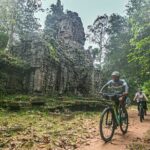
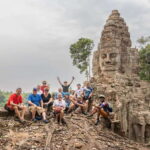
Timing and pace: what an 8-hour day really means
This is an approximately 8-hour outing, starting in the morning. The details say pickup is around 7:30 am, and the activity start time is listed as 8:30 am—so expect an early pickup window and a prompt departure.
Your stops are scheduled with realistic temple timing:
- Angkor Wat: about 2 hours
- Bayon: about 1 hour 30 minutes
- Ta Nei: about 1 hour
- Ta Prohm: about 1 hour
That structure is what keeps it from feeling like a long, exhausting sprint. You’ll bike between sites, then have time to slow down, look closely, and follow your guide’s explanations.
One thing I’d plan for: temple crowds and sun. Even with a morning start, you’ll still be outdoors a lot. Bring light layers, and wear shoes you’re comfortable walking in. You’ll be on a bike most of the day, but you’ll also move through temple areas where you can’t just stay seated and “power through.”
First stop: Angkor Wat and getting your bearings fast
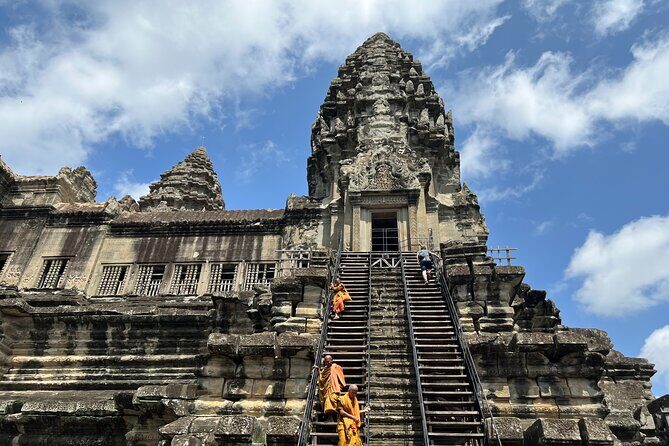
You start at Angkor Wat, picked up at your hotel and then directed to the ticket area first. The key detail here is that the tour time includes time for ticket handling. The day begins with a stop at the ticket booth so you can buy the required temple pass (admission ticket is not included on the tour listing).
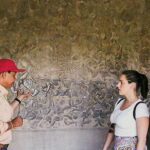
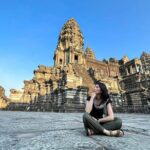
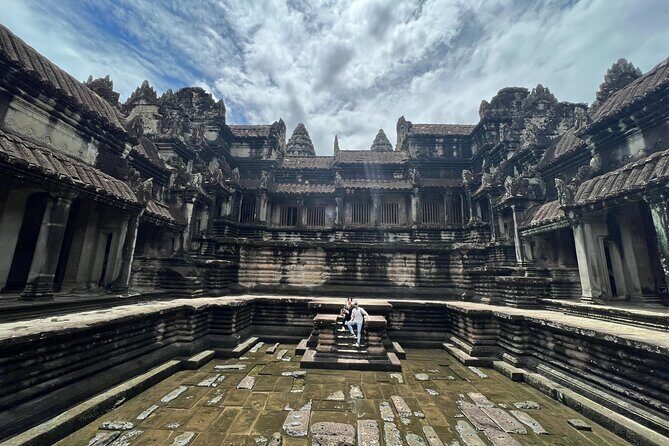
Once you’re in, you get about two hours at Angkor Wat. That’s enough time to see the major layout without treating it like a checklist. This temple can feel overwhelming because everything is symmetrical and layered with details. A good guide’s job is to help you recognize what you’re looking at: what parts are central, what motifs repeat, and how the temple fits into the larger Angkor world.
Biking here adds a nice benefit: you’re arriving with momentum rather than starting the day frozen in place. You also avoid some of the back-and-forth that happens when you rely only on short rides and long walks. The result is that you can focus on the temple itself once you’re inside.
Bayon at Angkor Thom: the faces of Avalokiteshvara

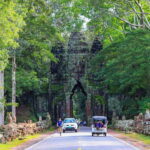
After Angkor Wat, you head to Angkor Thom and visit Bayon Temple. The tour route brings you to the south gate area first, which is a smart way to transition from the grand main temple into the city complex.
Bayon gets special emphasis because of what it represents. Your guide explains the stone faces tied to Avalokiteshvara, and also connects Bayon to the state temple associated with Mahayana Buddhist King Jayavarman VII. That matters because Bayon isn’t just a cool photo stop. It’s a visual statement, and once you understand what the faces symbolize, the carvings stop being random and start feeling purposeful.
You get about 1 hour 30 minutes here. That’s enough time to walk the key areas and look up without feeling rushed. Bayon is also one of the places where people tend to get stuck in picture mode. Having a structured time window helps you balance photos with actually reading the temple.
Potential drawback to keep in mind: Bayon can feel busy. If you’re the type who likes solitude for close-up looking, you’ll have to accept some movement and traffic flow. Still, the guide makes the time worth it by pointing out what to notice while you’re there.
Ta Nei: the calmer stretch on the way to Ta Prohm
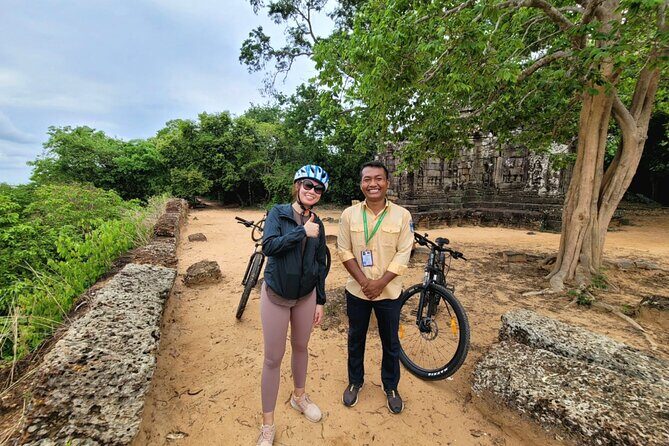
Next comes Ta Nei Temple, positioned as a less-frequent stop along the trail. Instead of turning Ta Nei into a quick walk-by, the tour gives it about one hour, which lets you slow down and take in the ruined structures and their jungle setting.
This is a helpful palate cleanser after Bayon. Bayon is visually intense—those faces pull your attention in every direction. Ta Nei shifts the mood. The guide’s pacing gives you time to look at the ruin itself, not just the idea of a ruin.
The tour also includes a moment to relax and enjoy local fresh fruits here. That’s not just a nice add-on. It helps you recharge so Ta Prohm doesn’t feel like the last stop of a power day. If you’ve ever toured temples back-to-back without a break, you know how quickly your attention span disappears. The fruit break keeps your energy steadier.
You can also read our reviews of more tours and experiences in Siem Reap

Ta Prohm: where the roots frame the ruins
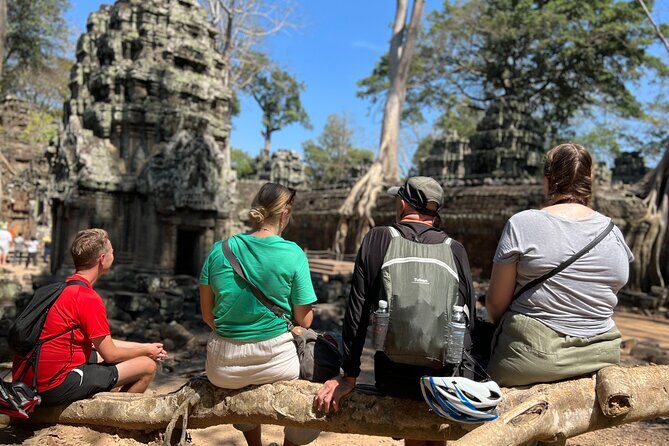
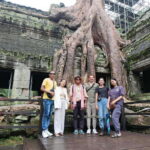
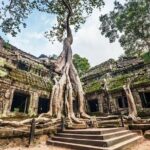
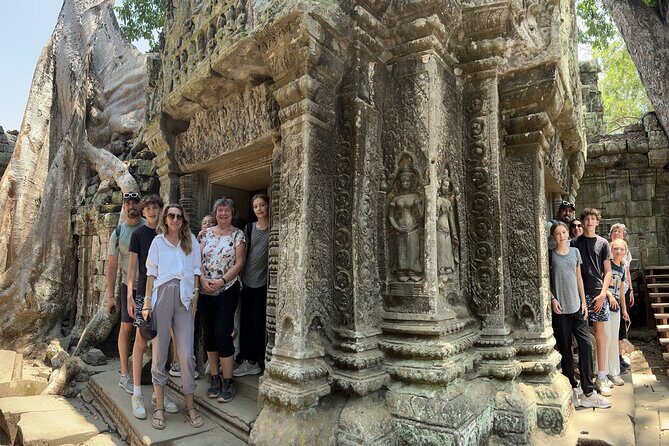
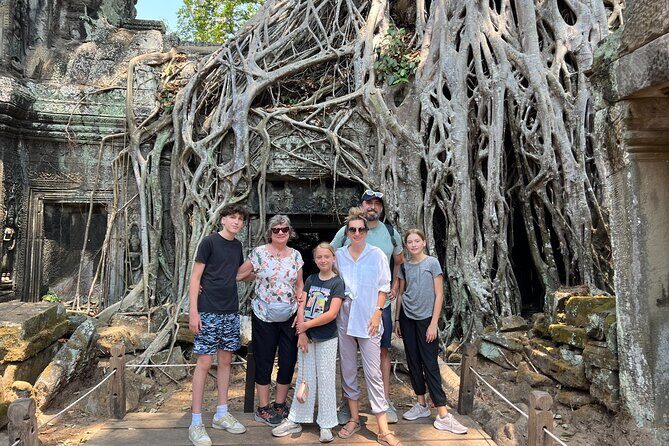
The final temple stop is Ta Prohm, famous for the way kapok trees clasp the sanctuaries with roots. Your time here is about one hour—enough for photos, orientation, and a guided walk through the key areas.
Ta Prohm is the kind of place that can go two ways. If you arrive with no context, it becomes mostly a cool background for pictures. If you have a guide, it becomes more. Your guide helps you understand how the temple was left in the state people recognize today and what that means for how you see the carvings and structures.
One practical tip: Ta Prohm is visually dramatic, so it’s easy to linger at the most photographed angles and then feel like you missed other parts. The time window keeps you moving through the site in a way that’s still relaxed.
When you get the combination right—prior context from Angkor Wat and Bayon, the calmer Ta Nei break, then Ta Prohm—you end up with a day that feels like a story, not a grab bag of ruins.
Lunch included: fuel for the afternoon leg
This tour includes lunch, which is one of the best value drivers in the whole offer. At Angkor, food logistics can turn into a time trap. If you’re paying for the day yourself, you spend mental energy deciding where to eat and waiting for a table.
With lunch included, you can keep your rhythm. You’re also not stuck thinking about breakfast, because breakfast isn’t included—so you’ll want to eat beforehand. After that early start, lunch helps reset your stamina before the last third of the temple circuit.
One more detail: the tour also includes bottle water, and Ta Nei includes fresh fruit. That combination is what keeps the day from feeling like you’re “earning” every kilometer by suffering a little. You’ll still be outdoors, but you’re less likely to run out of energy at the exact wrong moment.
Price and value: what $40 covers, and what it doesn’t
At $40 per person, the tour is positioned as a budget-friendly way to cover major Angkor sites with fewer headaches. What you actually get for that price is the key: an English-speaking tour guide, modern giant bike, hotel pickup and drop-off, transportation, bottle water, and lunch.
What you don’t get: the temple pass (admission ticket not included). That’s the biggest “surprise” cost for first-timers, so plan for it before you go. The tour time also includes time to buy the ticket at the booth, so you’ll handle it as part of the flow rather than doing it last minute.
When I look at value here, I think about what’s avoided. You’re not paying separately for a guide + bike rental + transport + lunch. Those add up fast in Siem Reap. Even if you end up spending extra for the temple pass, you’re still getting a day that’s stitched together cleanly.
Comfort, bikes, and who this tour suits best
This experience includes a modern giant bike, which is a big deal. When you’re riding in a place with uneven ground and lots of short transitions, a bike that feels stable reduces stress. You’re not trying to wrestle an old rental or spend energy compensating for a shaky ride.
Most travelers can participate. That phrasing matters because it suggests the tour is built for a wide range of abilities. Still, you should expect temple walking and a full day outdoors. If you’re comfortable riding a bike for hours and you don’t mind walking through ruins, this fits well.
This tour is especially good if you:
- want a structured Angkor day without juggling multiple transport steps
- like learning history while still getting movement and views
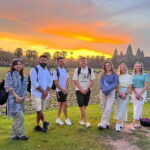
- prefer small-group touring rather than big crowds
- want included lunch so the day stays efficient
If you’re very heat-sensitive or hate walking at all, you might find the temple components tiring. The bike helps with distance, but it doesn’t remove the need to step around at the sites.
Small-group touring: why it changes the whole feel
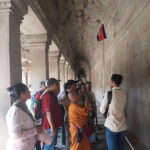
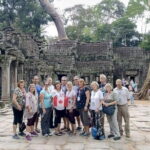
The group size is one of the strongest parts of the experience: minimum 2, maximum 7, and capped at 10 travelers. In practice, that means your guide can slow down when you’re staring up at carvings. It also means you’re less likely to get lost in a noisy pack.
I also like that this tour is geared toward a more personal guided experience. With fewer people, questions land faster. Explanations feel more targeted, and your day doesn’t become a sprint where you just follow the backs of strangers.
The reviews score is also consistently high, which usually points to a simple truth: people feel like the day was worth it. You get the core temples, it’s organized, and the included lunch and water make the pacing work.
Should you book the Angkor Wat Bike Tour with Lunch?
Yes, if you want the efficient Angkor circuit with less hassle and more guidance. For $40, the combination of hotel pickup, bike, water, lunch, and an English-speaking guide is what makes it a smart value day. You’ll also get a well-paced route through Angkor Wat, Bayon, Ta Nei, and Ta Prohm, with the historical context your eyes need.
Book it if you’re comfortable riding a bike and doing temple walking. If you expect only minimal movement or you know you’ll struggle with heat and stairs, you may want a gentler format.
FAQ
What’s included in the Angkor Wat bike tour?
The tour includes an English-speaking guide, bottle water, a modern giant bike, hotel pickup and drop-off, transportation, and lunch.
Do I need to buy the temple pass?
Yes. The temple pass (admission ticket) is not included, and you’ll handle it as part of the Angkor Wat stop.
How long is the tour?
The duration is about 8 hours.
What time does the tour start?
The listed start time is 8:30 am, and pickup is scheduled at your hotel at approximately 7:30 am.
How big are the groups?
The group size is small, from a minimum of 2 to a maximum of 7, and the experience has a maximum of 10 travelers.
Is lunch included?
Yes, lunch is included.
What if weather is bad?
This tour requires good weather. If it’s canceled due to poor weather, you’ll be offered a different date or a full refund.
If you tell me your comfort level with bike riding and your planned temple pass timing, I can help you figure out whether this pace fits your day.