REVIEW · SIEM REAP
Angkor Wat Small Group Tour and Sunset with Lunch Included
Book on Viator →Operated by Asean Angkor Guide · Bookable on Viator
Angkor in one big, well-planned day. This small-group Angkor Wat tour strings together the main hits—Angkor Thom, Ta Prohm, Angkor Wat, and a Phnom Bakheng sunset—with hotel pickup, A/C comfort, and cool breaks that matter in Siem Reap heat. You’ll see the famous smiling faces of Bayon, the tree-root chaos of Ta Prohm, and the classic symmetry of Angkor Wat without spending your whole vacation figuring out logistics.
I love two things most. First, the ride-and-stop rhythm is built for real visitors: air-conditioning, plus bottled water and cold towels that show up when you need them most. Second, the guide’s explanations are adjustable to you, from quick orientation to deeper meaning—so when you’re staring at stone carvings, you actually know what you’re seeing. Guides I’ve come across on this kind of tour (like Seila, Dara, Mony, Phanne, Raman, and Sotin) tend to answer questions on the spot and help you time photo stops.
One consideration: the Angkor Pass is at your own expense, and the day is long. You’ll walk a lot, there’s a climb at Phnom Bakheng, and sunset depends on weather. If it’s overcast, you’ll still get a great viewpoint, but don’t treat sunset as a guaranteed outcome.
In This Review
- Key takeaways before you go
- Door-to-door Siem Reap comfort (and why it matters at Angkor)
- Angkor Thom South Gate: Tonle Om Gate and the “capital city” feeling
- Bayon Temple: smiling faces, symbolism, and good photo timing
- Baphuon Temple: Shiva, layered structure, and a change of mood
- Terrace of the Elephants: a strategic viewpoint inside Angkor Thom
- Ta Prohm: tree roots, Tomb Raider vibes, and moving with purpose
- Lunch at Angkor Archaeological Park + Phum Preah Dak palm sugar break
- Angkor Wat in the afternoon: the “icon” experience with real context
- Phnom Bakheng sunset climb: great viewpoint, real weather limits
- What’s included in the $26 price (and what you’ll still pay for)
- Who this tour fits best (and who should adjust expectations)
- Should you book this Angkor Wat small-group sunset tour?
- FAQ
- How long is the Angkor Wat small group tour with sunset?
- Is hotel pickup and drop-off included?
- How many people are in the group?
- Which temples and sites are included in the day?
- Is lunch included, and do you offer vegetarian meals?
- Are temple admission tickets included?
- What should I wear?
- Is sunset guaranteed?
- What should I bring with me?
Key takeaways before you go
- Hotel pickup and A/C transport keep the day sane in the heat
- Small group size (max 10, with an upper cap of 14) makes questions easier
- Ta Prohm + Angkor Wat in the same day gives you contrast: chaos vs. perfect geometry
- Cold water and towels are not a gimmick; they help you keep going between stops
- Lunch is included, with a vegetarian option
- Angkor Pass is extra, so budget for that ahead of time
Door-to-door Siem Reap comfort (and why it matters at Angkor)
This tour is built around one idea: getting you from your hotel in Siem Reap to the Angkor sites without the headache. You’ll get pickup from a downtown hotel or guesthouse, then spend most of the day in a private vehicle with A/C. It’s a huge quality-of-life upgrade compared with patchwork transport.
The day runs for about 10 hours, and that’s plenty of time to do the big sights without feeling like you’re sprinting between them. The timing also matters for crowds. Your guide can help you hit the most popular structures at workable times, and I like that this tour is designed to minimize dead time.
Expect cold bottle water and cold towels as you move from one stop to the next. On hot days, that alone can change your experience from tiring to actually enjoyable.
You can also read our reviews of more tours and experiences in Siem Reap
Angkor Thom South Gate: Tonle Om Gate and the “capital city” feeling
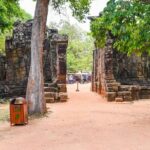
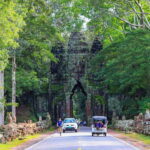
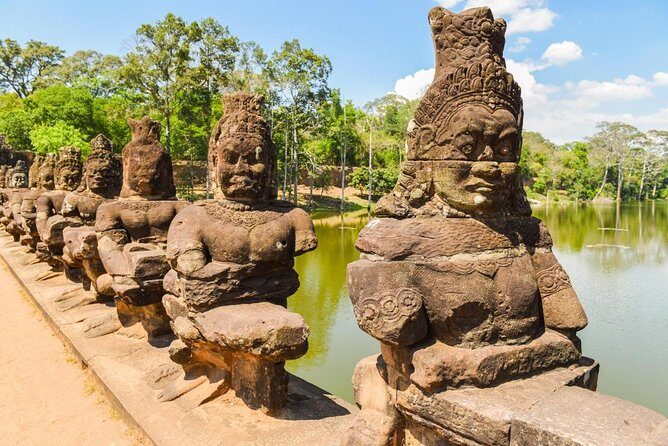
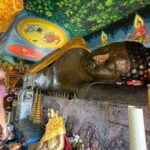
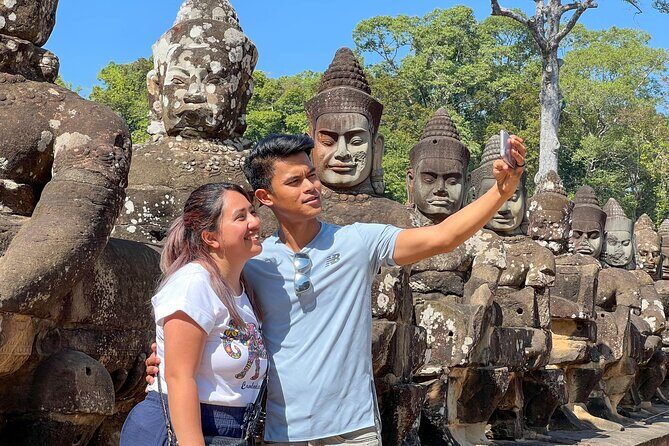
You start at Angkor Thom South Gate, also known as Tonle Om Gate. Even if you’ve seen photos, it’s one of those places where the scale hits you in person. You’re walking into what used to function as the royal capital complex, not just a single temple you pop in and out of.
This stop is short—about 20 minutes—so use it like a warm-up. Take a minute to orient yourself: where you are in relation to Angkor Thom’s inner layout, and how the gate leads you deeper. It’s also a good chance to check your footing and camera settings before the more involved carvings and temples.
If you like learning while you walk, this is a great opener. A good guide will connect what you see in the gate to the larger story of Khmer rule and temple design.
Bayon Temple: smiling faces, symbolism, and good photo timing
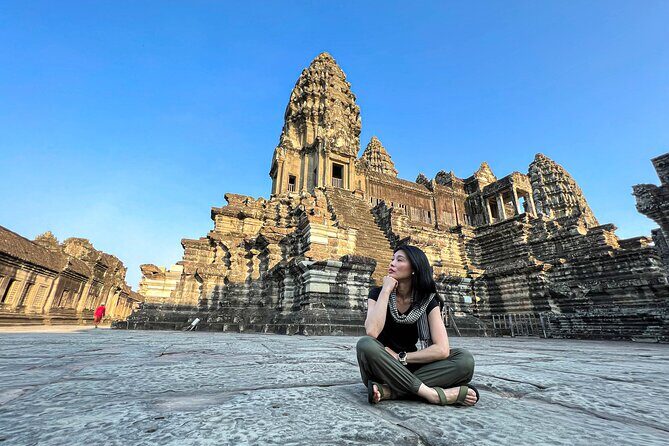
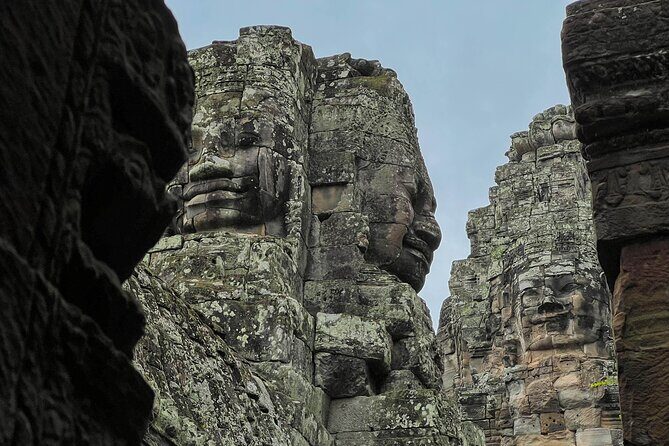
Next up is Bayon Temple, famous for its many stone faces. You’ll spend about 45 minutes here, which is long enough to notice details beyond the obvious front view.
Bayon is late 12th century and connected to Mahayana Buddhism, and your guide will help translate that into something you can see. The best moments are the ones where your guide points out how the faces repeat across towers and how the layout pulls you through the space.
I also like that Bayon is a moment where the tour naturally slows down. With the crowd levels shifting throughout the day, your guide’s timing can make the difference between snapping a quick shot and getting a real angle without wrestling for space. If someone in your group enjoys photos, guides on this tour style often act as a helpful photographer—showing you where to stand and when to move.
Baphuon Temple: Shiva, layered structure, and a change of mood
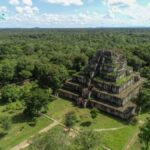
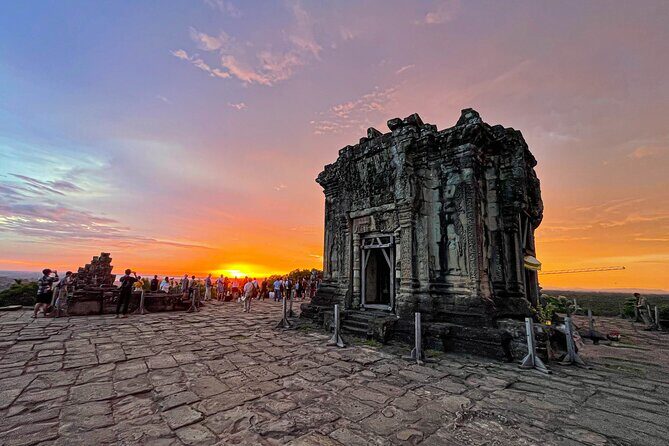
Baphuon is a Hindu temple dedicated to Shiva, built mid-11th century. It’s about 30 minutes, and it gives you a noticeable shift in tone from the face towers of Bayon.
The big thing to look for here is the three-tiered “temple mountain” design. Even without a long lecture, the structure teaches you something: how Khmer builders shaped religious ideas into architecture. With a guide explaining what those layers are meant to communicate, the temple stops feeling like a stop on a checklist.
If you’re sensitive to heat, this can still be a long climb and look-around, but the tour’s rest-and-ride structure helps you pace yourself.
Terrace of the Elephants: a strategic viewpoint inside Angkor Thom
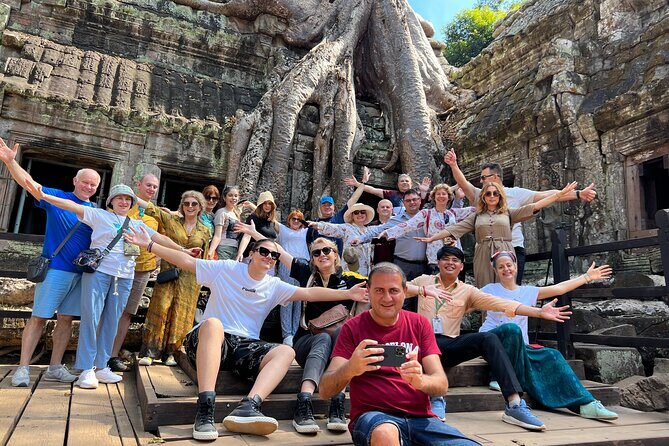
The Terrace of the Elephants takes about 15 minutes. It’s part of the walled area of Angkor Thom and is connected to how King Jayavarman VII used this space to watch an arriving army.
Even though it’s a shorter stop, it’s one of the most memorable “context” points of the day. The terrace functions like a historical viewing platform, so as you stand there, you can imagine the scale of ceremony and power that would have played out from this location.
This is a good stop for people who like connecting architecture to real-world use. Your guide can often help you visualize how power, procession, and space all fit together.
You can also read our reviews of more evening experiences in Siem Reap
Ta Prohm: tree roots, Tomb Raider vibes, and moving with purpose
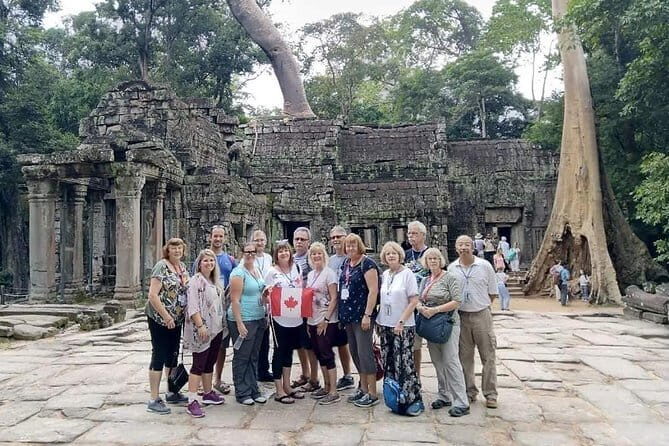
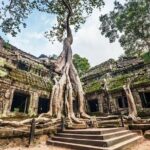
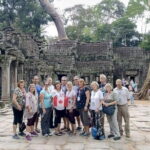
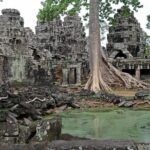
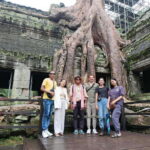
Then you head to Ta Prohm, the temple that looks like nature started winning mid-construction. It’s partly overgrown with huge tree roots, and it’s also known as a film backdrop for Tomb Raider.
You’ll have about 1 hour here, which is about right. Ta Prohm is visually busy. If you try to wander alone for the full hour, you can miss the best angles and the story that explains why these plants and structures seem locked in place together.
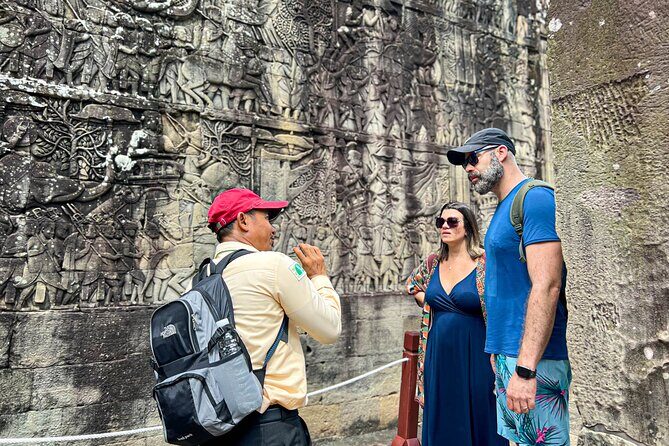
What I like about this stop on a guided day: you don’t just see impressive roots. You learn what the temple is, why it was left in its current state, and what to notice in the carvings and doorways. Your guide can also help you avoid the worst crowd bottlenecks by choosing when to move to each photo location.
Practical tip: bring your energy. Ta Prohm is not a quick look-and-go. Plan to slow down and take a few photos that show the roots, not just the building face.
Lunch at Angkor Archaeological Park + Phum Preah Dak palm sugar break
After Ta Prohm, the schedule shifts into a more human pace. You’ll enjoy lunch at a local restaurant, and the meal is cooked by a local chief. There’s a vegetarian option, which is a big deal on a day like this when you don’t want to worry about finding food.
What makes this lunch stop worth it is that it’s placed inside the flow of the day, not tacked on at the end like an afterthought. You’re fueled up, cooled down a bit, then sent onward.
Right after lunch, you’ll visit Phum Preah Dak, described as an authentic village area where you can learn how locals make palm cake and palm sugar. It’s a cultural contrast to the stone temples: instead of carvings and ruins, you get the daily craft side of Khmer life.
This stop also helps you reset mentally. Angkor is intense. A break like this gives your brain a chance to process what you’ve seen before you return to the biggest temple of the day.
Angkor Wat in the afternoon: the “icon” experience with real context
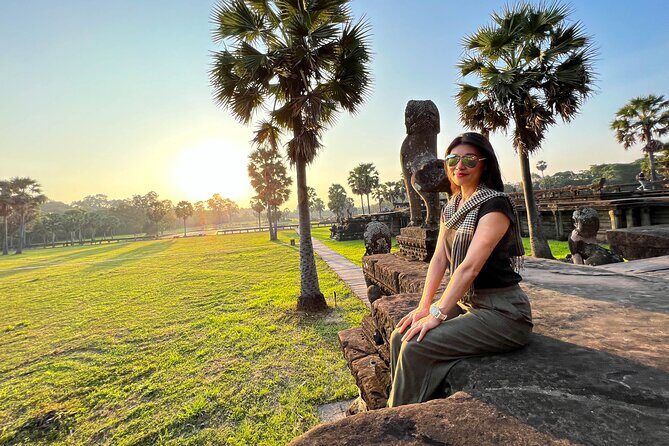
Angkor Wat is next, with about 1 hour 30 minutes at the site. This is the largest sacred building at Angkor and an icon of Khmer civilization, built by King Suyavarman and dedicated to Vishnu.
In that timeframe, you’re not meant to see everything in a slow, museum-like way. Instead, you get the essentials: how the temple complex is laid out, how the buildings relate to each other, and what details matter more than you’d think.
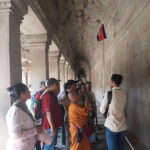
The key value of a guide here is interpretation. Many people can technically walk the grounds and take photos, but without context it’s easy to miss what makes Angkor Wat powerful as religious architecture. With explanations tailored to your level, you can switch from simply admiring to understanding the design logic.
Also watch for how the light changes during the afternoon. You won’t get the same dramatic sunrise effect, but the temple can look crisp and clear when the sky behaves. If the day stays hot, that’s another reason the tour’s A/C travel and water stops matter—you’ll enjoy the temple more.
Phnom Bakheng sunset climb: great viewpoint, real weather limits
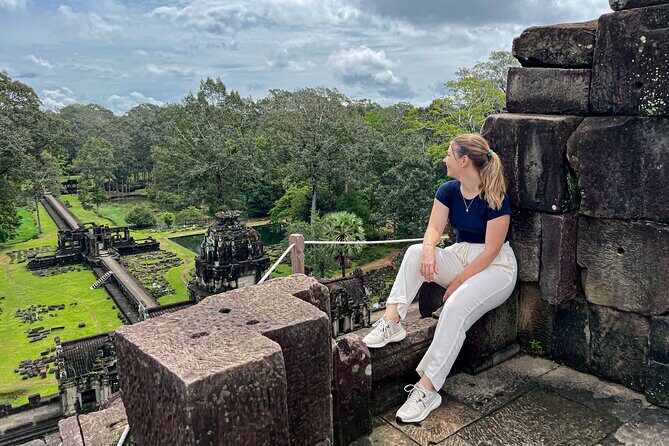
At the end of the day, you climb up to Phnom Bakheng for sunset. This segment is about 2 hours including the climb and return transfer.
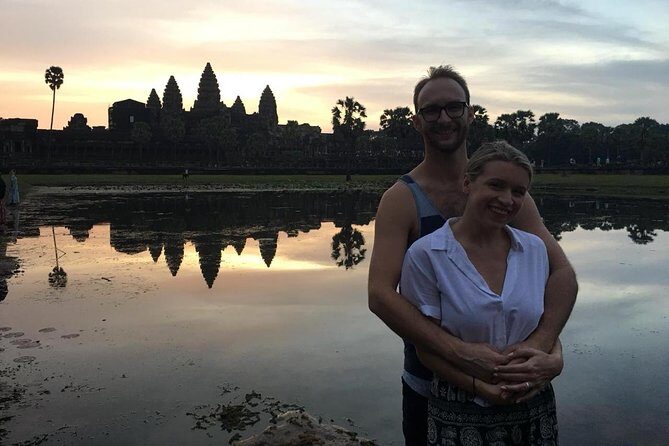
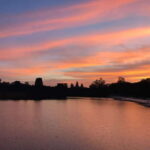
Here’s the honest reality: sunset at Angkor is weather-dependent. The experience requires good weather, and if skies don’t cooperate, the tour may still deliver a solid viewpoint experience without the full glow people hope for. Either way, Phnom Bakheng gives you a panorama angle over the temple area that feels different from ground-level views.
The climb itself is part of the experience, and you should plan for it. Wear comfortable footwear and go at a steady pace. If you’re traveling with anyone who has mobility limitations, this is the part where you’ll want to decide whether the ascent is worth it for your group.
When the light does work, it’s a satisfying finish: you see Angkor Wat in distance, then gradually turn your head and spot how the temple landscape spreads out.
What’s included in the $26 price (and what you’ll still pay for)
At $26 per person, this tour is strong value if you compare what’s actually handled for you. Your price covers a professional English-speaking guide, an experienced driver, A/C transport (minivan or bus), cool bottled water and towels, lunch at a local restaurant with vegetarian option, hotel pickup and drop-off, and temple admission tickets.
The big extra you should plan for: the Angkor Pass is at your own expense. So when you budget, treat that as a separate line item rather than a surprise on the day.
Also, soft drinks aren’t included. Water is included, but if you want soda or juice, you’ll need to purchase separately.
Who this tour fits best (and who should adjust expectations)
This tour fits best if you want the main Angkor sights in one day without stress. If you’re short on time in Siem Reap—like a first-timer with only a couple of days—this is a practical way to hit the big names: Angkor Thom, Bayon, Baphuon, Terrace of the Elephants, Ta Prohm, Angkor Wat, and the Phnom Bakheng sunset viewpoint.
It’s also a good match if you like being guided but not stuck in a classroom. The tour is designed so explanations can be adjusted to your level, which helps whether you’re history-curious or just want to understand what you’re looking at.
If your group hates long walking days, you might feel the pace more than others. This is still a day of temples and terrain. The sunset climb adds effort at the end, so keep that in mind.
Should you book this Angkor Wat small-group sunset tour?
I’d book it if you want maximum Angkor value for your time in Siem Reap and you appreciate comfort details like A/C rides, cold towels, and a guide who helps you read the sites. The small group size (limited to 10, with a cap of 14) makes it feel less crowded and more conversational than mass tours.
I would hold off or compare alternatives if you hate climbs, you’re expecting sunset to be guaranteed no matter what, or you don’t want to plan for the Angkor Pass as an extra cost. Weather can change the mood at Phnom Bakheng, and that’s not something any operator can fully control.
If you go in with the right mindset—good shoes, covered shoulders and knees, sunscreen, and a calm pace—you’ll come away with a full Angkor day that feels complete, not exhausting.
FAQ
How long is the Angkor Wat small group tour with sunset?
The tour runs for about 10 hours.
Is hotel pickup and drop-off included?
Yes. You’ll be picked up and dropped off at your downtown hotel or guesthouse.
How many people are in the group?
It’s limited to 10 participants to keep the experience more personal, with a maximum of 14 travelers.
Which temples and sites are included in the day?
You visit Angkor Thom South Gate (Tonle Om Gate), Bayon Temple, Baphuon Temple, Terrace of the Elephants, Ta Prohm, Angkor Archaeological Park area with a lunch stop and Phum Preah Dak village visit, Angkor Wat, and Phnom Bakheng for sunset.
Is lunch included, and do you offer vegetarian meals?
Lunch is included at a local restaurant, and there is a vegetarian option.
Are temple admission tickets included?
Yes, temple admission tickets are included, but the Angkor Pass is at your own expense.
What should I wear?
You must cover your knees and shoulders. This is required for visitors.
Is sunset guaranteed?
Sunset is planned at Phnom Bakheng, but the experience requires good weather. If weather is poor, you may be offered a different date or a full refund.
What should I bring with me?
Bring a camera, sunscreen, sunglasses, and insect repellent.