REVIEW · SIEM REAP
3-Day ‘Temples & Tonle Sap’ Tour
Book on Viator →Operated by Asia Voyage Tour · Bookable on Viator
Three days, two worlds, and a lot of walking. This Temples & Tonle Sap tour is interesting because it handles the heavy logistics for you while still packing in major Angkor sights plus Tonle Sap village life. I especially like the hotel transfers and the motorized boat ride that gets you out on the water without you planning anything.
The possible drawback: this is a full, busy schedule starting at 8:30am, and the walking at Angkor (plus uneven temple steps) won’t feel great if your mobility is limited.
In This Review
- Key Highlights You’ll Actually Feel
- Value Check: What You Get for About $250
- Start Time and Route Rhythm: Why 8:30am Matters
- Day 1 at Angkor Archaeological Park: Bayon, Baphuon, Ta Prohm
- Angkor Archaeological Park pass + ticket office stop
- Bayon Temple in Angkor Thom
- Baphuon Temple
- Ta Prohm (the famous one)
- Terrace of the Elephants
- Angkor Wat after lunch
- Phnom Bakheng in the late day
- Day 2: Angkor Wat Sunrise, Then the Eastern Temple Cluster
- Sunrise-style revisiting at Angkor Wat
- Preah Khan, Neak Poan, Ta Som, East Mebon
- Banteay Srei after lunch
- Banteay Samre
- Day 3: Kompong Phluk on Tonle Sap and the Roluos Temples
- Kompong Phluk: stilt villages and Tonle Sap rhythms
- Roluos Temples: early Khmer stone-and-brick era
- Phsar Leu Thom Thmey, Phsar Chas, and Artisans d Angkor
- Comfort, Heat, and What to Bring (So You Don’t Hate Day 1)
- Is It Worth It for Your Style of Travel?
- Should You Book This Temples & Tonle Sap Tour?
- FAQ
- What time does the tour start in Siem Reap?
- Are hotel pickup and drop-offs included?
- Do I need to buy Angkor temple passes?
- Are meals included in the tour price?
- Is there a motorized boat ride on the Tonle Sap day?
- What’s the cancellation window for a full refund?
Key Highlights You’ll Actually Feel
- You buy your Angkor passes on Day 1 at the Angkor Enterprise ticket office, one pass per person (3-day pass USD62).
- Angkor Wat is visited twice, including a sunrise-style early session on Day 2.
- Kompong Phluk is a Tonle Sap stilt-village experience, built on stilts and linked to seasonal fishing.
- You get temples beyond the usual headline list, including the Roluos group and several clustered sites around Angkor.
- Comfort extras are included: bottled water and cold towels, plus an air-conditioned vehicle.
- Your group stays together, with only your group participating, guided by a professional English-speaker.
Value Check: What You Get for About $250
For $250, this tour is basically paying for time, coordination, and transportation. You’re getting hotel pickup/drop-off, an air-conditioned vehicle for the tour days, a professional English-speaking guide, bottled water, and cold towels. You’re also getting the motorized boat fee for the Tonle Sap portion. That’s not nothing in Siem Reap, where temple-area transport and “simple logistics” can quietly eat your day.
The big separate cost is the temple access itself. Temple passes aren’t included, but you buy them with the tour on Day 1 at the Angkor Enterprise ticket office: a 3-day Angkor pass is USD62 (and a 7-day pass is USD72). So if you’re budgeting, a realistic total is roughly the tour price plus the pass, before meals.
Meals are not included, and soft drinks/alcohol aren’t included either. That’s typical for this kind of packed itinerary. The value is that you spend less time negotiating, finding entrances, and solving route problems. You trade a bit of freedom for a plan that tries to fit in a lot without you thinking about it.
You can also read our reviews of more tours and experiences in Siem Reap
Start Time and Route Rhythm: Why 8:30am Matters
The vehicle departs your hotel at 8:30am. This matters because Angkor’s peak heat hits fast, and you’ll see more before the day turns into full sun and crowds. It also means you should plan for an early breakfast, easy shoes, and a water game plan.
The tour is also built around moving efficiently between clustered sites. For example, Day 2 is designed around visiting multiple temples in the same general area before you head to Banteay Srei. That kind of grouping is exactly what you gain by booking a guided tour rather than trying to string everything together on your own.
And since the itinerary includes both long temple walks and a boat day, you’ll feel the day’s pacing more than you would on a slower tour. I’d call it action-packed, but in a practical way: you’re not stuck waiting around much.
Day 1 at Angkor Archaeological Park: Bayon, Baphuon, Ta Prohm
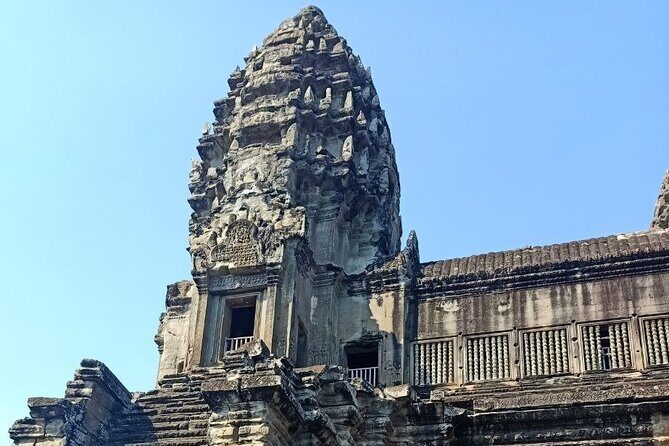
Day 1 is about getting a wide-angle view of Angkor quickly, then hitting the headline moments.
Angkor Archaeological Park pass + ticket office stop
You begin at the Angkor Enterprise ticket office to purchase your Angkor pass. The key detail here is that the pass is per person, and the tour suggests buying at least a 3-day pass. If you’re only in town for a short stretch, this is the right move because it lets you cover the major temple visits across multiple days without scrambling later.
Bayon Temple in Angkor Thom
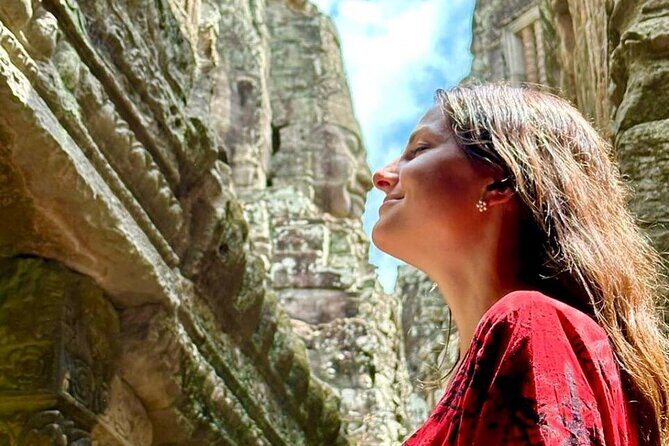
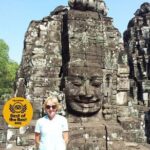
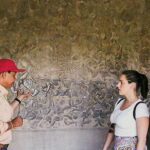
Bayon is one of those temples that feels designed for close watching. It’s richly decorated and was built as the state temple of King Jayavarman VII, connected to Mahayana Buddhism. The big advantage of having a guide here is that the temple can be overwhelming on your own. With interpretation, you start to notice what you’re looking at instead of just following your feet.

Baphuon Temple
Then you head to Baphuon, a three-tiered temple mountain dedicated to Shiva. It’s located northwest of Bayon in Angkor Thom. What I like about this stop is that it’s a different temple shape and feel, which helps break up the visual density of the first big cluster.
Ta Prohm (the famous one)
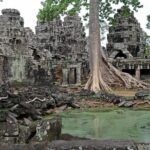
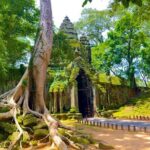
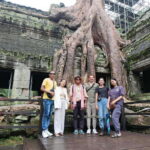
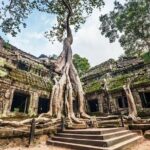
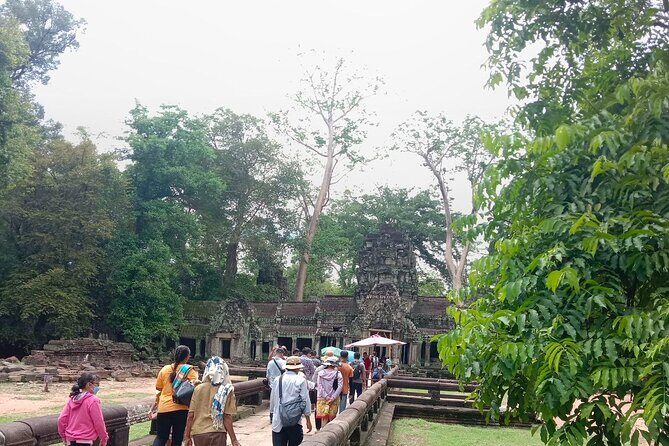
Ta Prohm is where you get a temple that still looks like nature is in the middle of negotiating with stone. It was originally called Rajavihara and is built in the Bayon style. The tour keeps you moving through, but with time allotted (about an hour on the schedule), you can still look up, look around, and take photos without feeling rushed the entire time.
Terrace of the Elephants
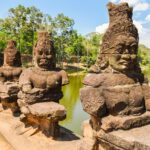
You also stop at the Terrace of the Elephants, which forms part of the eastern boundary of the royal palace grounds and faces the parade grounds. It’s not as famous as Angkor Wat, but it gives you context for how the palace area worked—processions, ceremonies, and royal space.
Angkor Wat after lunch
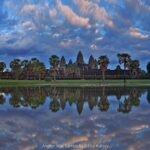
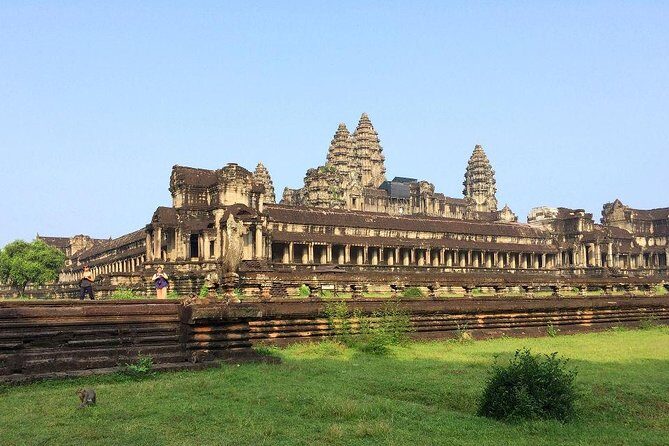
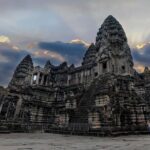
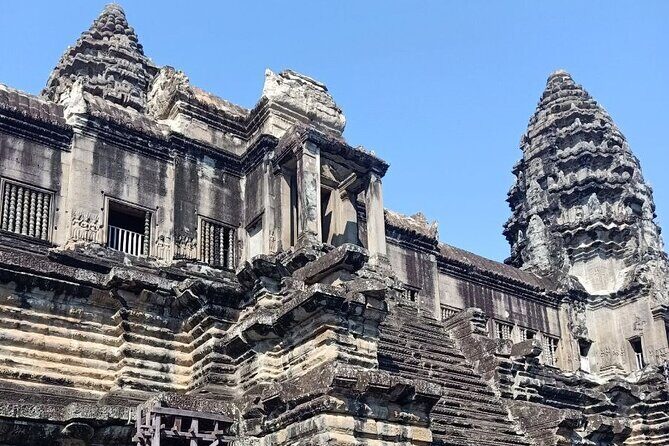
In the afternoon you continue to Angkor Wat, the giant star of the show. It’s the largest religious monument in the world on a massive site, and it was originally constructed as a Hindu temple dedicated to Vishnu. Expect a longer chunk of time here (around three hours). That’s enough to enjoy the scale, walk the key areas, and still have a moment to just stare.
Phnom Bakheng in the late day
To finish Day 1, you go to Phnom Bakheng, a Hindu and Buddhist temple-mountain dedicated to Shiva and built at the end of the 9th century. This is a hill-top temple, so expect stairs and a viewpoint vibe. It’s a solid way to end because it gives you that “Angkor from above” feeling before you reset for Day 2.
A practical note: because this day is so packed, I’d keep your expectations realistic. Day 1 can feel like you’re constantly switching between awe and head-spinning detail. A guide helps you make sense of it.
Day 2: Angkor Wat Sunrise, Then the Eastern Temple Cluster
Day 2 is split in two moods: early sunrise-style time at Angkor Wat, then a temple run that stays more efficient than random sightseeing.
Sunrise-style revisiting at Angkor Wat
You revisit Angkor Wat for the famous early session. The schedule then has you returning to the guest hotel for breakfast. I like this structure because it avoids the trap of going from sunrise to no-break temple sprint. You get to reset your energy before continuing.
Preah Khan, Neak Poan, Ta Som, East Mebon
After breakfast you visit Preah Khan, Neak Poan, Ta Som, and East Mebon. The important thing here is that they’re clustered together, which helps you spend less time in transit and more time actually looking at temples. Each site has a different layout, so even if you’re temple-weary, the variety keeps it moving.
Again, the guide’s role matters here. When you know what each temple complex is and who it was linked to, the visit becomes less about memorizing and more about understanding the pattern of Khmer sacred space.
Banteay Srei after lunch
After lunch you head to Banteay Srei, often called the ladies temple. It’s a 10th-century Cambodian temple dedicated to Shiva, located near Phnom Dei and about 25 km northeast of the main area. This is one of those stops where you can appreciate details more because it feels different from the big, monumental core sites. Your time on the schedule is about two hours, which is a good balance for photos and slower watching.
Banteay Samre
You finish the day with Banteay Samre, a Hindu temple in the Angkor Wat style. Built in the early 12th century during the reign of Suryavarman II and Yasovarman II, it’s scheduled for about an hour. Think of it as a strong closer that still keeps the day from dragging.
Day 3: Kompong Phluk on Tonle Sap and the Roluos Temples
Day 3 shifts the setting from temple stone to water-world life.
Kompong Phluk: stilt villages and Tonle Sap rhythms
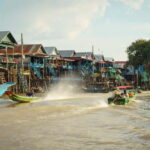
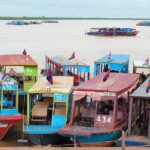
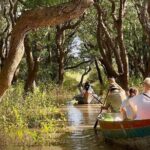
You start at Kompong Phluk, a collection of villages largely built on stilts on the Tonle Sap. The name means Harbor of the Tusks, and the community depends heavily on fishing. The tour info points out the wet season (May to October), when fishing is especially central to life there.
This is where the motorized boat piece becomes more meaningful. You aren’t just standing near a view; you’re moving through the environment that shapes people’s livelihoods. I find that kind of contrast makes the Angkor days feel connected instead of separate.
Roluos Temples: early Khmer stone-and-brick era
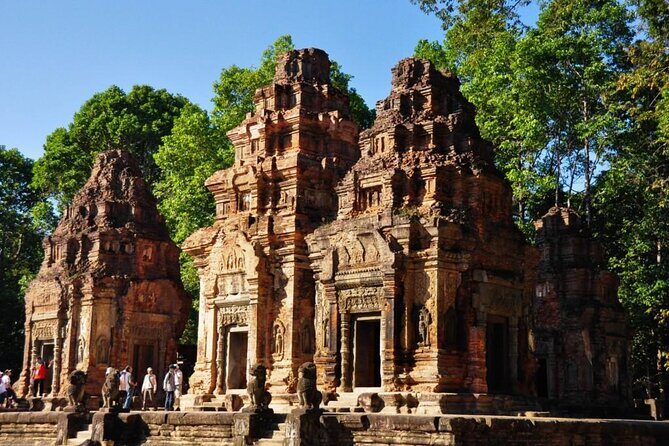
Next up is the Roluos group of temples. These are among the earliest permanent structures built by the Khmer, dating from the late 9th century and marking the beginning of classical Khmer civilization. Some were built with brick. You’ll typically see less of the “today” crowd here than at the absolute biggest sites, but the real value is historical placement: it’s a way to see Angkor not only as one peak moment, but as an evolving tradition.
Phsar Leu Thom Thmey, Phsar Chas, and Artisans d Angkor
On the way back, you pass by markets including Phsar Leu Thom Thmey (top market) and Phsar Chas (old market), plus Artisans d Angkor. Even though this part is shorter (around two hours), it’s a nice chance to pick up everyday life details: snacks, small gifts, and the normal noise of the city. It’s also a reminder that Siem Reap isn’t only temples.
Comfort, Heat, and What to Bring (So You Don’t Hate Day 1)
This tour includes bottled water and cold towels, which helps a lot. Still, the schedule is long and physical. For Angkor days, you’ll want shoes that handle dust and stone steps without slipping. Bring a hat, sunscreen, and something light for sun protection.
You should also expect that some temple areas are uneven and stair-heavy. The tour notes that it isn’t suitable for people with less than average fitness or anyone who can’t walk normally. If that sounds even slightly like you, I’d consider a slower approach instead of forcing it.
One small practical tip: keep your daypack simple. You’ll be moving from temple to temple in the same general circuit on most days. The fewer things you juggle, the more energy you keep for looking and taking photos.
Is It Worth It for Your Style of Travel?
This tour fits best if you:
- want Angkor highlights without wrestling with day-by-day planning
- like having a guide explain what you’re seeing as you go
- enjoy early starts and don’t mind a full day schedule
- want both temple culture and a real Tonle Sap water-life experience
It’s less ideal if you:
- prefer slow visits where you can linger for hours in one place
- need frequent rest breaks or step-free routes
- want lots of free time for wandering and spontaneous detours
The “private tour/activity” setup can be a plus if you don’t want to share your guide time with strangers. That can make photo stops and timing feel smoother.
Should You Book This Temples & Tonle Sap Tour?
Yes, you should book it if you’re time-limited and you want the big Angkor sites plus Tonle Sap in one organized package. The value comes from the package of hotel transfers, air-conditioned vehicle, English-speaking guide, and the motorized boat fee—then the itinerary pushes you through a thoughtful spread of temples, not just the one-or-two most famous stops.
But be honest about pace. This is not a relaxed “meander and admire” plan. It’s a structured sprint through temples, capped with a Tonle Sap day that changes the scenery fast.
If you want to see Angkor in depth without doing logistics, this tour is a strong bet. If you’re worried about walking stamina or you hate early mornings, look at a more flexible itinerary instead.
FAQ
What time does the tour start in Siem Reap?
The tour starts at 8:30am, and the vehicle departs your hotel at that tour start time.
Are hotel pickup and drop-offs included?
Yes. Hotel transfers (pickup and drop-off) are included, and the vehicle is air-conditioned for the tour days.
Do I need to buy Angkor temple passes?
Yes. Temple passes are not included. You buy them at the Angkor Enterprise ticket office, with a 3-day pass costing USD62 per person.
Are meals included in the tour price?
No. Meals, soft drinks, and alcohol are not included.
Is there a motorized boat ride on the Tonle Sap day?
Yes. A motorized boat ride is included, and the fee is covered. The tour also includes bottled water and cold towels.
What’s the cancellation window for a full refund?
You can cancel for a full refund up to 24 hours before the experience’s start time. If you cancel less than 24 hours before, the amount paid isn’t refunded.