REVIEW · SIEM REAP
2 Days Angkor Wat Sunrise and Sunset Private Tour
Book on Viator →Operated by Angkor Buddy Tour · Bookable on Viator
Angkor in two days feels intense.
That’s also why this private sunrise and sunset setup works so well: you get the big-name temples in the best light, then a second day that fills in the quieter circuit temples. I like how the schedule covers both the Big Circle and Small Circle zones, so you’re not just stuck doing one loop.
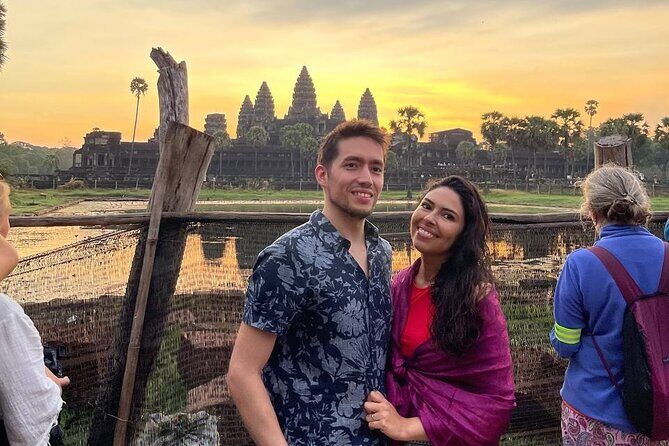
Two things I really like: first, you’re not driving yourself, which matters a lot when you’re up early; you’ll have free hotel pickup and drop-off plus an English-speaking guide who keeps you moving. Second, the day design is thoughtful: you start with Angkor Wat in the morning golden hours, then you end the trip at Phnom Bakheng for sunset views.
The main drawback to plan for is simple: entrance fees are not included, and the Angkor Pass (listed as the 3-day pass) is an extra cost you’ll need to budget. You also won’t be getting meals on the tour day, so you’ll want a breakfast plan and energy for a long temple day.
In This Review
- Key Highlights You’ll Actually Feel on the Trip
- Why Angkor Wat Sunrise and Bakheng Sunset Work So Well
- Your Two-Day Route: Big and Small Circle Temples in Order
- Day 1 Details: Angkor Wat, Angkor Thom Gates, Bayon Faces, and Ta Prohm
- Day 2 Details: Banteay Srei, Preah Khan, Neak Pean, and the Sunset Climb
- What’s Included, What’s Not, and Where the Money Goes
- Guide, Pickup, and Private-Group Comfort in Siem Reap
- Tickets, Dress Code, and the Rules That Can Slow You Down
- Practical Tips for a Smooth Sunrise/Sunset Schedule
- Who This Private Tour Fits Best
- Should You Book This Angkor Wat Sunrise and Sunset Private Tour?
- FAQ
- Is hotel pickup and drop-off included?
- Is this tour private?
- What’s included in the $134 per person price?
- Do I need to pay temple entrance fees separately?
- Can I buy the entrance pass on the day, before sunrise?
- Are breakfast and lunch included?
- What dress code do I need to follow?
- Are drones allowed at the temples?
- What if I need to cancel?
Key Highlights You’ll Actually Feel on the Trip
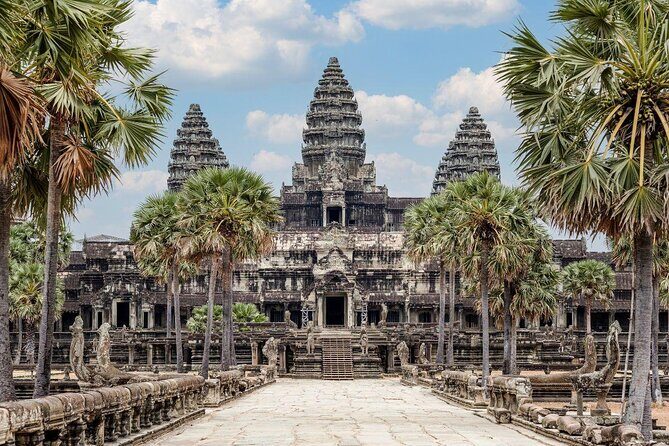
- Sunrise at Angkor Wat + sunset at Phnom Bakheng puts the most photogenic hours into your control
- A full two-day route hits Angkor Thom, Ta Prohm, and then the smaller circuit temples the crowds often skip
- Private tour means your guide can adjust pacing without squeezing you into a bus-style schedule
- Bottled water and air-conditioned transport take the edge off long days in the sun
- You’ll follow practical temple rules: dress code and no drone use without permission
Why Angkor Wat Sunrise and Bakheng Sunset Work So Well
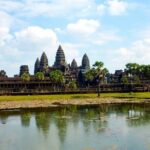
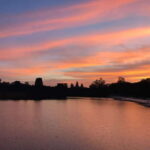
Angkor Wat looks impressive at any time of day, but sunrise is when the complex starts to feel spiritual instead of just monumental. Early light softens the stones, and the mood shifts fast when the sky warms up.
On the other day, the sunset payoff is about elevation and atmosphere. Phnom Bakheng is a temple-mountain view point, and watching the light change over the surrounding area is exactly the kind of payoff that justifies an early start and a long itinerary.
This tour also keeps the flow sane. You’re not trying to do every temple at random times; you’re building your day around the best time windows for the two most famous scenes.
You can also read our reviews of more private tours in Siem Reap
Your Two-Day Route: Big and Small Circle Temples in Order
This isn’t a random hit list. The tour is organized so you get a classic Angkor big hits day, then a second day that works through key circuit temples that complement the first.
The stops on Day 1 lean heavy on the central Angkor Wat and Angkor Thom zone, so you’ll see both Hindu and Buddhist Khmer eras in a tight area. Then Day 2 spreads you out for Banteay Srei and the cluster of smaller temples around the circuit, ending with Phnom Bakheng.
One more practical win: the itinerary durations are realistic enough that you’ll spend time looking, not just arriving. Even when some stops are short, you’re getting a guided visit that keeps you oriented.
Day 1 Details: Angkor Wat, Angkor Thom Gates, Bayon Faces, and Ta Prohm
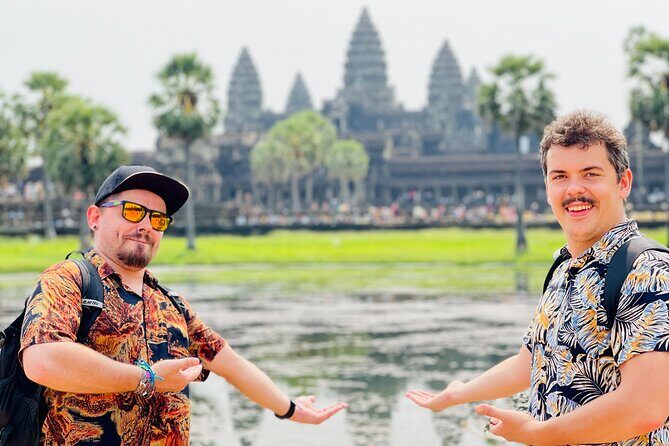
Stop 1: Angkor Wat (2 hours)
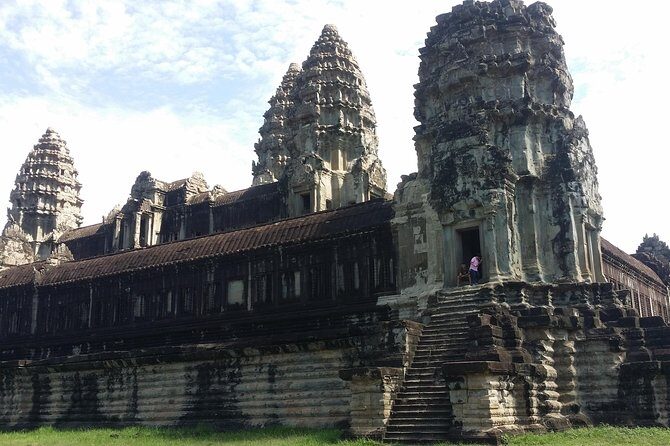
Angkor Wat is the main event, and the tour’s sunrise timing makes sense. You’ll get time to take in the layout—big axes, causeways, and courtyards—without feeling like you’re sprinting through. It’s also a Hindu temple complex, originally dedicated to Vishnu, which helps explain the iconography you’ll see as you move through the site.
Stop 2: Angkor Thom South Gate (15 minutes)
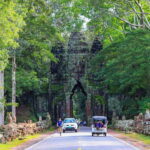
This is your “official entrance” moment into the larger capital city space of Angkor Thom. Even if it’s brief, it helps you get your bearings. You’ll be able to connect what you’re seeing later at Bayon and other Angkor Thom structures.
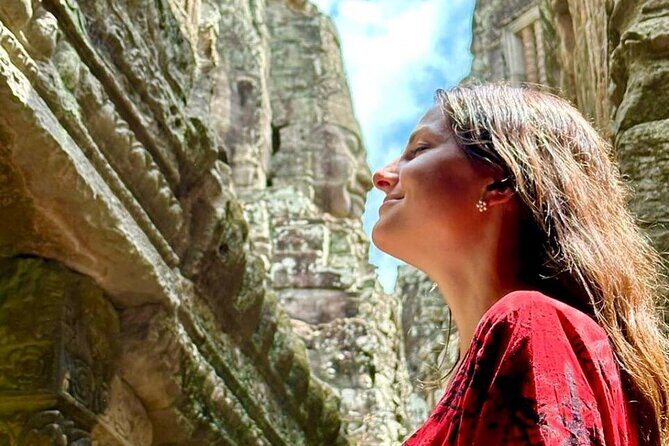
Stop 3: Bayon Temple (1 hour)
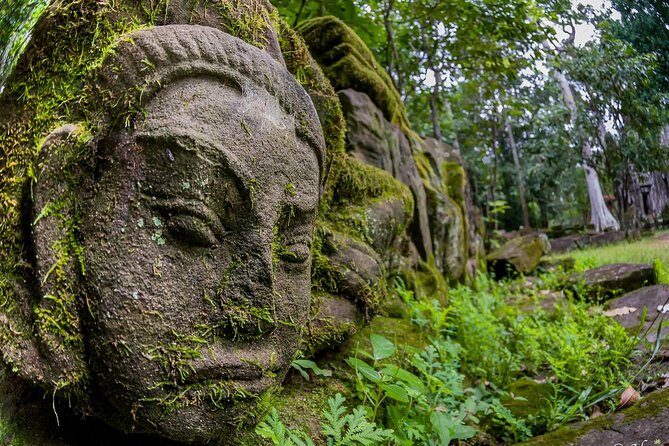
Bayon is famous for its faces, built as the state temple connected to Jayavarman VII’s Mahayana Buddhist vision. I like this stop because it’s decorative in a way that rewards slow looking—stone details that don’t feel like they’re just there for decoration.
Stop 4: Ta Prohm (1 hour)
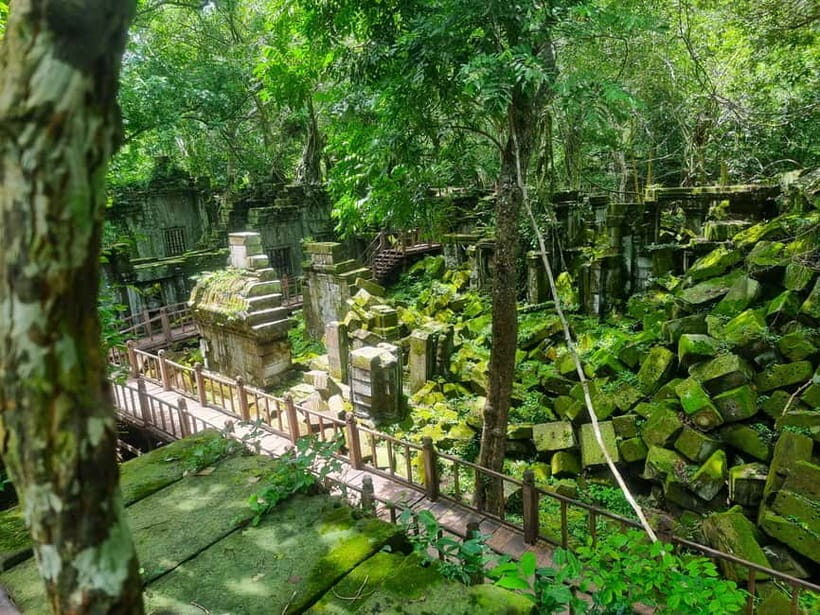
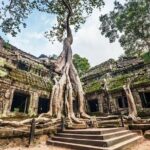
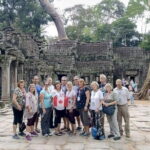
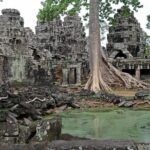
Ta Prohm is the temple that feels like time paused mid-story. The famous overgrowth and dramatic ruin setting make it one of the most atmospheric places at Angkor. The guide’s job here is important: you’ll want to understand what you’re looking at besides the obvious photo spots.
Stop 5: Ta Nei Temple (40 minutes)
Ta Nei is smaller, but that’s the point. This stop gives you variety without forcing you to jump to the next giant structure every few minutes. Dedicated to the Buddha during the period of Jayavarman VII, it adds another layer to the site’s spiritual timeline.
Stop 6: Terrace of the Elephants (15 minutes, free)
This terrace sits within Angkor Thom, and even a short visit can be useful. It’s a strong way to close the day by connecting the court-like spaces of Angkor Thom with the decorative style of the era.
What I’d watch for on Day 1: heat and fatigue. You’ll likely walk a lot before midday, and the best moments can still require standing still while you look up. Wear shoes that grip well, and plan to take small breaks rather than pushing through every photo.
Day 2 Details: Banteay Srei, Preah Khan, Neak Pean, and the Sunset Climb
Stop 1: Banteay Srei (2 hours)
Banteay Srei is known as a standout temple stop in the Angkor area, dedicated to Shiva and dated to the 10th century. This is a full two-hour block, so you’ll have time for the carvings and for the way the site changes as you move around. If you love detail work in stone, this is one of the best places for your effort.
Stop 2: Preah Khan (1 hour)
Preah Khan was built in the 12th century for Jayavarman VII and was designed to honor his father. It’s another stop that adds context: you’ll see how the complex is arranged and how the Khmer kings tied their politics and belief systems into temple-building.
Stop 3: Neak Pean (30 minutes)
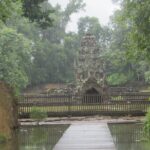
Neak Pean is different because it’s associated with an artificial island and a circular temple arrangement in relation to Jayatataka Baray. This stop is short, but it’s memorable if you like temples that feel more symbolic than purely decorative.
Stop 4: Ta Som (35 minutes)
Ta Som is smaller and tends to feel quieter. That makes it a good breather stop after the bigger complexes, while still staying in the historical circuit flow.
Stop 5: Eastern Mebon (40 minutes)
Eastern Mebon is another 10th-century temple, built under Rajendravarman. The interesting part is the setting on what was once an artificial island in the center of a now-dry area, which you’ll appreciate more with a guide narrating the layout.
Stop 6: Phnom Bakheng (1 hour)
This is where the tour’s sunset magic happens. Phnom Bakheng is a Hindu and Buddhist temple mountain, built at the end of the 9th century, dedicated to Shiva. Watching sunset here is the reason people choose a two-day format, because the timing and the feel matter as much as the stone itself.
One consideration for sunset: you’ll want to be ready for a climb and crowd flow at the viewpoint. Bring water, use sunscreen, and expect that you’ll need to stand and wait for the best light.
What’s Included, What’s Not, and Where the Money Goes
The price is $134.00 per person for a private 2-day experience, and it includes several practical things:
- Professional English-speaking tour guide
- Air-conditioned vehicle for transport
- Free hotel pickup and drop-off in the city
- Bottled water
- Sightseeing as specified, plus a mobile ticket
What’s not included is just as important for budgeting: breakfast, lunch, and drinks, plus recommended tipping for the guide and driver, and travel insurance.
Then there are temple entrance fees. The tour lists an Angkor Pass (3-day pass) at $62.00 per person as the entrance fee you’ll pay separately. If you add that, your likely total is $196 per person before meals and tips. That’s not cheap, but it’s fairly normal for Angkor experiences that include private transport and guided timing for sunrise and sunset.
For value, the key question is whether you want a guide-led route that hits both sunrise and sunset without you wrestling with logistics. If you’re not excited about planning and navigating those temple circuits on your own, this setup is often worth it.
You can also read our reviews of more evening experiences in Siem Reap

Guide, Pickup, and Private-Group Comfort in Siem Reap
The tour is private, meaning it’s only your group. That matters at Angkor because pacing is everything. When you have time pressure, it usually means people rush, photos turn into blur, and you miss details. With a private guide, you can stop when something grabs your attention.
Transport is air-conditioned, and you’ll get free pickup and drop-off at city hotels. That sounds simple, but it’s a big deal when you’re doing two long days and early timing. You’ll feel the benefit in the late afternoon, when heat and fatigue tend to hit.
One guide name that comes up is Tann. In the way he’s described, he’s careful and prepared—exactly what you want when your day depends on sunrise and sunset timing.
Tickets, Dress Code, and the Rules That Can Slow You Down
You’ll need to plan for the Angkor Pass separately since entrance fees aren’t included in the base tour price. The good news is you have options: entrance fees accept Visa cards, and the pass can be purchased on the day of the tour just before sunrise.
That means you don’t have to guess weeks ahead and wonder if you bought the wrong thing. Still, sunrise days can move fast, so build in a little breathing room for payment lines and whatever the day’s flow looks like.
Dress code is strict at Angkor. You’ll need respectful clothing that covers your shoulders and knees. The tour specifically notes that a real dress scarf is required (and other options aren’t accepted), so I’d pack one you know works.
Also, drones at the temples are not allowed. Permission has to go through APSARA, so don’t assume you can fly anything just because you have a device.
Practical Tips for a Smooth Sunrise/Sunset Schedule
The two-day format means you’ll deal with early mornings twice—once for sunrise at Angkor Wat, and again because your schedule starts early enough to catch the golden hour window. If your hotel offers breakfast, you can request a breakfast pack and eat after sunrise at Angkor Wat. That’s a smart way to avoid skipping food during the most intense part of the day.
Since lunch isn’t included, decide your meal strategy before you go. Either pack snacks you can handle in heat, or plan on buying something simple during your travel time between stops. Either way, you’ll have an easier day if you’re not trying to hunt for food when you’re already tired.
For temple walking, wear shoes you trust. Angkor paths can be uneven, and you’ll be standing still to look up at carvings. Bring sunscreen and a hat if you use them—sun is part of the Angkor tax, no matter how good the shade looks in your photos.
Finally, don’t underestimate water and slow pacing. This tour includes bottled water, but it doesn’t include unlimited drinks. Plan to sip steadily, not in one big gulp after you’re already overheated.
Who This Private Tour Fits Best
This tour is a great match if you want a high-touch guide and a clean itinerary that hits Angkor Wat and then continues into the rest of the site without dead time. It’s also a good fit for couples and small groups who want to travel comfortably in an AC vehicle instead of piecing together rides.
If you’re the type who hates missing the golden-hour moments, the sunrise-at-Angkor-Wat and sunset-at-Phnom-Bakheng plan is hard to beat. If you prefer very slow museum-style pacing, you might still enjoy it—but you’ll want to be mentally prepared that temple days have a lot of walking and a lot of standing.
Should You Book This Angkor Wat Sunrise and Sunset Private Tour?
I’d book it if you want an efficient two-day Angkor plan with sunrise and sunset as real priorities, not side quests. The combination of private comfort, an English-speaking guide, and a route that includes both the central Angkor zone and circuit temples is exactly what makes this worth choosing over a loose itinerary.
I’d think twice if you’re on a tight budget once you add the Angkor Pass, or if you prefer to travel completely on your own schedule and don’t care about sunrise/sunset timing.
If you want Angkor to feel organized—while still leaving room to look closely—this is one of the more practical ways to do it.
FAQ
Is hotel pickup and drop-off included?
Yes. The tour includes free pickup and drop-off at city hotels, plus transportation by air-conditioned vehicle.
Is this tour private?
Yes. It’s a private tour/activity, so only your group participates.
What’s included in the $134 per person price?
The price includes a professional English-speaking guide, AC transportation, bottled water, sightseeing as specified, and free hotel pickup and drop-off. It also includes a mobile ticket.
Do I need to pay temple entrance fees separately?
Yes. Entrance fees are not included in the tour price. The tour lists the 3-day Angkor Pass at $62.00 per person.
Can I buy the entrance pass on the day, before sunrise?
You can. Entrance fees accept Visa cards and can be purchased on the day of the tour just before sunrise.
Are breakfast and lunch included?
No. Breakfast, lunch, and drinks are not included. If your hotel includes breakfast, you can request a breakfast pack to enjoy after sunrise at Angkor Wat.
What dress code do I need to follow?
You need respectful clothing that covers your shoulders and knees. A real dress scarf is required, and the tour notes that it won’t allow other scarf options.
Are drones allowed at the temples?
Drones are not allowed at the temples. If you want to fly one, permission has to be requested from APSARA, per the tour info.
What if I need to cancel?
Free cancellation is available. You can cancel up to 24 hours in advance of the experience for a full refund. If you cancel less than 24 hours before the start time, the amount paid won’t be refunded.