Three and a half hours can change how you see Siem Reap. This private tour gives you a real feel for daily life and Khmer culture, starting in the Old Market/French Quarter and moving through key religious and local landmarks. I especially liked the stop at the A.D. 1371 Buddhist monastery and the chance to understand how monks live, not just what temples look like.
My other favorite part is how the tour connects history and today through hands-on craft stops like Satcha Handicraft Incubation and the local Made in Cambodia market. The one drawback to keep in mind: the route is short and time-boxed, so you may move mostly by tuk-tuk, and the exact stops can shift a bit depending on what you want to prioritize that day.
In This Review
- Key highlights to know before you go
- A 3.5-hour plan that actually helps you navigate Siem Reap
- What you’ll notice right away
- Old Market and the French Quarter area: your best first “map in real life”
- Why this matters
- The A.D. 1371 monastery stop: learning monk life in a real setting
- Timing and tone
- Royal Residence and Big Bat Park: royalty past, nature present
- A practical tip
- The “long-boat” monastery and village-style stops: where the city feels closer
- The value here
- A hidden 10th-century brick temple: small ticket, big perspective
- What to expect
- Satcha Handicraft Incubation and Made in Cambodia market: craft with a purpose
- How to shop smart (and not overspend)
- Apopo Rat Center: the $10 add-on worth considering
- A quick decision rule
- How transportation and walking usually work (and why your comfort matters)
- Price and value: what you’re really getting for $39
- Why the private format helps
- What to bring so the day feels easy
- Who this tour is best for
- Should you book this Siem Reap private city tour?
- FAQ
- How long is the Siem Reap city hidden gems private tour?
- What does the tour cost?
- Is pickup included?
- Is this a private tour?
- Are tickets included?
- Do I need to pay for Apopo Rat Center in advance?
- Is the tour in English?
- What should I bring?
- Can I cancel for a refund?
Key highlights to know before you go
- A short private orientation: 3.5 hours to get your bearings fast, without a big group
- Monastery life, not just architecture: you’ll see how monk routines shape the area
- Local markets and workshops: Satcha crafts and a Made in Cambodia market stop
- A mix of temples and everyday places: from brick temple sites to nearby village-style stops
- Apopo Rat Center is optional: plan for an extra $10 per person if you want it
- Tuk-tuk + short walks: expect some driving between stops, not a full walking tour
A 3.5-hour plan that actually helps you navigate Siem Reap
This tour is built for people who want more than a quick photo stop. You get a private guide and a driver, which matters in Siem Reap because distances add up fast and the city can feel like a maze if you’re only using maps. In a half-day, you’ll see a sequence of religious sites, local neighborhoods, and craft-focused places that show what the city is like outside the big Angkor circuit.
The best part for me is the pacing. You’re not trying to cram ten major attractions into one day. Instead, you’re building context: what you’re looking at, why it matters, and how it fits into modern Cambodian life.
You can also read our reviews of more guided tours in Siem Reap


What you’ll notice right away
Your route starts with the Old Market area (plus the French Quarter feel nearby). From there, you keep moving toward temples and monasteries, then into daily-life stops like workshops and local enterprises. It’s a smart mix because it helps you understand Siem Reap as a lived-in city, not just a gateway to ruins.
Old Market and the French Quarter area: your best first “map in real life”
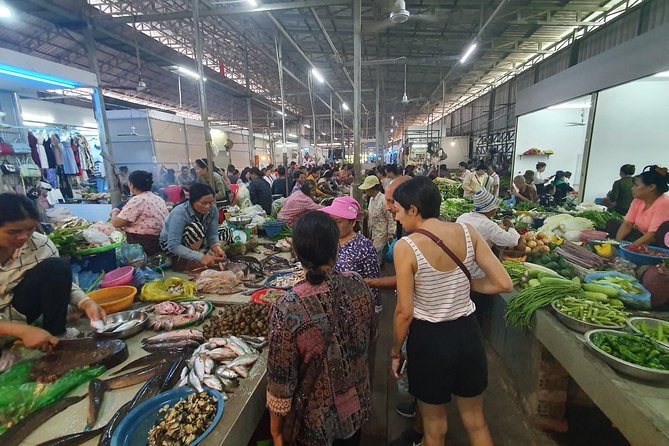
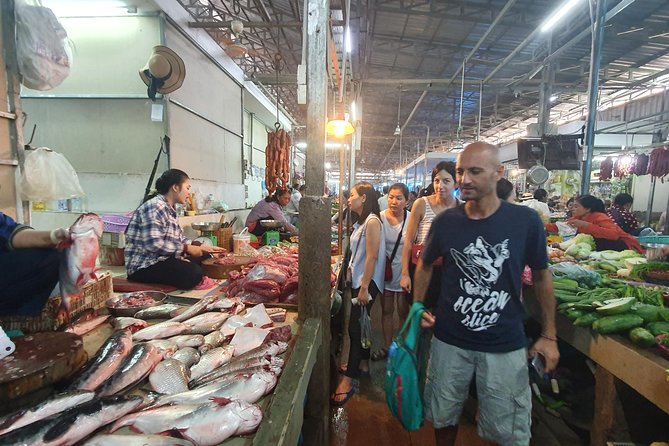
The tour begins in the Old Market area (Psa Chas), and this is a great starting point because it’s where you can feel the city’s layers at street level. Even if you’ve been to Siem Reap before, you’ll usually learn something new here just from what’s around you—stalls, movement, and the way people use the area day-to-day.
A short guided walk (about 20 minutes for this section) is enough to orient you without dragging. Your guide can point out what the market zone is known for and how it fits into the broader city layout.
Why this matters
If you want to explore on your own later, this early stop is practical. You leave with a mental picture of where things cluster, and you’re more likely to navigate confidently afterward—especially for evenings when you’re deciding where to eat or wander.
The A.D. 1371 monastery stop: learning monk life in a real setting

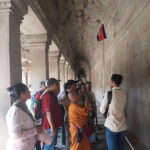
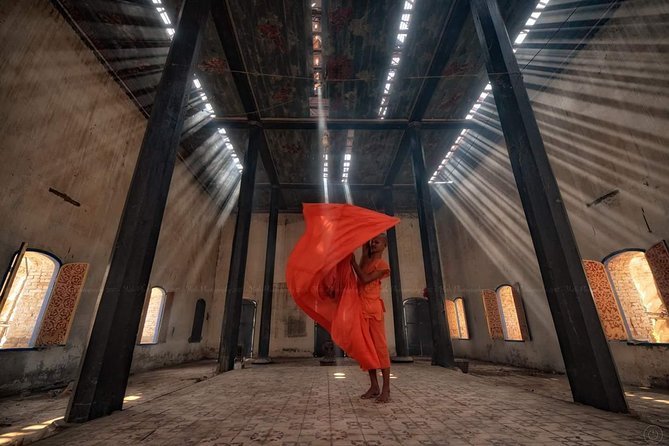
One of the most memorable parts of this tour is the visit to one of the oldest Buddhist monasteries, dating to A.D. 1371. This is not just a “look and go” structure. You’ll spend time where religious life is still part of the daily rhythm, and the guide explains the role of monks and what daily routines typically involve.
That monk-life context is where this tour goes beyond landmarks. You’re not only seeing what the site looks like—you’re getting the why behind the space.
You can also read our reviews of more city tours in Siem Reap



Timing and tone
Expect a calm, respectful atmosphere. Bring patience for slower moments. Religious sites are rarely about speed, and your guide’s job is to help you understand what you’re seeing rather than rush you through.
Royal Residence and Big Bat Park: royalty past, nature present
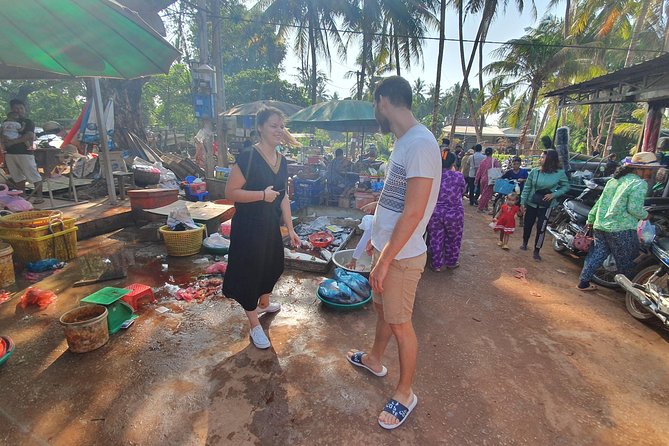
After the monastery, you’ll head toward the Royal Palace Residence area. This stop gives you a different angle on Siem Reap. Temples often get all the attention, but the royal zone helps show how power and culture have shaped the city over time.
Then comes Big Bat Park, which adds a natural element to the day. It’s the kind of stop that breaks up the more formal temple atmosphere with something more observational and local.
A practical tip
This is a short tour. Wear comfortable shoes even if you’re using tuk-tuk, because you’ll still have moments where you’ll be standing and walking through site areas.
The “long-boat” monastery and village-style stops: where the city feels closer

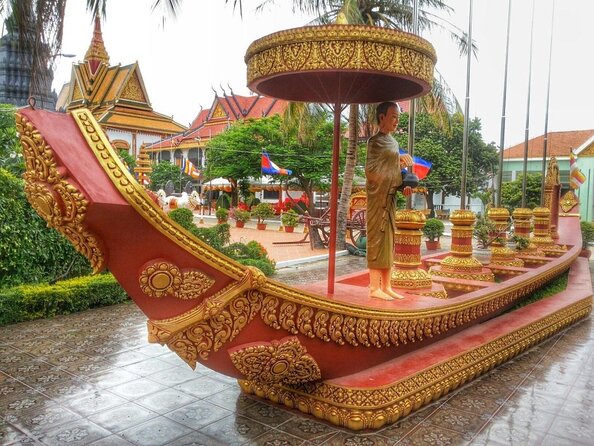
A standout part of the itinerary is a local monastery connected with a long wooden boat that can accommodate 76 rowers. That detail isn’t just trivia. It hints at how community life and spiritual life can overlap in Cambodia—especially around water, gatherings, and local traditions.
From there, the tour also includes a local school and tiny village stop on the way. This helps shift the focus from big monuments to what everyday learning and community life looks like nearby.
The value here
This is the part that often makes a city tour feel meaningful. You see how people live right around the places tourists usually rush past. It’s one thing to read history; it’s another to see a school setting and feel the scale of local neighborhoods.
A hidden 10th-century brick temple: small ticket, big perspective
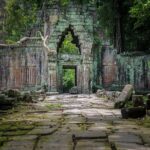
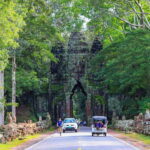
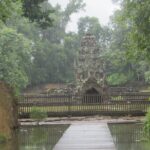
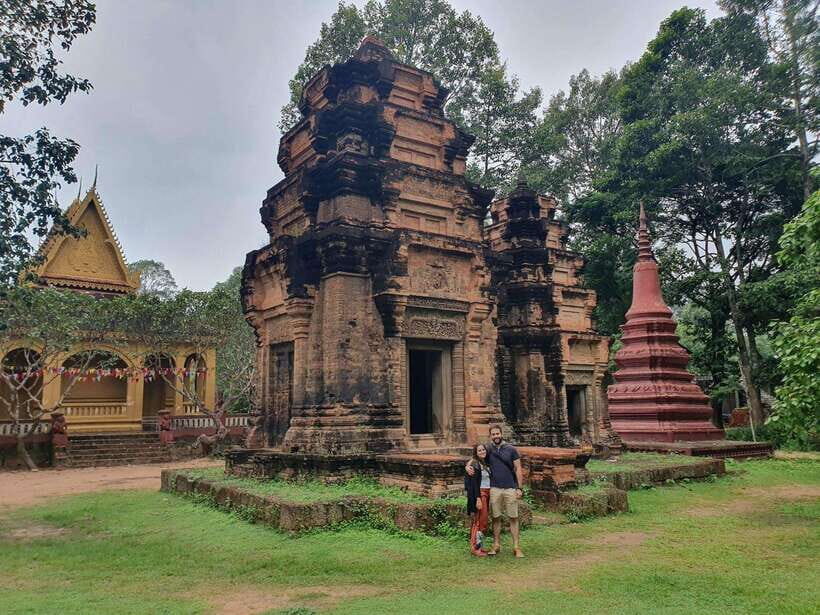
You’ll also visit a 10th-century brick temple site that does not require tickets. A brick temple can be easier to appreciate than grand stone monuments because the details are often more intimate—materials, wear, and layout that show age.
This is the kind of stop that works well with a private guide, because the guide can help you interpret what you’re seeing instead of leaving you to guess.
What to expect
You’re not going to spend all afternoon here. It’s short and focused, which keeps the day flowing. If you like archaeology and architectural texture, this will be a good match.
Satcha Handicraft Incubation and Made in Cambodia market: craft with a purpose
Two stops in particular give the tour a modern Cambodian heartbeat: Satcha Handicraft Incubation and the Made in Cambodia Market (a local enterprise stop).
At Satcha, you’ll see how handicraft skills are supported through an incubation approach, which means it’s not just shopping. It’s more like witnessing how livelihoods are developed.
Then at the Made in Cambodia market, you get the chance to see local products in a structured setting—useful if you want to buy without wandering into random souvenir chaos.
How to shop smart (and not overspend)
Bring cash and pace yourself. Craft shops often have multiple price tiers depending on materials and size. If you’re not sure what something should cost, ask your guide to point out what’s typical for locally produced items versus novelty goods.
And if you’re sensitive to shopping pressure, tell your guide early. With a private setup, you can keep it light and still enjoy the craft stops.
Apopo Rat Center: the $10 add-on worth considering
The Apopo Rat Center is optional and costs $10 USD per person. The value is emotional and educational: these rats are trained to help clear landmines by detecting dangerous areas, which turns a strange-sounding idea into a serious real-world benefit.
If you care about impact, this is the most “meaningful mission” style stop on the route. If you’d rather spend your limited time on temples, markets, and more traditional city life, it’s also easy to skip.
A quick decision rule
If you like learning about humanitarian technology and want one non-temple highlight, add it. If you’re here mainly for religious and historical sites, you may prefer keeping the day lean.
How transportation and walking usually work (and why your comfort matters)
The tour is about 3.5 hours and includes both vehicle movement and short on-foot portions. Even though a portion may be described as walking, expect that tuk-tuk hops are part of the reality of covering multiple sites quickly in Siem Reap.
This matters if you:
- have limited mobility
- dislike heat and want fewer sun hours outdoors
- prefer a gentle pace
If walking is a deal-breaker for you, tell your guide from the start so they can adjust the balance of stops where possible.
Price and value: what you’re really getting for $39
At $39 per person, this tour is priced like a focused city half-day with private support. What pushes it toward good value is that many costs are already wrapped in:
- private guide
- driver
- included tickets for the scheduled attractions
- cool drinking water
- taxes
The main add-on is Apopo at $10 per person. If you choose to include it, you should mentally budget a total of $49 per person.
Why the private format helps
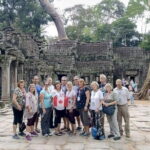
A group tour can be great in Angkor, but in-town, the private setup pays off because you can ask questions and spend a little more time where your interests land—like monasteries, craft workshops, or temple architecture. In a short tour, that flexibility is often what turns a checklist outing into a story you’ll remember.
What to bring so the day feels easy
This is a practical tour, but Siem Reap weather and sun still matter. Bring:
- a hat
- camera
- cash (handy for craft purchases and the Apopo optional ticket)
- scarf (useful for temples and for sun/wind)
- hand sanitizer or tissues
I also suggest a small bottle of water if you tend to get thirsty. The tour includes cool drinking water, but having a little extra helps keep you comfortable.
Who this tour is best for
This fits best if you:
- want a short way to understand Siem Reap city life beyond markets
- like monasteries, craft workshops, and local neighborhoods
- prefer private guidance over a big group
- want a half-day plan before or between Angkor temple visits
It’s also a good “first day in town” option. You’ll come away with a map in your head and a better sense of what kind of wandering you’ll enjoy next.
Should you book this Siem Reap private city tour?
I think it’s worth booking if you want a guided orientation that mixes temples with real-life parts of Siem Reap—monastery life, local craft, and the kind of stops you’d miss if you tried to plan everything yourself. The $39 price is fair when you consider the private guide/driver and the included tickets.
I’d be a bit more cautious if you’re strict about a walking-only tour, because the day is built for efficient movement and you’ll likely do tuk-tuk transfers between locations. Also, because the schedule can shift based on timing and your preferences, I recommend you tell your guide what you most want to prioritize before you start—especially if Apopo Rat Center is a must or a hard no.
If you like your travel days organized, calm, and meaningful in small ways, this one fits.
FAQ
How long is the Siem Reap city hidden gems private tour?
It runs about 3.5 hours.
What does the tour cost?
The tour price is $39 per person. Apopo Rat Center is an additional $10 per person if you choose to go.
Is pickup included?
Yes. You’re picked up from your hotel in Krong Siem Reap after booking.
Is this a private tour?
Yes, it’s a private group with a live English-speaking guide and a driver.
Are tickets included?
All tickets to the attraction are included except for Apopo Rat Center.
Do I need to pay for Apopo Rat Center in advance?
Apopo Rat Center is not included in the base tour price. It costs $10 USD per person.
Is the tour in English?
Yes, the guide speaks English.
What should I bring?
Bring a hat, camera, cash, scarf, and hand sanitizer or tissues.
Can I cancel for a refund?
Yes. You can cancel up to 24 hours in advance for a full refund.