REVIEW · SIEM REAP
Private Angkor Wat and Lost Temple Jungle Tour
Book on Viator →Operated by Angkor Daily Trip · Bookable on Viator
Stone faces, jungle roots, big meaning.
This private-style Angkor Wat and Lost Temple tour is built for people who want the headline monuments without losing hours to logistics. You’ll hit Angkor Wat, the many-faced Bayon, and the Tomb Raider-style jungle setting at Ta Prohm, while your guide explains the kings behind the building boom of the Khmer Empire, including rulers like Suryavarman II and Jayavarman VII. In the guide lineup, I see names like Bon Sith and Mr. Somra showing up in customer notes, and that matters because this is a lot of stone to look at without a story.
What I like most is how the day concentrates the top sights with time set aside for actually seeing them, including a full 2 hours at Angkor Wat and solid stretches at Bayon and Ta Prohm. I also like that the tour takes the stress out of moving around Siem Reap with 2-way hotel transfers, plus bottled water along the way.
One thing to keep in mind is cost stacking: the temple entrance pass is extra (a 1-day ticket is listed at $37 per person), and lunch isn’t included, so you’ll want to budget for those before you go.
In This Review
- Key highlights to know before you book
- What this tour really gives you for $40
- Hotel pickup to temple loop: how the logistics feel on the ground
- Angkor Wat: your 2-hour anchor stop
- Angkor Thom South Gate: the quick dramatic threshold
- Bayon: the many-faced center (1.5 hours)
- Thommanon: a smaller pause that adds texture
- Ta Prohm: the Lost Temple jungle moment (1 hour)
- Banteay Kdei: Buddhist architecture with a Bayon-style feel (1 hour)
- Why the guide matters: kings, conversions, and meaning
- Budget reality check: entrance pass and lunch
- Who this tour suits best
- Should you book this Angkor Wat and Lost Temple Jungle Tour?
- FAQ
- What’s the duration of the Private Angkor Wat and Lost Temple Jungle Tour?
- What’s included in the price?
- What entrance fees should I expect to pay?
- Is lunch included?
- Is this tour private?
- Can I cancel and get a refund?
Key highlights to know before you book
- A tight 6.5-hour temple circuit that focuses on Angkor’s most in-demand stops
- Time built in for the big moments, including 2 hours at Angkor Wat and 1.5 hours for Bayon
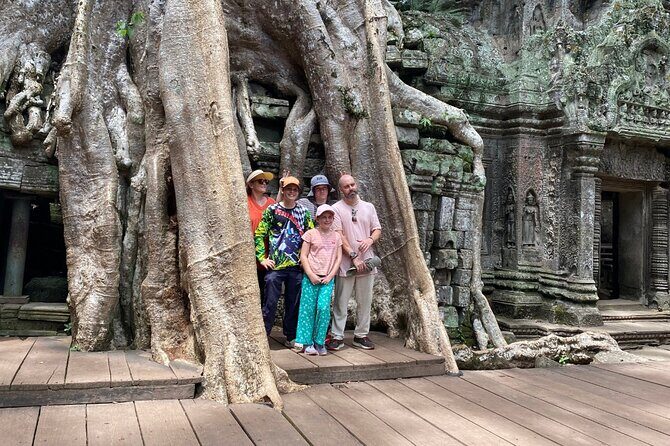
- Jungle drama at Ta Prohm, including the famous tree growing over temple structures
- English guidance with named guides like Bon Sith and Mr. Somra in customer feedback
- Hotel pickup and drop-off with bottled water to keep the day moving
- Entrance fees and lunch are separate, so your final total depends on the Angkor Pass you choose
What this tour really gives you for $40
At $40 per person for about 6 hours 30 minutes, the value is mostly about friction removal. You’re paying for transport, an English-speaking guide, and 2-way hotel transfers, so you spend less time figuring out routes and more time absorbing the temples.
But let’s be honest about the math. The price you see does not cover the temple entrance pass. The tour explicitly lists the 1-day ticket to temples at $37 per person, and lunch is also not included. In other words, your real budget is roughly $40 plus the pass, plus whatever you choose for food.
If you’re going to Angkor for the first time and you’re time-limited, this setup can work well: you get a guided loop through key sites that people usually try to cram into a full day anyway, just without the guesswork.
You can also read our reviews of more private tours in Siem Reap
Hotel pickup to temple loop: how the logistics feel on the ground
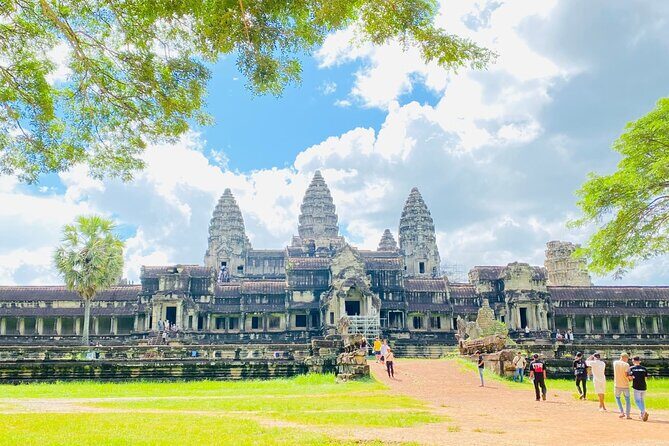
This is designed to start with you being collected from your hotel. The tour offers pickup and drop-off, with transfers from across Siem Reap, plus bottled water.
On the vehicle side, you can choose how you want to travel:
- A traditional tuk-tuk option for the classic feel
- An air-conditioned car option for comfort
- A small-group minivan option if you prefer sharing with others
That choice matters because it affects how tiring the day feels. In general, more comfort helps if you’re managing heat and walking, while tuk-tuks can be slower and more stop-start. Either way, the tour is built around getting you to the right gates and staying on a route through the Angkor complex.
You’ll also be issued a mobile ticket, which is handy for keeping things organized on the day.
Angkor Wat: your 2-hour anchor stop
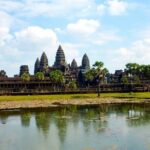
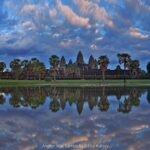
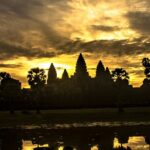
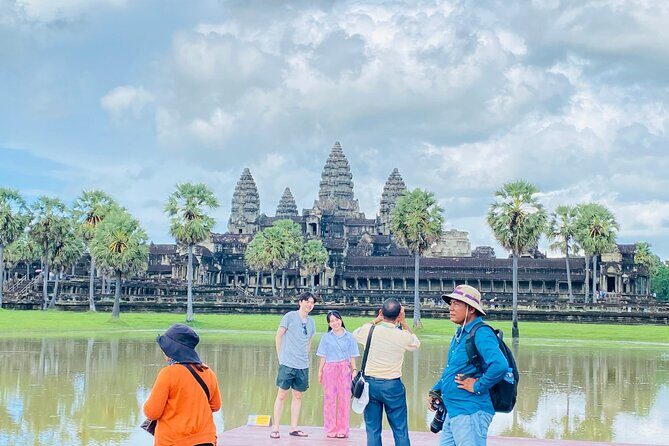
The day begins at Angkor Wat, described here as the largest religious monument in the world. You’re scheduled for about 2 hours, and that timing is a real advantage. Angkor Wat is huge, and if you only get a short visit, you end up just photographing details without time to understand what you’re looking at.
With a guide, the value shifts from scenery to meaning. This is where you’ll get a sense of why the monument is so central to Khmer architecture and belief systems, before the tour moves you outward into other temples and gates.
A practical consideration: entry to Angkor Wat is not included in the tour price. The admission ticket is listed as not included, and your Angkor Pass choice will affect what you ultimately pay.
Angkor Thom South Gate: the quick dramatic threshold
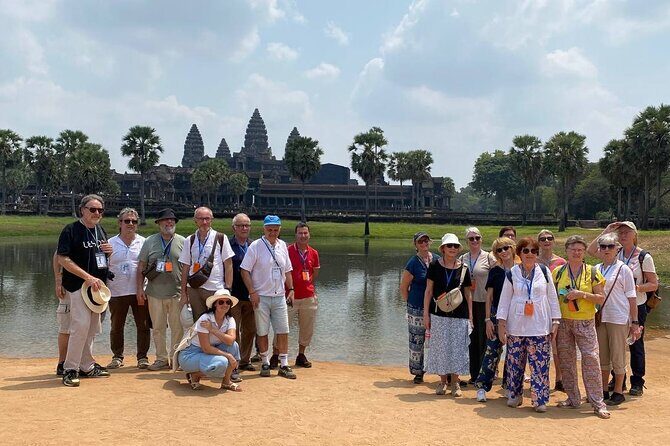
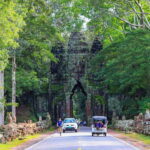
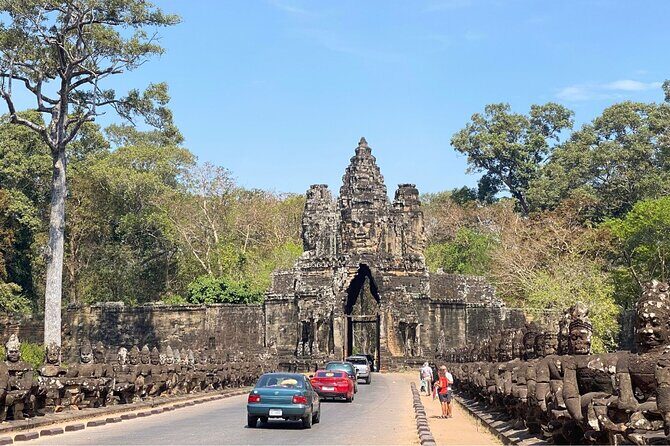
Next up is the Angkor Thom South Gate, a standout landmark in the Angkor Archaeological Park. You have about 30 minutes here, and that’s enough time for the main wow-factor without making the stop feel dragged out.
Why this gate is worth your attention: it’s a pivot point. It sits next to Baksei Chamkrong (as noted in the description), and it helps you get your bearings for the central circuit that follows. If you’re the kind of person who likes understanding spatial layout, this kind of “threshold stop” pays off later when you’re looking at Bayon and the inner areas.
Again, the stop notes admission ticket not included, so plan for the pass to cover your entry into the circuit.
Bayon: the many-faced center (1.5 hours)
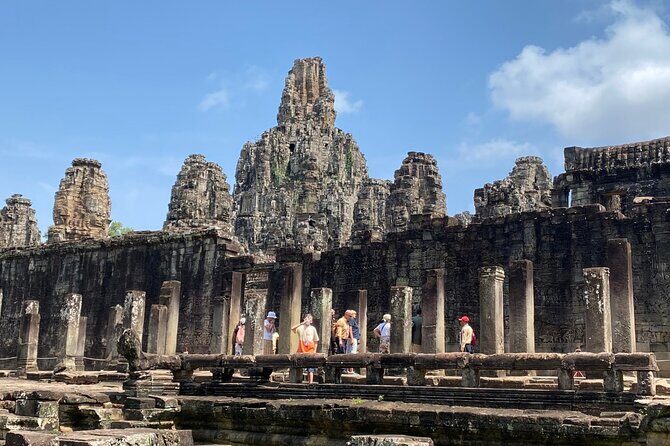
Then you move into Bayon Temple, placed in the center of Angkor Thom. Your time here is about 1 hour 30 minutes, which is generous enough to slow down and actually look.
The description highlights Bayon’s connection to Buddhism and links it to the reign of King Jayavarman VII (late 12th or early 13th century). It’s also identified in the tour overview as the many-faced highlight of the day, which is the whole point of Bayon for most first-timers: you’re not just looking at carvings, you’re looking at a repeating visual theme that changes as you move around.
What I like about giving Bayon time is that it prevents the day from becoming a checklist. With 1.5 hours, you can shift from first impressions to noticing patterns in how the temple presents itself from different angles.
No entrance fee for Bayon is included in the tour listing, so make sure your pass covers it.


Thommanon: a smaller pause that adds texture
After Bayon, the itinerary includes Thommanon, a smaller Hindu temple built during the reign of Suryavarman II. The stop is about 30 minutes, positioned east of the Gate of Angkor Thom and north of Chau Say Tevoda Temple (as described).
This is the kind of stop that can feel optional on a tight schedule, but it often becomes the good kind of contrast. When the day is dominated by big iconic structures, a smaller temple can make the carvings and layout feel more human-scale.
Because the temple is tied to a specific king’s reign, it also helps connect the dots between rulers and architectural changes across the complex. If you came wanting a story, these in-between stops are how you get it.
Admission is again noted as not included.
Ta Prohm: the Lost Temple jungle moment (1 hour)
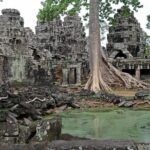
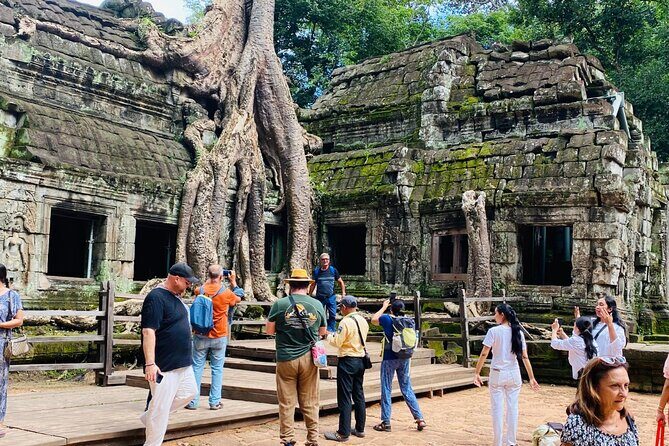
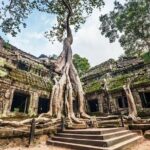
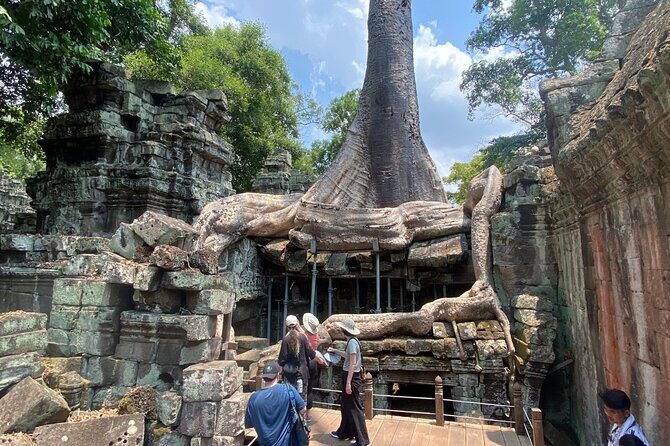
If your trip has one “wow, that’s exactly what I hoped it would look like” stop, it’s usually Ta Prohm. Here it’s called the famous jungle temple, and the description explicitly references its popular role as the Tomb Raider temple used in Angelina Jolie’s movie.
Your time is about 1 hour, which works well because Ta Prohm isn’t just about one view. You’re looking at structures shaped by vegetation, and the famous detail is included in the tour notes: there’s an amazing tree that grows on top of a temple.
This stop is also where the guide helps most. Without context, you can watch the jungle take over and still miss why the temple looks the way it does, or what changes over time you’re actually noticing. With a guide, you get the practical framing to connect the setting to the broader Angkor story.
Admission is not included, so your pass is essential here.
Banteay Kdei: Buddhist architecture with a Bayon-style feel (1 hour)
The next stop is Banteay Kdei, described as a Buddhist temple in Angkor. You’ll have about 1 hour, and the description gives a useful clue about what makes it interesting: its style is said to resemble Bayon architecture, and it’s also compared to designs seen at Ta Prohm and Preah Khan.
That matters because it helps you stop treating each temple like a random individual monument. Instead, you begin to see family resemblances across the complex, like visual accents and recurring design ideas that show up in different places and periods.
If you enjoy recognizing patterns, Banteay Kdei can be more satisfying than it first sounds. It’s not always the first temple people name, but the added connection to Bayon and the 1-hour slot gives it a fighting chance to land.
Admission is not included here either, per the tour info.
Why the guide matters: kings, conversions, and meaning
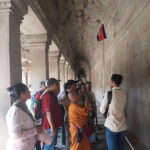
The tour’s main promise is not only temples, but the people who commissioned them. The overview says you’ll learn about the kings who built the monuments, and the itinerary descriptions name two of the biggest figures connected to the stops: King Suryavarman II and King Jayavarman VII.
Here’s what that does for your experience. Angkor can feel like you’re staring at similar-looking stone forever unless someone helps you track change over time and purpose. With a guide explaining why a temple is Hindu or Buddhist, or which ruler is tied to it, your eyes start sorting the details instead of just admiring them.
The customer feedback included guide names like Bon Sith and Mr. Somra, and that lines up with what you want from an English-speaking guide here: clear explanations, good pacing, and a steady sense of what to look for next.
Budget reality check: entrance pass and lunch
The tour price is clear, but the add-ons are just as important.
Not included:
- Lunch
- Entrance fee: 1-Day Ticket to Temples ($37 per person)
- Your Angkor Pass is also described as being at your own expense
So before you commit, I’d do a quick total estimate:
- Base tour price: $40
- Temple pass: $37
- Lunch: variable
That doesn’t make the tour “expensive.” It makes it transparent. You’re paying for transport + an English guide at a relatively low base rate, and you’re paying the official entrance cost separately, which is standard for Angkor.
If you’re trying to keep the day economical, you’ll likely control the remaining variable with food.
Who this tour suits best
This is a strong fit if you:
- Want a guided Angkor highlights loop without spending energy on arranging transport
- Prefer a shorter day around the core sites, not a marathon all-day scramble
- Like understanding the why behind the what, especially with named kings and religious context
It’s also a good choice if you’re bringing a group of friends or family and you want a smoother experience with pickup, bottled water, and a route already planned.
If you’re the type who hates guided commentary and wants total freedom, you might find a fixed itinerary limiting. But for most first-timers, structured time is a feature, not a bug.
Should you book this Angkor Wat and Lost Temple Jungle Tour?
I’d book it if your goal is to see the biggest Angkor icons—Angkor Wat, Bayon, and Ta Prohm—in one efficient day with hotel transfers and an English guide. The schedule is built around meaningful time at key stops, not just quick drive-bys.
I would also book it if you appreciate guided explanations that connect monuments to Suryavarman II and Jayavarman VII. That added context is what turns a pile of temples into a story you can actually follow.
Just go in with one mindset: plan for the $37 per person temple pass and budget for lunch separately. If you do that, the day feels like a solid value for the effort saved and the focus you get.
FAQ
What’s the duration of the Private Angkor Wat and Lost Temple Jungle Tour?
The tour is listed as approximately 6 hours 30 minutes.
What’s included in the price?
The tour includes hotel pick up and drop off, an English speaking tour guide, transportation by tuk tuk, and bottled water.
What entrance fees should I expect to pay?
You’ll pay for the 1-Day Ticket to Temples separately, listed at $37.00 per person. Entrance fees are noted as not included for each stop.
Is lunch included?
No, lunch is not included.
Is this tour private?
It offers options. You can choose a private tour (tuk-tuk or air-conditioned car), or you can choose a small-group tour by minivan. The private option is described as only your group participating.
Can I cancel and get a refund?
Yes. Free cancellation is offered if you cancel at least 24 hours in advance for a full refund. If you cancel less than 24 hours before the start time, the amount paid is not refunded.