Rice fields beat temple crowds. This day trip gives you a real look at daily Cambodian life, with an ox cart ride through countryside lanes and a traditional Khmer cooking class that ends in a homemade lunch you make yourself. It’s a simple formula, and it works.
I like that it’s built around people, not just places: a village walk, a stop at a rural school, and time spent learning from an English-speaking guide like Mr. Pich. One thing to plan for: the countryside can be dusty, so wear closed shoes and expect dirt on the bottom of your legs.
In This Review
- Key Things I’d Book This For
- From Siem Reap at 8:00: getting out of town early
- Village walk: meeting real daily life, not just scenery
- Ox cart ride through the countryside: slow travel with big payoff
- Rural school visit: a quick moment that can mean a lot
- Village market shopping: buying ingredients before you cook
- Traditional Khmer cooking class: learn by doing, not watching
- Homemade lunch you actually made: simple, satisfying, local
- Why the private format matters (especially in the village parts)
- Price and value: $60 for transport, food, and hands-on teaching
- Who should book this countryside cooking experience
- Should you book Savor the Countryside in Siem Reap?
- FAQ
- What time does the tour start?
- How long is the experience?
- What’s included in the price?
- Are drinks included?
- Is the tour private?
- Can the tour accommodate dietary requirements?
- Is there free cancellation?
Key Things I’d Book This For
- Ox cart ride that slows the day down and shows farms the way locals see them
- Khmer cooking class where ingredients are bought first, then turned into lunch
- Hotel pickup and drop-off from central Siem Reap so you don’t waste time getting there
- Village school visit for a quick, human connection outside the city
- Private tour setup that keeps the guide’s attention on your group
From Siem Reap at 8:00: getting out of town early
This tour runs like a classic countryside day: you start around 8:00am after breakfast, and your driver picks you up from your Siem Reap hotel. The early start matters. You’ll trade city traffic for country roads while the day is still calm, and you’ll arrive at the village before it gets too busy.
The transport is included, which is a big value point in Siem Reap. Getting out to rural areas on your own can mean juggling tuk-tuks or renting a vehicle and then figuring out timing. Here, you just show up, and the day flows.
Your schedule is also built for comfort. It’s a full day, but the activities change often—walking, a ride, a school visit, then cooking. If your goal is to get variety without running yourself ragged, this format helps.
You can also read our reviews of more cooking classes in Siem Reap

Village walk: meeting real daily life, not just scenery
The day begins with a walk through a local village, where you get chances to meet villagers as you go. This is one of the most meaningful parts because it’s not staged like a market show. You’re moving through normal routines—homes, paths, and everyday village life.
The guide’s translation and explanations are important here. Cambodia is a country where small details carry meaning, like how people talk, how work is organized, and how daily life is structured around family and farming. When your guide helps connect the dots, the village visit turns from scenery into understanding.
A practical note: village walks are usually not fancy-smooth walking. Wear shoes you don’t mind getting dusty. Also keep your phone for photos, but spend real time looking too. The best part is the simple back-and-forth—people noticing you, you noticing them.
Ox cart ride through the countryside: slow travel with big payoff
After the walking section, you hop into an ox cart ride through the village area. This isn’t just a photo stop. It changes your pace. You’ll see nearby farms and the way land is used, and you’ll feel the rhythm of rural travel—slow enough to notice the surroundings.
The ox cart is also one of those activities that works well for mixed groups. Families with kids tend to enjoy it because it’s different. Adults tend to like it because it adds context to the place you’re visiting. It’s one of the clearest “you are here” moments on the itinerary.
Drawback? Expect a bit of dust and uneven ground. Don’t plan on having perfectly clean clothes by midday. And if you’re sensitive to bumps, keep that in mind for comfort and posture during the ride.
Rural school visit: a quick moment that can mean a lot
A highlight of the day is a visit to a local rural school, where you can meet the students and teachers. This stop is brief, but it’s real. It gives the day a human anchor beyond food and transport.
This is also where a good guide really matters. An English-speaking tour guide can translate what’s happening and explain local school life in a way that feels respectful. You’re not just looking at kids at a distance—you’re having the chance to interact, and that interaction helps your day feel grounded.
If you’re traveling with teenagers or kids, this school visit can be a strong “we’re learning something together” moment. It tends to shift the day from sightseeing into connection.
Practical tip: bring a friendly, calm attitude. The aim is to be present, not to treat it like a performance. When the moment is right, a smile and a simple greeting go a long way.
Village market shopping: buying ingredients before you cook
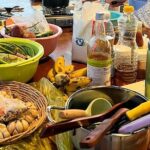
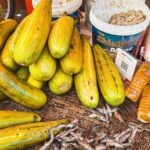
Before the cooking class, you’ll go to the local market to buy ingredients for your dishes. This is more than a shopping errand. It’s the part where Khmer cooking starts making sense, because you learn what’s used locally and how ingredients are chosen.
You’ll also see the difference between “ingredients in a cookbook” and ingredients in real life. Market ingredients are seasonal, available locally, and chosen by what people actually cook. When you buy them on-site, your cooking class becomes a practical lesson, not a demo.
One thing to note: the tour includes ingredients for the cooking class and lunch. Drinks aren’t included, so plan accordingly. If you’re sensitive to heat, you’ll be happier with water on hand.
And if you have dietary needs, tell the organizer ahead of time. The tour states they can accommodate special dietary requirements if you let them know.
You can also read our reviews of more tours and experiences in Siem Reap
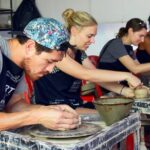
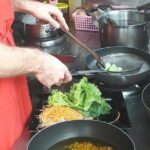
Traditional Khmer cooking class: learn by doing, not watching
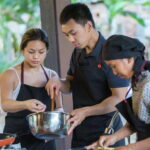
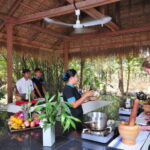
Here’s where the day becomes hands-on. After you shop, you’ll be shown how to prepare ingredients and taught how to cook a traditional Khmer dish. Your guide stays with you at all times to explain culture and traditions, and to translate as you work.
Don’t worry if you’re not confident in the kitchen. The structure is built for beginners: you start with ingredient prep, you follow steps, and you learn what each part is for. The guide’s role is key. You’re not left guessing, and you’re not just copying motions without understanding.
The cooking class also has a “why” layer. Khmer cuisine is shaped by local habits—what grows nearby, what flavors are common, and how meals are built around balance. Even without naming every spice in a technical way, you’ll understand how flavors work together once you’re chopping and stirring.
Possible drawback: it can feel warm and active. You’ll be standing and working for a while, so wear breathable clothes. If your mobility is limited, mention it early so the guide can suggest ways to participate comfortably.
Homemade lunch you actually made: simple, satisfying, local
After cooking, you’ll eat your homemade lunch once you finish preparing it. This meal feels different than a restaurant plate because you understand what went into it. You’ll taste your work, literally.
Lunch is included, which is a major value perk. In Siem Reap, food can range from cheap to tourist-priced fast. Including lunch means you control one big cost while still getting an experience that feels personal.
Also, remember drinks aren’t included. If you like tea or soft drinks with meals, you may want to plan to buy them separately. Just don’t leave it until you’re already hungry.
Why the private format matters (especially in the village parts)
This is listed as a private tour/activity, meaning only your group participates. That sounds like a marketing line, but here’s why it matters in practice: village walks and school visits can be unpredictable. When the tour isn’t managing multiple groups, the guide can adjust timing, pace, and attention.
The private setup also helps with translation. If you have questions about what you see—how people live, what schools are like, or why ingredients are used—the guide can answer without rushing you.
Reviews include a guide named Mr. Pich, and the descriptions point to thoughtful attention to the family group. That’s the kind of service that makes the day feel smooth. You’re not just getting a driver—you’re getting context.
One consideration: private tours can feel more intense because it’s your group the guide is focused on. If you want a casual, low-interaction vibe, you’ll still get it—but you might prefer a smaller group or book with that energy in mind.
Price and value: $60 for transport, food, and hands-on teaching
At $60 for about a day, the value depends on what you’d otherwise pay to recreate the same day. Here, your ticket includes transport, ingredients, an English-speaking guide, an ox cart ride, and lunch.
That’s a lot bundled. Even if you like going out on your own, costs add up quickly:
- transport to the countryside
- paying for guided explanations (especially at the school and village)
- paying for a cooking class
- lunch
This package solves the “busywork” problem. You spend the day doing activities, not planning each step. For families and groups, it’s also a way to turn one day into a story you can remember—village life, school interaction, and cooking all in one outing.
If you’re trying to maximize time in Siem Reap without adding too many separate tours, this is a strong choice. It’s also a nice balance if you’re temple-heavy during the rest of your trip.
Who should book this countryside cooking experience
This tour is a great fit if you want:
- cultural context outside Angkor and the city center
- an active day that still feels friendly and manageable
- a cooking experience tied to ingredients you buy locally
- a day that works across ages, including kids and teens
It may be less ideal if:
- you hate any dust or rougher outdoor conditions
- you want purely indoor activities
- you’re short on time and need something with fewer moving parts
For most people, the best approach is to treat this as a whole-day cultural experience. Don’t schedule it like an add-on. Put it on a day when you can enjoy the pace.
Should you book Savor the Countryside in Siem Reap?
If you want a day that feels local—village life, rural school time, and a Khmer cooking class that ends with lunch you made—book it. This is the kind of tour that gives you both understanding and a practical skill: you learn how the meal comes together, not just what it tastes like.
Choose it with two things in mind: comfort (closed shoes for dust) and expectations (it’s a countryside day with real outdoor movement). If you can handle that, you’ll come away with a calmer, more human side of Cambodia than a temple-only itinerary.
FAQ
What time does the tour start?
The tour starts at around 8:00am.
How long is the experience?
It’s listed as 1 day (approx.).
What’s included in the price?
The tour includes transport, ingredients for the cooking class, an English speaking tour guide, an ox cart ride, and lunch.
Are drinks included?
No. Drinks aren’t included.
Is the tour private?
Yes. It’s a private tour/activity, and only your group participates.
Can the tour accommodate dietary requirements?
Yes. If you tell them about any special dietary requirements, they will accommodate you.
Is there free cancellation?
Yes. You can cancel for a full refund up to 24 hours in advance of the experience start time.