REVIEW · SIEM REAP
Cambodian Cooking Class from Siem Reap
Book on GetYourGuide →Operated by Beyond. Unique Escapes · Bookable on GetYourGuide
Your dinner starts in a Khmer kitchen garden.
This 3.5-hour Siem Reap experience has you leaving town by tuk-tuk, getting a real feel for village life, and then cooking in an outdoor setup by a pond. You’ll walk through the community, meet a local family, and see how Khmer households grow and use everyday herbs and vegetables before you head to your cooking station.
I love that it’s truly hands-on: everyone gets their own cooking setup and works step-by-step with an English-speaking chef and guide (people like Sophia Lauren have led groups, and chefs such as Prey/Prayer have run sessions). I also love the food payoff. You’re not just tasting Khmer staples—you’re learning how to make dishes like fish amok (smooth curry cooked in young coconut) and Cambodian curry, which tends to be spiced but not fire-breathing hot.
One thing to plan for: you’ll do a short walk in the village area and the sun can feel strong. Bring a hat and comfortable shoes, especially if you go in the warmer months.
In This Review
- Key things that make this class worth your time
- Tuk-tuk out of Siem Reap and into real food country
- The family and garden stop: where Khmer cuisine starts
- Outdoor cooking pavilion: your station, your pace, your dishes
- Morning class menu: mango salad, fish amok, and sticky sweetness
- Afternoon class menu: sugar-cane fish, Cambodian curry, and nom tong noun
- What you actually learn (beyond the recipes)
- Value check: $32 for a half-day that includes the work and the meal
- Practical tips before you go
- Who this Siem Reap cooking class is best for
- Should you book this Cambodian cooking class from Siem Reap?
- FAQ
- How long is the Cambodian Cooking Class from Siem Reap?
- What’s the price per person?
- Do I get picked up in Siem Reap?
- Is lunch included?
- How many dishes do I cook during the class?
- What dishes are included in the morning class?
- What dishes are included in the afternoon class?
- Are there recipe materials to take home?
- How big are the groups?
- Can kids join?
Key things that make this class worth your time
- A village visit first, cooking second: you start with family life, gardens, and herbs you’d actually find in a Khmer home
- Small groups (max 6): easier questions, slower pace, and more instructor attention
- Your own station: no standing on the side—everyone chops, stirs, and cooks
- Cambodian classics with real technique: fish amok, curry, and dessert options made the Khmer way
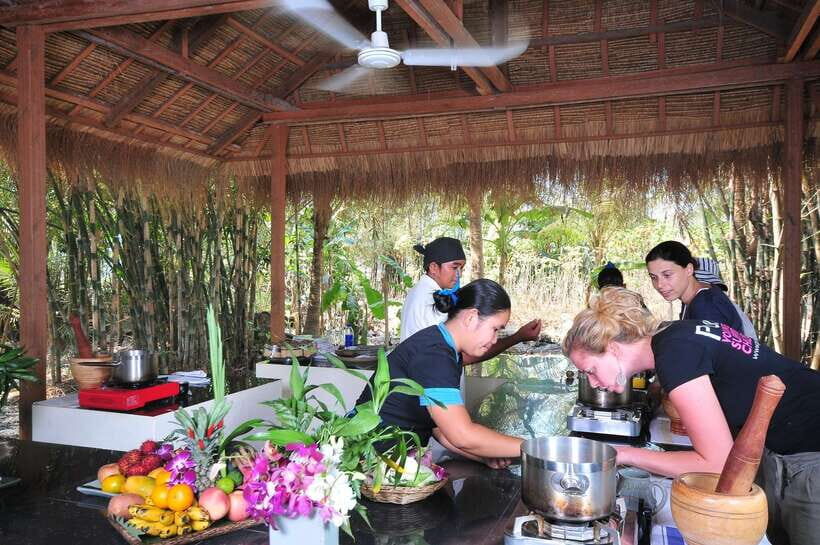
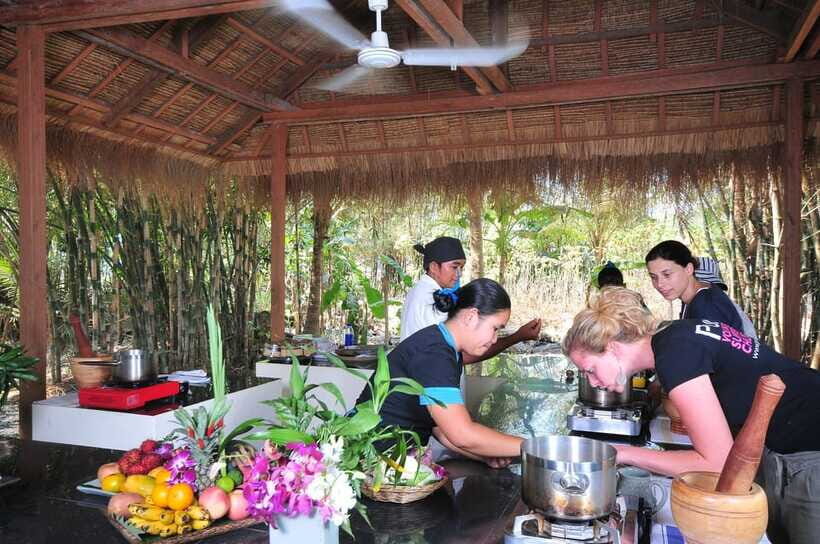
- Food served in a calm outdoor setting: a wooden pavilion over a pond as your dishes come out one by one
- Take-home recipes: a recipe card/book so you can repeat the dishes later
Tuk-tuk out of Siem Reap and into real food country
Siem Reap is busy, and after a few days of temples and tuk-tuks, it’s nice to have an activity that feels like Cambodia beyond the tourist map. This class does that by starting with a quick ride outside the city and shifting you into a rural village rhythm.
The tuk-tuk pickup matters more than it sounds. It saves you from figuring out transport on your own and it also sets the tone. You’re not “going to a restaurant.” You’re heading to someone’s world—where food starts in a garden, and meals are built from daily ingredients.
Once you arrive, the day has a smart flow. You don’t jump straight to cooking. You learn what Khmer households grow and cook with, then you visit a local family’s home area (including the kitchen and vegetable garden). After that, you move to the cooking pavilion where you actually cook multiple dishes.
Drawback? You are going to spend some time outdoors, and it’s not always shady. The hat-and-shoes recommendation is not just marketing. If you get heat-sensitive, wear light layers and be ready for a bit of sun during the village walk.
You can also read our reviews of more cooking classes in Siem Reap
The family and garden stop: where Khmer cuisine starts
The most meaningful part of this experience is the stop with a local family. You’re not only learning ingredients—you’re learning context. You’ll see how herbs and vegetables show up in everyday cooking, not just on a cooking-class menu.
Here’s what you should watch for during this part:
- Herbs and greens are the foundation. Khmer flavors often rely on fresh leaves, aromatics, and a careful balance of seasoning.
- Cooking is practical. The guide explains what’s used in daily meals, which helps you understand what you can realistically recreate later.
- You get a sense of household routines. Visiting the home area makes the food feel less like a “dish” and more like a way of living.
People often remember this stop because it changes how they think about taste. When you later make curry paste or handle aromatics at your station, you’re not working blind. You can connect flavors back to what you saw growing and what the family uses at home.
In past classes, guides such as Sophia Lauren have been praised for walking people through produce in a way that makes it easy to name and recognize things. Chefs like Prey/Prayer have also been noted for patient instruction while everyone cooks.
Outdoor cooking pavilion: your station, your pace, your dishes
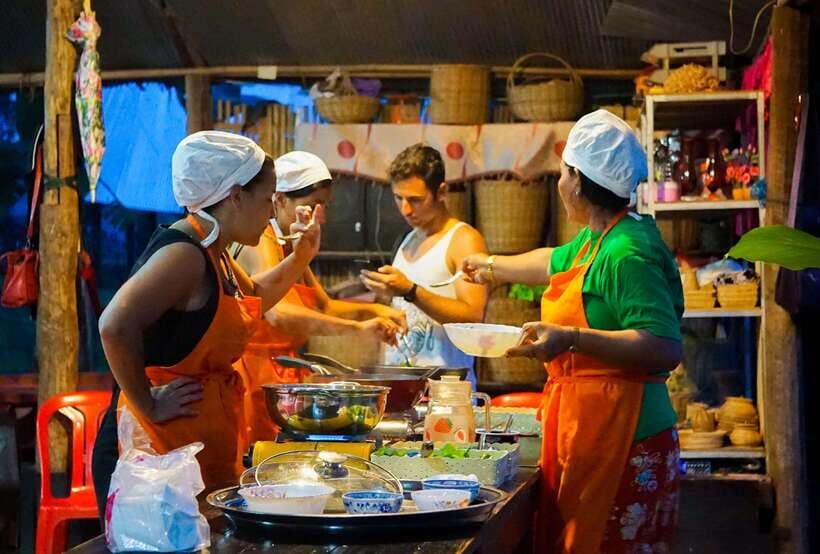
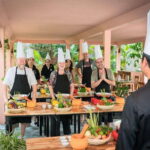
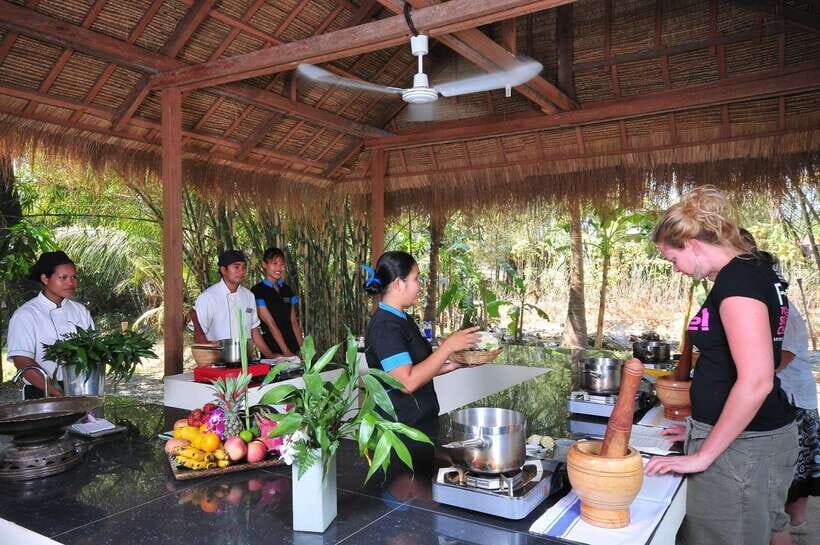
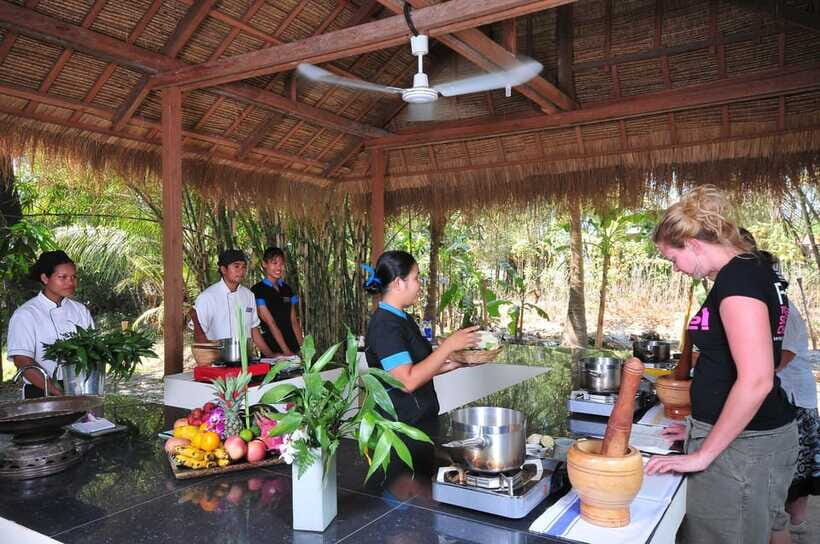
Now for the main event: the cooking itself. The class is fully hands-on. Everyone gets an individual cooking station and equipment. That’s a big deal because Khmer cooking is technique-heavy even when the steps look simple.
You’ll also learn how ingredients fit together in Cambodian cooking. The guide and chef help you understand typical Khmer flavors—what forms the base, how herbs and spices support the sauce, and what textures to aim for. You even get a recipe card/book at the end, which is key if you want to cook these again without guessing.
The cooking location is another win. Expect a beautiful outdoor setup, typically a wooden pavilion over a pond. In at least one instance, diners mentioned turtles swimming in the water below—so yes, you can sometimes enjoy your meal with wildlife nearby.
Service style is relaxed and part of the experience: after you finish cooking, your dishes are served to you one by one in that pavilion setting. You’re also offered a cold drink—soft drink, bottled water, or beer. It’s a good contrast to the work you just did. You earn the meal.
Morning class menu: mango salad, fish amok, and sticky sweetness
If you take the morning departure, you’ll usually cook a classic three-dish lineup built around freshness, comfort, and dessert.
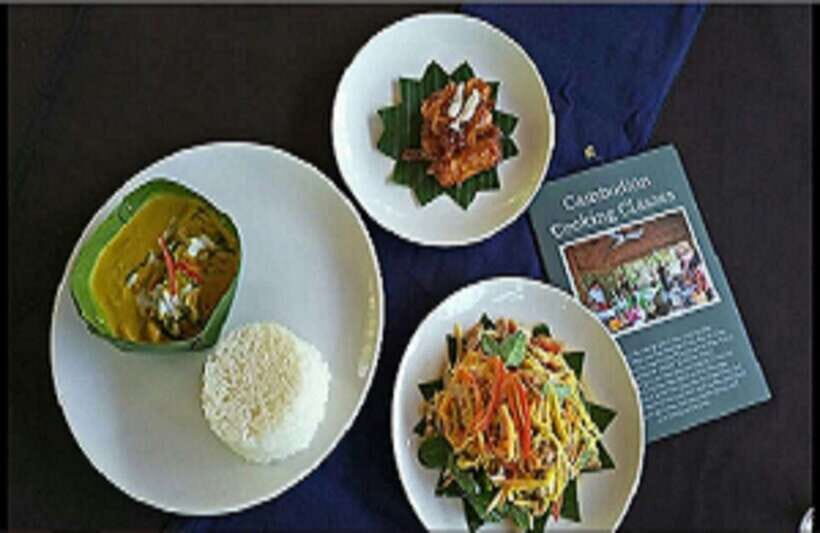
1) Cambodian Mango Salad
This is light, bright, and a great entry point if you’re new to Khmer flavors. The point here isn’t heat. It’s balance—freshness plus aromatics plus seasoning. When you make it, you learn how salad in Cambodia can feel like a full dish, not a side salad.
2) Fish Amok
This is the dish most people come for. Amok is cooked in a young coconut shell, and the result is smooth and gently spiced—more silky curry than chunky stew. You’ll practice combining aromatics and building the base, then shaping the cooking process around that coconut “vessel” style.
3) Sticky Rice Balls with Palm Sugar and Grated Young Coconut
This dessert is a reminder that Khmer cooking doesn’t only do savory. Expect chewy sweetness and a coconut-forward flavor that makes the meal feel complete.
Why this morning menu works: it gives you a full range of skills. You go from working with fresh ingredients (salad), to building a curry base (amok), to handling texture and sweetness (rice balls). That makes it easier to remember what matters when you cook at home.
Afternoon class menu: sugar-cane fish, Cambodian curry, and nom tong noun
The afternoon menu shifts toward earthy savory depth and crisp-sweet dessert energy. You still get the same hands-on format, but the dishes are different.
1) Prahet Chien (minced fish on sugar cane)
This dish centers on minced fish and sugar cane. The technique teaches you how flavors respond to different grilling or cooking styles—how aroma and seasoning cling to fish when it’s prepared this way.
2) Cambodian Curry
Cambodian curry is distinct from its Thai neighbor. You’re looking for layered fragrance rather than just raw heat. One of the big takeaways is that Cambodian food is typically spiced but not as hot as many people expect from the region.
If you’re someone who thinks curry always equals “make it chili.” You’ll probably rethink that after learning how the spices and base build the flavor.
3) Nom Tong Noun (Khmer brandy snaps)
This dessert is slightly sweet and crunchy with a signature snap. It’s also a nice final contrast to the richer curry and fish.
Afternoon classes are a great choice if you’re already temple-checked in the morning and want a half-day that feels more local and less sightseeing.
You can also read our reviews of more tours and experiences in Siem Reap
What you actually learn (beyond the recipes)
The recipes are a big part of the value, but the real learning is how dishes come together. Here’s what you should pay attention to during your cooking time:
- Base flavors matter. You’ll learn what creates the core of curry-style dishes.
- Fresh aromatics change everything. Herbs and vegetables you saw earlier are the same building blocks you’ll use at your station.
- Texture is part of the instruction. With dishes like amok and sticky desserts, you’re not just seasoning—you’re aiming for a specific feel.
- Alternatives help you cook later. Several past participants highlighted being told ingredient swaps they could find at home, which is what makes the recipe book genuinely useful.
Also, don’t ignore the pacing. The class is relaxed, and that matters. If you rush through chopping or mixing, Khmer dishes can turn out flat. A slower pace helps you build confidence fast.
Value check: $32 for a half-day that includes the work and the meal
At about $32 per person for a 3.5-hour experience, the best way to judge value is by what’s included and what you’re getting out of it.
What you get for the price:
- Tuk-tuk pickup and return (so you’re not scrambling for transport)
- English-speaking chef and guide
- Village walking tour and conversation with local villagers
- Cooking station + equipment
- Lunch (eat what you cook)
- Recipe book/card
- Complimentary soft drink, beer, or water
For that amount of structure, you’re paying less for a “meal” and more for an actual skill session: learning ingredients, techniques, and the logic of Khmer cooking. If you’ve ever taken a cooking class where you mostly watch, this one avoids that trap by design—everyone cooks.
Practical tips before you go
A few small things can make the difference between an okay afternoon and a smooth one.
- Bring a hat for the short village walk.
- Wear comfortable footwear. You’ll be on outdoor paths.
- If you have dietary restrictions, this class has experience accommodating different needs. Just be sure the team knows your situation when you attend.
- Temper your spice expectations. Cambodian food is full of spices but is generally not as spicy as you might expect from some neighboring cuisines.
Also, go with a good attitude. This is not a fast factory line. It’s a teaching day. If you ask questions—about ingredients, substitutions, or texture targets—the class becomes more than just three dishes.
Who this Siem Reap cooking class is best for
This experience fits best if you want:
- A small-group cultural food day with real instruction
- Hands-on cooking, not a passive demonstration
- A break from temple circuits that still feels grounded in local life
- A meal you can connect to what you saw earlier (family home, kitchen, vegetable garden)
It’s also a good option if you’re traveling with a partner or friends who want something more meaningful than another dinner. The pavilion meal is relaxed enough for conversation, and you’ll have plenty to talk about while your dishes are served.
If you’re traveling with kids: only children above 12 can join the cooking class. Private classes can be arranged for families upon request.
Should you book this Cambodian cooking class from Siem Reap?
If you care about learning real Khmer flavors—especially dishes like fish amok—and you want to spend half a day cooking with a local chef and guide, I’d say yes. For the money, the combination of village visit + hands-on cooking + recipe take-home is the key reason it works.
Book it if:
- You like practical travel experiences where you leave with skills.
- You want a calmer, quieter part of Siem Reap beyond temples.
- You’d enjoy eating your own cooking in an outdoor setting by a pond.
Skip it if:
- You want a fully air-conditioned, sit-down-only activity.
- You don’t want any walking or outdoor sun time.
If you’re on the fence, pick the menu that matches your mood: morning for mango + amok + sticky sweetness, afternoon for sugar-cane fish + Cambodian curry + nom tong noun. Either way, you’re learning Khmer cooking in a way you can actually recreate later.
FAQ
How long is the Cambodian Cooking Class from Siem Reap?
It runs for about 3.5 hours.
What’s the price per person?
The price is $32 per person.
Do I get picked up in Siem Reap?
Yes. You get tuk-tuk pickup from your hotel to the cooking class venue, and you’re returned at the end.
Is lunch included?
Yes. Lunch is included, and you eat the dishes you cook.
How many dishes do I cook during the class?
The class includes multiple dishes (the exact set depends on whether you join the morning or afternoon session).
What dishes are included in the morning class?
The morning menu includes Cambodian Mango Salad, Fish Amok, and Sticky Rice Balls with Palm Sugar and Grated Young Coconut.
What dishes are included in the afternoon class?
The afternoon menu includes Prahet Chien, Cambodian Curry, and Nom Tong Noun (Khmer brandy snaps).
Are there recipe materials to take home?
Yes. You’ll receive a recipe book/recipe card.
How big are the groups?
Tours are capped at a maximum of 6 participants.
Can kids join?
Only children above 12 can join the cooking class. Private classes can be arranged for families upon request.