REVIEW · SIEM REAP
Private Day Angkor Wat Temple and Banteay Srei Temple Tour
Book on Viator →Operated by Angkor Guide Tour · Bookable on Viator
A day at Angkor feels like switching universes. This private tour strings together the big, iconic hits with a few temple styles that look totally different from each other, from Ta Prohm’s jungle-choked ruins to Banteay Srei’s intricate pink-stone carvings. You also get the symbolism explained, like Angkor Wat’s mountain-ocean layout and the sacred meaning of its central tower.
Two things I especially like are the private pace and the practical help your guide can give on the ground. In one review, guide support mattered a lot for a companion on crutches, with smart options to drive closer and use a moped and tuk-tuk so she didn’t miss the key sites. I also like the guided interpretation, from the monastery story behind Ta Prohm (Rajavihara) to the human drama on Bayon’s 173 faces.
One consideration: the temples pass is not included, so your total spend isn’t just the $43 tour price. You’ll need to budget for the 1-day temples pass on top, and since the day runs about 8.5 hours, it’s a lot of walking even with shortcuts.
In This Review
- Key highlights before you go
- How this private day tour hits the big Angkor goals fast
- Ta Prohm: Rajavihara, jungle ruins, and the vine maze you can’t plan away
- Pre Rup: the state temple that tells you how old rulers staged power
- Banteay Srei: the Temple of Women and why small scale can mean big impact
- Angkor Thom South Gate: the causeway, the moat, and the moment you enter the royal square
- Bayon Temple: 173 faces and why your guide’s theories change the mood
- Baphuon and Phimeanakas: royal temple spaces between the palace and the parade route
- Terrace of the Elephants and Terrace of the Leper King: the long walls that make royal drama feel real
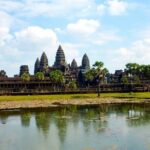
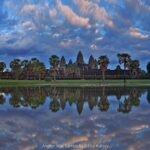
- Angkor Wat: five layers of meaning, one big finish
- Price and temples pass math: what you’re really paying for
- Transportation, timing, and comfort: how to survive the 8.5 hours
- Customization works: WhatsApp communication and smarter pacing
- Should you book this private Angkor Wat and Banteay Srei tour?
- FAQ
- What is the duration of the Private Day Angkor Wat Temple and Banteay Srei Temple Tour?
- Is hotel or airport pickup included?
- What is included in the tour price?
- Do I need to buy the temples pass?
- Which temples are visited on this tour?
- What are the operating hours for this experience?
- Is this a private tour?
Key highlights before you go
- Ta Prohm (Rajavihara) with vines and giant roots: a monastery-with-a-jungle mood that’s different from the more formal temple layouts
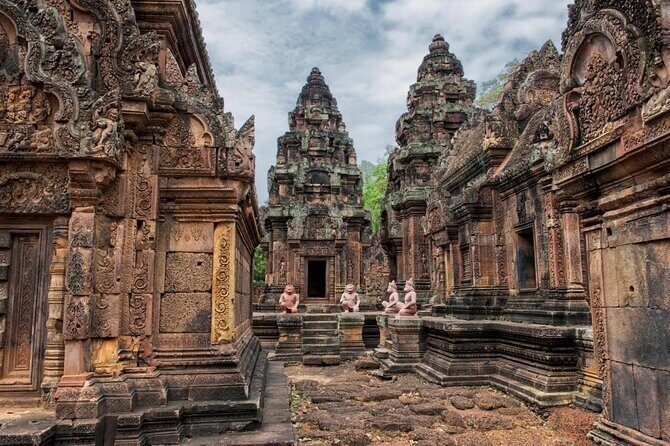
- Banteay Srei (Temple of Women): smaller scale, but famously detailed Khmer stonework from the 10th century
- Angkor Thom circuit: South Gate, Bayon, Baphuon, Phimeanakas, and the Royal Terraces in one packed sweep
- Angkor Wat’s “cosmic” design: five concentric walls, moats, and the central tower tied to Hindu-Buddhist cosmology
- Private guide flexibility: the tour can be customized, and your guide can help reduce walking when possible
How this private day tour hits the big Angkor goals fast
Angkor is huge, and the worst plan is a random dash. This tour works because it builds a logical loop: you start with Ta Prohm and Pre Rup, swing over to the pink-stone artistry of Banteay Srei, then tackle Angkor Thom’s royal core, and finish at Angkor Wat for that final wow-factor.
It’s also a good fit for first-timers who want more than photos. You’re not just walking between stones. Your guide connects what you’re seeing to what the builders were trying to represent—cosmic order, royal power, and religious purpose—so the sites click together in your mind.
And it’s private, so the day doesn’t get controlled by strangers’ slow shuffles. You’ll travel by air-conditioned vehicle, get cool water and towels, and have an English guide explaining as you go. That matters in Siem Reap heat, because Angkor isn’t just pretty—it’s physically demanding.
You can also read our reviews of more private tours in Siem Reap
Ta Prohm: Rajavihara, jungle ruins, and the vine maze you can’t plan away
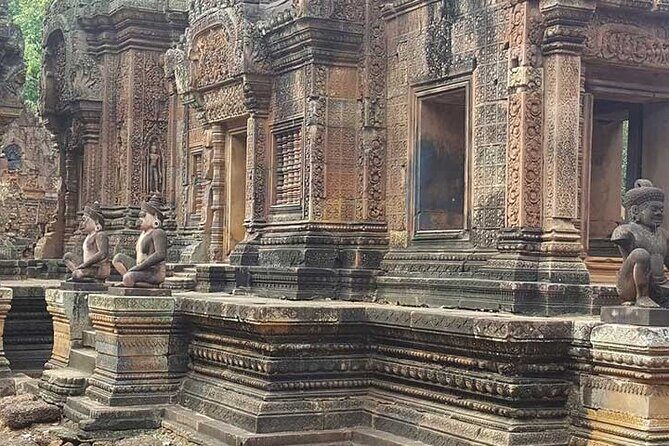
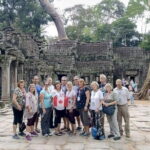
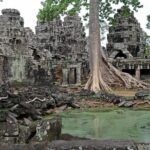
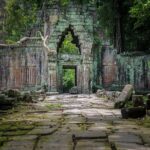
Ta Prohm is famous for a reason, and the guide story helps you see it as more than a “cool photo stop.” Its original name was Rajavihara, meaning monastery of the King, and it was built as a Mahayana Buddhist monastery and university. The construction date given for the temple is 1186 AD.
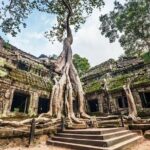
What makes Ta Prohm special during your visit is the way the jungle looks like it’s taken over on purpose. Huge tree roots sprawl across the ruins, and vines drape over stonework so completely that paths feel accidental. You’ll spend about 1 hour here, and that time flies because you’ll be moving between viewpoints—looking up at roots, then back down at carvings and doorways that show you the temple wasn’t meant to be swallowed.
Practical note: plan for uneven ground. Even when you take short cuts, you’ll be stepping around roots and debris. If you have mobility needs, this is one of the key places to ask your guide for a strategy, because Ta Prohm’s terrain can be tricky.
Pre Rup: the state temple that tells you how old rulers staged power
Next up is Pre Rup, built as the state temple for King Rajendravarman in the late 10th century, dated either 961 or 962 AD. One detail your guide may highlight is that it was built about nine years after East Mebon, which is 1.3 km north.
Pre Rup tends to be a breather stop compared to Ta Prohm, partly because it’s shorter on the schedule—about 20 minutes. But it’s still worth it because it gives you a different look at Khmer temple logic: you’re seeing how rulers created religious staging spaces, with temples designed to be approached, climbed, and viewed as statements of authority.
This is the kind of stop where the guide’s context helps. Without it, it can feel like “another tower.” With it, you start noticing the intentional layout and why the timing of construction matters in the sequence of Angkor’s development.
Banteay Srei: the Temple of Women and why small scale can mean big impact
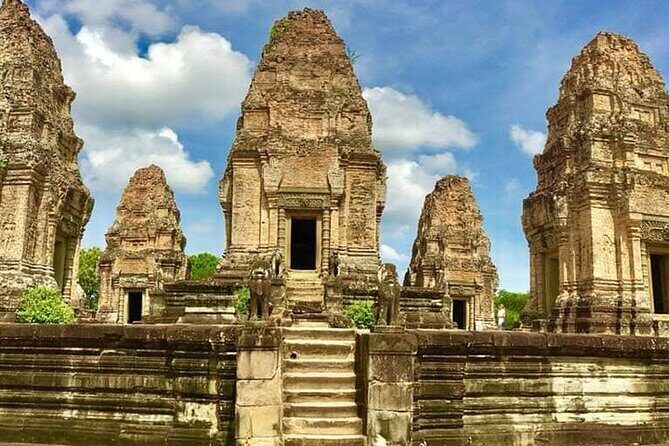
Then you move into Banteay Srei, also called the Pink Ladies Temple. It’s a 10th-century Khmer temple dedicated to Shiva. The big takeaway: it’s smaller than many other Angkor temples, but that smaller scale helps the carvings feel sharper and more readable.
Expect about 1 hour here. The appeal is the artistry—motifs, figures of gods, and detailed carving—so close up that you’ll start seeing patterns instead of just walls and towers. It’s the opposite experience of Ta Prohm. Ta Prohm feels like nature. Banteay Srei feels like craftsmanship.
If you care about fine details—stone “skin,” not just big structures—this stop will be your favorite kind of contrast. Also, because it’s near Phnom Dei (the area is listed for the temple), your guide may point out how the temple sits in its broader landscape setting, even if it’s not a dramatic, hilltop panorama kind of site.
Angkor Thom South Gate: the causeway, the moat, and the moment you enter the royal square
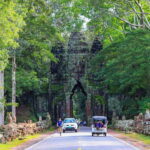
Angkor Thom is the royal city core, and it begins with a theatrical entry: the grand causeway crosses a moat that’s about 100 meters wide, and the causeway is flanked by naga balustrades. Your itinerary includes Angkor Thom South Gate, the entry point that leads you toward the heart of the complex.
This is only about 20 minutes on the schedule, but it’s not a throwaway stop. It’s a threshold. The point isn’t only the gate itself—it’s what it signals: this is the city of kings, and the approach is designed to guide your eyes and slow you down.
If you like architecture more than crowds, arrive mentally ready to notice the balancing act: stone and water, power and ritual, human passage framed by myth.


Bayon Temple: 173 faces and why your guide’s theories change the mood
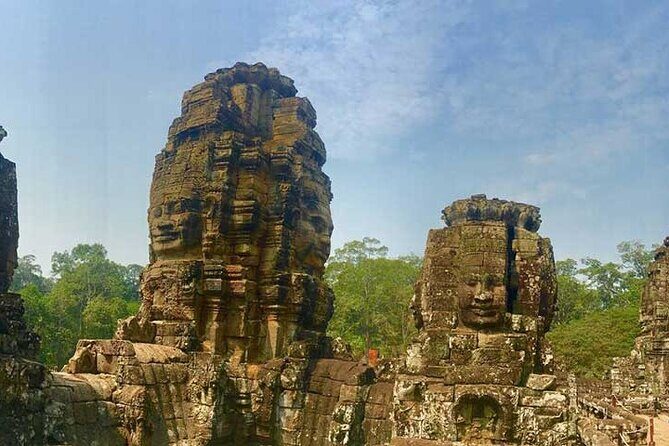
Bayon is famous for its towers of faces. The facts are clear: 173 gigantic faces remain on Bayon’s towers. The interesting part is how people interpret them. There are competing theories about who the faces represent, and the note included for this tour mentions that local Khmer believe the faces represent the Four Faces of Prohm.
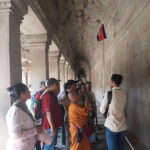
You’ll spend about 50 minutes at Bayon, and that’s a good chunk of time because the temple works like a visual puzzle. You’ll circle, look up, and then catch yourself noticing how angles shift the expression and the spacing. The guide helps here by pointing out what to watch for—where carvings connect visually, which towers are most aligned from specific viewpoints, and how the storytelling style differs from the more strictly “structure-first” temples.
One thing I recommend: don’t rush for the perfect shot. Bayon rewards slower looking. Even when it’s busy, you can still get a sense of the temple’s rhythm by pausing.
Baphuon and Phimeanakas: royal temple spaces between the palace and the parade route
From Bayon, you head toward Baphuon, described as the state temple of King Udayadityavarman II. It’s located in Angkor Thom, between the Royal Palace and Prasat Bayon. Your time here is about 40 minutes.
Baphuon can feel less immediately dramatic than Bayon, but it helps you understand the royal layout: Angkor Thom isn’t one temple. It’s a system. Baphuon is one part of that system, and it sits within the political-religious geography that makes the whole city work.
Then there’s Phimeanakas, a temple with a story and part of the royal enclosure. The tour timing for Phimeanakas is about 30 minutes, and because it’s in the royal enclosure, you may pass through it as part of the route between other major areas. This is another stop where explanation matters. Without the guide’s framing, you might miss why a smaller temple space can still feel significant.
Terrace of the Elephants and Terrace of the Leper King: the long walls that make royal drama feel real
Your itinerary includes both major royal terraces.
First is the Terrace of the Elephants, built by King Jayavarman VII at the end of the 12th century. The terrace stretches more than 300 meters, running from Baphuon in the south to the Leper King terrace in the north.
Then comes the Terrace of the Leper King, which, together with the Terrace of the Elephants, forms the eastern boundary of the Royal Palace grounds. The description also notes that these terraces face the parade grounds (the area where royal display would have mattered).
Your time is about 30 minutes for the Elephants terrace and around 15 minutes for the Leper King terrace. That’s not enough to read every carving, but it’s enough to understand why these terraces matter. They’re not just decoration. They’re “stage walls,” built for movement, display, and the everyday visual power of the royal space.
If you want value from these terraces, use your guide’s cues. Ask what to look for in the carvings, and you’ll get more out of the time you have.
Angkor Wat: five layers of meaning, one big finish
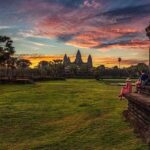
Angkor Wat is the big end-cap, scheduled for about 3 hours. The description in your tour notes it as the jewel of the Khmer archaeological crown, and it’s easy to see why. It represents Hinduism’s ancient gods, and its design is tied to ideas of heaven and sacred order.
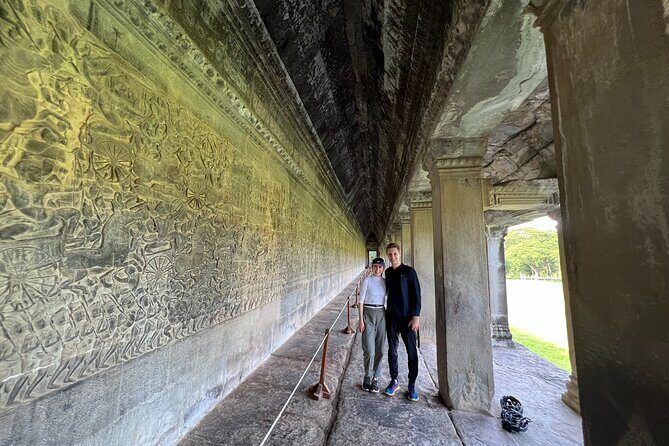
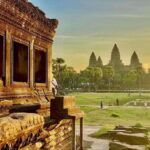
A key point your guide should bring up is the temple’s five concentric rectangular walls, plus moats alongside. This symbolizes a cosmic chain of mountains and ocean. The central tower represents Mount Meru, described as the center of the Hindu and Buddhist universe.
That’s more than trivia. It changes how you walk the site. If you understand the design language, the structure stops feeling like a maze and starts feeling like a deliberate map. You’re not just moving from one photo angle to another—you’re following a symbolic geometry.
Practical tip: save energy for the final walk. Three hours at Angkor Wat can turn into a lot if you’re chasing every viewpoint. But if you pick a few anchor spots and let the guide steer you between them, you’ll leave with that satisfying sense that the whole complex makes mental sense.
Price and temples pass math: what you’re really paying for
The tour price is $43 per person, and it includes the guide, A/C vehicle, parking/tolls, cool water and towels, plus pickup/drop-off at the airport. That’s strong value for a private day because transportation and a trained guide cost real money in Siem Reap.
But here’s the catch: the Temples Pass is not included. The notes list a 1-day pass for $37 per person. So your all-in day cost is typically $80 per person, before any extras you choose (like snacks or personal purchases).
Is it still good value? Usually, yes—because the pass covers entry across the temples you visit in this circuit, and the day is structured to make that pass worth the price. If you were doing individual sites on your own, you’d still end up paying the pass and spending time figuring out routes and ticket timing.
If you can travel with others, check whether group discounts apply in your booking. Since it’s private, the per-person value improves when you spread the guide and vehicle cost across more people.
Transportation, timing, and comfort: how to survive the 8.5 hours
This is scheduled for about 8 hours 30 minutes, with operating hours listed from 8:00 AM to 4:00 PM. You’ll ride in an air-conditioned vehicle, which matters because Angkor days are mostly heat plus dust plus sun.
Also, the tour includes cool water and towels. That’s not a luxury. It’s practical hydration management, especially if you’re moving between temples that each have their own outdoor exposure.
Walking is unavoidable. Even with vehicle transfers, you’ll still do temple walking, stairs, and uneven ground—especially at Ta Prohm and in parts of Angkor Thom. The schedule is built around shorter bursts—like 20 minutes at Pre Rup and the South Gate—so you’re not stuck in one place too long. Still, wear shoes you trust.
Customization works: WhatsApp communication and smarter pacing
Two highlights from the experiences shared with this tour style are worth calling out.
First, communication. One guide, Chanra, was praised for very good WhatsApp communication, which helps you line up expectations before the day starts. That kind of messaging reduces the “where do we meet?” stress that can drain a morning.
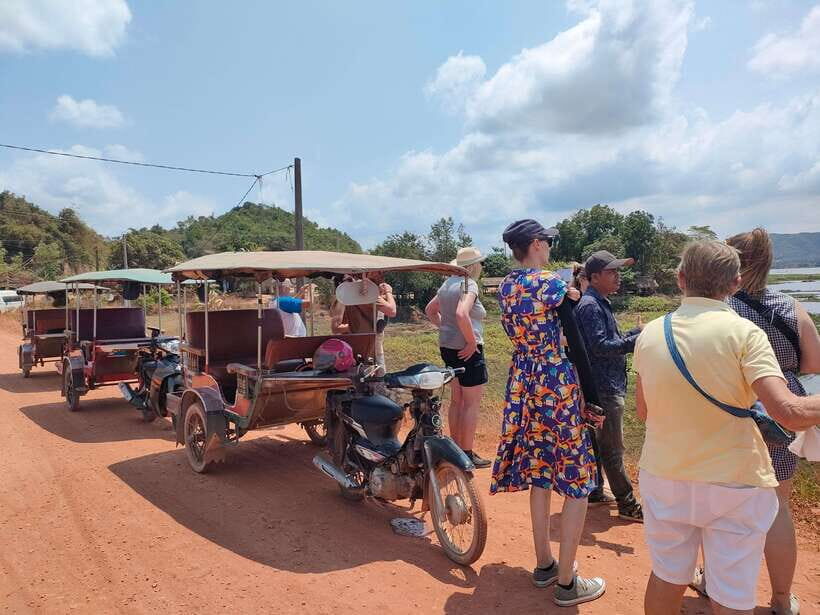
Second, customization and practical problem-solving. Chanra also helped tailor what the tour would focus on based on what was wanted, with suggestions added along the way. And in another experience, the guide used creative logistics—driving closer when possible and using a moped and tuk-tuk—to help a companion with a hurt foot and crutches still see the major sites.
Bottom line: if you have specific priorities or physical limitations, don’t be shy. This is a private format, so you’ll get more value when you clearly say what matters most.
Should you book this private Angkor Wat and Banteay Srei tour?
Book it if you want:
- A one-day circuit that hits Ta Prohm, Banteay Srei, Angkor Thom, and Angkor Wat without you planning every connection
- A guide who explains meaning, not just names
- Private flexibility, especially if your group has different pacing or needs
Skip it or adjust it if:
- You’re trying to avoid a lot of walking. Even with transfers, the sites are spread and the ground can be rough in places.
- You dislike paying for the temples pass on top of the tour price. The $37 pass is a separate line item you should budget for upfront.
If you do book, do one simple thing: pick your “must-not-miss” site, then tell your guide. The day’s strongest results come when the guide knows what you’re chasing—vines at Ta Prohm, detail at Banteay Srei, or the symbolic geometry at Angkor Wat.
FAQ
What is the duration of the Private Day Angkor Wat Temple and Banteay Srei Temple Tour?
The tour lasts about 8 hours 30 minutes.
Is hotel or airport pickup included?
Pickup is offered, and pickup/drop-off at the airport is included.
What is included in the tour price?
The tour includes an air-conditioned vehicle, an English tour guide, parking fees and roads tolls, cool water and towels, and pickup/drop-off at the airport.
Do I need to buy the temples pass?
Yes. A temples pass is not included. The 1-day pass listed is $37 per person.
Which temples are visited on this tour?
The tour includes Ta Prohm, Pre Rup, Banteay Srei, Angkor Thom South Gate, Bayon, Baphuon, Phimeanakas, Terrace of the Elephants, Terrace of the Leper King, and Angkor Wat.
What are the operating hours for this experience?
It runs daily (Monday through Sunday) from 8:00 AM to 4:00 PM, for the dates listed.
Is this a private tour?
Yes. It’s a private activity, so only your group participates.