REVIEW · SIEM REAP
Journey Through Time: Grand Tours with professional photographers
Book on Viator →Operated by Marvel Angkor Tours · Bookable on Viator
Angkor is better when you’re not rushed.
This private Grand Circuit day in Siem Reap-style comfort lets you walk temple to temple at a human pace, with a professional English-speaking guide and a professional photographer handling your shots. I especially like the stop order for first-time visitors (from Preah Khan’s big scale to Pre Rup’s viewpoints), and I like that your transport is set up end-to-end with round-trip hotel transfer included. The main drawback is the Angkor Temple Pass is extra, so your final bill isn’t just the tour price.
Two practical bonuses make the day smoother: the pickup is handled with an e-ticket you can show on your phone, and your ride includes small comforts like mineral water, tissue, and fruit. One thing to plan for is temple timing and dress rules—if you show up in shorts or sleeveless tops, you can get turned away at places of worship.
In This Review
- Key points to know before you go
- Grand Circuit at a human pace, not a stampede
- Price and value: what $237 buys you
- Temple pass and admission: what’s included vs extra
- Pickup, e-ticket, and how the day stays on rails
- Stop-by-stop on the Grand Circuit route
- Preah Khan: the Royal Sword Temple’s scale
- Neak Pean: the water-temple on an artificial island
- Ta Som: where nature edits the stone
- Pre Rup: the Hindu mountain temple and the view angle
- Eastern Mebon: Vishnu devotion on a dry island
- Banteay Srei: a smaller temple with big detail
- The photographer and guide combo: how you get better shots
- Dress code and temple manners you should follow
- Who this private tour suits best
- Should you book this Grand Circuit with a pro photographer?
- FAQ
- Do I need the Angkor Temple Pass for this tour?
- What’s included in the tour price besides transportation?
- Is hotel pickup and drop-off included?
- How long is the tour?
- Which temples are included on the route?
- Are temple admission tickets included?
- What’s the dress code for visiting?
- Do I receive an e-ticket for pickup?
- Is this a private tour?
- What if I need to cancel?
Key points to know before you go
- Private pacing: you can slow down inside the ruins instead of getting swept along.
- Photo support: a pro photographer (and guides who help with angles) means you’ll leave with better temple shots.
- Clear temple mix: Preah Khan, Neak Pean, Ta Som, Pre Rup, Eastern Mebon, plus Banteay Srei.
- Most tickets are not included: the Angkor Temple Pass is separate; Banteay Srei entry is listed as free.
- Comfort on the move: luxury private car/van, plus water, tissue, and natural fruits.
- Dress code is strict: knees and shoulders covered, or entry can be refused.
Grand Circuit at a human pace, not a stampede
The Angkor area can feel like two different worlds in one day: the quiet magic of stone corridors and carved faces, then the reality of crowds, lines, and time pressure. What I like about this experience is that it’s built for the first world. You’re on a private outing, so you’re not trying to keep up with a big group, and you’re not stuck waiting for everyone else to catch up.
It’s also a smart choice if you already plan to do Angkor Wat separately. The Grand Circuit is a fuller loop than the Small Circuit, and this route hits a spread of temples that feel different from each other—massive Preah Khan, the water-temple oddball at Neak Pean, the nature-reclaimed Ta Som, and the dramatic views at Pre Rup.
The tone of the day seems designed to feel relaxed: a comfortable ride, clear stops, and guides who can explain what you’re looking at without drowning you in lectures. Names like John, Diamond/Pich, and Davann show up as examples of the kind of guide vibe you can get—friendly, humorous, and ready to point out details beyond the obvious.
You can also read our reviews of more tours and experiences in Siem Reap.
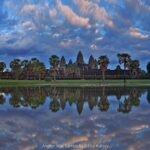
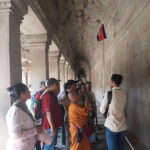
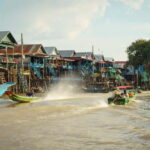
Price and value: what $237 buys you
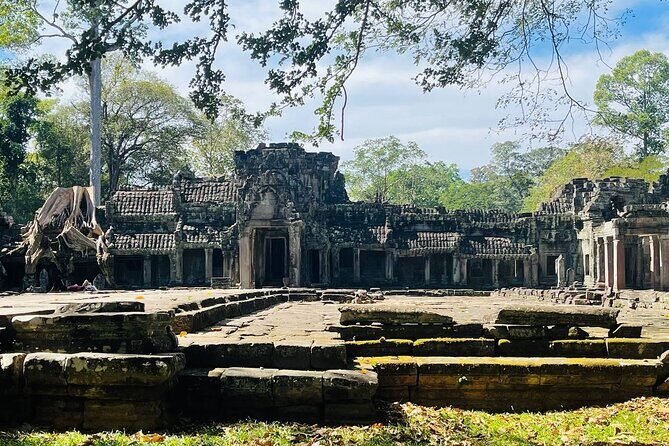
The tour price shown is $237, and that’s for the experience package, not the temple entry fees. In practice, this price covers the things that are hard to assemble neatly in Angkor on your own: private transport, a professional guide, a photographer, and on-the-road comforts.
Then there’s the “pass math.” The Angkor Temple Pass is $37 per person and is not included. So if you’re traveling with others, your total depends on how many people in your party need the pass. Also note the tour includes Banteay Srei with entry listed as free, which is a nice bonus if you’re counting costs.
One more small but real value point: you’re not just buying a route. You’re buying time saved and stress reduced. When you’re in a place with ticket systems, opening times, and dress-code enforcement, having someone handle the flow can make the day feel smoother—even if the temples themselves are what you’ll remember.
Temple pass and admission: what’s included vs extra
Here’s the split that matters:
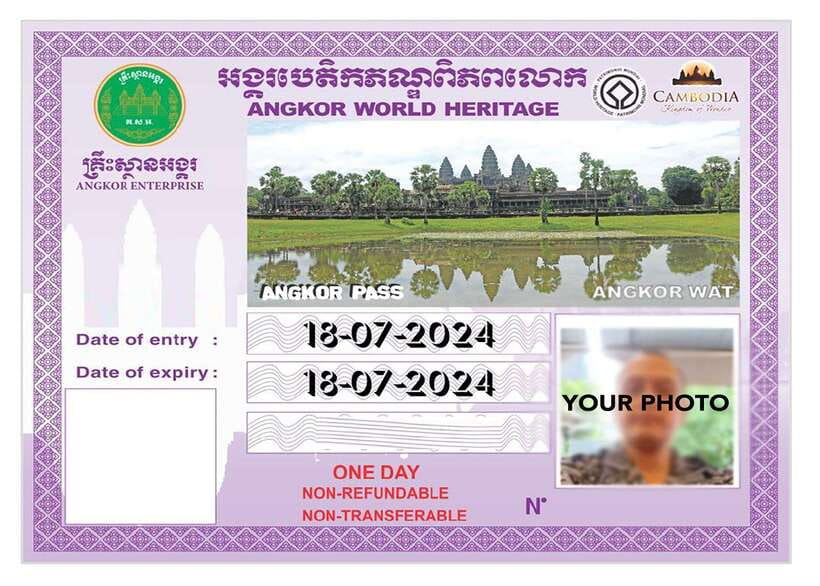
- Angkor Temple Pass: required for the Angkor Archaeological Park temple visits, and it’s not included (listed at $37 per person).
- Temple entry tickets for the main stops: marked as not included for stops like Preah Khan, Neak Pean, Ta Som, Pre Rup, and Eastern Mebon (each listed with admission ticket not included).
- Banteay Srei: listed as free for this stop.
So plan on paying for the pass, and treat the $237 as the “service + transport + guide + photo” portion. If you’re the type who likes to arrive ready and not scramble for tickets mid-day, this setup still works well—you just need to budget the pass first.
There’s also a line item listed as Sun light $15.00 per person. The details aren’t explained in what you were given, so I’d ask the operator what it refers to (shade, sun protection, or another add-on) before you lock it in.
Pickup, e-ticket, and how the day stays on rails
Angkor days live and die by logistics. This one has the key pieces:
- Pickup offered from your hotel area in Siem Reap.
- Private transport includes complimentary round-trip hotel transfer.
- E-ticket to your phone: you download it for your driver.
That may sound small, but it matters when you’re starting your day early and you don’t want to play phone-tag with a driver. A phone-based e-ticket makes the meet-up straightforward.
Timing is listed as 5 to 6 hours (approx.), which is a good length for a Grand Circuit style outing if you don’t want to feel like you’re sprinting. You’ll spend about an hour at each main stop, which gives you time to walk, look up close, and take photos without feeling late for the next place.
Stop-by-stop on the Grand Circuit route
Preah Khan: the Royal Sword Temple’s scale
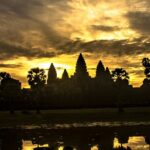
Your first major stop is Preah Khan, also known as the Royal Sword Temple. It was built in the early 12th century by King Jayvarman VII to honor his father. What I like about starting here is that the temple feels like a “world” rather than a single shrine. It was once a huge center of an organization with almost 100,000 officials and servants.
That backstory helps you read the architecture. When you see the scale of the complex, you’ll understand why it feels busy even when it’s quiet today. It’s also an excellent place for photos because the stonework and passageways give you lots of angles. The one-hour slot is long enough to explore at a steady pace.
Practical note: admission tickets for this stop are not included, so your Angkor Temple Pass needs to cover this portion of the route.
Neak Pean: the water-temple on an artificial island
Next comes Neak Pean, near Preah Khan. This is an artificial island with a Buddhist temple at its center. It was constructed by King Jayavarman VII in the middle of the Preah Khan Baray (Jayatataka).
Neak Pean is one of those temples that feels different the moment you arrive. Instead of “vast complex,” it’s more of a contained, reflective stop—like the temple wants you to slow down and look carefully. If you like symbolism and layout, the island setting and water connection make it memorable.
Again, admission is not included here, so keep your pass handy.
Ta Som: where nature edits the stone
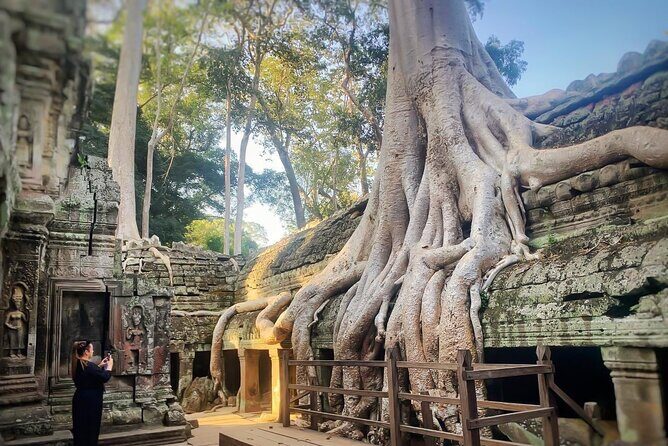
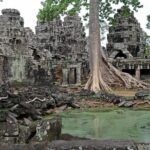
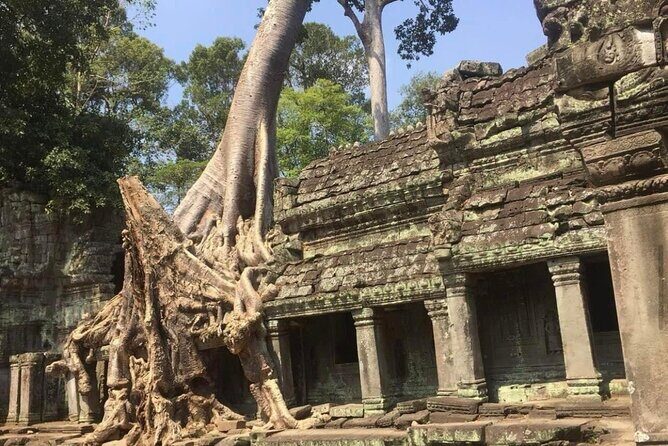
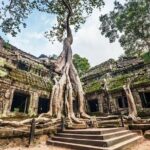
Then you move to Ta Som, built at the end of the 12th century by King Jayvarman VII, dedicated to his father. Like Ta Prohm, Ta Som is described as largely unrestored, with lots of trees growing through and around the structures.
This is one of the most photogenic stops for travelers who like texture: roots, shaded corridors, and stone surfaces with a “lived-in” look. I’d treat this hour as your best chance to take your time with framing. The photographer in your group can help you get good compositions without you constantly adjusting to crowds.
Admission for Ta Som is not included.
Pre Rup: the Hindu mountain temple and the view angle
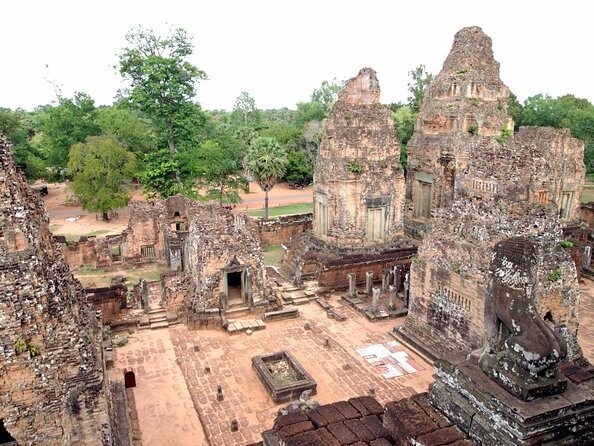
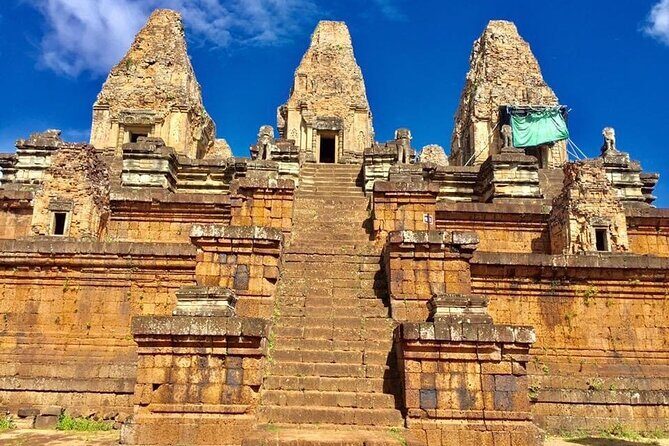
After Ta Som, you head to Pre Rup, a Hindu mountain temple constructed by King Rajendravarman in 961 or early 962. The temple’s modern Khmer name means “turn the body,” and local belief connects funerals with that idea.
Even if you don’t read every carving, Pre Rup’s value for you as a visitor is the way it forces perspective. “Mountain temple” means levels, lines, and viewpoints—so your photos will look more intentional when you take a little time to climb and pick an angle.
Admission is not included, so again the pass is what keeps you moving smoothly.
Eastern Mebon: Vishnu devotion on a dry island
Finally in the main circuit sequence, you’ll visit Eastern Mebon, a 10th-century temple built by King Rajendravarman to dedicate to the Hindu god Vishu and to honor the king’s parents. The temple was once an artificial island in the middle of the East Baray, which is now dry.
What I like here is the contrast: you get a sense of the temple’s original water setting, even if you’re seeing the “after” version today. It’s a stop for people who enjoy imagining how landscapes worked when water features were active.
Like the other main Angkor stops in this route, admission tickets are not included.
Banteay Srei: a smaller temple with big detail
The day ends with Banteay Srei, located about 25 kilometers northeast of the Angkor Archaeological Park, described as smaller than Angkor Wat but full of ornate stone artistry. It’s also marked with admission free in the tour details you provided.
This is a great closing stop for two reasons. First, it breaks up the “big complex” feeling you get from the Grand Circuit. Second, Banteay Srei’s scale makes it easier to focus on details—carvings, proportions, and the craft style that people usually associate with Khmer temple work.
If you want a final hour that feels more intimate, this add-on is a strong way to finish.
The photographer and guide combo: how you get better shots
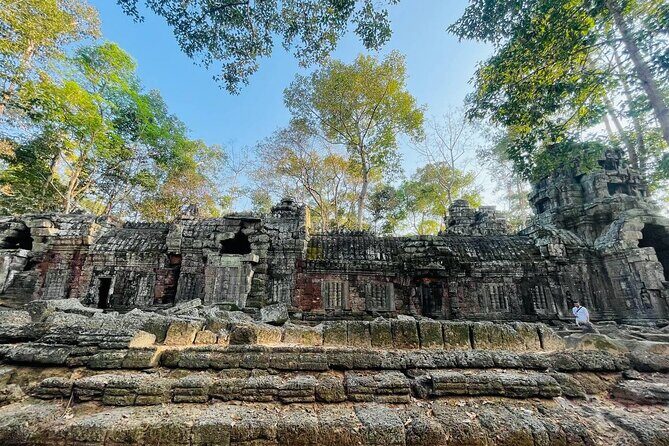
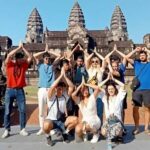
This tour includes a professional photographer, plus a professional English-speaking tour guide. That pairing matters because a photographer alone can snap great images, but a guide can also tell you what to look for—so your photos aren’t just pretty, they’re informed.
One theme that shows up in the guide styles connected to this operator is humor and engagement. Names like John and Diamond/Pich are associated with guides who bring facts without turning the day into a classroom, and with photo help that goes beyond just pointing at the temple. There’s also mention of guides helping with pictures and videos, plus little “easter egg” style discoveries around the temples.
You’ll still need to manage your own time for the best moments (sun angle, shade, and where the best viewpoint is), but having someone in the mix who understands angles and timing makes it easier to come away with images you actually want.
Dress code and temple manners you should follow
Cambodia’s temple rules are simple but non-negotiable here. You need to cover knees and shoulders for both men and women. That means no shorts and no sleeveless tops.
If you don’t comply, you risk refused entry to worship places. Pack something lightweight you can throw on quickly. I also recommend keeping a small scarf or light layer in your day bag even if you think your outfit already fits the rule.
Temple etiquette tip that goes with the dress code: move calmly, keep your feet and posture respectful, and don’t treat the ruins like a playground for fast selfies. Private pacing helps because you aren’t fighting for space.
Who this private tour suits best
This is a good fit if:
- You want private transport and a calmer experience instead of a large group scramble.
- You’re doing Angkor Wat on another day and want a Grand Circuit follow-up.
- You care about photos and want more than random snapshots.
- You like guided context and want to understand what you’re seeing at each stop.
It may be less ideal if you’re traveling super budget-only, because the Angkor Temple Pass is extra and you still have multiple admission-ticket components. But if $237 buys you less hassle and better flow, it often feels like a fair deal compared to stitching everything together yourself.
Should you book this Grand Circuit with a pro photographer?
I’d book it if your priority is a stress-free Grand Circuit with transport handled, a guide to explain what you’re looking at, and photo help that reduces the guesswork. The biggest reason is the pacing: private time inside Preah Khan, Neak Pean, Ta Som, and Pre Rup is where the experience becomes memorable, not the rush between them.
Skip it or ask lots of questions if you’re very price-sensitive, because the temple pass ($37 per person) is not included and you’ll want to confirm how the listed Sun light $15 per person item works for you. Also check your outfits for the strict coverage rule.
If you’re ready to slow down and photograph with purpose, this is the kind of Angkor day that feels like it was designed for you.
FAQ
Do I need the Angkor Temple Pass for this tour?
Yes. The 1-Day Angkor Temple Pass is not included and is listed at $37 per person.
What’s included in the tour price besides transportation?
You get luxury private car/van, a professional English-speaking tour guide, a professional photographer, mineral waters and tissue, and natural fruits during the tour.
Is hotel pickup and drop-off included?
Yes. The private transport includes a complimentary round-trip hotel transfer.
How long is the tour?
It’s listed as 5 to 6 hours (approx.).
Which temples are included on the route?
The itinerary includes Preah Khan, Neak Pean, Ta Som, Pre Rup, Eastern Mebon, and Banteay Srei.
Are temple admission tickets included?
For the main Angkor stops, admission tickets are listed as not included. Banteay Srei is listed as free.
What’s the dress code for visiting?
You must have knees and shoulders covered. No shorts or sleeveless tops are allowed, and entry may be refused if you don’t comply.
Do I receive an e-ticket for pickup?
Yes. You can download your e-ticket to your phone for the driver.
Is this a private tour?
Yes. It’s listed as private, meaning only your group participates.
What if I need to cancel?
You can cancel for a full refund if you cancel at least 24 hours in advance of the experience start time. Cancellation within 24 hours is not refunded.