REVIEW · SIEM REAP
Half-Day Ta Prohm and Banteay Kdei Tour
Book on Viator →Operated by Kampoul Adventure Tour · Bookable on Viator
These temples grow out of the jungle.
This half-day mix of Ta Prohm and Banteay Kdei lets you see UNESCO Angkor sights that feel a bit off the main track, with the classic overgrown look of Ta Prohm plus a calmer stop at Banteay Kdei. You also end with views around Srah Srang, the reservoir known as King’s Bath.
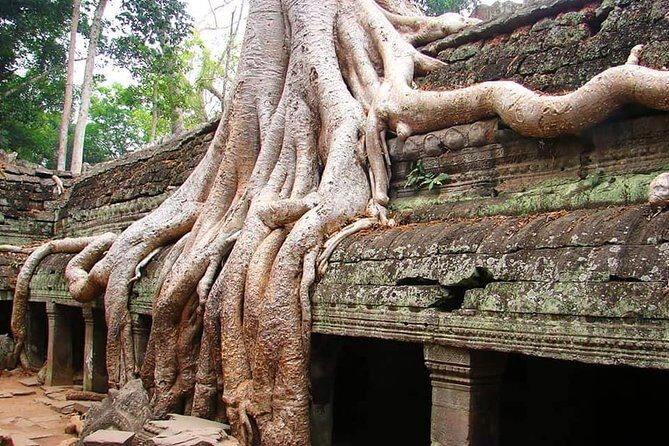
I really like two things about this tour. First, you get the standout Ta Prohm experience—spung tree roots, mossy stones, and the famous Tomb Raider tree for photos. Second, you’re not stuck on just one famous temple; you also spend time at Banteay Kdei and then Srah Srang, so your 4 hours feel balanced.
One thing to consider: the Angkor temple pass/entrance fees are not included, so your total cost will be higher than the $34 base price.
In This Review
- Key highlights worth planning for
- Why this half-day temple combo feels smarter than the “big one”
- Ta Prohm: where the jungle grabs the stones
- Banteay Kdei: Buddhist temple details without the same pressure
- Srah Srang and King’s Bath: the calm break people forget
- Price and value: what $34 really buys you
- Timing: morning or afternoon changes everything
- Lunch, water, and the small comfort stuff that matters
- How well this tour fits different travel styles
- Should you book this Ta Prohm and Banteay Kdei half-day?
- FAQ
- How long is the Half-Day Ta Prohm and Banteay Kdei tour?
- Does the tour include hotel pickup and drop-off?
- Is this tour private?
- What sites are included in the tour?
- How much time is spent at each stop?
- Are entrance fees included?
- What meals and drinks are included?
- Is there a vegetarian lunch option?
- Can I choose the departure time?
- What is the cancellation policy?
Key highlights worth planning for
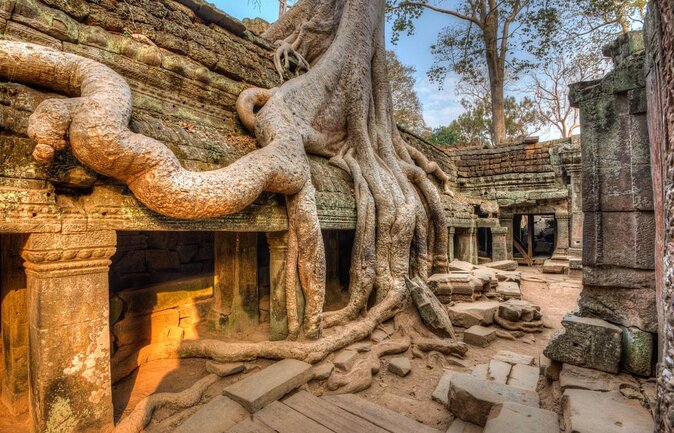
- Ta Prohm’s spung tree roots and moss-covered stones plus the Tomb Raider tree photo stop
- Banteay Kdei for a Buddhist temple visit that many standard routes skip
- Srah Srang (King’s Bath) with water still present today
- Hotel pickup and drop-off that keeps your morning/afternoon low-stress
- Lunch and bottled water included, with a vegetarian option available
- Morning or afternoon departure so you can match your energy and heat tolerance
Why this half-day temple combo feels smarter than the “big one”
If you’ve already seen Angkor Wat, this tour makes a lot of sense. You still get the Angkor temple experience, but you trade the most famous crowds-for-a-ticket vibe for a route that adds variety fast: jungle-overgrown Ta Prohm, the Buddhist setting of Banteay Kdei, and a reservoir stop at Srah Srang.
I like that the pacing fits real life. At roughly 4 hours total, you can cover three meaningful stops without burning your whole day. It’s a good choice if you’re splitting Angkor into smaller chunks (or if you just don’t want to spend every daylight hour in a queue).
Another practical win: you’re on a private tour, with round-trip transport from your hotel. That matters here because Siem Reap traffic and temple-site timing can eat up time if you’re trying to DIY. Having a guide also helps you understand what you’re looking at—especially at Banteay Kdei, where the details are Buddhist rather than the more commonly photographed Angkor Wat style.
You can also read our reviews of more tours and experiences in Siem Reap.
Ta Prohm: where the jungle grabs the stones
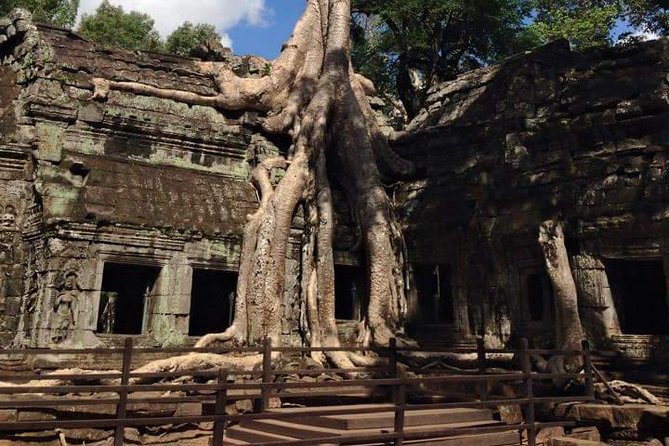
Ta Prohm is the reason so many people come to this part of the park. Your visit is timed for about 1 hour 30 minutes, which is long enough to walk slowly, frame photos, and still catch the temple’s mood.
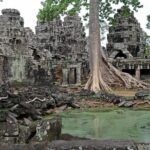
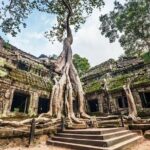
This is where you’ll see the showcase look most people associate with Ta Prohm: spung tree roots twisting over ancient stones, plus moss-covered surfaces that make the ruins look older and wilder. The effect isn’t just visual—it changes how you move. You’ll likely find yourself stepping back to take in the whole scene, then stepping closer to catch the textures where roots and stone meet.
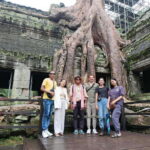
You’ll also get a specific photo target: the Tomb Raider tree. This is one of those spots where the visuals are the point. Even if you’re not chasing movie connections, you’ll probably enjoy how the roots form natural frames, like the temple has been built inside the forest.
A possible drawback: Ta Prohm rewards patience, and it’s not the place for a “quick in, quick out” mindset. If you rush, you miss what makes it special. And like most temple visits in Cambodia, the heat can be real—so the time of day you choose matters a lot (more on that later).
Banteay Kdei: Buddhist temple details without the same pressure
Next comes Banteay Kdei, a sprawling Buddhist temple that takes about 1 hour. This is a great shift in tone after Ta Prohm. Ta Prohm is all about nature taking over; Banteay Kdei feels more about the human design and the religious atmosphere.
What I like about adding Banteay Kdei is that it rounds out the Angkor story. You’re not only looking at architecture that tends to get the loudest attention. You’re also seeing Buddhist culture in Cambodia through a site that still feels lived-in by meaning, not just by photo angles.
You should expect a walk that’s interesting rather than exhausting if you go at a steady pace. A guide helps here because the temple layout can look like “stones and passageways” until someone gives you the thread to follow. With about an hour, you can usually see the most important zones without having to speed-run the site.
One caution: the main entrances and pathways can be uneven. Wear shoes you trust on real ground, not museum-smooth floors. If you plan to take lots of photos, give yourself a little extra time to stop, adjust, and then continue—this is one of those temples where details reward slower looking.
Srah Srang and King’s Bath: the calm break people forget
After the temples, you’ll head to Srah Srang, with about 30 minutes at the reservoir. This stop is short, but it’s a smart palate cleanser. Instead of more stone and roots, you get water and open views.
Srah Srang is known as King’s Bath, and the water is still present today. That little fact matters. It helps the place feel functional, not just “historic scenery.” You’ll likely find it a nice spot for a breather—especially if you’ve been walking under the sun.
This is also the kind of stop where a guide’s pacing helps. Don’t treat it like a quick photo and move on. Take the moment to look at the water edges and the surrounding temple structures. It gives your day more shape: temples up, then a calmer, reflective end point.
The only downside is that 30 minutes can disappear fast if you stop for every photo. If you want a few solid shots (not 40), plan for a quick check: one wide view, one detail, then a slow walk along the best vantage points.
Price and value: what $34 really buys you
The base price is $34 per person for a 4-hour private tour from Siem Reap. On paper, that can sound low—until you look closely at what’s included and what isn’t.
What you get included:
- Hotel pickup and drop-off
- Professional guide
- Private tour
- Bottled water
- Lunch
- Round-trip transport
What’s not included:
- Entrance fees / Angkor temple pass
- Drinks (beyond bottled water)
So the real value math is: you’re paying for time, coordination, and guided access. The entrance pass is a separate cost you need to plan for, and drinks beyond bottled water can add up if you don’t budget for them.
Is it worth it? For me, yes—if you want a guided route that hits three worthwhile stops and doesn’t force you to arrange transport. If you’re the type who loves to read maps, set your own schedule, and navigate temples without help, you might DIY for less. But if you want the day to feel easy and coherent, the included guide + transport + lunch is doing real work.
Also: this tour is booked far in advance on average, so if your dates are tight, don’t wait too long. Popular departure slots can fill up.
Timing: morning or afternoon changes everything
You can choose a morning or afternoon departure, and that choice affects the entire experience.
If you pick the morning option, you usually get a steadier start—helpful for comfort during the walking portions of Ta Prohm and the temple paths around Banteay Kdei. If you pick afternoon, you may enjoy softer light for photos, but you’ll still be dealing with heat and humidity during the walk.
Here’s my practical take: pick the departure that matches your tolerance, not just your sightseeing list. If you’re doing multiple temple days, morning tours often make it easier to spread things out so you don’t collapse by day’s end.
One more timing note: the itinerary includes a set amount of time at each stop (Ta Prohm first, then Banteay Kdei, then Srah Srang). So it’s not a “wander forever” tour. The upside is you’ll leave with clear coverage in four hours; the downside is you can’t linger endlessly at one spot without trading time from another.
Lunch, water, and the small comfort stuff that matters
This tour includes lunch and bottled water, which is a big deal on a half-day temple circuit. It means you can keep moving without hunting down a meal while you’re already in the Angkor rhythm.
There’s also a vegetarian lunch option available if you request it at booking. If dietary needs matter to you, make sure you’ve flagged it clearly when you reserve. When you travel, lunch is one of those “small” things that can decide whether a day feels smooth or stressful.
What’s not included: drinks. So if you know you’ll want extra water, juice, or something stronger than bottled water, budget for it or plan a quick purchase where appropriate.
Also, if you’re the kind of person who likes having snacks in reserve, bring a small one. Even on tours that list lunch, real schedules can get adjusted by timing and crowds. A backup bite keeps you from feeling hungry during the walk.
How well this tour fits different travel styles
This is a good match if you:
- Have already seen Angkor Wat and want more variety in the Angkor temple zone
- Want a private guide so you can ask questions and move at a comfortable pace
- Like photo-friendly ruins with real jungle drama (Ta Prohm)
- Want to include at least one stop that isn’t purely “the main highlight” (Banteay Kdei and Srah Srang)
It’s also worth considering if you’re traveling with limited energy. The total duration is about 4 hours, and the time at each stop is clearly allocated. That helps you avoid the all-day fatigue that can hit on temple circuits.
If you hate group dynamics, you’ll appreciate the private setup where only your group participates. Still, I’d confirm the vehicle and group size when you book—private labeling should mean your party is handled directly, but I’ve seen situations where the practical size can surprise people.
Should you book this Ta Prohm and Banteay Kdei half-day?
I’d book this tour if you want a focused, guided temple day that adds real texture beyond the Angkor Wat headline. The mix is strong: Ta Prohm for iconic roots and the Tomb Raider tree, Banteay Kdei for Buddhist temple atmosphere, and Srah Srang for King’s Bath water views. Plus, the included lunch and bottled water help keep the day comfortable.
Skip it (or rethink it) if entrance fees and the Angkor temple pass would be a hassle for your budget, or if you don’t want to do any planning around ticket timing. Also be honest with yourself about how you handle walking and the heat—this route is great, but it still requires real temple-site movement.
If you’re looking for an efficient way to see more Angkor temples without turning your whole day into a marathon, this is a very sensible pick.
FAQ
How long is the Half-Day Ta Prohm and Banteay Kdei tour?
It’s about 4 hours total.
Does the tour include hotel pickup and drop-off?
Yes. Hotel pickup and drop-off are included.
Is this tour private?
Yes. It’s a private tour, and only your group participates.
What sites are included in the tour?
Ta Prohm, Banteay Kdei, and Srah Srang (King’s Bath).
How much time is spent at each stop?
Ta Prohm gets about 1 hour 30 minutes, Banteay Kdei about 1 hour, and Srah Srang about 30 minutes.
Are entrance fees included?
No. Entrance fees and the Angkor temple pass are not included.
What meals and drinks are included?
Bottled water and lunch are included. Drinks are not included.
Is there a vegetarian lunch option?
Yes. A vegetarian lunch option is available if you request it at booking.
Can I choose the departure time?
Yes. You can choose a morning or afternoon departure.
What is the cancellation policy?
You can cancel for free up to 24 hours in advance for a full refund. If you cancel less than 24 hours before the start time, you don’t get a refund.