REVIEW · PHNOM PENH
The killing field and Toul Sleng Genocide museum (S21) Tour
Book on Viator →Operated by Cambodia green tour and transport · Bookable on Viator
Two places. One brutal chapter.
This Killing Fields and Tuol Sleng S21 tour links Choeung Ek and the Tuol Sleng Genocide Museum in one smooth half-day outing, so you can understand how the Khmer Rouge system worked. You get an English-speaking guide and safe, air-conditioned transport, plus cold bottled water—so you’re focused on learning, not logistics.
I especially like the small group size (up to 20), because it keeps the pace steady without feeling chaotic. I also love that you spend a full block of time at each site, with guided context that helps the story make sense rather than just shock you. And I’ve seen guides praised for being respectful and clearly explain the history in an emotionally tough setting (you might hear examples like Neang or Mr Seth).
The main drawback is budgeting: museum admission fees are not included in the base price, and the subject matter is explicit and graphic, so this isn’t ideal if you want a light day of sightseeing.
In This Review
- Key highlights you should know
- Why Choeung Ek and S21 belong together in one outing
- Getting there from Phnom Penh: pickup, A/C ride, and timing
- Choeung Ek Genocidal Center: what the 2 hours is really for
- Tuol Sleng Genocide Museum (S21): from poisonous trees to a prison museum
- The guide makes the difference: English clarity and careful tone
- Price and value: what $18 really turns into
- Group size and pacing: up to 20 can be a sweet spot
- Emotional impact: how to handle a sad, graphic day
- Who this tour suits best
- Should you book this Killing Fields and S21 tour?
- FAQ
- How long is the Killing Fields and S21 tour?
- Does the tour include pickup in Phnom Penh?
- What museums are included in the tour?
- Are the museum entrance fees included in the $18 price?
- Is an English-speaking guide included?
- What transport comfort is provided?
- How large is the group?
- Is this a mobile-ticket experience?
- What if the weather is bad?
- Is free cancellation available?
Key highlights you should know
- Two-site pairing: Choeung Ek and Tuol Sleng (S21) in one 4-hour-plus schedule
- Low-stress transport: air-conditioned vehicle, driver, pickup offered, and cold bottled water
- Small group comfort: maximum of 20 people
- Time on site: about 2 hours at each museum, not rushed in-and-out
- Extra ticket costs: entrance fees add to the $18 base price
- Guided clarity: a professional English guide who frames events with care and detail
Why Choeung Ek and S21 belong together in one outing
If you’re trying to understand the Khmer Rouge era in Cambodia, this is one of the most sensible ways to do it. Choeung Ek (often called the Killing Fields) shows the system at the other end—where people were killed and buried. Tuol Sleng (S21) shows the machine in the middle—where people were imprisoned and tortured to extract information.
Putting them back-to-back matters. Choeung Ek makes the scale and purpose feel real, while S21 explains the process that came first. Together, they help you see the logic of terror, not just the aftermath. And since this tour includes travel between them, you don’t have to spend your mental energy figuring out how to connect two heavy sites on your own.
You’ll also feel the difference in how each place communicates the past. One is an outdoor landscape with memory spaces. The other is a former high-security prison turned museum. The contrast is part of the learning.
You can also read our reviews of more museum experiences in Phnom Penh


Getting there from Phnom Penh: pickup, A/C ride, and timing
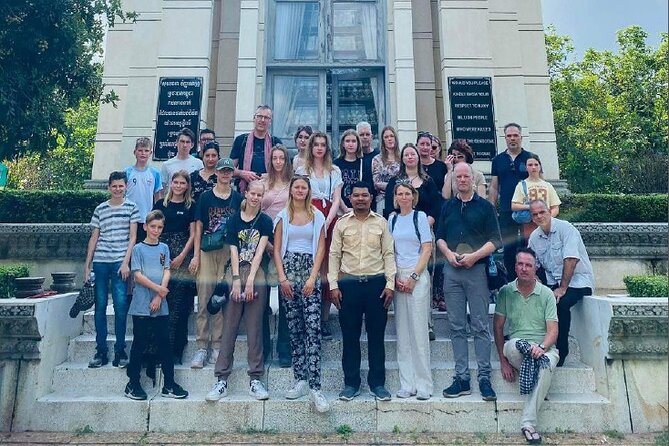
This tour is based in Phnom Penh and includes pickup offered. Since Choeung Ek is about 15 km south of Phnom Penh, the ride is part of the experience—especially when you’re starting in the city heat.
Expect roughly 4 hours 15 minutes total. The schedule is built around two separate ~2-hour blocks: one for Choeung Ek and one for Tuol Sleng S21. That timing is long enough to actually take in what you’re seeing and reading without feeling constantly herded along, but short enough that you still get the rest of your day in Phnom Penh afterward.
Transport quality is included: a clean, safe, air-conditioned vehicle with a driver. Cold bottled water is provided, which sounds like a small thing until you realize you’ll be outside and walking while your brain is absorbing extremely hard material. Mobile tickets are used as well, which helps you avoid last-minute fuss.
Choeung Ek Genocidal Center: what the 2 hours is really for
Choeung Ek is not just a museum stop—it’s a place of mass killing. This tour begins there, and it’s easy to see why it’s often the first site visitors experience: it frames the end result before you move to the prison system.
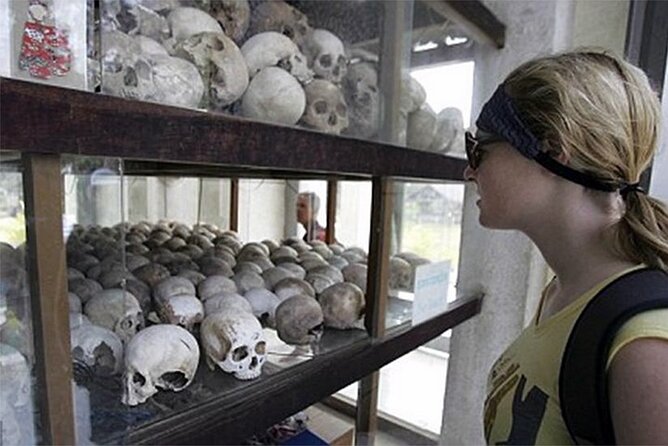
You’ll learn that the area was once an orchard and a Chinese cemetery, then the Khmer Rouge, led by Pol Pot, turned it into the infamous killing fields. The numbers shared here are staggering: around 20,000 victims executed, with 2.5 million people massacred and buried over about three years.
This is where you’ll feel the “heavy” side of the day. Even when a guide is calm and clear, the subject matter is explicit and graphic, and some people find it emotionally hard. The value of a guided tour is that you’re not left alone with only written facts—you get a human explanation that connects details into a story you can hold.
One practical consideration: because this stop is about two hours, you’ll want to pace your attention. Spend time where the guide directs you, but also give yourself a moment to look without rushing. This isn’t a place for multitasking.
Tuol Sleng Genocide Museum (S21): from poisonous trees to a prison museum
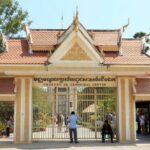
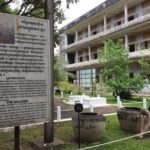
After Choeung Ek, you’ll head to Tuol Sleng Genocide Museum, often called S21. The name Tuol Sleng is tied to the idea of the hill of poisonous trees, and that place-name context comes with the history you’ll be told.
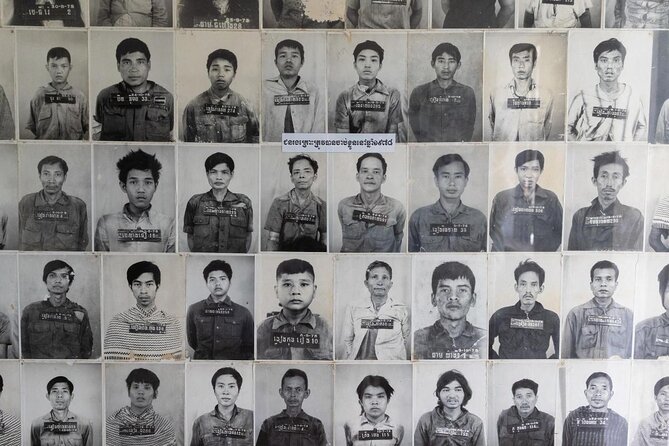
The site is especially hard to understand without guidance. Pol Pot turned what was once a popular high school into a high-security prison. In this museum, you’ll be told that about 20,000 people were imprisoned, and many were tortured to get information.
This is the site where the system feels most procedural. Instead of only thinking about killing, you’ll start thinking about arrest, detention, coercion, and how a regime can scale cruelty through paperwork, routines, and guarded spaces.
Also notice the emotional pacing. S21 can feel intense in a different way than Choeung Ek because it’s closer to the methods. It’s still part of the same overall story, but the museum setting can make it feel more immediate and enclosed.
Again, the guide’s tone matters a lot here. Some guides are praised for being respectful and for connecting their explanations to what they know personally or how it affects their family. You might even catch a guide like Neang explaining in a way that feels both knowledgeable and human—one review also noted learning a few Khmer words along the way, which can be a gentle reminder that you’re not only witnessing history; you’re interacting with Cambodia in the present.
The guide makes the difference: English clarity and careful tone
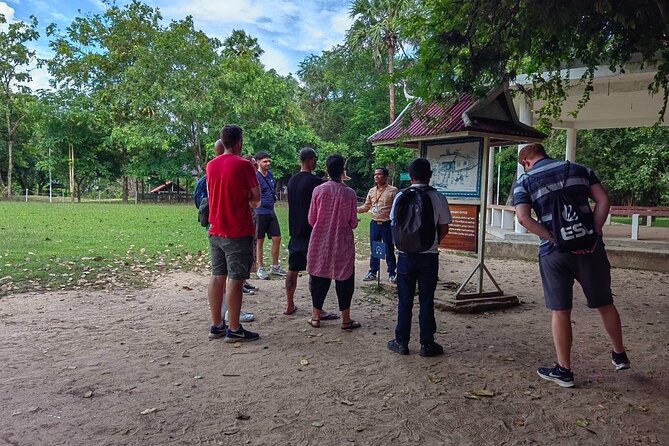
You’re paying for two big things with this tour: a guide and a transport buffer. The guide is what turns a list of rooms and sites into understanding.
A professional English-speaking guide is included, and the most highly praised tours in this area share a common style: respectful, detailed explanations that don’t treat suffering like trivia. The best guides also help you follow the timeline and the purpose behind what you’re seeing—especially when the facts are grim.
In past tours, guides have been singled out by name, including Mr Seth and Neang. If you get one of these guide styles, you can expect clear history delivered in a way that doesn’t rush the emotional reality. One big takeaway from the best experiences is that the guide explanations can feel honest and personal, which helps many people process the material without feeling numb.
If you’re the type of traveler who likes to learn with structure—dates, names, how one event led to another—this format fits you well. If you’re worried about being overwhelmed, the guide can also help by pacing the story and focusing on what matters most.




Price and value: what $18 really turns into
The advertised price is $18 per person, and it covers more than you might think at first glance. You get:
- A professional English-speaking guide
- A driver and safe transportation in an air-conditioned vehicle
- Cold bottled water
- A group tour capped at 20 people
What’s not included is crucial: museum admission fees. You’ll add:
- Choeung Ek entrance ticket: $3 per person
- Tuol Sleng (S21) entrance ticket: $5 per person
So plan on about $26 total for the core experience, before tipping and personal expenses. That price adds up to a lot of history learning plus transport between two major sites, in a half-day schedule that doesn’t require you to coordinate multiple pickups or tickets on your own.
Is it a bargain? For this pairing, I think it’s good value—especially because the tour handles transport comfort and guided interpretation. But do keep the extra ticket cost in mind so you’re not surprised when you’re asked for the fees at the sites.
Group size and pacing: up to 20 can be a sweet spot
The group cap of 20 travelers isn’t just a comfort detail. It affects pacing. In a smaller group, a guide can manage questions and keep you moving without the “herded” feeling that bigger tours sometimes bring.
It can also help you during emotionally tough moments. You’re not constantly bumping into strangers or waiting for everyone to regroup. That matters at places like S21, where you might want a few quiet seconds to read or look carefully.
The tour is designed for “most travelers,” which suggests the structure is workable for a wide range of visitors. Still, this is a heavy topic. If you know you struggle with graphic content or intense historical material, take that seriously and consider how your day will feel.
Emotional impact: how to handle a sad, graphic day
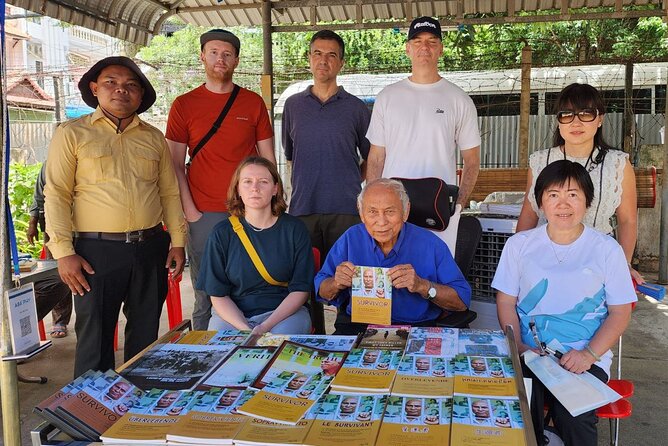
This is one of those outings where the “top attraction” is also the hardest part of the day. The tour is described as emotionally hard and explicitly graphic. That doesn’t mean it’s poorly handled—it means the subject deserves honesty.
My practical advice: don’t plan anything demanding right after. If you still want to go out for dinner, choose something simple, quiet, and close by. You’ll process this tour more than you think you will.
If you travel with friends or family, decide ahead of time what kind of experience you want. Some people prefer to talk through what they learned; others need silence and space. A guided tour helps with the facts, but your own pace still matters.
Who this tour suits best
This is a strong fit if:
- You want a clear explanation of the Khmer Rouge era in Phnom Penh
- You care about understanding the connection between the prison system and the killing fields
- You like a structured half-day plan with an English guide and A/C transport
- You prefer small-group touring (max 20) over jumping between sites alone
You might skip it if:
- You’re looking for a lighter day
- Graphic, explicit content would be too much for you right now
- You don’t want to spend your limited time in Cambodia on emotionally heavy history
Should you book this Killing Fields and S21 tour?
I’d book it if your goal is real learning in a manageable time window. The pairing of Choeung Ek + Tuol Sleng S21, combined with A/C transport, a professional English guide, and cold bottled water, makes it a practical way to tackle two of Phnom Penh’s most important historical sites.
Just go in with the right expectations: plan for extra entrance fees (plus tipping if you choose), and accept that the day will be sad and graphic. If that matches what you’re ready for, this tour offers good structure, thoughtful guidance, and a clear path through one of Cambodia’s darkest chapters.
FAQ
How long is the Killing Fields and S21 tour?
It runs about 4 hours 15 minutes (approx.), with time split between Choeung Ek and Tuol Sleng (S21).
Does the tour include pickup in Phnom Penh?
Pickup is offered.
What museums are included in the tour?
You visit Choeung Ek Genocidal Center (the Killing Fields) and Tuol Sleng Genocide Museum (S21).
Are the museum entrance fees included in the $18 price?
No. The Choeung Ek entrance ticket is $3 per person, and the Tuol Sleng (S21) entrance ticket is $5 per person.
Is an English-speaking guide included?
Yes. The tour includes a professional English-speaking tour guide with a driver.
What transport comfort is provided?
You travel in an air-conditioned vehicle, and the tour includes cold bottled water.
How large is the group?
It’s a group tour with a maximum of 20 travelers.
Is this a mobile-ticket experience?
Yes, mobile tickets are included.
What if the weather is bad?
This experience requires good weather. If it’s canceled due to poor weather, you’ll be offered a different date or a full refund.
Is free cancellation available?
Yes. You can cancel up to 24 hours in advance for a full refund.