REVIEW · SIEM REAP
Full-Day Guided Bicycle Tour in Angkor Wat Temple
Book on Viator →Operated by Asia Backroads Travel · Bookable on Viator
Cycling through Angkor feels like a different world. This full-day guided bike tour is built for pace and variety: traffic-free paths, forest roads, and stops at the big names (Ta Prohm, Bayon, Angkor Wat) plus several less-expected temple sights along the way. You also get the practical stuff handled—bike fitting, helmet, water, and an English-speaking guide—so you can focus on the ruins and the scenery.
I especially like how the route spreads things out across the Angkor Archaeological Park, not just a rushed checklist. And I love that the tour keeps you moving at a relaxed rhythm, with time for real looking and photo pauses. One thing to consider: entrance fees are not included, so plan for the Angkor day pass on top of the $55 tour price.
If you’re lucky, you’ll ride with a guide as fun and sharp as Vuthy or Chuoy—people mentioned how much they enjoyed the humor and temple storytelling. The tradeoff is simple: it’s an 8-hour day on a bike, so you’ll want to be comfortable riding for long stretches in warm, possibly humid weather.
In This Review
- Key highlights worth your attention
- Why biking Angkor beats the usual temple stampede
- Pickup, bike fitting, and a day planned for flow
- Ta Prohm Temple: jungle roads and roots in the right frame
- Angkor Thom and Bayon: elephant terrace carvings and face towers
- Angkor Wat in the afternoon: the world’s largest religious monument
- Price and value: what $55 really covers (and what doesn’t)
- What to bring and how to enjoy the full day
- Who this tour fits best
- Should you book this Angkor Wat bicycle tour?
- FAQ
- How long is the full-day guided bicycle tour?
- How much does the tour cost?
- Is hotel pickup and drop-off included?
- Are bikes and helmets provided?
- Is lunch included?
- Are entrance fees included in the price?
- What’s included for food and drinks during the ride?
- How large is the group?
- What days and times does the tour run?
- What happens if the tour is canceled due to weather?
Key highlights worth your attention
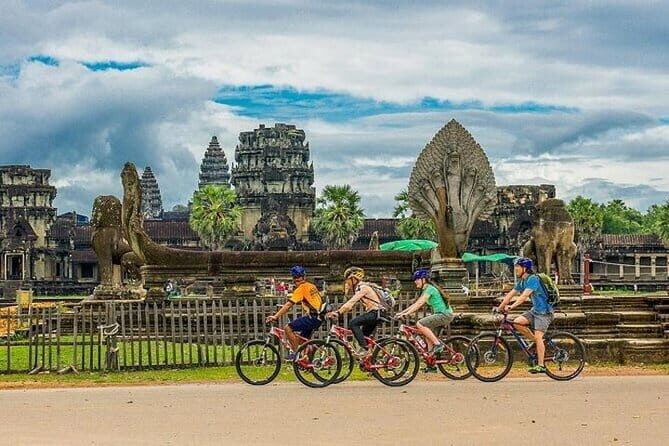
- Shaded, quieter riding routes that help you escape the densest crowd zones
- Small groups (up to 12) for a calmer experience and easier pacing
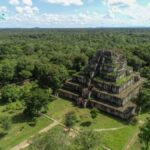
- A mix of famous + lesser-visited temples, including Ta Prohm and Bayon plus stops like Kravan Temple and Banteay Kdei
- Terrace stops inside Angkor Thom, including the Terrace of the Elephants and Terrace of the Leper King
- Lunch near the temples, plus local snacks and seasonal fruit to keep energy up
- Hotel pickup and drop-off, so you don’t waste time figuring out logistics
Why biking Angkor beats the usual temple stampede
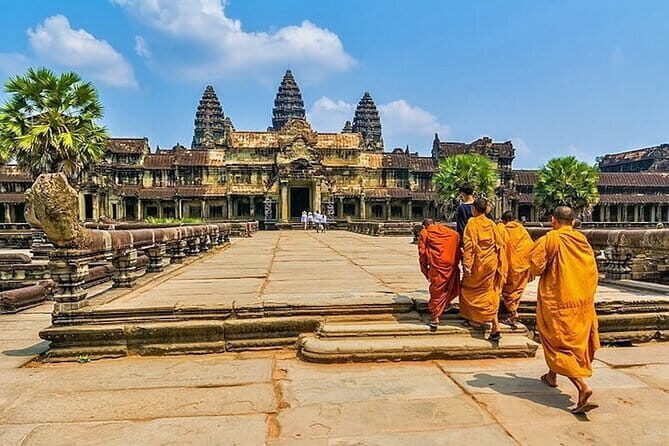
Angkor can be overwhelming if you experience it the standard way—standing in lines, getting shuffled between stops, and watching the day slide by with limited time to look closely. This tour changes the feel because it’s designed around moving through the park and countryside by bicycle. You’re not just arriving at temples; you’re riding between them along roads and paths that feel more local and less like a queue.
A big bonus is the contrast in scenery. One stretch can be shaded and foresty, then you hit stone and carvings, then you drop into another quieter corner of the ancient landscape. That rhythm matters. It keeps your brain from overheating on history overload and makes each temple encounter land with more impact.
Also, the tour is built for a relaxed pace. You still cover the main highlights—Ta Prohm, Bayon, Angkor Thom, and Angkor Wat—but you’re not stuck rushing like you’re trying to beat closing time. That’s a comfort factor, especially when the temples are busy.
You can also read our reviews of more guided tours in Siem Reap
Pickup, bike fitting, and a day planned for flow
Your day starts with hotel pickup and drop-off, which is one of the most underrated parts of a day trip. When you’re in Siem Reap, it’s easy to lose time to transfers. Here, that time is folded into the tour from the start.
Once you’re picked up, you get a bike fitting and safety briefing before riding. That’s not just formality—it helps you get comfortable sooner, especially on a long day where minor discomfort can turn into a problem. You’ll also have a good-quality bike and a helmet, plus pure drinking water during the tour.
The day runs about 8 hours, and the structure is fairly evenly split across the major temple zones. It helps that there’s a logical flow: begin in the Ta Prohm area, move through Angkor Thom for Bayon and terraces, then head to Angkor Wat later with time to eat and regroup.
Group size is capped at 12 travelers, which tends to make everything easier: you can keep a steady rhythm without constant regrouping, and the guide can manage the route without a massive bottleneck.
Ta Prohm Temple: jungle roads and roots in the right frame
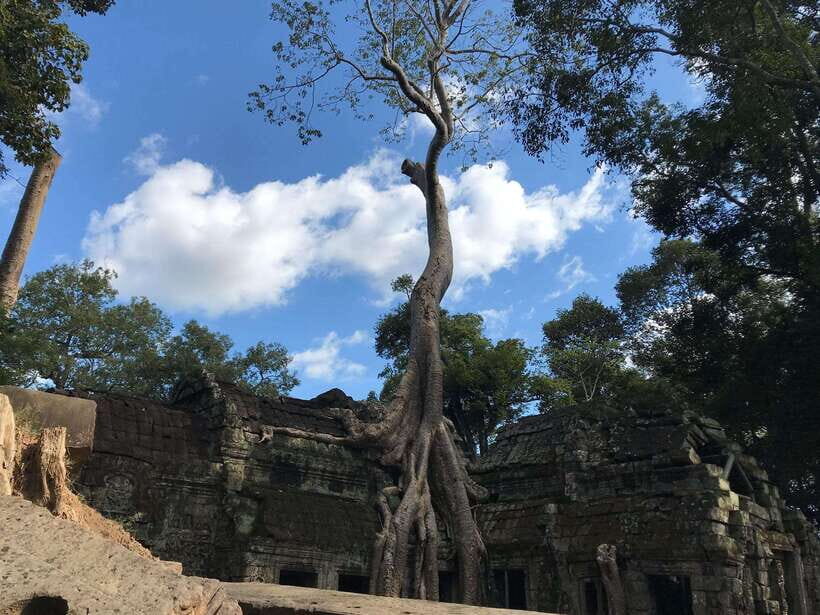
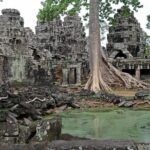
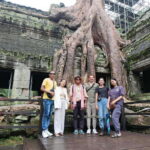
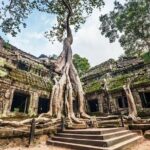
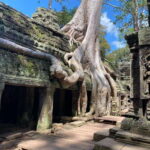
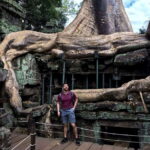
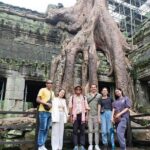
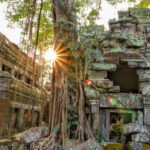
Most people come to Ta Prohm for the famous look: massive fig tree roots wrapping around stone, plus jungle vines hanging on like the landscape refused to let go. This tour begins there, and that order helps. Starting early often gives you more breathing room to enjoy the setting instead of feeling squeezed.
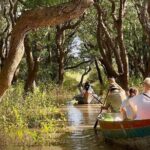
Before reaching Ta Prohm, you ride through the Angkor checkpoint area and then follow a scenic, shaded road that winds gently through forest. That road time is part of the experience. It’s when the day shifts from city to park—cooler shade, more quiet, and a calmer build-up before the temples.
Along the way, you’ll pass additional temple stops, including Kravan Temple and Banteay Kdei. Those aren’t the biggest headline names, but they matter because they break up the day. They also set you up to appreciate the complexity of the Angkor system: it’s not one monumental site, it’s a whole network of spaces shaped by different eras.
Ta Prohm itself is scheduled for about 3 hours. Admission isn’t included, so you’ll need your Angkor day pass separately. But once you’re inside, slow down. Ta Prohm rewards patience. You’ll likely find it easier to notice textures in the stone and the way roots and vines behave across different angles, rather than just snapping photos and moving on.
Possible drawback to keep in mind: if you’re someone who likes ultra-early starts, this tour’s timing may feel like a normal morning rather than a sunrise hustle. Still, the day is paced well enough that you’re not stuck waiting around.
Angkor Thom and Bayon: elephant terrace carvings and face towers
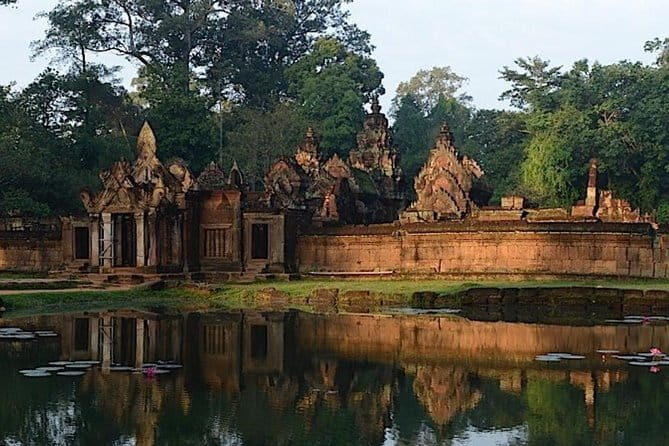
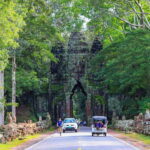
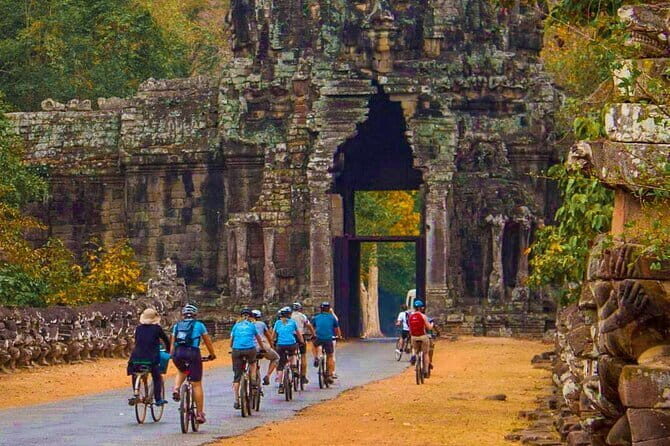
After Ta Prohm, you cycle on to Angkor Thom, entering through a stone gate with carvings of elephants and tall carved faces. This gate is a strong visual moment. It also gives you context for the scale of the city you’re about to explore.
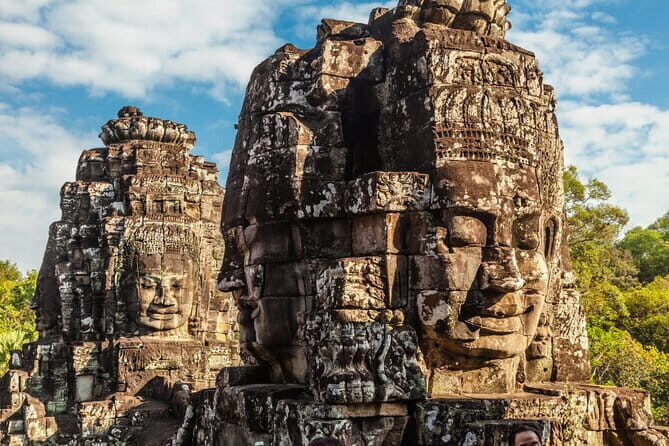
The big stop here is Bayon Temple, known for its serene, smiling stone faces. The effect is very different from Ta Prohm. Ta Prohm is tangled with nature, dramatic and overgrown. Bayon feels more composed, more architectural, and more focused on the city’s power and symbolism.
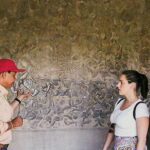
This section includes about 2 hours for Angkor Thom highlights. You’ll also visit the Terrace of the Elephants and the Terrace of the Leper King. These terraces are where you see the carving work up close—bas-reliefs that add texture to the visit beyond the main faces of Bayon.
The value of including the terraces is that they give your brain a different kind of reading time. Instead of only thinking about the biggest landmark in the frame, you get to look at how storytelling is built into repeated relief scenes. And since you’re cycling between temple zones, the day doesn’t feel like one long museum hall experience.
One practical consideration: the park can be busy in general, so it’s still smart to plan for crowds at the most famous stops. The ride helps you reach these places efficiently, but it doesn’t remove all peak-time foot traffic.
Angkor Wat in the afternoon: the world’s largest religious monument
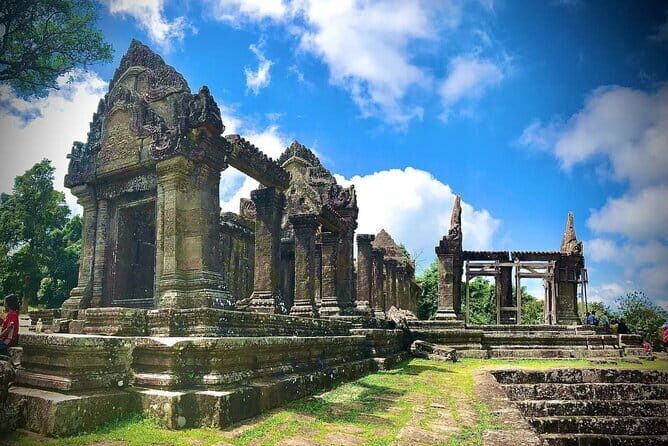
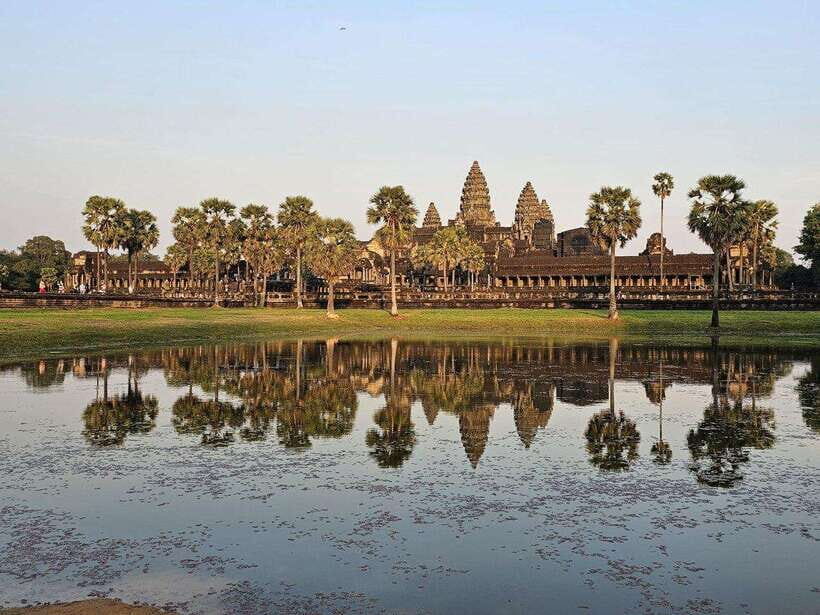
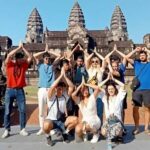
Then comes the headline. Angkor Wat is scheduled for about 3 hours, and it’s a fitting centerpiece for the end of the day’s temple sequence.
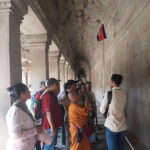
This is where you’ll want a calm mindset. Angkor Wat is huge and visually dense, and the trick is not trying to “win” the visit by seeing everything fast. Instead, let the architecture guide you. Think in terms of layout and symbolism—how the spaces relate and how the carvings work as a visual language.
Because lunch happens before or around your arrival phase here, you get a reset point. The tour includes lunch at a local restaurant, and it’s served midway during the day near the temples. That matters more than you might think. Food breaks keep you from turning the last temple stop into a survival mission.
After lunch and some afternoon temple time, the tour cycles you back to your hotel. That return ride is also part of the experience: you go from stone and crowds into the feeling of movement again, with the countryside and park edges in view.
You can also read our reviews of more tours and experiences in Siem Reap
Price and value: what $55 really covers (and what doesn’t)
The tour costs $55 per person, and for that you get a lot of the hard-to-plan pieces: experienced English cycling guide, good-quality bike & helmet, hotel pickup & drop-off, lunch, local snacks and seasonal fruits, and pure drinking water.
For me, the value hinges on the tradeoff: you’re paying for a guided route plus logistics, so you can ride between sights without spending your energy negotiating transport, bike access, and pacing. If you’d otherwise cobble together those parts yourself, the added cost can vanish fast once you factor in time and coordination.
What’s not included is the big line item people sometimes forget: entrance fees for all attractions. The info provided lists USD 37 for a single day entry. So a realistic budget looks like:
- $55 tour price
- plus about $37 entrance fees
That puts you around $92 before any extra drinks. Alcohol is available to purchase, but it’s not included.
What to bring and how to enjoy the full day
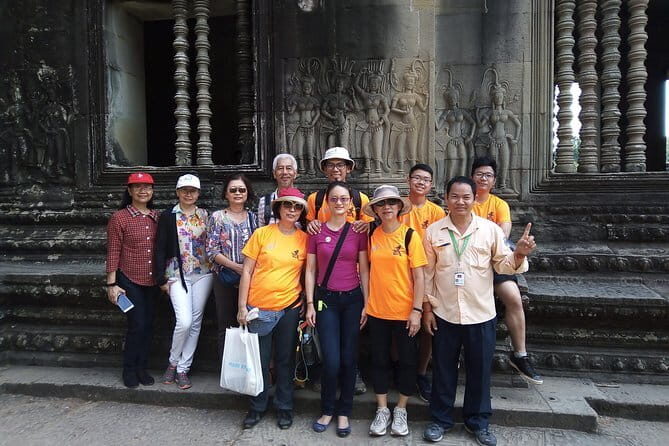
Because the tour is weather-dependent, it helps to plan for heat and humidity. The experience is listed as requiring good weather. If poor weather forces a cancellation, you’ll be offered a different date or a full refund.
In terms of your own prep, you’ll feel better if you bring:
- Sunscreen and a hat (you’ll be on shaded roads, but not every moment is protected)
- Sunglasses (temple light can be bright)
- Comfortable clothes for cycling and walking around temples
- A light layer for early morning air, just in case
You’ll also be glad to know the tour includes local snacks and seasonal fruit, so you’re not stuck rationing energy between major stops. Still, hydration habits help. Since the tour provides pure drinking water, you’ll have what you need—but you should still sip regularly instead of waiting until you feel thirsty.
Also, have your expectations aligned: this is a guided bike day with temple time. If you want long free time with no structure, this may feel scheduled. If you like a plan that includes the right stops in a logical order, you’ll likely appreciate it.
Who this tour fits best
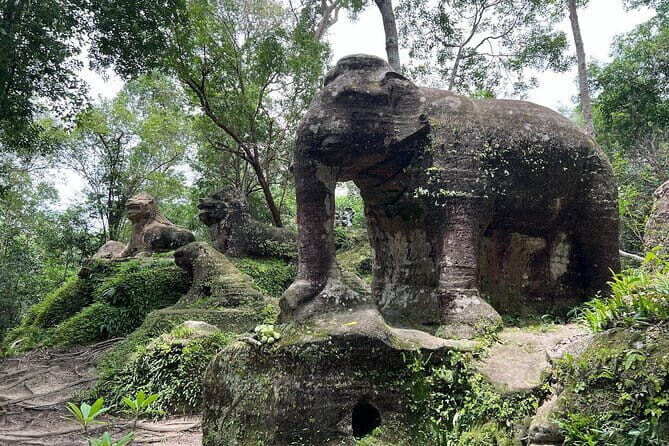
This is a strong choice if you:
- Want to see the big Angkor highlights without only doing a bus-and-walk routine
- Prefer calmer riding through peaceful, traffic-free trails
- Enjoy guides who make temple stories easy to follow and, from what you’ve heard in the guide feedback, can keep things funny
- Like the idea of a small group capped at 12 travelers
It’s also a good option if you want a day that blends culture with countryside scenery. You’re not just sitting in a vehicle. You’re moving through the landscape, which makes the day feel longer in the best way.
If you’re someone who can’t ride for extended stretches, or you’re uncomfortable with a full-day schedule, you might want to consider something shorter. The info says most travelers can participate, but that still implies you should be comfortable on a bike for roughly the full ride plan.
Should you book this Angkor Wat bicycle tour?
I think you should book if you want Angkor to feel like an experience, not a checklist. The combination of cycling between temples, the inclusion of both famous landmarks and additional stops like Kravan Temple and Banteay Kdei, and the inclusion of lunch plus snacks makes it a practical day.
I’d skip it or hesitate if you:
- Already have your own plan for entrance tickets and you’re comfortable arranging everything independently
- Need a very low-activity day
- Dislike the idea that the main costs are split (tour price plus entrance fees)
If you like structure, small-group pacing, and the idea of trading some crowded walking routes for shaded roads and jungle-path vibes, this tour is a very solid value. Add the fact that guides such as Vuthy or Chuoy are reported to bring both knowledge and humor, and it’s the kind of day that stays memorable for the right reasons.
FAQ
How long is the full-day guided bicycle tour?
It runs about 8 hours (approximately).
How much does the tour cost?
The price is $55.00 per person.
Is hotel pickup and drop-off included?
Yes. Hotel pickup and drop-off are included.
Are bikes and helmets provided?
Yes. The tour includes a good-quality bike and a helmet.
Is lunch included?
Yes. Lunch is included at a local restaurant.
Are entrance fees included in the price?
No. Entrance fees are not included. The single day entry is listed as USD 37.
What’s included for food and drinks during the ride?
You’ll have lunch plus local snacks and seasonal fruits, along with pure drinking water.
How large is the group?
The tour has a maximum of 12 travelers.
What days and times does the tour run?
It operates Monday through Sunday, 8:00 AM to 5:00 PM (within the listed validity dates).
What happens if the tour is canceled due to weather?
If it’s canceled due to poor weather, you’ll be offered a different date or a full refund.