REVIEW · PHNOM PENH
Chiso temple, Neang khmao, and Taprum temple historical site Tour
Book on Viator →Operated by The Killing Field and S21 Genocide Tour · Bookable on Viator
Phnom Chisor gives you instant Cambodia scale. This private, 8-hour temple day mixes big views, Angkor-era details, and a calm lake break, so the scenery changes without the schedule feeling rushed. I especially loved the 11th-century sculptures and galleries at Phnom Chisor, and I also liked how our guide, Soapheak, explained what you’re actually looking at near the active pagoda.
There’s one thing to consider: it’s a temple-heavy day, so if you want long sits, cafés, and downtime, you may find yourself wishing for more breaks than the short lake stop. Still, the pacing works well if you like walking, photos, and learning the Khmer story behind each site.
In This Review
- Key highlights to know before you go
- Phnom Chisor sets the tone for the whole day
- The best view at Chisor: rice fields, a temple avenue, and strong photo angles
- Prasat Neang Khmau: two brick towers, Shiva devotion, and an active pagoda scene
- Ta Prohm Temple: smaller than Angkor, still a strong Jayavarman VII story
- Yeay Pov Temple: your final temple moment
- Tonle Bati: the local lake break that makes the day feel complete
- How the 8-hour private format works (and why it’s worth it)
- Price and value: paying $190 per group up to 5
- What to bring for a temple-and-lake day
- Who should book this tour from Phnom Penh
- Should you book the Chiso, Neang Khmau, and Ta Prohm (Taprum) historical site tour?
- FAQ
- What is the duration of the tour?
- How much does the tour cost?
- Is pickup included, and where does the tour start?
- Is there an English-speaking guide?
- Are admission tickets included?
- What is included in the price?
- Is food included?
Key highlights to know before you go
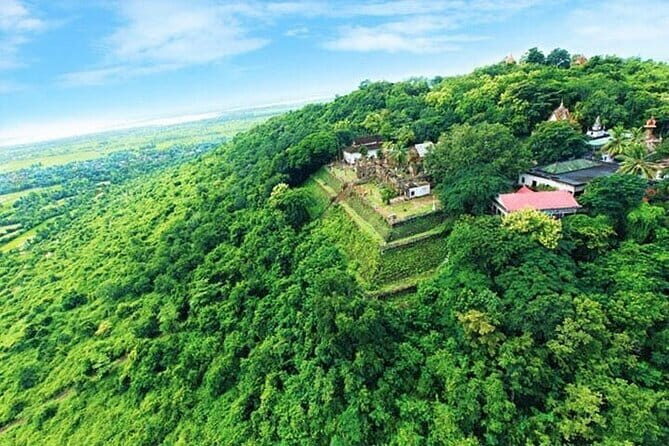
- Phnom Chisor’s view spot: walk behind the temple for wide countryside and rice-field scenery
- A straight-line temple layout: see how an avenue aligns key features toward the east
- Prasat Neang Khmau’s brick prasats: two deteriorating towers tied to Angkorian-era devotion to Shiva
- Ta Prohm Temple’s unique art: smaller than the famous Ta Prohm, but built in the Jayavarman VII era
- Tonle Bati as a reset: a local weekend lake with fishing and easy photo opportunities
Phnom Chisor sets the tone for the whole day
You start with Phnom Chisor, a temple site built in the 11th century and still covered with sculptures today. It’s not just a “look from the outside” stop. You can walk through the different galleries, and you can even enter the place of worship when the site is open and respectful access is available.
This is one of those Cambodian temple spaces where your eyes keep finding new carvings as you move. I like that because it turns the visit from a checklist into something more like wandering with a purpose. And since you’re starting early, you usually get better light for photos before the heat builds.
If you’re the kind of person who enjoys small visual clues, Phnom Chisor rewards that. Even without being an archaeology nerd, you can feel the planning behind the layout. The guide helps you connect what you see to what it likely meant to people living with these temples, day after day, long before “tour day” existed.
Practical tip: wear shoes you’re comfortable walking in. You’ll move through galleries and around viewpoints, and you don’t want to spend the day thinking about your feet.
You can also read our reviews of more historical tours in Phnom Penh
The best view at Chisor: rice fields, a temple avenue, and strong photo angles
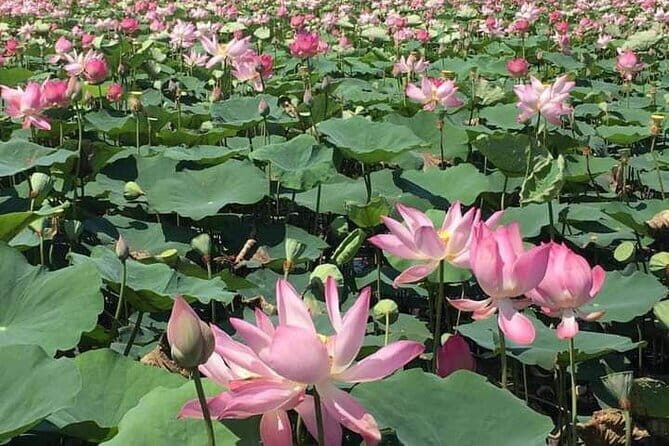
The real wow moment at Phnom Chisor is at the back of the temple. There’s a prime spot for views and pictures where you can see a vast plain of surrounding rice fields and countryside. It’s the kind of landscape shot that makes the whole day feel bigger, even if you’re only seeing one small slice of it.
What I found extra interesting is how the eastward view line tells a story. From there, looking down toward the east, you can see an avenue that forms a straight line connecting three main features. Those include two outer temples with a cruciform ground plan, plus a moat. In other words, the site isn’t random. It’s arranged with intention, and the view point helps you read that plan.
When you stand in that back area, don’t just frame a photo and run. Slow down for a minute and try to take in the line-of-sight idea: temple-to-avenue-to-moat. That’s where a guide’s explanations really pay off, because you start recognizing the “why” behind the geometry.
Photo timing tip: if you care about pictures, hold your position for a few minutes and re-check your angle. The light and the haze over the fields can change what looks crisp.
Prasat Neang Khmau: two brick towers, Shiva devotion, and an active pagoda scene
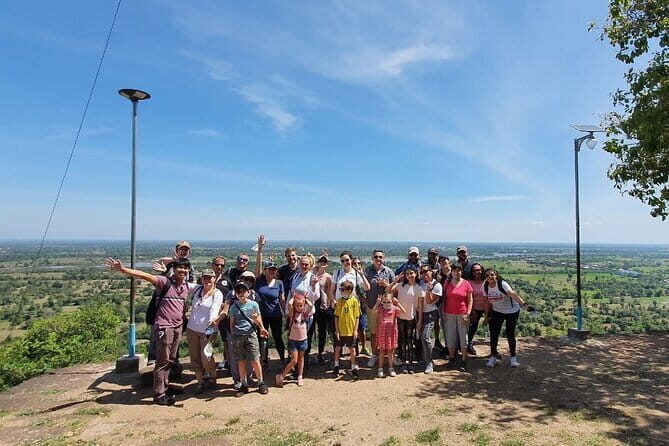
Next you head to Prasat Neang Khmau, an Angkorian-era temple complex associated with the worship of Shiva. This site is located in Rovieng commune, Samrong district, off National Road 2, about 27 kilometers north of Takeo provincial town or roughly 52 kilometers south of Phnom Penh.
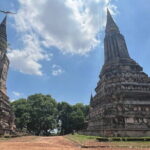
Here’s what makes it feel different from the bigger temple complexes: Prasat Neang Khmau consists of two deteriorating brick prasats (towers). They were built in the Angkorian era in the 10th century A.D. under King Jayavarman IV. The site also suggests there may have been at least one more tower and possibly as many as three more originally, even if today you see only two.
And it’s not dead ruins only. You’ll also spend time standing next to an active pagoda. That matters because it changes the mood from museum-quiet to lived-in sacred space. My favorite part of the explanation from Soapheak was how he connected the surrounding structures and the pagoda lifestyle to how these towers would have fit into daily spiritual practice.
What to look for: since the towers are deteriorating, focus less on imagining them brand-new and more on reading their remaining form. The texture and survival of brickwork can be a clue to age and rebuilding patterns, and the guide helps you interpret what you’re seeing without forcing complicated jargon on you.
Admission for the scheduled stop is listed as free, and the tour includes all fees and taxes. That means your money goes more toward guide time and transport than ticket math.
Ta Prohm Temple: smaller than Angkor, still a strong Jayavarman VII story
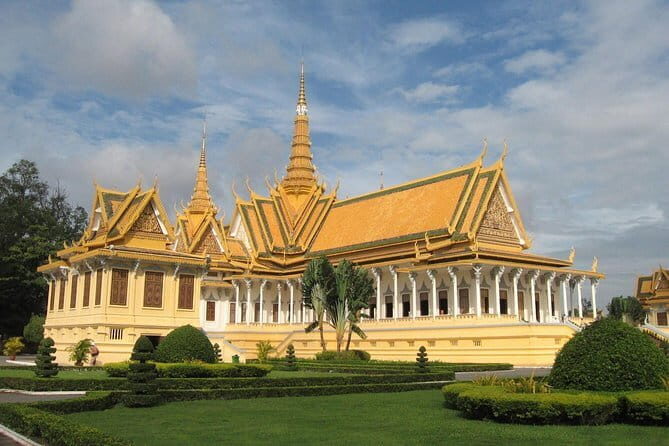
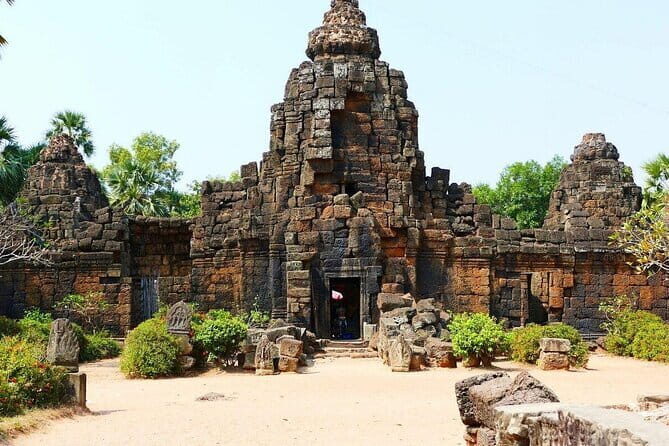
After that, the route brings you to Ta Prohm Temple. This one was built during the reign of King Jayavarman VII, in the late 12th or early 13th century. If you’ve heard of the famous Ta Prohm at Angkor, this is a different scale of experience. The one you visit here is smaller, but it features a lot of very unique art.
That combination—smaller scale plus distinctive decoration—can be a sweet spot. You’re more likely to notice carvings and details without feeling like you’re in a crowd sprinting between photo spots. And because your guide has the time to point out specific elements, you get to understand what the artistry likely communicated to the people who used the temple.
Even when a site is smaller, it still gives you the best part of temple travel: pattern recognition. You start seeing how Khmer temple design expresses power, devotion, and community space. You might not catch every symbolic detail on your first try, but you’ll at least leave with a clearer sense of what the artist and patron were aiming for.
Wear-and-walk reality check: temple art often rewards close inspection, so keep an eye on your balance when you’re near uneven surfaces. Take your time; the day is built for steady looking.
Yeay Pov Temple: your final temple moment
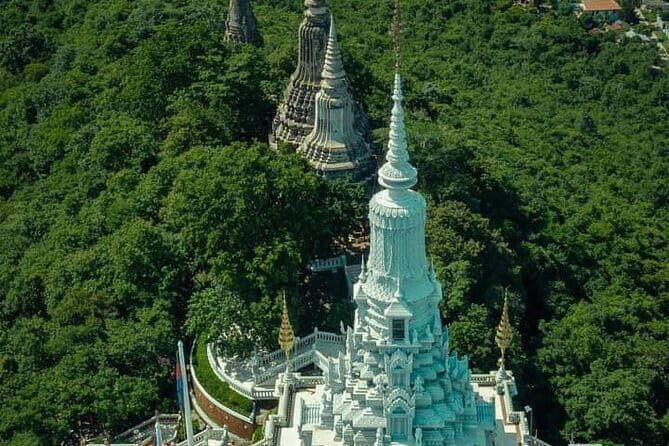
Your last temple destination is Yeay Pov Temple. The day ends with this stop after Ta Prohm, so you’re moving from one sacred site atmosphere to another. Even without heavy crowds, this kind of finale can feel good because your brain has already switched into temple mode.
Respect matters here, as it does at any active worship area. If there are any signs about dress or access, follow them. And if you’re unsure where to stand or whether you can enter certain sections, ask your guide first. It saves awkward moments and helps you keep the visit smooth for everyone.
Good strategy: treat Yeay Pov as your chance to slow down and absorb the overall feeling of temple travel—rather than trying to match every stone to a historical fact. If you take in the site calmly, you’ll feel the day’s story ending in the right place.
You can also read our reviews of more museum experiences in Phnom Penh


Tonle Bati: the local lake break that makes the day feel complete
Between temples (and after them), you get a change of pace at Tonle Bati. This is a small lake about 30 km south of Phnom Penh. It’s a popular weekend destination for the local population and also a well-known fishing spot.
That makes Tonle Bati more than just a scenic photo stop. It’s a chance to see everyday Cambodia life in a setting that’s naturally social. Even if you keep it simple—walk around, look at the water, take a few pictures—you’ll feel the shift from stone galleries to a living landscape.
Because this stop is listed as free and scheduled for about an hour, it works as a real reset. You can stretch your legs, cool down a bit, and reset your energy level for the last stretches of the day.
If you like candid moments: a lake where people fish often shows you honest rhythms of the weekend. Just keep a respectful distance and don’t block active work.
How the 8-hour private format works (and why it’s worth it)
This is a private tour/activity, built for your group only, with a maximum of up to 5 people. That matters because it changes the feel: you’re not negotiating your way through a moving crowd, and you can ask questions when they pop into your head.
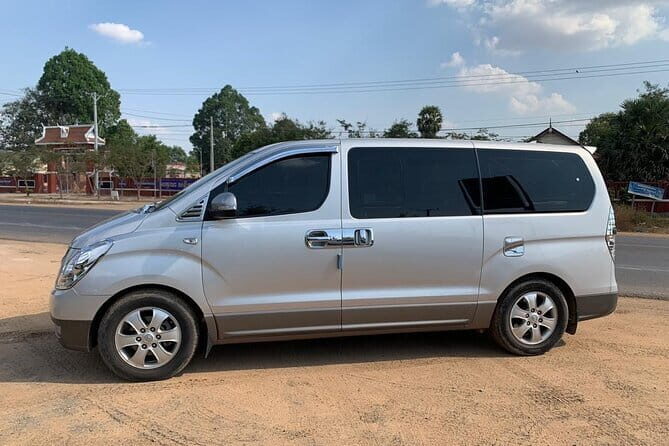
Pickup is offered from the meeting point at River Crown Restaurant, 357, St. 178, Prehsisovath Quay, Phnom Penh 12206, Cambodia. The tour starts at 8:00 am and ends back at the same meeting point. Transportation is by air-conditioned vehicle, and the tour includes a friendly driver and cool water.
The whole thing runs about 8 hours. That’s long enough to cover multiple sites without feeling like you’re constantly sprinting, but short enough to stay comfortable if you plan your pace. The mix of temple stops plus the lake stop gives you a natural rhythm: climb/look, then reset, then learn/look again.
Since it’s booked fairly far in advance on average (87 days), I’d recommend planning ahead if you’re traveling during peak seasons or on popular weekends. A private temple day can fill up when people are trying to fit a “big learning day” into a limited Phnom Penh schedule.
Price and value: paying $190 per group up to 5
The price is $190 per group (up to 5). That’s not the kind of pricing that works the same if you’re traveling solo, but it can be excellent value if you can share with a friend or family member.
Here’s what you get included:
- An English-speaking tour guide
- Transportation in an air-conditioned, clean, hygiene-focused vehicle
- A friendly driver and cool water
- All fees and taxes
And for several scheduled stops, admission is specifically listed as free. That’s important, because it means you’re not guessing what will cost extra once you arrive.
Food and beverages are not included, so you’ll want to either eat before you go or plan for your own lunch stop during the day. Tipping to the local guide and driver is also not included, so set aside a budget for that if you feel the service deserves it.
My value take: this tour feels like you’re paying for guided time plus transport across multiple sites, with tickets not eating up your day budget. If you’re the type who likes context—what you’re looking at and why—it tends to land as a good deal.
What to bring for a temple-and-lake day
Even with cool water included, you’ll want to bring the usual “don’t ruin your day” items. Wear breathable clothes and comfortable shoes, because you’ll be walking through galleries and moving between stops.
A few other practical ideas:
- Bring sun protection (hat/sunglasses) for the viewpoint and open areas
- Keep a light layer handy if you get chilly in the car
- Have a way to keep your phone charged for photos
- Dress modestly for temple areas, especially if you’re near an active pagoda
Also, because this is a mobile-ticket tour, make sure you can access your ticket on your phone when the guide needs it. Simple, but easy to forget.
Who should book this tour from Phnom Penh
I’d suggest this experience if you want a single day that covers multiple sacred sites with a guide explaining what you’re seeing. It’s a solid fit for:
- First-timers who want temple context, not just directions
- Small groups up to 5 who can share the cost
- People who care about views, especially the rice-field panorama from Phnom Chisor
- Travelers who like the “not-too-big” feel of sites like Ta Prohm Temple compared with the biggest, most crowded names
If you prefer extremely structured museum-style touring, you may still enjoy it, but expect to spend time walking and looking rather than sitting in a classroom. This day is built for motion.
Should you book the Chiso, Neang Khmau, and Ta Prohm (Taprum) historical site tour?
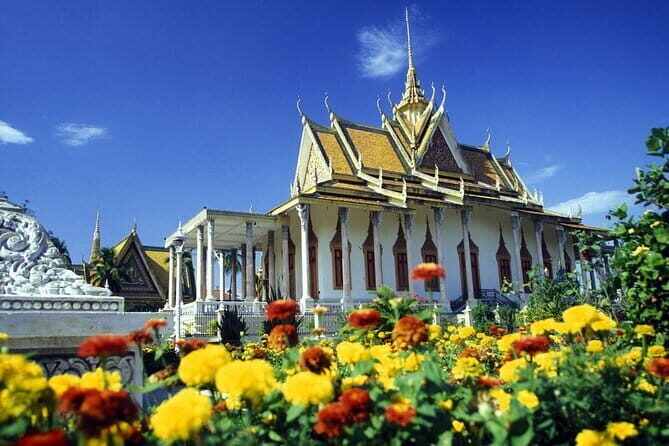
If your goal is a temple route with a real countryside viewpoint, this is a strong choice. Phnom Chisor gives you the scenery and the sculpture walk, Prasat Neang Khmau adds Angkor-era spirituality linked to Shiva, and Ta Prohm Temple brings a Jayavarman VII chapter with unique art. Finishing with Tonle Bati gives you a more human, local contrast.
I’d skip it only if you want more time at one single site with minimal driving and maximal downtime. This tour is about variety in one day, and the value comes from keeping that mix working smoothly.
FAQ
What is the duration of the tour?
The tour lasts about 8 hours.
How much does the tour cost?
It costs $190 per group, up to 5 people.
Is pickup included, and where does the tour start?
Yes, pickup is offered. The meeting point is River Crown Restaurant, 357, St. 178, Prehsisovath Quay, Phnom Penh 12206. The tour starts at 8:00 am and returns to the meeting point.
Is there an English-speaking guide?
Yes. The tour includes an English-speaking tour guide.
Are admission tickets included?
For the scheduled stops listed (Phnom Chisor, Prasat Neang Khmau, and Tonle Bati), admission is listed as free, and the tour also includes all fees and taxes.
What is included in the price?
Included are transportation by air-conditioned vehicle, a friendly driver, cool water, the English-speaking guide, and all fees and taxes. Mobile ticket is also included.
Is food included?
No. Food and beverages are not included, and tipping the local guide and driver is also not included.