REVIEW · PHNOM PENH
Killing field and Toul Sleng genocide museum Tour
Book on Viator →Operated by Phnom Penh Tours · Bookable on Viator
Phnom Penh forces you to look at recent history with clear eyes. This tour pairs Choeung Ek Genocidal Center and Tuol Sleng Genocide Museum (S-21) so you can connect the Khmer Rouge’s arrest-and-torture system to what happened afterward.
Two things I really like: the tour includes a licensed English-speaking guide (so you’re not stuck guessing at labels), and I love that the drive is air-conditioned with bottled water included. One thing to keep in mind: the tour price ($19) does not include the site admission fees, so you’ll need extra cash on the day.
You’ll also get a few hours of straight emotion and hard facts. If you’re not ready for that, you might want a lighter day in Phnom Penh—but if you are, this is a powerful way to understand what happened to Cambodia in the late 1970s.
In This Review
- Key things to know before you go
- What this Choeung Ek and Tuol Sleng tour really gives you
- Choeung Ek Killing Fields: seeing the place behind the numbers
- What to watch for (and how it can feel)
- Tuol Sleng S-21: the prison-school that became an interrogation system
- Why a guide matters more at Tuol Sleng
- The guide translation makes this more than a bus ride
- A small but important reality check
- Price and admissions: where your $19 goes
- Tip planning without overthinking
- Timing, group size, and how the half-day runs
- Who this tour is best for (and who should choose another day)
- Should you book this Phnom Penh Killing Fields and Tuol Sleng tour?
- FAQ
- FAQ
- What is the price of the tour?
- How long does the tour take?
- Does the price include admission to Choeung Ek and Tuol Sleng?
- Are hotel pickup and drop-off included?
- Is the tour conducted in English?
- What’s included besides the guide?
- How big is the group?
- What if the weather is poor?
- Is free cancellation available?
Key things to know before you go
- Two major Khmer Rouge sites in one half-day: You visit both Choeung Ek and Tuol Sleng, with time built in at each stop.
- English translation for exhibits: Your guide explains what you’re looking at, so you get the point instead of just the photos.
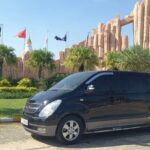
- Air-conditioned comfort with water included: The vehicle is set up for Phnom Penh traffic and the road between sites.
- Small group size (max 20): You’re less likely to feel like a number in a crowd.
- Admission fees are separate: Plan for $3 at Choeung Ek and $5 at Tuol Sleng, plus tipping if you choose.
- Guides may share personal context: Names like Makara, Chamroeun, Neang, Ohm, and Ron show up in past tours, including personal family-linked insights.
What this Choeung Ek and Tuol Sleng tour really gives you
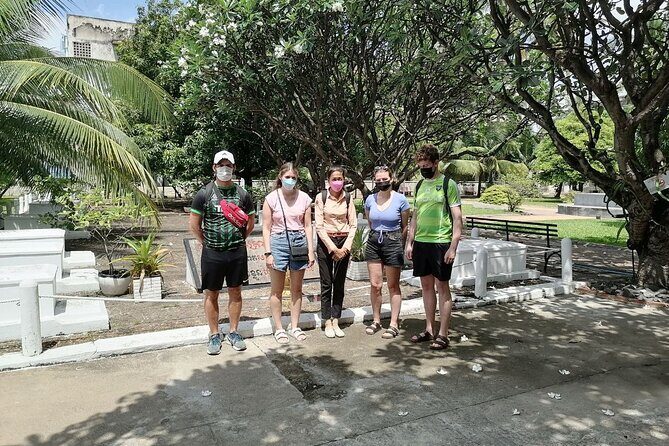
This tour is for people who want meaning, not just checkmarks. The sites are famous for a reason, but the real value is how the day is guided: you’re shown the facts and then helped connect them into a story you can actually hold in your head.
Choeung Ek is the aftermath and the mass killings. Tuol Sleng is the machine that fed those killings, where prisoners were held, interrogated, and tortured. Put together, they make a grim but clearer timeline.
You’re not left on your own, either. The tour is built around a professional English-speaking guide, and the guide translates what’s on display. That matters a lot at Tuol Sleng, where the setting is emotionally intense and details can blur fast when you’re reading alone.
You can also read our reviews of more museum experiences in Phnom Penh
Choeung Ek Killing Fields: seeing the place behind the numbers
Your day starts with a pickup (offered) from the Amanjaya Pancam Hotel area in Phnom Penh, then you ride to Choeung Ek, about 9 miles south of the city. The tour runs on a schedule that assumes real travel time, so you’re not sprinting between spots.
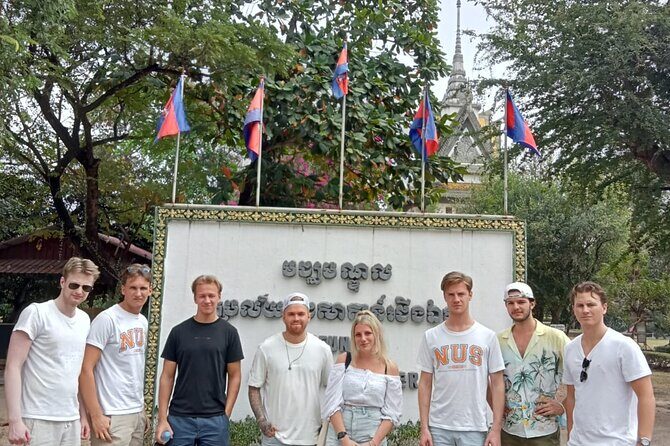
At Choeung Ek, you’ll learn how the Khmer Rouge turned a place with earlier uses into what became known as the killing fields. The transformation is part of the teaching: it was once an orchard and a Chinese cemetery, and later it became a site for executions and mass burial. The figures given here are massive—around 20,000 victims referenced for executions, and about 2.5 million people massacred and buried over roughly three years.
The layout at a site like this can feel overwhelming if you don’t have context. That’s where the guided explanation helps you slow down and understand what you’re looking at. You also get a built-in moment to pay respects to the victims, which helps turn a visit into something more human and less like a museum stop.
What to watch for (and how it can feel)
Choeung Ek is outdoors and emotionally heavy. Even with a guide keeping things organized, you’ll likely feel like your brain is working too hard. This is not a “light” stop, so I’d treat the whole half-day as a serious commitment.
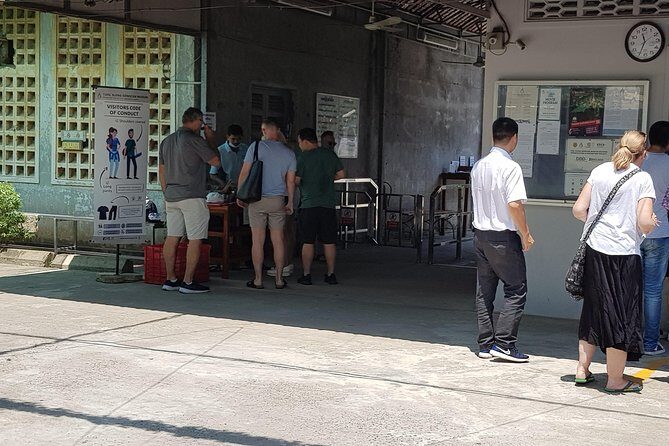
Also, admission for Choeung Ek is not included. The fee listed is $3 per person. It’s a small add-on, but it affects your plan—bring a bit of cash so you’re not scrambling at the entrance.
Tuol Sleng S-21: the prison-school that became an interrogation system
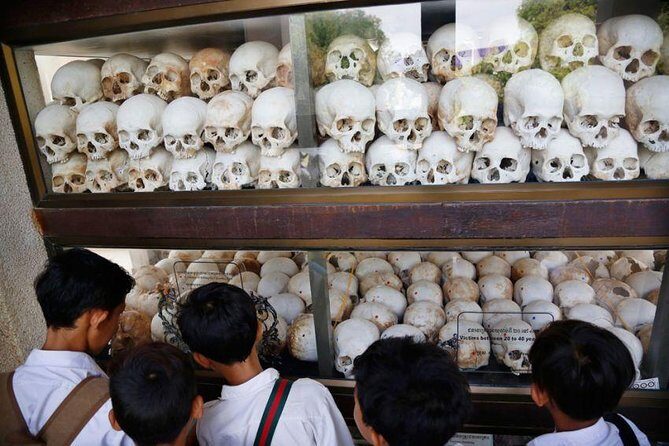
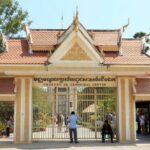
After Choeung Ek, the tour returns you to Phnom Penh for Tuol Sleng Genocide Museum, also called S-21 (S meaning Security, with Tuol Sleng meaning hill of the poisonous trees). The point of sequencing is smart: you see the end result first, then you go to the place where so many prisoners passed through the Khmer Rouge’s interrogation and torture process.
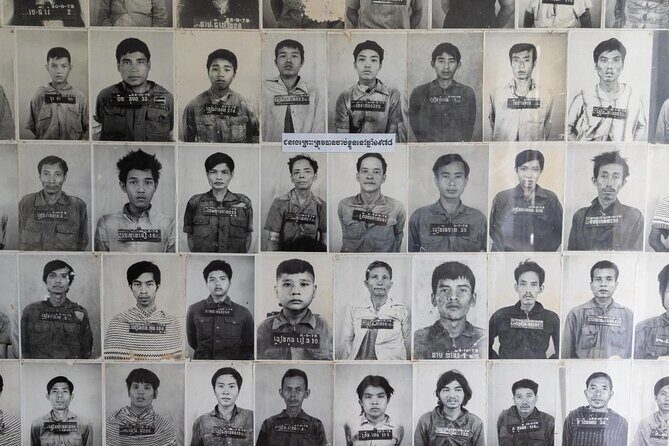
Tuol Sleng is housed in what used to be a high school. The tour’s teaching emphasizes that it was one of the most notorious interrogation centers in Cambodia—among 189 known interrogation centers referenced in the tour description. The key range of prisoners held, tortured, and processed here is listed as about 14,000 to 17,000.
A big part of what makes Tuol Sleng stick with you is the physical reality described on the tour: prisoners were often kept in primitive brick cells that were built inside former classrooms. That detail turns abstract history into something your senses can’t ignore.
Why a guide matters more at Tuol Sleng
If you’ve ever visited a museum where text feels too dense to process, you’ll understand the challenge here. Tuol Sleng has displays where the context is crucial. This tour is built to solve that problem with translation and a chance to ask questions.
One review note that’s practical for your expectations: you won’t be getting the usual audio guides at the museum. In other words, you’re meant to rely on the guide’s explanations, not a separate device.
The tour gives you about two hours at Tuol Sleng, which is enough time to absorb without feeling like you’re being rushed out the door. Still, you should expect mental fatigue. This is the kind of place where even after the tour ends, you may keep thinking about it.


The guide translation makes this more than a bus ride
The headline features are easy to list: professional English-speaking guide, air-conditioned transport, bottled water. But the real difference is how the translation supports understanding.
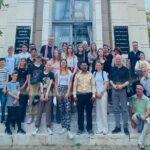
When a guide translates the displays, you’re not just reading. You’re following a narrative. You can ask questions while the guide is still in the moment with you, which helps connect the Khmer Rouge program of arrests and torture to what happened at the killing fields.
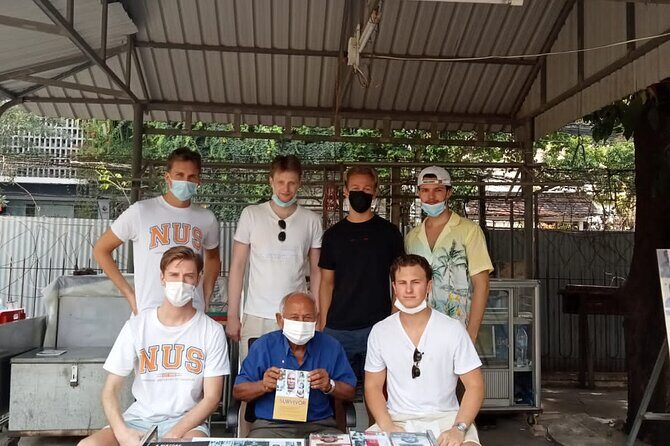
In past tours, guides with names like Makara and Chamroeun are highlighted for strong clarity and for bringing history together with personal perspective. Other names that show up include Darian, Ron, Rouan, Neang, Ohm, Om, and Sammy. You may not get the exact same guide, but the pattern is consistent: people value the combination of timeline facts plus lived or family-linked context.
A small but important reality check
A tour like this can move quickly at times, especially if the guide is working hard to cover a lot of material. One review mentioned occasional fast speaking. So if you’re picky about pace, remind yourself you can still ask follow-up questions when you need a slower explanation.
Price and admissions: where your $19 goes
At $19 per person, this tour is priced to be doable. What it covers (and doesn’t) is the key to understanding value.
Included:
- Professional English-speaking tour guide and driver
- Air-conditioned vehicle
- Water (cool water is specifically mentioned)
- Safe, clean transportation
Not included:
- Admission to Choeung Ek: $3 per person
- Admission to Tuol Sleng: $5 per person
- Tipping service and other personal expenses
So your real “all-in” baseline is $27 before tipping: $19 + $3 + $5. For a guided, multi-site program lasting about 4 hours 15 minutes, that’s a reasonable value—especially in a city where independent transport and guided interpretation can add up fast.
Tip planning without overthinking
Tipping is not included, and since this is hands-on guidance through an intense subject, I’d plan to tip the guide and driver if you felt the explanations landed well. If you keep it simple—small but fair—nobody’s asking you to be dramatic. This tour is about respect as much as information.
Timing, group size, and how the half-day runs
The total duration is listed as about 4 hours 15 minutes. That’s long enough to do both major sites properly, but short enough that you can still enjoy the rest of your day in Phnom Penh if you want.
The structure is:
- Choeung Ek: about 2 hours
- Tuol Sleng: about 2 hours
- Plus travel time between them, in an air-conditioned vehicle
Group size is capped at 20, which usually makes it easier to hear the guide and get questions answered.
Pickup is offered, and the meeting point is tied to the Amanjaya Pancam Hotel area. Some people have reported confusion about exact pickup timing in the past, so my practical advice is boring but effective: be waiting a little early and confirm pickup details clearly the day before. It saves stress when the day already feels heavy.
Who this tour is best for (and who should choose another day)
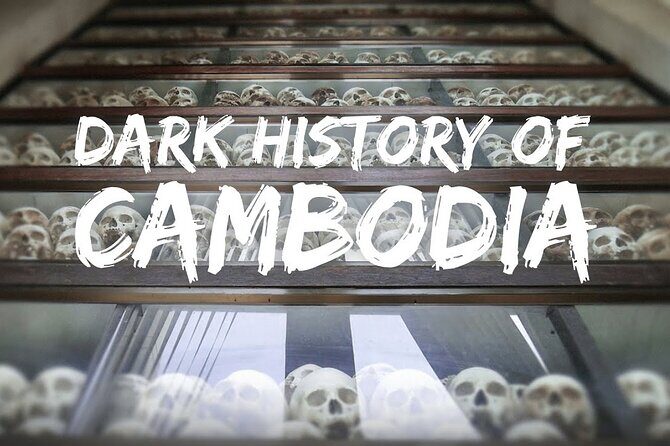
This is a strong fit if you want a guided explanation of the Khmer Rouge era and you’re willing to handle difficult content. It’s also ideal if you like structure: two sites, clear time blocks, and translation.
You’ll also appreciate it if you’re the type who wants to do the respectful thing properly—paying respects to victims and not treating the places like regular attractions.
This tour might not be the best match if:
- You want a “see a few highlights” style afternoon
- You get overwhelmed easily by torture or mass killing themes
- You prefer self-paced museum wandering over guided storytelling
But if your goal is understanding—how the regime worked and what it left behind—this combo tour is one of the most direct options in Phnom Penh.
Should you book this Phnom Penh Killing Fields and Tuol Sleng tour?
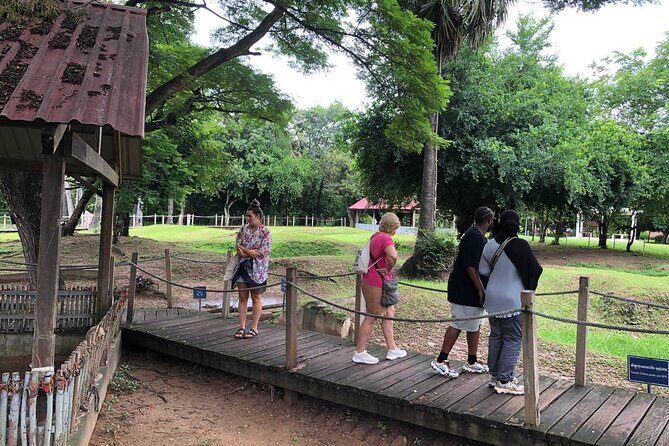
Book it if you want guided context at both ends of the story: the interrogation system at Tuol Sleng and the mass killings at Choeung Ek. The translation component is the difference between passively viewing sites and actually understanding them, and the included air-conditioned transport plus water makes the logistics feel manageable.
Skip it for now only if the topic is too much for your current trip mood, or if you’d rather spend your Phnom Penh time on lighter, more relaxed experiences. You can always return, but you can’t really “prepare” the facts—you either want to face them with a guide or you don’t.
If you do book, come ready for an emotional day, bring money for the two admissions ($3 and $5), and plan to tip. Then let the guide’s explanations connect the dots. That’s where this tour becomes worth more than its already-fair price.
FAQ
FAQ
What is the price of the tour?
The tour costs $19 per person.
How long does the tour take?
The duration is about 4 hours 15 minutes.
Does the price include admission to Choeung Ek and Tuol Sleng?
No. Admission fees are not included: $3 per person for Choeung Ek and $5 per person for Tuol Sleng.
Are hotel pickup and drop-off included?
Pickup is offered, and the activity ends back at the meeting point. The meeting point listed is the Amanjaya Pancam Hotel area.
Is the tour conducted in English?
Yes. The tour includes a professional English-speaking tour guide who translates the displays.
What’s included besides the guide?
An air-conditioned vehicle and bottled/cool water are included, along with safe and hygienic transportation.
How big is the group?
The maximum group size is 20 travelers.
What if the weather is poor?
The experience requires good weather. If it’s canceled due to poor weather, you’ll be offered a different date or a full refund.
Is free cancellation available?
Yes, you can cancel up to 24 hours in advance for a full refund.