REVIEW · SIEM REAP
1-Day Angor Wat Small Circuit Tour with Sunset
Book on Viator →Operated by Angkor Guide Services · Bookable on Viator
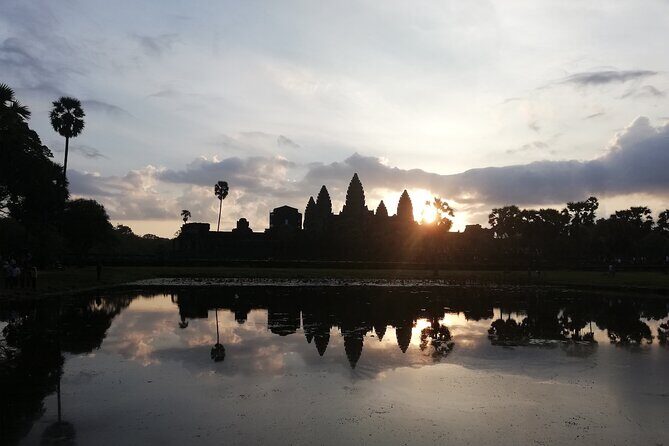
Angkor at sunrise is the kind of day you plan your week around. This small circuit tour packs the biggest Angkor hits into a single 8 to 9 hour loop, and you get the payoff moment with Phnom Bakheng sunset. I especially love that you start early at Angkor Wat and that the route includes the photogenic contrast of Ta Prohm’s roots and the quieter feel of Ta Nei. One thing to think about: it is a long day, and the end involves a tiring climb up to the sunset viewpoint.
What makes this experience feel worthwhile is the practical setup: hotel pickup and drop-off, an air-conditioned vehicle, and a licensed English-speaking guide who helps you move efficiently through the temples. You’ll also get water and a cool wet towel, which matters more than you’d think once the sun kicks in.
The one real drawback is timing. You’ll be walking, standing, and climbing on and off all day, so if you hate long hot stretches, plan a slower day elsewhere. Also, the temple pass is extra, so budget for it upfront.
In This Review
- Key highlights worth your attention
- How the Small Circuit + Sunset Works in One Long Day
- 8:00 a.m. Pickup and Sunrise at Angkor Wat: Getting the Light Right
- Ta Prohm and Ta Nei: Roots, Ruin, and a Break from the Main Flow
- Angkor Thom South Gate, Bayon, and Baphuon: The City Core in a Single Loop
- Terrace of the Elephant and Terrace of the Leper King: Royal Courtyard Stops
- Phnom Bakheng Sunset: The Climb and the Payoff View
- Price and Temple Passes: Is $63 Good Value?
- Guide Quality Makes the Difference: What Sok and Mr.Lucky Get Right
- Who This Tour Fits Best (and Who Should Rethink)
- Should You Book This Tour?
- FAQ
- What time does the tour start?
- Is hotel pickup and drop-off included?
- Do I need to buy the temple pass?
- Is Angkor Wat sunrise included?
- Which stops are included in the day?
- Are meals included?
- What’s included with the guide and transport?
- Is this a private tour?
- Can I get a full refund if I cancel?
Key highlights worth your attention
- Angkor Wat sunrise timing that gets you into position before the crowds do
- Ta Prohm with massive tree roots and strong photo angles
- Ta Nei for a quieter pause away from the busiest circuits
- Angkor Thom core temples including Bayon and Baphuon in one run
- Royal palace terraces with the Elephant Terrace and Leper King Terrace
- Phnom Bakheng sunset viewpoint with a hike to reach the best angle
How the Small Circuit + Sunset Works in One Long Day
This tour is built for people who want Angkor’s greatest hits without planning a multi-day chess game. You start with early temple time at Angkor Wat, then you work your way through the Angkor Thom area, and you finish with sunset on Phnom Bakheng. In practice, that means you’ll be constantly moving, but the payoff is that the best-known sights line up with the best-known light.
You’ll spend shorter blocks at some stops (think quick photo stops and orientation moments) and longer stretches at the major temples. That balance is good because Angkor can drain you if you try to do too much on your own with no schedule. The guide’s job is basically to keep you pointed in the right direction and ready for what matters at each site.
The other thing this structure helps with is crowd timing. Even though you’re still in the thick of Angkor, starting at Angkor Wat for sunrise usually gives you a calmer first look than arriving mid-morning.
You can also read our reviews of more evening experiences in Siem Reap

8:00 a.m. Pickup and Sunrise at Angkor Wat: Getting the Light Right
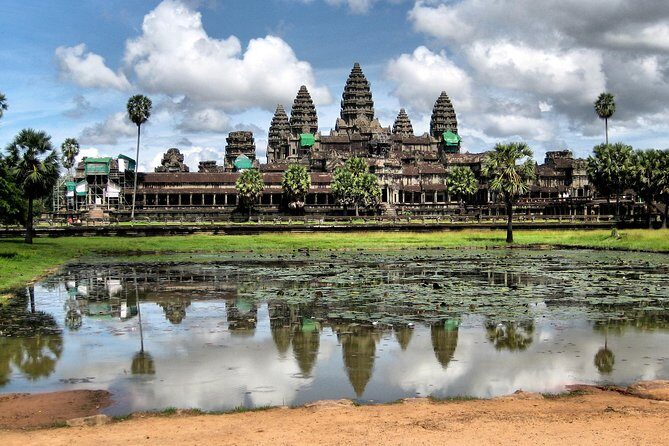
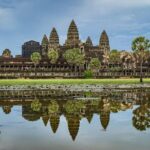
Your day begins at 8:00 am with pickup from your hotel or guest house. The guide meets you, then the group stops to buy the one-day temple pass before heading into Angkor Wat. Angkor Wat sunrise isn’t just a nice idea here. The schedule is the point: you’re aiming to be in position early enough to see the sky change and the temple silhouette start to look like the postcards.
Angkor Wat itself is huge, so a guide helps you avoid the common trap of walking in circles. With a licensed English-speaking guide, you get orientation fast: which areas to prioritize, what to look for on the bas-reliefs and towers, and how to read the temple layout. That kind of context can turn a quick look into something you actually remember.
Practical tip: sunrise days are chilly at first and then quickly warm. Bring layers you can handle because you’ll move from the early morning chill to full sun quickly. And once you start walking, keep your temple pass and ticket details easy to access, since the tour includes multiple temple entries.
Ta Prohm and Ta Nei: Roots, Ruin, and a Break from the Main Flow
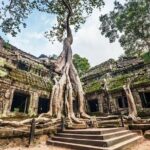
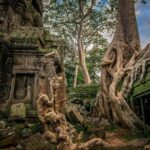
After Angkor Wat, you head to Ta Prohm, often called the Tomb Raider temple because of its famous on-screen look. The star here is the visual chaos in the best way: gigantic tree roots wrapping around stone structures. This place is a photographer’s dream because you get strong vertical lines, shadow patterns, and those dramatic root curves that frame faces and doorways.
You’ll have about 1 hour 30 minutes here. That’s enough time to do two things well: get your main shots and then slow down for a second pass when the angles shift. If you only rush through, you miss the texture. If you only stand and stare, you fall behind. This time window helps you do both without feeling frantic.
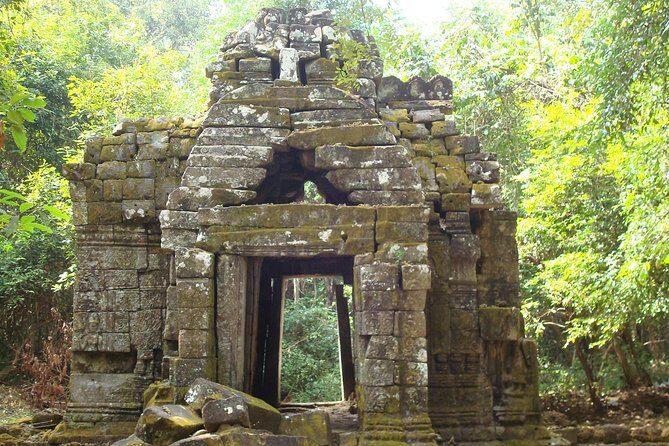
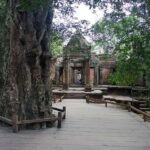
Next comes Ta Nei, a smaller, quieter temple tucked into a forested setting. This stop is short (around 30 minutes), but the value is the pacing break. Ta Nei isn’t trying to compete for attention in the same way Ta Prohm does. It’s more about breathing room, fewer people, and an easier feeling as you step away from the busiest points of the day.
I like that Ta Nei helps reset your brain. After big, iconic spaces, a quieter temple gives you a chance to notice details again: simpler carvings, the way light falls between trees, and the calm that comes from being slightly off the main beat.
Angkor Thom South Gate, Bayon, and Baphuon: The City Core in a Single Loop
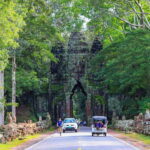
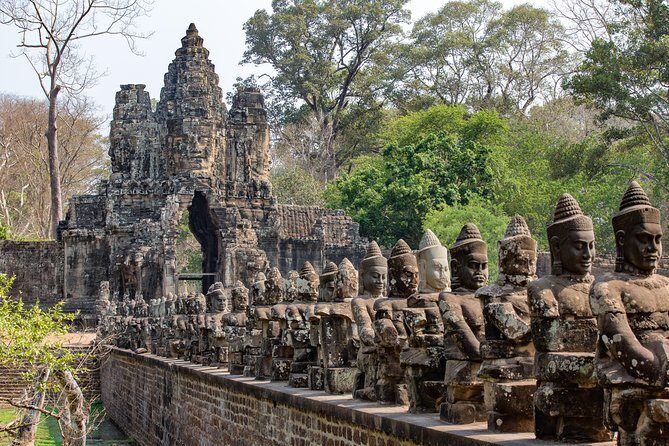
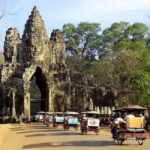
Then you roll into Angkor Thom, starting with a quick stop at the Victory Gate. Even though it’s brief (about 15 minutes), it’s a smart photo moment. It gives you that classic entrance composition, and it helps you connect what you’re seeing later in Angkor Thom to the layout of the city.
After that, you visit Bayon, the temple at the center of Angkor Thom with 216 faces. Bayon is one of those places where the design makes you feel watched from multiple directions. As you move through the temple, the faces seem to change angles, so the experience is as much about walking the space as it is about viewing it from one spot. You’ll have about 1 hour here, which is just enough to follow the flow without turning it into an exhausting endurance test.
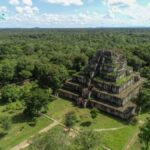
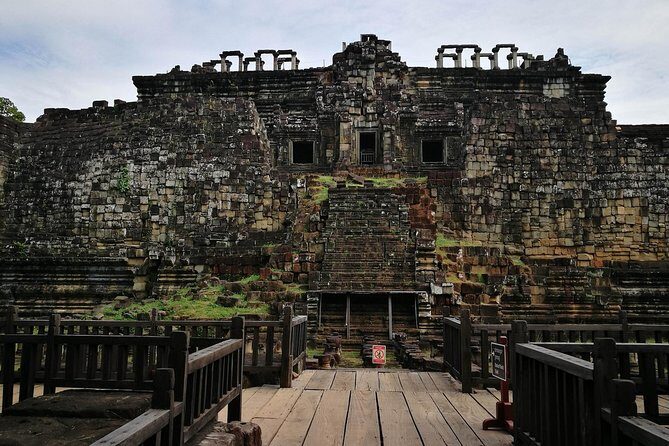
From Bayon, you continue to Baphuon. This one is described as a pyramid-shaped Hindu temple built in the 11th century, and it’s restored and open for tourists. The reason I appreciate including Baphuon right after Bayon is that it shifts the visual language. Bayon hits you with face towers and dense symbolism; Baphuon brings a more structured, geometric feel.
Keep your energy for the walking sections. Bayon and Baphuon are both in the core zone, so you’re not always traveling far between stops. That saves time and keeps your day moving without too many long transfers.
Terrace of the Elephant and Terrace of the Leper King: Royal Courtyard Stops
The next phase is the royal palace area, where you’ll see two of the most talked-about terraces: the Terrace of the Elephants and the Terrace of the Leper King. This is part of the royal palace enclosure wall area and a platform where King Jayavarman VII is said to have viewed his victory army.
These terraces are not the kind of stop where you just take one photo and move on. They work best when you understand the function of the space. The terraces were made for status, ceremony, and observation. Standing in those spots gives you a sense of how power was displayed through architecture and staging.
This part of the tour is shorter (around 30 minutes), so I suggest focusing on two things: the perspective you get from where you stand, and the story the terraces imply about how the king’s court operated. In a day packed with many temples, this royal-courtyard stop is a helpful change of pace because it feels more like a historical stage than a single holy structure.
You can also read our reviews of more tours and experiences in Siem Reap
Phnom Bakheng Sunset: The Climb and the Payoff View
Your final stop is Phnom Bakheng mountain for sunset. You’ll hike up to the viewpoint area and then go up to the Bakheng Temple for the highest sunset view. This is the part that can feel tough. One warning from real experience is simple: the end climb is tiring, especially if you’ve been standing and walking since early morning.
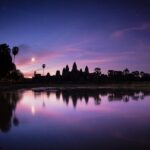
Still, this is also where the day turns into a memory. Phnom Bakheng is a classic sunset setting because the angle and elevated view let you see the park’s temple silhouettes and the changing colors in the sky. Sunset turns the temples from monuments into mood.
What to do if you want this to feel good rather than brutal:
- Wear shoes that grip, not just shoes that look nice.
- Go at your own pace on the climb and pause when you need to.
- Don’t waste time fighting for position if you’re already near the top. Once you’re at a workable spot, the light does the work.
When the sun drops, the whole scene feels quieter. It’s a great way to close a day that otherwise has a lot of intensity.
Price and Temple Passes: Is $63 Good Value?
The tour price is $63, and that includes a licensed English-speaking guide, hotel pickup and drop-off, an air-conditioned vehicle with driver, plus cool water and a cool wet towel. A mobile ticket is also mentioned, which is helpful because it reduces the hassle of juggling paper.
But here’s the financial reality check: the temple pass is not included. The one-day pass is listed at $37 USD per person, and meals (breakfast/lunch/dinner) aren’t included either. Also, admission tickets at each stop are noted as not included.
So your realistic day cost is roughly the tour price plus the temple pass, with meals on top if you buy them. That said, the value can still be strong if you care about efficiency. In Angkor, time has a cost. Having pickup, a guide, and transport usually saves you from the headaches of trying to coordinate entry and routes on your own.
This tour also helps you prioritize. Instead of debating which temples are truly worth the effort, the schedule takes you to the famous essentials plus a quieter break at Ta Nei and a sunset finish. If you’re only doing Angkor once, that kind of focus is often worth paying for.
Guide Quality Makes the Difference: What Sok and Mr.Lucky Get Right
One of the best parts of this tour is the human factor. Guides like Sok have been described as experienced with fluent English and able to answer questions about Cambodia and what you’re seeing. That matters because Angkor can feel like beautiful stone until someone gives you the map for what you’re looking at.
Another guide name that comes up is Mr.Lucky, praised for being friendly, fun, considerate, and on time. He’s also described as knowing the best places for photos and giving you the timing you want at each location. I like that approach because it respects your pace. You don’t just get marched. You get positioned.
If you want to learn while you walk, this kind of guide is a big reason to book a structured tour. You’ll get context that helps you notice details faster, and you’ll also avoid the common trap of leaving with a list of temple names but no sense of what makes each one special.
Who This Tour Fits Best (and Who Should Rethink)
This works best if you:
- Want a single-day plan that hits the major temples in a smart order
- Like having an English-speaking guide to explain what you’re seeing
- Are comfortable with an active day and a final uphill climb
I’d rethink it if you:
- Hate long days with lots of walking and standing
- Struggle with stairs and climbs, because Phnom Bakheng is at the end and it’s described as a tiring hike
- Need lots of free time for drifting. This itinerary is structured, with stops timed to keep momentum.
That said, the stop durations are varied. You get longer time where the sights need it (Angkor Wat, Ta Prohm, Bayon) and shorter bursts where you need orientation and photos (Victory Gate, Ta Nei, royal terrace stops). That rhythm helps most people manage energy.
Should You Book This Tour?
If you’re doing Angkor on one day and you want the highlights plus sunset, I think this is a solid pick. The combination of Angkor Wat sunrise, Ta Prohm’s roots, Bayon’s 216 faces, royal terrace stops, and a classic sunset finish is a strong lineup for the time.
Book it if you value a guided route and easy logistics like pickup, air-conditioned transport, and help with the temple pass. Consider a different plan if you’re worried about the final climb at Phnom Bakheng or you want a slower, more self-paced day.
FAQ
What time does the tour start?
The tour start time is 8:00 am, with pickup from your hotel or guest house.
Is hotel pickup and drop-off included?
Yes. Pick up & drop off at hotel is included, and the guide starts by meeting you at your accommodation.
Do I need to buy the temple pass?
Yes. The temples pass for one day is $37 USD per person, and it is not included in the tour price.
Is Angkor Wat sunrise included?
Yes. The plan includes heading to Angkor Wat to watch the sunrise early in the morning.
Which stops are included in the day?
The tour includes Angkor Wat, Ta Prohm, Ta Nei, the Victory Gate of Angkor Thom, Bayon, Baphuon, the Terrace of the Elephants, the Terrace of the Leper King, and Phnom Bakheng for sunset.
Are meals included?
No. Meals (B/L/D) are not included.
What’s included with the guide and transport?
Included are an English speaking guide with a licensed guide, an air-conditioned vehicle with a driver, and cool water and cool wet towel.
Is this a private tour?
Yes. It is described as a private tour/activity, and only your group will participate.
Can I get a full refund if I cancel?
Yes. There is free cancellation, with a full refund if you cancel up to 24 hours in advance of the experience start time.