REVIEW · SIEM REAP
Ultimate Angkor Wat Sunrise, Bayon, Ta Prohm Temple
Book on Viator →Operated by Angkor Pro Travel · Bookable on Viator
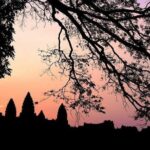
Angkor Wat at sunrise is a strong start. This tour is built around the early light and a smooth route through Angkor National Park, with an English tour guide and air-conditioned vehicle. I also like that you’re not just rushed from ruin to ruin; you get a planned stop for breakfast near Srah Srang before the temple-heavy part of the day.
Two things really drive the value here. First, the timing: the day starts around 4:20 am, so you can see Angkor Wat when it’s calmer. Second, the order of sights makes sense, moving from Angkor Wat to Bayon’s smiling faces, then to the tree-choked drama of Ta Prohm.
One consideration: you’ll need to budget the Angkor Pass ($37 per person), and the tour price itself doesn’t include food or drinks. If you go in expecting one flat fee, you’ll feel surprised at the gate and at breakfast time.
In This Review
- Key Things to Know Before You Go
- Sunrise Logistics: Why 4:20 am Changes the Whole Day
- Angkor Wat Sunrise: The World’s Largest Religious Monument in Early Light
- Angkor Thom and Bayon: 54 Towers and 200 Smiling Faces
- Srah Srang Breakfast: The Royal Bath Break You’ll Actually Appreciate
- Ta Prohm: The Tomb Raider Temple and Its Tree Roots
- Price and What Your $13 Per Person Really Buys
- Comfort, Transport, and the Private-Group Feel in Siem Reap
- Who This Tour Fits Best (and Who Might Skip It)
- Should You Book Ultimate Angkor Wat Sunrise, Bayon, Ta Prohm?
- FAQ
- What time does the tour start?
- How long is the tour?
- Is the Angkor Pass included in the price?
- Are meals included?
- What’s included in the tour price?
- Is this a private tour?
- Where does the tour start and end?
- Do I need a physical ticket?
- Is confirmation provided after booking?
- Is the tour refundable?
Key Things to Know Before You Go

- 4:20 am start for Angkor Wat sunrise, so plan for an early morning and strong caffeine needs
- English-speaking professional guide to explain what you’re seeing at each stop
- Angkor Pass ($37 per person) not included, so add that to your budget
- Srah Srang breakfast break near the Royal Bath, before Bayon and Ta Prohm
- Private transportation and pickup/drop-off from Siem Reap for a lower-stress day
Sunrise Logistics: Why 4:20 am Changes the Whole Day
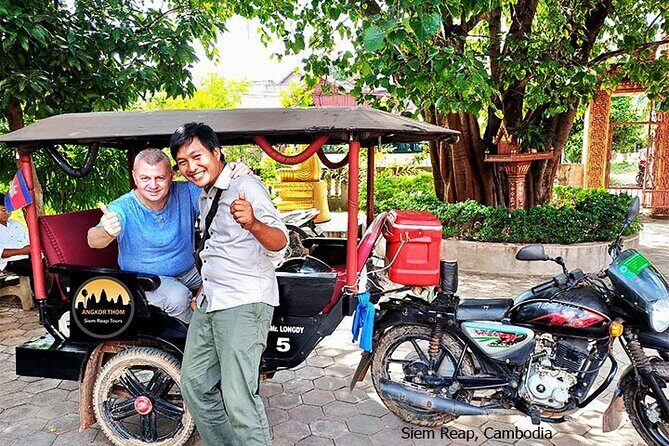
The schedule is the headline. You start your day at about 4:20 am, aimed at sunrise at Angkor Wat. That early hour matters because Angkor works best when you can look up at carvings and towers without feeling like you’re in a human conveyor belt. Even if you’ve seen photos, sunrise gives you softer contrast, which helps you notice details in stonework and the layout of the temple complex.
You’ll be in an A/C vehicle and picked up in Siem Reap, which is a practical win for a day that starts in the dark. Once you’re at the park, the tour keeps moving with guided pacing, so you’re less likely to get lost and more likely to spend time where the sights really pay off.
Because this is a 7-hour tour (approx.), it’s not a slow wander. It’s a focused route, so bring water, wear comfortable shoes, and expect some walking over uneven surfaces.
You can also read our reviews of more tours and experiences in Siem Reap
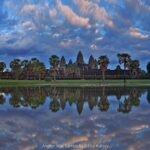
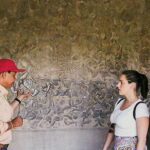
Angkor Wat Sunrise: The World’s Largest Religious Monument in Early Light
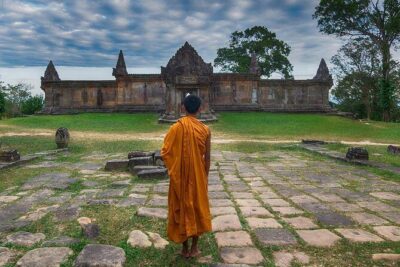
Angkor Wat is described here as the world’s largest religious monument, built in the early 12th century. On this tour, sunrise is the main event at the start, so your first views come with that early-morning glow and cooler temperatures.
What I’d watch for when you’re there:
- The grand architecture: get oriented first. The temple’s structure is easier to understand when you take a moment to see how the courtyards and levels connect.
- The intricate carvings: sunrise light can make shallow details pop. If you’re trying to spot patterns, wait for a small shift in lighting rather than rushing.
- The sheer scale: Angkor Wat doesn’t feel small when you’re standing in front of it. It feels planned, deliberate, and built to be seen from certain angles.
Admission is not included. You’ll need the Angkor Pass ($37 per person) before you can fully enjoy the sites. If you’re traveling on a tighter budget, this is still worth planning for because you’re covering multiple major temples in one day instead of buying separate tickets for each stop.
Angkor Thom and Bayon: 54 Towers and 200 Smiling Faces
After Angkor Wat, the tour shifts toward Angkor Thom, where Bayon Temple is the star. Bayon is late 12th century and tied to King Jayavarman VII, and it’s famous for 54 towers and over 200 smiling stone faces.
This is one of those sights where a guide really helps. Without someone pointing out what you’re looking at, it’s easy to focus only on the faces and miss the temple logic. With a good explanation, you start to see the repeating composition, the way towers rise above surrounding structures, and how your viewpoint changes depending on where you stand.
Practical tips for Bayon:
- Give yourself time to move around. Those faces don’t look the same from every angle.
- Look up, then look forward. The faces are dramatic, but the temple’s layout is what makes the whole scene feel intentional.
- Expect a bit of crowding around the most photographed angles, especially in peak travel seasons. Going early in the day helps.
You’ll spend about 1 hour here, which is a solid length for Bayon. It’s enough to see multiple towers and still keep momentum toward Ta Prohm, which is the more chaotic, nature-over-stone stop.
Srah Srang Breakfast: The Royal Bath Break You’ll Actually Appreciate

You stop at Srah Srang, known as the Royal Bath, with time to eat breakfast at a local restaurant near the site. This is listed as a 1-hour stop, and it’s not just a pause in the schedule—it’s a useful one.
Why this break matters:
- You’re up very early for sunrise, so a planned meal keeps you from running on fumes.
- It offers a calmer contrast between temple intensity. After Angkor Wat, Srah Srang lets you reset and get your bearings in a more open setting.
- It’s also a chance to hydrate before Ta Prohm. Ta Prohm can feel like a slow-motion obstacle course of roots, stone, and steps.
Food and drinks are not included, so you’ll pay out of pocket here. I’d treat breakfast as a budget line item, not an optional extra, and aim to eat something easy on your stomach before you start climbing and walking again.
Ta Prohm: The Tomb Raider Temple and Its Tree Roots
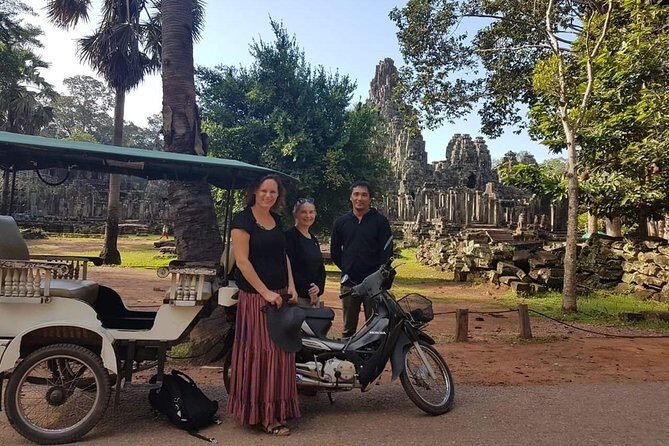
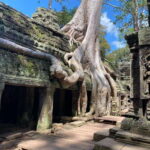
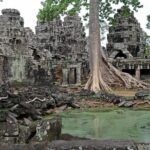
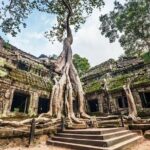
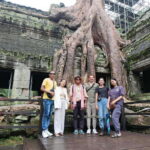
The final major temple stop is Ta Prohm, often called the Tomb Raider Temple. The defining feature here is the way massive tree roots have taken over parts of the ruins, creating a scene where nature and architecture appear fused.
This temple works best when you slow down just a bit. The roots make patterns in the stone, and they also create natural frames for photos—so you don’t just see one view, you see many smaller compositions as you walk.
On this tour, Ta Prohm is scheduled at about 1 hour. That’s enough for the signature scenes without feeling trapped in a long, tiring browse. The main drawback is also what makes it special: the site can be uneven and visually busy. Wear shoes with grip and keep an eye on your footing.
If you’re the type who likes your temples dramatic and slightly wild-looking (rather than perfectly symmetrical and clean), Ta Prohm is the closer you want.

Price and What Your $13 Per Person Really Buys
Here’s the honest math. The tour price is $13 per person, and the big ticket item not included is the Angkor Pass at $37 per person. Add those together and your day is no longer “cheap cheap,” but it’s still strong value for what you get.
What your payment covers:
- Hotel pickup and drop-off
- A professional English tour guide
- Air-conditioned vehicle
- Private transportation
- The planned route through major sights
What costs extra:
- Angkor Pass ($37 per person)
- Foods and drinks
- Travel insurance and personal expenses
So the value comes from packaging. Instead of trying to coordinate multiple temples on your own while navigating early-morning timing, you get a prepared plan and a guide to help you make sense of each site quickly. You’re also not paying a separate guided tour fee for each temple.
One more practical note: it’s listed as booked about 12 days in advance on average. That suggests it’s popular enough that you shouldn’t wait until the last minute, especially if you have fixed travel dates and want the early start.
Comfort, Transport, and the Private-Group Feel in Siem Reap
This tour is listed as private, meaning only your group participates. In practice, that usually translates to fewer time-wasting bottlenecks and more flexibility if you need a short pause for photos or rest breaks.
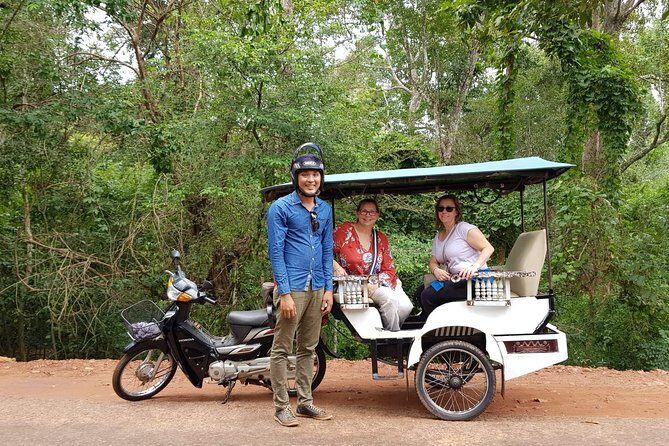
It also includes pickup and drop-off, starting and ending back at the meeting point in Siem Reap (listed as Krong Siem Reap, Cambodia). That’s a real advantage because Angkor days can turn annoying fast if you have to arrange transport and meet up with the wrong driver at the wrong time.
You’ll ride in an A/C vehicle, which matters in Cambodia, especially once the morning cool fades and you’re back outside. A tour like this is basically a full-day effort compressed into a 7-hour structure, and comfort helps you keep your energy.
I’ll also mention something from a past booking: the tour operator met the group as the guide was running a few minutes late, and they got moving right around the pickup time. That kind of problem-solving matters. It’s a sign the operation pays attention to keeping the day on track, not just delivering a guide and hoping for the best.
Who This Tour Fits Best (and Who Might Skip It)
You’ll likely love this tour if:
- You want Angkor Wat sunrise as your main goal and prefer not to scramble for timing.
- You appreciate an English guide to connect what you’re seeing at Angkor Wat, Bayon, and Ta Prohm.
- You’d rather do a concentrated route with planned stops than build your own day from scratch.
It might not be your best choice if:
- You hate early starts and would rather travel slower at your own pace.
- You’re trying to keep costs ultra-low. With the Angkor Pass and food/drinks, your total will be more than the headline price.
- You want lots of free time at each temple. This is structured and fairly efficient.
The good news: you still get three of the most recognizable temple experiences in Cambodia in one guided day, with the comfort of pickup, drop-off, and A/C transport.
Should You Book Ultimate Angkor Wat Sunrise, Bayon, Ta Prohm?
If your priority is a well-paced day covering Angkor Wat at sunrise, then Bayon’s smiling faces, and finally Ta Prohm’s tree-root takeover, this is a strong booking. The guide-and-transport package makes the early start easier, and the route gives you variety without dragging the day into a marathon.
If you budget thoughtfully—plan for the $37 Angkor Pass and pay for breakfast separately—you’ll feel like you got real value for your time. For most people visiting Siem Reap with limited days, this is the kind of tour that helps you see the big hits without turning your trip into logistics.
FAQ
What time does the tour start?
The tour starts around 4:20 am for sunrise at Angkor Wat.
How long is the tour?
The duration is about 7 hours.
Is the Angkor Pass included in the price?
No. The Angkor Pass is $37 per person and is not included.
Are meals included?
No. Foods and drinks are not included. Breakfast is available at a local restaurant near Srah Srang, and you pay for it.
What’s included in the tour price?
It includes hotel pickup and drop-off, a professional English tour guide, an air-conditioned vehicle, and private transportation.
Is this a private tour?
Yes. It’s described as private, meaning only your group participates.
Where does the tour start and end?
It starts in Krong Siem Reap, Cambodia and ends back at the meeting point.
Do I need a physical ticket?
The tour is listed as offering a mobile ticket.
Is confirmation provided after booking?
Yes. Confirmation is received at the time of booking.
Is the tour refundable?
No. This experience is non-refundable and cannot be changed for any reason.