REVIEW · SIEM REAP
Siem Reap: Kompong Khleang Floating Village Guided Tour
Book on GetYourGuide →Operated by Angkor One Daily Tour · Bookable on GetYourGuide
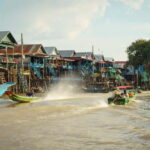
Stilted houses change with the seasons here. Kompong Khleang is one of Tonle Sap Lake’s biggest lake communities, and the day is built around watching daily life shaped by water levels, fishing, and farming. I love how the visit focuses on real routines, not just photos, and Tonle Sap makes everything feel connected.
The two parts I especially like are the countryside drive with local stops and the time on the lake with a guide like Dara, who keeps explanations clear and friendly. You’ll also get a small-group feel, so you can ask questions without shouting over a crowd.
One thing to consider: the village experience depends a lot on the season. If you go when water levels are lower, it will be less dramatic than peak rainy-season “floating” views, even though the lifestyle is still fascinating.
In This Review
- Key things to know before you go
- Kompong Khleang Floating Village: What Makes It Different
- Getting There From Siem Reap: A Countryside Day Trip Pace
- Timing note that affects the vibe
- A Small-Group Tour With an English Guide (Dara’s Style)
- Village Life on Stilted Posts: What You’ll Actually See
- Seasonal transformation: your photo plan
- The Tonle Sap Boat Time: Floating Schools, Pagodas, and Views
- Boat-related costs to budget for
- Rice Fields, Markets, and Food Stops: Why the Drive Is Part of the Deal
- Price and Value: When $100 Makes Sense
- What to Bring (So You’re Comfortable, Not Busy)
- Not allowed items
- Who Should Go, and Who Should Skip It
- Should You Book This Kompong Khleang Tour?
- FAQ
- How long is the Kompong Khleang floating village guided tour?
- How much does it cost, and what is the group size?
- Is hotel pickup included?
- What’s included in the price?
- What entrance or boat fees are not included?
- Does the tour include a boat trip on Tonle Sap Lake?
- What language is the tour guide?
- What should I bring, and do I need cash?
- FAQ
- Is this tour suitable for everyone?
- Can I get a full refund if I cancel?
Key things to know before you go
- Small-group setup (up to 3 per group) for a more personal pace
- English-speaking local guide (Dara is a common guide name, with a warm, humorous style)
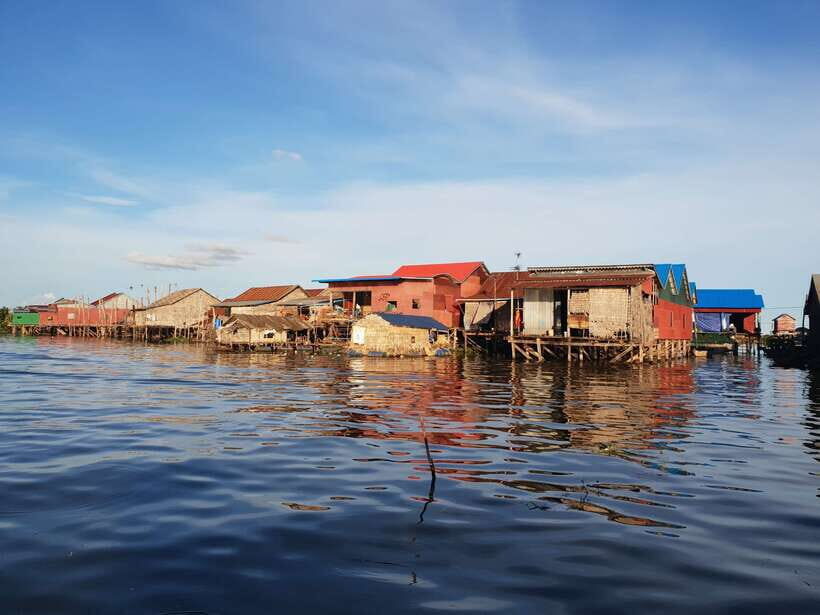
- Seasonal transformation of stilted houses and waterways at Tonle Sap
- Scenic rural drive through rice fields plus stops for local life
- Boat time on Tonle Sap Lake to see homes, schools, and pagodas from the water
Kompong Khleang Floating Village: What Makes It Different
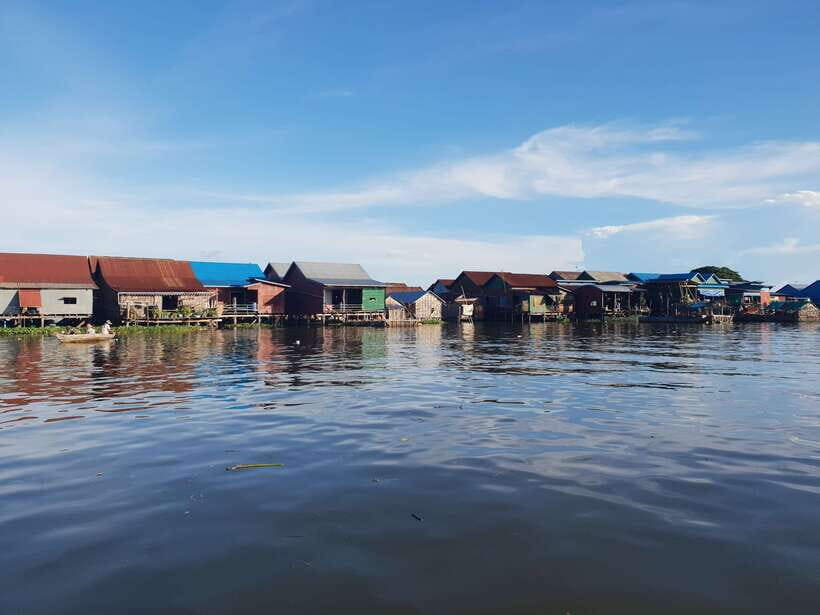
Kompong Khleang is not the postcard version of a floating village where everything is always water-covered. It’s a working community whose homes sit on tall posts, rising and changing their relationship to the lake as the water level rises and falls. That seasonal shift is exactly what makes the place so interesting.
You get to see stilted homes in two different modes depending on when you visit. In the rainy season, you’ll understand why locals talk about the lake like a living thing: the water comes up, and the village looks like it’s gliding on the surface. In the dry season, those same posts are easier to spot, and the view feels more like an elevated town above a reflective plain. Either way, you’re seeing adaptation in real time.
The experience is also cultural in a practical way. You’re not only looking at houses. You’re learning how families earn a living with fishing and farming and how that work ties into the lake’s rhythms. If you like travel days that teach you something you can actually use, this hits the mark.
You can also read our reviews of more guided tours in Siem Reap
Getting There From Siem Reap: A Countryside Day Trip Pace
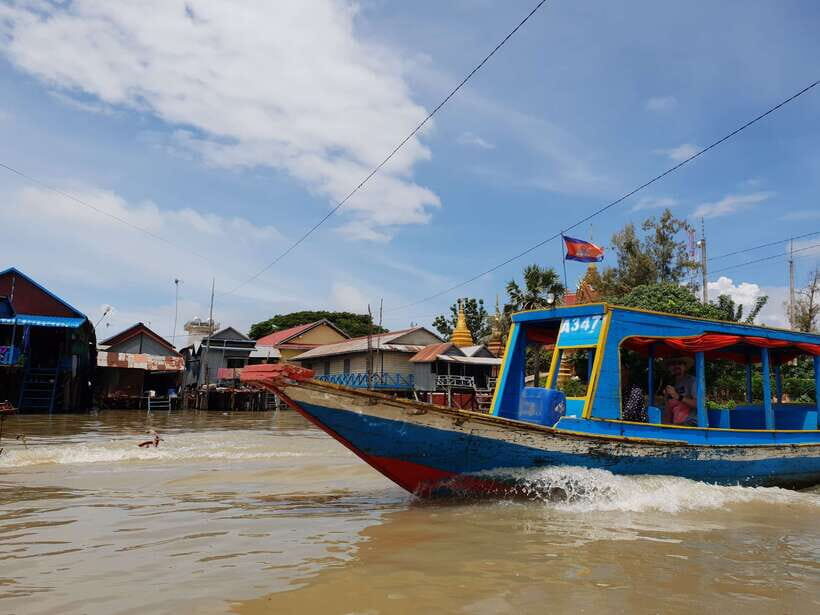
This is a 6-hour guided outing with hotel pickup and drop-off options around Siem Reap. You’re looking at a road trip of about 50 km each way to reach Kompong Khleang, and the route itself is part of the point.
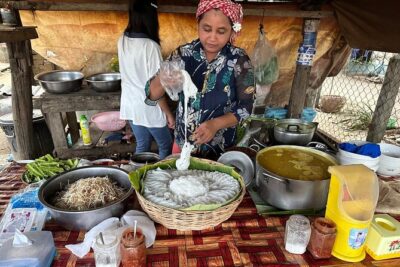
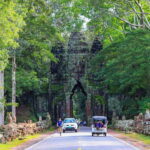
On the way, you pass through Cambodian countryside with rice fields and local villages. You also get stops that slow the day down just enough to make it feel like you’re learning the region, not just transporting to a single sight. In one version of the day, the stops include explanations, and even a chance to taste sticky rice and see how fish are cooked from lake catches. That kind of detail matters because it turns the lake community from a viewpoint into a way of life.
The tour uses air-conditioned transportation, which is a real comfort factor in Siem Reap’s heat. And it’s designed for an easy flow: you’re picked up, you’re guided at each stage, and you’re returned to the area you started from. It’s the kind of day that feels calm rather than rushed.
Timing note that affects the vibe
Your best views for the dramatic floating effect usually line up with rainy-season water levels. If you’re traveling in a drier month, you’ll still see the stilted village and lake life, but the “floating” look may be less extreme.
A Small-Group Tour With an English Guide (Dara’s Style)
The day runs with an English-speaking local guide, and small-group pricing means you’re not swallowed by a giant bus tour. Guides often shape how much you get out of a place like this, because so much of the value is in what you learn while moving between the lake, the homes, and the routines.
In the local guide stories associated with this tour, Dara comes up repeatedly: friendly, genuinely interested in questions, and willing to explain things in a way that’s easy to understand. One guide note also mentions humor and a light mood, which helps when you’re dealing with sun, heat, and a long day. When your guide keeps things relaxed, you tend to notice more.
What you can expect from the guide at Kompong Khleang:
- context about lake life tied to the seasons
- practical explanations of fishermen and farming
- pointers for what to look for while on and off the boat
That last part matters. On Tonle Sap, it’s easy to look at water and think you see everything. Your guide helps you notice floating schools, pagodas, and houses that you’d otherwise miss.
Village Life on Stilted Posts: What You’ll Actually See
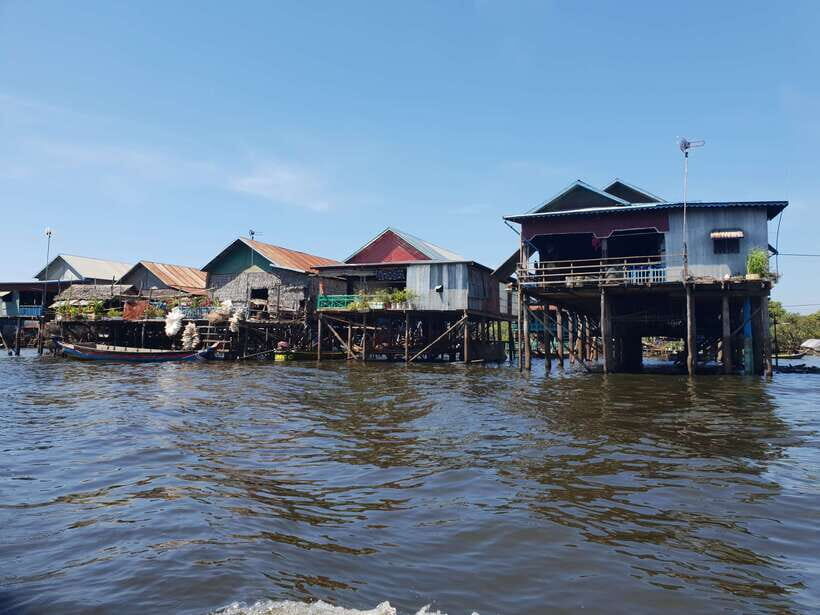
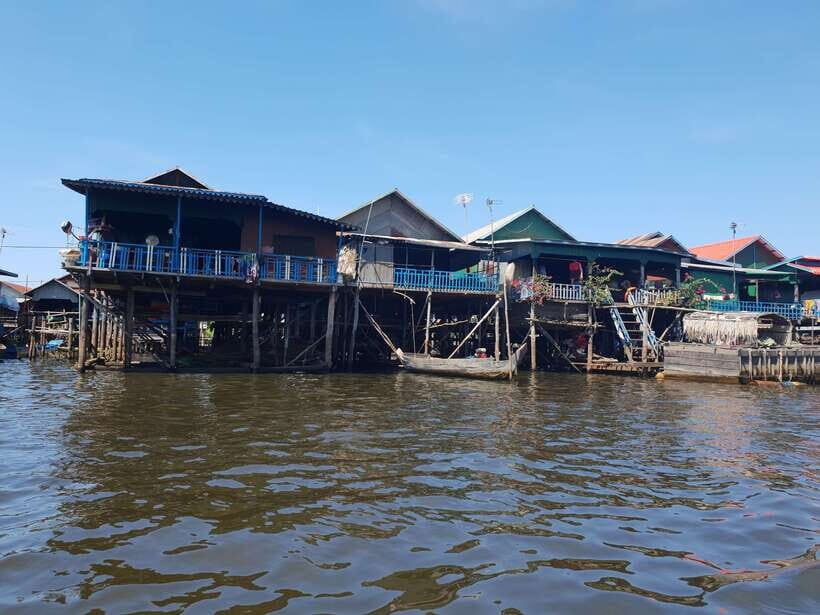
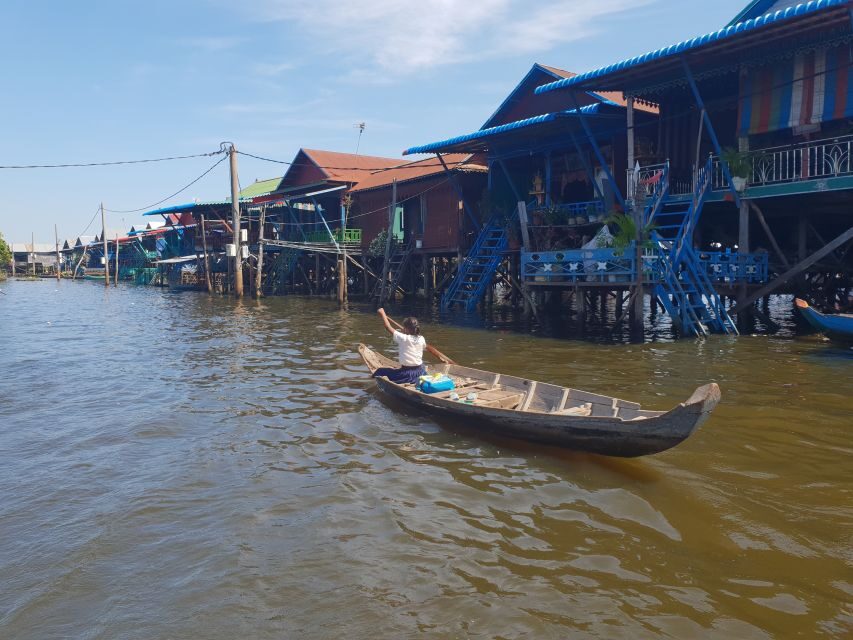
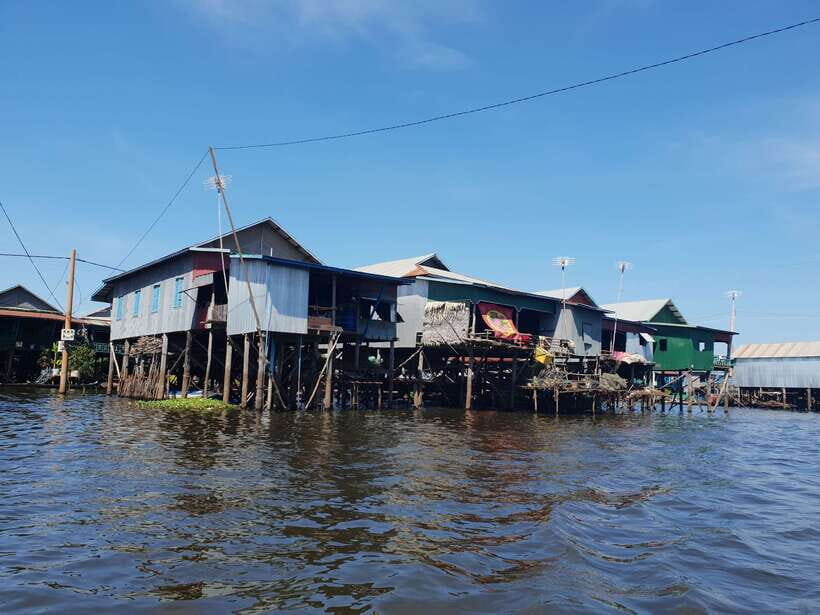
Kompong Khleang is known for its stilted homes, and you’ll spend time understanding how families live with water changing under them. The stilt structure isn’t a novelty. It’s daily infrastructure—protection, mobility, and a long-term solution to flooding.
When you reach the village area, you’ll see how the community is arranged around the lake. The tour typically includes a look at a local market and time built around daily life: fishing routines, lake-based work, and how farming fits into the broader seasonal calendar. Even if you don’t fully grasp every detail at first, you’ll come away with a clearer picture of the village’s logic.
A key bonus here is the focus on communities rather than a single “viewing spot.” Some tours skim. This one spends enough time for you to connect what you see—stilted houses, people moving between water and land, goods at market—with what your guide tells you about livelihoods.

Seasonal transformation: your photo plan
If you’re trying to photograph the full effect, plan your expectations around water level. When the water is high, houses and waterways can look more connected, almost floating as a system. When the water is lower, the stilt framework is more visible, and the place looks like an elevated settlement with water below.
Either way, bring patience. In moments like this, small details often beat sweeping photos—how people move, how boats handle the spacing between homes, and how daily tasks continue despite the unusual setting.
The Tonle Sap Boat Time: Floating Schools, Pagodas, and Views
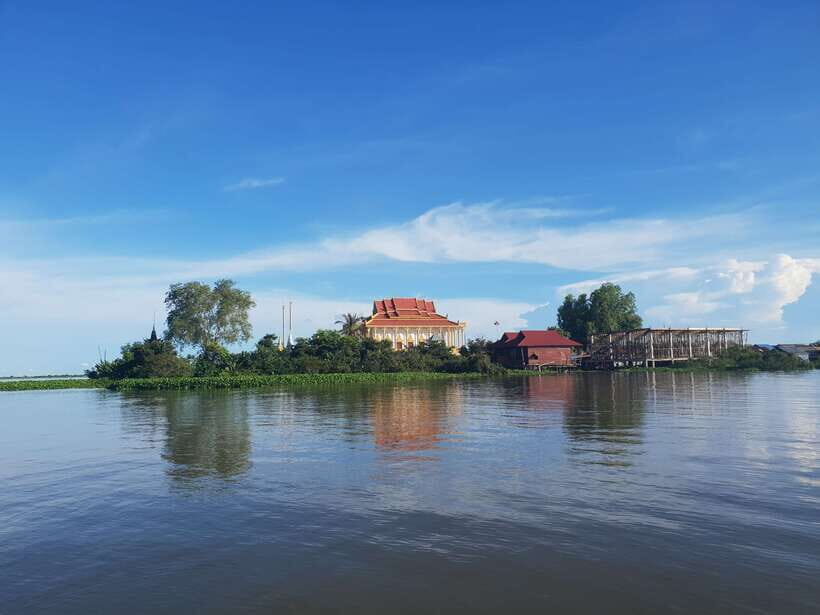
A major part of the day is the boat trip across Tonle Sap Lake. This is where Kompong Khleang stops being a village you look at and becomes a place you experience as water geography.
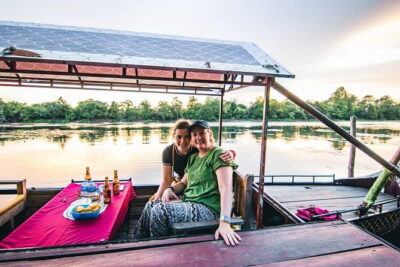
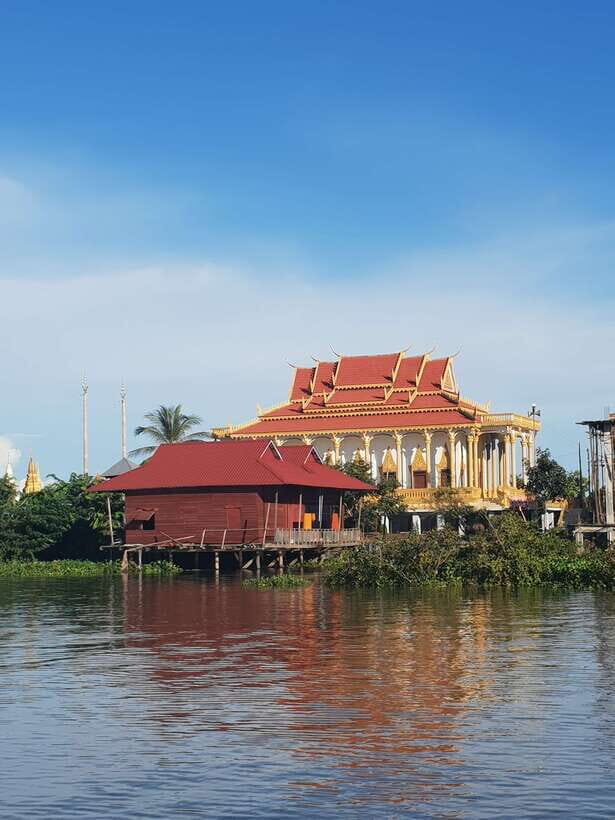
From the lake, you can spot floating elements like floating schools, pagodas, and houses. The perspective is the whole point. From land, you see posts and buildings. From the boat, you see how communities stitch themselves into open water while still keeping daily life running.
This is also a good moment to slow down and watch. You’ll have time to notice:
- how boats travel between areas of the village
- how people manage work connected to the lake
- how structures relate to each other across waterways
And yes, you’ll likely get a few great photos without feeling like you spent the whole day chasing angles. The lake view does a lot of the work for you.
Boat-related costs to budget for
The tour price includes certain parts of the day, but an entrance ticket ($20 USD per adult) is listed as not included, and that ticket includes private boat exploring the village. On a practical level, you should plan for that add-on so your day stays smooth once you arrive.
Rice Fields, Markets, and Food Stops: Why the Drive Is Part of the Deal
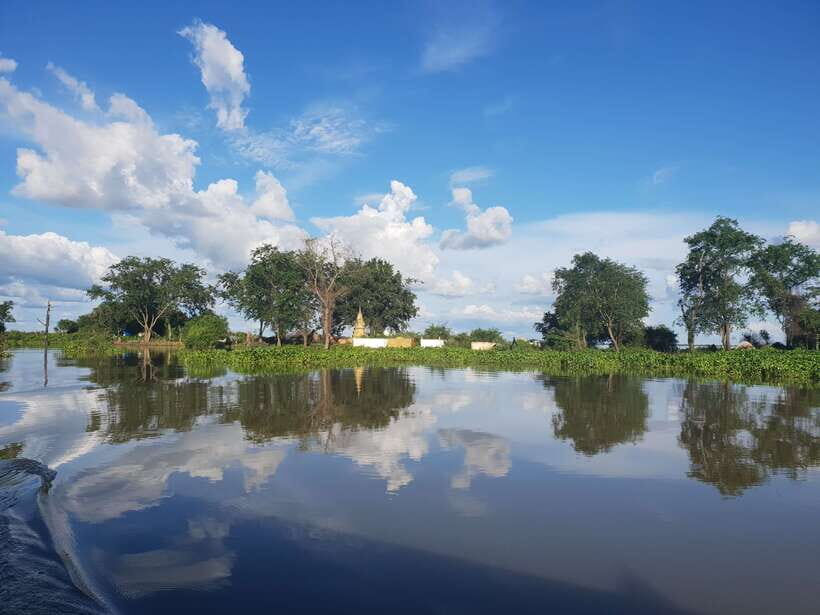
I like tours that give you a sense of place beyond the main attraction. This day trip does that with the scenic drive through rice fields and local villages, plus stops that connect you to lake and countryside life.
Some guide-led versions of the day include:
- explanations during roadside stops
- seeing fish preparation linked to lake catch
- tasting sticky rice
Even if you’re not a big food person, those stops can help you understand what’s behind the scenes. In a community like Kompong Khleang, food and work are deeply connected to the seasons and the lake’s pulse. Small tastes and simple demonstrations make those links easier to grasp.
It also breaks up the drive so the day doesn’t feel like a straight line from Siem Reap to a single dock. You get to adjust to the local rhythm before you reach the village.
Price and Value: When $100 Makes Sense
The listed price is $100 per group up to 3, which is a big value signal if you’re traveling as a duo or small family. You’re paying for a guided experience with air-conditioned transport and lake time, not just a transfer.
But don’t forget the add-ons:
- $20 USD per adult entrance ticket (not included)
- the ticket is said to cover entry and private boat exploring
So what does that mean for value? If you’re a couple, the base price per person feels reasonable because you spread the group cost. If you’re traveling alone, the per-person cost can feel higher than the headline number, because the group cap is built into pricing.
Also consider what you get for the money:
- English-speaking guide with a focus on daily life
- boat time on Tonle Sap
- rural drive with meaningful stops
- small-group pace
To me, the best value comes if you want something calmer than the biggest “floating village conveyor belt” tours, and you care about understanding the lake community rather than just snapping pictures.
What to Bring (So You’re Comfortable, Not Busy)
You’ll be outdoors, likely in strong sun, and spending time looking across water and around village areas. Pack like it’s a hot, bright day.
Bring:
- sunglasses
- hat
- camera
- sunscreen
- comfortable clothes
- cash
That cash tip is practical: there’s an entrance fee listed as not included, and you may run into other small expenses during food or market moments.
Not allowed items
The tour notes that baby carriages are not allowed, and it also lists explosive substances as not allowed. It adds that riding the animals is not allowed. The goal is safety and basic visitor rules in a living community.
Who Should Go, and Who Should Skip It
This is generally a tour for a wide range of ages, but it has some clear limits. It is not suitable for:
- children under 3
- people with back problems
- people with mobility impairments
- wheelchair users
- people over 80
Even if the tour says it can accommodate all ages, those safety notes are the real decision-makers. If you or someone in your group has trouble with uneven ground, steps, or getting onto and off a boat, this is the kind of day where comfort can become stressful fast.
Also think about your personal energy level. Six hours is a solid chunk of time, and the lake plus heat can be tiring even if you’re not walking far.
Should You Book This Kompong Khleang Tour?
If you want an authentic Tonle Sap experience that’s more than a quick sightseeing stop, I’d book it. The mix of countryside drive, guided explanations, and boat time gives you more than one way to understand Kompong Khleang. The small-group feel helps a lot too, especially if you like asking questions and moving at a human pace.
I’d hesitate if you’re going during a drier season and your main goal is the most dramatic floating look. You’ll still learn and see the community, but the visual effect may be less dramatic than peak rainy-season days. I’d also skip it if mobility or back comfort is an issue, because the setting is real-world and uneven.
One last practical thought: budget for that $20 per adult entrance ticket, and you’ll feel in control of the day instead of scrambling at the last moment.
FAQ
How long is the Kompong Khleang floating village guided tour?
The tour duration is 6 hours.
How much does it cost, and what is the group size?
It costs $100 per group up to 3 people.
Is hotel pickup included?
Yes. You get pickup from multiple locations, and you’re asked to wait in your hotel lobby about 10 minutes before pickup time.
What’s included in the price?
Included items are an English-speaking local guide, air-conditioned transportation, and mineral water.
What entrance or boat fees are not included?
An entrance ticket of $20 USD per adult is not included. It covers entry and private boat exploring the village.
Does the tour include a boat trip on Tonle Sap Lake?
Yes. The day includes boat travel across Tonle Sap Lake.
What language is the tour guide?
The guide language is English.
What should I bring, and do I need cash?
You should bring sunglasses, a hat, camera, sunscreen, comfortable clothes, and cash.
FAQ
Is this tour suitable for everyone?
No. It is not suitable for children under 3, people with back problems, people with mobility impairments, wheelchair users, or people over 80.
Can I get a full refund if I cancel?
The activity offers free cancellation up to 24 hours in advance for a full refund.