REVIEW · SIEM REAP
Full Day Tour Angkor Wat Sunrise and Siem Reap Temples
Book on Viator →Operated by Asia Tours Desk · Bookable on Viator
4:30 am feels early, then it works. This sunrise-focused day at UNESCO Angkor Wat is all about seeing the temple when the light is soft and the site feels more alive. What makes it special is the guide layer: guides like Borey, Sarha, and Lin are praised for bringing carvings and history into plain language, not just pointing at stones. I also like the hassle-free hotel pickup and drop-off, which keeps your morning calm instead of turning it into a tuk-tuk scavenger hunt.
Here’s the main trade-off: entrance fees aren’t included, so your final total depends on the tickets for the sites you visit. Since this runs on sunrise, it also requires good weather, and if conditions are poor you’ll need to be flexible with dates.
In This Review
- Key points to know before you go
- Why a 4:30 am start makes sense at Angkor Wat
- What you get for $45: guide, air-con ride, and small group
- Sunrise at Angkor Wat: timing, tickets, and what to watch for
- Angkor Thom South Gate to the Bayon: where the stone tells stories
- Ta Prohm and the Tomb Raider look: photos without the rush
- Banteay Srei and breakfast stop: finishing strong without feeling rushed
- Practical tips to make sunrise temple time easier
- Who this tour is best for
- Should you book this sunrise-and-temples tour?
- FAQ
- Is hotel pickup and drop-off included?
- What time does the tour start?
- Are entrance fees included in the price?
- What’s included during the drive?
- How long is the tour?
- How big is the group?
Key points to know before you go
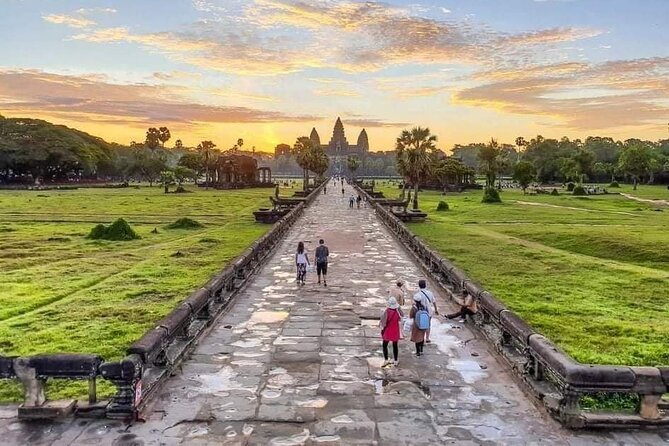
- Sunrise timing at Angkor Wat to catch the temple in its most flattering light
- English-speaking guide who explains what you’re looking at (not just where to stand)
- Air-conditioned vehicle plus water and a fresh towel, helpful in Cambodia’s early heat
- Compact group size (max 16) for a more controlled, easier experience
- A full temple circuit after sunrise: Angkor Thom (South Gate, Bayon, terraces) and Ta Prohm
- Optional Banteay Srei later in the day, with time for a breakfast stop
Why a 4:30 am start makes sense at Angkor Wat
This tour is built around one simple idea: Angkor Wat is best when you see it before the day gets loud. The start time is 4:30 am, and yes, you’ll feel it. But the payoff is real—early light changes the way stone carvings, towers, and the horizon line look. It’s also when you’ll get the most from your guide’s explanations because you’re not fighting for time or scrambling between photos.
One thing I appreciate about a sunrise-first plan is that it prevents the common problem of “we got there, took a few pictures, and rushed through.” With this format, the morning has structure. You arrive, the guide gives you context, you see the big moments, then the day flows to other key temple areas.
And because you’re picked up from your hotel, you’re not burning energy trying to beat the clock. That matters at this hour. Even a small delay can knock you off your best viewing window, and this package tries to protect that.
You can also read our reviews of more tours and experiences in Siem Reap.
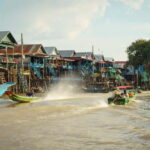
What you get for $45: guide, air-con ride, and small group
The price is $45 per person for a 7 to 8 hour tour. On paper, that can sound “almost too cheap,” but the details show where the value sits. You’re paying for an English-speaking guide, air-conditioned transport, and hotel pickup and drop-off. You also get water and a fresh towel in the vehicle, which is a smart inclusion when you’re heading out in the pre-heat hours and then staying active for hours.
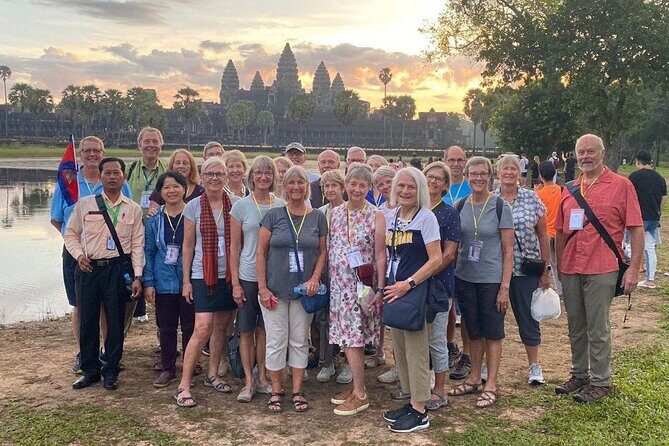
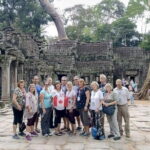
Group size is capped at 16. That’s not tiny, but it’s small enough to feel organized. You’re less likely to get stuck behind a wall of people every time the guide wants to point something out.
Two costs to remember:
- Entrance fees are not included.
- Meals aren’t listed as included.
If you like guided value, this works because you get more than “tickets and transport.” The guides praised in this program—Borey, JB, Sarha, Dunto/Bunto, Lin, and Mr. Ming—are repeatedly singled out for clear history, patience, and the ability to answer questions. That’s the part you can’t buy on your own once you’re inside the temples.
Sunrise at Angkor Wat: timing, tickets, and what to watch for
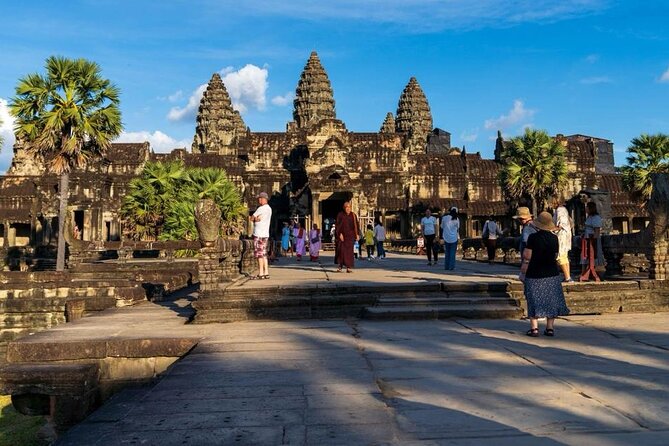
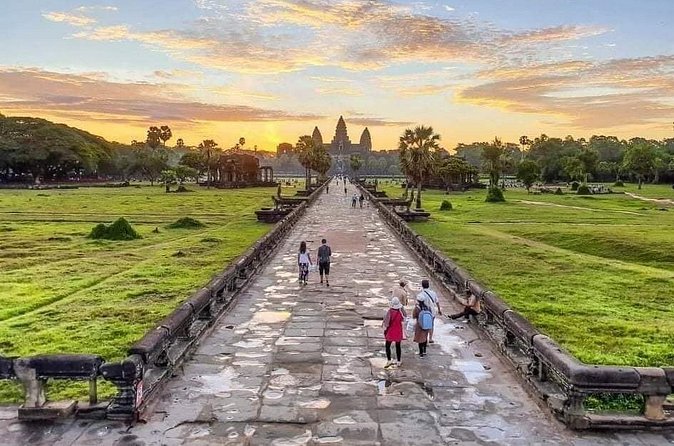
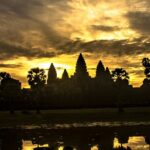
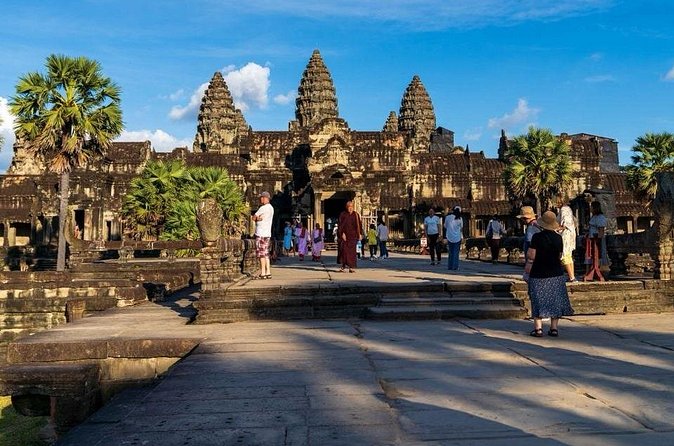
Angkor Wat is the headline stop, and the tour gives it the time it deserves. You’ll be visiting Angkor Wat at sunrise, with a guided experience designed to help you understand the cultural and historical importance of what you’re seeing.
About tickets: the tour notes that admission tickets are not included. So plan to bring payment for entry when you get there (or handle it per the operator’s process). This matters because it affects how smoothly your morning runs. If you arrive without knowing your entry cost and process, you can lose time right when you need to be in position.
What your guide helps with is equally important:
- They give context so the carvings and layout feel less random.
- They help you navigate faster through the UNESCO site.
- They offer insider tips on where to look and how to frame photos.
One practical point: sunrise means you may be outside longer in cooler air, then it warms up quickly. Bring something you can layer, and wear shoes that work for stone floors and lots of walking.
Angkor Thom South Gate to the Bayon: where the stone tells stories
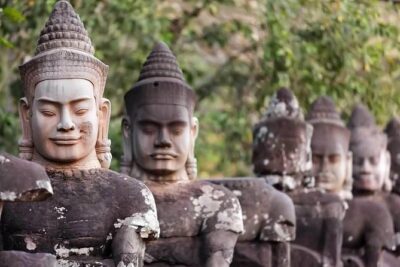
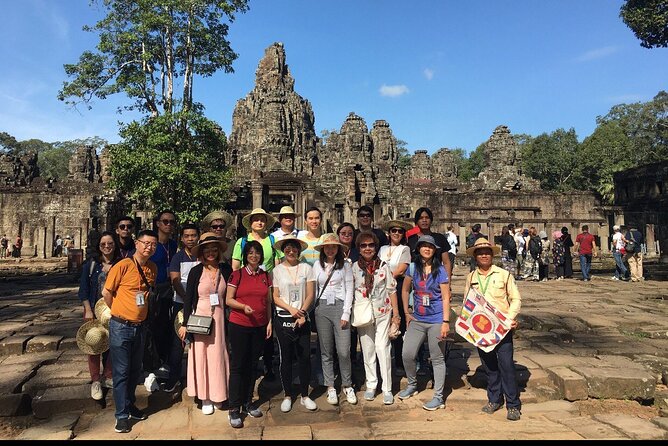
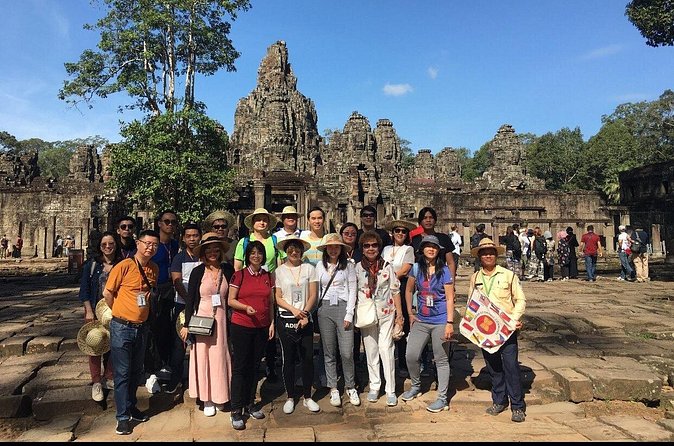
After sunrise, the day shifts to Angkor Thom, one of the most memorable temple complexes in the region. You’ll start at the South Gate of Angkor Thom, then move through major stops including Bayon Temple, the Terrace of the Elephant, and the Terrace of the Leper King.
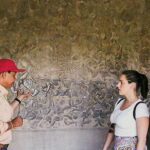
This section is a great example of why a guide is worth it. These places are visually striking, but without context they can blur together. With a guide, you can connect the dots: what this complex was, how the layouts were used, and why certain areas matter.
Bayon Temple is often the emotional center of Angkor Thom. The faces and the repeating motifs can feel overwhelming at first. A good guide helps you slow down enough to notice patterns—then speed up again when you’re moving to the next section.
The terraces are also key. The Terrace of the Elephant and the Terrace of the Leper King give you a sense of how people lived, celebrated, and recorded meaning through carvings. You’ll spend about 2 hours in this stretch, so the pacing matters. It shouldn’t feel like a sprint, and with a max group size of 16, you can usually move as a unit.
A small caution: Angkor sites can be busy as the day heats up. Your best advantage here is that the earlier start already gets you past the most frantic timing at Angkor Wat, so your energy is better for Angkor Thom.
Ta Prohm and the Tomb Raider look: photos without the rush
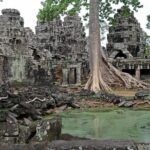
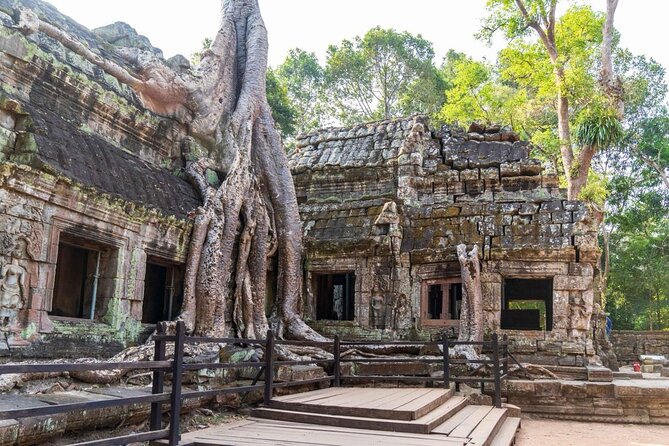
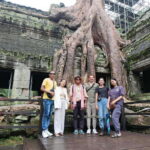
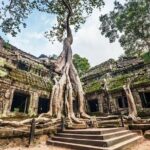
Next up is Ta Prohm. This is the temple known for its dramatic, overgrown feel—where massive tree roots and branches wrap around ruins and stone structures.
Ta Prohm is a quick stop on the itinerary timing—listed as 1 minute in the outline—but in practice, this is the kind of place where you want more minutes than you think. The good news is that the tour is guided, which usually helps you get the right viewing spots for photos and better angles without just wandering.
This is also where the tour’s value becomes visible again. The guide’s job is to help you see beyond the famous look. If the roots and stones are the headlines, the guide adds the storyline: how this temple fits into Angkor-era religious and architectural life.
Your photo plan will depend on what time you reach it and how the light looks that day. If you care about getting good shots, go into it with flexible expectations. Trees and roots change where shadows fall. The guide can help with quick positioning so you don’t lose time.
And yes, Ta Prohm is often linked to the Tomb Raider filming setting. If that’s part of why you’re here, you’ll get your visual match—plus you’ll get explanations that make it more than movie scenery.


Banteay Srei and breakfast stop: finishing strong without feeling rushed
After the morning and midday temples, the tour heads toward Banteay Srei. This stop is described as optional, and it’s also paired with a Khmer-style breakfast mention in the itinerary flow.
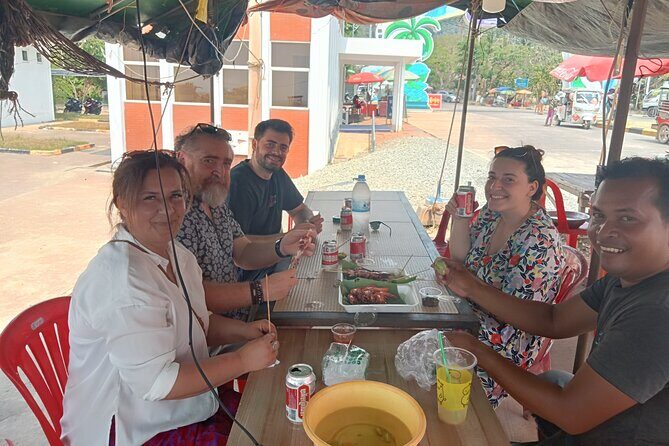
Meals are listed as not included, so you should treat breakfast as a stop that might require you to pay separately, even if it’s planned into the schedule. The best way to prepare is to plan on bringing some cash or having payment ready.
Why add Banteay Srei late? Because the tone changes. After big complexes, you often want something that feels more delicate and intimate. Banteay Srei tends to be approached with that mindset, even though you still walk and you still climb a bit. You return to Siem Reap by late afternoon, so the day doesn’t drag into the evening.
One more scheduling note: the whole tour is about 7 to 8 hours. That’s a solid amount of temple time for one day. If you’re trying to see sunrise Angkor Wat plus multiple major complexes, this format is efficient.
Practical tips to make sunrise temple time easier
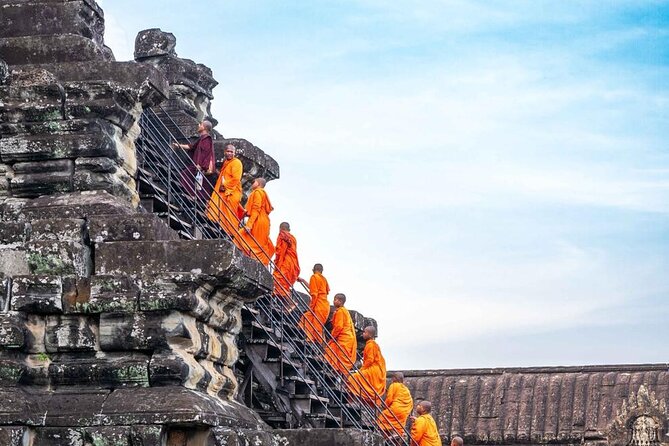
This is a long day that starts very early. A little prep makes a big difference.
- Wear comfortable walking shoes with good grip. Stone and steps add up fast.
- Bring a light layer for the morning air, then be ready for warmth later.
- Pack sun protection: hat or cap, sunscreen, and sunglasses. Even early mornings can turn bright.
- Plan for entrance fees. Since they’re not included, you’ll want to know what you’ll need for Angkor Wat and each site.
- Keep water habits steady. The vehicle includes water, but you’ll still benefit from sipping regularly during temple walking.
Also, use the guide’s time. People often spend their whole morning hunting for photos and then miss the explanations. This tour’s value is in learning what you’re looking at and understanding why the site matters.
Who this tour is best for
This is a strong match if you want:
- Sunrise at Angkor Wat without handling logistics on your own
- An organized temple route that hits multiple major stops in one day
- A smaller group and an English guide who explains history and symbolism in practical terms
You might especially like it if it’s your first time in Siem Reap and you want an expert to help you prioritize. In the feedback around guides like JB, Sarha, Dunto/Bunto, Lin, and Mr. Ming, the consistent themes are patience, clarity, and the ability to answer questions.
If you’re the type who wants a totally self-guided experience with no early start, this may feel too structured. But if you prefer “show up, follow a plan, and learn as you go,” this tour fits.
Should you book this sunrise-and-temples tour?
I’d book it if sunrise at Angkor Wat is on your must-do list and you want the day to feel efficient rather than chaotic. For the money, you’re getting the big essentials: hotel pickup and drop-off, air-conditioned transport, and a guide who can make the temples make sense.
Before you click confirm, do two quick checks:
- Budget for entrance fees and any site costs since they’re not included.
- Be flexible on timing if weather isn’t cooperative, because sunrise quality depends on conditions.
If you handle those, this is a very solid way to see Angkor’s highlights in one go—plus you’ll come away with a clearer story of what those stones were built to say.
FAQ
Is hotel pickup and drop-off included?
Yes. Pickup and drop-off at your hotel are included in the tour package.
What time does the tour start?
The tour starts at 4:30 am.
Are entrance fees included in the price?
No. Entrance fees for the included sites are not included.
What’s included during the drive?
You get an air-conditioned vehicle, transfers, and water plus a fresh towel in the vehicle.
How long is the tour?
It runs about 7 to 8 hours.
How big is the group?
The tour has a maximum of 16 travelers.