REVIEW · SIEM REAP
Siem Reap: Floating Village Tour
Book on GetYourGuide →Operated by Khmerdetours · Bookable on GetYourGuide
Floating villages feel like another world.
This 3-hour boat tour takes you off the Siem Reap treadmill and onto Cambodia’s most unusual water system, Tonle Sap, where rivers reverse twice a year. I especially like the fact that you travel on flat-bottomed riverboats with local guides connected to the floating communities, so you get more than just photos.
Two things I’d call out right away: the free hotel pick-up and drop-off and the simple, family-friendly pace that makes this doable even if you’re not a hardcore early-morning person. One possible drawback: parts of the experience can lean more sightseeing than deep, step-by-step village life explanations, so if you’re hoping for a very detailed on-the-water walkthrough, it helps to choose your guide well (names I’ve seen praised include Vanna and Mr. Friday, also listed as Mr. Poun Poss).
In This Review
- Key highlights at a glance
- From Siem Reap to Tonle Sap: Lotus Farm and Countryside Stops
- Flat-Bottom Boats and Narrow Channels: Your Floating Village Route
- Tonle Sap’s Water Reversal: Why Homes and Businesses Move Twice a Year
- Queen Tara on the Water: Drinks, Fruit, and a 100-Year-Old Boat Stop
- The Community Side: Fishermen, Shrinking Fish Stocks, and Ongoing Struggles
- Price and Logistics: Is $65 Worth It for a 3-Hour Boat Tour?
- Who Should Book This Tour (and Who Might Want a Different One)
- Practical Notes for a Comfortable Day on Tonle Sap
- Should You Book the Siem Reap Floating Village Tour?
- FAQ
- How long is the Siem Reap Floating Village Tour?
- How much does the tour cost?
- What’s included in the price?
- Are meals included?
- Do you provide drinks or fruit during the tour?
- Do you pick up guests from hotels?
- What language does the guide speak?
- Is the tour suitable for children, and what do they pay?
- Are unaccompanied minors allowed?
- Does the tour operate in all weather conditions?
- Is free cancellation available?
Key highlights at a glance
- Local guidance tied to the floating villages, with people born and working in the community
- Flat-bottom riverboats that handle narrow turns and changing water levels
- Lotus flower farm photo stop, with a Buddhist-cultural explanation of the plant’s uses
- Tonle Sap biosphere reserve context, including birds, depth changes, and UNESCO recognition
- Queen Tara riverboat break, docking for drinks and local fresh fruit on a 100-year-old vessel
From Siem Reap to Tonle Sap: Lotus Farm and Countryside Stops
This starts with you leaving the city in an air-conditioned minivan/car or sometimes a tuk tuk, depending on the departure flow. You’ll be picked up at your hotel/guesthouse/hostel and returned afterward, which is a big deal in Siem Reap because most “short” tours turn into long taxi wrangling. Here, the transport is built in.
On the way to the lake area, you make two main stops. The first is at a lotus flower farm. Your guide explains why the lotus matters in Buddhist culture, and you’ll hear practical details about how different parts of the plant are used (not just the flower). It’s also one of the easiest places on the route to get clean photos—wide color fields, and plenty of space to step away from the road noise.
You’ll also pass through rice paddies and Cambodian countryside. This matters because once you reach the water, you’re no longer thinking of Tonle Sap as “a lake.” You start seeing it as a whole living system—fields, farms, and waterways all tied together by seasonal water movement.
One practical note: you’ll want to dress for sun or drizzle because the tour runs in all weather conditions and asks you to dress appropriately. If you’re sensitive to humidity, bring a light layer you can throw on for the boat sections.
You can also read our reviews of more tours and experiences in Siem Reap.
Flat-Bottom Boats and Narrow Channels: Your Floating Village Route
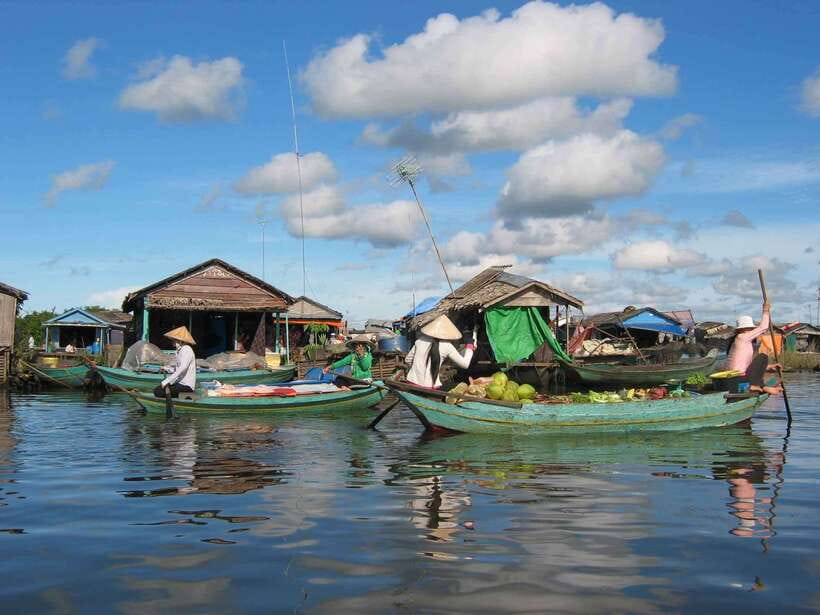
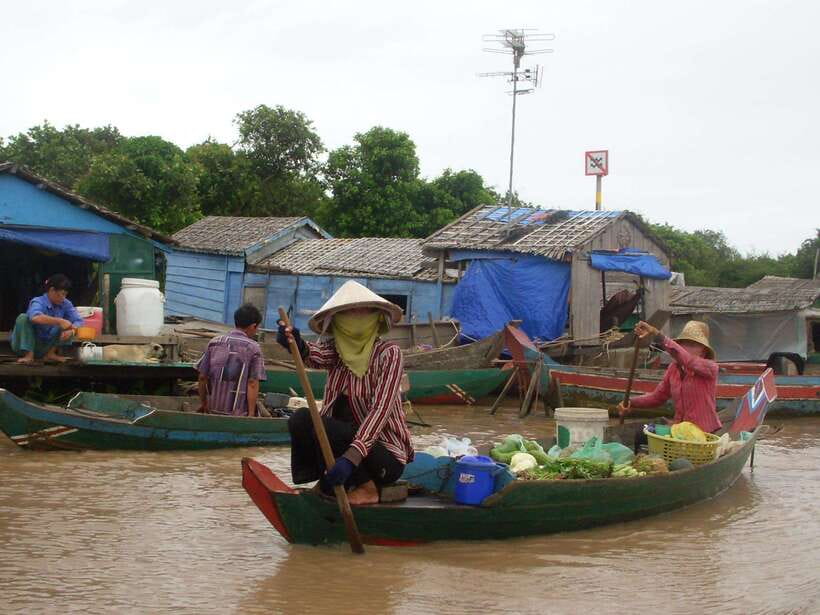
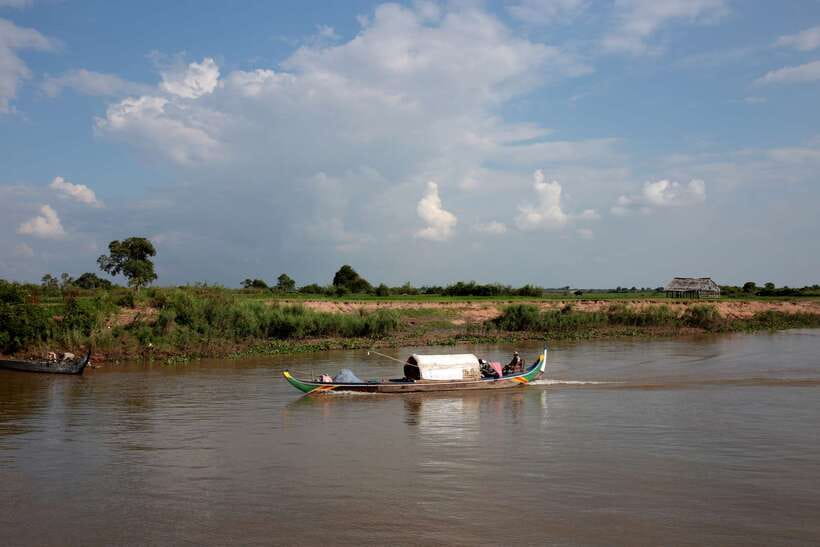
Once you reach the river entry, you switch to private boats waiting for you to take you to and around the floating villages. These are flat-bottomed riverboats, which is exactly what you want here. The channels can be narrow, the turns can be sharp, and the water level changes a lot with the seasons, so the boat needs to be stable and able to work with shallow conditions.
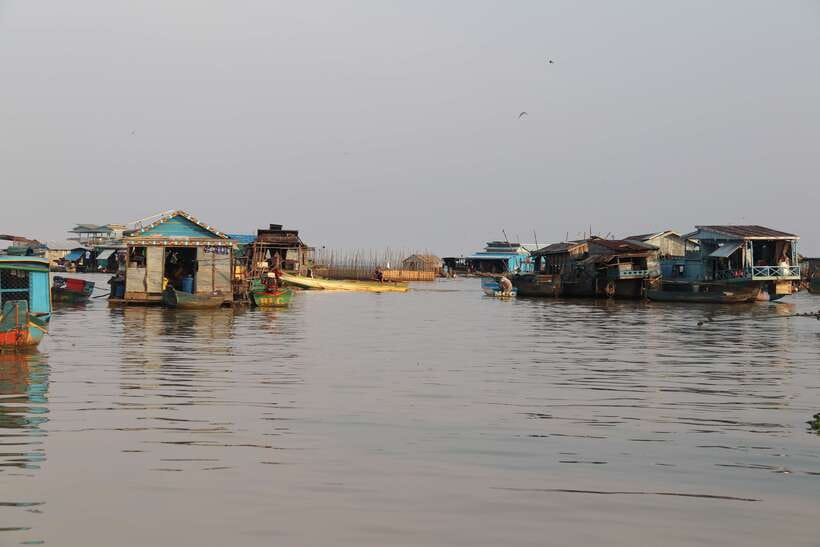
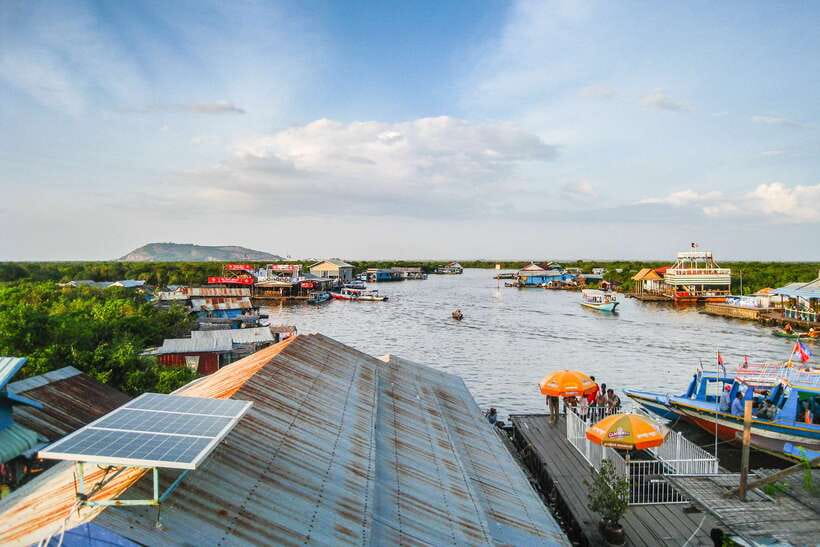
The vibe on the water is calm and strange in the best way. You move through canals and then around corners that can feel like someone just flipped a switch from narrow river to wide, open water. A key point: the tour area is home to about 6,000 people, so you’re not just seeing a couple of boats tied together—you’re seeing a community with daily routines.
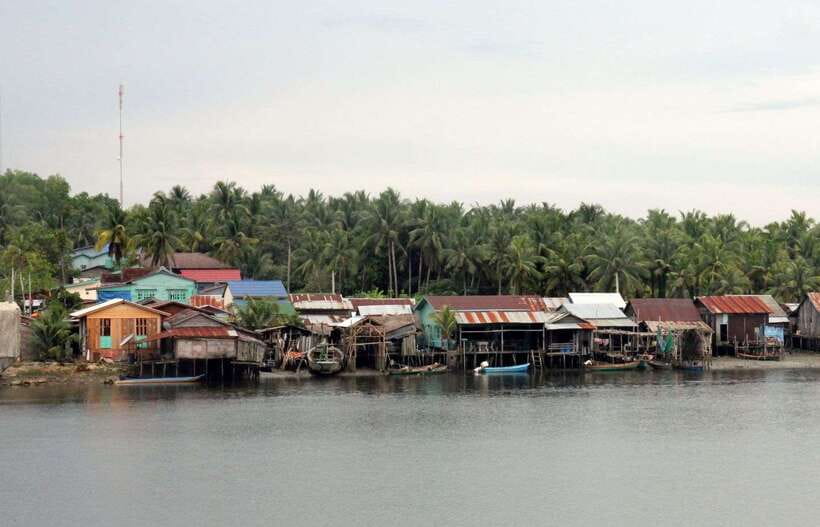
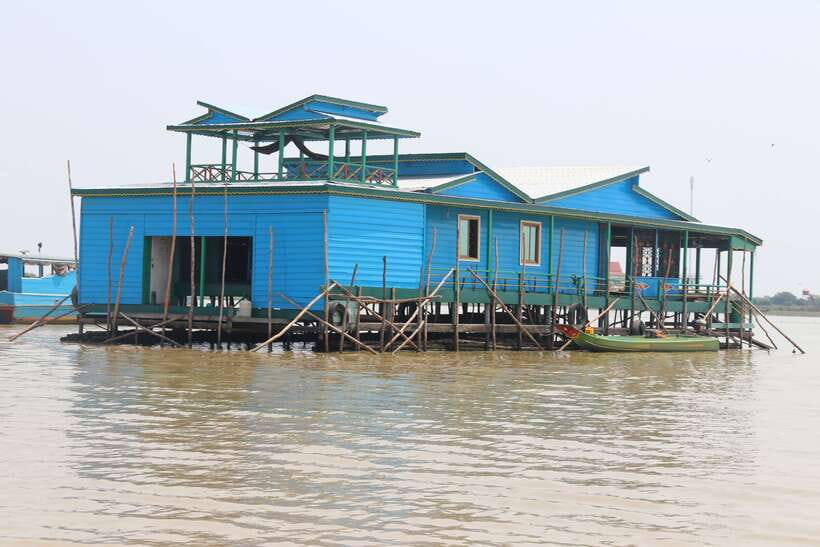
You may see floating buildings like schools, churches, markets, and even a police station and jail, plus basketball courts and vegetable gardens. Even when some elements are more visible from a distance than close-up, it still lands: this is a place where the built environment adapts to the water’s timing.
Guide quality can shape how much you get out of it. In the feedback I’ve seen, guides like Vanna and Mr. Friday (Mr. Poun Poss) are praised for connecting what you see to Cambodia’s bigger story—history, daily life, and how people work around the lake’s changes. If you end up with a guide who keeps it general, you might feel you’re doing a longer boat ride. If you get one who explains what you’re pointing at, the same 3 hours feels like you’re collecting a lot more meaning.
Tonle Sap’s Water Reversal: Why Homes and Businesses Move Twice a Year
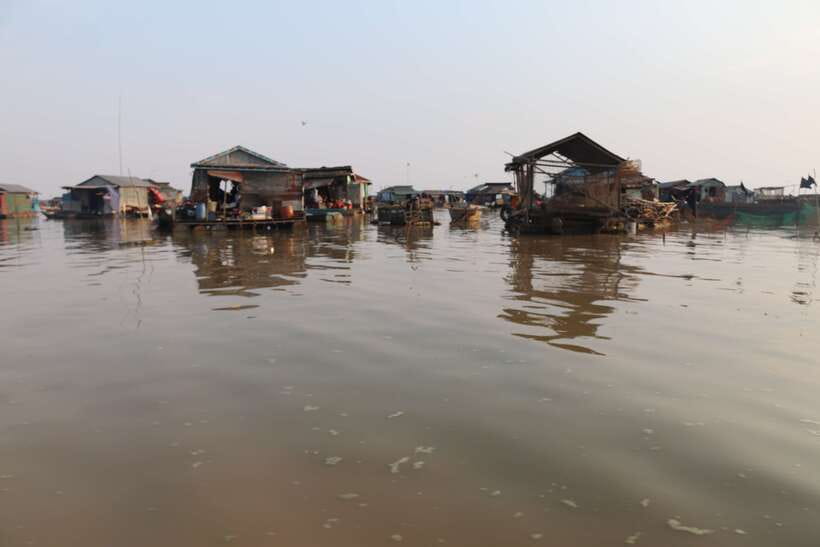
The floating villages make way more sense once you understand Tonle Sap’s weird water behavior. This isn’t a normal “lake stays where it is” situation.
Tonle Sap’s water flows in a way that changes direction twice per year. It’s essentially a river system, not just a static bowl of water. In the dry season, water empties toward the South China Sea through the Vietnam delta. In the wet season, the delta swells and pushes water north into Tonle Sap.
That shift is dramatic. Early in the wet season, the water depth can be around 1.5 meters, and at the height of the wet season it can rise to over 10 meters. As the water expands, the forests fill up first, then the floating villages move in because life follows the water.
This seasonal movement also changes the size of the lake’s area—from about 2,700 square kilometers in one phase to over 12,000 square kilometers in the other. And the lake is a standout for biology: it’s the largest freshwater lake in Southeast Asia and described as the richest fishing lake in the world. It’s also a UNESCO biosphere reserve (recognized in 1997) because of high biodiversity, including over 120 bird species, with many large water birds.
Why does all this matter for your tour day? Because it changes what you’re actually looking at. You’re not seeing “a tourist version” of life on boats. You’re watching a place where the water level decides where homes, businesses, and routines can exist.
Queen Tara on the Water: Drinks, Fruit, and a 100-Year-Old Boat Stop
After time cruising through village channels and wider water views, you dock at the Queen Tara riverboat. This vessel is described as a 100-year-old ex cargo boat, and it’s used as a stop for drinks and local fresh fruit.
This part is more than a break. It gives you a moment to reset your senses after sun and motion, and it also creates a natural point for your guide to connect lake life with what you just saw from the boat. It’s especially helpful if you’re a first-timer and you need a minute to organize the images in your head.
One more thing I like about this format: it doesn’t try to cram in ten stops. You’re on the water, you see the village layout, and then you take refreshments before finishing up. For many people in Siem Reap, that balance is exactly what keeps a short tour from feeling rushed.
The Community Side: Fishermen, Shrinking Fish Stocks, and Ongoing Struggles
Floating villages are often sold as a spectacle, but this one is framed as support for the local community through sustainable jobs. The local staffing emphasis matters here: the guides are described as being born in the floating village area, and the crew on the Queen Tara boat is also tied to the community.
The tour description highlights a serious pressure point: fishing stocks being reduced every year, making the struggle for fishermen and their families “quite a huge and ongoing problem.” Even if you don’t know the right questions to ask on day one, you’ll likely sense that the boat journey isn’t only about scenery. It’s about livelihoods.
That context changes how you interpret what you’re seeing. Floating schools and markets aren’t just charming backdrops. They’re essential infrastructure for people who have adapted their lives to a shifting water world—and now must adapt again as resources change.
I’d think about this as a “learn + respect” tour. You’re seeing daily life in a place with real constraints, not a theme park set.

Price and Logistics: Is $65 Worth It for a 3-Hour Boat Tour?
At $65 per person for 3 hours, the value comes from what’s included rather than just the sightseeing itself. You get:
- free hotel pick-up and drop-off
- an English-speaking local guide
- all transport
- all checkpoint fees
- boats and driver
Meals and drinks aren’t listed as included, but you do dock at Queen Tara for drinks and local fresh fruit, which helps offset that for the time you’re on the water.
So the real question isn’t whether $65 is “cheap.” It’s whether you’re paying for a complete day-of-water experience without needing extra taxis, separate boat arrangements, or added entry chaos. For many visitors, that’s the difference between a tour you remember and one you barely survive.
This is also a good length if you want a break from the full-day temple grind. Three hours keeps it manageable, and it’s often easier to fit into a busy Siem Reap schedule.
If you want a smooth experience, do one simple thing: confirm your pickup time clearly and be ready a few minutes early. One piece of confusion has shown up in the past (a tour that started later than expected), and with any tour, it’s smart to have your own timing anchored.
Who Should Book This Tour (and Who Might Want a Different One)
Book this if you want:
- a family-friendly outing that doesn’t require extreme mobility or long travel blocks
- a chance to see the floating villages from the water
- clear connections between what you see and how Tonle Sap actually works season to season
You might reconsider if:
- you’re expecting a super close-up, home-by-home walking tour. This is primarily a boat experience, and some aspects may feel more like cruising and viewing than detailed, step-by-step immersion.
- you prefer lots of structured stops and guaranteed extras beyond the lotus farm and the riverboat time. There can be variety in what stops appear, so it’s good to treat this as “water + village context,” not as a fixed checklist of attractions.
It also helps to pair this with a guide you’re comfortable learning from. If you get Vanna or Mr. Friday (Mr. Poun Poss), you’ll likely be in for better storytelling and stronger explanations.
Practical Notes for a Comfortable Day on Tonle Sap
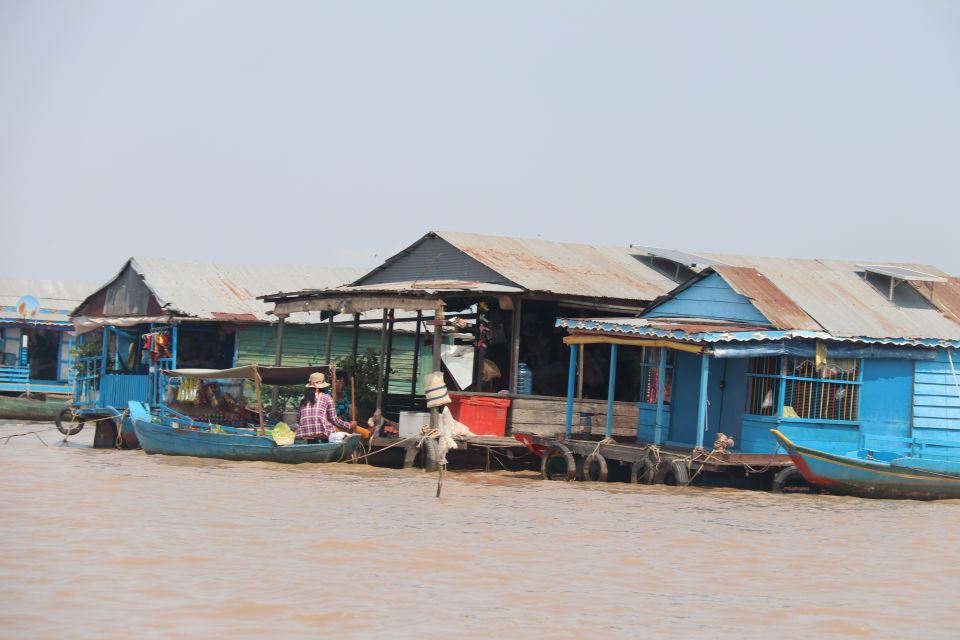
This tour is built for the water. That means motion, sun exposure, and changing views as you shift between narrow river sections and wider water. Since it runs in all weather conditions, dress appropriately for the day you get.
Children are allowed and the tour is described as suitable for families, with a pricing rule of children 10 and under half price and children 5 and under free. The key requirement is that children must be accompanied by an adult, and unaccompanied minors aren’t allowed.
You’ll get an English-speaking guide, and the tour language is listed as Cambodian and English, so communication should be straightforward even if your Khmer is zero.
Should You Book the Siem Reap Floating Village Tour?
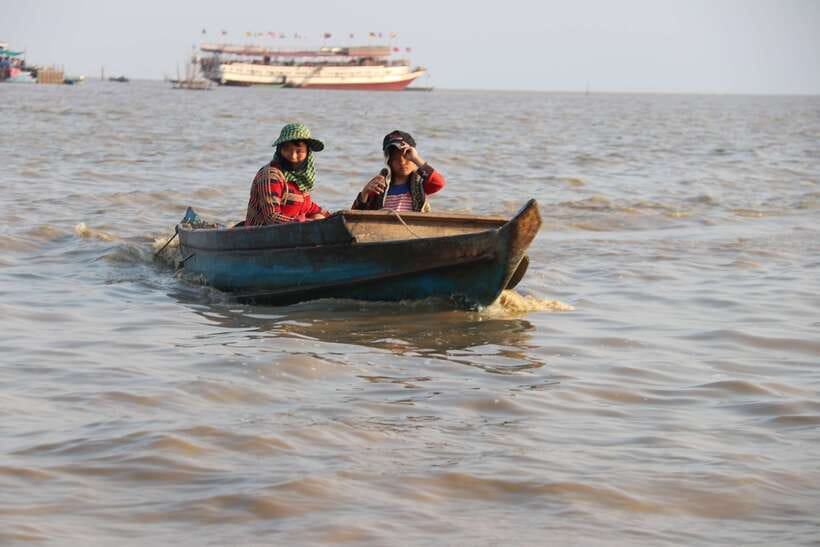
I’d book it if you want a short, well-rounded look at life around Tonle Sap that includes real context: flat-bottom boats, lotus farm cultural explanation, and the UNESCO-scale biology and seasonal water reversal behind the floating villages. The inclusion list is also a big plus, since transport and boating are handled.
I’d pause and read carefully if you’re the type who needs very granular, close-up explanations at every stop. Since the experience depends on how much your guide talks and how the route plays out that day, you’ll get the best payoff when your expectations match the format: a guided water ride with meaningful context, not a full-on documentary walkthrough.
FAQ
How long is the Siem Reap Floating Village Tour?
The tour runs for 3 hours.
How much does the tour cost?
The price is $65 per person.
What’s included in the price?
It includes hotel/guesthouse/hostel pick-up and return, an English-speaking local guide, all transport, all checkpoint fees, and boats and driver.
Are meals included?
No. Meals and drinks are listed as not included.
Do you provide drinks or fruit during the tour?
You will dock with the Queen Tara riverboat for drinks and local fresh fruits.
Do you pick up guests from hotels?
Yes. Free hotel pick-up and drop-off are included.
What language does the guide speak?
The tour offers Cambodian and English with an English-speaking local guide.
Is the tour suitable for children, and what do they pay?
Children must be accompanied by an adult. Children 10 and under are half price, and children 5 and under are free.
Are unaccompanied minors allowed?
No. Unaccompanied minors are not allowed.
Does the tour operate in all weather conditions?
Yes. It operates in all weather conditions, and you should dress appropriately.
Is free cancellation available?
Yes. You can cancel up to 24 hours in advance for a full refund.