REVIEW · SIEM REAP
Siem Reap: Angkor National Museum Admission Ticket
Book on GetYourGuide →Operated by SARUS CO., LTD · Bookable on GetYourGuide
A museum ticket with real payoff. This one is interesting because it helps you connect what you see at Angkor with the people and beliefs that shaped it. You get self-paced access to the Angkor National Museum, plus a chance to see over a thousand Buddha statues, ancient inscriptions, and excavated artifacts without being rushed.
Two things I especially like: first, the museum’s setup gives you room to slow down and actually read the wall information, which is where it all clicks. Second, eight galleries trace the evolution of Khmer art, culture, and religion in a way that makes Angkor Wat feel less mysterious and more explainable. One heads-up: an audio guide is not included, so if you want that extra context, budget an additional $5.
In This Review
- Key things to know before you go
- Angkor National Museum: what you’ll really get out of it
- Inside the museum: eight galleries that connect art to belief
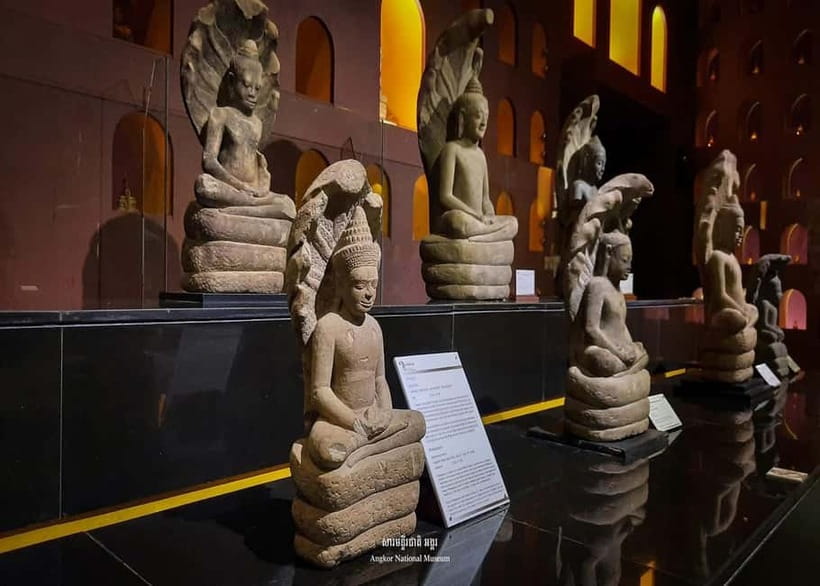
- The “wow” collection: Buddha statues, inscriptions, and excavated pieces
- How long to plan: timing that matches your pace
- Audio guide vs. wall text: the best way to spend your attention
- Skipping the ticket line: how that plays out in real life
- Getting there on your own: transport is your responsibility
- What to bring: the small items that prevent big annoyances
- Who this museum ticket is best for
- Price and value: is $15 worth it?
- Final call: should you book this Angkor National Museum ticket?
- FAQ
- What is the price of the Angkor National Museum admission ticket?
- How long is the ticket valid?
- Is the ticket self-paced?
- Does the ticket include an audio guide?
- Can I skip the ticket line?
- Do I need to arrange my own transportation to the museum?
- How do I receive the ticket before my visit?
- Is the museum wheelchair accessible?
Key things to know before you go
- Skip the ticket line: you walk in instead of waiting in a queue.
- Self-paced galleries: you control the pace, from quick scan to careful reading.
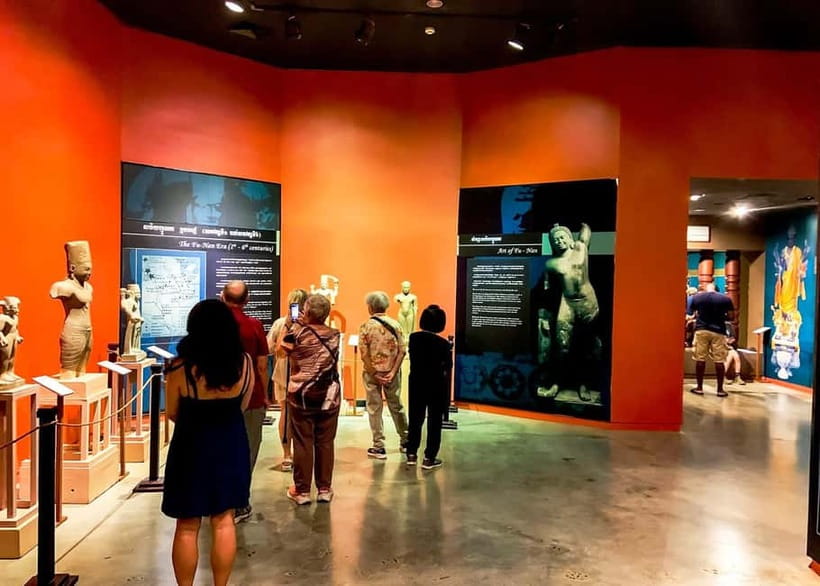
- Eight gallery rooms: you’ll move through Khmer art, culture, and religion over time.
- Over 1,000 Buddha statues: it’s a standout collection, not a small exhibit.
- Ancient inscriptions and excavated artifacts: you see objects tied to Angkor archaeology.
- Audio guide costs extra: ask for it when you arrive if you want narration.
Angkor National Museum: what you’ll really get out of it
I like museum tickets that do more than just “check a box.” This one works because it’s focused on the civilization behind the temples. Instead of treating Angkor as a set of impressive ruins, the museum helps you understand the Khmer Empire’s ideas and artistic choices—especially how religion showed up in carvings, statues, and everyday sacred objects.
If you’re headed to Angkor Wat or the wider temple circuit, this is a smart follow-up (or a smart start). You’ll notice details faster once you’ve seen the museum’s materials: the shape of iconography, the way religious themes repeat, and how artistic styles change across periods. Even if you’re not a hardcore history person, the exhibits do a good job of translating meaning into objects you can actually look at.
The admission is $15 per person, and that price is mostly about access. You’re not paying for a tour guide here. That can be a plus if you prefer freedom and reading at your own speed. The small drawback is that you’ll need to supply your own brainwork—no guide voice to tie it together for you.
You can also read our reviews of more tours and experiences in Siem Reap.


Inside the museum: eight galleries that connect art to belief
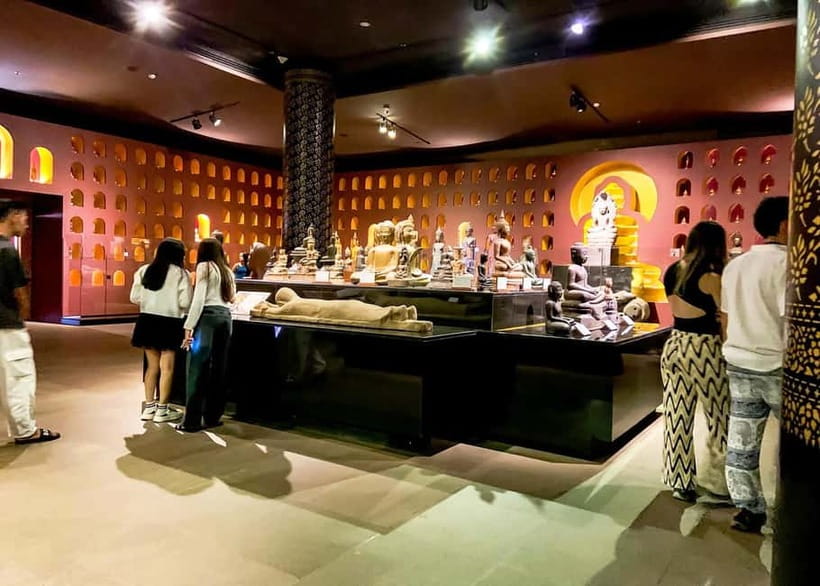
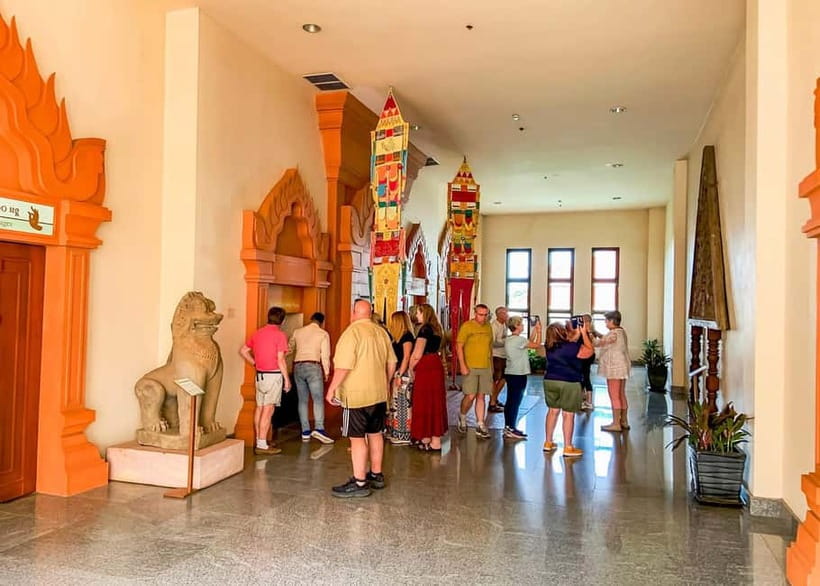
The museum is organized into eight galleries, and that structure matters. You’re not just walking through random rooms of relics. The galleries are meant to show how Khmer art, culture, and religion developed over time, so the exhibits build a storyline as you go.
Here’s the practical way to use that. When you enter the first gallery, treat it like your orientation. Then, as you move room to room, keep an eye out for how the objects and themes shift. You’ll be looking at things like statues and inscriptions, plus artifacts excavated from Angkor archaeological sites. That mix helps you connect the physical objects to the beliefs that produced them.
This museum also rewards people who read the information boards. One visit experience I saw emphasized that the explanations on the walls are what truly tie the collection together. I agree with that approach. You can spend time just looking at stonework and still enjoy it, but the story lands hardest when you pair the visuals with the captions.
The “wow” collection: Buddha statues, inscriptions, and excavated pieces

The headline attraction is the scale: over a thousand Buddha statues. Even if you’ve seen statues at temples, the museum version hits differently. At Angkor, you often see fragments in place—worn, weathered, and part of a larger architectural setting. In the museum, you’re seeing a collection gathered for study and interpretation. It’s like shifting from a wide scenic view to a close-up workshop.
Then there are the ancient inscriptions. Inscriptions can be easy to overlook if you’re in a hurry, but they matter because they’re direct evidence—markers of language, authority, and belief. The museum also includes artifacts excavated from Angkor’s archaeological sites, which adds another layer. You’re not just seeing religious art; you’re seeing material connected to what archaeologists uncovered.
If you want to make this worthwhile, don’t treat it as a race to the last room. Pause when something catches your attention—especially if a statue style or inscription format looks different from what came before. Those small contrasts are exactly what the eight-gallery flow is designed to highlight.
How long to plan: timing that matches your pace
The ticket is valid for 1 day, but the museum itself isn’t a full-day marathon for most people. Based on actual visit experiences, you’ll probably fall into one of two patterns.
If you use an audio guide, one visitor planned around 1.5 to 2 hours. Another person who took their time and toured slowly ended up with more than 3 hours. That range makes sense. If you skim the wall text, you’ll move faster. If you read carefully, stop for photos, and re-check details, you’ll stretch out.
My advice: decide in advance what you want from the day. If Angkor temples are your priority, keep the museum to a strong, focused block and then go see temples while the museum ideas are fresh. If you’re more into the culture and religion behind the sites, give yourself extra time and treat it like a study session with better lighting than outdoors.
Also note this: the audio guide is not included in the ticket. It’s extra, and one on-site experience reported it costs $5 additional. You’ll want to know this ahead of time so it doesn’t become a surprise at the counter.
Audio guide vs. wall text: the best way to spend your attention
The museum experience is designed to work without a guide, because the information boards are doing a lot of the teaching. That’s good news if you don’t want to pay extra or if you like reading in your own rhythm.
Still, an audio guide can help. One person recommended renting the guiding device and started from gallery #1 to build understanding step by step. The advantage of audio is that it can make the gallery progression feel clearer—like a narration track for what you’re seeing.
If you’re deciding whether to spend the extra $5, ask yourself this: Do you enjoy reading museum boards, or do you prefer listening while you look? If you enjoy reading, you might be fine skipping the audio guide. If you’d rather have spoken explanations (and you’re okay with a small extra cost), the audio guide can turn your visit into a tighter storyline.




Skipping the ticket line: how that plays out in real life
The ticket experience includes skip-the-ticket-line access. That can save your day in Siem Reap, where timing matters and queues can eat into temple time.
One practical detail: the ticket may not be delivered instantly after booking. You should plan for the fact that your ticket is sent separately, and you may need to message the operator if you’re heading to the museum right away. Also, you’re required to provide a WhatsApp number to receive the ticket before your visit. After booking confirmation, the operator contacts you to reconfirm.
So the simple strategy is: have your phone ready, use a number you can reach on WhatsApp (or compatible apps like Telegram or Viber), and double-check you can receive messages before you set off. This kind of museum visit is smooth when your communication setup is smooth.
Getting there on your own: transport is your responsibility
There’s no pickup or drop-off included. You handle your own transportation to the museum. That sounds basic, but it changes how you should plan the day. You’ll want to check travel time from wherever you’re staying in Siem Reap and leave a buffer so you’re not rushing at the entrance.
The good part: because it’s self-paced and you’re not tied to a guide schedule, you can fit it around temple timings. If you’re visiting Angkor in the morning and want the museum later, this ticket makes that easy. If you want the museum first to set context, you can do that too.
What to bring: the small items that prevent big annoyances
Bring comfortable shoes. You’ll be moving through multiple galleries, and the museum is best enjoyed when you can stand and walk without thinking about your feet.
Bring your camera. The collection is visually impressive, and you’ll probably want photos of inscriptions and statues when allowed (rules aren’t listed beyond the main restrictions, so follow on-site signage).
Bring comfortable clothes, plus cash. Cash is specifically recommended, which usually means you may want to purchase something on-site or handle the audio guide fee without scrambling. One more thing: it’s a museum, so treat it like one—light bag if possible, and anything you need for a slow, readable visit.
What you shouldn’t bring: pets, and no alcohol and drugs. That’s straightforward, but it’s worth keeping in mind if you’re traveling with companions or doing multiple activities in the same day.
Who this museum ticket is best for
This works for history fans, sure. But it’s also a great fit if you want culture without a long guided lecture. Because it’s admission-only and self-paced, you can tailor the visit to your style.
- If you like reading and learning through exhibits, you’ll enjoy the wall text approach that makes the collection make sense.
- If you want context before temples, this can sharpen what you see and help you connect religious themes to stonework.
- If you’re traveling with limited time, the museum gives you a focused way to understand the Khmer Empire without committing to a full-day guided itinerary.
One more practical fit: if you don’t want a guided group, you’ll like having control. The ticket doesn’t force a schedule. You can start where you want, pause when you want, and leave when you’ve had enough.
Price and value: is $15 worth it?
At $15 per person, this ticket is basically paying for access to a museum that’s built around major themes: the Khmer Empire, the evolution of Khmer art and religion, and a large collection of statues and inscriptions connected to Angkor archaeology.
The value improves if you’re the kind of person who reads captions and notices patterns. If you just want the highlights in ten minutes, it won’t feel like the best deal. But if you’re willing to spend time—especially 1.5 to 3 hours—the cost starts to look fair fast.
Keep in mind the two add-ons that can change your budget. First, the audio guide costs extra (reported as $5). Second, you might spend a little on photos, small purchases, or snacks nearby, since food and beverages aren’t included. Still, even with the audio guide, you’re keeping the spending tight compared with a full guided experience.
Wheelchair access is available, which is a real plus for comfort and planning.
Final call: should you book this Angkor National Museum ticket?
I’d book it if you want Angkor to make more sense. This ticket is a strong value because it gives you the objects and the explanations in one place, and you can shape the timing around your temple plans. It also helps you avoid the common frustration of seeing beautiful ruins without understanding what you’re looking at.
Don’t book it if you’re allergic to reading and you only have a tight schedule for quick stops. A museum works best when you’re willing to slow down a bit.
If you do book, I’d recommend two simple moves: plan for enough time to read the information boards, and decide early whether you’ll use the audio guide so the experience stays smooth.
FAQ
What is the price of the Angkor National Museum admission ticket?
The ticket costs $15 per person.
How long is the ticket valid?
The ticket is valid for 1 day.
Is the ticket self-paced?
Yes. You can explore the Angkor National Museum at your own pace.
Does the ticket include an audio guide?
No. An audio guide is not included, and you may rent one on-site for an extra fee.
Can I skip the ticket line?
Yes, this option includes skip-the-ticket-line access.
Do I need to arrange my own transportation to the museum?
Yes. Pickup and drop-off service are not included, so you’re responsible for getting to the museum.
How do I receive the ticket before my visit?
You must provide a WhatsApp number to receive the ticket before the visit. The operator will contact you to reconfirm once your booking is confirmed.
Is the museum wheelchair accessible?
Yes, the experience is wheelchair accessible.