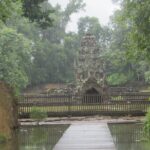
Faces, forests, and temple towers. This short temple circuit strings together Angkor Wat and the famous faces of Bayon, then closes with Ta Prohm’s tree-tangled ruins. I like how your guide keeps the stops connected—one flow from the grand scale of Angkor Wat to the broader Angkor Thom area—so you’re not just collecting photos. And with Dan leading the way, the carvings and religious ideas behind the temples actually make sense as you move through them.
One thing to budget for: temple fees are not included. The entrance cost is $37 per person, which can be a surprise if you’re only looking at the $45 tour price.
In This Review
- Key highlights before you go
- Why this Angkor Wat–Bayon–Ta Prohm circuit feels efficient
- Price and value: the $45 tour plus the $37 temple fee
- Morning setup: pickup, what to wear, and how to stay comfortable
- Angkor Wat: King Suryavarman II’s giant statement
- Angkor Thom South Gate (Tonle Oum) and the 3 km city sweep
- Bayon Temple: the faces, the layout, and the meaning
- Ta Prohm: the tree temple vibe (and why it’s famous)
- If you have energy: an extra small temple stop
- Logistics that matter on an Angkor day
- Who should book this tour (and who might skip it)
- Should you book? My take
- FAQ
- What sites does this tour cover?
- How long is the tour?
- What’s the price of the tour?
- Are the temple admission tickets included?
- Do I get hotel pickup and drop-off?
- What’s included in the tour besides the guide?
- What should I wear to enter the temples?
- Do I need to bring valuables?
- Is the tour private?
- Is tipping included?
- Is cancellation free?
Key highlights before you go
- Dan’s story-first guidance: he ties temple design to the religions and political world that produced them.
- Angkor Wat’s huge scale: built 1113–1150 AD under King Suryavarman II, and designed in three levels with five main towers.
- Angkor Thom South Gate (Tonle Oum): you’ll hear about the gates (including the ghost/dead and killing gates) and the city’s 3 km square footprint.
- Bayon Temple faces up close: you’ll see the famous smiling faces both outside and inside, with context that makes them less random.
- Ta Prohm as a tree temple: the roots-and-stone atmosphere is the reason people plan this stop.
- Comfort on a long day: hotel pickup/drop-off, air-conditioned transport, drinking water, and cold towels.
Why this Angkor Wat–Bayon–Ta Prohm circuit feels efficient
This is a classic first-time Angkor route, but it’s paced like a real human day. You’re looking at about 5 to 7 hours total, which gives you time to enter key temples without feeling like you’re sprinting from one spot to the next.
What makes it work is the mix of big-ticket sites and a short walk through the Angkor Thom area. Angkor Wat sets the standard. Then you move into the Angkor Thom world at the South Gate and Bayon, where the city layout and faces start telling a bigger story. After that, Ta Prohm changes the mood—more wild, more tangled, more cinematic.
You can also read our reviews of more tours and experiences in Siem Reap.


Price and value: the $45 tour plus the $37 temple fee
The tour price is $45 per person, and that’s for transport, guide time, and basic comfort. What’s not included is the temple admission fee ($37 per person), plus tipping for guide and driver (recommended).
So yes, the entrance fee is a real cost, and you should factor it in right away. But I still think the value is solid because you’re paying for a local English-speaking guide, hotel pickup/drop-off, and access to the inside of major temples with explanations—not just a bus drop.
If you’re traveling in a group, it’s also worth noting that the tour offers group discounts and runs as a private experience for your group. That can make the overall day feel less crowded and more guided than the low-cost “see-it-and-go” style.
Morning setup: pickup, what to wear, and how to stay comfortable
Expect hotel pickup and drop-off, plus an air-conditioned car. You’ll also have drinking water and cold towels, which matters in Siem Reap weather when you’re walking in temple courtyards and sunlit stone corridors.
You do need to plan your outfit. You’re advised to cover your knees and shoulders when entering temples. This isn’t the time for shorts and tank tops unless you pack an easy cover-up. Comfortable walking shoes are strongly recommended too, because you’ll be moving between sites and through uneven temple surfaces.
Finally, keep valuables out of the daypack drama. The tour advises you not to bring valuables with you.
Angkor Wat: King Suryavarman II’s giant statement
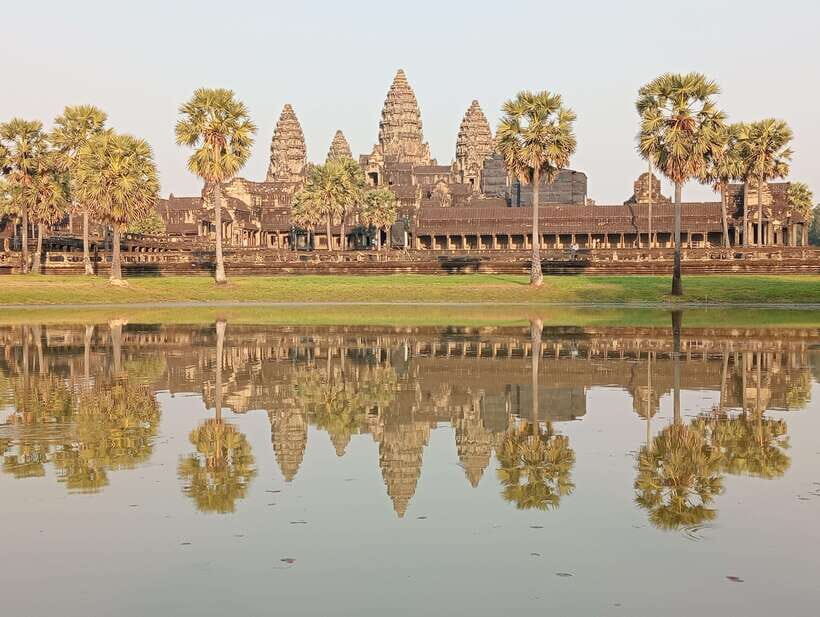
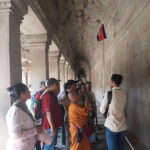
Angkor Wat is the headliner for a reason. You’ll spend about 3 hours here, and you’ll see it from outside and inside, with a local expert guide explaining what you’re looking at.
Angkor Wat was built from 1113 to 1150 AD by King Suryavarman II, and it measures about 330 metres by 260 metres. The temple is structured in three levels with five main towers. That description sounds technical until you’re actually there—then you feel how the layout pulls your eyes upward and inward.
One more reason this place hits: Angkor Wat is Cambodia’s national symbol and even appears on the national flag. Your guide’s job here is to translate that into something you can feel—why the temple looks the way it does, and how its design connects to beliefs and power.
My practical tip: when you’re inside, slow down. The guide’s storytelling is best when you’re standing still enough to actually notice carvings and architectural details. If you rush, you miss the point.
Angkor Thom South Gate (Tonle Oum) and the 3 km city sweep
After Angkor Wat, you shift gears to Angkor Thom. You’ll stop at the South Gate, also called Tonle Oum, for about 30 minutes.
This part is short, so treat it like a briefing that helps you understand everything that comes next. Angkor Thom is a large walled city with five gates, including the ghost gate (gate of the dead), victory gate, dei chhnang gate (north gate), and killing gate—plus the South Gate you’re visiting. The city is described as 3 kilometres each side, which gives you a sense of the scale even if your walk is brief.
You’ll also continue through key Angkor Thom landmarks as part of the route: Baphuon, Elephant Terrace, the Terrace of the Leper King, and the Royal Palace. These are big names, but the “value” here is timing. Without a guide, it’s easy to see them as separate monuments. With the guide, they feel like parts of one city plan.
Potential drawback to consider: since the South Gate stop is brief, if you’re the type who likes to linger for 45–60 minutes per viewpoint, you might wish you had more time here. The trade-off is you get to hit Bayon and Ta Prohm on the same day.

Bayon Temple: the faces, the layout, and the meaning
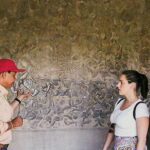
Next up is Bayon Temple, about 1 hour. Bayon is famous for the faces, and the stop follows that logic: you’ll see parts of the temple from outside and then go inside as well.
These faces are more than a single iconic photo angle. Your guide can explain why they’re everywhere and how the temple’s design fits into the broader beliefs of the period. The strongest reviews highlight Dan’s ability to connect religion, politics, and the carvings you see on the walls—so you’re not just reading signage, you’re getting the “why” behind the “what.”
Here’s what you should do while you have the hour:
- Look outward first to understand the structure.
- Then go inside and let the guide’s explanations slow you down.
- Keep checking how the faces relate to different points in the space—your view changes as you move.
My practical note: if you prefer quieter temples, Bayon can still feel busy because it’s one of the most recognizable stops. Going with a guide helps because you spend more time orienting and less time wandering.
Ta Prohm: the tree temple vibe (and why it’s famous)
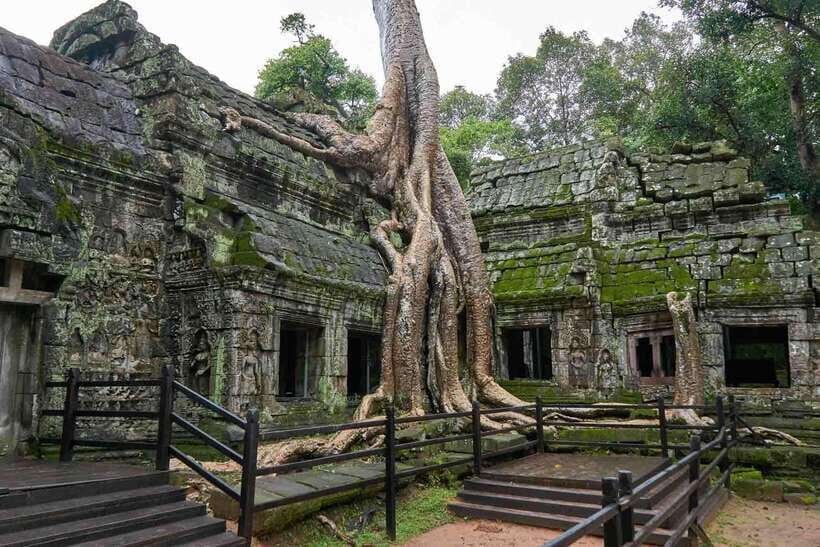
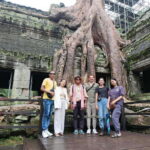
Finish with Ta Prohm, also known as the Tomb Raider temple and described here as a tree temple. You’ll spend about 1 hour, again with both outside and inside views plus guide explanation.
Ta Prohm is famous because nature and stone look like they grew together here. Even if you’ve seen pictures, seeing it in person changes the feeling. It’s one of the best “mood shifts” on the circuit because Angkor Wat and Bayon feel more controlled and formal, while Ta Prohm feels like time moved differently.
Your guide’s explanation adds extra value at this stage. Instead of treating it as a set piece, you get the context of how temples like this were shaped and what people intended when they built them.
Photo tip: bring a phone strap or keep your camera secure when you’re near roots and uneven stone paths. You’re walking in an active archaeological space, not a studio.
If you have energy: an extra small temple stop
There’s a mention of another small temple stop if you have energy. The exact temple name isn’t specified in the details you provided, so you should think of this as a “time and legs permitting” bonus.
If you want the extra stop, go for it—just keep an eye on your pace. This circuit already includes multiple temples and several Angkor Thom landmarks, so the best strategy is to stay flexible and let your guide steer the day based on your group’s comfort.
Logistics that matter on an Angkor day
This tour runs as a private tour/activity, meaning only your group participates. That’s a real quality-of-life factor. You’re not stuck in a big mixed crowd, and questions actually get answered.
You’ll also get a mobile ticket, plus confirmation at the time of booking. Hotel pickup and drop-off remove the most annoying part of day planning—figuring out transportation while you’re trying not to burn your first morning.
One more practical thing: the temple dress code is firm. Plan ahead so you don’t waste time negotiating with staff or scavenging for a borrowed wrap. Cover knees and shoulders, wear shoes you can trust, and your whole day runs smoother.
Who should book this tour (and who might skip it)
This fits best if you:
- Want the big three Angkor Wat, Bayon, and Ta Prohm in one organized day.
- Prefer local English-speaking guidance that explains what you see, not just where to stand.
- Like a route that’s structured enough to keep you oriented through the Angkor Thom zone.
You might think twice if:
- You hate walking or you have limited mobility. The day includes multiple temple interiors and outdoor connections.
- You’re strictly budget-shopping and don’t want to add the $37 temple fee per person on top of the tour price.
If you fall in the middle—curious, comfortable with moderate walking, and you want value—this is a strong match.
Should you book? My take
I’d book this if you want a guided, efficient circuit that covers the core Angkor highlights with enough time inside key temples to actually understand them. The biggest value driver here is the guide quality, especially Dan’s storytelling and his ability to connect religious and political context to the carvings and temple design.
I’d hesitate only if the temple fee makes you cringe or if you want a slower, more scattershot day with no time pressure at each stop. Otherwise, this route hits the sweet spot: iconic sites, clear guidance, and comfort details like air-con transport, water, and cold towels.
FAQ
What sites does this tour cover?
It includes Angkor Wat, Angkor Thom South Gate (Tonle Oum), Bayon Temple, and Ta Prohm. It also mentions an additional small temple stop if you have energy.
How long is the tour?
The duration is 5 to 7 hours (approximately).
What’s the price of the tour?
The tour price is $45.00 per person.
Are the temple admission tickets included?
No. Temple fees are not included, and the admission fee is $37.00 per person.
Do I get hotel pickup and drop-off?
Yes. Hotel pickup and drop-off are included.
What’s included in the tour besides the guide?
You get an air-conditioned car, drinking water and cold towels, and a local English-speaking tour guide.
What should I wear to enter the temples?
You must cover your knees and shoulders when entering temples.
Do I need to bring valuables?
The tour advises you not to bring valuables with you.
Is the tour private?
Yes. It’s described as a private tour/activity, so only your group participates.
Is tipping included?
Tipping for the guide and driver is not included, but it is recommended.
Is cancellation free?
Free cancellation is available. You can cancel up to 24 hours in advance for a full refund.