REVIEW · SIEM REAP
Angkor Wat Temples Tour with Entrance Ticket and Lunch
Book on Viator →Operated by Green Era Travel · Bookable on Viator
One day, four temple moods. This tour strings together Angkor Wat, Angkor Thom, Bayon, and Ta Prohm with a private guide and a comfortable air-conditioned vehicle, plus frequent stops for photos so you’re not just rushing from gate to gate. You also get to shape the pace around what you care about most, which matters on a site this big.
I like two things a lot: the included entrance ticket (so you’re not juggling paperwork before you even start) and the included set-menu lunch at a local restaurant mid-tour. It’s a practical way to keep the day moving without losing time to hunting for food.
One possible drawback: you’ll need moderate physical fitness for uneven ground and walking between temple areas. If you’re not comfortable with stairs and rough surfaces, you’ll want to plan extra time for slower moments.
In This Review
- Key things to know before you go
- The value of doing Angkor in one efficient day
- Pickup timing and getting your Angkor Pass smoothly
- Angkor Wat: the must-see stop with room for photos
- Angkor Thom: fortified city vibes from the South Gate
- Bayon Temple: the smiling faces moment
- Ta Prohm: tree-root ruins and the story behind the controversy
- Lunch set-menu: keeping energy steady without slowing the day
- Your guide matters more than you think
- Comfort, group size, and what that means for your day
- Price and what you’re really paying for ($119 per person)
- Weather and pacing: how to plan for the real Angkor day
- Who this tour fits best (and who should rethink it)
- Should you book this Angkor Wat temples tour?
- FAQ
- What’s included with the Angkor Wat temples tour?
- How long is the tour?
- What time does pickup happen in Siem Reap?
- Which temples are visited during the day?
- Is lunch included, and can I request a vegetarian option?
- What happens if the weather is bad?
Key things to know before you go
- A focused one-day loop through Angkor Wat, Angkor Thom, Bayon, and Ta Prohm
- Hotel pickup and drop-off in Siem Reap, timed for a morning start
- Entrance fees and lunch included, so your day is easier to budget
- English-speaking guide to help you navigate and understand what you’re seeing
- Small group size (max 10), with room for photo stops and questions
- Vegetarian lunch option available if you request it when booking
The value of doing Angkor in one efficient day
Angkor can be overwhelming fast. The ticket lines, the vast grounds, the number of temples, and the sheer amount of walking can turn a dream day into a stressed-out blur. This tour helps you avoid that by doing the heavy lifting for you: pickup, admission, guiding, and a route that hits the most popular highlights in a single stretch of time.
The itinerary is built around the “big four” you’ll see referenced again and again: Angkor Wat, Angkor Thom, Bayon, and Ta Prohm. That’s great if you’re in Siem Reap for a short window and want the greatest concentration of famous sights without spending your day studying maps.
Because you travel with an experienced English-speaking guide, you also get more out of each stop. You’re not just looking at stone—you’re learning what each place is known for and getting help moving through rugged areas without wasting time.
And since the tour includes lunch and cold bottled water, you’re less likely to lose momentum mid-day. That sounds small, but on temple tours it can make a big difference.
You can also read our reviews of more tours and experiences in Siem Reap.

Pickup timing and getting your Angkor Pass smoothly
Your morning starts with hotel pickup from Siem Reap between 8:00 am and 8:45 am. That timing is useful because it gives you a calmer start before the day gets hotter and crowded. Once you’re collected, you head to the Angkor Wat Ticket Office to get your Angkor Pass.
This is one of those “you’ll appreciate it later” parts of the day. Admission and logistics can be the most annoying part of a temple visit, especially if you’re learning the system. Having it handled as part of the tour helps you start viewing temples sooner, rather than spending your energy on logistics.
You’ll also travel in a comfortable air-conditioned vehicle. The tour notes that you may travel via shared tuk tuk or air-conditioned vehicle, depending on how the day is run, but the key point is that you’re not enduring the trip in an uncomfortable way.
A small practical note: if you’re the type who likes to arrive ready (water, hat, sunscreen, camera charged), you’ll have an easier time enjoying the first temple once the ticket process is done.
Angkor Wat: the must-see stop with room for photos
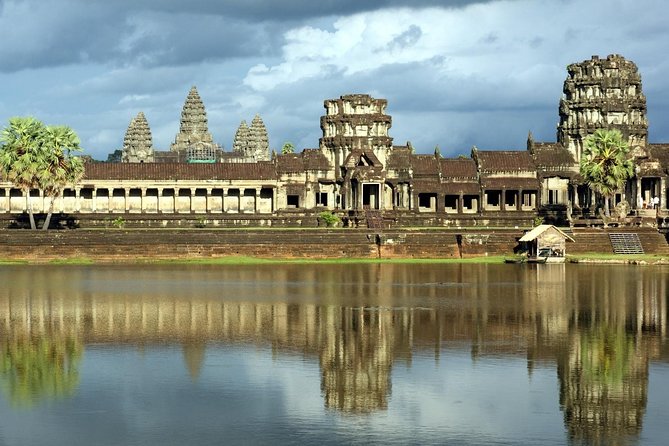
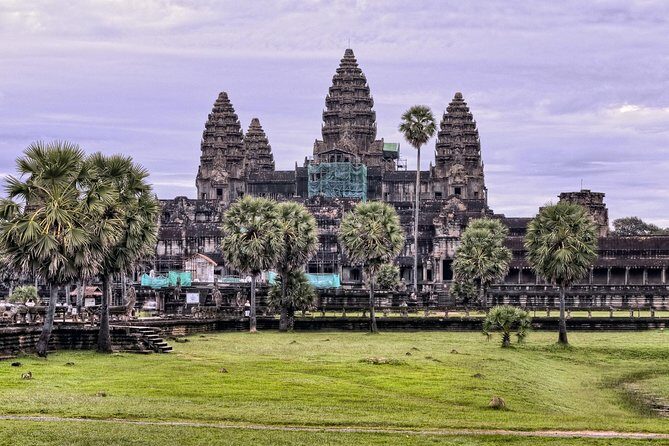
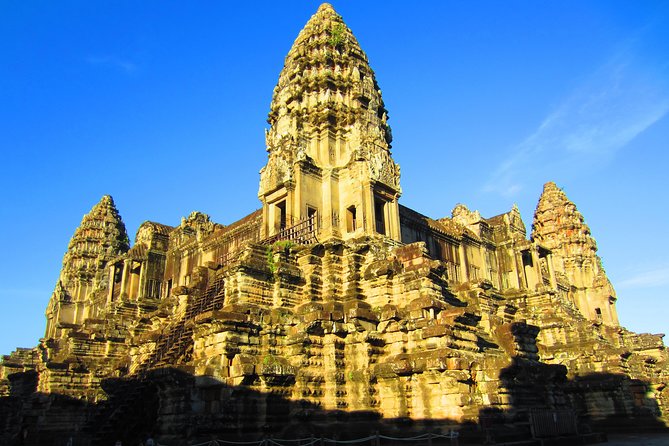
Angkor Wat is your first major temple visit, and it’s positioned as a best-preserved archaeological site in Southeast Asia and even considered one of the Seven Wonders of the World. That’s a big reputation, but what you actually feel on site is the sheer scale and how carefully the place is arranged.
You’ll typically have around two hours here, which is enough time to see the core areas without feeling like you got only a quick glance. It’s also built to allow photo breaks—your guide helps you pause frequently, so you’re not stuck sprinting after the group.
What makes this stop especially valuable on this tour is that you’re not doing it alone with a loose plan. Your guide provides commentary as you walk the grounds, and they help you understand what you’re looking at rather than treating the site like a checklist.
A drawback to consider: two hours can feel fast if you’re a slow photographer or if you like to stop often to read details. If that’s you, tell your guide your pace early so you can plan your time.
Angkor Thom: fortified city vibes from the South Gate
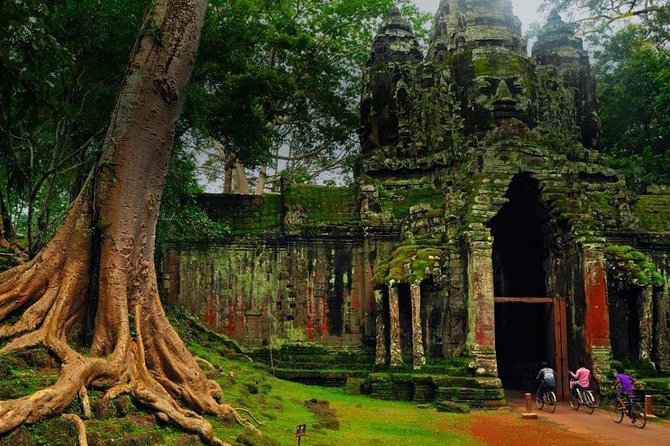
After Angkor Wat, you go to Angkor Thom, described as a sprawling fortified city. This part matters because it changes the feel. Angkor Wat often reads as the iconic centerpiece. Angkor Thom feels more like a landscape of walls, gates, and routes—still impressive, but with a different atmosphere.
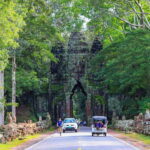
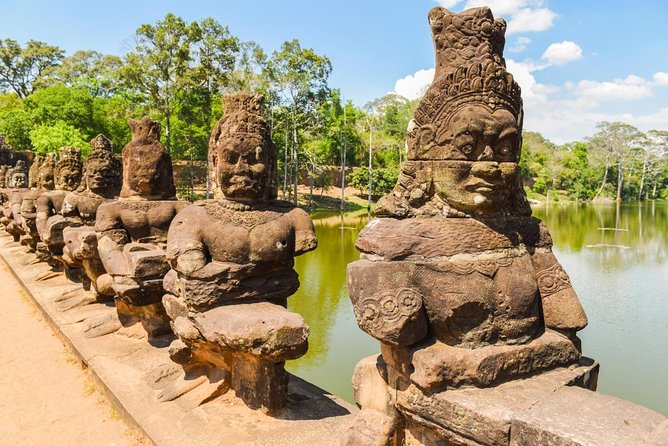
You’ll enter from the monumental South Gate, crossing a picturesque causeway lined along the way. Then you’ll spend about one hour exploring with your guide.
That hour isn’t a lot of time in a site this large, so treat it as an efficient orientation: you’ll see the key impression of the area and understand what makes it important. The guide also helps you navigate the rugged terrain, which is the real hidden benefit. At Angkor, “navigating” isn’t just about finding the next entrance—it’s about getting around uneven ground and knowing where to pause for good views without getting lost or stuck behind other groups.
Possible consideration: if you love spending lots of time in one complex (rather than touching four in one day), this one-hour slot might feel brief. For most first-timers, though, it’s the right tempo.
Bayon Temple: the smiling faces moment
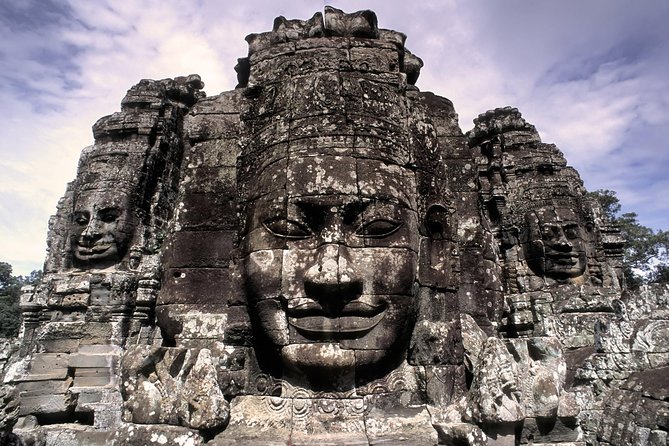
Next up is Bayon Temple, known as the Temple of Smiling Faces. Bayon is a favorite for many visitors for a reason: it hits you with instantly recognizable character. This is the stop where your eyes really lock onto the repeated face motif and the temple’s “mood,” which is hard to convey from photos.
You’ll have about one hour here. That may sound short, but Bayon works well for a guided visit because the best way to enjoy it is with guidance on what to focus on and how to move through the space without losing momentum.
The guide’s commentary helps connect the visuals to meaning, and you’ll get help navigating the site so you can spend your time looking rather than figuring out routes. On a day like this, that’s a big deal.
One note for planning: because this stop is compact and visually intense, it’s a great place to slow down for a few minutes if you want to absorb it. If you want more photos, you can do it, but it’s smarter to ask the guide for a quick plan so you don’t waste time redoing your path.



Ta Prohm: tree-root ruins and the story behind the controversy
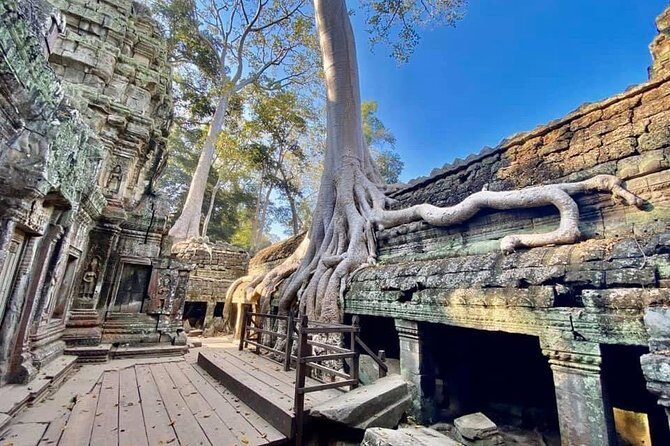
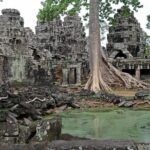
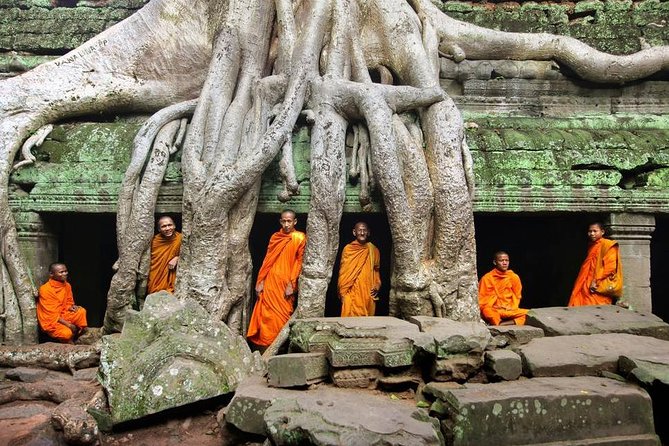
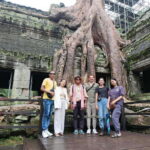
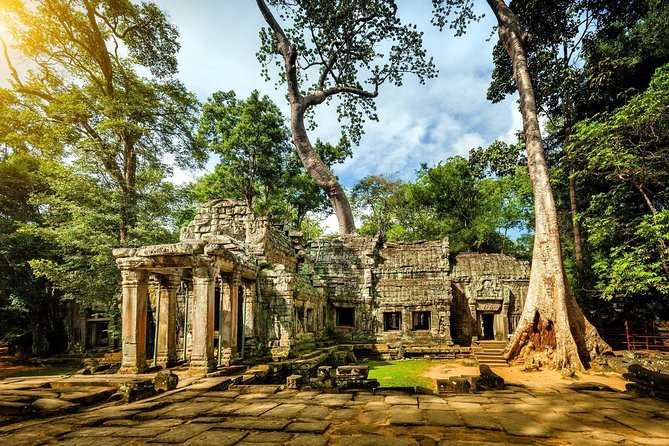
Your final temple stop is Ta Prohm, where the experience is shaped by the dramatic scene of ruins taken over by tree roots. That nature-meets-stone contrast is exactly why Ta Prohm is so famous—and why it often feels different from the more “structured” temple impressions.
You’ll have around one hour at Ta Prohm, and your guide will explain how the site was left by French archaeologists amid the destruction controversy. The exact details vary by how stories are told, but the takeaway is that this stop is not only about visuals. It’s also about how heritage decisions affect what you see today.
This hour typically works well at the end of the day because Ta Prohm is the type of place where you can let your brain relax. You’re not required to remember a map of routes—you’re invited to react to the scene. The tree roots create natural frames for photos, and your guide can help you find photo-friendly spots without turning your visit into a chaotic scramble.
Possible consideration: by the time you reach Ta Prohm, you may feel your legs from earlier walking. If you have a moderate fitness level, pace yourself here. A good guide will notice if you’re tiring and help keep things smooth.
Lunch set-menu: keeping energy steady without slowing the day
Lunch is included as a set menu at a local restaurant, and it’s timed so you don’t lose the day to finding food on your own. Based on the praise for the lunch experience, it’s a decent, practical break rather than a rushed, forgettable stop.
What I like about including lunch here is that it prevents decision fatigue. Angkor days reward people who keep plans simple. You’ll eat, refuel, and get back to temples without needing to negotiate menus, prices, or “what’s good nearby.”
Vegetarian travelers also have an option: vegetarian meals are available if you request them at booking. If you’re vegetarian or have dietary restrictions, don’t wait. Send the request when you reserve so it’s planned ahead.
Your guide matters more than you think
The tour’s design is “guided,” but the guide is what turns a standard sightseeing day into an actually enjoyable one. The reviews highlight a specific example: Lay Not is praised for being a dream guide, with explanations that land and attention that doesn’t fade as the day gets busy.
That kind of guide quality matters on Angkor because the temples aren’t arranged like a theme park. You’ll be moving through rugged areas and learning what to look for. A strong guide also helps you feel confident: where to stand, when to move, how long to spend at a spot, and how to avoid unnecessary detours.
If you want to get the most out of this tour, come with a couple of priorities. For example:
- If you care most about the photography moments, tell the guide early and ask where the best photo pauses fit.
- If you’re more interested in understanding what makes each temple famous, spend a little extra time at the commentary points and ask questions as you walk.
Customization is part of the pitch here, and it’s the right thing to use. Angkor is big. Your attention should not be scattered.
Comfort, group size, and what that means for your day
This is capped at a maximum of 10 travelers, which is a sweet spot for a day like this. Large crowds make it harder to see, harder to hear your guide, and harder to take photos without waiting. Smaller group size keeps the day more fluid, especially during transitions between temples.
You’ll also have hotel pickup and drop-off, which saves time and reduces stress. In Siem Reap, getting to Angkor can be easy, but getting there smoothly still helps. You’re not adding another layer of planning to an already-packed schedule.
Transport is handled by a comfortable air-conditioned vehicle during the tour, though the tour notes you might use a shared tuk tuk depending on how the day is run. Either way, the goal is temperature control and reasonable comfort while covering enough ground to see the four major temples.
The itinerary duration is about 6 to 7 hours. That’s not “all day.” It’s a manageable length that fits many travel schedules, including people who want to keep the evening free for a relaxed meal in town.
Price and what you’re really paying for ($119 per person)
At $119 per person, this tour can feel like a serious number until you look at what’s bundled. You get:
- Hotel pickup and drop-off
- 1-day national park ticket included
- Entrance ticket coverage built into the day
- English-speaking guide
- Lunch set-menu at a local restaurant
- Cold bottled water
When you add up tickets, a guide, transport, and lunch separately, the cost starts to make sense as a convenience package. You’re not just buying access to temples—you’re buying a schedule that works. No scrambling for tickets. No negotiating meals on a tight timeline. No wondering how to spend limited time at a world-famous site.
You’ll also see that the average booking lead time is about 57 days. That often means the tour is popular and more likely to run smoothly when you book ahead.
Best value is for first-timers or anyone who wants the top sights without spending the whole day doing planning. If you already know Angkor well and have your own transportation strategy, you might find cheaper DIY options. But for peace of mind and time efficiency, this pricing is hard to beat.
Weather and pacing: how to plan for the real Angkor day
This experience depends on good weather. If it’s canceled due to poor weather, you’ll be offered a different date or a full refund. That’s worth taking seriously because temple ruins don’t become more fun in rain.
Pacing also matters. The tour spans a morning start through early afternoon territory, with continuous transitions. The moderate fitness requirement is real, even if you’re not doing extreme hikes. Uneven surfaces and stairs are part of the deal at temple sites, and you’ll be on your feet for several hours.
My practical advice: treat this as a walking day. Plan your footwear accordingly. If you pack a hat and keep water in mind, you’ll feel better during the final stops.
Who this tour fits best (and who should rethink it)
This Angkor temples tour fits best if you want:
- A one-day plan that hits the big names: Angkor Wat, Angkor Thom, Bayon, Ta Prohm
- Guidance and commentary, not just photo stops
- Fewer moving parts, with pickup, admission, and lunch handled
- A small group (up to 10) and a comfortable ride
You might rethink it if you:
- Hate walking on uneven ground and stairs
- Want a slow, deep exploration of just one or two temples instead of an efficient sweep
- Prefer total DIY control and don’t care about having a guide interpret what you’re seeing
If you’re unsure, remember the design here: it’s meant to get you oriented and satisfied in one day. That’s a specific goal, and it’s a good one.
Should you book this Angkor Wat temples tour?
I’d book it if you want a smart, low-stress way to see Angkor’s most famous temples in one go, with entrance fees and lunch included and a guide who can keep the day coherent. The strong praise for guides like Lay Not also signals you’re not just paying for access—you’re paying for understanding and attention during the walk.
Skip it only if your travel style is extremely slow, or if uneven terrain is a deal-breaker for you. For most people, this is a solid value choice that protects your time and helps you enjoy the temples instead of managing logistics.
FAQ
What’s included with the Angkor Wat temples tour?
The tour includes hotel pickup and drop-off, a one-day national park ticket, an experienced English-speaking guide, lunch (set menu at a local restaurant), cold bottled waters, and transport during the tour (shared tuk tuk or air-conditioned vehicle). The entrance tickets for the stops are included as part of the tour.
How long is the tour?
The duration is listed as approximately 6 to 7 hours.
What time does pickup happen in Siem Reap?
Pickup is offered from your hotel in Siem Reap between 8:00 am and 8:45 am.
Which temples are visited during the day?
You visit Angkor Wat, Angkor Thom, Bayon Temple, and Ta Prohm.
Is lunch included, and can I request a vegetarian option?
Yes, lunch is included as a set menu at a local restaurant. A vegetarian option is available, and you should request it when booking.
What happens if the weather is bad?
This experience requires good weather. If it’s canceled due to poor weather, you’ll be offered a different date or a full refund.