REVIEW · SIEM REAP
Shared day tour with Spanish-speaking guide at Angkor Temple.
Book on GetYourGuide →Operated by Camboya Travel · Bookable on GetYourGuide
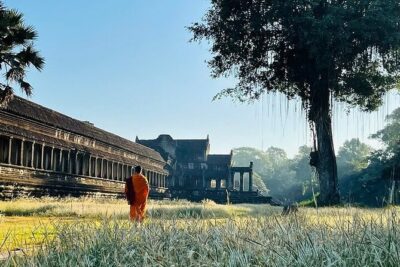
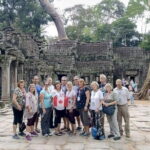
Angkor feels bigger with a guide. In a small group capped at 9, you get hotel pickup in Siem Reap and a live guide who can switch between Spanish, Portuguese, and English. That matters because the sites are visually stunning, but also confusing fast.
I especially like two things here. First, the morning routing through Angkor Thom gives you the big, dramatic scenes in the right order, from the South Gate to the temple terraces. Second, the guidance is not just facts-on-a-plate; one verified Spanish booking singled out their guide Sem for explaining the story and details clearly.
One consideration: 8 hours is a full day of walking and sun on uneven temple ground. If you’re sensitive to heat (or you need more frequent breaks), you’ll want to plan your pace and hydration carefully, and note the tour isn’t suitable for people over 150 kg.
In This Review
- 6 Key Highlights You’ll Actually Feel On This Angkor Day
- From Siem Reap Pickup to Angkor Thom’s South Gate
- Angkor Thom to Bayon: The Faces You Can’t Stop Looking At
- Terrace of the Elephants: When Stone Shows Off
- Terrace of the Leper Kings: A Strange Name With Sharp Details
- Ta Prohm: The Jungle Temple That Feels Unfinished
- Angkor Wat in the Afternoon: 81 Hectares of Wow
- Price and Value: Is $50 a Good Deal?
- What to Bring (So Your Day Feels Easier)
- Who This Angkor Tour Fits Best
- Should You Book This Angkor Day Tour?
- FAQ
- How long is the Angkor temple day tour?
- How much does it cost?
- Is the tour in Spanish?
- Is it a small group?
- What temples are included?
- Where do you get picked up?
- Is free cancellation available?
- Can I pay later?
- What should I bring?
- Is the tour suitable for everyone?
6 Key Highlights You’ll Actually Feel On This Angkor Day
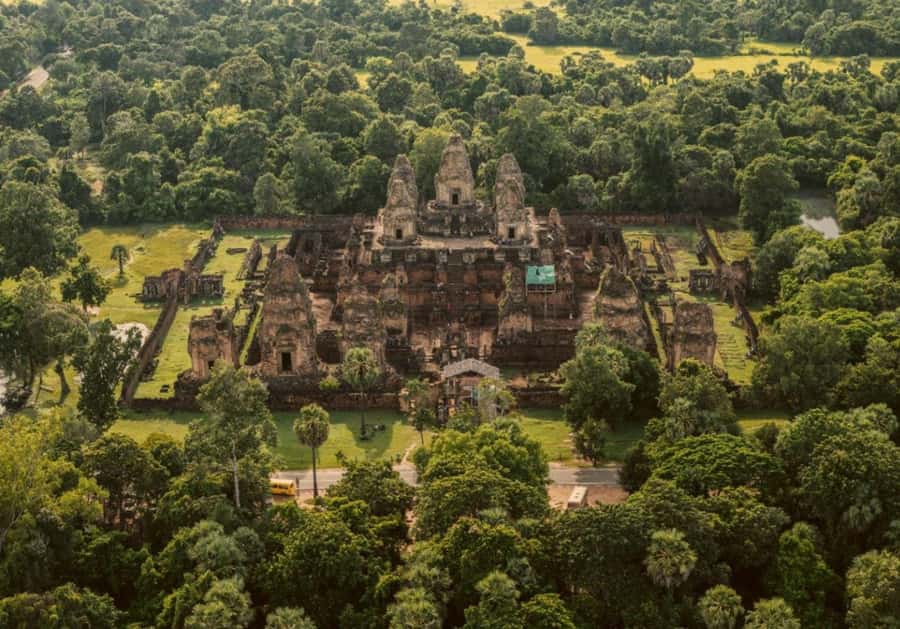
- South Gate entrance with demons, gods, and a giant naga: you start with the most cinematic approach into Angkor Thom.
- Bayon temple face towers: the carved faces are the main event, and it’s easier to notice patterns with a guide’s pointers.
- Terrace of the Elephants: you get a wide view of what the Khmer kings wanted people to see and remember.
- Terrace of the Leper Kings: the carvings on the ground level are easier to appreciate when someone guides your eye.
- Ta Prohm in the jungle: you see the temple that still looks like nature is taking it back.
- Angkor Wat in the afternoon: after the morning, you land at the complex that feels like the center of the entire Angkor plain.
From Siem Reap Pickup to Angkor Thom’s South Gate
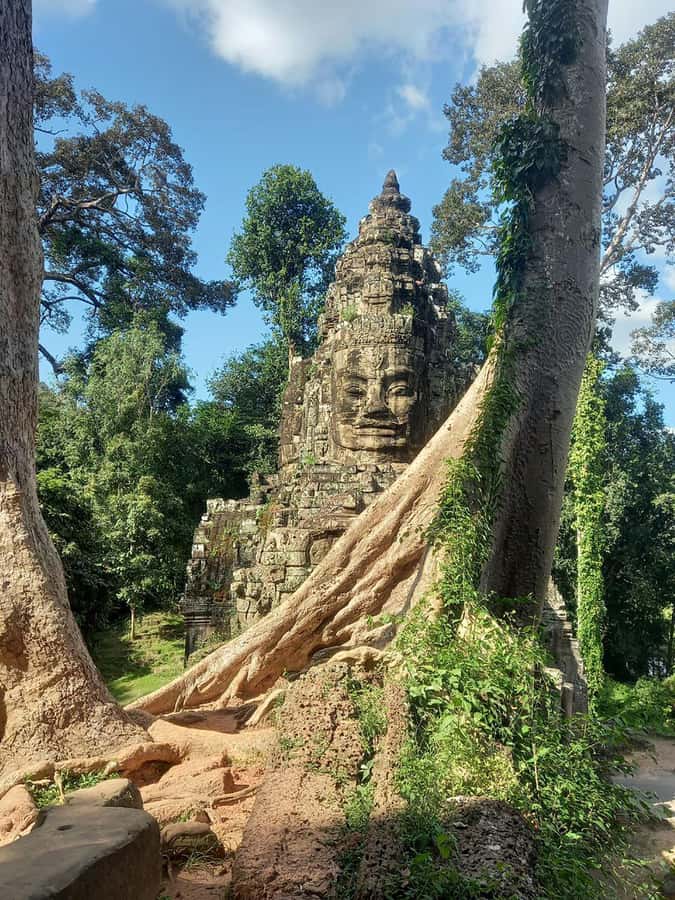
Your day starts with pickup from your hotel in Siem Reap. The goal is simple: get you into Angkor Thom while your energy is still good and the light is doing something flattering to stone.
Angkor Thom is the fortified city, covering about 10 square kilometers. The entrance experience is one of the reasons this route feels satisfying. You enter through the monumental South Gate along a causeway lined on both sides with statues of demons and gods, each with a giant naga. It’s not just decoration. It’s a visual summary of how the Khmer world blended myth, power, and ceremony.
Why that’s valuable for you: without context, you’d walk the causeway and think, cool statues. With a guide, you start seeing the causeway as the opening scene of the whole city—like being dropped into a story at chapter one instead of chapter seven.
You can also read our reviews of more tours and experiences in Siem Reap.
Angkor Thom to Bayon: The Faces You Can’t Stop Looking At
After the gate, the itinerary moves to Bayon temple, famous for its enormous carved faces. This is where Angkor shifts from “many temples” to “one place that’s clearly obsessed with expression.”
The face towers are the big visual hook, but the helpful part is learning what to look for as you move around. You’ll spend time in the temple area where the faces seem to follow you, and you’ll get a sense of how the stone design creates that effect from different angles.
What I like about this stop: Bayon is visually loud, but it’s not random. A good guide helps you notice how the faces relate to layout, movement, and meaning. One Spanish-leaning booking praised their guide Sem for explaining the history and details in a way that made the carvings click.
Possible drawback: Bayon is popular and busy, so if you crave quiet, slow contemplation, you’ll need patience. The upside is that your guide can help you keep moving strategically so you’re not stuck waiting for the perfect shot.
Terrace of the Elephants: When Stone Shows Off
Next you visit the Terrace of the Elephants. This terrace is one of those places where the scale hits you before the details do. Even if you don’t know what every carving means, the sheer presence of the terrace communicates status: this was meant for power display, public movement, and ceremonial theater.
Your guide’s role here is practical. They’ll point out what’s worth your time at ground level so you’re not just looking up and hoping for the best. You’ll also get a better sense of how the terraces function as viewing platforms—so the temple complex isn’t only about worship spaces, but also about how rulers wanted people to experience the city.
Good to know: terraces can involve lots of uneven surfaces and standing still to look. If you bring sensible shoes, you’ll enjoy this more.
Terrace of the Leper Kings: A Strange Name With Sharp Details
Then comes the Terrace of the Leper Kings. The name alone can make people grin, but the value is what’s actually there: stone carvings that reward slower looking.
This terrace can be easy to rush through because it doesn’t have the instant wow factor of Bayon’s faces. That’s exactly why having a guide helps. Someone who understands the carvings can guide your eye to patterns, positions, and the way the terrace space feels designed—not accidental.
Why it belongs in a small-group tour: with only a handful of people, you’re more likely to get attention when questions pop up. The experience stays conversational instead of turning into a line you’re stuck following.
Ta Prohm: The Jungle Temple That Feels Unfinished
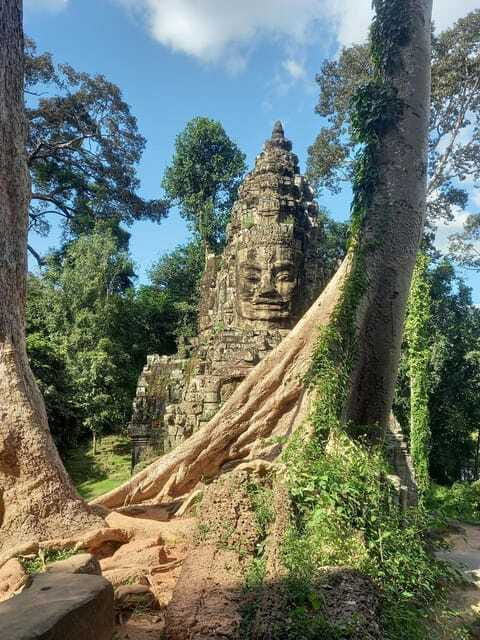
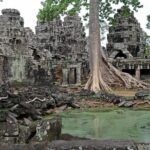
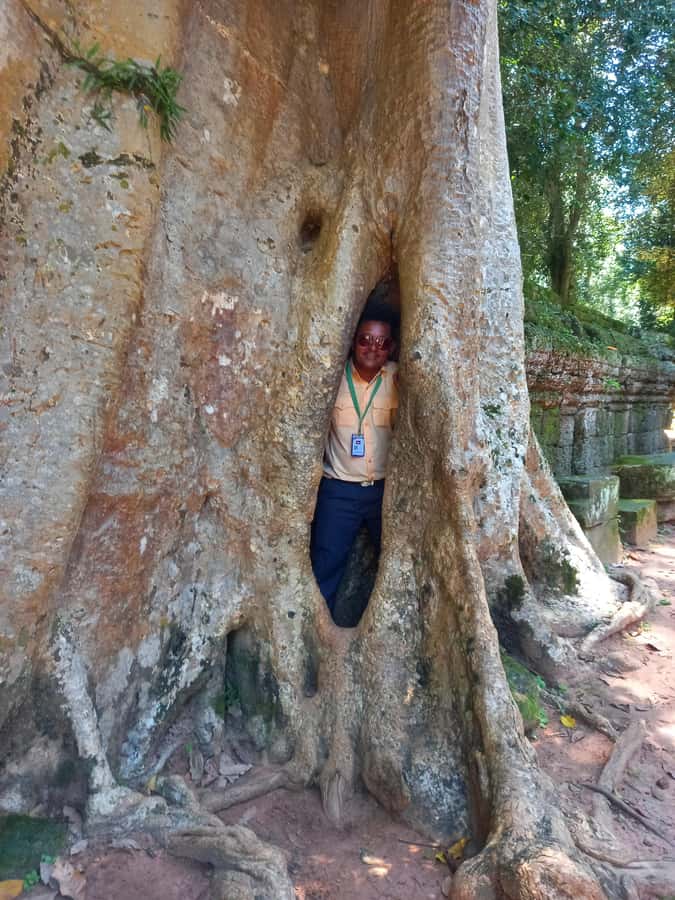
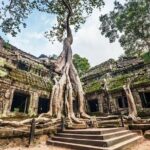
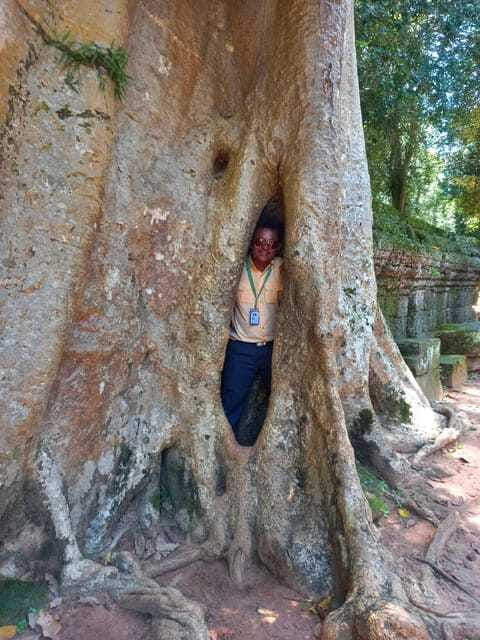
In the later part of the morning, you arrive at Ta Prohm. This is the temple in the jungle that has remained relatively untouched since it was discovered, which gives it that unmistakable “stones with roots” look.
The effect is hard to explain without seeing it. You look for structure, but then the trees and vines interrupt your expectations. It makes Angkor feel less like a museum and more like a place that got reclaimed in real time.
Practical tip: bring a jacket. You’ll likely be hot in the daytime, but temple weather can shift and Ta Prohm has shaded spots where you might cool off. Also bring drinks; an 8-hour day means you need steady water, not just a heroic chug at the end.

Angkor Wat in the Afternoon: 81 Hectares of Wow
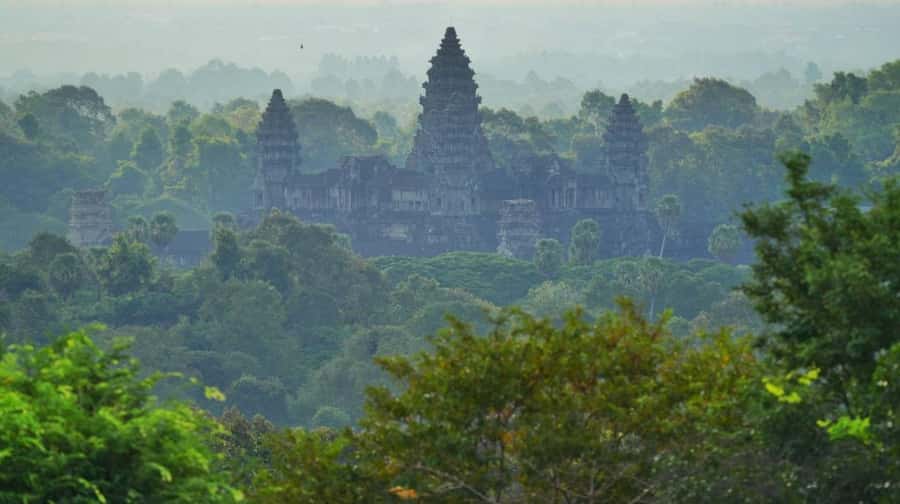
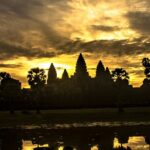
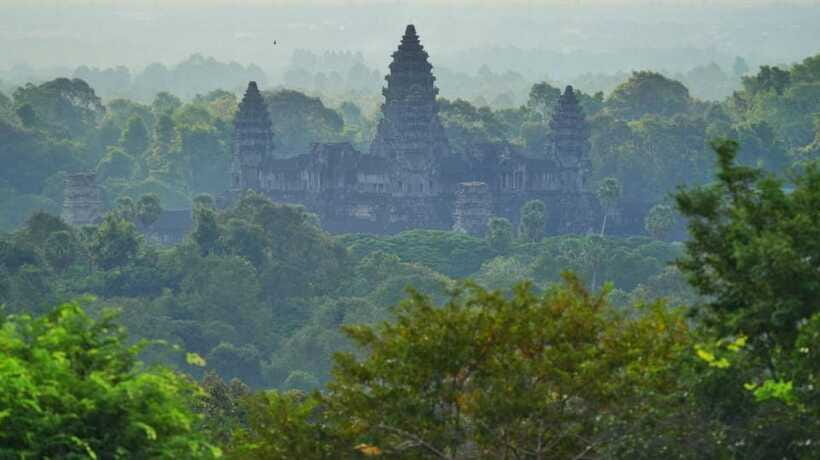
After lunch-ish break time depending on the day’s flow, you visit Angkor Wat—the most famous temple on the Angkor plain. This is the one that makes people understand why Angkor gets talked about like a lost city.
Angkor Wat is enormous, with a complex area of about 81 hectares. The scale is comparable to the Imperial Palace in Beijing. That comparison isn’t there to impress you. It’s there to help you prepare your expectations: you’re not walking through one temple. You’re moving through a designed universe of stone geometry, passages, and viewpoints.
You’ll also hear about the “perfection” of its composition and balance. The real-life version of that idea is simple: proportions feel right as you walk, and views line up in a way that makes the complex look planned from every angle.
Where a guide really helps: Angkor Wat can be visually overwhelming. Without pointers, you can end up seeing it like a collage. With a guide, you get a route and a set of priorities, so your photos aren’t only pretty—they’re representative.
Price and Value: Is $50 a Good Deal?
At $50 per person for an 8-hour shared, small-group tour, the value comes down to what you get with the guide and how efficiently the route hits the highlights.
Here’s the math in real terms:
- Small group (up to 9) means more personal attention than the giant-van style tours.
- Live guide with multiple languages means you’re not stuck with translation gaps.
- The itinerary covers the major “must-see” stops: Angkor Thom, Bayon, Ta Prohm, and Angkor Wat—without sending you to far-flung outliers.
So you’re paying for time and organization, plus the mental payoff of understanding what you’re looking at. That matches the tone of the Spanish review praising Sem for detailed explanations.
One trade-off: it’s shared. You don’t set the pace yourself. If you want total freedom to linger at one carving until it feels like conversation, you might be better suited to a private option. But for most people, a tight, structured route is exactly what makes the day feel complete.
What to Bring (So Your Day Feels Easier)
The tour info lists a few helpful items. I’d treat these as your basics for a temple day:
- Drinks
- Jacket
- GPS/map
- Pen
- Internet access
That GPS/map and internet access note might feel odd, but it’s still smart: Angkor can be easier when you can check your orientation and schedules. The pen is usually for small forms or notes.
Also remember:
- No pets
- Not suitable for people over 150 kg
If you pack lightly and comfortable, you’ll enjoy the walking more and spend less time messing with gear.
Who This Angkor Tour Fits Best
This tour is a strong fit if you want the headline temples and you don’t want to guess your way through complicated sites.
You’ll likely enjoy it most if:
- You like guides who explain what you see rather than just pointing and moving on.
- You want Spanish (and still value English/Portuguese support if needed).
- You prefer a shared small group with limits, not a crowded stampede.
If you’re the type who wants maximum solitude or an ultra-slow pace at every stop, you might feel the “8 hours” pressure. In that case, you’d probably want a more flexible plan than a tight day itinerary.
Should You Book This Angkor Day Tour?
If you’re choosing between doing Angkor on your own and taking a guide, I’d lean toward this kind of small-group guided day tour. You get the major sights: Angkor Thom through the South Gate, Bayon’s face towers, the two terraces, Ta Prohm, and then Angkor Wat at full scale. Most importantly, you’re not just seeing stone—you’re learning how to read it as you go, and the Spanish review experience with Sem is a good sign that the explanations land.
Book it when you want a well-paced highlights route with context. Pass if you’re chasing quiet, long pauses, or heavy independence. For many first-timers, this is the fastest path to feeling oriented in Angkor without losing your whole day.
FAQ
How long is the Angkor temple day tour?
The tour duration is 8 hours.
How much does it cost?
The price is $50 per person.
Is the tour in Spanish?
The live tour guide includes Spanish, Portuguese, and English.
Is it a small group?
Yes. The group is limited to 9 participants.
What temples are included?
The tour includes Angkor Thom (including the South Gate), Bayon temple, the Terrace of the Elephants, the Terrace of the Leper Kings, Ta Prohm, and Angkor Wat.
Where do you get picked up?
You’re picked up at your hotel in Siem Reap in the morning.
Is free cancellation available?
Yes. You can cancel up to 24 hours in advance for a full refund.
Can I pay later?
Yes. It offers reserve now & pay later, with pay nothing today.
What should I bring?
Bring drinks, a jacket, GPS/map, a pen, and internet access.
Is the tour suitable for everyone?
The tour is not suitable for people over 150 kg. Pets are not allowed.