REVIEW · SIEM REAP
Half Day War Museum Siem Reap Killing Fields and Artisans Angkor
Book on Viator →Operated by Asian Trails LTD · Bookable on Viator
Sudden, heavy history starts the morning. This half-day private tour connects Cambodia’s war-era reality with today’s crafts and resilience, with all entrance fees included. You also get a real guide, not a rush job.
I particularly like the English-speaking guide and the included hotel pickup and drop-off inside Siem Reap. It keeps the focus on the places and the stories, instead of logistics.
One consideration: the sites include graphic content and the subject matter is emotionally intense, so it may not be the right fit for younger kids or anyone who needs a lighter day.
In This Review
- Key points worth knowing before you go
- A half-day that moves from loss to craft
- Wat Thmey Killing Fields: what you’ll see and how to prepare
- War Museum Cambodia: three decades of conflict, explained clearly
- Artisans d’Angkor: Khmer stone and wood traditions, today
- Private guide, included fees, and hotel pickup: the value check
- Timing, temperature, and what to wear in Siem Reap
- Who this tour suits best in Cambodia
- Should you book this half-day tour?
- FAQ
- How long is the half-day tour?
- Is pickup and drop-off included?
- Are the entrance and donation fees included?
- Is this tour private?
- Do you offer morning and afternoon departures?
- Are there shoes-off rules at the sites?
- What should I bring for Siem Reap weather and electronics protection?
Key points worth knowing before you go
- Wat Thmey Killing Fields is a small pagoda setting, not a huge theme park, and it’s tied to young monks practicing English
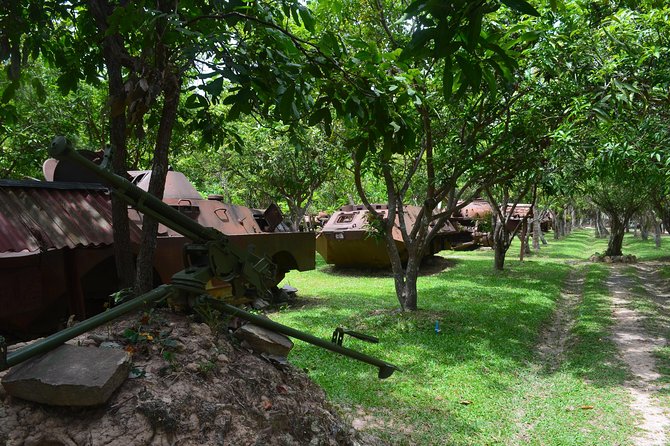
- War Museum Cambodia covers decades of conflict in a way that stays direct and human
- Les Artisans d’Angkor highlights stone-carving and wood-sculpting traditions with a focus on rebuilding skills
- Private means personal pacing, with an English-speaking guide and time to ask questions
- Morning or afternoon departures help you match the tour to your temple-game plan
A half-day that moves from loss to craft
This is not a casual sightseeing loop. In about three hours, you’ll go from the Killing Fields at Wat Thmey to the War Museum Cambodia, and then finish at Les Artisans d’Angkor. The flow matters: you’re seeing how ordinary life was crushed during the Khmer Rouge era, and then how Cambodian culture and craftsmanship are being carried forward.
I like that the tour is private and time-focused. It’s easy to feel “history-ed out” when everything is packed into a full day. Here, the schedule is tight, but it’s still paced enough for a guide to explain what you’re looking at.
Price-wise, $48.72 per person can feel high if you compare it to group buses. But in this case, the value comes from the mix of private guide + private vehicle + entrance/donation fees included. You’re not adding lots of “surprise costs” once you’re on the road.
You can also read our reviews of more tours and experiences in Siem Reap.

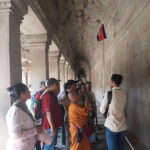

Wat Thmey Killing Fields: what you’ll see and how to prepare
Wat Thmey is a small stop at heart, and that can make it hit harder. You’re visiting a pagoda area tied to the Killing Fields, and you should treat this as a respectful, reflective visit—not a quick photo break.
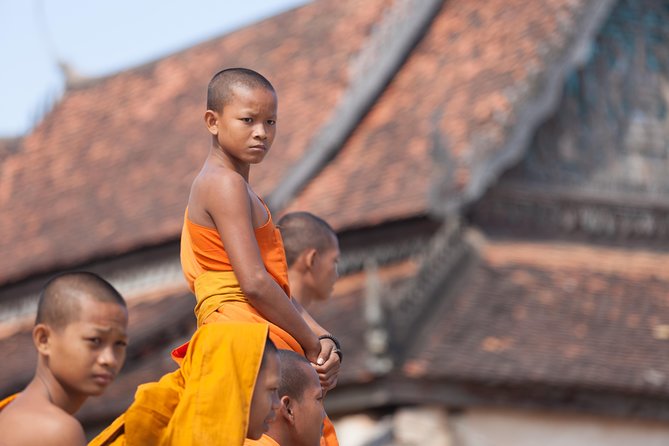
A detail I’d plan around: Wat Thmey has been thriving with young monks, and some of them view the area as a place to brush up on English. That means your guide may be helping you notice not just the memorial context, but also how daily life and learning continue around it.
Practical heads-up before you go:
- Expect graphic content at the sites, and the tour description notes it may not be suitable for young children.
- You’ll likely need to take off your shoes for religious sites. Your guide will tell you where that applies.
- Bring sunglasses, a hat/cap, and sunscreen. Even when it looks cloudy, the sun can be fierce.
- If you’re filming or using your phone, remember natural elements can be rough on electronics. Keep devices wrapped/protected.
The guide here is key. The best experience isn’t about reading signs fast. It’s about understanding what you’re seeing and why the memorial space looks the way it does.
War Museum Cambodia: three decades of conflict, explained clearly
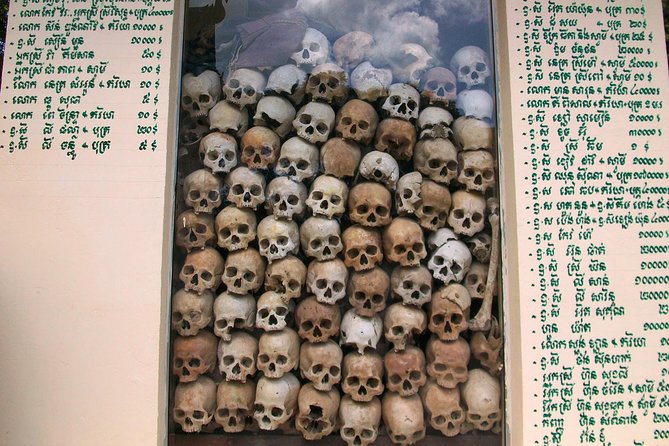
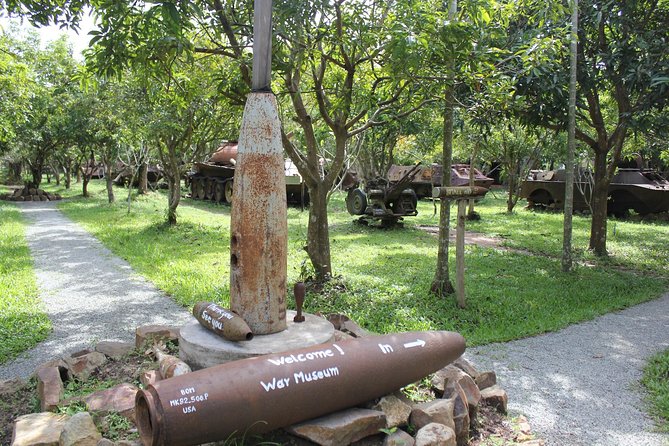
After the memorial site, the tone shifts slightly, but not in a way that feels like you’re being let off the hook. War Museum Cambodia is designed to show how the Cambodian nation lived through war for decades, with the period under the Khmer Rouge sitting at the center of the story.
I like this stop because it helps connect the dots. At memorial sites, the focus is often on a single place and its meaning. At a museum, you can start seeing the timeline and the broader impact, which makes the earlier stop feel less random and more part of a larger system.
This is also a strong “guide-led” type of visit. A well-told explanation helps you avoid two common traps:
- turning it into trivia
- or letting it feel so heavy that you stop processing it
One review praised an eloquent guide with broad knowledge and said some moments were brutally honest and deeply emotional. That matches the theme here: the museum doesn’t soften the reality.
If you’re someone who likes modern history but tends to get lost in dates, don’t worry. The advantage of a private guide is that they can steer the explanation toward what you actually want to understand.
Artisans d’Angkor: Khmer stone and wood traditions, today
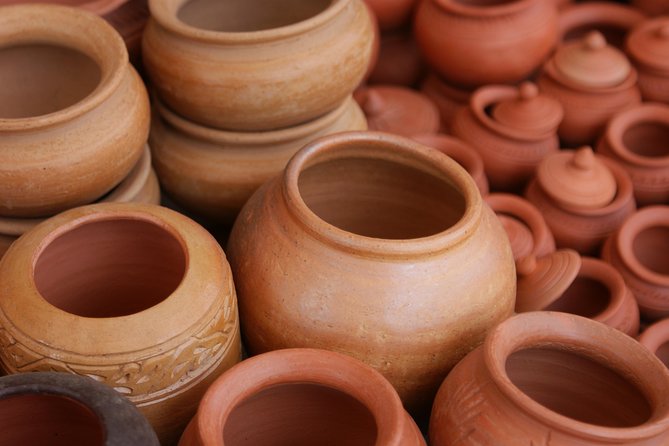
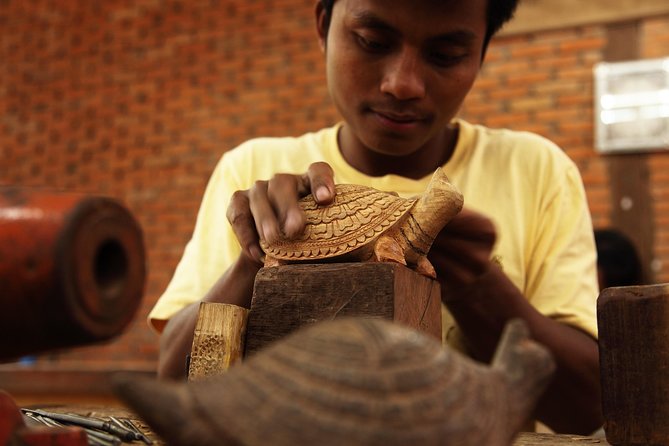
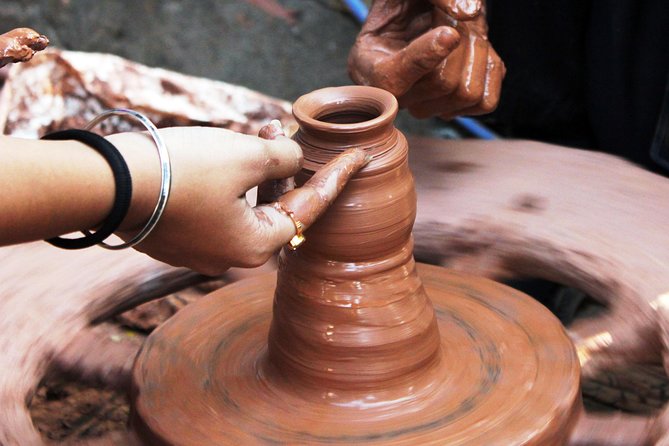
Finishing at Les Artisans d’Angkor is the tonal contrast built into the tour. Instead of more battlefield memory, you’re walking into a space that focuses on reviving and continuing older Khmer traditions—especially stone-carving and wood-sculpting.
This part matters even if you’re not a craft shopper. It changes the conversation from loss to continuity. You’re seeing skills being taught, practiced, and kept alive, which is a different kind of history: not the kind that lives in documents, but the kind that lives in hands.
Here’s what I’d watch for:
- How the workshop explains what’s being preserved (those carving traditions).
- Whether the guide connects it to Cambodia’s “rebirth” after the war-era collapse.
- How you react to the shift. Some people find it uplifting. Others might feel it’s too fast after the memorial and museum stops. Your guide’s pacing and tone are your buffer.
One review specifically thanked their guide for pairing history with a broader local context around the temple area. That kind of contextual linking can be especially useful at this final stop, because it helps you see the crafts not as a souvenir stop, but as cultural survival.
Private guide, included fees, and hotel pickup: the value check
The tour is a full private basis with an English-speaking guide (other languages are on request, depending on availability, and may have supplementary charges). You’re also getting transportation by car/mini-van/coach with a professional driver.
Why that matters in real life:
- You don’t spend time negotiating tuk-tuks or hunting for the next pickup.
- You don’t wonder if you’re skipping something. The guide has the flow.
- When questions come up, you can ask them without feeling like you’re holding up a group.
The other big value piece is that entrance fees and donation fees are included. That’s not just convenient. It changes how you experience the day. You walk into each stop without doing mental math.
Is there a downside? One review called the tour overpriced but still praised the guide’s eloquence and knowledge. That’s a fair warning for anyone who hates paying for guided structure. If you’re the type who wants to wander alone, this may feel like “you’re paying for someone to tell you what you already can read.” If you want context and respectful guidance, it’s usually money well spent.




Timing, temperature, and what to wear in Siem Reap
This is a half-day tour of about 3 hours, with each major stop running about 45 minutes. That means you’ll be moving at a steady pace. You’ll have time to look, but it’s not “linger as long as you want” time.
Most tours like this work best when you plan around the heat:
- Wear light, breathable clothing.
- Bring a hat/cap and sunscreen (cloud cover doesn’t guarantee shade).
- Use sunglasses. Your eyes will thank you after a couple of hours outdoors.
Also, pack for shoe removal at religious sites. If you’re going to be taking shoes on and off, wear footwear that’s easy to handle. The tour notes that your guide will explain where shoes are removed.
Finally, if you’re sensitive about photos at memorial spaces, keep the mood in mind. Some places call for stillness. Let your guide set the tone, then follow it.
Who this tour suits best in Cambodia
This half-day tour is ideal for you if:
- You want a focused slice of modern Cambodian history without committing to a full day
- You like the structure of a guide-led explanation
- You care about understanding the Khmer Rouge era in a way that goes beyond quick surface stops
- You want a meaningful finish at a cultural workshop, not just another temple photo
It may be less suitable if:
- You’re traveling with children who can’t handle graphic or emotionally heavy content
- You want a light, carefree day
- You prefer independent travel with minimal guidance
If you’re planning a temple-heavy itinerary in Siem Reap, this can act like a counterweight. One review also mentioned a guide sharing knowledge around the temple complex in town, which hints that a good guide may connect the history you’re learning to what you’re seeing elsewhere in the city.
Should you book this half-day tour?
I’d book this tour if you’re ready for honesty and you want context delivered by a guide, not a pile of text. The combination of memorial site, museum, and a workshop finish creates a complete emotional arc in just a few hours—and the included fees help keep the experience from turning into a spending spree.
I’d think twice only if the topic feels like too much for your group, especially for kids. If you’re comfortable with the heavy subject matter and you want a guided, respectful way to understand Cambodia’s war-era reality, this is a strong choice for a half-day in Siem Reap.
FAQ
How long is the half-day tour?
It runs for about 3 hours.
Is pickup and drop-off included?
Yes, pickup and drop-off are included for customers staying in and inside Siem Reap.
Are the entrance and donation fees included?
Yes. All entrance and donation fees for the included visits are included in the price.
Is this tour private?
Yes. It is operated on a full private basis, and only your group participates.
Do you offer morning and afternoon departures?
Yes. You can choose between morning and afternoon departures.
Are there shoes-off rules at the sites?
For religious sites and temples, it’s customary to take off your shoes before entrance. Your guide will inform you in advance where it applies.
What should I bring for Siem Reap weather and electronics protection?
Bring sunglasses, a hat/cap, and sunscreen with a high SPF. The tour also notes that natural elements can affect electronic equipment, so wrap and protect your devices.