REVIEW · SIEM REAP
Exclusive Angkor temples and Small group temples tours
Book on Viator →Operated by Bayon Tabi Tour · Bookable on Viator
Angkor can feel overwhelming fast, so this small-group format helps. You’ll see the big anchors of the Angkor world—Angkor Wat, Angkor Thom, Bayon, Ta Prohm, and key terraces—while a local English-speaking guide gives context as you move. The day ends with a Khmer-style sunset climb at Phnom Bakheng, then you’re whisked back to Siem Reap.
Two things I really like: you get hotel pickup and drop-off, which saves you time and stress in the heat, and you travel in an air-conditioned van or bus instead of cramming onto a nonstop crowd-magnet. One consideration: temple entrance fees are not included, and that adds up, so you’ll want to budget extra before you go.
In This Review
- Key moments to expect (quick hits)
- Why this Angkor day feels more manageable than the big-bus version
- Price and value: the real budget math before you book
- Getting started in Siem Reap: pickup, AC ride, and a smarter start time
- Stop 1: Angkor Thom South Gate (your first wow moment)
- Stop 2: Angkor Thom (the capital city overview that clicks)
- Stop 3: Bayon Temple (the faces and the late-12th/early-13th story)
- Stop 4: Terrace of the Elephants (and why that name matters)
- Stop 5: Terrace of the Leper King (a statue name with a reason)
- Stop 6: Ta Prohm Temple (the monastery that feels lived-in)
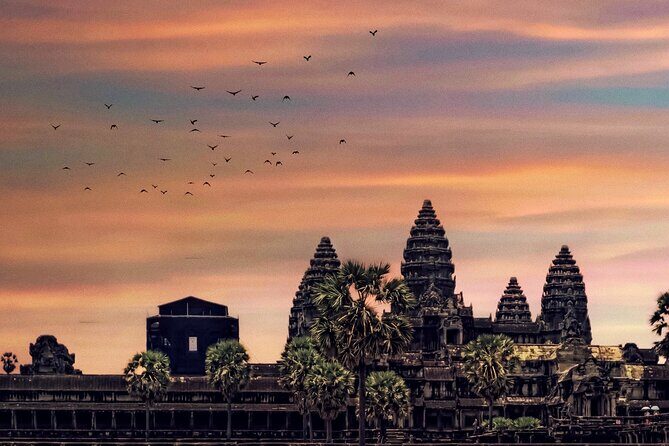
- Stop 7: Angkor Wat (the big one, built for time)
- Phnom Bakheng sunset: the Hindu and Buddhist mountain temple finish
- Small-group touring that actually helps: what up to 25 means
- What kind of traveler should book this?
- Should you book Bayon Tabi Tour for exclusive Angkor temples and sunset?
- FAQ
- Are temple entrance fees included in the $19 tour price?
- Does the tour include an English-speaking guide?
- Is pickup from my hotel included?
- How long is the tour?
- What temples and sites are included during the day?
- Are meals included?
- Is mineral water included?
- What’s the maximum group size?
- Is air-conditioned transportation provided?
- Is free cancellation available?
Key moments to expect (quick hits)
- Small group cap (up to 25) makes it easier to hear your guide and move at a human pace
- Air-conditioned transport helps you stay steady in Siem Reap’s heat
- Angkor Thom, Bayon, and Ta Prohm cover very different temple moods in one day
- Sunset at Phnom Bakheng adds a Hindu and Buddhist mountain-temple finish
- Mineral water on the tour keeps you from scrambling mid-day
Why this Angkor day feels more manageable than the big-bus version
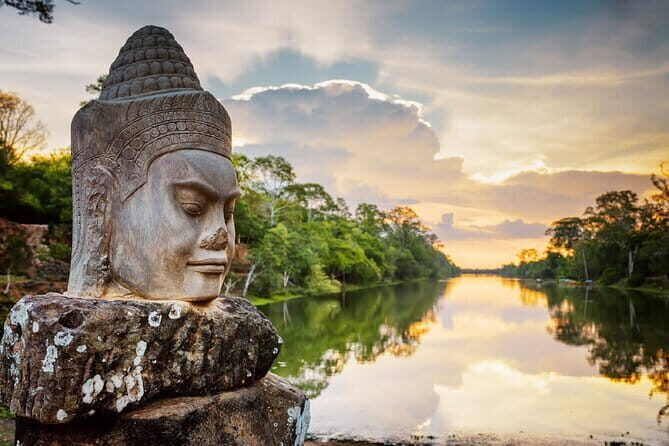
Angkor sites are famous for a reason, but the experience can turn into a stopwatch game if you’re stuck on the wrong tour. This format keeps you moving through major highlights with a small-group feel, and that matters when you’re trying to enjoy what you’re seeing instead of just checking boxes.
The tour runs about 6 to 10 hours, and it’s built around efficient transitions between temple zones, plus an end-of-day sunset moment. You’ll also get mineral water during the tour, which sounds minor until you’re standing in sun for long stretches.
One of the best value signals here is that you’re not just buying temple time. You’re buying a guide’s running explanation of the Khmer empire’s significance, and you’re getting a schedule designed to reduce the worst crowds—especially compared to jam-packed bus tours.
You can also read our reviews of more tours and experiences in Siem Reap.
Price and value: the real budget math before you book
The listed tour price is $19, but the temple entrance fee is separate. You should plan on paying $37 per person for the Angkor temple admission. Meals are also not included.
So your realistic spending target looks like:
- $19 for the tour
- $37 for temple entrance fees
- Add lunch/dinner costs on top (since meals aren’t included)
Even with that add-on, the value is still strong if you want a full day that includes English-speaking guidance, hotel pickup/drop-off, air-conditioned transport, and a structured sunset finish. If you already know you’ll buy entrance anyway (you will), then the tour price mostly covers the ride, guide, and routing.
Getting started in Siem Reap: pickup, AC ride, and a smarter start time
This is one of those tours where the first win is not a temple—it’s the handoff. Pickup from your hotel is included, and you’ll also get direct drop-off back to your hotel after sunset. That cuts out a lot of “meet here at 7:30” stress.
The vehicle is air-conditioned, which matters because this day is long and the light changes fast. You’ll want to arrive with energy, and AC helps you do that. It also makes it easier to keep a steady rhythm for temple time, rather than melting through the ride.
Tip: bring something to layer. Even if it’s hot outside, AC can feel cold once you’re sweaty.
Stop 1: Angkor Thom South Gate (your first wow moment)
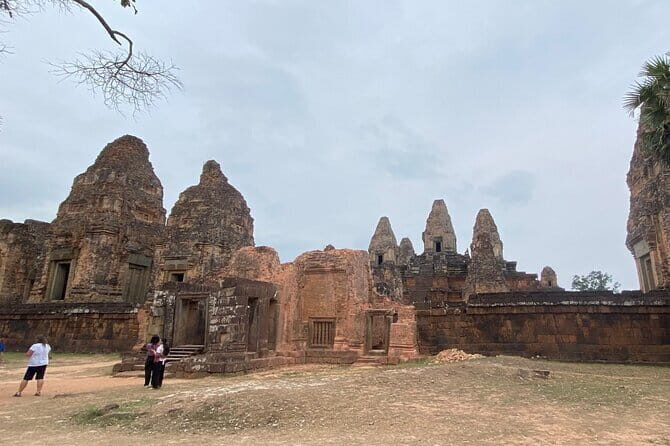
Your first temple stop is the Angkor Thom South Gate. Angkor Thom is described as the Khmer capital city, often called the great city, and it’s known for major temples.
A short stop here (about 30 minutes) works for two reasons:
- You get an immediate sense of scale.
- You start learning the “city layout” idea early, before you’re hit with too many individual structures.
The drawback of this kind of first stop is that you’re going to be eager to move on. If you’re someone who likes to linger, you may feel the time is tight. Still, it sets you up well for what comes next.
Stop 2: Angkor Thom (the capital city overview that clicks)
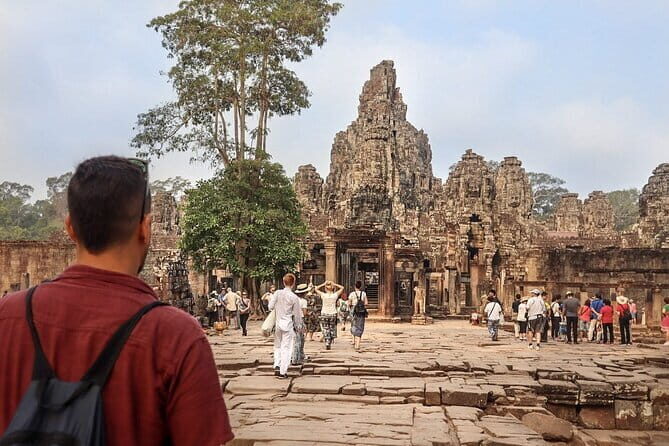
Next you spend about 1 hour exploring Angkor Thom itself. This is where the day starts to connect. You’re seeing the capital-city concept, not just isolated temples.
What I like about this pacing is that it gives you a “map in your head.” Once you understand that Angkor Thom was built as a capital, the later temple stops start to feel less random. Your guide’s explanations of Khmer significance become easier to follow.
Practical note: wear shoes you trust. Stone paths can be uneven, and you’ll do plenty of walking over the course of the day.
Stop 3: Bayon Temple (the faces and the late-12th/early-13th story)
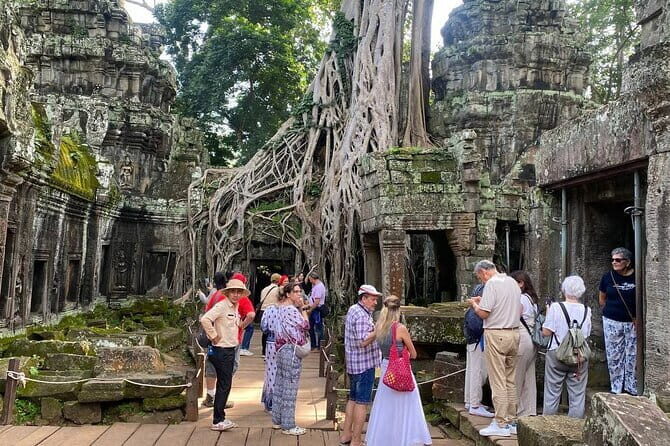
At Bayon Temple you get about 1 hour. Bayon is described as a richly decorated Khmer temple built in the late 12th or early 13th century, so it’s not just a pretty stop. It’s a piece of the story.
This is a great temple for slowing down mentally. The best way to enjoy Bayon is to let your guide’s context land first, then look at what you see. That turns a “big temple” into a “specific moment in time.”
Photo note: the tour style here tends to include help with where to stand for pictures. One of the highest-rated comments praised the guide and driver for actively helping guests find good viewpoints and even taking people for photos. That kind of hands-on attitude is worth its weight when crowds and angles matter.
Stop 4: Terrace of the Elephants (and why that name matters)
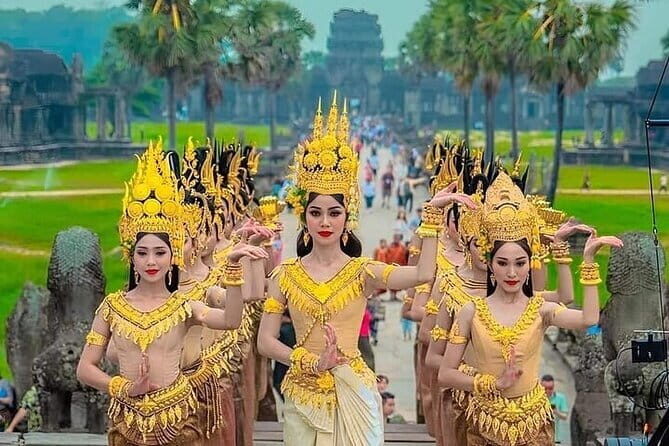
The next stop is Terrace of the Elephants for about 30 minutes. Even if you’re not an art scholar, a terrace stop works because it changes the type of viewing. Instead of only “walk into the temple,” you’re looking at a broad structure and details.
One detail in the tour description references Beng Mealea and notes it’s about 68 km northeast of Siem Reap. The presence of both names means it’s wise to confirm what exact terrace feature you’ll cover on your day. Either way, the goal is the same: add variety with a terrace-style ruin moment instead of repeating temple interiors.
Stop 5: Terrace of the Leper King (a statue name with a reason)
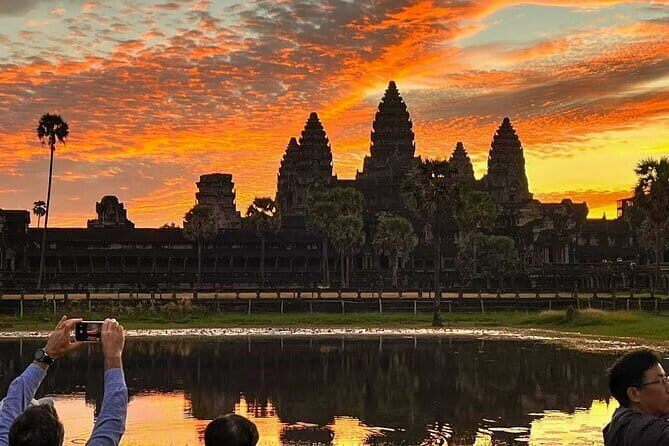
About 30 minutes at the Terrace of the Leper King follows. The statue is called the Leper King because discoloration and moss growing on it was reminiscent of a person with leprosy, and the name reflects a Cambodian reference in the description.
I like this stop because it reminds you that these places aren’t only worship sites. They’re also cultural memory stamped into stone. A guide’s explanation turns what could be a quick glance into a moment with meaning.
If you’re sensitive to how people interpret disease and suffering in historical names, it can help to keep the tone neutral and focus on why the stone looks the way it does today.
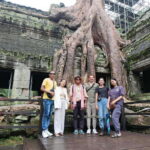
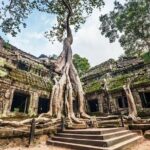
Stop 6: Ta Prohm Temple (the monastery that feels lived-in)
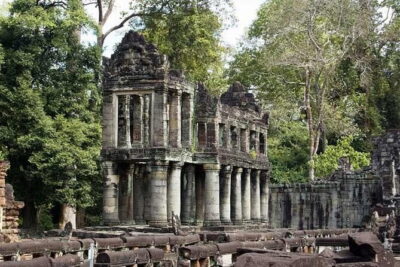
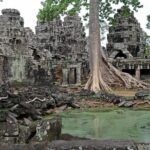
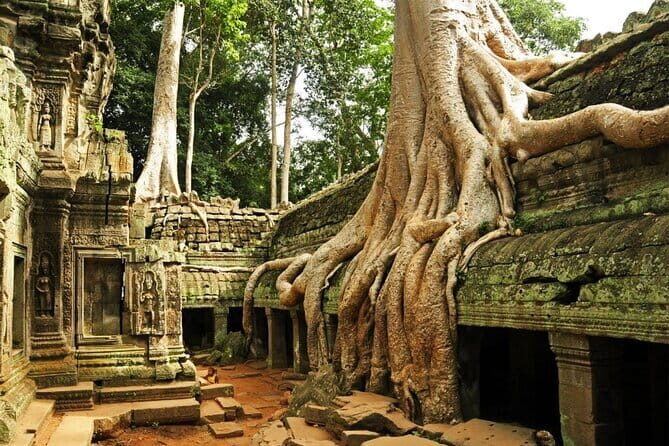
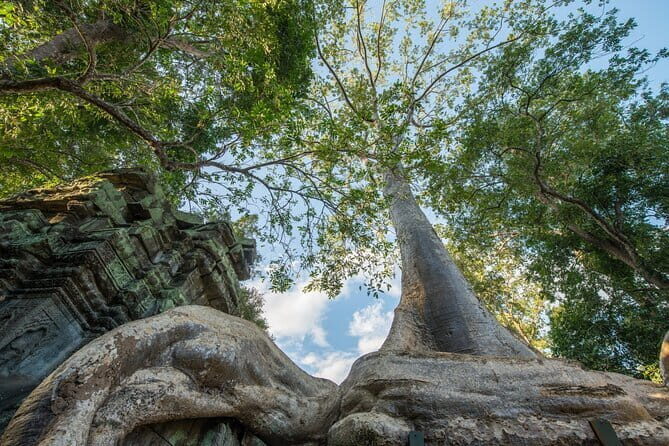
Your next highlight is Ta Prohm Temple for about 1 hour. Ta Prohm is described as being founded by King Jayavarman VII as a Mahayana Buddhist monastery and university, and it’s singled out because it’s different from other Angkorian temples.
That last part is where your guide’s context matters. When you hear that it served as a monastery and a learning place, Ta Prohm shifts from “cool ruins” to “a functioning world that once had daily rhythms.”
This is also one of those temples where you’ll probably want a slower pace. You’re walking, but you should still look up and around, not only forward.
Stop 7: Angkor Wat (the big one, built for time)
Angkor Wat gets the biggest block: about 3 hours. The description notes it’s the largest religious monument in the world, on a site measuring 162.6 hectares. That’s your reality check: 3 hours can still be short, so focus helps.
What I’d do with your time:
- Start with orientation: understand where your route goes first.
- Listen to what the guide explains about meaning and significance.
- Then spend your best attention on one or two key areas instead of trying to “see everything.”
Angkor Wat can be visually overwhelming. A guide’s job here isn’t just explaining—it’s helping you translate what you’re seeing into something that feels coherent.
Phnom Bakheng sunset: the Hindu and Buddhist mountain temple finish
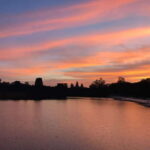
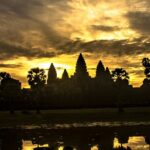
The day ends with a Khmer sunset at Phnom Bakheng, described as a Hindu and Buddhist mountain temple. Sunset is where a lot of people find their emotional high point, and this stop is designed for that.
Because you’re going for sunset, timing matters. You’ll want to be ready for the final stretch and plan your photo time early, rather than waiting until you’re already at the top and scrambling for angles.
Also, bring patience. Even with small-group touring, sunset viewing can mean a crowd. The upside is the payoff: light shifts your whole perception of the structures.
Then you’ll return to Siem Reap and get a direct transfer back to your hotel.
Small-group touring that actually helps: what up to 25 means
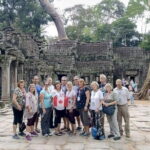
A max of 25 travelers is not just a number. It changes the feel of the day.
With a smaller group:
- you’re less likely to get lost when your guide points out details
- you can ask questions in between stops
- photo time is more manageable, especially if your guide helps with viewpoints
That lines up with the strongest praise you’ll see for this kind of tour: a guide and driver who help guests get good pictures and who go above and beyond to keep the day moving without steamrolling people.
What kind of traveler should book this?
This tour is a good fit if you:
- want a structured full day covering major Angkor highlights
- like English-speaking local guidance rather than wandering without context
- value hotel pickup and drop-off to reduce hassle in Siem Reap
- prefer air-conditioned transport and a smaller group pace
It’s less ideal if you:
- hate paying separate $37 temple entrance fees
- want long, slow museum-style lingering at each stop
- expect meals to be included (they are not)
Should you book Bayon Tabi Tour for exclusive Angkor temples and sunset?
If your goal is a first-time Angkor day that hits the most important stops without the chaos of huge bus groups, I’d say yes, book it, especially because pickup/drop-off and AC are included. The guide-led approach is what turns a hot day of walking into something that actually makes sense.
Just do your homework on cost. The all-in experience isn’t just the $19 tour price once you add $37 entrance fees and plan for meals.
If you want one day that balances major sights, a sunset ending, and practical comfort, this is a strong option.
FAQ
Are temple entrance fees included in the $19 tour price?
No. Temple entrance fees are not included. The tour lists temple entrance fee as $37 per person.
Does the tour include an English-speaking guide?
Yes. An English-speaking guide is included.
Is pickup from my hotel included?
Yes. Pickup and drop-off from your hotel are included.
How long is the tour?
It’s approximately 6 to 10 hours.
What temples and sites are included during the day?
The tour includes Angkor Thom South Gate, Angkor Thom, Bayon Temple, Terrace of the Elephants, Terrace of the Leper King, Ta Prohm Temple, Angkor Wat, and sunset at Phnom Bakheng.
Are meals included?
No. Meals (lunch/dinner) are not included.
Is mineral water included?
Yes. Mineral water is included during the tour.
What’s the maximum group size?
The tour has a maximum of 25 travelers.
Is air-conditioned transportation provided?
Yes. The tour includes an air-conditioned vehicle (van or bus).
Is free cancellation available?
Yes. There is free cancellation, and you can cancel up to 24 hours in advance for a full refund.