REVIEW · SIEM REAP
Sunrise Small Group Tour in Siem Reap
Book on Viator →Operated by Visit Cambodia · Bookable on Viator
Waking up early here is worth it. This tour is built for that moment when Angkor Wat spires catch first light, before the biggest crowd waves arrive. I like the small-group feel (up to 8) and the fast, guided path through the Angkor complex, so you’re not just wandering in the dark. One thing to consider: it starts very early at 4:30am, so plan for an alarm you will definitely hear.
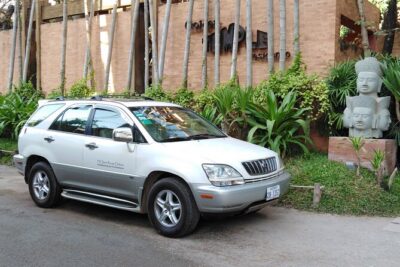
I also appreciate the smooth logistics. You get hotel pickup or a nearby meet-up at Sivutha Blvd, plus an air-conditioned minivan with bottled water and a cool towel for the long morning ahead. The main drawback for your budget is simple: the temple pass isn’t included (it’s $37 per person for a one-day pass covering all temples).
With a private group, I think this is a smart way to see the big sights without the usual chaos. Guides like Vichhay (and sometimes Sokthik on other dates) are known for clear English explanations and helping with photos and photo spots, and even pro-camera pictures for download when offered.
In This Review
- Key highlights to know before you go
- Sunrise and the Angkor “quiet window”
- Meeting point on Sivutha Blvd and pickup timing that actually helps
- Angkor Wat before the crowds: spires, towers, and first light
- Bayon Temple: the smiling faces with guided context
- Angkor Thom South Gate: quick photos, big impact
- Ta Prohm and the tree roots: a temple with motion
- Elephant Terrace: a pass-by moment, not a full visit
- The drive, the pace, and why time windows matter
- What’s included: guide, air-conditioning, water, and the small-group advantage
- Price and value: $120 per group, plus the temple pass
- What to pack for a 4:30am start (without guessing too much)
- Who this sunrise tour fits best
- Should you book this sunrise small-group Angkor tour?
- FAQ
- What time does the sunrise tour start in Siem Reap?
- Where is the meeting point?
- Do you pick up from hotels?
- How long does the tour last?
- Is the tour private, and how many people are in a group?
- What is included in the tour price?
- Are temple entrance fees included?
- Is lunch included?
- What if weather is poor or I need to cancel?
Key highlights to know before you go
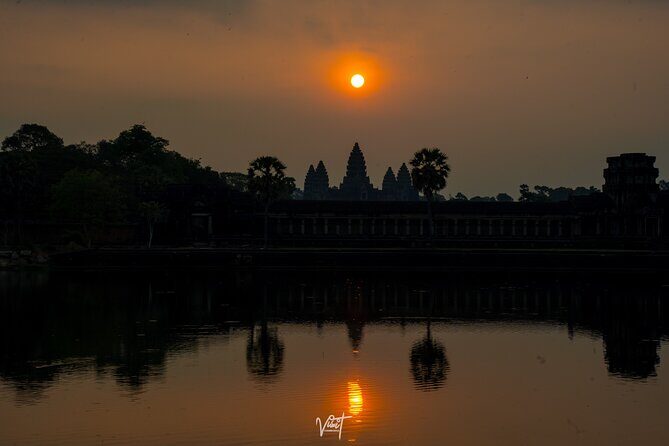
- Angkor Wat at sunrise, before the bulk of the crowds for calmer views and better timing
- Up to 8 people, private group only, so the day moves at a human pace
- Licensed English-speaking guide with history and practical orientation as you walk
- Angkor Thom essentials in one run: Bayon, South Gate, and Ta Prohm
- Comfort basics included: air-conditioned transport, bottled water, and a cool towel
- Temple pass is separate ($37/person) so you can budget the full day cost
Sunrise and the Angkor “quiet window”
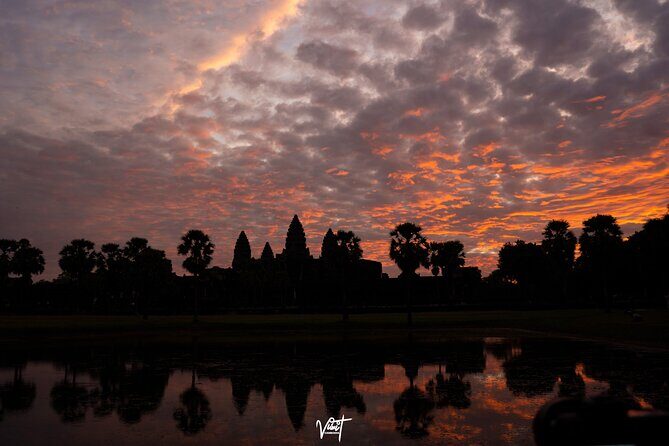
Angkor Wat changes fast depending on the light. Going for sunrise is not just about seeing the famous silhouette—it’s about catching the complex when fewer people are already in place, and the air feels like it belongs to the morning, not the midday rush. On this kind of early start, you get to experience that first wave of atmosphere when the temple looks both ancient and oddly fresh.
I also like that the tour does more than one iconic stop and then leaves you to figure out the rest. You’re guided through the core sights of Angkor in a logical flow, with time allocated for viewpoints and walking. That matters because Angkor can feel big and confusing if you’re trying to self-plan while also managing early hours.
Finally, this is an efficient way to see multiple temples in one morning without you needing to chase tuk-tuks or coordinate drivers yourself. You’re paying for the plan, the guide, and the early timing working together.
You can also read our reviews of more tours and experiences in Siem Reap
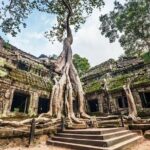
Meeting point on Sivutha Blvd and pickup timing that actually helps
Your day starts at 4:30am. The meeting point is 233 Sivutha Blvd, but you can also be picked up from your hotel. Either way, the guide will come 30 minutes before the tour starts, so you’re not standing outside waiting for a van to appear like a magic trick.
This matters because the early hour turns every minute into effort. A clear pickup window keeps you from burning time in the dark, and it also helps you be ready to move as soon as the route opens.
The tour ends back at the same place it began (Sivutha Blvd), or the provider can drop you at your hotel. That avoids the classic “where do I go now?” scramble after a long temple morning.
Angkor Wat before the crowds: spires, towers, and first light
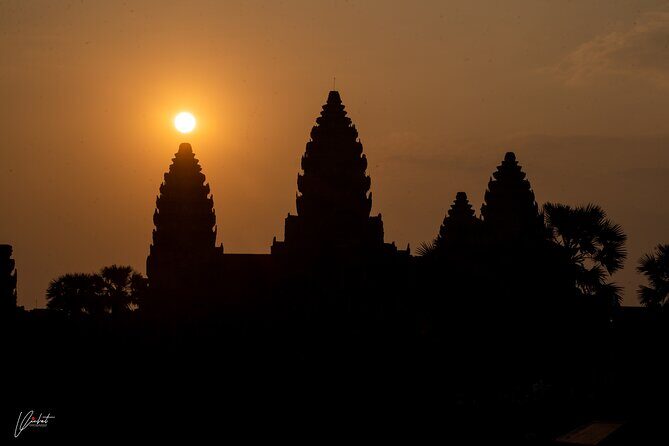
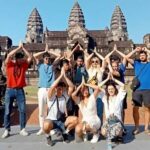
Angkor Wat is the main event here, and the tour gives it a solid block of time—about 3 hours at the site. You’re watching the sunrise over the temple’s spires, then you’re guided through key areas so you don’t miss the signature views that people come to see in the first place.
What I’d watch for, as you’re arriving early, is how the light interacts with stone details—arches, carvings, and the rhythm of the courtyards. Sunrise also tends to flatten crowds into a calmer flow, which means you can pause, look up, and actually understand what you’re looking at instead of just snapping photos and moving on.
Also, this is not a “blink and you’ll miss it” stop. With around three hours, you have time for the sunrise moment and then for a guided walk that fills in context—why certain shapes and layouts matter, and what to notice as you move through the grounds.
Bayon Temple: the smiling faces with guided context
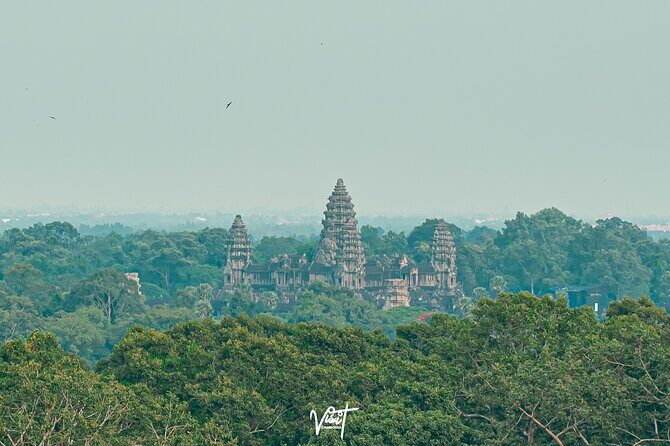
After Angkor Wat, the tour shifts to Bayon Temple, with about 1.5 hours here. Bayon is famous for its faces—those many stone heads that feel like they’re looking in every direction. If you’ve ever wondered why Bayon pulls people in even if they’re not big temple nerds, it’s because it’s visually intense from multiple angles.
What makes this stop work better with a guide is the context: Bayon is tied to Buddhism and associated with Khmer kingship in the late 12th or early 13th century. A good explanation helps you stop treating it like just another photo backdrop and start recognizing the themes as you walk.
I’d also use this time to slow down a bit. Bayon can be busy even early, but you still get enough time to choose photo spots and understand how the temple’s layout shapes your sightlines.
Angkor Thom South Gate: quick photos, big impact
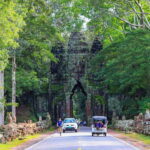
Next is Angkor Thom South Gate, with a shorter 30-minute stop built in. This is one of those moments where you’re not meant to linger all day—you’re meant to step into the right place, take a few meaningful photos, and keep moving.
The gate is visually powerful, and it’s a great bridge between the sweeping approach of Angkor Thom and the tighter, face-and-detail energy of Bayon. If you want the classic images, this is your window.
Since the stop is brief, I’d treat it like a practical photo sprint: arrive, get your shots, then focus on enjoying the moment rather than trying to cover every angle.
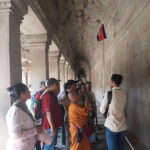

Ta Prohm and the tree roots: a temple with motion
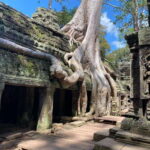
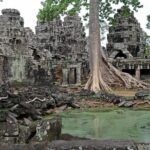
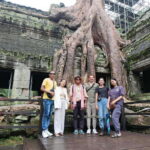
Then you move to Ta Prohm Temple, where the tour allows about 2 hours. Ta Prohm is the “tree roots” temple—the one people point to when they say Angkor feels like it was being reclaimed by nature. And it’s true. The roots change how you read the temple, because they create framing and texture everywhere.
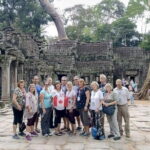
With a guide, you’ll get more out of the stop than just finding the most famous root-covered doorway. You’ll be directed toward what’s worth seeing and how to navigate the site efficiently, which is key because Ta Prohm can feel like a maze of close-up details.
I like this stop because it’s different from the more symmetrical, “readable” architecture of some other temples. Ta Prohm feels more chaotic in the best way—like the temple is still alive, still changing shape as the centuries pass.
Elephant Terrace: a pass-by moment, not a full visit
The tour includes a drive-by of the Elephant Terrace. The word pass-by matters: you won’t get the same deep time you get at the main temples. This is more of a “you’ll see it as you move through the area” kind of moment.
Still, it’s a useful inclusion if you want the terrace in your mental map. Elephant Terrace is one of the big iconic features of the Angkor Thom complex, and even a brief look can help you connect the rest of the Angkor architecture you’ve already visited.
The drive, the pace, and why time windows matter
The full experience runs roughly 5 to 8 hours. That range comes from real-world factors like site flow and how the group moves through the complex.
This is an active format—morning starts early, and there are multiple temple stops. If you want a slow, sit-down, “let’s wander until lunch” style day, you might find the pace a bit tight. But if you want to see the major highlights without losing time to planning, this structure makes a lot of sense.
The round-trip structure also helps: you’re picked up, guided through the key sights, and then returned either to the start area or directly to your hotel after about 30 minutes of driving back from the Angkor area.
What’s included: guide, air-conditioning, water, and the small-group advantage
This tour includes a lot that affects comfort and quality early on:
- Transport by air-conditioned minivan
- Hotel pickup and drop-off
- Bottled water and a cool towel
- Experienced licensed English-speaking guide
- Mobile ticket
- Private group limited to up to 8
That small group number is a big deal. In a place as popular as Angkor, fewer people means more control. You’re not stuck waiting behind a crowd every time you want a photo. You can hear the guide more clearly, and your walking path tends to feel more organized.
Also, the guide can help you make sense of what’s in front of you. In particular, guides such as Vichhay have a reputation for helping with photo spots and explanation, and in some cases even taking pro-camera photos for a download link. That’s not guaranteed as a universal feature, but the fact that it’s part of how some guides operate tells you the guiding style can be practical, not just ceremonial.
Price and value: $120 per group, plus the temple pass
The tour price is $120.00 per group (up to 8 people). That can be a steal or it can be pricey, depending on your group size.
Here’s the math that matters:
- If you book with a full group of 8, you’re effectively paying about $15 per person for the tour service (not including the temple pass).
- If it’s just 2 people, you’re closer to $60 per person for the same group-based price.
Then you add temple entry. Temple entrance fees are not included. The listed one-day pass for all temples is $37 per person. So your total “real cost” is closer to:
- About $52 per person at 8 people, or
- About $97 per person at 2 people,
before anything like a meal you choose yourself.
No lunch is included either. The upside is that you stay flexible; the downside is you’ll want a simple plan for food once you’re done.
Overall, this is good value if you can fill out the group size, or if you really value having an organized sunrise plan with pickup, transport, and a licensed guide.
What to pack for a 4:30am start (without guessing too much)
Because the tour starts at 4:30am, you’ll want to be ready for a long morning out walking. I’d focus on basics:
- Comfortable shoes for temple paths and uneven stone
- Sun protection like a hat and sunglasses (even early starts can get bright)
- A small layer or light cover, since mornings can feel cooler than midday
Water is included, so you don’t need to bring a full bottle—but you might still like the option to carry a second sip if you tend to get thirsty.
Also, since you’re moving between stops for photos, bring a camera setup you can actually handle quickly. Angkor rewards patience, but sunrise also rewards being able to stay steady when crowds and light shift.
Who this sunrise tour fits best
This is the right choice if you:
- Want Angkor Wat sunrise without wrestling with DIY timing
- Prefer a private small group over a big bus day
- Like having an English guide who can point out what matters at Bayon, Angkor Thom South Gate, and Ta Prohm
- Want an organized route that hits the highlights in a single day
It’s not the best match if you want a slow, flexible day with lots of free time at each site, or if you’re not able to handle an early start.
If you’re the kind of person who likes to get the big photos done early, then linger with understanding, this route is a strong fit.
Should you book this sunrise small-group Angkor tour?
Yes, I think you should book if your top goal is a well-run sunrise experience with real structure: pickup, transport, a licensed English-speaking guide, and the main Angkor highlights in one morning. The small-group limit to up to 8 is especially valuable at Angkor, where crowded logistics can drain the magic.
Before you hit the button, do two quick checks:
- Make sure you’re okay paying temple pass fees separately (about $37 per person).
- Be honest about the wake-up call. At 4:30am, your body sets the tone for the whole day.
If those fit you, this is one of the cleaner ways to see Angkor with less stress and more meaning—starting with that first light over Angkor Wat.
FAQ
What time does the sunrise tour start in Siem Reap?
The start time is 4:30am.
Where is the meeting point?
The meeting point is 233 Sivutha Blvd, Krong Siem Reap, Cambodia.
Do you pick up from hotels?
Yes. Pickup is offered from Sivutha Blvd or from your hotel. You’ll need to share your hotel name and room number.
How long does the tour last?
The tour duration is about 5 to 8 hours.
Is the tour private, and how many people are in a group?
This is a private tour/activity, and only your group participates. The group size is up to 8.
What is included in the tour price?
Included are air-conditioned minivan transport, bottled water and a cool towel, hotel pickup and drop-off, and an experienced licensed English-speaking tour guide. You also receive a mobile ticket.
Are temple entrance fees included?
No. Temple entrance fees are not included. The one-day pass is listed at $37 per person covering all temples.
Is lunch included?
No. Lunch is not included.
What if weather is poor or I need to cancel?
The experience requires good weather. If it’s canceled due to poor weather, you’ll be offered a different date or a full refund. You can also cancel for a full refund up to 24 hours before the experience’s start time.