REVIEW · SIEM REAP
Angkor Zipline and Temple Tour with Sunset
Book on GetYourGuide →Operated by Angkor Dynasty Travel · Bookable on GetYourGuide
Angkor mixes temples and treetops in one long day. This tour pairs an Angkor Zipline jungle run with guided stops through the big names of the Angkor World Heritage area, then finishes with a sunset climb at Phnom Bakheng. I like the way it’s paced: early adrenaline, then a temple circuit with a guide, then that golden-hour payoff.
Two standouts are the guided temple time (Bayon’s smiling faces at Angkor Thom and the long bas-relief story scenes at Angkor Wat) and the fact that the zipline portion is included up front with the Silver Course package. One drawback to plan for: the Angkor pass is not included, and the day involves real walking plus a set of temple steps near the end.
In This Review
- Key things to know before you go
- The “zipline to temples” formula (and why it works)
- Starting the day at 07:30: getting to the South Gate right
- Orchid House: safety first, then the jungle run
- Angkor Thom: Bayon’s faces and the “story stones”
- Bayon Temple (the faces that stop you)
- The Royal Palace enclosure: Phimeanakas
- Baphuon and the terraces
- The main drawback here
- Lunch break: plan for what’s not included
- Ta Prohm: the temple swallowed by roots
- Angkor Wat: bas-relief storytelling and the long outer galleries
- A practical note for timing and comfort
- Phnom Bakheng and sunset: the stair climb reality check
- Price and value: $104 isn’t the whole picture
- Who this tour fits best (and who should skip it)
- Booking tips that can save you money and headaches
- Should you book Angkor Zipline and Temple Tour with Sunset?
Key things to know before you go
- Silver Course included: it’s the 4-zipline, 3-suspension-bridge setup, with Gold requiring an extra $35
- Early 07:30 pickup keeps your temple day moving and gets you to the complex before the biggest surges
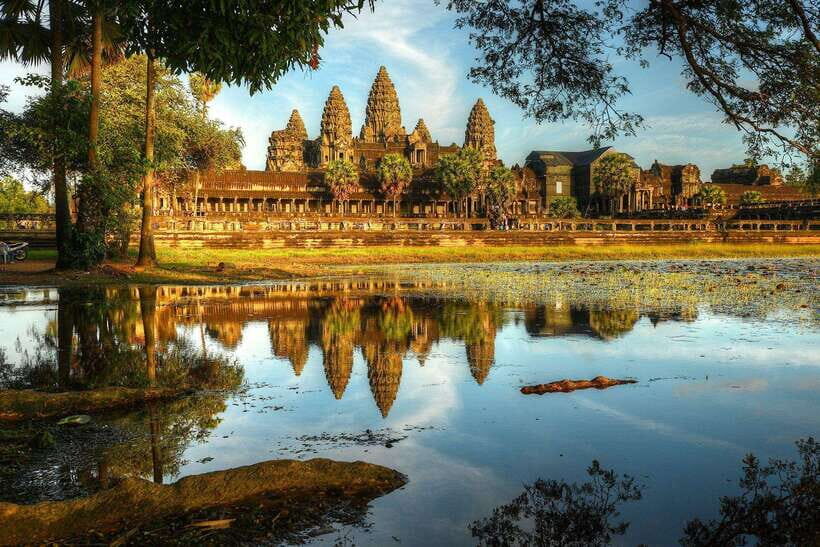
- Angkor Thom highlights: Bayon, Phimeanakas, Baphuon, plus the Terrace of the Elephants and the Leper King
- Ta Prohm photo moments: huge fig-tree roots and creepers around the temple
- Sunset at Phnom Bakheng: expect a stair climb and a viewpoint that can be crowded
- No large bags: plan to travel light so you’re not stuck juggling luggage during transfers
The “zipline to temples” formula (and why it works)
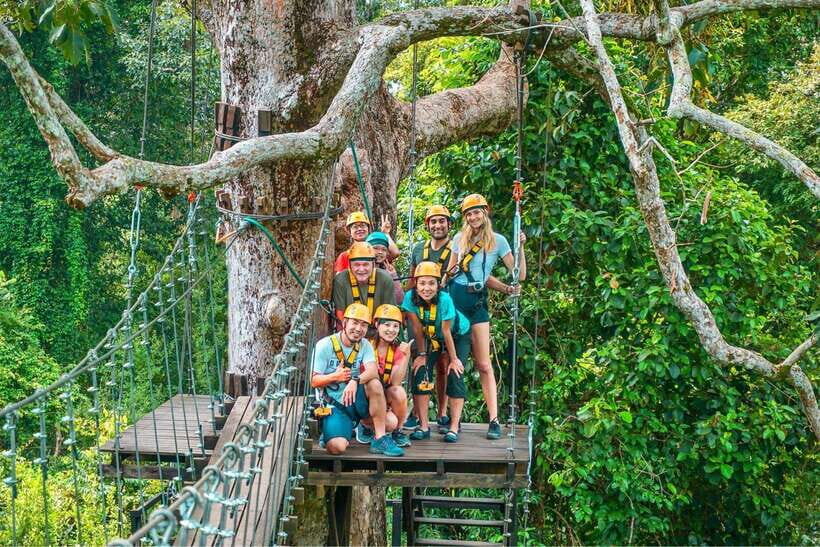
This isn’t just a temple tour with a short add-on. You start in the jungle, flying over rainforest terrain, then you land right into a guided Angkor day. That shift matters. The zipline gives you a quick hit of motion and views from above—then the temples bring you back to walking scale, carvings, and stories.
The structure also helps you see a lot without feeling totally rushed. You’ll get a guided circuit through Angkor Thom and Angkor Wat, then hit Ta Prohm for that iconic tangled-tree look, and finish with sunset from Phnom Bakheng, which is a different kind of “show” than the morning sites.
The other smart piece: your transportation and guide are bundled with the experience. You’re riding in an air-conditioned vehicle from pickup to the main sites, with a guide staying with you for the temple stops.
You can also read our reviews of more evening experiences in Siem Reap
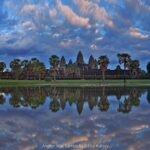
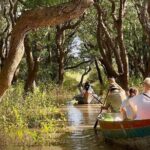
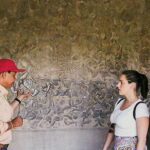
Starting the day at 07:30: getting to the South Gate right
Your day begins with an early pickup from Krong Siem Reap at 07:30am. You travel by air-conditioned minivan/minibus, and the plan is to reach the south gate area so you can take in the complex as you’re stepping into it.
Why I think that timing is a big deal: Angkor can get intense later in the day. Even with a guide and a route, crowds and heat change how much you enjoy the stone details. Starting early gives you more breathing room for photos and for simply looking at carvings and layouts without feeling like you’re being pushed along.
Practical note: you’ll want to keep your stuff simple. Large bags aren’t allowed on this tour, so pack in a way that doesn’t turn into a hassle during registration, transfers, and temple walks.
Orchid House: safety first, then the jungle run
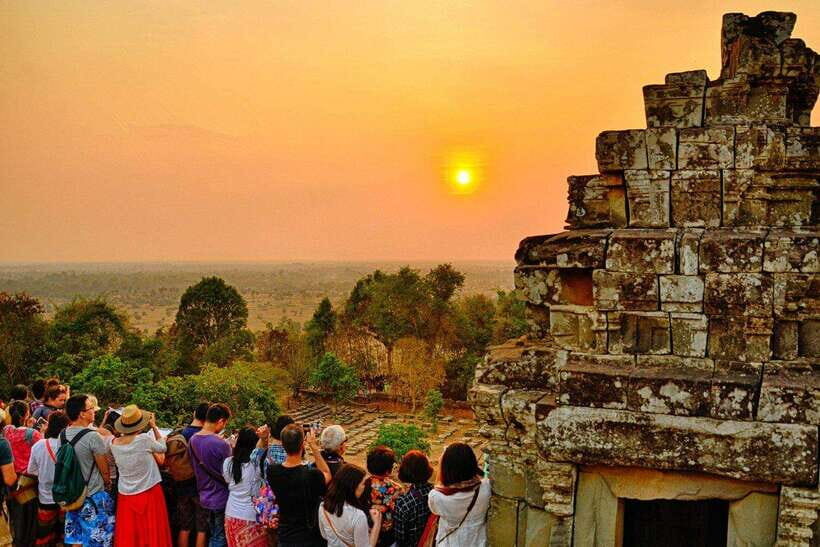
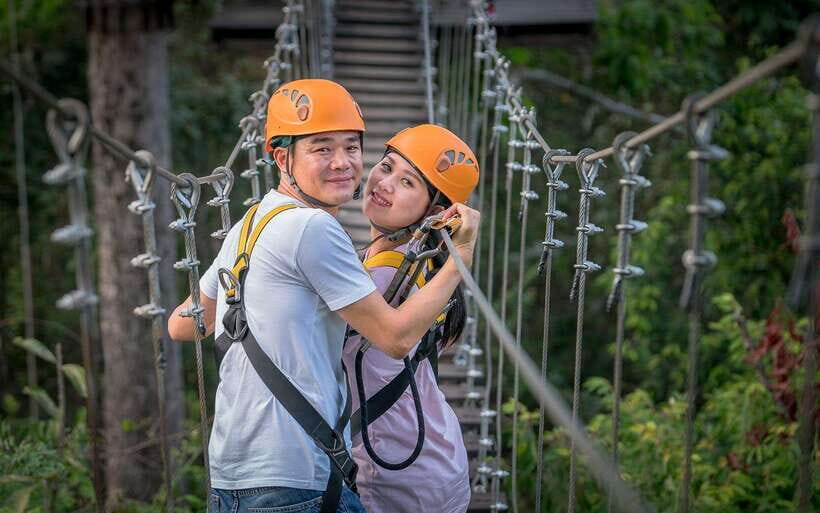
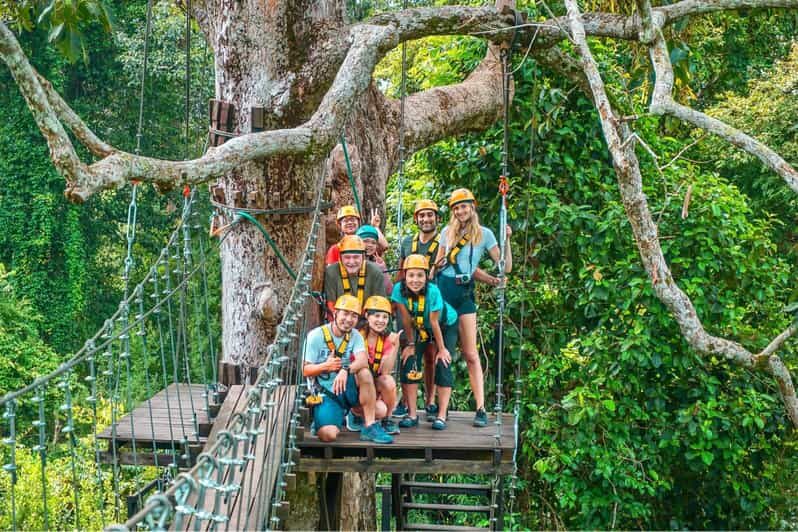
Once you reach the zipline operation at Orchid House, you’re greeted by the team and you go through registration. Then comes the safety instruction session—this is not the moment to chat your way through it. Pay attention to how they want you to use the harness and handle the equipment.
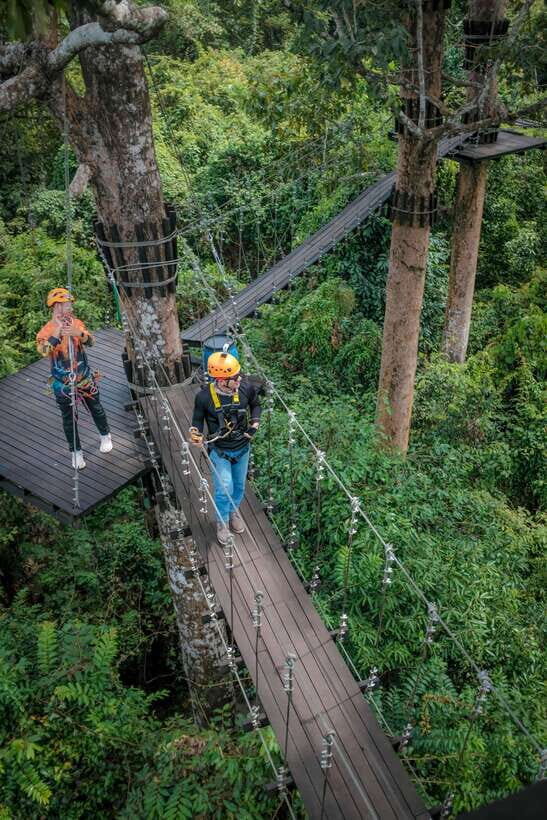
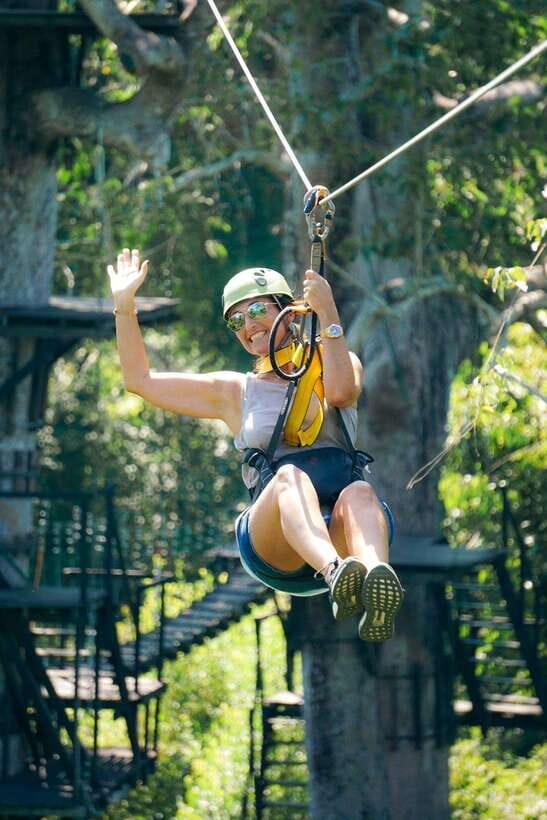
The zipline itself runs about 1.5 hours. You’re moving through the canopy area with bird’s-eye views, and the main appeal is the contrast: Angkor’s temple zone sits inside a broader region with jungle texture all around. From the air, you see that bigger picture.
One useful detail for expectations: the included setup is the Silver Course package, which is typically 4 zip lines and 3 suspension bridges. If you’re imagining a longer circuit with a lot more flying, you’ll want to consider the Gold Course, which is an extra $35 per person.
Angkor Thom: Bayon’s faces and the “story stones”
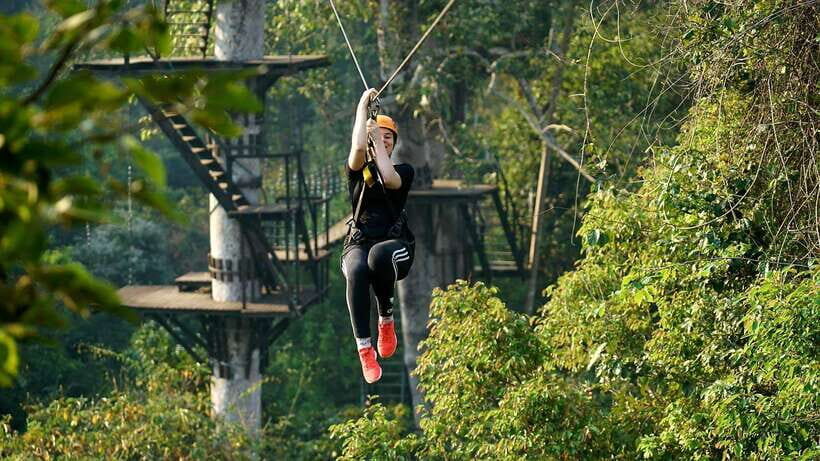
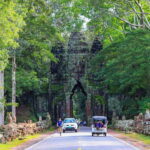
After the jungle portion, you shift into one of the best parts of the Angkor experience: Angkor Thom. This segment includes a guided visit with walking (about 2.5 hours), plus key stops you don’t want to miss.
Bayon Temple (the faces that stop you)
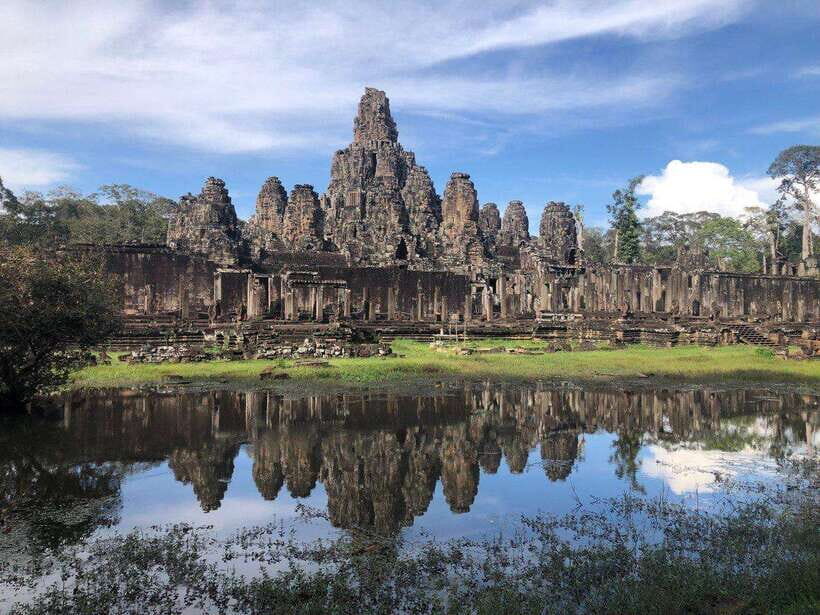
Bayon is famous for its wise, smiling faces. The guide helps you look at the temple not as one photo angle, but as a whole composition—how the faces relate to the structure around them. It’s one of those places where you feel like you’re being watched, but in a calm way.
A tip I’d follow: pause at a few different spots. Bayon is all about perspective, and the “perfect” photo is rarely your first one.
The Royal Palace enclosure: Phimeanakas
You also visit Phimeanakas, located within the Royal Palace enclosure. Even if you’re not a hardcore architecture person, it’s worth paying attention because it tells you how power was staged at Angkor—temple as statement, not just sacred space.
Baphuon and the terraces
You’ll move on to Baphuon, plus the dramatic terraces: the Terrace of the Elephants and the Terrace of the Leper King. These are the kinds of stops where your brain starts connecting art, legend, and everyday visuals carved into stone. They’re a good reminder that Angkor wasn’t only kings and gods—it was also scenes meant to be seen.
The main drawback here
This is still a walking day. Angkor Thom involves moving between areas, and the ground can be uneven. Wear shoes you trust.
Lunch break: plan for what’s not included
Lunch is part of the day, but the meal itself is not included. That means you’ll want to be ready for timing and options depending on what’s available nearby and what the guide has planned.
I like bundling a meal where possible because it reduces decision fatigue. If you’re sensitive to heat or hunger swings, bring a small plan: a snack you can keep on hand before you need it, and water awareness. You’ll have chilled water provided, but Angkor days can still feel long.
Ta Prohm: the temple swallowed by roots

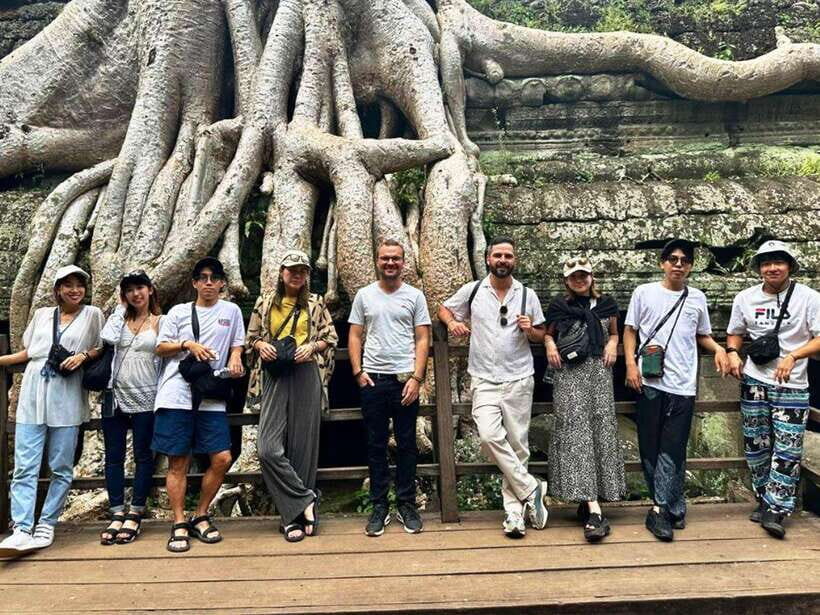
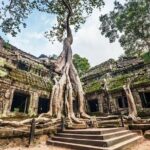
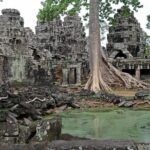
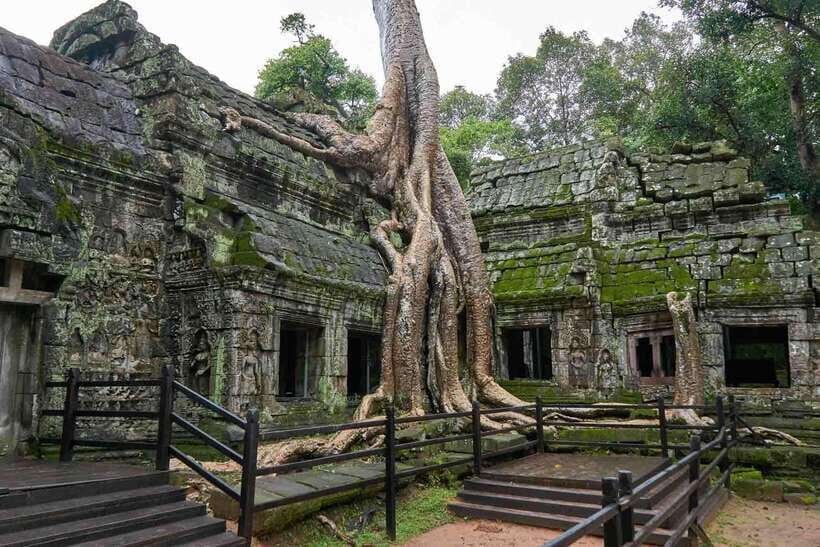
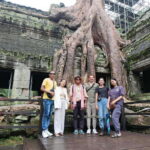
After lunch, you head to Ta Prohm. This is one of the most visually specific temples at Angkor: the huge fig trees and gigantic creepers wrap around structures in a way that feels almost staged, even though it’s nature taking over.
This stop is great for a couple reasons. First, it gives you a different texture than the more formal Angkor Thom and Angkor Wat layouts. Second, it’s the kind of place where your guide can point out how the roots behave against stone—where growth strengthens the drama and where the temple still shows structure underneath.
Plan to slow down here. You’ll want time to look up, not just across. Photos are good, but the real payoff is noticing how the carvings and beams relate to the plant growth.
Angkor Wat: bas-relief storytelling and the long outer galleries
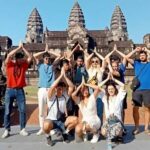
Then you roll into Angkor Wat. Your day includes a photo stop, a guided visit, and sightseeing/walking (about 2.5 hours).
Angkor Wat is a World Heritage Site and has a feature that’s worth knowing before you arrive: the longest continuous bas-relief in the world runs along the outer gallery walls, telling stories from Hindu mythology. Even if you’re not reading every panel, it changes how you look. You start seeing the building as a “narrative machine,” not just a landmark.
Also important for budgeting: the Angkor pass is not included. Your Angkor Wat entry depends on that ticket, so you’ll need to factor in the $37 per person Angkor pass cost on top of the tour price.
A practical note for timing and comfort
Angkor Wat is big. The walk distances can surprise you if you expect only a few quick photo spots. If you’re someone who likes to take your time, this is where the guide helps you keep your energy for the highlights instead of wandering in circles.
Phnom Bakheng and sunset: the stair climb reality check
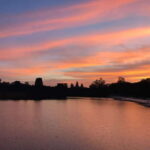
Your last stop is Phnom Bakheng for sightseeing, walking, and sunset (about 1.5 hours). This is the payoff moment: you climb to the temple mountain and watch the light shift across the area.
Sunset here is special because it isn’t just “watch the sky.” You’re on a temple mound, with stone structures framing the view. The shift from daylight to evening also changes how you perceive distance—what looked flat in the afternoon starts to feel layered.
Reality check: you’ll be climbing steps. This tour isn’t a gentle stroll at the end of the day. If you have mobility limitations, heart problems, or you’re not comfortable with stairs, you’ll likely want to skip this particular sunset climb. The tour data also notes it’s not suitable for pregnant women and for people with heart problems.
Price and value: $104 isn’t the whole picture
The listed price is $104 per person and it includes:
- air-conditioned transportation and hotel pickup/drop-off
- a tour guide and driver
- chilled water and towels
- the Silver Course package for the zipline
That means you’re paying for the big logistics and the included zipline circuit. And you don’t have to separately coordinate a temple guide and transport.
But you should budget for the items that are not included:
- Angkor pass: $37 per person
- meal (not included)
- soft drinks
- GoPro rental and photographer services (optional)
- Gold Course: extra $35 per person if you want more zip time
When I look at the value, I think about what’s actually “hard” to organize: getting between sites, dealing with heat, and making sure you hit the key temples with context. This tour handles the coordination and keeps the day guided, which is usually where group tours earn their keep.
The only big value question for you: do you want the Silver experience or do you want the Gold length? If you’re the type who hates “it ended too soon,” Gold might be worth considering.
Who this tour fits best (and who should skip it)
This is a strong match if you want a single-day plan that mixes:
- adrenaline (ziplining through jungle terrain)
- major Angkor temples (Angkor Thom, Ta Prohm, Angkor Wat)
- a sunset finish at Phnom Bakheng
It’s also a decent choice if you like having a guide explain what you’re seeing, since you’ll spend meaningful time at multiple temples rather than just hopping between photo stops.
Skip this tour if:
- you’re pregnant or have heart problems (not suitable per tour info)
- you can’t handle stair climbing at the end
- you’re traveling with luggage or large bags (not allowed)
- you’re outside height/weight limits: under 3 ft 3 in (100 cm) or over 275 lbs (125 kg)
Booking tips that can save you money and headaches
Here are the practical things I’d lock in before you pay:
- Confirm whether you’re staying with the Silver Course or upgrading to Gold. Silver is typically 4 zip lines + 3 suspension bridges.
- Budget for the Angkor pass early so you’re not surprised at the gate.
- If you care about getting the pace you expect, ask the operator to clarify what private group means in practice for your day. The tour is listed as private, but I’d still confirm how they’ll handle timing with your specific group.
If you want the sunset to feel calm, plan to go into it expecting a climb and some crowd energy. Sunset is popular for a reason.
Should you book Angkor Zipline and Temple Tour with Sunset?
If you want one day that mixes jungle views and the top Angkor sites, this is a good fit. The included zipline Silver Course and the guided temple circuit make it feel more complete than doing ziplining or temples alone. Just go in with the right expectations: you’ll need an Angkor pass, you’ll walk a lot, and the sunset climb at Phnom Bakheng is not for people who avoid stairs.
If you’re unsure between Silver and Gold, choose based on your style. Silver gives you a solid adventure without turning your day into a full zipline marathon. Gold is for the “I want more flying time” crowd.