REVIEW · SIEM REAP
Khmer Cooking Class at a Local’s Home in Krong Siem Reap
Book on Viator →Operated by Angkor Wat Travel Tour · Bookable on Viator
Cooking in a real Siem Reap neighborhood is special. This class pairs a market ingredient hunt with hands-on Khmer cooking, then you sit down and eat what you made. You’ll get door-to-door tuk-tuk pickup, a small group size (max six), and guidance from instructors like Kong (King Kong), Sorya, Sivoon, or Sky, depending on the session.
Two things I really like: first, the focus on learning the why behind the flavors, not just copying recipes. Second, you get to choose four dishes for your own meal, so you can target classics like Fish Amok and Tom Yum while still mixing in options that fit your tastes.
One consideration: the experience is described like a local home cooking class, but the cooking happens in an open-air setup in a local residential area, sometimes with other groups working nearby. It still feels local and friendly, but it may not match the private-home fantasy.
In This Review
- Key things to know before you go
- A Tuk-Tuk Food Plan That Actually Gets You Into Local Life
- Market Time: Choosing Ingredients for Khmer Flavor
- Garden and Cooking Area: Local Produce, Practical Lessons
- The Four-Course Format: How Choice Makes It More Fun
- Instructors You’ll Feel Good About: Kong, Sorya, Sivoon, and Sky
- What About Vegetarian or Allergies?
- Drinks, Timing, and the Practical Stuff That Impacts Your Comfort
- Value Check: Is $27 Really Worth It in Siem Reap?
- Extra Stops: Mushroom Farm and Crocodile Farm Add Local Flavor to the Day
- Who This Class Suits Best (and Who Might Want Something Different)
- Should You Book This Khmer Cooking Class in Siem Reap?
- FAQ
- How long is the Khmer cooking class?
- What’s the price per person?
- Do I get hotel pickup and drop-off?
- How many people are in the class?
- What dishes can I cook?
- Is lunch included, or is it only for dinner?
- Can the class accommodate vegetarian meals or food allergies?
- Are beer and wine included?
- What other visits are included besides the cooking?
- Is there free cancellation?
Key things to know before you go
- Max six people means you get real hands-on help, not stand-and-watch lessons.
- Market + garden time helps you understand what makes Khmer cooking work.
- You choose four-course dishes, including favorites like Fish Amok and Tom Yum.
- Pickup and drop-off are handled by tuk-tuk, which makes the whole thing easy from your hotel.
- You’ll likely meet instructors named Kong (King Kong), Sorya, Sivoon, or Sky.
- The package includes extra guided stops at a mushroom farm and a crocodile farm.
A Tuk-Tuk Food Plan That Actually Gets You Into Local Life
In Siem Reap, it’s easy to do everything “touristy.” This cooking class takes you the other direction, into everyday food shopping and real Khmer ingredient culture.
Your day starts with hotel pickup by tuk-tuk, then you move on to the local market. After that, you’ll head to the cooking area where you cook your four dishes and eat together. Many people love this format because it’s active right away, and it doesn’t require fancy cooking skills—just curiosity and a willingness to try.
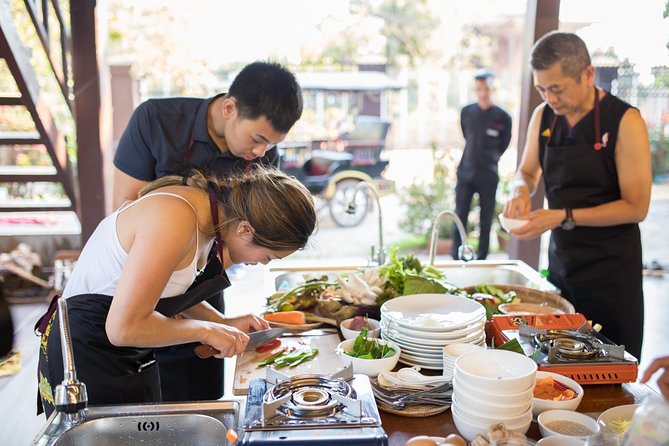
I also like that the group is capped at six. That matters. When the class is small, the instructor can correct your knife work, help you with spice balance, and guide you step-by-step through techniques (like making coconut-based sauces or getting the right texture).
You can also read our reviews of more tours and experiences in Siem Reap.

Market Time: Choosing Ingredients for Khmer Flavor
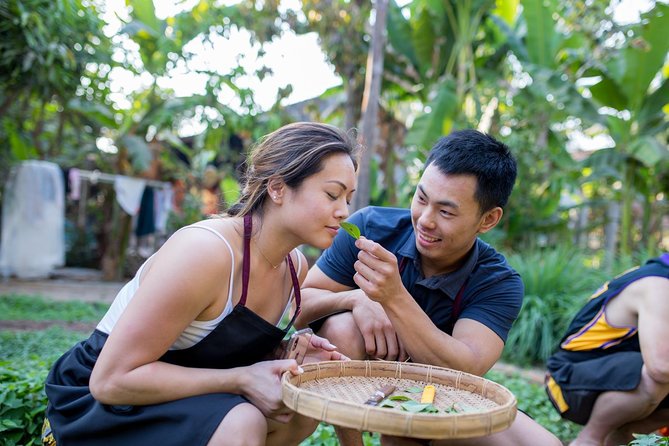
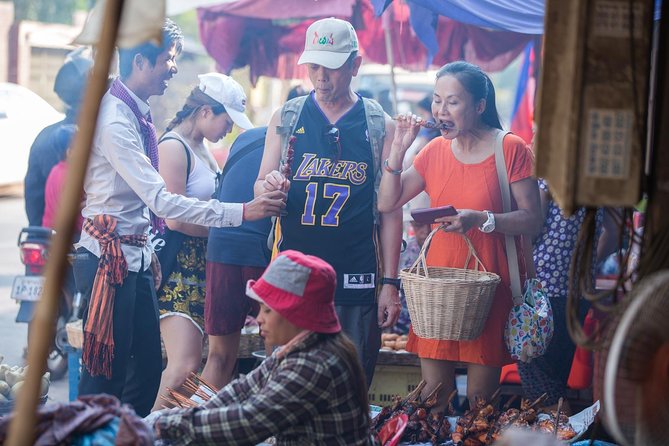
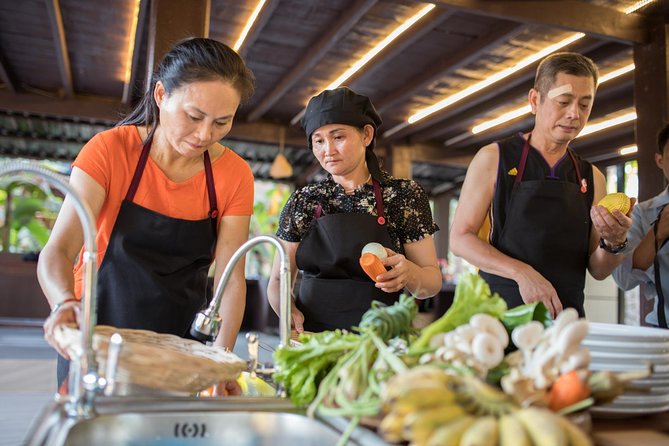
The market stop is where the class starts making sense. Instead of just learning a recipe, you learn how ingredients get chosen in Cambodia—what looks fresh, what locals buy for everyday meals, and how herbs and aromatics matter for the final taste.
You’ll walk the stalls with your guide and look for items tied to the dishes you’ll cook. Many classes keep this part quick, and this one generally keeps it to a focused stretch (often described around 20–30 minutes). That’s good news if you’re not trying to spend your whole morning wandering. You get the essentials, and then you get moving.
One extra benefit from the way instructors teach here: you might get little “why” lessons, like what certain herbs are used for, how flavors get built in layers, and which ingredients are worth paying attention to when you cook later at home.
If you’re aiming for specific dishes, this is the time to decide. Some instructors make it easy to pick recipes that match your comfort level while still staying authentic—so you can build a meal that feels like Khmer home cooking, not a generic cooking demo.
Garden and Cooking Area: Local Produce, Practical Lessons
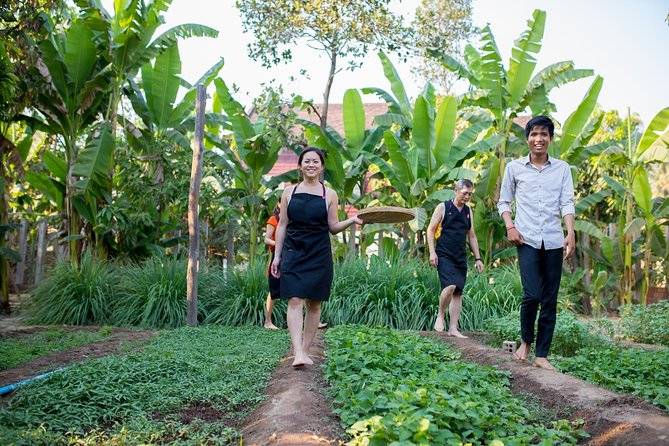
After the market, you’ll go to a garden and cooking space where you can see fresh herbs and produce growing. Several reviews mention walking through the garden and being encouraged to smell or sample herbs. That kind of sensory prep helps later, because you recognize flavors when they show up in the dish.
Now for the realism: even though the experience is framed as a local home class, it often runs in an open-air tiled kitchen space in a residential neighborhood. You may cook alongside other small groups, depending on timing. It’s not a problem for most people, but it’s worth knowing so you can set expectations correctly.
The good part is how the instruction works in that setup. One instructor helps multiple people, but the structure still feels personalized. You get step-by-step support, and you’re not stuck waiting for your turn to do something. Reviews also mention photos being taken during the experience, which is a nice touch if you want proof without trying to hold your phone and chop at the same time.
The Four-Course Format: How Choice Makes It More Fun
Here’s the part that keeps showing up in top reviews: you each choose your own four dishes. That means two people in the same class can end up cooking eight dishes total, then sharing the table meal.
You can expect to cook a mix of Khmer favorites, with common highlights including:
- Fish Amok (often the signature “Khmer” dish people want)
- Tom Yum (the hot and sour soup that really teaches you about balancing tang, heat, and richness)
- Fish cooked in banana leaf (aromatic and flavorful)
- Plus additional courses you select as part of your four-course menu
The course selection is a big deal for value. At $27, you’re not paying for a single dish and a quick demo. You’re paying for a structured meal where you actually cook—then you eat what you made. That’s why this class appeals to both foodies and first-timers.
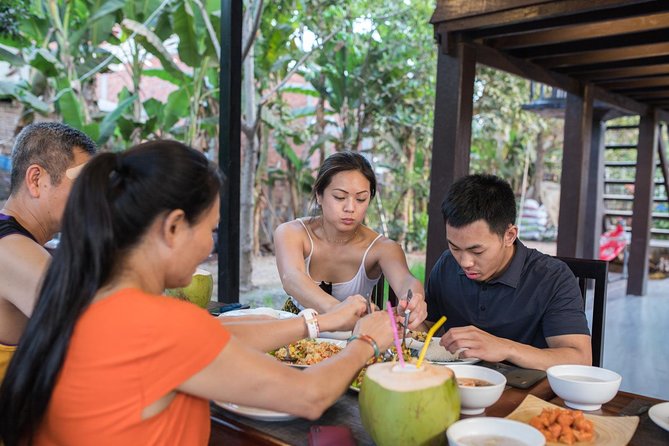
Also, don’t underestimate how much food you end up with. People often leave stuffed, partly because four courses are real portions and partly because groups tend to pick different dishes.
Instructors You’ll Feel Good About: Kong, Sorya, Sivoon, and Sky
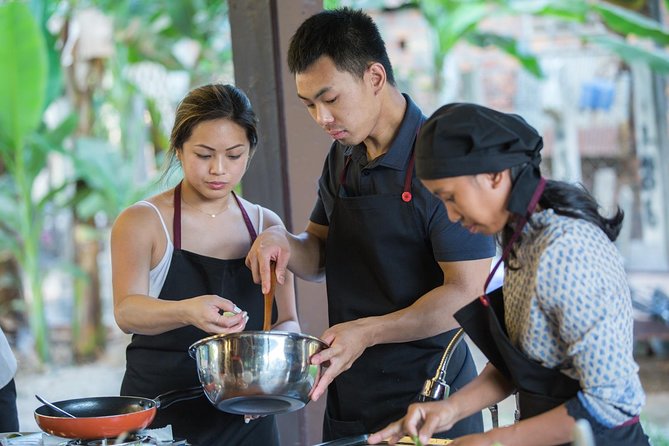
The quality of the teaching shows up again and again. Names you may see for your session include Kong (King Kong) as a cooking instructor and Sorya or Sivoon as a guide/host. Another name mentioned is Sky, also leading cooking instruction.
What I’d look for, based on how these instructors teach, is clarity plus patience. Many reviews describe step-by-step help, frequent check-ins while you cook, and a playful energy that makes complicated flavors feel less intimidating. One review even mentions that the kitchen instruction could feel like a fun TV-competition moment—though in the nicest, friendlier way.
If you’re nervous about cooking, this is the right kind of class. You’re not expected to be a chef. You’re expected to follow the process, ask questions, and adjust as the instructor explains the goal (like sauce thickness, seasoning timing, or when to stop cooking so fish stays tender).





What About Vegetarian or Allergies?
Good news: the class is set up to consider dietary needs. If you’re vegetarian or have food allergies, you should let the operator know in advance. The information you have suggests there can be possible allowances.
That matters because Khmer cuisine does use fish sauce and shrimp paste in many classic dishes. If you don’t plan ahead, you can end up with limited options. With notice, you give them a chance to steer you toward recipes that work for you.
If you’re vegan, allergic to dairy, or have a severe allergy, you’ll want to be specific about what you can’t eat. Don’t just say general allergy—list ingredients.
Drinks, Timing, and the Practical Stuff That Impacts Your Comfort
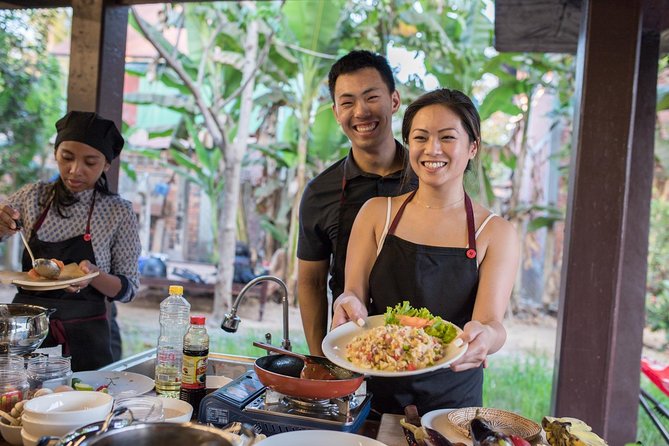
The meal you cook includes what you prepare, and it’s part of the session’s overall time (about three hours). There are class times that can work for both lunch and dinner plans, which is handy in Siem Reap where your days can get chaotic.
For drinks, the data says beer and wine are not included. One review specifically notes water only. So if you want juice, soft drinks, or anything beyond water, plan to bring it or buy it separately if that’s possible for your day.
Also expect hands-on work beyond just stirring. One review mentions doing basic washing prep as part of the process. It’s not unpleasant, but it’s a reminder that you’ll be participating, not just tasting.
Value Check: Is $27 Really Worth It in Siem Reap?
At $27 per person for around three hours, this class is good value because you’re buying three things at once:
- Local market guidance (and ingredient selection)
- Real cooking instruction with a small group
- A four-course meal you create and eat
Many “food experiences” in tourist zones charge more and still leave you watching. Here, you cook. That makes a big difference. The market walk is not just scenery, and the meal is not a token tasting portion.
You also get hotel pickup and drop-off by tuk-tuk, which often costs extra if you book it separately. The class also includes ingredients and a trained host/guide. When you add those practical pieces, the price feels much more reasonable.
Finally, the learning sticks because you’re not only tasting Khmer flavors—you’re building the technique to reproduce them. Some reviews mention that recipes may be sent afterward, which is a great way to keep the skills from fading after vacation.
Extra Stops: Mushroom Farm and Crocodile Farm Add Local Flavor to the Day
Your package includes extra guided visits to a mushroom farm and a crocodile farm with a local guide. The provided info doesn’t spell out timing details for these stops, so I’d treat them as add-ons that get folded into the overall experience flow.
These are worth considering because they add context beyond cooking. Even if you’re primarily there for Khmer cuisine, it’s still useful to see how locals grow or raise food (mushrooms) and how farming can range into surprising areas (crocodiles).
If you dislike animal-related attractions in general, you might want to skip or reconsider. But if you’re the kind of traveler who likes understanding how food systems work, these two stops can be a bonus.
Who This Class Suits Best (and Who Might Want Something Different)
This experience is a strong fit if you want:
- A hands-on activity that’s not just a long meal
- Small-group attention (max six)
- Khmer classics like Fish Amok and Tom Yum
- A mix of learning and eating, with market context
It’s also a great choice for couples and small groups because everyone can pick different dishes, so you leave with a table full of variety.
It may be less ideal if you specifically want a one-on-one private class in a private home kitchen. Reviews suggest an open-air kitchen setup in a residential area, sometimes with other groups during the same session. Many people still love it, but it’s good to know.
If you have mobility issues, you’ll want to check how easy the market walk and transfers are for you. The info says it’s near public transportation and includes tuk-tuk pickup, but it doesn’t confirm step-free access.
Should You Book This Khmer Cooking Class in Siem Reap?
If you’re choosing between “see Siem Reap” and “learn Siem Reap,” I think this class leans toward the second one in a smart, practical way. You’ll get a real ingredient walk, a garden context, and guided cooking you can repeat later.
Book it if:
- You want to cook four Khmer dishes yourself
- You like small groups and hands-on teaching
- You want market insight, not just a plate of food
- You’re excited about Fish Amok and Tom Yum
Consider another option if:
- You want a fully private home kitchen with no other groups nearby
- You strongly prefer food experiences without any animal-related farm visits
Overall, for the price and the teaching format, this is one of the more cost-effective ways to go beyond Angkor postcards and understand how Khmer food actually gets made—ingredient by ingredient, taste by taste.
FAQ
How long is the Khmer cooking class?
The class runs for about 3 hours.
What’s the price per person?
It’s $27.00 per person.
Do I get hotel pickup and drop-off?
Yes. You’ll get hotel pickup and drop-off by tuk-tuk.
How many people are in the class?
The group size is capped at a maximum of 6 travelers.
What dishes can I cook?
You’ll prepare a 4-course meal and you can choose what you cook. Fish Amok and Tom Yum are highlighted, and fish in banana leaf is also mentioned as part of the experience.
Is lunch included, or is it only for dinner?
Both lunch and dinner class times are offered, and the meal you prepare is included. Lunch is listed as included in the tour details.
Can the class accommodate vegetarian meals or food allergies?
You can let the operator know in advance for vegetarian needs or allergies, and they can possibly make allowances.
Are beer and wine included?
No. Beer and wine are not included.
What other visits are included besides the cooking?
The package includes guided visits to a mushroom farm and a crocodile farm.
Is there free cancellation?
Yes. You can cancel for a full refund up to 24 hours in advance of the experience start time.