REVIEW · SIEM REAP
Angkor Wat Private Tour by Tuk-Tuk with English Speaking Driver
Book on Viator →Operated by About Cambodia Travel & Tours · Bookable on Viator
Angkor in a tuk-tuk feels personal. This private Siem Reap tour gives you hotel pickup and a driver who waits at each temple, so your day runs on your pace, not a bus schedule. I especially liked the flexible timing and the way the route hits the big names in a logical order, from Angkor Wat to Ta Prohm. One thing to plan for: tickets (the Angkor Pass) aren’t included, and depending on your option, you may get a driver first and a licensed guide only if you add that upgrade.
The temple lineup is a smart mix of iconic and lesser-visited stops, with time built in so you’re not just posing and moving on. I also liked practical touches that show up when you choose the English guide option—one guide (Sophal) even handed over chilled towels along the way, which is a lifesaver in the heat. The main consideration is language: if you don’t select the licensed guide option, the English may be limited and you’ll rely more on what you can read on-site.
You’ll go as a private group—just your party—so you can tweak the plan if you want more time at Bayon’s faces or a slower walk through Ta Prohm. If you’re chasing sunrise or sunset, the day can feel long, but the payoff is huge. Bottom line: this is best when you want control, comfort, and classic Angkor highlights in one smooth day, with a cost that’s lower than most full-guided private formats once you add the Angkor Pass separately.
In This Review
- Key highlights you’ll actually feel during the day
- Private tuk-tuk from Siem Reap: how the day runs
- Picking the best Angkor timing: sunrise, full day, sunset, or Banteay Srei
- Angkor Wat first: what you’ll notice in the 3-hour block
- Angkor Thom South Gate to Bayon: faces, terraces, and tight city energy
- Baphuon, Ta Nei, and Ta Prohm: the day shifts into variety
- Banteay Kdei and Prasat Kravan: finishing with style
- English speaking driver vs licensed guide: who tells you what you’re seeing
- Price and value: what $13.50 buys (and what it doesn’t)
- Your comfort plan: heat, walking, and making time feel easy
- Should you book this Angkor Wat private tuk-tuk tour?
- FAQ
- What’s included in the Angkor Wat private tour?
- Do I need to buy the Angkor Pass?
- Is lunch included during the tour?
- How long is the tour?
- Is this tour private or shared with others?
- Can I choose a sunrise or sunset option?
- What’s the cancellation policy?
Key highlights you’ll actually feel during the day
- Hotel pickup + tuk-tuk waiting time keeps you from losing half your day between stops
- Private just for your group means fewer speed-bumps from other schedules
- English options: licensed guide upgrade for more meaning, otherwise driver-led logistics
- Classic Angkor route hits Angkor Wat, Bayon, Ta Prohm, and more in a sensible loop
- Comfort extras like water and chilled towels showed up with at least one guide
Private tuk-tuk from Siem Reap: how the day runs
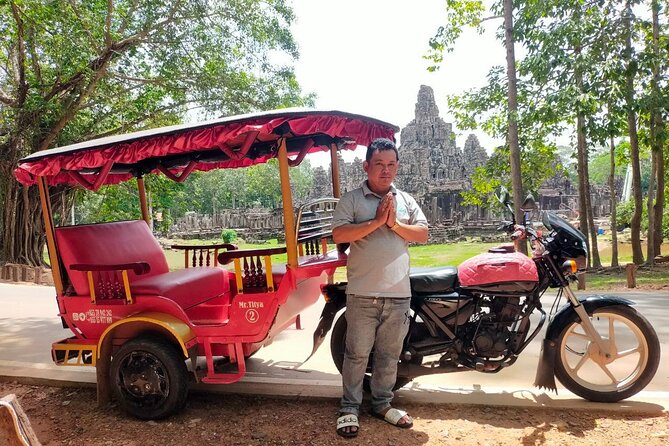
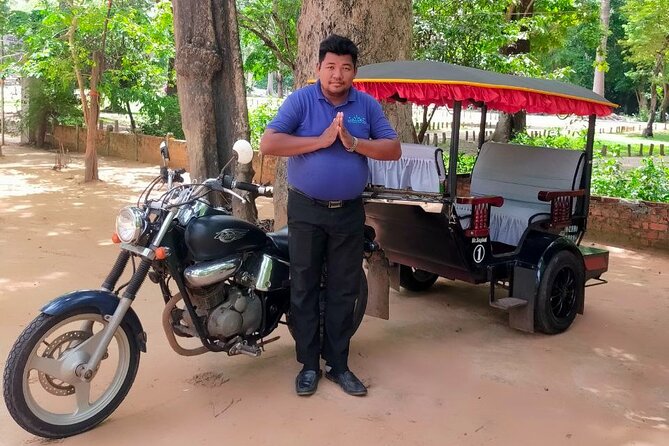
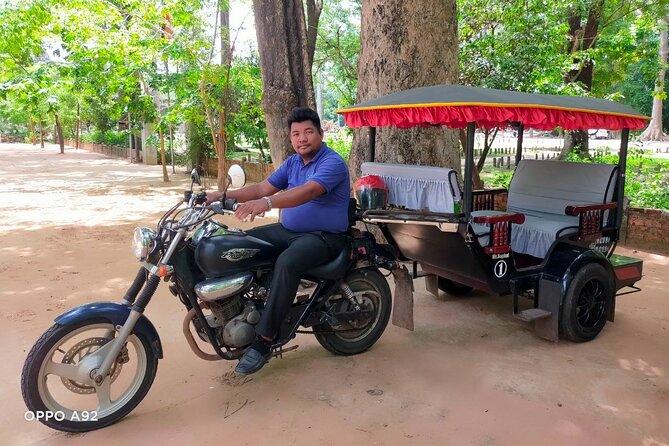
This tour starts with a simple idea: you get picked up at your hotel, then you’re in charge of your pace once the tuk-tuk is rolling. You’re not squeezed into a bigger group plan, and the tuk-tuk format is built for temple-to-temple travel where roads can be slow and stop-and-go is normal.
The driver is also a key part of your experience, because you’re not constantly searching for the next transport point. At each stop, the driver waits so you can park your brain for a moment and focus on the site. In practical terms, that means fewer timing worries and less stress about where your transport is while you’re walking around.
The tour includes a private tuk-tuk charter from Siem Reap, and it’s designed so your group is the only group using that vehicle. That matters when you want to linger at a viewpoint, duck into shade, or handle bathroom breaks without racing the clock like you’re trying to catch a train.
You can also read our reviews of more tours and experiences in Siem Reap.
Picking the best Angkor timing: sunrise, full day, sunset, or Banteay Srei
You can shape your Angkor day around the light and the temples you care about most. The options you can choose from are:
- Angkor Wat Sunrise by Tuk-Tuk (sunrise view + small-circle Angkor temples)
- Angkor Wat Tour by Tuk-Tuk (classic full-day Angkor Park route)
- Angkor Temples & Banteay Srei (adds the pink sandstone Banteay Srei)
- Sunset at Angkor Wat Tour by Tuk-Tuk (late-day classic sunset plan)
Here’s the practical way to decide. If you’re the type who wants the most famous view without rushing, sunrise or sunset tends to feel more cinematic and less about “standing in line.” If you want the full story arc of Angkor—temples, city remains, and iconic faces—go with the classic full-day option.
Also, consider your tolerance for walking. Sunrise and sunset can be great, but they often make the day longer because you’re starting earlier or ending later. If you’re visiting in hot months, the classic full-day route with planned stops can feel more balanced because you’ll build in breaks as you go.
Angkor Wat first: what you’ll notice in the 3-hour block
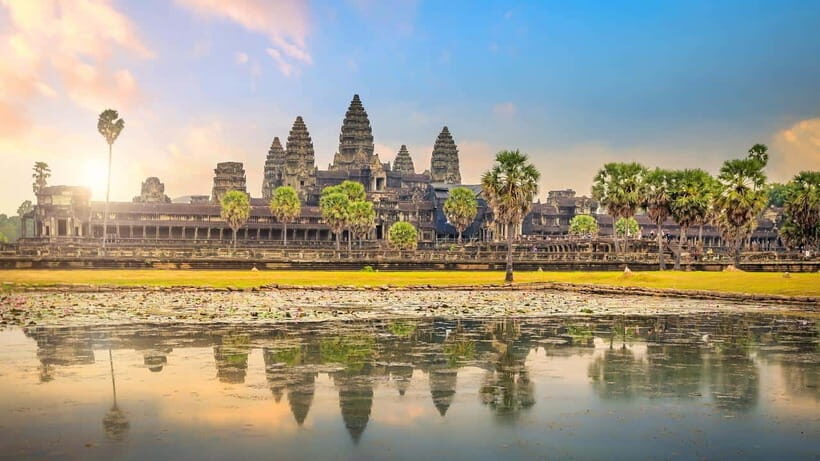
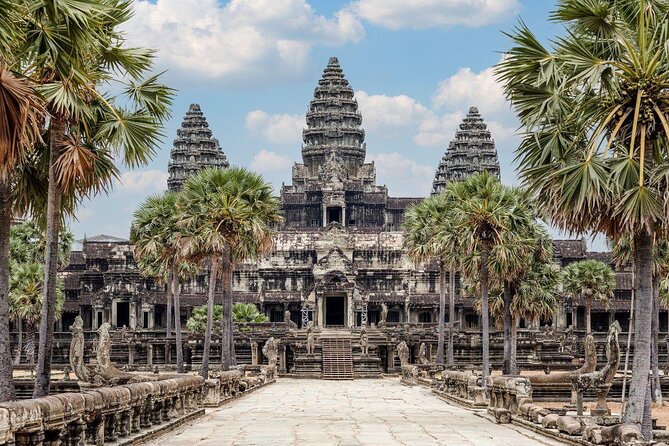
Angkor Wat is the headline, and you’ll start there with time set aside (about 3 hours in the plan). Even if you’ve seen photos before, being inside the complex changes the scale. The architecture is orderly in a way that makes you understand why Angkor became a cultural and religious center. You’re not just looking at temples—you’re reading a layout.
What I’d watch for in that first stretch:
- How the main paths and axis guide you from gate to temple spaces
- The transitions between courtyards, levels, and viewpoints
- The way the light moves across stone as you reposition
One detail worth knowing: admission tickets aren’t included in the tour price. Your driver will help you buy the Angkor Pass at the entrance of Angkor Park before you start the day, which helps keep the morning from turning into an awkward ticket scramble.
If you chose the sunrise version, the experience shifts from “check the box” to “timed atmosphere.” Sunrise tends to make the temple feel calmer at first, then the crowd energy ramps up as the sun gets higher. Either way, arriving prepared to spend time—more than a quick stroll—makes the first stop feel worth it.
Angkor Thom South Gate to Bayon: faces, terraces, and tight city energy
After Angkor Wat, the route moves into Angkor Thom territory. You’ll stop at the South Gate (about 30 minutes), which sets the tone. The point of starting at the gate is that Angkor Thom doesn’t feel like a single monument—it feels like an entire city you can walk through.
From there, the plan targets Bayon Temple (about 1 hour). Bayon is famous for its towers covered in stone faces. In person, it’s harder to look away than you think you’ll be. The faces are serene, and the effect is almost disorienting because you keep turning and noticing the expressions change with your angle. It’s one of those places where your photos can’t really explain the feeling.
Practical tip: at Bayon, give yourself a bit of time to wander slower than you think. If you race the hour, you’ll miss the way the towers and levels create multiple vantage points.
Baphuon, Ta Nei, and Ta Prohm: the day shifts into variety
Next is Baphuon Temple (about 30 minutes). Baphuon is a strong stop because it breaks up the day’s rhythm. Instead of another “faces” moment, it’s about structure and presence—an older centerpiece that helps you connect Bayon’s city vibe to the broader city layout.
Then there’s Ta Nei Temple (about 30 minutes). This one is smaller and less visited, and the benefit is exactly that: you can breathe. It’s a stop that works well when you want a quieter palate cleanser between the major sites.
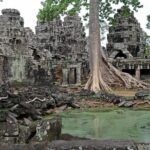
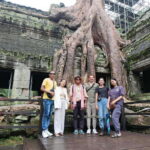
After that comes Ta Prohm (about 1 hour). This is where many people’s Angkor day becomes a personal favorite. Ta Prohm is the Buddhist temple tied to Jayavarman VII’s era, and it’s known for the way roots and stone interact. Even if you’ve seen Ta Prohm in pictures, standing among the big tree-covered structures gives you a different sense of scale and texture.
One balanced note: Ta Prohm can feel busy at peak times, and the ground is uneven. If you’re prone to slower walking, it helps to move with patience here so you don’t lose your focus to keeping your footing.
Banteay Kdei and Prasat Kravan: finishing with style
The later part of the loop includes Banteay Kdei (about 30 minutes). This is a massive Buddhist monastery area framed by concentric walls. The entrances are decorated with garudas, so it rewards a slow approach—look closely rather than just passing through.
Finally, the plan reaches Prasat Kravan (about 30 minutes), a smaller 10th-century Hindu temple dedicated to Vishnu. It’s easy to underestimate a smaller stop when you’ve been in “main attraction mode,” but the value here is variety. After the big complexes, a smaller, focused temple helps you reset and process what you’ve already seen.
If you’re the kind of traveler who likes to leave with a sense of movement—big to quiet to small—this ending sequence is satisfying. It’s not only about hitting famous names; it’s about building a coherent day.
English speaking driver vs licensed guide: who tells you what you’re seeing
This is the part you should think about before booking, because it can change the whole tone of the day.
The core tour includes a private tuk-tuk with an English speaking driver, and there’s an option to add an official English-speaking licensed tour guide for deeper history and context. That upgrade is especially helpful if you want to understand what you’re looking at beyond the headlines.
A couple of real-world lessons from guide-and-driver experiences:
- One driver (Titya) was described as kind and reliable, but not positioned as a full tour guide—so you may need to rely on your own reading if you didn’t add the guide option.
- Another experience noted that the driver’s English wasn’t strong, which matters if you care about explanations between stops.
- When an English guide like Sophal was part of the day, the experience felt more “meaningful,” with practical comfort touches like water and chilled towels.
So here’s my advice. If you want the temples to feel connected—why Bayon looks the way it does, why Ta Prohm is tied to Jayavarman VII, how the city layout makes sense—choose the licensed English guide option. If you’re happy with a mostly logistical day and you’ll learn on the fly, the English driver can be enough.
Price and value: what $13.50 buys (and what it doesn’t)
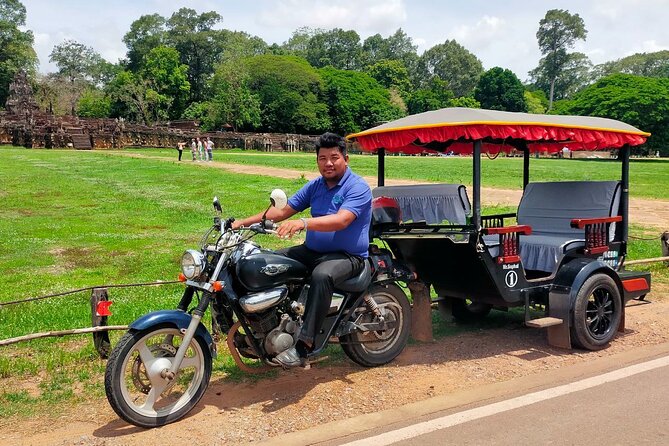
At $13.50 per person, this tour price is low for a private tuk-tuk setup from Siem Reap. The catch is also clear: admission tickets aren’t included, and lunch is on you.
Here’s how I’d think about the real budget:
- You’ll pay for the Angkor Pass separately (your driver helps you purchase it at the entrance).
- Lunch is at local restaurants with both vegetarian and non-vegetarian options, typically $3–$10 per dish.
- Gratuities for the tuk-tuk driver are not included.
Even with the extra costs, the value can still be strong because you’re not paying for a big group ticketing shuffle. You’re paying for control: pickup, a tuk-tuk that waits, and a route that covers major sites without turning your day into a “transport hunt.”
This is the sort of deal that works best if you’re traveling smart—planning your Angkor Pass ahead in your mind, and budgeting lunch and small tips without surprises. If you want everything fully packaged (tickets + guide + lunch), you might find pricier options elsewhere. But for a private day with flexibility, this one often feels like a good bargain.
Your comfort plan: heat, walking, and making time feel easy
Even with a tuk-tuk doing the heavy lifting between stops, Angkor is still temple walking on stone paths and uneven ground at times. The day is long enough that small comfort decisions matter.
A few practical ideas that make a difference:
- Wear shoes that handle uneven ground without pain.
- Bring a hat and something light for sun protection.
- Plan to drink water between stops—especially if you’re doing sunrise or sunset.
One of the nicest signals from this tour experience is that some guides bring comfort-minded extras. Having water and chilled towels offered during the day can turn a tiring afternoon into a manageable one.
Also, remember that admission tickets aren’t included, so the morning start should be treated like a plan: expect to purchase the Angkor Pass at the entrance before you begin walking. That small step is part of the rhythm of the tour.
Should you book this Angkor Wat private tuk-tuk tour?
Book it if you want:
- A private, tuk-tuk-based Angkor day with hotel pickup and a driver who waits
- A route that covers Angkor Wat + Angkor Thom + Ta Prohm without feeling chaotic
- The option to add a licensed English guide if you care about context
Skip it or reconsider if:
- You expect the driver alone to provide deep history all day—your best bet is the licensed guide upgrade
- You don’t want to handle the Angkor Pass purchase as part of your day plan
If your goal is a smooth, flexible Angkor visit with classic highlights and less stress than group tours, this is a solid pick. You’ll spend more time looking at temples and less time worrying about the next move.
FAQ
What’s included in the Angkor Wat private tour?
The tour includes roundtrip pickup and drop-off at your hotel by private tuk-tuk, a private tuk-tuk with an English speaking driver, and a private tuk-tuk charter from Siem Reap. A mobile ticket is included, and there’s an option to add an official English-speaking licensed tour guide.
Do I need to buy the Angkor Pass?
Yes. All sightseeing tickets are not included, and you’ll purchase the Angkor Pass to cover the temples in the itinerary. Your tuk-tuk driver will assist you with purchasing it at the entrance of Angkor Park.
Is lunch included during the tour?
No. Lunch is not included. There are local restaurants near the temples with vegetarian and non-vegetarian options, and meals are at your own expense (menu prices range from $3–$10 per dish).
How long is the tour?
The duration is listed as approximately 3 to 8 hours, depending on which option you choose (for example sunrise or sunset versus a longer full-day route).
Is this tour private or shared with others?
It’s private. Only your group will participate.
Can I choose a sunrise or sunset option?
Yes. You can choose options like Angkor Wat Sunrise by Tuk-Tuk or Sunset at Angkor Wat by Tuk-Tuk, plus other day-route combinations such as adding Banteay Srei.
What’s the cancellation policy?
Free cancellation is available up to 24 hours in advance for a full refund. If you cancel less than 24 hours before the experience’s start time, the amount you paid is not refunded.