Phnom Penh in one long, meaningful day. This full-day private tuk-tuk tour strings together the Royal Palace, Silver Pagoda, Wat Phnom, and the two big genocide sites, with an English-speaking guide to explain what you’re seeing. I like that it’s built for hotel pickup and drop-off, so you’re not wasting your time crisscrossing the city.
The best part is the way the day links places of Khmer pride with places of Khmer suffering, so you actually understand the city instead of just checking boxes. One thing to consider: the Tuol Sleng and Choeung Ek stops are heavy, emotionally intense, and you’ll want to pace yourself.
In This Review
- Key highlights worth knowing
- Private Tuk-Tuk Comfort and Value for $84.11
- Royal Palace and Silver Pagoda: When Phnom Penh Shows Its Formal Side
- Wat Phnom: The One Hill in Town (and the Story That Sticks)
- Tuol Sleng and Choeung Ek: Respectful Context for an Unimaginable Period
- Tuol Sleng Genocide Museum (S-21)
- Choeung Ek Genocidal Center (Killing Fields)
- How to handle the emotional load
- Central Market and the Independence Monuments: Phnom Penh After the Museums
- Central Market: Art Deco and yellow-bright landmark energy
- The Independence-era tower and the Norodom Sihanouk Memorial
- Lunch, Food Stops, and How Your Guide Helps
- Timing, Pace, and What 7 to 8 Hours Feels Like
- Guides, Questions, and Why This Tour Gets High Marks
- Who Should Book This Phnom Penh Tuk-Tuk Tour
- Should You Book This Tour?
- FAQ
- How long is the Phnom Penh full-day tuk-tuk city tour?
- Is hotel pickup and drop-off included?
- Is this tour private?
- What’s included in the price?
- Is lunch included?
- Which key sites are visited?
- Do I get a ticket on my phone?
- Are entrance fees included?
- Is the tour weather-dependent?
- What is the cancellation policy?
Key highlights worth knowing
- Hotel pickup and drop-off keeps a 7 to 8 hour day focused on sightseeing, not logistics
- Entrance fees included helps you skip the ticket line math at multiple stops
- Royal Palace + Silver Pagoda pairs throne-room grandeur with a quieter, sacred corner of the complex
- Wat Phnom is the one hilltop pause in town, with a hill-and-legend story that’s easy to remember
- Tuol Sleng (S-21) and Choeung Ek give context to the Khmer Rouge era in a structured route
- Central Market and major monuments round out the day with Phnom Penh’s Art Deco landmark feel
Private Tuk-Tuk Comfort and Value for $84.11
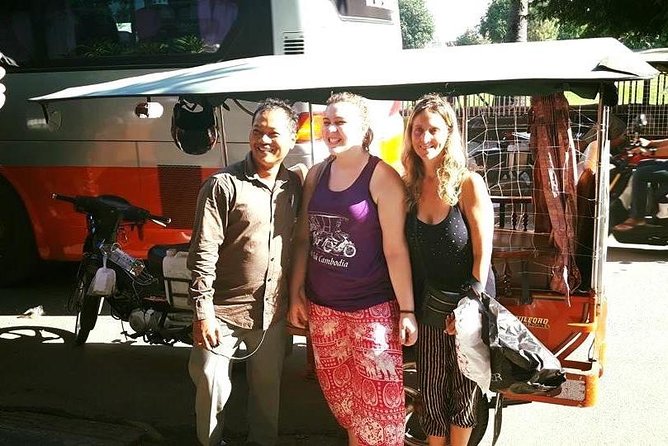
At $84.11 per person for a 7 to 8 hour day, the value here is mostly about what you don’t have to manage. You get private transportation in a tuk-tuk, an English-speaking guide, cold bottled mineral waters, and all entrance fees. That matters in Phnom Penh, where a full-day plan can fall apart if you’re fighting crowds, heat, and transport timing.
You’ll also get hotel pickup and drop-off, which is a real quality-of-life upgrade. In a city where “just go down the road” can turn into “add 20 minutes,” door-to-door pickup keeps the day on schedule and reduces stress for your first time in town.
Also: this tour tends to get reserved ahead. On average, it’s booked about 15 days in advance, so if you have fixed travel dates, don’t treat it like a last-minute idea.
The other practical note: this is a private tour/activity, meaning only your group participates. That usually makes it easier to ask questions, especially during the harder museum stops later in the day.
Royal Palace and Silver Pagoda: When Phnom Penh Shows Its Formal Side
You’ll start in the Royal Palace complex. The Throne Hall is one of the big draws, and what I like is how it’s described in practical, visual terms: the Throne Hall sits to the left of the main entrance, and it’s crowned by a 59-meter tower. Even if you’re not a hardcore architecture person, that kind of landmark detail helps you orient fast and notice the right things.
From there, you shift to Silver Pagoda (Wat Preah Keo Morakot), located in the southern portion of the Royal Palace complex. The name Silver Pagoda is already the hook, but what really helps you enjoy it is the story behind the place. It was formerly known as Wat Uborsoth Rotannaram, because it’s where the King worshiped. That turns the visit from “pretty building” into “purposeful space.”
Time-wise, you’re looking at about an hour at each of these palace-area stops. For many first-timers, that’s a solid amount of time: enough to see key areas without turning the day into a sprint.
Tip for your photos and your sanity: the palace complex can feel bright and reflective, so try to plan your main exterior shots around when the light is less harsh. And because this is a guided visit, ask your guide what to look for before you start shooting. You’ll get better photos with less effort.
Wat Phnom: The One Hill in Town (and the Story That Sticks)
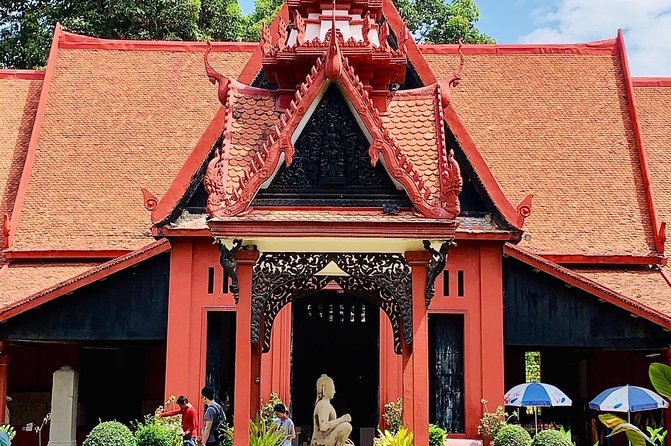
Wat Phnom is the break from palace formality. It sits on a tree-covered knoll about 27 meters high, and it’s the only hill in Phnom Penh. That alone is a useful detail, because you’ll immediately understand what makes this spot different.
The legend attached to Wat Phnom is memorable: the first pagoda on the site was erected in 1373 to house four Buddha statues said to have been deposited there. A guide can make legends feel less like trivia and more like meaning—why people return to the site, how the story shaped local faith, and how Wat Phnom became a kind of city landmark.
You’ll have about 40 minutes here, including the ticket time. That’s enough to walk the grounds, pause for the viewpoint feel, and still stay on schedule for the afternoon.
If you want a simple strategy: use Wat Phnom as your reset button. Before the museums later, take a few minutes to breathe, look at the hill from different angles, and remember the day is not only about tragedies. Phnom Penh also has places of calm and daily devotion.
Tuol Sleng and Choeung Ek: Respectful Context for an Unimaginable Period
This is the part of the day you should treat like a serious commitment. The itinerary moves from the learning to the reality fast—and that’s why a good guide matters.
Tuol Sleng Genocide Museum (S-21)
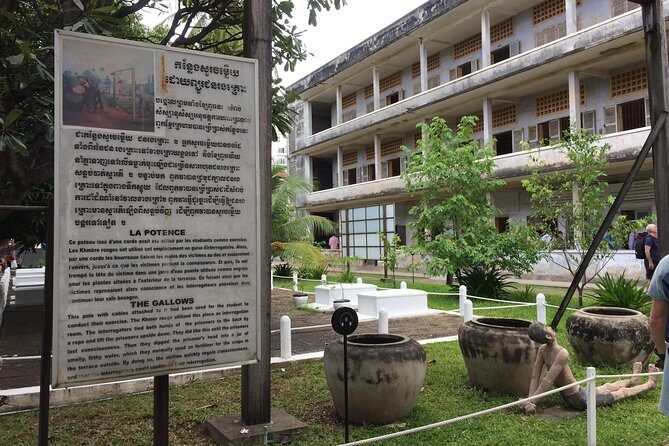
Tuol Sleng is especially direct because the story is tied to a specific site. The school building—Tuol Svay Prey High School—was taken over in 1975 by Pol Pot’s security force and turned into a prison known as Security Prison 21 (S-21).
The museum focuses on what happened there, and it’s presented in a way that connects you to the timeline: this became the largest detention and torture center in the country. You’ll be there about 1 hour 30 minutes—long enough to absorb, but not so long that you feel trapped.
What I found valuable in the way guides handle this stop is tone. A respected guide won’t rush you, and they also won’t turn it into performance. They help you keep your footing as the material gets heavy.
Choeung Ek Genocidal Center (Killing Fields)
Choeung Ek (the Killing Fields area) is another step in the story. Between 1975 and 1978, about 17,000 men, women, children, and infants (including nine westerners) were detained, tortured, and then transported to the extermination area.
This stop gives physical and emotional scale to what S-21 represented. It’s about what happened after the prison system—where the victims ended up, and what the Khmer Rouge regime did on a mass level.
You’ll also have about 1 hour 30 minutes for this area.
How to handle the emotional load
I’ll be blunt: this is not a “light sightseeing” stretch. Plan your expectations. Wear something comfortable. Carry water (you get bottled water on the tour). If you feel overwhelmed, step aside and take a moment. A private tour helps here because you’re not stuck moving with a huge group where you can’t pause.
And one more thing: if your guide has a family connection to the Pol Pot era, you may feel that history in the way they explain details. One review noted that a guide’s family lived through Pol Pot times, and that kind of personal perspective can make the day feel even more grounded and real.
Central Market and the Independence Monuments: Phnom Penh After the Museums
After the genocide museums, the day shifts back toward the city you’ll actually walk through.
Central Market: Art Deco and yellow-bright landmark energy
Central Market is an Art Deco landmark with a bright yellow building completed in 1937. The main dome sits about 26 meters high, with four tall arch-roofed arms branching out diagonally. Even if you don’t shop, it’s worth seeing because it’s one of the most visually distinct buildings in the center.
You’ll spend about 20 minutes here—enough to get the feel of the place and pick up small items if you want. The key is not to expect time to browse like you’re on a shopping spree. Think: quick look, maybe a snack plan for later, then back to the route.
The Independence-era tower and the Norodom Sihanouk Memorial
You’ll also pass two major monuments that help complete the picture of modern Phnom Penh:
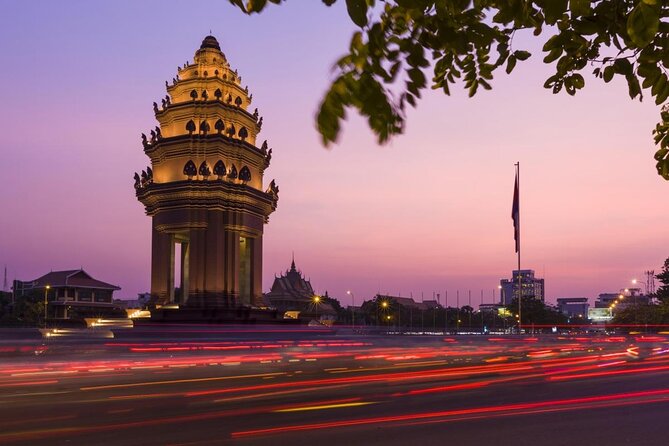
- An Angkorian-style tower built in 1958 to mark Cambodian Independence Day after winning back independence
- The Norodom Sihanouk Memorial, commemorating former King Norodom Sihanouk. You get a sense of scale here: a bronze statue 4.5 meters tall under a 27 meter structure
These stops aren’t meant to be long, but they’re helpful for understanding how the country remembers leaders and national turning points right in the capital.
Lunch, Food Stops, and How Your Guide Helps
Lunch is not included. What you do get is a guide who will recommend a local restaurant. In practice, this is a good setup because Cambodian food varies a lot by neighborhood, and your guide can point you to something that fits your comfort level and the pace of the day.
Here’s the practical mindset I’d use: treat lunch as a reset, not a highlight event. You’ll already be spending hours on foot and in museums. Choose something that’s filling but not overly time-consuming, and don’t plan to squeeze in a second big stop after.
One more tip: ask your guide for a quick strategy before you break—what to order, where to sit, and how long it should take. When you’re running a 7 to 8 hour day, small timing decisions matter.
Timing, Pace, and What 7 to 8 Hours Feels Like
This tour is built to cover a lot without turning into a blur of “next, next, next.” You’ll hit the palace complex first, then Wat Phnom, then the two major genocide stops, and finish with Central Market and monuments.
The time distribution matters. The museums take a big share of the day, which is exactly what it should do. You don’t want to spend ten minutes at a place like Tuol Sleng and feel satisfied. The 1 hour 30 minutes blocks are long enough to do the place justice.
Heat and comfort matter too. A tuk-tuk ride can be slower than a car, especially when traffic thickens, but it also gives you flexibility. You’re in a private vehicle, so your guide can adjust timing to your pace.
If you’re the type who gets tired after museum #2, plan to take it slow, sit when you can, and don’t feel pressured to read every single panel cover to cover.
Guides, Questions, and Why This Tour Gets High Marks
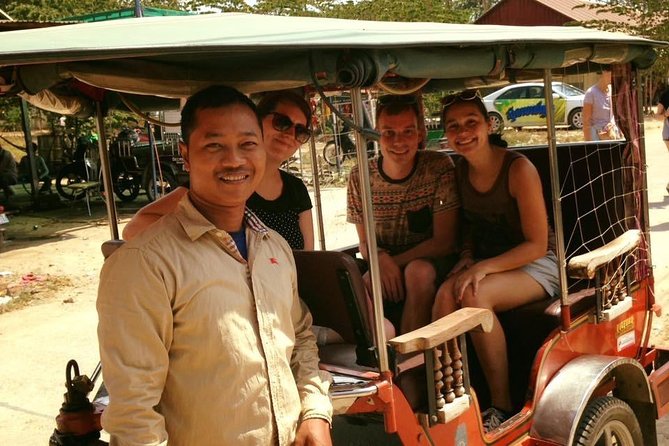
The reviews you’ll see for this kind of day often hinge on one thing: the guide. On this tour, English-speaking guides are part of the package, and that language piece is huge for museums.
I’m especially drawn to the fact that guides bring more than schoolbook facts. One tour review mentioned a guide whose family lived through Pol Pot times. Another highlighted an exceptional guide, Ms Chheang Sreyneang, praised for knowledge and patience with questions. A different review praised Channy as sweet and very knowledgeable.
Even without knowing which guide you’ll get, it signals the same pattern: you’re likely to have someone who can explain the stops in a human way, not just recite facts. For Phnom Penh, that’s the difference between a checklist day and a day where the city starts making sense.
Who Should Book This Phnom Penh Tuk-Tuk Tour
This tour is a strong fit if:
- You want a full-day hit of top sights without designing the route yourself
- You want a guide to connect palace life, temple stories, and modern history
- You’re okay with spending a lot of time at serious historical sites
- You prefer private transport and don’t want to fight for timing on public options
You might think twice if:
- You’re not comfortable with intense history about genocide and torture
- You get overwhelmed easily in museums and need lots of breaks
- You’d rather do a lighter, purely temple-and-market day
Should You Book This Tour?
Book it if you want one day that actually explains Phnom Penh. The biggest “yes” is the combination of private tuk-tuk, hotel pickup and drop-off, and entrance fees included, paired with the exact sites that make the city make sense: Royal Palace, Silver Pagoda, Wat Phnom, and the two major genocide memorials.
Don’t book it thinking it’s just sightseeing. The Tuol Sleng and Choeung Ek stops are the emotional backbone of the day. If you’re ready for that, you’ll come away with a clearer, more honest understanding of Cambodia’s past and how it shapes the present.
If you can, go in with a simple goal: learn enough to respect the places properly, then let the day change you in a good way.
FAQ
How long is the Phnom Penh full-day tuk-tuk city tour?
It runs about 7 to 8 hours.
Is hotel pickup and drop-off included?
Yes. Hotel pickup and drop-off are included.
Is this tour private?
Yes. It’s a private tour/activity with only your group participating.
What’s included in the price?
The tour includes hotel pickup & drop-off, an English-speaking tour guide, private tuk-tuk transportation, cold bottled mineral waters, and all entrance fees.
Is lunch included?
No. Lunch is not included, though your guide will recommend a good local restaurant.
Which key sites are visited?
The tour includes Royal Palace, Silver Pagoda, Wat Phnom, Choeung Ek Genocidal Center, Tuol Sleng Genocide Museum, Central Market, and additional major monuments in Phnom Penh.
Do I get a ticket on my phone?
Yes. The tour offers a mobile ticket.
Are entrance fees included?
Yes. All entrance fees are included in the tour price.
Is the tour weather-dependent?
Yes. It requires good weather. If canceled due to poor weather, you’ll be offered a different date or a full refund.
What is the cancellation policy?
You can cancel up to 24 hours in advance for a full refund. If you cancel less than 24 hours before the experience starts, the amount you paid will not be refunded.