REVIEW · SIEM REAP
Angkor Wat Admission Ticket
Book on Viator →Operated by Green Era Travel · Bookable on Viator
Sunrise at Angkor hates delays. This Angkor Wat admission ticket service delivers your Angkor Archaeological Park pass to your hotel the night before, so you can skip the ticket-office line and get moving toward the temples. I especially like the hotel delivery angle and how it protects your sunrise plan from last-minute logistics.
You also get the kind of timing freedom that Angkor demands. I like that you can choose an 1-, 2-, 3-, or 7-day pass and use it during visiting hours from sunrise to sunset on your own schedule. The main drawback is the trade-off: it costs more than buying directly at the Angkor ticket office, and the process relies on quick admin like sending passport photos on time (and the pass isn’t refundable if plans change).
In This Review
- Key highlights worth caring about
- Skip the ticket office line with hotel delivery timing
- Price and value: paying for convenience (and what you get for it)
- What your pass covers from sunrise to sunset (and why that’s a big deal)
- How to plan Angkor Wat morning: protect your sunrise time
- Angkor Thom: the “last and enduring” capital you can’t rush
- Ta Prohm and the Bayon: the temples that reward your slow walking
- Preah Khan, Neak Pean, and the smaller “watch your step” stops
- Small circuit planning: Pre Rup, Ta Keo, Prasat Kravan, and Ta Som
- Roluos and the earlier temples: Bakong, Preah Ko, and Lolei
- Farther out: Beng Mealea, Phnom Bok, and Prasat Phnom Krom
- Kbal Spean and the Kulen region note you must not miss
- What’s included vs not included (so you don’t get surprised)
- The best way to use it: hire a guide for context, not for speed
- Angkor Visitor Code: respect rules that keep the site sacred
- Should you book this Angkor Wat admission ticket delivery service?
- FAQ
- What pass lengths are available for the Angkor Archaeological Park ticket?
- When will my Angkor Wat admission ticket be delivered to my hotel?
- Do I need to wait at the ticket office on the day I visit?
- Is transportation to Angkor Wat included with this admission ticket?
- Do I need to send passport photos after booking?
- Do children under 12 need a ticket?
- Can I transfer or get a refund for the pass?
Key highlights worth caring about
- Hotel delivery before your next temple day so you don’t burn morning time in queues
- Pass options from 1 to 7 days to match a short stopover or a slow, multi-day circuit
- Your face is on the pass (non-transferable), with frequent checks at entrances
- A big menu of temple stops you can mix across the main and smaller areas
- You avoid ticket-office problems that can happen when you rely on last-minute online access
- Cultural rules are part of the plan: shoulders/knees covered, don’t touch carvings, respect monks
Skip the ticket office line with hotel delivery timing

Here’s the practical magic of this Angkor Wat admission ticket: you don’t need to show up early just to buy the pass. The service delivers the Angkor National Park ticket to your hotel front desk under your name, typically in the evening around 6 pm for use on the following days. The details also note that delivery happens one day before your visit, meaning your pass is valid on the next day after it’s dropped off.
That matters because Angkor has two realities:
1) Dawn is the draw (especially at Angkor Wat).
2) Ticket offices and lines can steal your best light.
When your pass is already waiting at reception, you can focus on the day ahead: get transportation lined up, dress properly, and show up at the temple gate without the stress of figuring out ticket logistics at the last second.
One small but important habit: keep your ticket/pass on you and be ready to show it to ticket controllers. The pass also has a photo of you, so it’s not something you can “share” with someone else in your group.
You can also read our reviews of more tours and experiences in Siem Reap.


Price and value: paying for convenience (and what you get for it)

The listing price is $59.00 per person, but the real way to think about value is the pricing structure behind it. The provided breakdown says the base ticket from the ticket office is cheaper, and this service adds fees for delivery and handling, with examples like:
- 1-Day ticket: $37 + services fees and promotional information
- 3-Day ticket: $62 + services fees and promotional information
- 7-Day ticket: $72 + services fees and promotional information
So yes, you’re paying a convenience premium. But for a lot of visitors, the math is simple:
- If you only have a short window and dawn matters, time is money.
- If the official ticket-buying process is glitchy or you just don’t want to gamble, delivery to your hotel buys peace of mind.
- If you’re tired after traveling and don’t want one more errand, it’s worth it.
Also, the pass experience is built around frequent entry checks. Some people report that they received a lanyard, which makes those repeat checks easier. Even if you’ve traveled enough to be calm in crowds, Angkor is a place where one missed block of time can feel like a whole lost morning.
Bottom line: this is a smart purchase when your itinerary is tight or sunrise is your priority. If you’re staying long, don’t care about peak times, and you want the lowest possible price, buying directly may be the cheaper route.
What your pass covers from sunrise to sunset (and why that’s a big deal)

Once you have the Angkor Archaeological Park ticket, the included terms say you can visit from sunrise to sunset on your own arrangement. That sounds straightforward, but at Angkor it becomes a powerful tool for planning.
With more days, you can spread out temple time and avoid doing everything back-to-back. With fewer days, you can still hit major highlights without wasting hours on admin. Either way, the ticket format is what keeps it workable: it’s the national park access pass for Angkor’s archaeological sites.
A few other practical details that affect your day-to-day:
- The pass is not transferable and includes a photo of the visitor.
- Passes aren’t valid after their printed validity dates.
- You must keep the ticket and show it when requested.
- Drones and commercial filming require permits from the APSARA National Authority.
And for families: children below 12 don’t need a ticket, but they must show a passport to prove age.
How to plan Angkor Wat morning: protect your sunrise time

Angkor Wat is the star, and the schedule usually starts with the early light. The plan here is simple: your pass arrives the day before, so you’re not stuck chasing tickets at dawn.
Angkor Wat itself is listed for about 2 hours. That’s long enough to walk key sightlines and take in the space without sprinting. The sunrise strategy is also why the delivery service is so popular: if you’re traveling from out of town or arriving late the night before, this removes a big uncertainty.
To make that morning go smoothly, treat it like a real event:
- Dress respectfully (shoulders and knees covered).
- Plan for a full walk—comfortable shoes are not optional in Angkor.
- Bring water and pace yourself, because the heat builds fast after dawn.
Also, keep your hands to yourself. The rules ask you not to touch carvings, even when you’re tempted to get a closer look.
Angkor Thom: the “last and enduring” capital you can’t rush

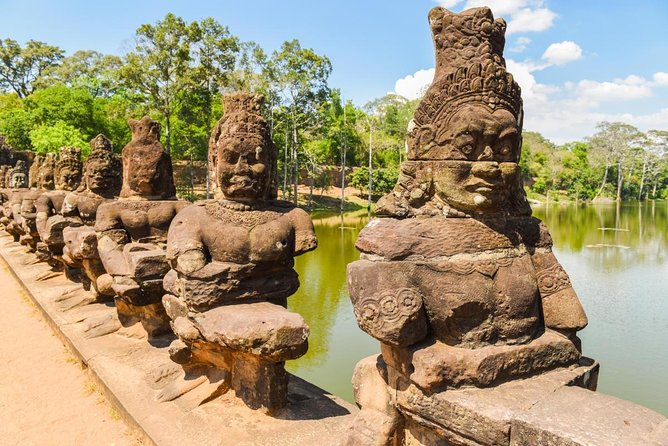
Next up is Angkor Thom, listed at about 1 hour 20 minutes. Historically, it’s described as the last and most enduring capital city of the Khmer empire, established in the late 12th century by King Jayavarman VII.
In practical terms, Angkor Thom feels like a concentrated dose of big-city grandeur: gates, walls, and temple spaces that make you look up more than you expect. You’ll want to move at a steady pace here because the area is visually intense, and it’s easy to get caught in photos and miss the flow.
If you’re working with limited time, I’d prioritize getting the main highlights first, then spend the remaining minutes on the spots that really grab you.






Ta Prohm and the Bayon: the temples that reward your slow walking

Ta Prohm is listed for about 1 hour and is commonly described by its movie association. The key thing to know is that this is a temple where the setting feels part of the attraction—so don’t just rush through. Move slowly enough to notice the way the structure and trees interact.
Then you’ll likely connect to the Bayon Temple, listed at about 1 hour. Bayon is described as richly decorated and built as the state temple of the Mahayana Buddhist King Jayavarman VII. It sits at the center of the Angkor Thom complex, so it often becomes a natural highlight after you’ve already made your way through the capital.
A quick timing warning: if you’re also doing Neak Pean and the smaller surrounding stops, build in buffer time. Angkor isn’t just distance—it’s walking fatigue plus heat plus photo stops. Even with a great pass, your body needs more time than your map.
Preah Khan, Neak Pean, and the smaller “watch your step” stops
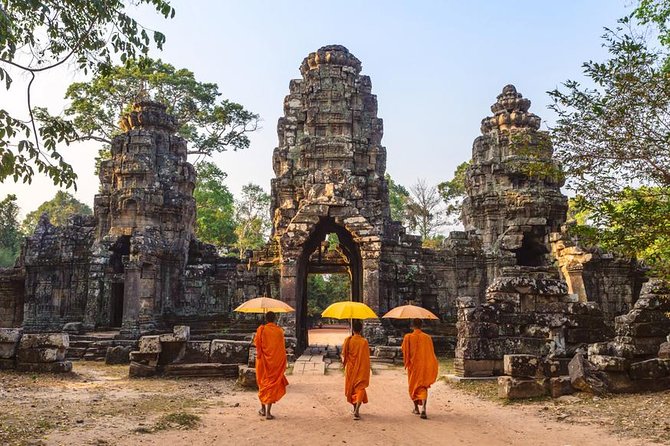
The itinerary includes Preah Khan (about 1 hour 20 minutes) and Neak Pean (about 1 hour). Preah Khan is described as a temple built in the 12th century for Jayavarman VII to honor his father, located northeast of Angkor Thom.
Neak Pean is described as an artificial island with a Buddhist temple on a circular island, connected with Jayatataka Baray and the Preah Khan area. These can feel calmer than the biggest-name sites, but don’t treat them like quick side quests. In bright daylight, smaller details can be easy to miss.
Also included are shorter stops like:
- Baksei Chamkrong (about 30 minutes)
- Srah Srang (Royal Bath, about 20 minutes)
- Banteay Samré (about 40 minutes)
These are great when you want variety without committing to another long walk.
Small circuit planning: Pre Rup, Ta Keo, Prasat Kravan, and Ta Som

If you like a mix of views and architectural details, the “small circuit” style days fit well with this pass. The included time estimates make it clear how to build a route without burning your whole day.
Here are some of the stops and what they add:
- Pre Rup (about 30 minutes): a temple mountain built as a state temple, combining brick, laterite, and sandstone. It’s short but visually rewarding.
- Ta Keo (about 40 minutes): described as possibly the first fully sandstone temple-mountain built by Khmers in the 11th century. Good for people who like early Khmer craftsmanship.
- Prasat Kravan (about 30 minutes): small brick towers on a terrace. Because it’s compact, it works well as a breather.
- Ta Som (about 40 minutes): a late 12th-century temple associated with Jayavarman VII.
- Srah Srang (about 20 minutes): the Royal Bath reservoir area. It’s a time saver between temple climbs.
Also in the mix is Banteay Samré (about 40 minutes), described as an early 12th-century Hindu temple. This kind of stop is a reminder that Angkor isn’t one style or one era—it’s many layers.
Roluos and the earlier temples: Bakong, Preah Ko, and Lolei
Not every great Angkor day is only about the late-peak fame sites. The itinerary includes earlier temple groups in the Roluos area, including:
- Bakong (about 1 hour): described as the first temple mountain of sandstone built by Khmer rulers in the 9th century.
- Preah Ko (about 30 minutes): located at Roluos between Bakong and the road.
- Lolei (about 25 minutes): the northernmost temple in the Roluos group.
These work well if you want a sense of how the Khmer temple style evolved. They’re also a good match for travelers who want big impressions without spending the whole day on the most crowded gates.
Farther out: Beng Mealea, Phnom Bok, and Prasat Phnom Krom
This pass can also support longer, more adventurous days that spread out beyond the main clusters. The listing includes remote stops such as:
- Prasat Phnom Krom (about 2 hours 20 minutes): a temple on a hill about 12 kilometers southwest of Siem Reap.
- Phnom Bok Temple (about 2 hours): a hill in the northeast of Eastern Baray, part of a “trilogies of mountains” setup.
- Beng Mealea (about 2 hours): described as an Angkor Wat period temple around 40 km from the main group, and it’s noted as admission ticket free in the provided details.
Remote temples are where your pass still matters, but your day depends more on transportation planning. Transport to the sites isn’t included in the pass itself, so you’ll need to arrange tuk-tuk, car, or minivan separately.
Also: these longer days are where comfortable shoes matter most. Your legs will do the negotiating, not the schedule on paper.
Kbal Spean and the Kulen region note you must not miss
Kbal Spean is listed as an archaeological site near the Kulen Hills, with a suggested time of 3 hours in one part of the plan and 4 hours in another slot that’s labeled admission ticket free. Treat it as a longer stop either way.
What you should watch closely is what’s not covered by this pass. The additional info states that Phnom Kulen and Koh Ker Temples require separate tickets. So if your dream includes those, don’t assume your Angkor pass automatically covers everything in the wider region.
What’s included vs not included (so you don’t get surprised)
This experience includes:
- Delivery to your hotel front desk under your name (around 6 pm the evening before your next day)
- Access to visit from sunrise to sunset (on your own arrangement)
- The Angkor National Park ticket (1-Day, 2-Day, 3-Day, or 7-Day options)
This experience does not include:
- Transportation to the sites (tuk-tuk, car, minivan, bus)
- A tour guide (available to hire in most languages)
- Foods and drinks
- Travel insurance
- Separate tickets needed for Phnom Kulen and Koh Ker temples
So think of this as buying your access pass plus the smart logistics of having it waiting for you. If you want storytelling, routes, and translation, you’ll need to arrange a guide separately.
The best way to use it: hire a guide for context, not for speed
You can do Angkor solo with the pass, but many visitors get more meaning when they add a guide. The feedback you’ve got here highlights that kind of value through named staff and guides, including people like Mr Ho, Bob, Vantha, and Sok Piseth.
A guide also helps with the tempo. If you’re trying to cover big ground, a good guide can keep you from wasting time standing in the wrong place for the best view. You’ll still walk, but you’ll walk with purpose.
One practical tip that comes up in feedback: if your day is sunrise-heavy, you can lose less time by having the ticket already organized. That’s exactly where this service aims its convenience.
And if you’re working with the service directly, communication can happen quickly through WhatsApp. In a couple of cases, the company reportedly reminded travelers to send required portrait photos after booking.
Angkor Visitor Code: respect rules that keep the site sacred
Angkor isn’t just scenery. The listed code of conduct is straightforward, and it helps you avoid awkward moments at gates:
- Respect monks
- Respect all signs
- Do not give money or candy to children
- Wear respectful clothing with shoulders and knees covered
- Do not litter
- Do not smoke
- Do not touch carvings
- Travelers should have a moderate physical fitness level
If you’re used to temple sites elsewhere, these rules will feel familiar. If you’re not, treat them as part of the experience, not a chore.
Should you book this Angkor Wat admission ticket delivery service?
Book it if:
- Your first priority is sunrise at Angkor Wat, and you don’t want to gamble on ticket lines.
- You have a short stay in Siem Reap and you’re trying to protect your temple time.
- You’d rather pay for delivery and handling than chase a ticket office on arrival day.
- Your group includes people who don’t want extra errands before temple gates.
Skip it and buy direct if:
- You’re traveling slowly, don’t mind ticket-office logistics, and you’re comfortable managing the process yourself.
- You want the lowest possible price and you’re confident you can buy tickets easily on your dates.
- You’re likely to forget the required passport photo step and you don’t want to deal with any admin risk.
My take: if Angkor Wat is on your must-do list and you’re trying to avoid avoidable stress, this is a good way to start. You’re not buying a different temple experience. You’re buying time, reduced friction, and the confidence that your pass is already handled.
FAQ
What pass lengths are available for the Angkor Archaeological Park ticket?
The included options list 1-Day, 2-Day, 3-Day, and 7-Day Angkor National Park tickets.
When will my Angkor Wat admission ticket be delivered to my hotel?
The ticket is delivered to your hotel front desk under your name in the evening around 6 pm, for your visit on the following day. The details also note it’s delivered one day before your visit, so the ticket is valid on the next day after delivery.
Do I need to wait at the ticket office on the day I visit?
No. The main point of this service is to save time by arranging your Angkor ticket pass in advance and having it delivered to your hotel so you can avoid waiting in line at the ticket office on your temple day.
Is transportation to Angkor Wat included with this admission ticket?
No. Transportation to the sites (tuk tuk, car, minivan, or bus) is not included. You can hire a tour guide separately in most languages, but guide service is not included either.
Do I need to send passport photos after booking?
Yes. The information says you should email passport photos of all travelers after booking, and if you do not send the photos you will not be issued a ticket.
Do children under 12 need a ticket?
Children below 12 don’t need a ticket to the national park, but they need to show a passport to prove their age.
Can I transfer or get a refund for the pass?
No. Passes are not transferable (the pass contains a photo of the visitor), and passes are not refundable. Passes also aren’t valid after their printed validity date.