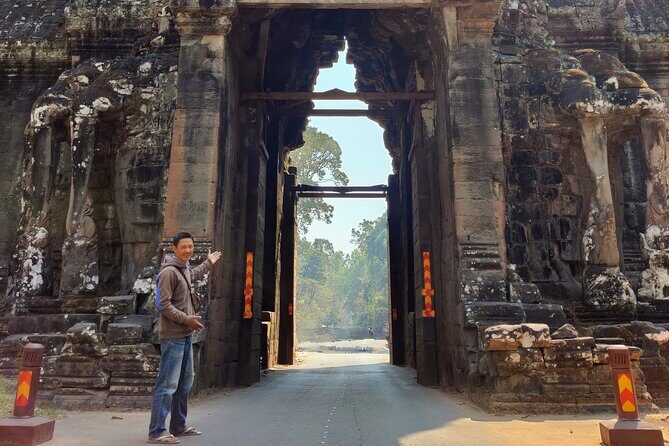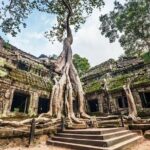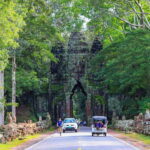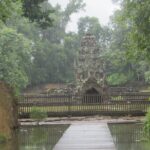
Remote temples change the Angkor feeling. This Grand Circuit route swaps some of the biggest Angkor crowds for calmer, more outlying temple stops, including the island setting of Neak Pean and the tree-tangled gate at Ta Som. I like that the day is paced for real looking, not just speed-walking from one highlight to the next.
Then you cap the day with Banteay Srei, famous for extremely detailed pinkish sandstone carving in a smaller temple area than many of the main sites. My only caution: the tour price covers the guide and transportation, but Angkor admission fees are not included, so budget the Angkor Pass cost separately.
In This Review
- Key highlights worth planning for
- Grand Circuit Temple Route: the calm side of Angkor
- What “less crowded” really means for you
- One more practical benefit
- Price and value: what $50 covers (and what to budget for)
- Why this pricing can still be a good deal
- How the day flows: from Preah Khan to Banteay Srei
- Stop 1: Preah Khan (about 1 hour)
- Stop 2: Neak Pean (about 1 hour, island calm)
- Stop 3: Ta Som (about 1 hour, the tree-entwined gate)
- Eastern Mebon and Banteay Samre: geometry with breathing room
- Stop 4: Eastern Mebon (about 1 hour)
- Stop 5: Banteay Samre (about 2 hours)
- Admission note that affects planning
- Banteay Srei: pink sandstone carvings and the Citadel of Women vibe
- What to do while you’re there
- Mr. K’s guide approach: timing, attention, and context
- Comfort and timing tips for a smooth Angkor day
- The best habit: build in short pauses
- If you’re sensitive to long days
- Should you book the Angkor Grand Circuit and Banteay Srei tour?
- FAQ
- What’s included in the Angkor Grand Circuit and Banteay Srei tour?
- Is the Angkor admission fee included in the tour price?
- How long does the tour take?
- Do I get pickup and drop-off from Siem Reap?
- Is this tour private?
- What’s the cancellation policy if plans change?
Key highlights worth planning for
- A quieter Grand Circuit with more remote temples than the main Small Circuit
- Neak Pean’s artificial island setting and Ta Som’s striking tree-entwined gate
- Eastern Mebon’s five-tower geometry and the way the layout echoes Mount Meru symbolism
- Banteay Srei’s 3D-style carving in soft, pinkish sandstone (the “Citadel of the Women” reputation fits)
- Mr. K’s style of guidance, with thoughtful timing and context that goes beyond the stones
Grand Circuit Temple Route: the calm side of Angkor
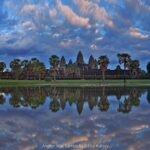
If your Angkor days so far have felt like a theme park with temples, this route can feel like a reset. The Grand Circuit is built around temples that are farther from the main flow, so you get more moments to take your time and notice details. You’ll still see big-name Angkor culture, but the vibe tends to be less frantic, more you-and-your-guide.
This tour also makes sense if you already did Angkor Wat or the typical day-hopping route and want a different angle. Instead of doubling down on the most famous places, you get a sequence of sites that help you understand how the Khmer temple world worked across different periods and styles.
You can also read our reviews of more tours and experiences in Siem Reap.
What “less crowded” really means for you
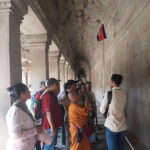
It’s not just fewer people in the photos. When fewer tour groups are stacked at the same time, you can:
- Pause longer to read carvings or wall patterns
- Walk the edges of temple grounds without constantly stepping around others
- Feel less rushed when the light changes during the day
One more practical benefit
A calmer circuit also makes your guide’s explanations easier to absorb. You’re not just hearing facts while you’re being pushed along by the crowd.
Price and value: what $50 covers (and what to budget for)
The tour costs $50 per person, and for that you get a lot that usually adds up separately: English speaking tour guide, pickup & drop-off, an air-conditioned vehicle, and cold drinking water. There’s also a mobile ticket included, which can make entry smoother for what’s included in the experience.
Here’s the reality check: admission isn’t included. The Angkor admission cost noted here is $37 per person for the Under of Angkor Pass. So a more realistic day budget is $50 + the pass fee, plus anything you want to buy for snacks or water beyond what’s provided.
Why this pricing can still be a good deal
If you’re pairing a guide + transportation for multiple temple stops, you’re basically paying to avoid the hardest part of Angkor: timing and logistics. With pickup, you’re not spending your morning figuring out what to do next. And with an air-conditioned ride and cold water, you’ll feel human at the halfway point.
How the day flows: from Preah Khan to Banteay Srei
The route is built for a long, satisfying temple day, roughly 6 to 8 hours. The order matters because you’re moving through a mix of styles—Hindu and Buddhist-linked sites, island settings, and more intimate temple scale.
Your itinerary goes in these main steps:
- Preah Khan (about 1 hour)
- Neak Pean (about 1 hour, admission listed as free)
- Ta Som (about 1 hour, admission listed as free)
- Eastern Mebon (about 1 hour, admission listed as free)
- Banteay Samre (about 2 hours, admission listed as free)
- Banteay Srei (about 2 hours, admission listed as free)
Not all of these stops have the same admission situation, and Preah Khan is specifically shown as not included in the tour admissions. That’s another reason it helps to plan your day around the pass cost.
Stop 1: Preah Khan (about 1 hour)
Preah Khan is a major 12th-century temple built during King Jayavarman VII’s reign, honoring his father. It’s located northeast of Angkor Thom and west of the Jayatataka baray, which gives it a strong sense of place within the Angkor water-and-temple system.
What I’d focus on here:
- The temple’s relationship to the broader Angkor layout, not just the main structures
- Walking time on the grounds so you’re not only seeing the first view from the path
A drawback to consider: since Preah Khan admission is not included, you’ll want to make sure you’ve accounted for the pass cost early. If you show up without that budget in mind, you’ll feel it immediately.
Stop 2: Neak Pean (about 1 hour, island calm)
Neak Pean is an artificial island with a temple on it, in Jayatataka Baray, connected to Preah Khan. The setting is the point: it feels like a pause in the middle of the day, more quiet and reflective than the big temple complexes.
What to look for:
- The idea of the island as part of a sacred water landscape
- How the circular island layout frames the temple space
Practical tip: you’ll often get better photos when you slow down and let the light shift a little. This is one stop where your patience pays back.
Stop 3: Ta Som (about 1 hour, the tree-entwined gate)
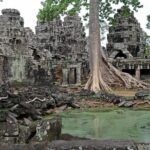
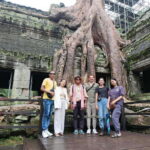
Ta Som is a late-12th-century temple dedicated under King Jayavarman VII. The headline here is the striking gate where trees have taken over, wrapping around the stone and creating a natural frame.
Why this stop matters:
- It shows Angkor’s slower, lived-in story of nature reclaiming architecture
- It’s visually different from the more rigid, symmetrical views of other temples
If you like atmosphere and not just architecture, this is a must-see stop on the route.
Eastern Mebon and Banteay Samre: geometry with breathing room
After Ta Som, the day settles into a pattern: more temple structure, less spectacle, and more room to notice design choices. That’s what makes the Grand Circuit feel more rewarding than a checklist tour.
Stop 4: Eastern Mebon (about 1 hour)
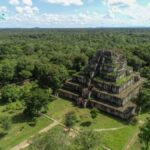
Eastern Mebon is known for its five towers arranged like the numbers on a die, sitting atop a base with three tiers. The whole temple sits inside three enclosures, and the symbolism links to five peaks of mythical Mount Meru.
If you like architecture, this is the stop where your brain can finally relax and enjoy structure:
- Look at the tower grouping first, then step back to see how it sits within the enclosures
- Notice the tiered base and how it changes the silhouette
A small consideration: if you’re exhausted from the earlier walking, this is one place you might still want to move steadily and not rush. The details are there, but they take a moment.
Stop 5: Banteay Samre (about 2 hours)
Banteay Samre is a Hindu temple built in the early 12th century during Suryavarman II and Yasovarman II. It’s located about 400 meters east of the East Baray.
This stop gets time—about 2 hours—which is a gift. When you’re not being rushed, you can walk the grounds and take in how the temple reveals itself from different angles.
Why I think the extra time is valuable:
- Temples like this reward slow looking more than big dramatic photo moments
- You’ll notice more texture and layout if you don’t have a hard stop in your mind
Admission note that affects planning
Banteay Samre is listed with admission marked as free in the tour stop details, but your overall day still depends on the pass and which temples require it. The guide can help you keep it straight, and that’s part of the value.
Banteay Srei: pink sandstone carvings and the Citadel of Women vibe
This is the big finish. Banteay Srei is a 10th-century temple dedicated to Shiva. It’s located near Phnom Dei, roughly 25 km northeast of the main temple group. The reputation is real: it’s known for highly intricate 3D carvings in a soft pinkish sandstone, and its temple scale is relatively miniature compared to many other Angkor sites.
You’ll also get the story detail that makes it feel more specific and less generic. Banteay Srei was not commissioned by a king, but by a Brahman courtier, which adds a human layer to the monument.
And yes, it’s often called the jewel of Khmer art and the Citadel of the Women—because the craftsmanship is delicate, detailed, and so focused that the carving work practically becomes the main event.
What to do while you’re there
Since you only get about 2 hours for this stop, prioritize:
- Carving panels and reliefs (the 3D effect is the point)
- Any areas where stone details look sharp rather than worn away
- Slow steps along the edges so you catch the same artwork from different angles
If you’ve been mostly seeing big monuments all day, Banteay Srei is a satisfying shift. It’s like switching from a big screen movie to a close-up documentary.
Mr. K’s guide approach: timing, attention, and context
The biggest difference on this kind of temple day isn’t just which sites you visit. It’s how you experience them. With an English speaking guide—Mr. K is specifically noted in the experience details—you’re getting more than lecture-style facts.
The guide’s sweet spot is practical storytelling:
- He’s attentive, so you can ask what to focus on
- He knows what temples may matter most to you and how timing affects your visit
- He shares context about Cambodia beyond temple walls, which helps the day feel connected to real life, not sealed-off ruins
You don’t need a super advanced background to enjoy this. The job of a good guide is to translate complexity into clear choices, and that’s exactly the value here.
Comfort and timing tips for a smooth Angkor day
This is a full-temple day with multiple transfers, so comfort matters.
You’ll travel in an air-conditioned vehicle with cold drinking water, which helps you stay functional in the heat. Still, you’ll want to wear light layers, have sun protection, and plan on walking on uneven ground.
The best habit: build in short pauses
Even with good pacing, Angkor can feel like nonstop input. My advice is simple:
- After each major stop, take 2–3 minutes before you rejoin the route
- Let your guide’s explanation land before you jump to the next site
That’s how the calmer circuit actually stays calm.
If you’re sensitive to long days
This tour runs roughly 6 to 8 hours, so if you dislike heat, or you’re coming off another long day of sightseeing, consider setting expectations. The good news: you get breaks through transportation time and the guide-driven flow, and Banteay Srei’s slower, detail-focused atmosphere can feel like a reward rather than another chore.
Should you book the Angkor Grand Circuit and Banteay Srei tour?
Yes, if your goal is to see Angkor with less crowd pressure and more time to notice what’s actually carved and built. This tour is a strong fit if you:
- Already did the most famous Angkor highlights and want a different day
- Want remote-feeling temples without going totally DIY
- Care about craftsmanship, especially the pink sandstone 3D carvings at Banteay Srei
- Appreciate a guide who times visits and adds context beyond the stones
Skip it (or reconsider) if you’re trying to do Angkor on a tight budget and you don’t want to pay admission fees on top of the tour price. The pass fee is an extra line item, and the day is long enough that you’ll want to be sure you’re up for multiple temple walks.
If you’re willing to plan for the admission cost, this is a well-structured Angkor day with a calmer route and a genuinely satisfying final stop.
FAQ
What’s included in the Angkor Grand Circuit and Banteay Srei tour?
It includes an English speaking tour guide, pickup and drop-off, an air-conditioned vehicle, and cold drinking water. The experience also uses a mobile ticket.
Is the Angkor admission fee included in the tour price?
No. Admission fees are not included. The Angkor pass cost listed is $37 per person for the Under of Angkor Pass.
How long does the tour take?
The duration is approximately 6 to 8 hours.
Do I get pickup and drop-off from Siem Reap?
Yes. Pickup and drop-off are included.
Is this tour private?
Yes. It’s listed as private, with only your group participating.
What’s the cancellation policy if plans change?
Free cancellation is available. You can cancel up to 24 hours in advance for a full refund. If you cancel less than 24 hours before the start time, the amount paid is not refunded.