REVIEW · SIEM REAP
1-Day Angkor Wat Cycling Tour: Scenic Bike Adventure in Siem Reap
Book on Viator →Operated by Hok Cambodia Journeys · Bookable on Viator
Pedal-powered sightseeing beats sitting still. This 1-day Angkor route mixes the big famous stops with quieter temples, so you get context and variety without feeling rushed. You also ride through areas that feel like local Angkor—villages and forest paths—not just the main stone corridors.
I especially like the private setup with direct hotel collection and drop-off, which saves you from time-wasting logistics. I also love the practical heat help: you get cool water, cool towels, and local snacks while you’re cycling.
One consideration: the temples aren’t included in the tour price. You’ll need an Angkor Temple Pass (listed as $37 per person) and you should plan for long morning walking inside the complexes too.
In This Review
- Key points at a glance
- Why biking Angkor works better than cramming in fewer stops
- The 8:00 am start: pickup convenience that actually saves energy
- How far you ride: 20 km, mostly flat, with just enough variety
- Temple-by-temple: the ride you’re following (and what each stop gives)
- Angkor Wat: your big start, about two hours inside
- Angkor Thom via the South Gate: the royal-city transition
- Bayon Temple: faces, symbolism, and a quick but focused stop
- Terrace of the Elephants and Victory Gate area: royal power in stone
- Ta Nei Temple: a calmer forest stop with quiet mood
- Ta Prohm: the jungle temple with movie fame
- Prasat Kravan: villages and a more human ending
- Price and value: $49 plus the Angkor Pass equation
- What I’d pack and how I’d ride it comfortably
- Who this tour is best for (and who should think twice)
- Should you book this 1-day Angkor cycling tour?
- FAQ
- How long is the 1-day Angkor Wat cycling tour?
- What does the tour cost, and is the Angkor Pass included?
- What’s included in the price?
- Do I get hotel pickup and drop-off?
- How far do you cycle during the tour?
- Which temple stops are included?
- What time does the tour start?
- What should I wear for the temples?
- What happens if weather is bad?
Key points at a glance
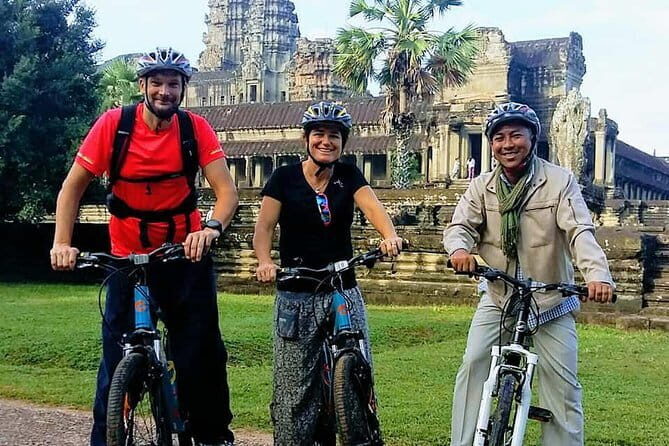
- Private hotel pickup and drop-off means no hunting for buses or meeting points
- About 12 miles (20 km) of mostly flat riding, with some road-and-trail sections
- Big sights plus calmer temples: Angkor Wat, Angkor Thom/Bayon, Ta Prohm, plus Ta Nei and Prasat Kravan
- Heat-friendly extras: cool water, cool towels, and local snacks during the ride
- English guide + safety gear provided, so you’re not managing the route yourself
- Angkor Pass is extra (listed $37 per person), and it’s required for entry
Why biking Angkor works better than cramming in fewer stops
Angkor can be done fast. But fast often means chaotic: you move, stop, stand in lines, and repeat. This tour gives you a smoother rhythm because it’s designed around cycling between temple areas. You still see the signature highlights, but you also get side stops that you might otherwise skip if you’re only doing a short, car-based loop.
The value here is balance. You’re not just chasing photo angles. You’re getting a guided route that groups the sites in a sensible order: start with Angkor Wat, then move into Angkor Thom for Bayon and the terraces, and finish with the jungle-and-forest feeling of Ta Prohm plus quieter temples like Ta Nei and Prasat Kravan.
Private pacing matters, too. With a small group and your own rhythm, you can slow down for details, speed up when the route is open, and avoid the feeling of being dragged from one “must-see” point to another.
You can also read our reviews of more cycling tours in Siem Reap
The 8:00 am start: pickup convenience that actually saves energy

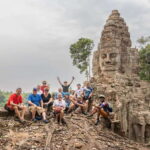
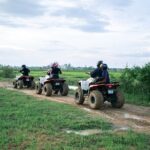
This tour starts at 8:00 am, with bike pickup from your hotel. That detail is bigger than it sounds. In Siem Reap, time spent coordinating transport can steal your best hours. An early start also helps because temperatures build during the late morning and afternoon.
You’ll have a guide and bicycle ready when you’re picked up, plus the tour includes return back to your hotel after cycling the route. That makes the day feel like one organized package instead of a chain of separate tickets and directions.
English guidance is part of the included price, so you’re not stuck translating temple signs while trying to beat the heat. And since the tour is private, the guide can adjust pacing to your comfort level instead of treating everyone like the same speed.
How far you ride: 20 km, mostly flat, with just enough variety
The route is about 12 miles (20 kilometers). The terrain is described as flat, which is a good sign for most visitors. Still, one of the most useful practical notes from real experiences is that the ride can be a mix of road and trail. That’s normal for Angkor cycling: you’ll likely have smooth stretches, then sections where you’re dealing with uneven ground or a narrower lane.
The good news is you’re not expected to do a workout class. The tour is built for sightseeing. You’re given cool water and cool towels, plus local snacks, so you can keep your energy without feeling like you’re rationing everything.
Plan for simple, smart prep:
- Wear light clothing that still follows the rules: shoulders and knees covered.
- Bring sunscreen and sunglasses if you use them.
- Wear closed-toe shoes or sandals with a secure fit for uneven patches.
- Keep some cash for the Angkor Pass, since it’s not included.
Temple-by-temple: the ride you’re following (and what each stop gives)
This day is structured to let you see Angkor in layers: a grand start, a royal-city “inside look,” a jungle-famous complex, then quieter temples and village scenery.
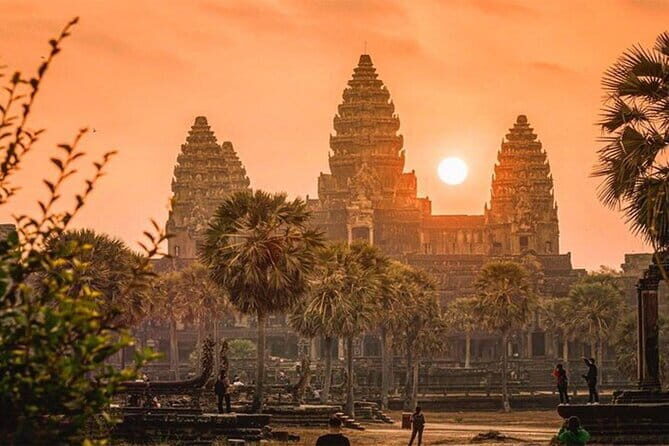
Angkor Wat: your big start, about two hours inside
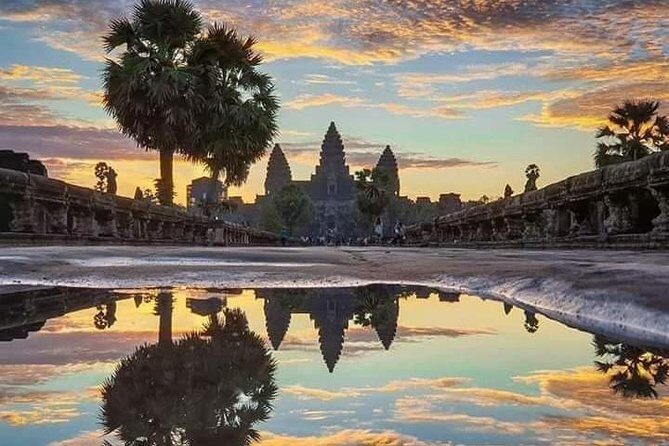
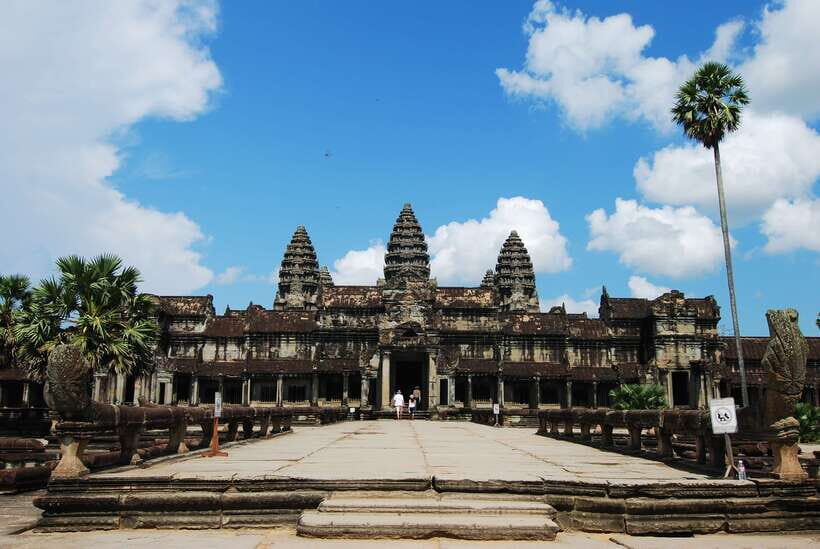
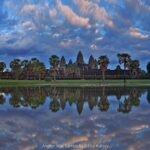
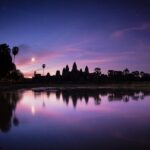
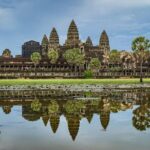
Angkor Wat is the opener, and that’s the right move. After pickup at 8:00 am, you’ll cycle to the Angkor complex and spend around two hours there. This timing helps because Angkor Wat can be overwhelming if you don’t pace it. A guide’s job is to help you connect what you see with why it was built the way it was.
You’re also given time before and after cycling segments to reset. That matters when you’re transitioning from open cycling areas into stone courtyards and long sightlines.
Practical tip: plan to walk more than you think. Even if the ride is flat, temple areas ask for steady feet, photo pauses, and time to look up.
You can also read our reviews of more tours and experiences in Siem Reap
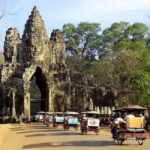
Angkor Thom via the South Gate: the royal-city transition
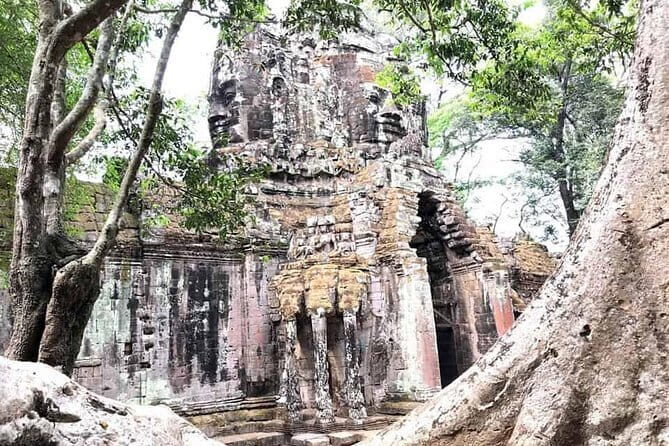
Next comes Angkor Thom, entered via the South Gate. That’s not just a route detail—it changes the feel of the day. Angkor Thom is the old capital city space, and starting through the south entry makes the transition from “single complex grandeur” into “city scale” easier to understand.
You’ll have about one hour in this section. Expect cycling among temple points within Angkor Thom, then breaks for eating. The guide also sets context so you can read the place as a whole, not a checklist of stone shapes.
Bayon Temple: faces, symbolism, and a quick but focused stop
Bayon sits in the center of Angkor Thom, and it’s famous for a reason. Your stop is around 30 minutes, which might sound short until you’re there and realize the power of Bayon is visual. The guide explains what you’re looking at so the time feels efficient instead of rushed.
The temple is described as built by King Jayavarman VII and dedicated to Lord Lokesvara, connected to Mahayana Buddhism. Even if you’re not a history person, this kind of context helps you understand why the design is the way it is.
Terrace of the Elephants and Victory Gate area: royal power in stone
From Bayon, you move into the terrace area: Terrace of the Elephants, described as a royal conference hall in front of the royal palace area. Elephants were used to transfer kings, royal family, and generals between places—so the terrace is tied directly to power and procession.
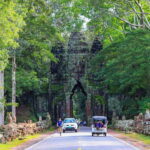
You’ll also see the Victory Gate as part of this Angkor Thom segment. Your time here is about 30 minutes. This is a good portion for photos, plus a good “pause and breathe” segment before the day shifts again toward forest temples.
Ta Nei Temple: a calmer forest stop with quiet mood
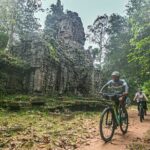
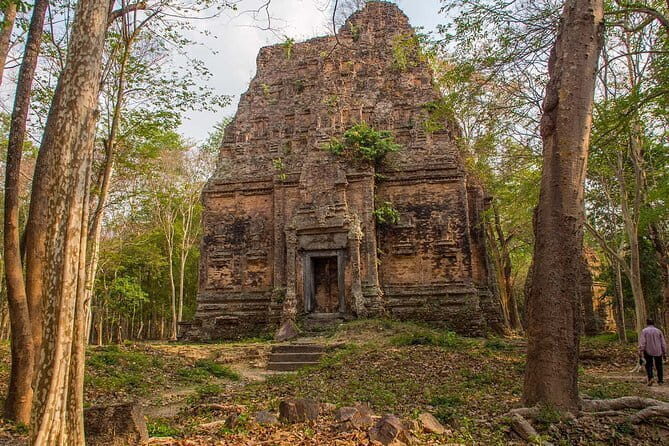
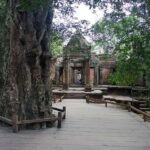
Then you’ll head to Ta Nei, reached by cycling through a small forest path. Your time here is about 30 minutes, and the vibe matters: Ta Nei is described as small and peaceful, and this stop is a breather from the crowds and stone density.
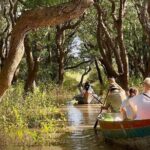
This is where cycling feels especially meaningful. You’re not just walking from temple to temple on foot; you’re moving through changes in scenery—forest shade, narrower paths, and a slower pace that feels more local.
Practical tip: keep your eyes on footing. Forest paths can be uneven, so give yourself a bit of time for careful walking around the temple area.
Ta Prohm: the jungle temple with movie fame
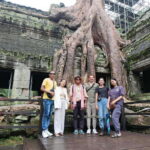
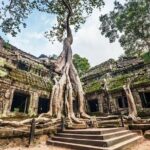
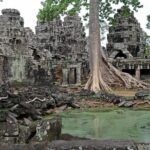
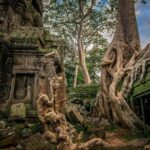
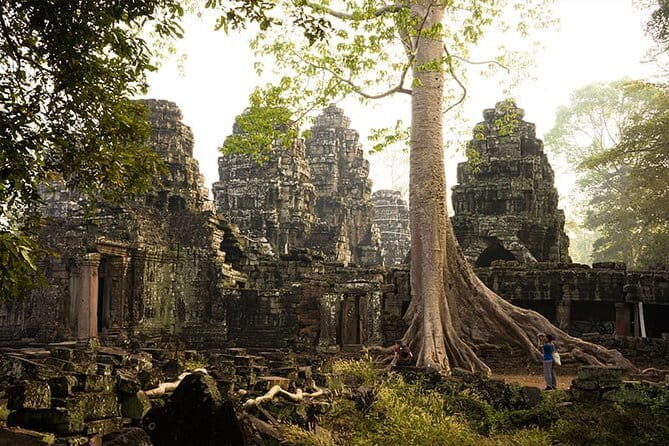
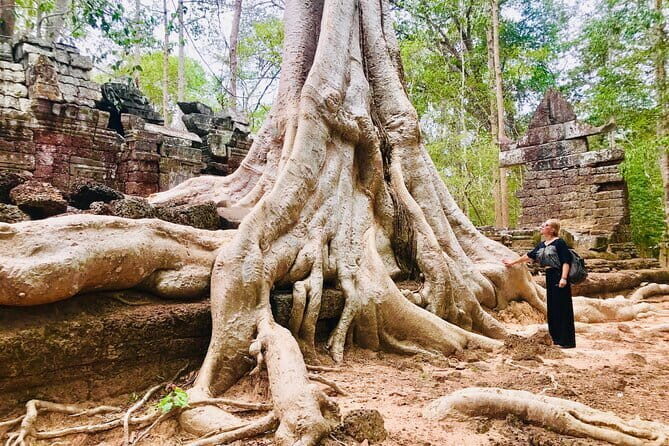
Now for the stop most people have heard about: Ta Prohm. It’s described as the most popular jungle temple in Cambodia, and it’s connected to the Hollywood filming of The Tomb Raiders.
You’ll spend about one hour here. That hour can go fast because the roots, structure, and photo angles tempt you to stop constantly. The guide’s context helps you understand what you’re seeing beyond the cinematic association—why the ruins feel tangled with nature and how that changes the way you experience the site.
If you like temples that feel less staged and more weathered, Ta Prohm is your payoff.
Prasat Kravan: villages and a more human ending
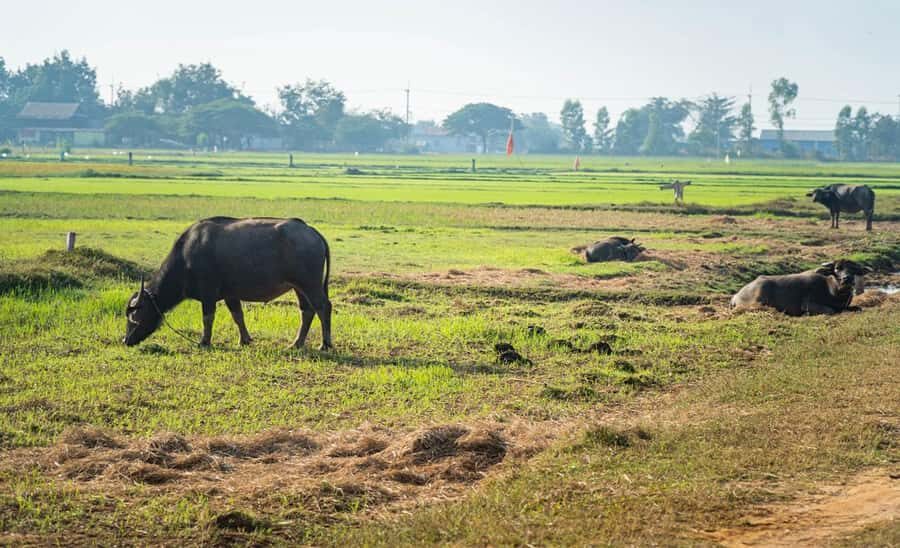
After Ta Prohm, the ride continues through local village areas, and you’ll visit Prasat Kravan for about 30 minutes. This stop is the tour’s shift from big monumental stone to more everyday surroundings.
The idea here is local interaction and understanding daily life and traditions, not just sightseeing. Even if you keep your conversations brief, the environment makes the day feel less like a theme park and more like a living region you’re passing through.
Then it’s back on the bike to cycle to your hotel.
Price and value: $49 plus the Angkor Pass equation
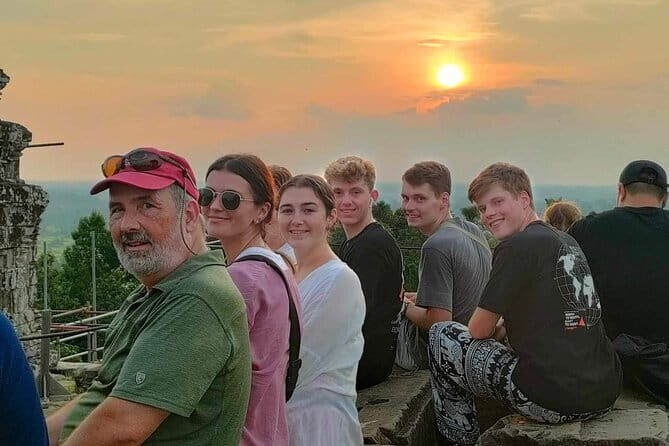
The tour price is listed as $49.00 per person. That looks like a bargain until you do the complete math, because the Angkor entry ticket isn’t included.
The Angkor Temple Pass is $37 per person and is listed as your responsibility. So your likely baseline for the day is $86 per person before meals and tips. Accommodation isn’t included, but pickup and drop-off are.
Is it good value? For most people, yes—mainly because you’re paying for three things:
- An English guide who helps you make sense of the ruins while you’re there
- The bicycle and safety gear, plus the route planning that gets you between key areas without you managing directions
- The heat-friendly extras (cool water, cool towels, snacks) that help keep the experience comfortable
If you were to self-arrange bike rentals, navigation, and a guide separately, you’d likely spend more effort and money. If you already have the pass and know you want a day that’s active but not punishing, the package makes sense.
One more detail: this tour is private and includes group discounts if applicable to your booking. Also, it uses a mobile ticket, which can reduce day-of hassle if your device is charged.
What I’d pack and how I’d ride it comfortably
Even with water and towels provided, your body still needs a little prep. Here’s what makes the biggest difference on a hot Angkor cycling day:
- Clothes that cover shoulders and knees (required by the tour guidance)
- Light layers so you can handle sun and shade changes during forest segments
- Sunscreen, sunglasses, and a hat if you use them
- A small refillable water bottle just in case you want more than the included supply
- Comfortable footwear for short walks and uneven areas
Also, don’t overplan your pace. This is a sightseeing ride, not a race. If you’re unsure, tell the guide at the start that you want more time for photos or slower breaks. Private format means you’re not locked into a rigid group schedule.
Who this tour is best for (and who should think twice)
This is a strong fit if you:
- Want Angkor highlights without spending the day stuck in a vehicle
- Like active travel that’s still relaxed enough to enjoy temple details
- Appreciate a guide explaining what you’re seeing at each stop
- Enjoy a mix of signature sites and calmer spaces like forest temples
It may be less ideal if you:
- Can’t handle cycling around 20 km over mixed road/trail segments
- Want a fully passive day with minimal walking inside temples
- Are not able to wear clothing covering shoulders and knees
Most travelers can participate, and the safety equipment is provided. Still, cycling days always ask for a basic comfort level with riding and walking.
Should you book this 1-day Angkor cycling tour?
Book it if you want a day that feels organized and enjoyable: early start, guided context, and a bike route that helps you cover a lot without feeling like you’re sprinting.
I’d especially recommend it if you enjoy the idea of seeing both the famous lineup and the quieter temple moods, like Ta Nei’s forest calm and the village-area finish at Prasat Kravan. The combo of Angkor Wat, Angkor Thom/Bayon, and Ta Prohm is the “greatest hits,” but the lesser-visited stops make the day feel more personal.
Skip it only if you know you can’t comfortably cycle the distance and pace, or if you really prefer a fully sedentary tour style.
FAQ
How long is the 1-day Angkor Wat cycling tour?
It runs about 6 to 7 hours total.
What does the tour cost, and is the Angkor Pass included?
The tour price is $49.00 per person, and the Angkor Temple Pass is not included. The Pass is listed as $37 per person and is paid separately.
What’s included in the price?
The tour includes a bicycle, an English tour guide, cool water and towels, and local snacks.
Do I get hotel pickup and drop-off?
Yes. The guide collects you from your hotel and cycles with you through the route, then drops you back at your hotel.
How far do you cycle during the tour?
You’ll cycle around 12 miles (20 kilometers) over flat terrain, with some road and trail sections possible.
Which temple stops are included?
The stops are Angkor Wat, Angkor Thom (via the South Gate with Bayon, Elephant Terrace, and Victory Gate area), Bayon, Terrace of the Elephants, Ta Nei, Ta Prohm, and Prasat Kravan.
What time does the tour start?
The tour starts at 8:00 am.
What should I wear for the temples?
You should wear clothes that cover your shoulders and knees.
What happens if weather is bad?
The experience requires good weather. If it’s canceled due to poor weather, you’ll be offered a different date or a full refund. Free cancellation is available up to 24 hours before the experience start time for a full refund.