REVIEW · SIEM REAP
Siem Reap Angkor Wat Sunrise or Sunset Explore The Temples +Guide
Book on Viator →Operated by Siem Reap Tour Trails · Bookable on Viator
This is the kind of Angkor day that feels organized. You’re not just hopping between ruins. You’re moving through Angkor Wat, then the quieter temples like Banteay Kdei, and ending with big-hitting sights inside Angkor Thom like Bayon and the Tonle Om/South Gate area.
I like two things most: first, the built-in convenience of hotel pickup and drop-off plus an air-conditioned mini-bus; it saves you from the usual logistics headache. Second, the route mixes the famous spots (Ta Prohm and Bayon) with a less-crowded stop (Banteay Kdei), so your photos and your attention don’t feel repetitive. The main consideration is that entrance fees aren’t included, so you’ll need to budget for tickets on top of the $18 price.
In This Review
- Key Highlights Worth Planning For
- What the $18 Price Covers (and What It Doesn’t)
- Pickup, Mini-Bus Comfort, and a Day That Runs on Temple Time
- Angkor Wat at Sunrise or Sunset: The Best Use of Your 3 Hours
- Banteay Kdei’s Citadel of Chambers: Why the Quieter Stop Works
- Ta Prohm’s Jungle Temple Effect: Giant Roots and Sturdy Time
- Bayon Temple in Angkor Thom: 54 Towers and 200+ Faces
- Tonle Om (South Gate of Angkor Thom): The Causeway Moment
- Guide Quality Is the Real Difference on This Kind of Route
- Who This Tour Suits Best (and Who Might Want Something Else)
- Quick Booking Reality Check: What to Expect on the Day
- Should You Book This Angkor Wat Sunrise or Sunset Temples Tour?
- FAQ
- How long is the Siem Reap Angkor Wat sunrise or sunset temples tour?
- What’s included in the tour price?
- Are entrance fees included?
- What temples are included on the itinerary?
- Is food included?
- Do I need to bring anything for the tickets?
- What’s the group size limit?
- Is pickup from my hotel included?
- What happens if weather is bad?
- Can I cancel for a full refund?
Key Highlights Worth Planning For
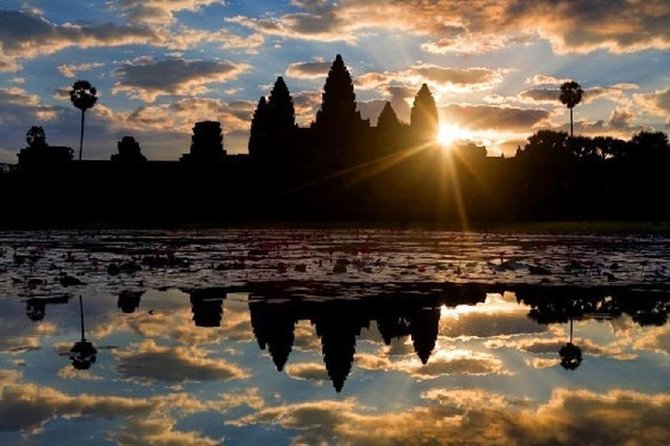
- Angkor Wat timed for sunrise or sunset with a long enough stop (about 3 hours) to find your moment
- Banteay Kdei gets real air time (about 1 hour) with carvings and serene corridors, away from the heaviest crowds
- Ta Prohm’s tree-root look comes with extra time (about 2 hours) so you can slow down and not feel rushed
- Bayon’s 54 towers and 200+ stone faces are the centerpiece of Angkor Thom, with time to actually see the details
- Tonle Om/South Gate adds drama at the end, with a causeway lined by gods and demons statues
- Small-group feel up to 25 people, plus a professional English-speaking guide, water, and transportation
What the $18 Price Covers (and What It Doesn’t)
At $18, this is priced like a budget-friendly way to do the Angkor classics without doing the whole thing alone. The big value is what’s included: mini-bus transportation, an English-speaking tour guide, drinking water, and pickup/drop-off from your Siem Reap hotel. You also get a mobile ticket, which helps keep things simple on the day.
What’s not included is equally important. Entrance fees are listed as not included, and you’ll be asked to purchase your ticket for the Angkor Archaeological Park on arrival at stop 1. In practice, that means your final cost will be the $18 plus the entrance ticket you pay separately.
If you’re already comfortable paying site admission and you want a guided route to save time, this is a strong setup. If you hate paying add-ons, then you’ll want to account for those tickets before booking so you’re not surprised later.
You can also read our reviews of more tours and experiences in Siem Reap.
Pickup, Mini-Bus Comfort, and a Day That Runs on Temple Time
This tour runs for about 8 hours 30 minutes. The schedule is built around temple visiting blocks, not a flexible wander day. You start with pickup from your Siem Reap hotel and head to the Angkor Archaeological Park by air-conditioned minibus.
That matters more than it sounds. Angkor days can feel long when you’re constantly moving between locations, waiting, and re-orienting. Having transportation handled and a guide doing the flow means you can focus on what you came for: seeing carvings, towers, courtyards, and the different temple styles.
The tour includes drinking water, which helps with the long hours. It won’t replace all personal needs (you’ll still want to plan for comfort), but it removes one everyday burden from your day.
Angkor Wat at Sunrise or Sunset: The Best Use of Your 3 Hours
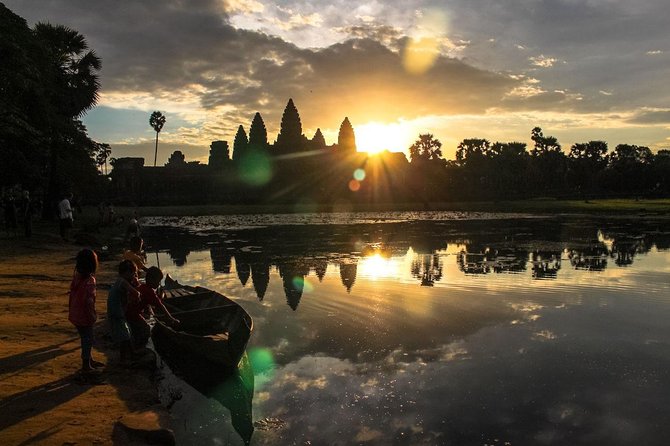
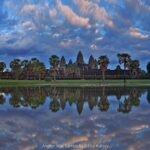
The day begins with Angkor Wat, timed for the experience that the title promises: sunrise or sunset. You’ll get an early morning pickup and travel to the park, then you’ll purchase your entrance tickets at stop 1 (admission not included).
You’re given about 3 hours at Angkor Wat. That’s a lot of time for one temple, and it’s the right amount for doing this properly. Sunrise and sunset at Angkor Wat aren’t just about being present at a specific minute. You’ll want time to move around galleries, look closely at intricate carvings, and soak in the scale of grand architecture and sacred sanctuaries without feeling like you’re sprinting.
A practical note: Angkor Wat tends to be the anchor of the whole itinerary. If your day is only going to feel like one big moment, this is it. The guide’s job here is to keep you oriented and help you use the light window effectively, so you’re not guessing where to stand when the sun shows up.
Banteay Kdei’s Citadel of Chambers: Why the Quieter Stop Works
After Angkor Wat, you move to Banteay Kdei, a Buddhist monastery from the late 12th century. The name is tied to the idea of a Citadel of Chambers, and you can feel that in the temple’s calmer rhythm: serene corridors and unique carvings, without the same pressure cooker feeling as the most famous structures.
You get about 1 hour here. For a lesser-known temple, that time is the difference between rushing through and actually noticing. The carvings and corridors are the point, and 1 hour lets you slow down enough to see patterns rather than just snap a single photo and move on.
This is one of my favorite parts of the itinerary concept. When a day is built only around headline ruins, everything starts to blur. Banteay Kdei breaks the pattern with a different mood—still impressive, just more peaceful.
Ta Prohm’s Jungle Temple Effect: Giant Roots and Sturdy Time
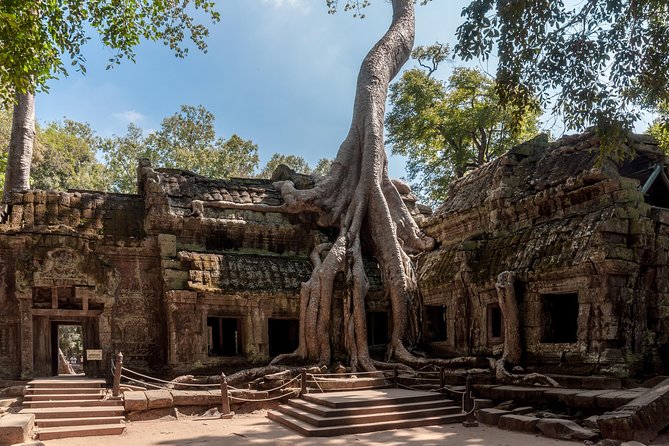
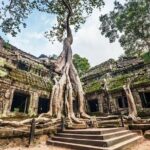
Next up is Ta Prohm, the famous jungle temple. This is where the big visual happens: massive tree roots growing over the ruins. The tour description also emphasizes an important detail—the temple was left largely unrestored, which creates that jungle temple effect you came to see.
You’ll spend about 2 hours at Ta Prohm. That’s useful because this temple is photogenic from multiple angles. If you only had 30 or 45 minutes, you’d likely spend most of your time waiting, taking one wide shot, and then wishing you had more time to notice smaller carving lines and wall textures.
This stop is also where timing and movement matter. Ta Prohm’s visual appeal can pull you in every direction. With a guide and a defined time block, you can actually enjoy the place instead of spending the visit bouncing between the same photo spots.


Bayon Temple in Angkor Thom: 54 Towers and 200+ Faces
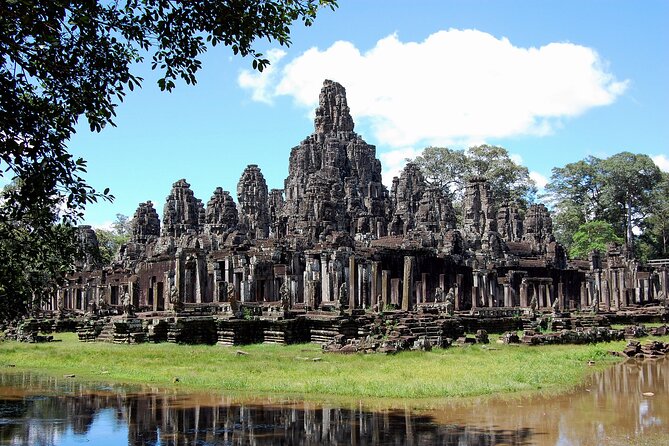
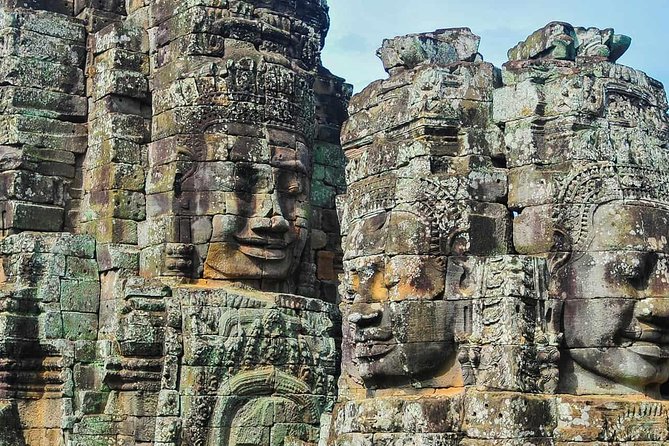
The itinerary then goes to Bayon Temple, inside the heart of Angkor Thom. Bayon is known for 54 towers, each decorated with four massive stone faces of Avalokiteshvara. The description also highlights that you’ll see 200+ stone faces smiling from the towers.
You get about 2 hours here, which is the right call. Bayon isn’t just one view. The carvings and face panels pull your attention in a loop, and the towers create repeating patterns that reward slower looking. The tour also notes the carvings depict scenes of daily life and historical events, which is part of what makes Bayon more than a pretty silhouette on a postcard.
One more thing I appreciate about giving Bayon real time: it helps you understand how Angkor Thom feels like a world, not just a single temple. Bayon is the center, and the rest of your stops feed into that feeling.
Tonle Om (South Gate of Angkor Thom): The Causeway Moment
You finish with Angkor Thom South Gate, also described as Tonle Om Gate. This is where the day ends on a dramatic entrance scene.
You’ll stop at the gate area (about 30 minutes), which is likely too short to treat like a full temple visit—but perfect as a closing highlight. The tour description points to a grand entrance with a causeway lined with statues of gods and demons. The gate is crowned with four giant stone faces, similar to the face style you’ll recognize from Bayon.
This kind of stop works best when you treat it like a breather and a photo payoff. You get the symbolism and the scale without needing hours of focus.
Guide Quality Is the Real Difference on This Kind of Route
This tour is built around a professional English-speaking guide, and the guide quality shows up clearly in the feedback patterns associated with this experience. The name Prem appears in praise for being qualified, with immense knowledge of the history and the buildings. Another name, Chamrong, comes up connected to how smoothly the overall plan and dining setup ran.
I can’t guarantee who you’ll get, but the important takeaway for your decision is that this isn’t a “driver only” day. It’s designed around explanations—why temples look the way they do, what you’re seeing, and how the sights connect.
If you care about understanding what you’re looking at, that’s a big part of the value.
Who This Tour Suits Best (and Who Might Want Something Else)
This works best for you if:
- You want transportation, guide, and water handled for an Angkor day
- You want a route that mixes famous ruins with at least one calmer stop (Banteay Kdei)
- You like a structured timeline with time blocks at each major temple
It may be less ideal if:
- You want a fully DIY pace with no set order
- You strongly prefer entrance fees included in the ticket price
- You’re expecting long free time at Angkor Wat beyond about 3 hours
Also, this is designed for good weather. The experience notes it requires good weather, and if it can’t run due to poor weather, you’ll be offered a different date or a full refund. So if you’re booking for a time when conditions look shaky, keep flexibility in mind.
Quick Booking Reality Check: What to Expect on the Day
The tour uses mobile tickets, so you’re not stuck with printed paperwork. Confirmation happens at booking, and the group size tops out at 25 travelers, which is large enough to feel social but small enough that you shouldn’t be lost in a crowd the whole time.
The order of stops is packed, and the visit lengths are temple-sized: around 3 hours at Angkor Wat, 1 hour at Banteay Kdei, 2 hours at Ta Prohm, 2 hours at Bayon, and 30 minutes at Tonle Om South Gate. That adds up to a complete Angkor sampling, not a slow meander.
If you want one “big day” that hits the headline sights plus a quieter temple, this does that.
Should You Book This Angkor Wat Sunrise or Sunset Temples Tour?
Yes, if you want a guided, structured Angkor day that keeps the logistics easy and still gives you time at the key temples. The combination of pickup/drop-off, an English-speaking guide, and a route that includes both Ta Prohm and Bayon plus the quieter Banteay Kdei is a smart value mix.
Before you book, do two sanity checks:
- Plan for entrance fees since they’re not included in the $18 price.
- Choose sunrise or sunset based on your energy level, since the day starts early and runs about 8.5 hours.
If that fits how you like to travel, this is a very practical way to see a lot of Angkor without losing your whole day to navigation.
FAQ
How long is the Siem Reap Angkor Wat sunrise or sunset temples tour?
It runs for approximately 8 hours 30 minutes.
What’s included in the tour price?
The tour includes transportation (mini-bus), a professional English-speaking tour guide, drinking water, and pickup and drop-off.
Are entrance fees included?
No. Entrance fees are not included, and you’ll purchase them for Angkor Wat (Angkor Archaeological Park) during the tour.
What temples are included on the itinerary?
You’ll visit Angkor Wat, Banteay Kdei, Ta Prohm, Bayon Temple, and Angkor Thom South Gate (Tonle Om Gate).
Is food included?
No. Food is not included.
Do I need to bring anything for the tickets?
The tour provides a mobile ticket, but admission tickets are not included, so you’ll need to handle entrance fees separately.
What’s the group size limit?
The tour has a maximum of 25 travelers.
Is pickup from my hotel included?
Yes. Hotel pickup is included, and you’ll also get drop-off afterward.
What happens if weather is bad?
The experience requires good weather. If it’s canceled due to poor weather, you’ll be offered a different date or a full refund.
Can I cancel for a full refund?
Yes. You can cancel up to 24 hours in advance for a full refund. If you cancel less than 24 hours before the start time, the amount paid is not refunded.