Three reservoirs, one sacred day. This private tour strings together some of the most atmospheric temples in the Angkor area, from the UNESCO-listed Preah Khan to Neak Pean, built on an artificial island in a reservoir. You’ll also get a forest-temple stop at Ta Som, plus East Mebon and Pre Rup, with your guide explaining what you’re seeing and how it connects to Cambodian life and faith.
I love how the route keeps a steady rhythm without cramming your day full of one-mile detours. I also love the value math: most stops on the plan are free to enter, so you only pay the big ticket once. One thing to plan for is the separate Preah Khan entrance fee (not included in the $41 rate), which changes the total you’ll spend.
In This Review
- Key things I’d bet on (before you book)
- A Siem Reap temple route that actually fits 4–5 hours
- Private transport, hotel pickup, and a guide who can make stones make sense
- Stop 1: Preah Khan (Royal Sword) and why it kicks off the day
- Neak Pean on an artificial island: the reservoir temple moment
- Ta Som: a short forest-temple stop that adds texture
- Eastern Mebon and Pre Rup: water history to brick-and-stone spectacle
- Eastern Mebon (East Mebon)
- Pre Rup
- Srah Srang: the quick pool stop with serious purpose
- Budget and value: how the $41 price turns into your real total
- Timing tips that keep the day comfortable
- Who this tour is best for
- Should you book Preah Khan, Neak Pean and Pre-Rup?
- FAQ
- How long is the Preah Khan, Neak Pean and Pre-Rup private tour?
- Is hotel pickup and drop-off included?
- What’s included in the tour price?
- Do I need to pay entrance fees?
- Is this tour private or shared?
- Is there a cancellation option if plans change?
- Who is the tour best for?
Key things I’d bet on (before you book)
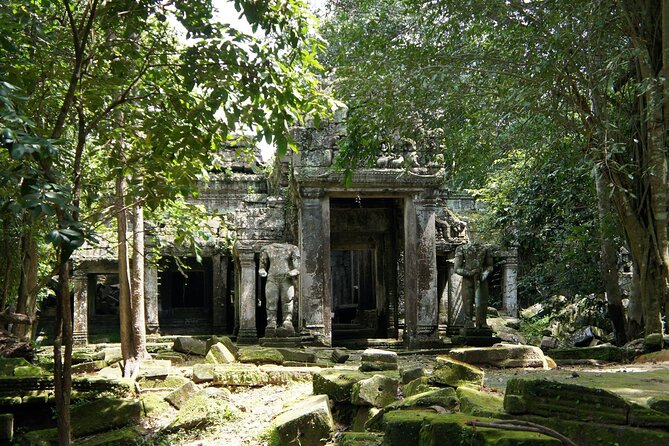
- UNESCO-listed Preah Khan anchors the tour and sets the context for the rest of the sites
- Neak Pean’s reservoir island setting is visually striking and easy to understand with a guide
- Ta Som gives you a shorter, “forest texture” moment without turning the day into a hike
- Several free-entry temples help keep your total cost under control
- Private air-conditioned transport and bottled water make the schedule feel relaxed
A Siem Reap temple route that actually fits 4–5 hours
This is a half-day plan, roughly 4 to 5 hours, and the timing is built to feel like a tour you can enjoy instead of a marathon. The sightseeing portion is paced across six stops, with about an hour at Preah Khan, about an hour at Neak Pean, and shorter visits at Ta Som (about 30 minutes), Srah Srang (about 20 minutes), plus around 40 minutes each for East Mebon and Pre Rup.
That matters because Angkor-area temple sites can blur together if you’re not careful. Here, the order helps you build an “on-map” understanding: you start with a major complex (Preah Khan), then move to linked water-temple ideas (Neak Pean and surrounding reservoir history), then shift toward the next cluster (Ta Som, East Mebon, and Pre Rup). You’re not just checking boxes—you’re learning the pattern.
If you’re doing Angkor Wat on day one (or you’ve already hit the big-ticket highlights), this makes a smart follow-up. You’ll get plenty of classic temple atmosphere without feeling like you’re repeating the same scenery over and over.
Private transport, hotel pickup, and a guide who can make stones make sense
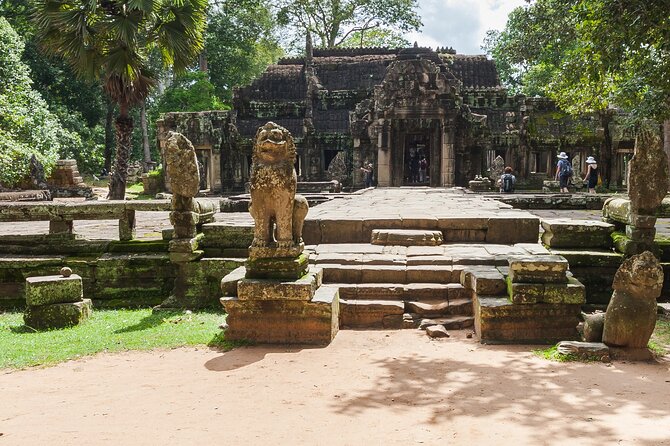
You’re picked up and dropped off at your hotel, and you ride in a private air-conditioned vehicle with bottled water. That’s not just comfort. In Siem Reap, heat and timing can quietly drain your energy, and private transport helps you avoid the tug-of-war of shared schedules.
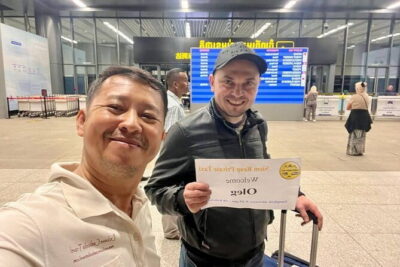
Most important is the guide. This tour includes an English-speaking tour guide, and one name that shows up for strong service is Sim. When Sim is your guide, the focus is practical: explanations that tie temple features to why they were built, plus helpful guidance so you know what to look for as you move between sites.
This kind of guided pacing is especially valuable with Angkor temples. Some of the structures are fragmentary, and it’s easy to miss the point if you’re looking only for big, obvious carvings. A good guide helps you connect the layout, the setting, and the symbolism.
Stop 1: Preah Khan (Royal Sword) and why it kicks off the day
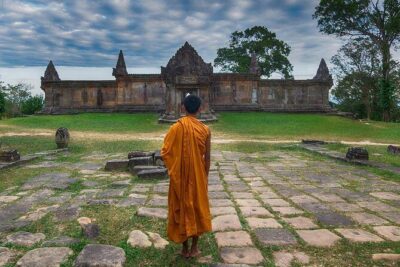
Preah Khan is a major Angkor-area temple complex built in the 12th century by King Jayavarman VII in honor of his father. It’s also listed as a UNESCO site, which is a good sign that you’re starting with something foundational to understand the rest of the Angkor story.
The temple is described as having a flat design and a plan made of successive rectangular galleries. In plain terms: you’re walking through a sequence of spaces that feel like rooms inside an idea. With an experienced guide, that layout becomes more than geometry—it becomes a way to read how power, religion, and community were arranged in the Khmer world.
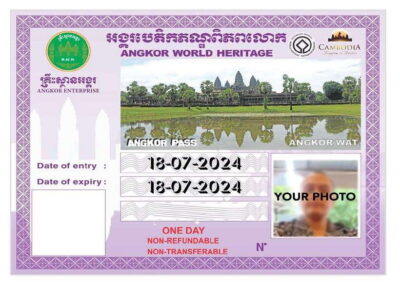
Plan for about one hour here. Also, note the practical detail: entrance fee for Preah Khan is not included. The listed entry cost is $37 per person. Budgeting this up front is the easiest way to keep the rest of the trip feeling smooth.
Neak Pean on an artificial island: the reservoir temple moment
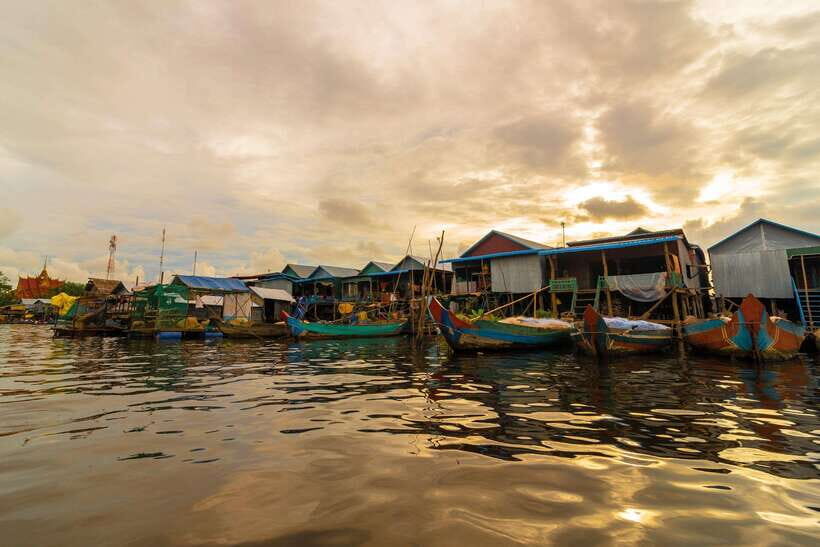
Next up is Neak Pean (also known as Neak Poan), famous for the idea behind the “entwined serpents.” This temple was built on an artificial island in the middle of a reservoir connected to Preah Khan. The reservoir size given is about 3.5 km by 1 km, which helps you picture how big this water landscape was in its original setting.
You’ll spend about one hour at Neak Pean, and entry here is listed as free. The big advantage of pairing Neak Pean with Preah Khan right before it is that you can connect the dots. Instead of treating Neak Pean as an isolated stop, you understand it as part of a bigger water-and-sacred-landscape concept linked to the larger complex.
This is also one of the easiest stops to enjoy with a guide, because the setting does a lot of the talking. You can look at the island placement and the relationship to water, then let your guide explain what that placement likely meant.
Ta Som: a short forest-temple stop that adds texture
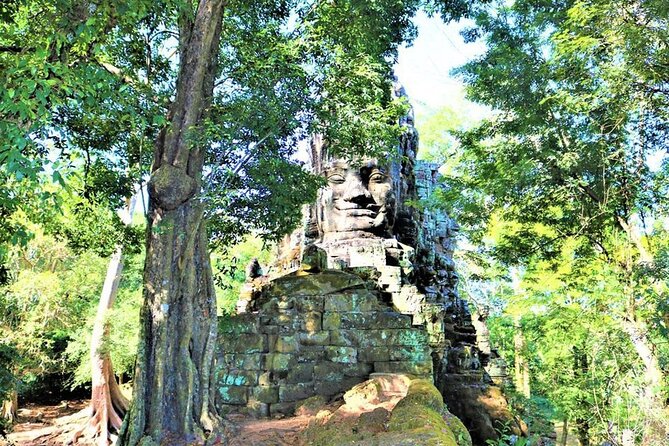
Ta Som is smaller, but it’s a great palate cleanser between the “big layout” temples. It was built at the end of the 12th century for King Jayavarman VII, and it sits near the Angkor Thom area—north east of Angkor Thom and just east of Neak Pean.
Your time here is about 30 minutes, and entry is also free. That shorter stop works well because Ta Som is more about atmosphere than marathon exploration. Even if you’re not a detail-hunter, the idea of a temple tucked into a more forested feeling area makes the tour feel varied.
The practical win: you get variety without losing momentum. If you’ve already walked for hours, a 30-minute stop can keep your legs happy while still giving you that “different angle” temple experience.
Eastern Mebon and Pre Rup: water history to brick-and-stone spectacle
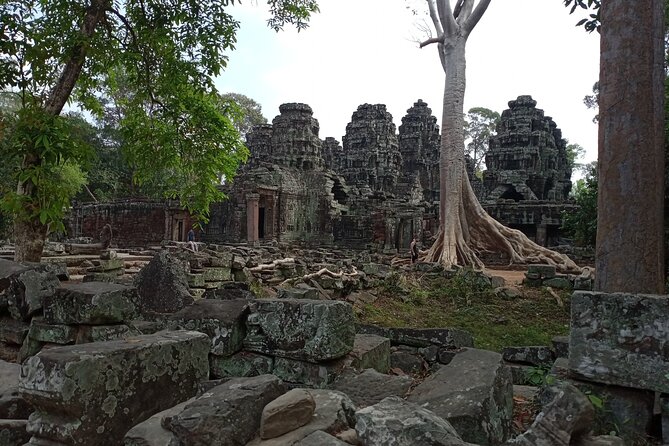
After the Neak Pean and Ta Som pairing, the route shifts toward two more major temple experiences: Eastern Mebon and Pre Rup.
Eastern Mebon (East Mebon)
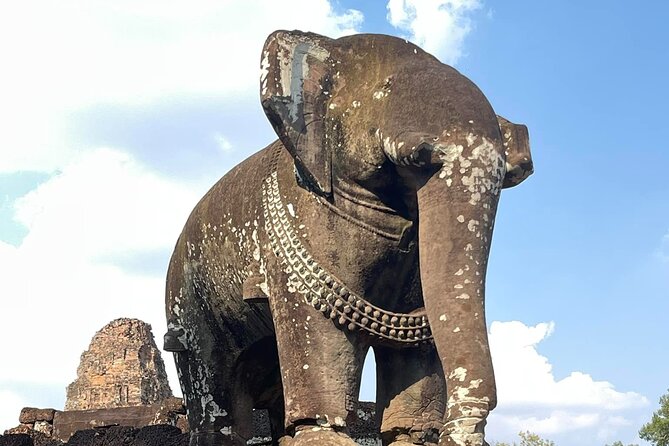
Eastern Mebon was built in the 10th century by King Rajendravarman. It sits on an artificial island in what was the East Baray reservoir, which is now dry. The reservoir dimensions provided are about 7.5 km by 1.8 km, which really underlines the scale of the ancient water system.
Expect around 40 minutes at this stop, and entry is free. This is another place where a guide helps. Water features can sound abstract until you’re standing near what used to be part of the reservoir landscape. You’ll likely find it easier to understand why certain temples were positioned where they were when someone explains the function of these designed water areas.
Pre Rup
Then you finish with Pre Rup, a temple mountain built by Rajendravarman in the 10th century. The construction is noted as a mix of brick, laterite, and sandstone, which is helpful because it gives you a way to notice the material shifts as you look around.
You’ll spend about 40 minutes here, and entry is free. Pre Rup also works well as a closing stop because it gives you a more classic “temple mountain” feel after the water-linked sites.
If you’re the type who likes viewpoints and wide temple layouts, this is one of the easier stops to appreciate without needing a long time to feel satisfied.
Srah Srang: the quick pool stop with serious purpose
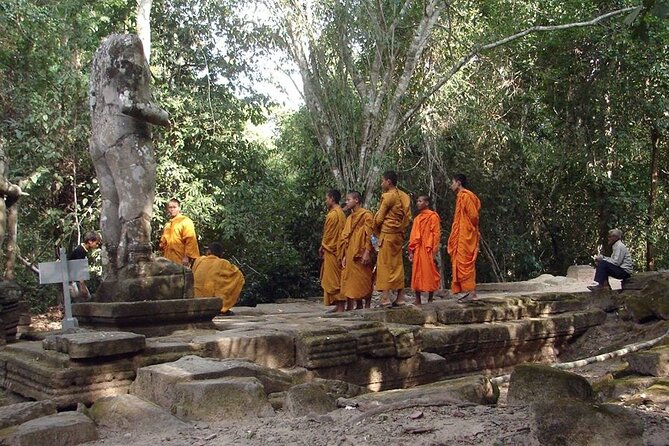
Your final stop before heading back is Srah Srang (often written as Sras Srang). This one is only about 20 minutes, but it’s not a random add-on.
Srah Srang was dug in the mid-10th century through the initiative of Kavindrarimathana, who’s described as a Buddhist minister of Rajendravarman II. Later, it was modified around the year 1200 by Jayavarman VII. So even though you don’t spend long here, it’s a site with a clear timeline and a practical role in the temple-world.
Entry is listed as free, and the value is mostly interpretive: your guide can help you see this as part of the water-and-community network that shows up again and again around Angkor temples.
Budget and value: how the $41 price turns into your real total
The tour price is $41.00 per person, and that includes:
- an English-speaking tour guide
- a private air-conditioned vehicle
- bottled water
- hotel pickup and drop-off
The separate cost you must plan for is the Preah Khan entrance fee: $37 per person. Since the other stops listed have free admission, your likely “all-in” cost is about $78 per person.
Is that good value? For many people, yes—because you’re paying for private transport and a guided explanation across multiple sites in one half-day. If you were doing the stops on your own, you’d still need transport and timing, and it’s easy for self-guided temple hopping to become a frustrating guessing game.
The main reason to hesitate is simple: if you’re extremely budget-driven, that added $37 can feel like a surprise. If you’re comfortable with one major ticket and several free entries, the plan holds together nicely.
Timing tips that keep the day comfortable
Even with private transport, temple days can tire you out. So I’d suggest you plan around comfort:
- Wear comfortable shoes for walking on uneven ground.
- Bring a hat and light layers, since you’ll be outside for stretches between stops.
- Have a plan to cover the Preah Khan entrance fee smoothly, since it’s the only paid temple on this route.
- Use the bottled water and don’t skip breaks. Your tour time is limited, so small delays can steal from your best moments.
Also, keep expectations realistic. Ta Som is about 30 minutes, and Srah Srang is about 20 minutes. That’s enough time for understanding and photos, but it’s not a “stay all day” slow wander.
Who this tour is best for
This tour fits you well if:
- you want a guided Angkor-area day that’s not overly long
- you like learning how temples connect through water and layout
- you’ve already done Angkor Wat and want another set of important sites
- you prefer a private schedule with hotel pickup and drop-off
It might feel less ideal if:
- you’re trying to keep temple ticket costs as low as possible
- you prefer spending long hours at one site rather than sampling several stops
- you don’t want a paid ticket to be the standout cost of the day (Preah Khan is $37)
Should you book Preah Khan, Neak Pean and Pre-Rup?
I’d book it if you want a smart second-day Angkor plan that goes beyond the headline complexes. The route makes sense: you get a UNESCO anchor (Preah Khan), a memorable reservoir setting (Neak Pean), a smaller forest-temple contrast (Ta Som), then water-linked and material-rich temples (Eastern Mebon, Pre Rup), plus the short but meaningful water-pool stop (Srah Srang).
The decision hinge is the budget math. If $37 extra for Preah Khan won’t bother you, this is a strong value for the mix of private comfort, guided context, and multiple temple experiences in one afternoon. If it will, you may want a cheaper self-guided strategy—but you’ll trade away the kind of clear explanations that make these layouts click.
If you do book, ask for your guide by name if Sim is available. A guide who can explain the “why” behind the temple design is the difference between walking through ruins and actually understanding what you’re seeing.
FAQ
How long is the Preah Khan, Neak Pean and Pre-Rup private tour?
The tour runs about 4 to 5 hours.
Is hotel pickup and drop-off included?
Yes. Hotel pickup and drop-off are included, along with a private air-conditioned vehicle.
What’s included in the tour price?
The price includes an English-speaking tour guide, private transport, bottled water, and pickup/drop-off.
Do I need to pay entrance fees?
Yes. Preah Khan entrance fee is not included and is listed as $37 per person. The other stops (Neak Pean, Ta Som, East Mebon, Srah Srang, and Pre Rup) are listed as free.
Is this tour private or shared?
It’s private, meaning only your group participates.
Is there a cancellation option if plans change?
Yes. Free cancellation is available up to 24 hours before the experience start time for a full refund.
Who is the tour best for?
Most travelers can participate, and it’s a good choice if you want an English-speaking guided tour of several major Angkor-area temples.