REVIEW · SIEM REAP
Siem Reap 2-Day Private Angkor Wat Tour with Sunrise
Book on Viator →Operated by Vamos Camboja Turismo · Bookable on Viator
Angkor looks different at dawn. This 2-day private Siem Reap tour is built around the two big lighting moments—sunrise at Angkor Wat and a sunset viewpoint at Phnom Bakheng—plus an English-speaking guide who keeps the day moving at your pace.
I especially like the mix of famous faces and quieter corners: Ta Prohm with its tree-root drama, and stops like Banteay Samre that feel calmer than the headline temples.
One real consideration: you’ll start early (day 2 pickup at 5:00 AM) and you need to budget for the Angkor Archaeological Park entrance ticket, which is not included in the $135 tour price.
In This Review
- Key things to know before you go
- Angkor Wat Sunrise + Phnom Bakheng Sunset: The lighting math works
- Getting your park pass and dressing right (so you don’t get turned away)
- Day 1 in Angkor Thom: South Gate smiles to Banteay-style carvings
- Angkor Thom South Gate: start with the faces
- Bayon Temple: the smiling towers and the bas-relief storytelling
- Baphuon and the ceremonial terraces: scale and symbolism
- Ta Prohm: the jungle-and-tree-root photo you’ll actually remember
- Lunch at Srah Srang area: take a break before Angkor Wat
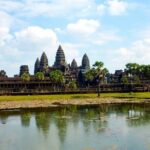
- Angkor Wat: the world-famous stop, paced so you can breathe
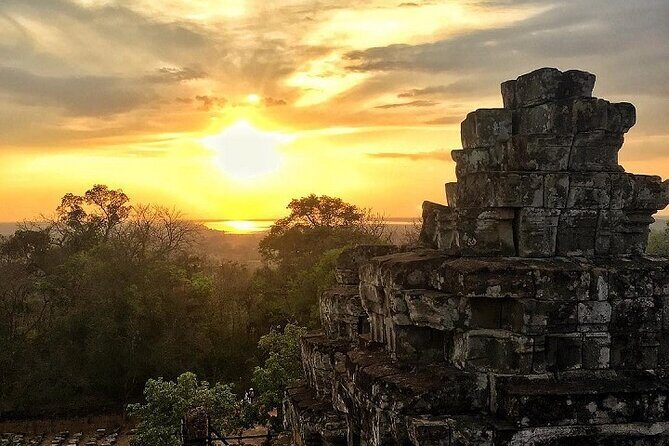
- Phnom Bakheng sunset: end day 1 with real payoff
- Day 2 sunrise rhythm: 5:00 AM, breakfast timing, and calmer temple pacing
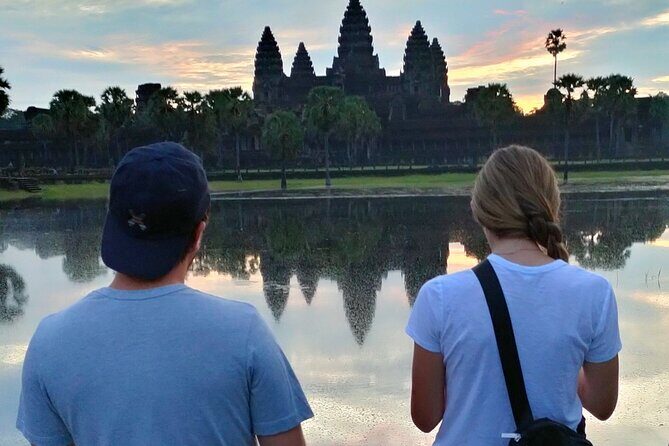
- Angkor Wat at sunrise: do it once, then enjoy the day
- Pre Rup: mountain-style temple views without the rush
- Banteay Srei: pink sandstone fine-art level
- Banteay Samre and Ta Som: quieter stops, big atmosphere
- Neak Pean: a symbolic island temple with pool calm
- Preah Khan: long corridors and mixed religious roots
- What makes the private part matter: English guidance and real-world pacing
- Transport and comfort: tuk-tuk on day 1, private car on day 2
- Price and value: what $135 covers, and what you must add
- Who this tour fits best (and who might rethink it)
- Should you book this Angkor sunrise-and-sunset private tour?
- FAQ
- Is the Angkor Archaeological Park entrance ticket included?
- How much is the entrance ticket?
- What time is pickup on day 1?
- What time is pickup on day 2 for sunrise?
- Is lunch included?
- What transport do you use?
- Is there a dress code?
- Is the tour private?
- Are cold water and towels included?
- Can children join for free?
Key things to know before you go
- Angkor Wat at sunrise: early pickup (5:00 AM) and time to take in the temple before the main crowds roll in
- Sunset from Phnom Bakheng: you end day 1 with one of the best views over the temple area
- Private guide in English: you’re not stuck with a loud group agenda; pacing can match your energy
- A smart temple spread: Angkor Thom highlights, then the jungle-and-carving circuit, then the pink-sandstone artistry of Banteay Srei
- Comfort support: cold water and towels during the tour help a lot in Cambodia’s heat
- Entrance ticket separate: the park pass (USD 62 for 2–3 days) is extra, even though the tour handles ticket timing
Angkor Wat Sunrise + Phnom Bakheng Sunset: The lighting math works
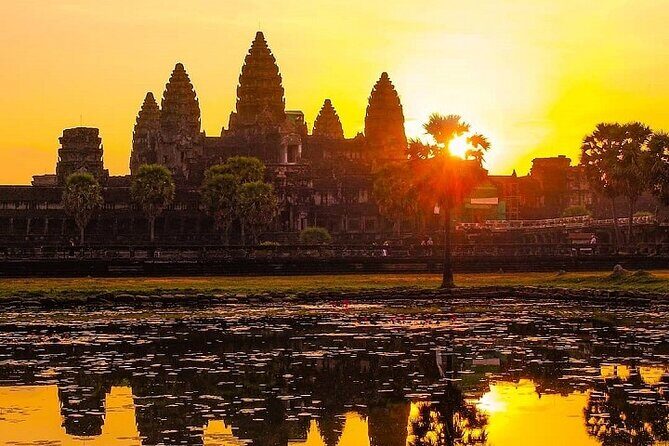
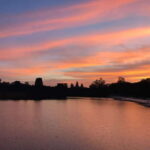
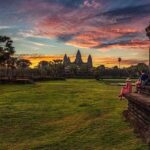
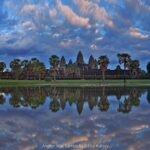
The best part of this kind of Angkor trip isn’t just seeing temples. It’s the light. On day 2, you’ll get Angkor Wat at sunrise, when the sky softens the stone and you can actually hear your own footsteps for a while. On day 1, you’ll finish at Phnom Bakheng for sunset, when the temples turn warmer and the view gives you scale—how massive the Angkor complex really is.
This tour also makes practical sense because you split the experience over two mornings/afternoons rather than forcing everything into one exhausting day. You get time to look at carvings, climb only what you feel like climbing, and stop for photos without feeling like you’re being herded.
You can also read our reviews of more private tours in Siem Reap
Getting your park pass and dressing right (so you don’t get turned away)
The Angkor Archaeological Park entrance ticket is not included. The standard info here is that the pass runs USD 62 per person for 2–3 days, and it’s your job to purchase it. Your guide meets you on day 1 at 8:30 AM and you’ll go to the ticket booth together (or you can buy online beforehand).
Plan your clothing like a grown-up. Cambodia temple rules are real:
- You can use a scarf to cover knees and shoulders for most temples.
- Except Angkor Wat, you must wear pants or skirts that cover the knees plus a shirt that covers the shoulders.
- No revealing items like short skirts, shorts, tank tops.
This is one of those details that can ruin your day if you ignore it. If your hotel can lend you a light layer, do it. Otherwise, a scarf is the easiest fix.
Day 1 in Angkor Thom: South Gate smiles to Banteay-style carvings
Day 1 starts from your hotel lobby at 8:30 AM. After you handle the entrance ticket, your route begins with the big-city feel of Angkor Thom—and it stays visually dramatic most of the day.
Angkor Thom South Gate: start with the faces
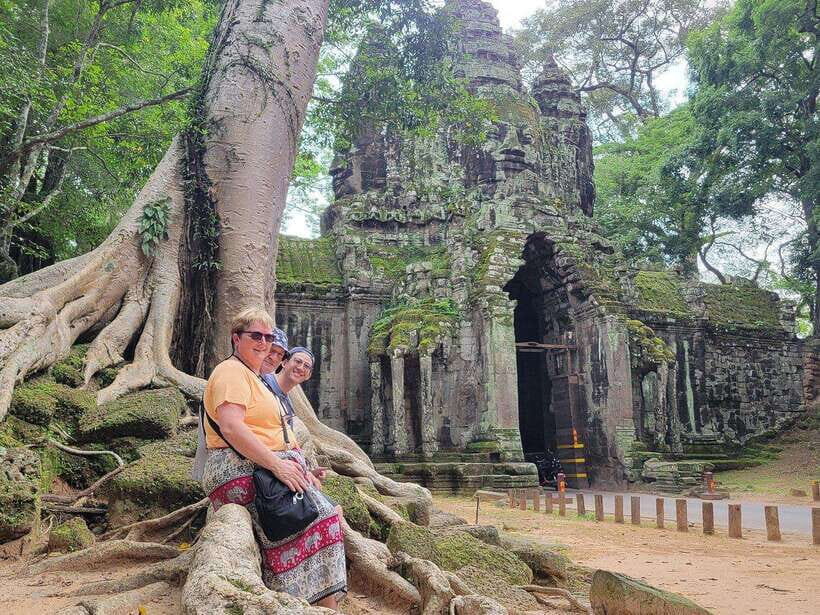
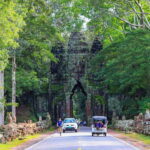
You’ll first walk through Angkor Thom South Gate, known for its giant smiling faces. It’s a strong way to enter the Angkor story because it sets the tone: this wasn’t a quiet temple picnic area. It was a kingdom core.
What to notice: the gate is both an entrance and a symbol. When you look up, you get a sense of power and performance—Khmer architecture that communicates with you even before you step into the courtyards.
Bayon Temple: the smiling towers and the bas-relief storytelling
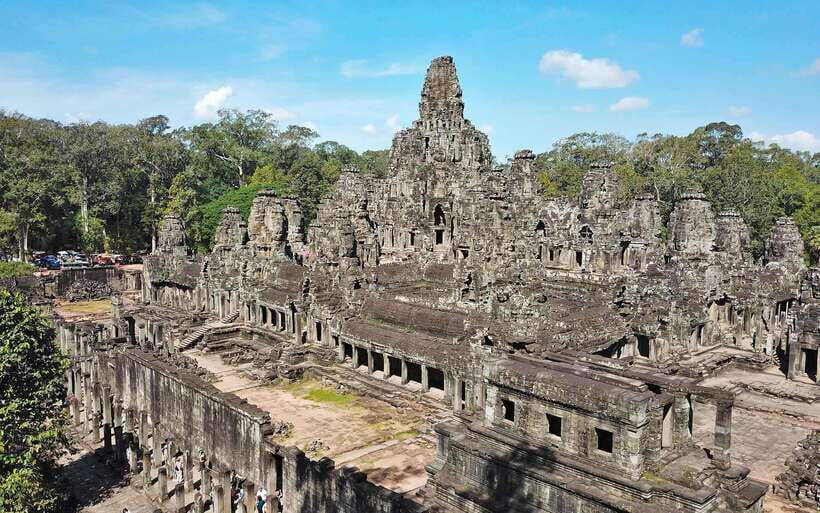
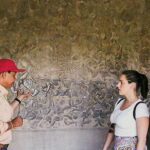
Next is Bayon Temple, the heart of Angkor Thom, famous for towers carved with more than 200 smiling faces. You’ll spend about an hour here, enough time to see how the faces repeat from different angles and how bas-reliefs explain everyday life.
If you like architecture details, Bayon rewards patience. If you don’t, your guide can point out the key scenes so you’re not just staring at stone patterns.
You can also read our reviews of more tours and experiences in Siem Reap
Baphuon and the ceremonial terraces: scale and symbolism
Then it’s on to Baphuon Temple (a massive three-tier pyramid temple with steep terraces and intricate bas-reliefs). Even with limited time, it feels like a structure built to dominate the space.
After that come the more “you have to slow down” stops in Angkor Thom:
- Terrace of the Elephants: carved elephants and garuda figures tied to ceremonial viewing and public events
- Terrace of the Leper King: raised platform with intricate bas-reliefs, named after a mysterious statue idea people associate with it
These areas can feel less famous than the gate-and-face combo. That’s exactly why they’re worth it. They show how Angkor mixed religion, politics, and spectacle in the same stone.
Ta Prohm: the jungle-and-tree-root photo you’ll actually remember
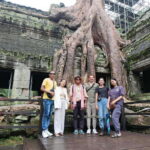
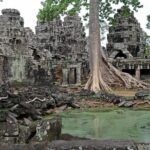
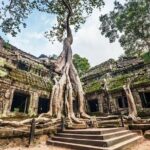
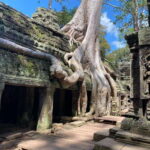
By the time you reach Ta Prohm, you’ve earned it. Ta Prohm is known for massive tree roots wrapping around ruins, and it’s the temple people associate with a jungle reclaiming stone.
This is also one of the most photogenic stops. The trick is to not only shoot the roots—look at the way the temple frames the trees and how the carvings survive around the damage. A good guide helps you spot what’s preserved versus what’s collapsed.
Lunch at Srah Srang area: take a break before Angkor Wat
Lunch is not included, but you’ll have about an hour at Srah Srang for food at a nearby restaurant your guide recommends. In hot weather, this pause matters more than you think. It gives you time to cool down and reset before the biggest monument of the trip.
Angkor Wat: the world-famous stop, paced so you can breathe
After lunch, you’ll head to Angkor Wat. Expect around 2 hours. This is the world’s largest religious monument, and the reason it stays famous is simple: it’s built to work as visual propaganda. Symmetry, scale, and carvings all reinforce the same message.
If you’re visiting for the first time, Angkor Wat can feel like a lot at once. That’s why the pacing here matters—your guide can slow you down for the details rather than sprinting you through.
Phnom Bakheng sunset: end day 1 with real payoff
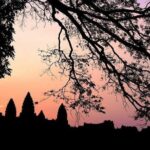
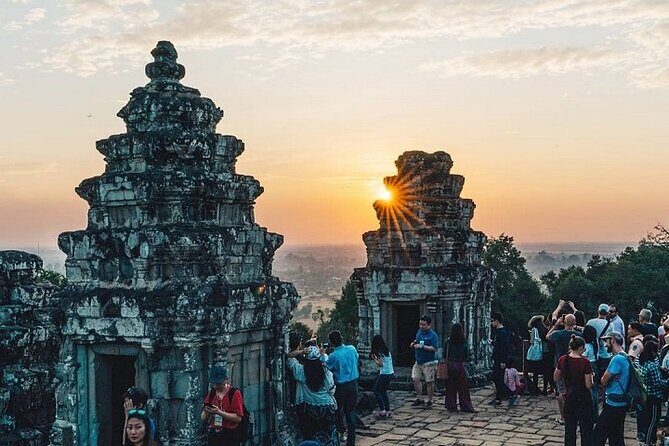
Day 1 closes at Phnom Bakheng for sunset. You get about an hour here, and the view is over the temple area and surrounding countryside—exactly what you want after a full day of stone and shade.
Practical note: bring a sense of timing. You’ll want to arrive with enough margin to find a spot, not just show up when the sky is already turning.
Day 2 sunrise rhythm: 5:00 AM, breakfast timing, and calmer temple pacing
Day 2 starts even earlier. Your guide picks you up at 5:00 AM for sunrise at Angkor Wat. You’re advised to bring breakfast from your hotel so you can eat after sunrise. That’s a smart move because it prevents you from spending the morning hunting for food while your energy crashes.
Angkor Wat at sunrise: do it once, then enjoy the day
Even if you visited Angkor Wat the day before, sunrise changes the experience. The temple’s details look sharper in low light, and the atmosphere is more peaceful. The stone also looks less harsh, so it’s easier to appreciate carvings without squinting through bright glare.
Plan for photos, but also plan for a short quiet moment. Sunrise is one of the few times Angkor feels personal.
Pre Rup: mountain-style temple views without the rush
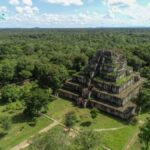
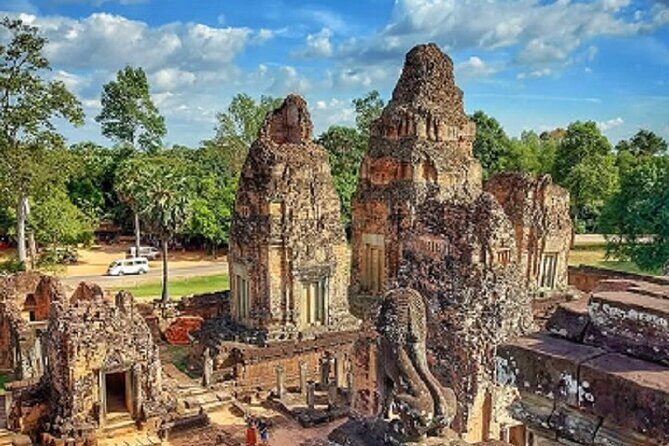
After breakfast, you’ll visit Pre Rup, known as a mountain-style temple with views over the countryside. It’s a good “second-day” temple because it doesn’t demand constant attention like the bigger landmark stops.
This one is especially good if you like early-morning calm. You get scenery and a chance to rest your eyes.
Banteay Srei: pink sandstone fine-art level
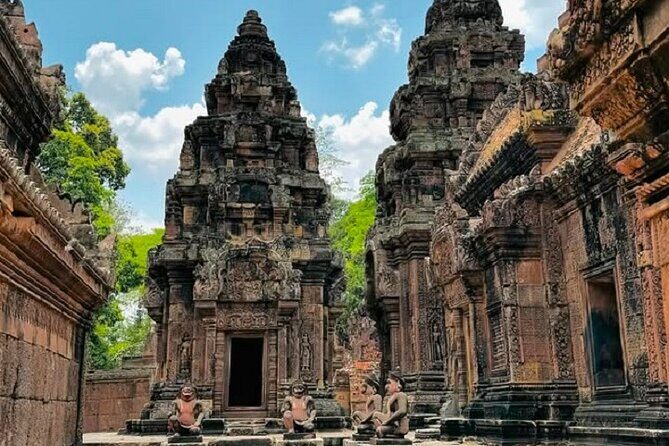
Next is Banteay Srei, the “Citadel of Women,” famed for intricate pink sandstone carvings. Your time here is about an hour, and it’s the kind of temple where you’ll want your camera ready—but also your curiosity even more ready.
The carvings can feel almost delicate compared to the larger structures. It’s a nice contrast after the heavier Angkor Thom and main-city style temples.
Banteay Samre and Ta Som: quieter stops, big atmosphere
Then comes a calmer sequence:
- Banteay Samre: peaceful, symmetrical design, detailed carvings, and a more quiet feel away from the main crowds
- Ta Som: a smaller temple where giant tree roots grow over the eastern gate, creating that temple-reclaimed-by-jungle scene
These stops work well because they keep you from feeling like you’re repeating the same temple formula over and over.
Neak Pean: a symbolic island temple with pool calm
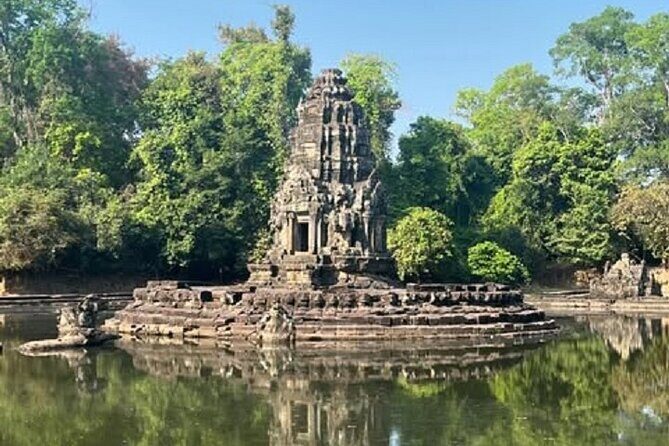
Neak Pean is a small island temple surrounded by tranquil pools. It’s linked to a mythical lake idea (Anavatapta), believed to have healing powers. Even if you’re not chasing legends, the pool setting gives you a breather from stone intensity.
Preah Khan: long corridors and mixed religious roots
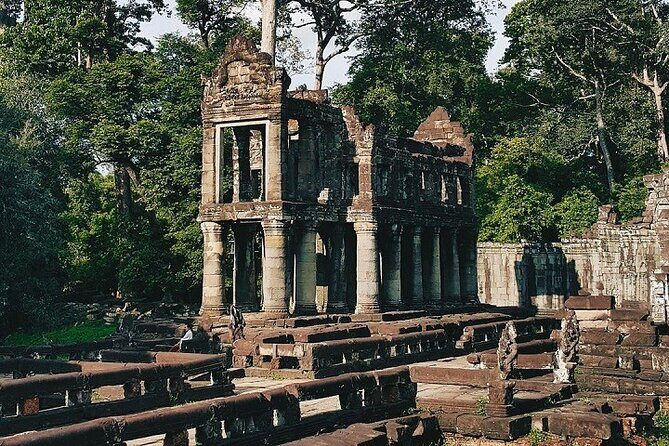
Finally, you’ll visit Preah Khan, a large 12th-century Buddhist complex with atmospheric corridors and intricate carvings. It has influences from Hindu and Buddhist traditions and originally served as a monastery and school.
Preah Khan often feels like the story continues even after you think you’re done seeing temples. You get a sense of function, not just form—this wasn’t only about worship, it was about learning and community life.
What makes the private part matter: English guidance and real-world pacing
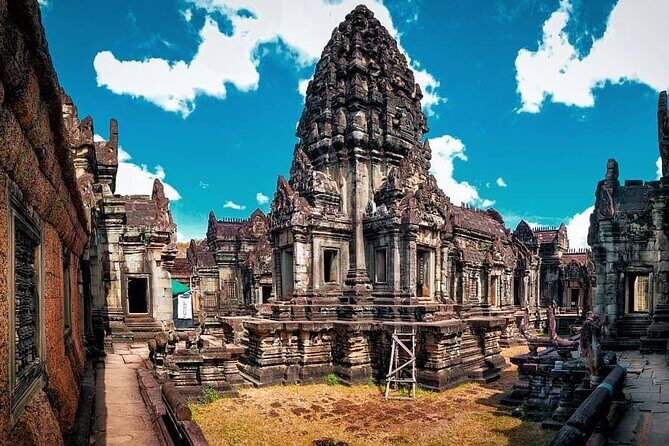
The biggest value here is the private setup with an English-speaking guide, not just because you can ask questions. It’s because your guide can help you prioritize the details that make each temple feel different.
The tour also pairs your guide with a driver who handles the daily logistics. In past experiences with this format, guides like Choub and Mr Sok Chea were praised for being clear, informative, and attentive. Drivers such as Mr Kosal and Ben were also highlighted for showing up on time and keeping the ride comfortable with cold towels and cold water.
That sounds small until you’re standing in sun, walking stone steps, and trying to keep your brain switched on. Those cooling touches make a difference on a two-day schedule.
Transport and comfort: tuk-tuk on day 1, private car on day 2
For 1–2 people, you’ll use a tuk-tuk on day 1 and a private car on day 2. For 3+ people, it’s an A/C van or bus both days.
Why you should care: tuk-tuk rides can be fun and breezy, but A/C matters in midday heat. This setup tries to balance charm and comfort across the two days.
Also included: hotel pickup and drop-off in Siem Reap city, plus free cold water and towels during the tour.
Price and value: what $135 covers, and what you must add
At $135 per person, this tour price includes:
- English-speaking guide
- Transfers and visits listed in the schedule
- Transport based on group size
- Cold water and towels
- Hotel pickup/drop-off
What’s not included:
- Angkor Archaeological Park entrance ticket (USD 62 per person for 2–3 days)
- Lunch and drinks are not stated as included
So the real cost is tour price plus the park pass. Still, for a private, two-day rhythm with both sunrise and sunset, the value is strong because you’re buying time, planning, and guidance—not just transportation.
If you’re already comfortable with DIY temple trips, you could save money by going on your own. But if you want someone to sequence the sights and explain what you’re seeing while you focus on photos and details, this setup is easy to justify.
Who this tour fits best (and who might rethink it)
This works well if you:
- want sunrise at Angkor Wat without figuring out the timing alone
- like a private guide so you can move at your pace
- enjoy a broad temple mix: Angkor Thom, jungle roots, pink carvings, and pool calm
- want a schedule that balances major highlights with calmer temples like Banteay Samre
It may be less ideal if you:
- hate early starts (day 2 pickup is 5:00 AM)
- don’t want to handle a separate entrance ticket purchase
- plan to wear very casual clothing that might not meet temple rules (bring a scarf and a plan)
Kids are welcome. Children under 12 join free of charge (you’ll need a passport as proof). That can make the price feel much better for families.
Should you book this Angkor sunrise-and-sunset private tour?
If you’re choosing between one-day chaos and a two-day plan, I’d pick this style for most first-timers and many repeat visitors. Two days lets you see the heavy hitters (Bayon, Ta Prohm, Angkor Wat) without racing, and it adds variety with places like Banteay Srei and Preah Khan.
Book it if you value English guidance, cooling comfort (water and towels), and a schedule built around light. Consider another option if you’re very budget-tight or you absolutely hate waking up before dawn.
For everyone else: this is a clean, practical way to experience Angkor in full color, starting with dawn stone and ending with sunset views.
FAQ
Is the Angkor Archaeological Park entrance ticket included?
No. The entrance ticket to Angkor Archaeological Park is not included in the tour price, and you must purchase it separately.
How much is the entrance ticket?
The park pass is listed as USD 62 per person for 2–3 days.
What time is pickup on day 1?
Your guide meets you in your hotel lobby in Siem Reap at 8:30 AM.
What time is pickup on day 2 for sunrise?
On day 2, pickup is at 5:00 AM for sunrise at Angkor Wat.
Is lunch included?
Lunch is not included. You’ll have a lunch break (about an hour) at the Srah Srang area, and your guide will recommend a nearby restaurant.
What transport do you use?
For 1–2 people, it’s a tuk-tuk on day 1 and a private car on day 2. For groups of 3 or more, it’s an A/C van or bus for both days.
Is there a dress code?
Yes. You may use a scarf to cover your knees and shoulders for most temples. Except for Angkor Wat, you must wear pants or a skirt covering the knees and a shirt covering the shoulders. Short skirts, shorts, tank tops, and other revealing clothing are not permitted.
Is the tour private?
Yes. It’s a private tour/activity, meaning only your group participates.
Are cold water and towels included?
Yes. Cold water and towels are included during the tour.
Can children join for free?
Children under 12 years old can join for free. A passport must be shown as proof.