REVIEW · SIEM REAP
Sharing Trip to Angkor Temple with sunset
Book on GetYourGuide →Operated by Tour Guide Team Phnom Penh · Bookable on GetYourGuide
Angkor feels like a time machine you can walk into. This day trip strings together Angkor Wat, Angkor Thom, and Ta Prohm with a licensed English guide pointing out what you’d miss if you were just following crowds. I especially like the way the tour keeps you moving with clear explanations at each stop, and I like the practical extras like cold water and wipes during a long hot day.
One thing to weigh: you’ll spend most of the day outdoors, and even with breaks, it’s still Cambodia heat plus a lot of walking between monuments.
In This Review
- Key things to know before you go
- Why Angkor timing (and heat) make or break your day
- Hotel pickup, air-conditioned van, and the smooth start
- Angkor Wat: more than postcards and a serious guided walk
- South Gate to Bayon: 216 faces and the story behind the stone
- Baphuon, Phimeanakas, and the royal-palace stretch
- Baphuon and the repaired giant Reclining Buddha
- Phimeanakas and the shaded jungle view
- Terrace of the Elephants and Preah Palilay
- Ta Prohm: the roots-and-stone temple where sunset photos actually work
- Food and breaks: what to expect when lunch isn’t included
- Price and value: $19 tour vs $37 temple ticket
- What to pack and how to dress for a long, hot day
- Who this Angkor day trip suits best
- Should you book this Angkor Wat to Ta Prohm circuit?
- FAQ
- What is the price of this Angkor temple day trip?
- How long does the experience last?
- Does the tour include hotel pickup and drop-off?
- Is transportation included?
- Is the temple ticket included?
- Are meals included?
- Does the tour include a guide?
- Is there skip-the-line access?
- What should I bring for the day?
- Is it suitable for children and people with disabilities?
Key things to know before you go
- Free hotel pickup and drop-off means you start and end with less stress, especially if this is your first day in Siem Reap.
- Skip-the-line via a separate entrance helps you spend more time looking and less time waiting.
- A full guided circuit covers the big names: Angkor Wat, Bayon, Baphuon, Phimeanakas, the Terrace of the Elephants, and Ta Prohm.
- Sunset-friendly photo time is built into the later part of the route, with Ta Prohm’s tree-and-stone drama as the payoff.
- Cold waters and wipes keep the day tolerable when temperatures climb.
- You’re outdoors most of the time, so shade is limited and what you wear matters.
Why Angkor timing (and heat) make or break your day
The real enemy here isn’t the temples. It’s the sun. The tour is designed to get you going early so you beat both the heat and the crowds that build up around the main complexes. That timing matters because once you’re deep in the site, you’ll be walking longer stretches than you expect, with only pockets of shade.
This is also why the guide’s pacing feels important. You’re not just moving from one photo stop to the next—you’re getting context while you’re still fresh enough to care. And because the monuments are religious as well as historical, there are clothing expectations: cover knees and shoulders when you enter temple areas. It’s not a vibe-killer; it’s a small rule that keeps the day respectful and smoother.
You can also read our reviews of more evening experiences in Siem Reap

Hotel pickup, air-conditioned van, and the smooth start
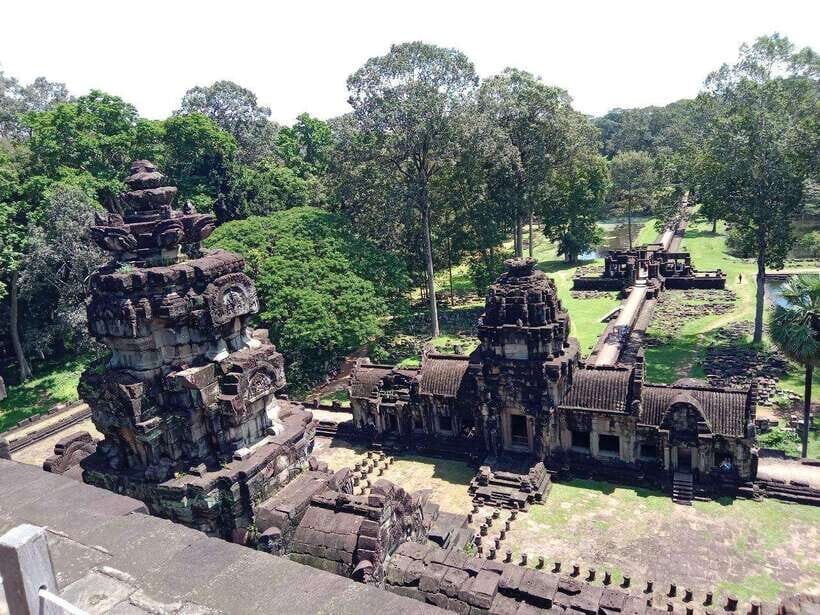
I love a tour that doesn’t make you figure things out at 7 a.m. You get picked up at your hotel lobby, then travel by air-conditioned vehicle to the temple zone. The trip also includes gasoline, toll roads, and parking, so nothing feels like a last-minute add-on.
You’ll also get cold waters and wipes during the tour. That sounds basic, but on a day like this it’s a genuine quality-of-life upgrade. The same goes for the practical guidance: the tour stresses what to bring—sun protection, insect repellent, and comfy closed shoes—because the day is built around being outside.
There’s one more perk that affects your day: you can skip the line via a separate entrance. In Angkor, where queues can eat your time and patience, that extra access helps you start seeing things sooner.
Angkor Wat: more than postcards and a serious guided walk
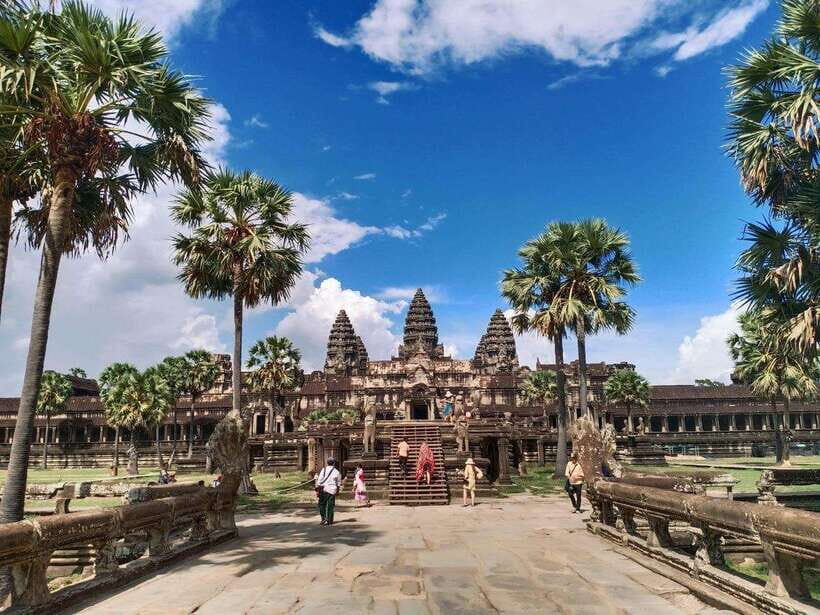
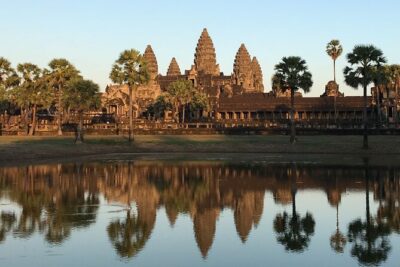
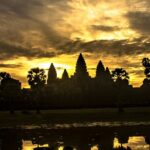
Angkor Wat is the one you already know. But it’s also the one that rewards close attention. The tour gives you a guided visit plus time for photos, with about 2.5 hours set aside here.
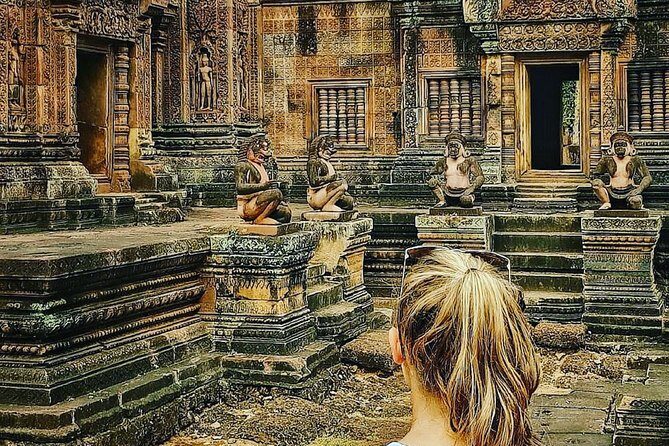
What I like about this stop is how the tour frames Angkor Wat as an evolving religious site. It began as a Hindu temple complex and later became Buddhist—so when you look at details, you’re not just seeing decoration. You’re seeing layers of belief and how the site changed over time.
The guide also helps you notice the angles for photography. That matters because the light can be brutal in the middle of the day, and the best views depend on where you stand and which structures you’re lining up. Even if you’re not a “serious photographer,” you’ll get a better shot by following the guide’s suggestions instead of wandering randomly.
Practical reality check: you’ll walk on uneven paths. Wear shoes that can take dust and heat, not sneakers that kill your feet after an hour.
South Gate to Bayon: 216 faces and the story behind the stone
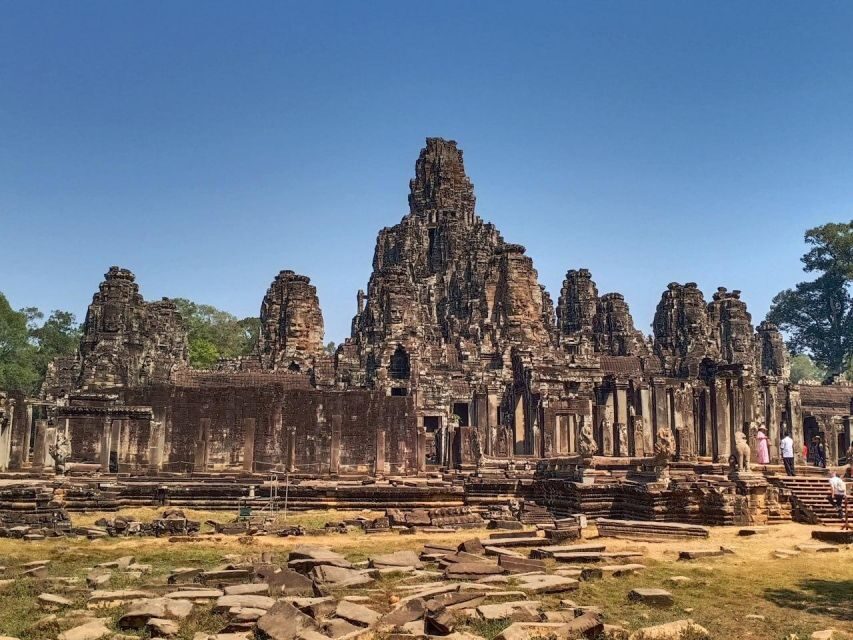
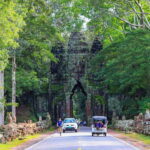
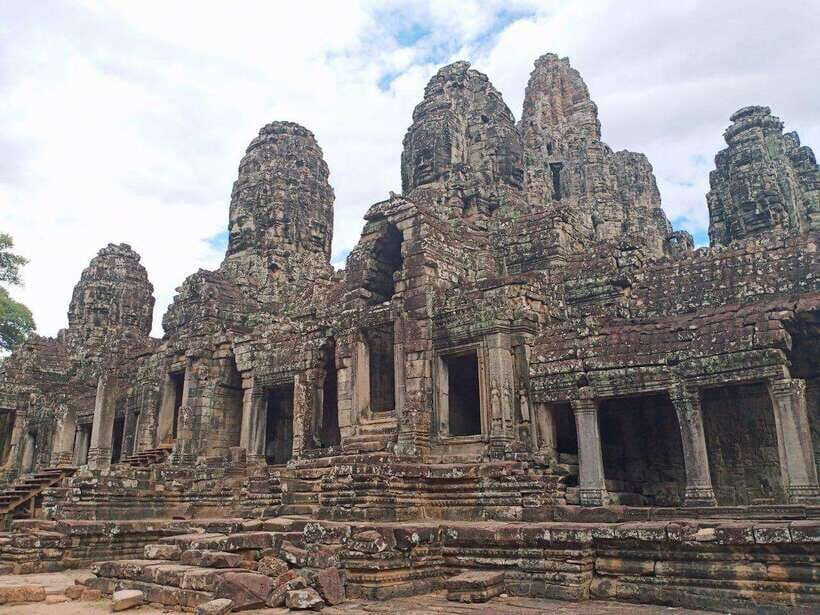
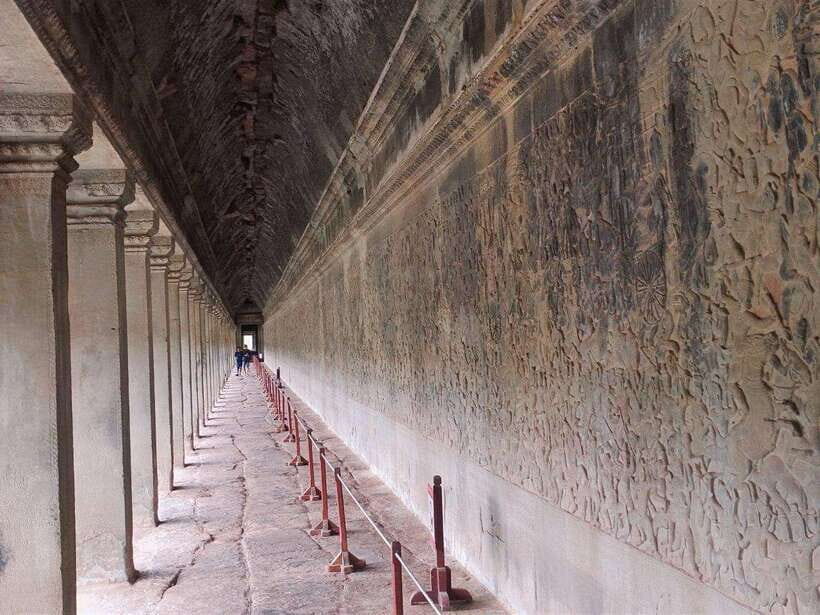
Next comes the South Gate, also called the southern entrance. You get a short photo stop and then you move into Angkor Thom through that gate. The walk inside feels different from Angkor Wat—more fortress-like, more enclosed, and much more “city” than “temple.”
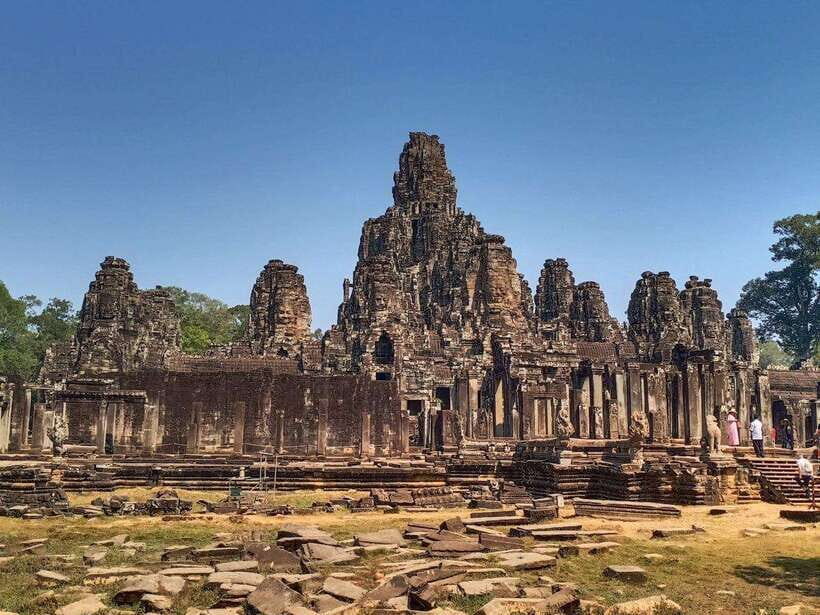
Then you hit Bayon. This is the part that most people remember: the temple of Bayon with its 216 enigmatic faces watching from stone towers. The tour time here is about 1.5 hours, and that’s enough to let the guide do what guides are good for—explaining the carvings and pointing out where to look.
Bayon also gives you an easy way to slow down. When you understand what you’re looking at—what the reliefs depict and how the galleries are structured—you stop taking pictures as fast you can and start building a mental map. That’s when it becomes more than scenery.
If you want one tip that improves the whole Bayon experience: bring your camera readiness, but don’t shoot constantly. Pause. Let your eyes adjust. The carvings are easy to miss when you’re rushing.
Baphuon, Phimeanakas, and the royal-palace stretch
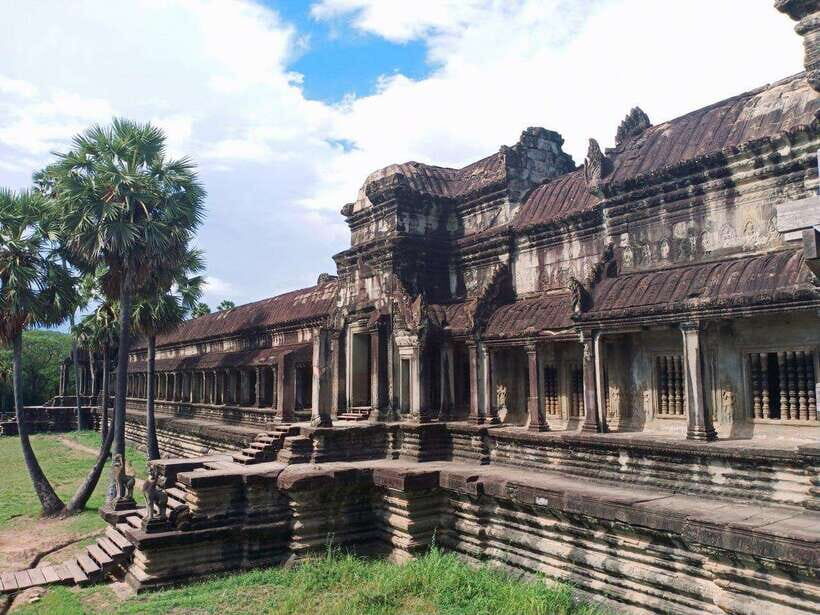
After Bayon, the route keeps moving through key structures that show off different styles and periods.
Baphuon and the repaired giant Reclining Buddha
Baphuon includes a long causeway and an impressive Reclining Buddha. This isn’t just a highlight for photos; it also carries a real historical note. The tour description points out that it was a jigsaw-puzzle reconstruction, put back together in 2011 after 37 years of disruption caused by war. That kind of detail makes the stones feel less frozen in time.
Phimeanakas and the shaded jungle view
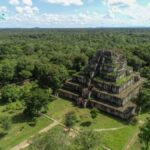
Phimeanakas sits in a shaded area and has steep steps to a view point. The tour gives you about 30 minutes here, and it’s one of those stops where the climb is part of the experience. If you’re okay with stairs and you like viewpoints, you’ll enjoy it.
If you’re not great with heat or legs, plan for a slower pace. It’s worth taking your time at this stage because the day is still progressing.
Terrace of the Elephants and Preah Palilay
You also get the Terrace of the Elephants, more formally tied to the Royal Palace esplanade, plus time around Preah Palilay. This area is known for its shaded surroundings, which becomes a welcome change when the sun has been relentless.
This segment is where the tour feels like a real guided circuit rather than a checklist. You’re seeing different “zones” of Angkor Thom, not just isolated monuments.
Ta Prohm: the roots-and-stone temple where sunset photos actually work
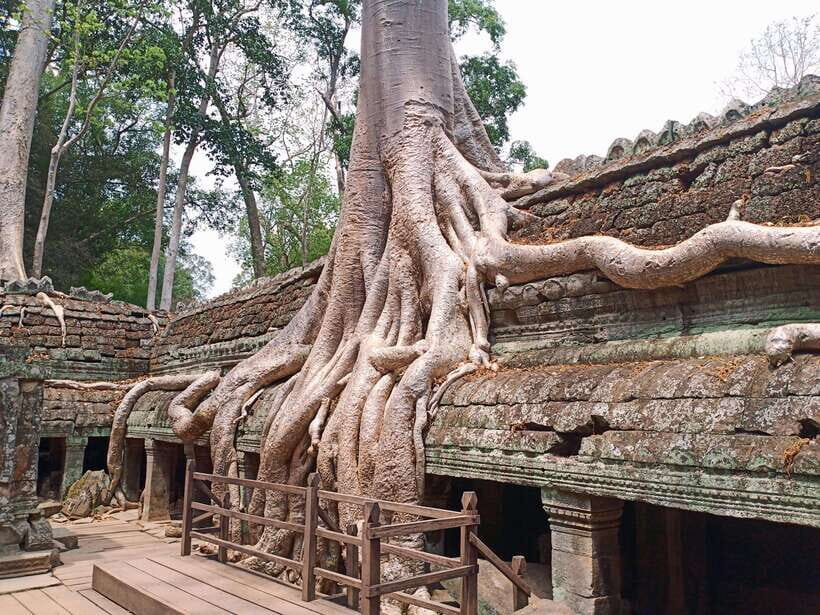
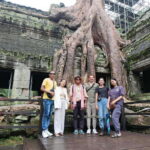
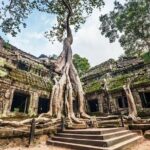
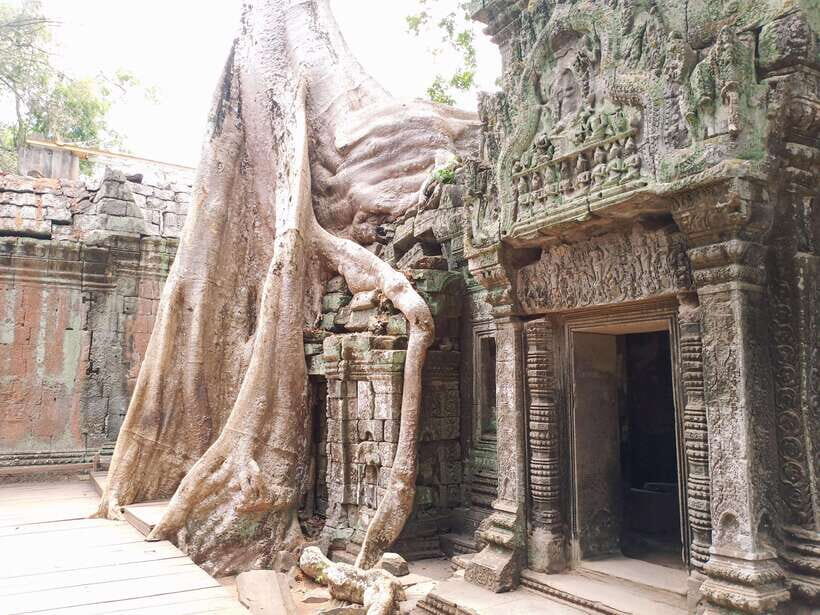
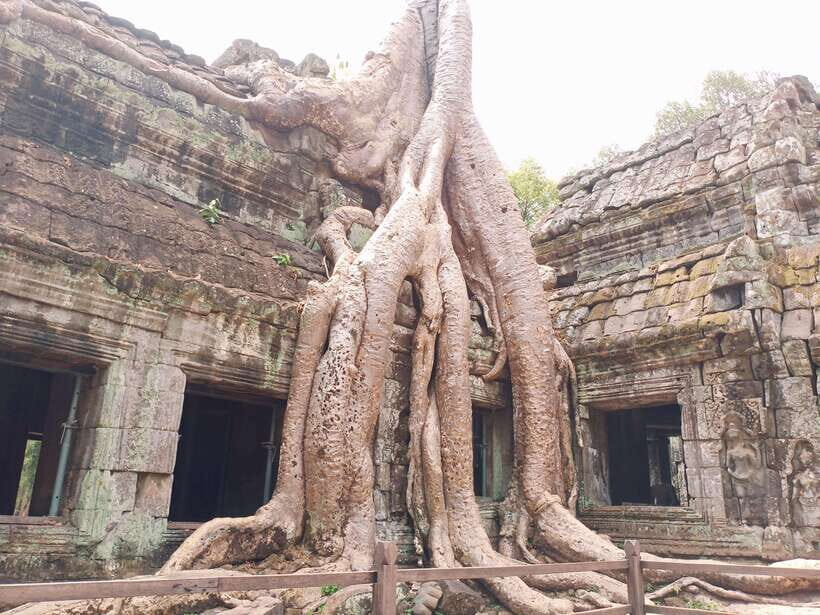
Then you get to Ta Prohm, famous to many people through a major movie connection. But even without the pop-culture link, this is one of Angkor’s most compelling sites because nature has directly claimed the architecture.
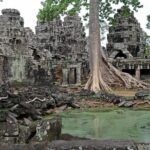
You’ll spend about an hour here. The tour emphasizes the relationship between tree roots (notably those Spung tree roots) and ancient stones covered in moss. That combo makes Ta Prohm feel alive in a way the more open temples don’t.
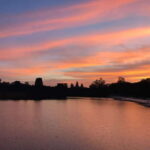
This is also where your late-day timing helps. The tour mentions sunset and gives time for photos, so you should plan on using the golden-hour light for shots rather than waiting until the end of the visit. The shadows and contrast at this stage make the roots and stone texture pop.
One practical note: the ground can be dusty. Bring closed shoes, and keep your camera strap tight. You’ll be moving around to find the best angles.
Food and breaks: what to expect when lunch isn’t included
Lunch isn’t included in the price. You should budget about USD 7–10 for a meal, and there’s a break scheduled for lunch during the middle part of the day.
I like that the tour doesn’t pretend lunch is included. In places like Angkor, food choices vary, and you’ll be happier if you treat lunch as a chance to take a breather, drink something cool, and recharge before the final temple stop.
If you’re prone to getting headachy in heat, prioritize water before hunger. Hunger is annoying. Heat is worse.
Price and value: $19 tour vs $37 temple ticket
Let’s talk value in real numbers.
The tour cost is $19 per person, and it includes a licensed English guide, air-conditioned transport, hotel pickup/drop-off, toll roads, parking, travel insurance, gasoline, and cold waters and wipes. It also includes skip-the-line entry through a separate entrance.
What’s not included is the temple ticket, listed at USD 37, plus meals (USD 7–10). So your full-day budget usually ends up closer to the ticket plus lunch and any personal spending—still not crazy for a guided Angkor day with transportation.
Where the tour feels like a good deal is in the labor it saves you:
- You don’t have to arrange transport and entry on your own.
- You get real explanations at multiple monuments, not just time stamps.
- You’re kept comfortable with water and wipes on a long outdoor day.
If you were going to pay for a guide anyway, this becomes even better value. If you’d rather DIY with your own transport and you’re comfortable reading the site without guidance, you might not need a guided tour. But if you want meaning, not just photos, the included guiding hours are the big payoff.
What to pack and how to dress for a long, hot day
The day is outdoors, so your packing list is part of the experience. Bring comfortable shoes (closed, sturdy, and dust-friendly). Bring a hat and sunglasses. Add sunscreen, a long-sleeved shirt, and long pants because temple rules and sun protection both apply.
You’ll also want cash, a camera, and a power bank. Mosquito repellent is specifically recommended, since evenings and shaded areas around the site can bring bites.
For temple etiquette, plan to cover up at entrances. Knees and shoulders need coverage, even when the weather says otherwise. This is one of those times where “lightweight long clothing” is your best friend.
Who this Angkor day trip suits best
This is a strong fit if you want:
- A guided circuit of the main sites, with explanations as you go
- Photo time at the big landmarks, especially Bayon and Ta Prohm
- A hassle-free start from your hotel thanks to pickup and drop-off
It’s not a fit if:
- You’re in a wheelchair or need accessibility accommodations (it’s not suitable for wheelchair users)
- You’re visually impaired (listed as not suitable)
- You’re traveling with kids under 10
Also, it’s worth being honest with yourself about heat and walking. The day moves between several key areas, and you’ll spend a lot of time on foot. If you know you struggle with long outdoor walks in hot weather, you’ll need to pace yourself carefully.
Should you book this Angkor Wat to Ta Prohm circuit?
Book it if you want a guided, easy, one-day way to experience the core Angkor monuments without arranging anything yourself. The best reasons are practical: free hotel pickup and drop-off, cold water and wipes, skip-the-line access, and a knowledgeable English guide who helps you see details you’d otherwise miss.
Don’t book it if you’re trying to minimize walking and sun exposure. It’s a full outdoor day, and temple dress rules plus long hours under the sky mean you’ll feel it.
If you’re on the fence, decide based on this question: do you want to understand what you’re seeing, or are you only here for a quick photo hit? This tour is built for the first answer.
FAQ
What is the price of this Angkor temple day trip?
The price is $19 per person for the tour.
How long does the experience last?
It’s listed as a 1-day experience.
Does the tour include hotel pickup and drop-off?
Yes. Pickup and drop-off are included, with free pickup at your hotel lobby.
Is transportation included?
Yes. You travel in an air-conditioned vehicle, and gasoline, toll roads, and parking are included.
Is the temple ticket included?
No. The temple ticket is not included and is listed as USD 37.
Are meals included?
No. Meals are not included, and lunch is typically budgeted around USD 7–10.
Does the tour include a guide?
Yes. A professional licensed guide is included, with English listed as the language.
Is there skip-the-line access?
Yes. The tour includes skip the line via a separate entrance.
What should I bring for the day?
Bring sunglasses, sun hat, camera, sunscreen, long-sleeved shirt, long pants, cash, biodegradable insect repellent, and a power bank.
Is it suitable for children and people with disabilities?
It’s not suitable for children under 10 years, wheelchair users, or visually impaired people. Pets are also not allowed.