REVIEW · SIEM REAP
Private sunrise tour to Angkor Wat & other highlights with Professional Guide.
Book on Viator →Operated by Around Cambodia Travel · Bookable on Viator
Angkor at sunrise feels like a slow breath. This private tour is built for early access and an efficient route through the big sights, with a professional English-speaking guide to explain what you’re seeing. I like that the day doesn’t feel like a stampede; it’s paced so you can actually look up, read the carvings, and take photos without fighting the crowd crush.
Two things I’d put near the top: the personalized itinerary that’s designed to avoid peak congestion, and the comfort touches like AC transport, bottled water, and cool towels. One thing to consider: the temple pass isn’t included, so you’ll want to budget for it upfront (currently listed at $37 per person).
In This Review
- Key Points at a Glance
- Why a Private Sunrise Plan Works at Angkor Wat
- Price and What You Actually Get for $65
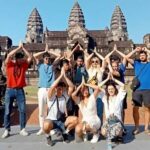
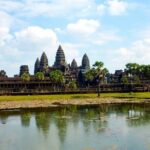
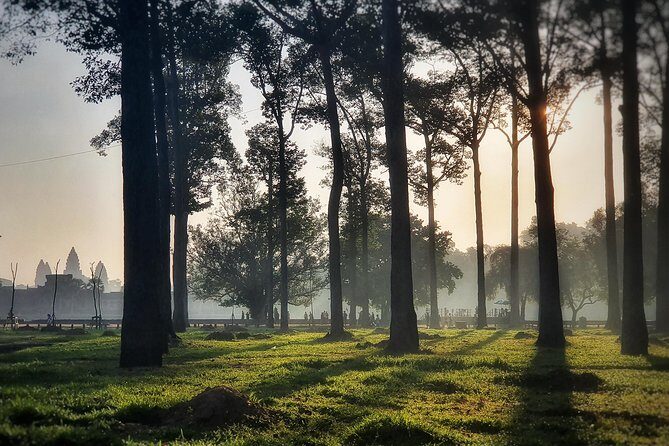
- The Sunrise Part: Angkor Wat, Tickets, and Pacing
- Srah Srang Breakfast Break (And Why It’s Smart Timing)
- Ta Prohm: The Roots, the Crowd Control, and the Film Factor
- Ta Nei: A Quieter Jungle Temple You’ll Feel More Than Photograph
- Angkor Thom South Gate and Bayon After the Morning Glow
- Getting Around Comfortably in the Heat (The Practical Stuff)
- Who This Tour Is Best For (And Who Might Want to Adjust)
- Should You Book This Private Sunrise Tour to Angkor Wat?
- FAQ
- Is this tour private?
- How long is the tour?
- Is pickup included?
- What’s included in the $65 price?
- Do I need to pay for temple admission?
- When do we buy admission tickets?
- Where do we stop during the day?
- Is there time for breakfast?
- What if I need to cancel?
Key Points at a Glance
- Sunrise-first strategy at Angkor Wat for the best light and fewer people in your way
- English-speaking pro guides who can tailor the tour; guides like Nak and Lux were praised for their communication
- A real break at Srah Srang with time for breakfast after the first temple surge
- Ta Prohm early timing helps you see the famous roots without the biggest crowds
- Quiet stop at Ta Nei where the jungle feel can be calmer than the headline sites
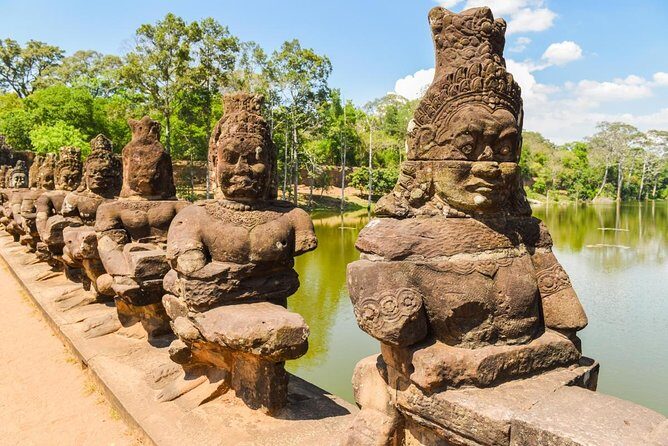
- Angkor Thom’s South Gate and Bayon after sunrise to keep the day moving while the light is still good
Why a Private Sunrise Plan Works at Angkor Wat

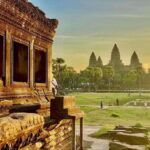
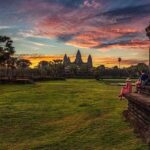
Angkor Wat is the kind of place where timing matters as much as ticket lines. The sunrise glow isn’t just a pretty moment—it changes how stone carvings pop, how shadows fall, and how the whole temple complex feels. A sunrise start also means you’re seeing Angkor before the day’s energy ramps up.
This is set up as a private experience, meaning you’re not stuck with a rigid script or forced to keep pace with a group that isn’t your speed. Your guide builds the rhythm around your questions and the route’s flow, which is a big deal in a site this large. If your priority is photos, context, or simply not getting harried, this approach pays off.
You can also read our reviews of more guided tours in Siem Reap
Price and What You Actually Get for $65
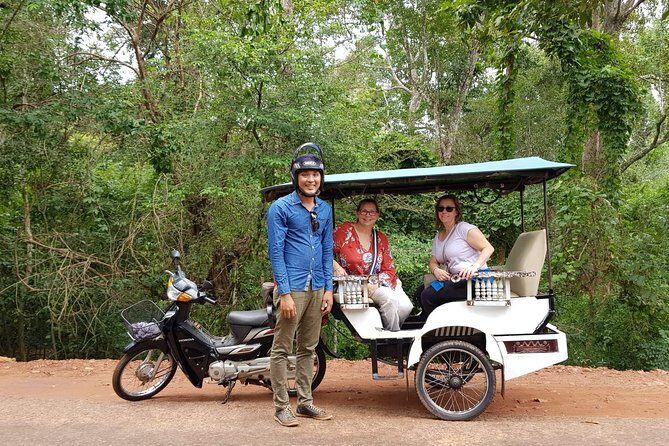
The listed price is $65 per person, and the day is built around your guided transport plus essentials: an air-conditioned vehicle, a professional English-speaking tour guide, bottled water, cool towels, and the driver/car fuel. That matters because Angkor isn’t a quick stroll between attractions—you’re paying for time, comfort, and someone handling the logistics so you can focus on the temples.
The main add-on is the temple pass (Angkor entry) at $37 per person, which is not included. On paper, that makes the all-in cost $102 per person. In practice, it’s still often good value because you’re paying for a guided route that’s designed to reduce crowd stress and help you get more meaning from what you see.
If you’re the DIY type, you can rent transport and go on your own. But sunrise at Angkor is where DIY can get messy fast—timing, ticket access, and figuring out which temples to hit first. This tour is basically buying you less friction for your morning.
The Sunrise Part: Angkor Wat, Tickets, and Pacing
Your morning starts with pickup and a short pre-temple step to handle admission before you walk into Angkor Wat for sunrise. The idea is simple: get you positioned early enough to enjoy the light and the atmosphere, without wasting time once you’re already there.
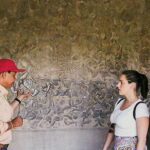
Once you’re inside, you spend about two hours at Angkor Wat itself. That’s a realistic window: long enough to take in the main views, wander with purpose, and still not feel like you’re being rushed out the moment the sky shifts. A good guide also helps you notice details you’d otherwise gloss over—placement of features, what certain angles emphasize, and how to read the temple’s story visually.
One small reality check: sunrise weather can be hit or miss. Even with perfect planning, clouds can dull the color. When that happens, the value of a good guide becomes even more important, since you’ll still get context while the light does what it wants.
Srah Srang Breakfast Break (And Why It’s Smart Timing)
After the first temple push, you head to Srah Srang, stopping for a 30 to 45 minute breakfast break. This is a practical move. Early mornings at Angkor can turn your energy into dust by late morning, and food + a reset helps you keep enjoying the rest of the route rather than dragging through it.
Srah Srang also gives you a different kind of visual break. Instead of another giant gate or another temple facade, it’s a more open, reflective setting tied to the temple-world around water and ritual. Even if you’re not ordering a gourmet meal here, you’ll appreciate the pause because the next stops include more walking through ruins and shaded stone corridors.
Ta Prohm: The Roots, the Crowd Control, and the Film Factor
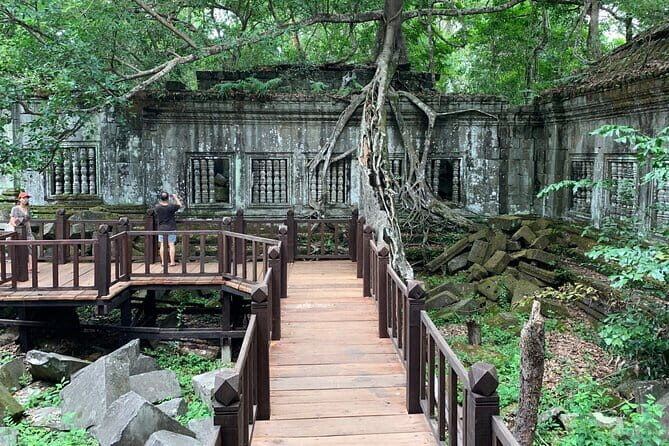
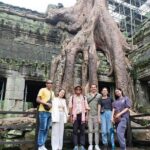
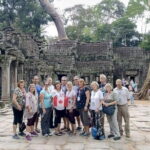
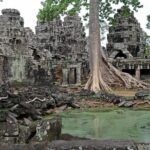
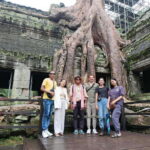
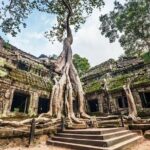
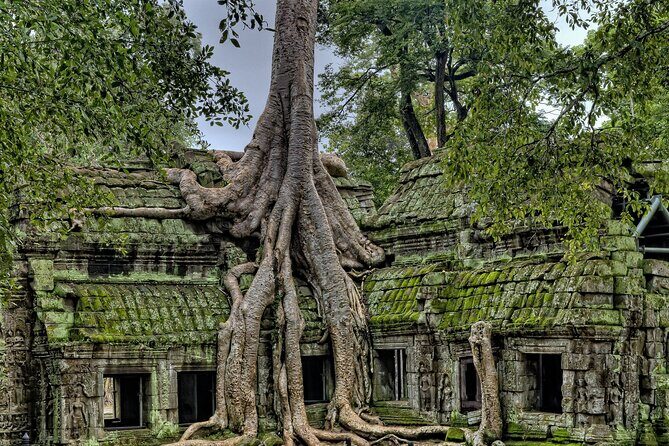
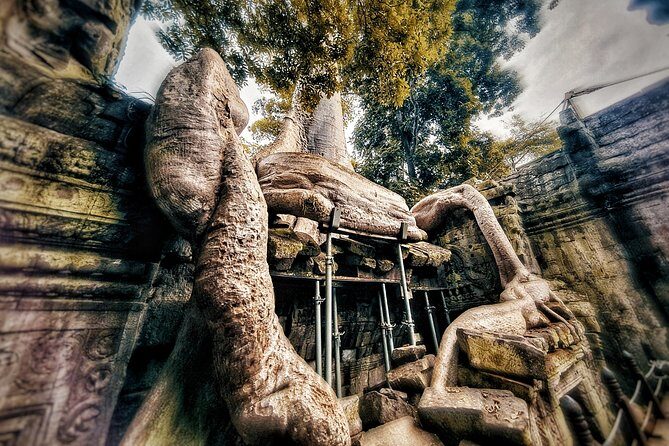
Ta Prohm is the star stop for a lot of people, thanks to its widely recognized look—ruins with dramatic tree roots taking over parts of the structure. The key advantage on this tour is timing: you go early enough that you can avoid bigger crowds, which makes the place feel more breathable.
You’ll spend about one hour here. That’s enough to see the most iconic angles without rushing past the smaller details. The guide’s role is huge at Ta Prohm because it’s easy to treat it like a movie set. With the right explanations, you understand what you’re seeing: how nature and stone share the same space, and why the temple is treated as both heritage and living ruin.
If you care about photos, this is where you’ll likely want to slow down. Crowd-light conditions mean fewer people cutting across your frame and more chances to wait for the angle of the light.
You can also read our reviews of more private tours in Siem Reap
Ta Nei: A Quieter Jungle Temple You’ll Feel More Than Photograph
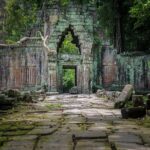
Then comes Ta Nei, marked as one of the quieter stops because it’s harder to reach visually and feels more hidden in the woods. You spend about 45 minutes there, which is a sweet spot. Long enough for a real look, short enough to keep the day moving and not fry your legs in the midday heat.
This is the kind of temple where the experience is less about big showy views and more about atmosphere. The stone feels tucked into the trees, and the air can feel calmer. If Angkor has started to feel like a checklist, Ta Nei is the reset you didn’t know you needed.
Also, it’s a good reminder that Angkor isn’t one look. You’re getting contrast: headline temples first, then something quieter that still rewards your attention.
Angkor Thom South Gate and Bayon After the Morning Glow

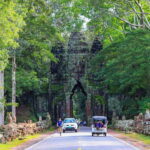
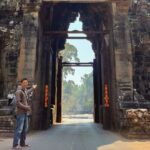
From Ta Nei, you roll to Angkor Thom South Gate for about 10 minutes. It’s a fast stop, so think of it like a way to check out the city scale and the ceremonial layout. You’re looking at how the complex organizes movement—where you enter, how you transition, and what that implies about the temple city’s design.
Next is Bayon, the stop where many people feel Angkor clicking into place. You spend about one hour here, and it’s planned after the sunrise moment at Angkor Wat, when the lighting and energy can be different. Bayon’s faces and the maze-like layout can be hard to appreciate if you’re not sure where to look. A guide helps you orient quickly so you don’t spend an hour wandering in circles while everyone else looks like they know the route.
This is also where the day’s storytelling matters most. You’ll get explanations about the Khmer Empire and what these spaces meant, not just what they look like.
Getting Around Comfortably in the Heat (The Practical Stuff)
Angkor mornings can be cool, but the heat builds fast once you’re between temples. This tour handles comfort in the small ways that add up: air-conditioned vehicle, bottled water, and cool towels. Those details aren’t flashy, but they’re exactly what keep a day like this enjoyable instead of miserable.
The route is designed for flow. The timing is tight enough to feel efficient, with stops that break up the intensity: sunrise at Angkor Wat, breakfast reset at Srah Srang, famous roots at Ta Prohm, a quieter temple at Ta Nei, then city-gate viewing and Bayon. That structure helps you avoid the common Angkor problem of repeating the same kind of stop over and over.
Also, the tour uses mobile ticket capability as part of the experience setup. In real life, that can simplify what you carry and how you handle entry steps.
Who This Tour Is Best For (And Who Might Want to Adjust)
This is a great fit if you want:
- A stress-reduced sunrise plan without worrying about timing and ticket steps
- A guide who can answer questions in English and keep you from feeling lost among similar-looking towers
- A route that mixes headline sights with quieter spots like Ta Nei
It’s also a strong choice if you’re traveling solo or as a couple and you don’t want a random group pace. Private guide tours are especially useful when you care about meaning, not just stamps on the checklist.
If you’re the kind of visitor who wants every temple slowly, for hours and hours, you might find 6 to 7 hours a bit structured. But for most people, this is a good length: enough to cover major highlights without turning the day into a marathon.
And if sunrise is your #1 priority, this plan puts your energy where it matters. If sunrise clouds roll in, you’ll still have plenty to enjoy afterward, but the exact sky color is outside anyone’s control.
Should You Book This Private Sunrise Tour to Angkor Wat?
I’d book it if you want the easiest path to an early Angkor Wat experience plus a guided run through key temples without the crowd stress. The value isn’t just the $65—it’s the combination of early timing, a private itinerary approach, and comfort support that keeps you functional for the whole day.
If you already have temple passes and you’re comfortable building your own sunrise plan, a DIY day can be cheaper. But DIY rarely matches the smooth pacing this tour offers, especially the way it threads Angkor Wat, then Ta Prohm early, then Bayon after the main light moment.
One last practical tip: budget for the $37 temple pass in addition to the tour price, and pack for heat even if sunrise starts cool. Do that, and this becomes one of the more satisfying ways to experience Angkor without losing your mind in lines.
FAQ
Is this tour private?
Yes. Only your group participates.
How long is the tour?
It runs about 6 to 7 hours.
Is pickup included?
Pickup is offered.
What’s included in the $65 price?
An air-conditioned vehicle, an English-speaking tour guide, driver and petrol, cool towels, and bottled water.
Do I need to pay for temple admission?
Yes. Temple passes are listed as $37.00 per person and are not included.
When do we buy admission tickets?
You’ll purchase the temple tickets before walking in for sunrise at Angkor Wat.
Where do we stop during the day?
Angkor Wat, Srah Srang, Ta Prohm, Ta Nei, Angkor Thom South Gate, and Bayon, with return toward Siem Reap afterward.
Is there time for breakfast?
Yes. There’s a breakfast break at Srah Srang lasting about 30 to 45 minutes.
What if I need to cancel?
Cancellation is free up to 24 hours in advance of the experience start time for a full refund. If you cancel less than 24 hours before, the amount paid is not refunded.