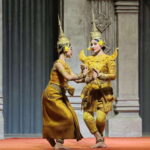
Dawn makes Angkor feel brand-new. This Angkor Wat sunrise tour also explains the site’s religious roots, including the Hindu god Vishnu, before you move through major Angkor landmarks with a local guide. I especially like that your guide aims you at a good place for photos, and there’s a real trade-off: you start very early and temple tickets are not included.
The group stays small (max 10), so the pacing feels relaxed instead of rushed, even with four stops. I also like the practical touches: an air-conditioned ride, plus cold water and cold towels to help you reset after each temple. If you’re sensitive to early mornings, this schedule may be your biggest concern.
In This Review
- Key Highlights at a Glance
- Why This Sunrise Route Feels More Than Just a Temple Checklist
- The 4:30–4:45 am Start: When Early Means Worthwhile
- Angkor Wat Sunrise: UNESCO Grandeur Plus a Vishnu Story
- What to watch for at Angkor Wat (beyond the first wow)
- Bayon Temple and Angkor Thom: The Faces Explained
- Ta Prohm: Fig Trees, Roots, and Ruins Left Mostly As Found
- What Ta Prohm is best for
- Banteay Kdei: A Quieter Monastic Finish
- Price and Value: What $39 Really Covers
- Group Size, Guides, and the Human Touch
- How the Day Fits Together (and Where It Can Feel Long)
- Who Should Book This Angkor Wat Sunrise Tour
- Should You Book It?
- FAQ
- FAQ
- What time does the tour start?
- How long is the experience?
- Is pickup from my hotel included?
- Are meals included?
- What is included in the price?
- What is not included?
- How many people are in the group?
- Which temples are visited?
- Is sunrise viewing included?
- Do I get a guide for photos?
- What if I cancel?
Key Highlights at a Glance
- Max 10 travelers: easier questions, better photo timing, and more personal attention
- Angkor Wat sunrise timing: you get to the complex early enough to enjoy the quiet
- Photo help inside Angkor Wat: your guide finds a spot so you can focus on framing
- Bayon’s faces story: 54 towers and 216 Avalokesvara faces get explained clearly
- Ta Prohm’s fig-tree embrace: ruins left in much the same condition as found
- Banteay Kdei pace: a shorter final stop that still adds variety to the day
Why This Sunrise Route Feels More Than Just a Temple Checklist
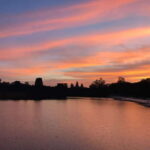
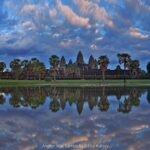
This tour works because it starts before the usual rush. You’re heading out in the dark, aiming for sunrise at Angkor Wat when the mood is calm and the weather tends to feel easier. Then the day keeps moving with three more standout Khmer-era sites, so you get breadth without spending your whole trip bouncing between random Tuk-Tuks.
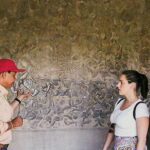
What makes it more satisfying is the way the day is framed. You don’t just see stone. Your guide connects what you’re looking at to Khmer religious influence, including the shift between Hindu and Buddhist meanings over time. That framing matters because Angkor is confusing if you only read plaques. With a guide, you start noticing patterns: where power shows up in architecture, how worship shapes layout, and why certain symbols keep reappearing.
There’s also a practical realism here. You’re not pretending it’s a “quick in-and-out” morning. Expect a long day—about 8 hours—so you’ll want to treat this as your main Angkor outing, not a side quest.
You can also read our reviews of more tours and experiences in Siem Reap
The 4:30–4:45 am Start: When Early Means Worthwhile
The meeting time is 4:30 am, with pickup from your hotel around 4:45 am. That’s early by any standard, but it pays off in two ways.
First, sunrise is the main event, and you need time to get into position without stress. Second, you usually get the “temple day” portion before heat ramps up. One of the strongest themes in the experience is that starting early helps the day feel more comfortable, with cooler weather and a calmer atmosphere than later in the day.
If you’re the type who normally hits snooze like it’s a sport, plan a simple win: set yourself up the night before. Have a dry layer ready (sunrise air can feel different than daytime), and keep your camera gear easy to reach.
Angkor Wat Sunrise: UNESCO Grandeur Plus a Vishnu Story
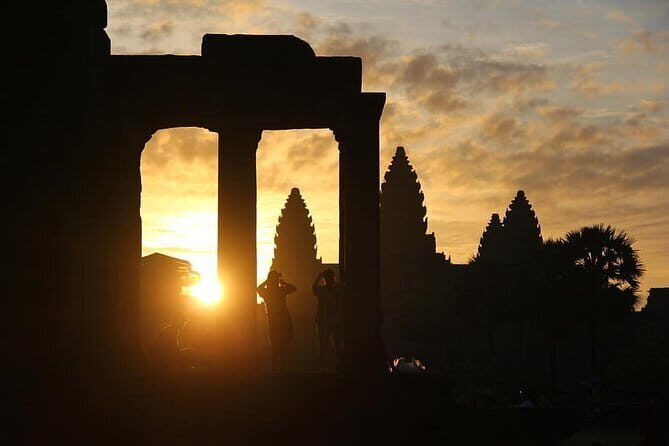
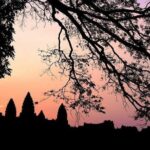
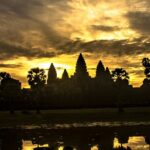
Stop 1 is Angkor Wat, with sunrise viewing and time to explore afterward. The tour allocates about 3 hours here, and it’s not just time for photos—it’s time for meaning.
Angkor Wat is tied to Khmer royal building projects associated with Khmer King Soriyavaraman II, and your guide brings in the religious background linked to Vishnu. Even if you don’t know the names of gods and kings yet, the guide’s role is to translate symbols into something you can recognize: the way sacred architecture guides movement, and why the site’s spiritual purpose shaped the design.
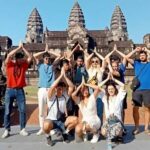
One of the best practical perks is the photo support. Your guide will find a good location for taking photographs inside Angkor Wat. That matters because sunrise photography is not only about timing—it’s about angles, foot traffic, and where you can stand without constantly being in the way.
A realistic note: this is the biggest draw in Siem Reap, so you’ll be surrounded by other sunrise-goers. The value is that you’re there early, with a plan, and you’re not doing it blindly.
What to watch for at Angkor Wat (beyond the first wow)
- How carvings and structure guide your eye toward the most important elements
- How early light changes surfaces and makes details stand out
- Why the layout feels ceremonial, not random
Bayon Temple and Angkor Thom: The Faces Explained
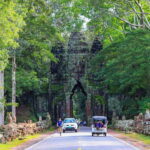
After Angkor Wat, the tour heads to Bayon Temple, including the South Gate of Angkor Thom and then the central area. You get about 2 hours for this stop.
Bayon is famous for its many towers, each decorated with faces of Buddhist Avalokesvara (the tour describes 216 faces across 54 towers, created by Khmer King Jayavaraman VII). What I like about having this explained is that the faces stop feeling like decoration and start feeling like an intentional statement. In other words: you see artistry, then you get the story behind why that artwork is there.
The route here is also efficient. Starting with the gate gives you context for the larger Angkor Thom complex, so when you reach the center, it feels like you’re moving deeper into a coherent place rather than hopping between unrelated monuments.
A drawback to consider: this stop is visually intense. If you’re hoping for quiet contemplation only, Bayon can feel busy because it’s one of the main photo targets. The guide helps you pace through it so you can still get your calm moments.
Ta Prohm: Fig Trees, Roots, and Ruins Left Mostly As Found
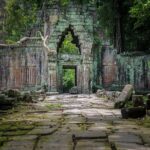
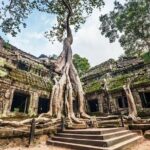
Stop 3 is Ta Prohm, with about 2 hours. This is the site most associated with the idea of jungle taking back the stone.
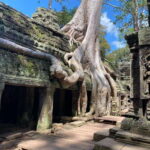
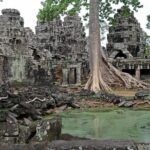
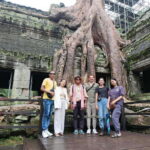
Here, the tour emphasizes that Ta Prohm is embraced by enormous fig trees, with ruins left in much the same condition as they were found. That detail matters because it’s not a perfectly restored monument with a staged look. You’re seeing a mix of craftsmanship and time, where nature and history are still tangled.
It’s also a great stop for photography—especially for people who like composition, not only silhouettes. The fig tree shapes frame doorways and walls, and the roots create natural lines you can use to lead the eye through the scene.
A practical consideration: you’ll likely want comfortable footing, since the ground can be uneven around roots and ruins. The tour’s cold-water and cold-towel support helps after the stop, but you still want to be ready for outdoor walking.
What Ta Prohm is best for
- Photo framing with natural borders from the fig trees
- Noticing how restoration choices change the feel of a site
- Seeing the relationship between architecture and time
Banteay Kdei: A Quieter Monastic Finish
The day ends with Banteay Kdei, about 1 hour. This site is described as a former monastery for Buddhist monks, built by King Jayavarman VII in the late 12th century to early 13th century.
Where Ta Prohm is famous for its “dramatic nature takeover,” Banteay Kdei tends to feel more like a slow exhale. The description highlights it as a largely non-restored monastic complex in a style similar to Ta Prohm. That means you get another angle on Khmer religious architecture, without needing to spend a full extra half day.
Even in an hour, you can leave with a clearer sense of how monasteries worked compared with temple centers. The structures feel purpose-built for communities of practice, not only for ceremonial spectacle. If you’re tired after several major stops, this shorter final section is a smart way to finish.
Price and Value: What $39 Really Covers
The price is $39, and it includes:
- an air-conditioned vehicle
- an English tour guide
- cold water and cold towels
What’s not included:
- Angkor Wat admission ticket
- Meals (breakfast, lunch, dinner)
This is where the value question gets interesting. Low starting prices often hide costs in admissions and food, and this tour follows that pattern. Your $39 is mainly paying for logistics (early pickup, transport, timed navigation) plus guide expertise and comfort perks. If you already planned to buy tickets anyway, that can make the package feel like a bargain.
One more nuance: the day is long, but lunch is not included. The tour notes local lunch guidance and recommendations, so you can still eat well, just plan to pay for it yourself. I like this setup because you’re not forced into a generic group meal. You get advice, then choose what fits your appetite and budget.
Group Size, Guides, and the Human Touch
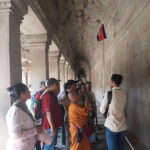
This is a small-group tour with a maximum of 10 travelers. That number changes the feel. You can ask questions without shouting, and you can move as a group without feeling like you’re stuck behind a wall of strangers.
The guide quality is a big part of why this tour scores so highly. People highlight guides like Vuthy, Sen, Sam, and Thourn for humor, clear explanations, and strong English. There’s also a mention of a guide with the Indiana Jones vibe, plus drivers like James and Mr Lucky who keep the day comfortable.
The practical takeaway: you’re not just buying a route. You’re buying someone’s ability to translate what you see, then help you get photos at the right time and place.
How the Day Fits Together (and Where It Can Feel Long)
The itinerary is simple on paper: Angkor Wat, Bayon, Ta Prohm, Banteay Kdei. The real work is timing.
- Angkor Wat (about 3 hours): sunrise plus deeper exploration
- Bayon (about 2 hours): South Gate, then central Angkor Thom/Bayon faces
- Ta Prohm (about 2 hours): fig trees and ruins left as found
- Banteay Kdei (about 1 hour): monastic complex finish
So by the time you reach stop 4, you’ll likely be temple-crewed out. That’s normal. The good news is the last stop is shorter, which helps you absorb what you’ve already learned instead of rushing through everything.
If you’re planning other activities in Siem Reap the same day, you’ll probably want to keep them light afterward.
Who Should Book This Angkor Wat Sunrise Tour
This tour is a great fit if you:
- want a planned sunrise at Angkor Wat instead of guessing where to stand
- like having a guide connect symbols to Khmer religious and cultural influence
- prefer a small group (max 10) for easier movement and photo timing
- value comfort touches like air-conditioning and cold towels during a long day
It may not be ideal if you:
- hate early mornings and know you won’t do well with a 4:30 am start
- already have your own full-day temple plan and don’t want guided transport
- plan to skip admissions and rely on a fully ticket-free day (tickets are not included)
Should You Book It?
If you want the classic Angkor highlights with a plan, this is an easy yes. The sunrise timing at Angkor Wat, the mix of Bayon/Angkor Thom, and the natural drama of Ta Prohm give you a strong “four-stop” day without chaos. The small group size plus photo help inside Angkor Wat is the part that often makes the difference between seeing temples and actually enjoying them.
Book this if you can handle the early departure and you’re okay paying for admissions separately. If early starts are a deal-breaker, then look for a later-day option instead.
FAQ
FAQ
What time does the tour start?
The meeting time is 4:30 am, and hotel pickup is around 4:45 am.
How long is the experience?
The duration is about 8 hours.
Is pickup from my hotel included?
Yes, pickup is offered.
Are meals included?
No. Meals (breakfast, lunch, dinner) are not included. The guide can still offer lunch recommendations.
What is included in the price?
The tour includes an air-conditioned vehicle, an English tour guide, and cold water & cold towels.
What is not included?
Angkor Wat tickets are not included. Tickets for other stops are also not listed as included.
How many people are in the group?
This experience has a maximum of 10 travelers.
Which temples are visited?
You’ll visit Angkor Wat, Bayon Temple (including the South Gate of Angkor Thom), Ta Prohm, and Banteay Kdei.
Is sunrise viewing included?
Yes. You watch the sunrise at Angkor Wat.
Do I get a guide for photos?
The guide helps find a good location for taking a photo inside Angkor Wat.
What if I cancel?
You can cancel for a full refund if you cancel at least 24 hours before the start time.