REVIEW · SIEM REAP
Monk Blessing Ceremony
Book on Viator →Operated by Passion Indochina Travel · Bookable on Viator
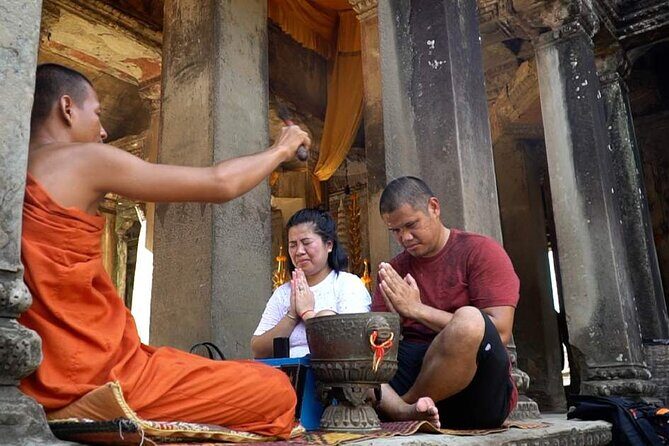
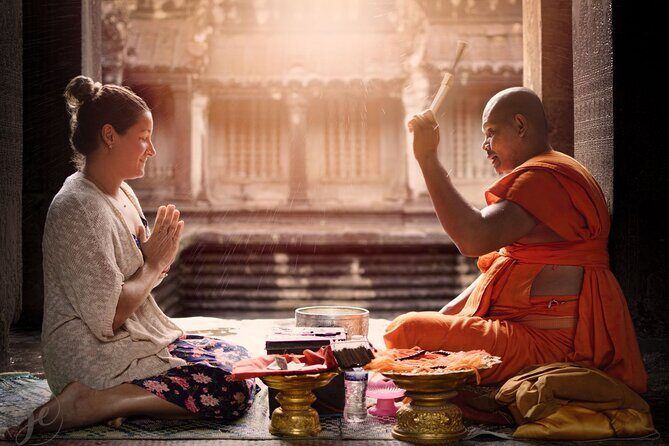
A monk blessing is short, spiritual, and real. It’s a Cambodian Buddhist ritual that feels both ceremonial and practical: you watch prayers and chanting, see water poured as part of the blessing, and get an explanation that helps the whole thing make sense. The experience also ends with a personal red thread tied on your wrist for prosperity and good fortune.
What I like most is the guided context. Your guide walks you through what the offerings mean and why you do each step, so you are not just standing there guessing. I also appreciate the hands-on touches like the sarong and towel, plus the fact that round-trip transportation is part of the package.
One thing to consider: this is religious ceremony time, so the atmosphere includes incense and ritual moments that may feel more intimate than a typical sightseeing stop. If you prefer only secular activities, or if incense smells bother you, this may not be your easiest match.
In This Review
- Key things to know before you go
- Wat Porkrom: A Calm Pagoda Stop in Siem Reap
- How The Monk Blessing Works: Chanting, Water, and Offerings
- The Red Thread Wrist Blessing and What It Means
- Your Guide and Timing: What Pickup Feels Like in Siem Reap
- What to Wear and How to Stay Comfortable During the Incense
- Included Perks That Make the Ceremony Feel Thoughtful
- Price and Value Check: Is $45 Worth It?
- Who Should Book This Monk Blessing in Siem Reap?
- When It Might Not Be the Right Fit
- Should You Book This Monk Blessing Ceremony?
- FAQ
- How much does the Monk Blessing Ceremony cost?
- How long is the Monk Blessing Ceremony in Siem Reap?
- Is pickup or round-trip transportation included?
- Where does the ceremony take place?
- What is included in the ceremony package?
- Do I receive anything during the ceremony?
- Is travel insurance included?
- What happens if the weather is poor?
- Can most travelers participate?
Key things to know before you go
- Wat Porkrom setting: A well-known pagoda experience in Siem Reap with a calm, focused feel
- A clear step-by-step guide: You’re taught what you’ll do during prayers, chanting, and water blessing
- You receive a red thread: A thin red wrist thread is tied on at the end for prosperity and good fortune
- Ceremony supplies included: Sarong and towel are provided so you can participate comfortably
- Round-trip transport included: Pickup is offered, and the guide handles the timing around your schedule
- Price and length fit a packed day: About 1 to 2 hours for the experience, with extra drive time possible
Wat Porkrom: A Calm Pagoda Stop in Siem Reap
Siem Reap can feel like you are speed-running temples. This is different. The monk blessing ceremony pulls you into a working religious space at a pagoda, where the day’s rituals are the point, not the photo backdrop.
The ceremony takes place at Wat Porkrom, and that matters. You are not just watching a performance from the outside. You’ll be guided through the flow in a way that matches how people actually show respect during Buddhist ceremonies.
The pacing is also friendly for most schedules. The ceremony is listed at 1 to 2 hours (approx.), so it works even if you have already planned Angkor-area temple time. In real life, you should still expect some added time for pickup and the drive back, since Siem Reap is spread out.
You can also read our reviews of more tours and experiences in Siem Reap.
How The Monk Blessing Works: Chanting, Water, and Offerings
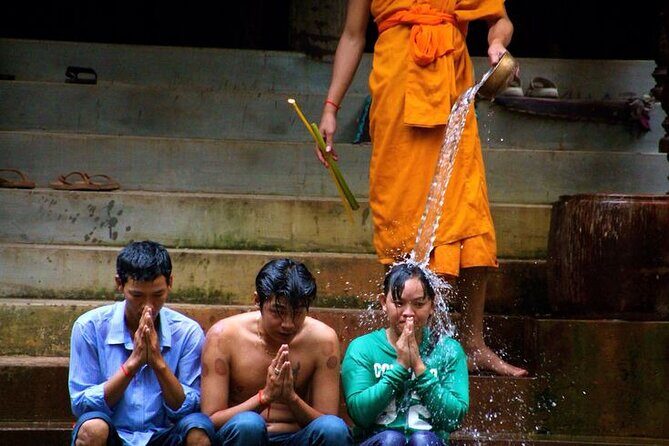
This ceremony centers on a few core actions: prayers, chanting (and singing), offerings, and a water blessing. Even if you have never participated in something like this before, the guide helps you understand where you are in the ritual and what each moment is meant to do.
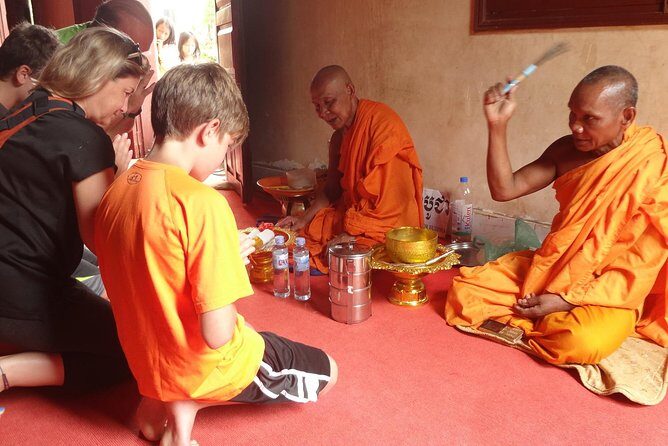
During the prayer and chanting segment, you are essentially witnessing the monks’ focus and rhythm. It can sound repetitive on paper, but in the moment it tends to feel grounding. Your guide’s job is to translate what is happening in plain language, so you can connect to the meaning instead of just counting minutes.
Then come the offerings. You’ll have the chance to see how flowers and incense are used, and how the act of offering fits into Buddhist practice. The tour description specifically calls out the aroma of burning incense and beautiful flower offerings, which is one of the sensory cues that makes this feel like a real ritual instead of a staged event.
The water blessing is the part many people remember most clearly. In the ceremony, monks pour water as part of the blessing, and your guide explains the symbolism as you watch it. If you tend to read about spirituality but want something you can actually experience, this is a good middle step.
One more thoughtful touch: the guide can tailor the experience to your preferences and schedule. That helps if you want more explanation during the ceremony, or if you need the timing to stay flexible.
The Red Thread Wrist Blessing and What It Means
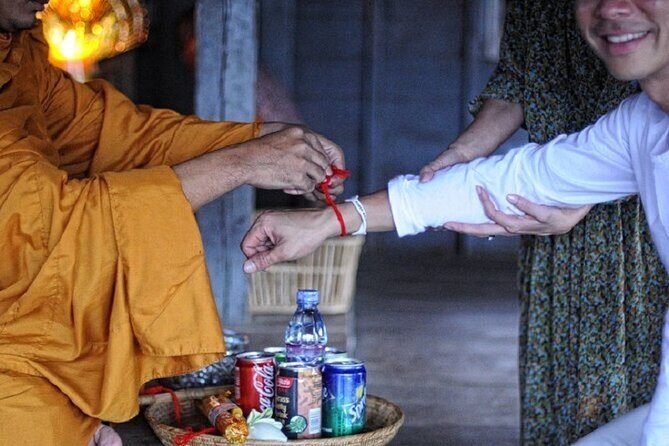
The end of the ceremony is personal. After prayers and blessings, everyone receives a thin red thread tied around the wrist. The tour description is clear that it symbolizes prosperity and good fortune.
You might think a wrist thread is just a souvenir. In this context, it is part of the ritual closure. The monks’ chanting and the water blessing lead to a moment where your participation becomes visible and lasting, even if it is small and simple.
This also makes the tour easy to explain to friends later. You do not have to sell the whole thing as spiritual philosophy. You can say you received a blessing tied on at the end, and you learned what each step represents.
A practical tip: treat the thread as part of your ceremony, not as a thing to remove right away for convenience. If you do not know what to do with it, ask your guide what locals typically do with it after the blessing.
Your Guide and Timing: What Pickup Feels Like in Siem Reap
The tour includes an English-speaking driver/guide, and that’s not a small benefit. In Siem Reap, directions and context can make the difference between feeling lost and feeling respected. Here, the guide’s role is to translate ritual steps into something you can actually follow.
In one example of how the experience runs smoothly, a visitor was picked up by Mr. Chhun Bunleng, who explained what to do with the monk during the ceremony. That kind of clear guidance matters because it prevents awkward pauses when it is your turn.
Most experiences also include round-trip transportation from your hotel. That reduces friction when you have limited time or you just do not want to navigate on tuk-tuk for a short cultural stop. It’s especially valuable if your day is already packed and you want this blessing to feel calm rather than logistics-heavy.
In the schedule, the ceremony is the main event, and the drive is the necessary add-on. Expect that the total time can run longer than 1 to 2 hours once you factor in pickup and travel, and plan your next activity accordingly.
What to Wear and How to Stay Comfortable During the Incense
This is a ceremonial space, so comfort and appropriate coverage matter. The tour includes a sarong and towel, which is one of the best parts for practical travelers. You don’t have to hunt for the right clothing before you go.
You’ll also encounter incense and ritual movement. The tour description explicitly mentions burning incense, so you should plan for the smell and smoke atmosphere. If you are sensitive to fragrances or you have asthma, you may want to bring something helpful for you (like a mask you feel comfortable using), and let your guide know you need breaks.
Short sessions can still feel intense if you are already tired from temple heat. Bring water, take shade when you can, and treat this as a moment to slow down. People often choose this kind of tour because it offers a different rhythm than the rest of the day.
Also keep in mind that your guide is expected to provide instruction and support through the ceremony. That reduces uncertainty and helps you participate respectfully without needing to memorize any rules.
Included Perks That Make the Ceremony Feel Thoughtful
This tour is priced at $45, and what you get helps explain why it can be good value. You are not only paying for a seat at a pagoda. You’re paying for interpretation, transportation, and ceremony support.
Here’s what’s included:
- English-speaking driver/guide
- Monk blessing ceremony
- Sarong & towel
- Monk offering
That package matters because it covers the most common friction points. Many cultural experiences fail because you are left to figure out logistics on your own. This one supplies the clothing basics and provides the driver/guide to keep the flow smooth.
It also includes a monk offering. Having that handled as part of the experience can reduce stress. If you prefer to participate without trying to guess what locals consider the right action, that is a real benefit.
Group discounts are mentioned in the tour summary too. If you are traveling with friends or family, it’s worth asking what pricing looks like for your group size so you can maximize value.
Price and Value Check: Is $45 Worth It?
At $45, you are paying for more than a religious moment. You’re paying for interpretation plus access to a guided blessing experience.
Consider the trade-offs:
- It’s not a long tour, so the value is about quality of guidance, not quantity of time.
- The ceremony includes participation steps and a red thread tie-on, which is a memorable “finish” rather than just viewing.
- Round-trip transport helps keep the day efficient, which often justifies the cost on its own when you would otherwise pay for tuk-tuk rides.
For many people, this is the kind of experience they do once, not repeatedly. That makes clarity and support especially important, and the included guide and ceremony supplies help you get that.
If you want to compare value to other Siem Reap activities, think of it like this: temple tickets get you sights. This gets you meaning plus an ending ritual you carry with you on your wrist.
Who Should Book This Monk Blessing in Siem Reap?
This is a strong fit if you want a cultural experience that is active but not physically demanding. The tour notes that most travelers can participate, which usually means there are no complicated fitness requirements.
It’s also a good option for:
- Families looking for an educational cultural stop (a 13-year-old and parent have found it educational and enjoyable)
- Travelers who want spiritual context without needing advanced Buddhism knowledge
- People who appreciate a guided explanation of rituals instead of silent observation
If you’re already visiting temples and want a break from the usual Angkor-focused pace, this adds a different lens. It’s not about grand ruins. It’s about lived religious practice.
When It Might Not Be the Right Fit
Even though the experience is generally accessible, it isn’t for everyone.
Consider skipping or adjusting expectations if:
- Incense and ritual chanting feel uncomfortable to you
- You want a secular tour that avoids religious participation
- You are trying to fit the ceremony into a schedule with no slack time, because the day’s drive time and weather can affect what feels comfortable
The tour also requires good weather. If conditions are poor, the experience can be rescheduled or refunded, so you should avoid planning something critical immediately before or after with zero flexibility.
Should You Book This Monk Blessing Ceremony?
If you want a calm, meaningful Siem Reap moment with a clear guide and an actual participation ending, this is an easy yes. The red thread blessing, the step-by-step explanations, and the included sarong and towel make it feel respectful and complete, not like a rushed culture stop.
I’d book it if you like ceremonies that are simple but heartfelt, and if you want your Siem Reap day to include more than temples and heat. I’d think twice only if incense, chanting, or religious participation are big “nope” items for you.
FAQ
How much does the Monk Blessing Ceremony cost?
The price is listed at $45.
How long is the Monk Blessing Ceremony in Siem Reap?
The duration is approximately 1 to 2 hours, and you should allow extra time for pickup and travel.
Is pickup or round-trip transportation included?
Pickup is offered, and round-trip transportation is provided.
Where does the ceremony take place?
The tour includes a monk blessing at Wat Porkrom in Siem Reap.
What is included in the ceremony package?
It includes an English-speaking driver/guide, the monk blessing ceremony, sarong and towel, and a monk offering.
Do I receive anything during the ceremony?
Yes. At the end, a thin red thread is tied around your wrist as a symbol of prosperity and good fortune.
Is travel insurance included?
No. Travel insurance is not included.
What happens if the weather is poor?
The experience requires good weather. If it’s canceled due to poor weather, you’ll be offered a different date or a full refund.
Can most travelers participate?
The tour notes that most travelers can participate. If you have concerns about incense or religious rituals, it’s a good idea to ask your guide beforehand.