REVIEW · SIEM REAP
Koh Ker & Preah Vihear
Book on Viator →Operated by Van Express Tours · Bookable on Viator
Two temples, big altitude energy. This Koh Ker & Preah Vihear trip strings together Khmer ruins with the lived-in feel of rural Cambodia, and it’s noticeably hillier than you might expect. I like the small-group setup (max 2 travelers), which makes stops feel less rushed, and I like the careful guide-and-driver pairing you get with Vanra and driver Mr Buny, praised for safe, respectful pacing. One consideration: temple entrance fees, food, and accommodation are not included, and the ground can be tiring if you are not used to uneven paths and climbs.
You start at 8:30 am with pickup offered and cold water included, then spend Day 1 working through Koh Ker and nearby ruins before finishing with quieter moments up on Kulen Mountain at Peung Kom Nuo. Day 2 focuses on Preah Vihear, a Hindu temple set high along the Dongrek mountain range on the Cambodia–Thailand border, then adds the short but heavy stop at the Ta Mok House. The mobile ticket is handy, too, if you prefer less paper-fuss while you’re on the road.
In This Review
- Key things you’ll notice on this Koh Ker and Preah Vihear trip
- Koh Ker: a Khmer capital on a hill (and why it changes your whole trip)
- Beng Mealea: ruin + nature, and how to enjoy it without rushing
- Peung Kom Nuo on Kulen Mountain: a short breather with a different mood
- Preah Vihear: the border temple you actually feel in your body
- Ta Mok House: one short stop that adds real context
- Price and Logistics: what the $100 really buys you
- What Vanra and Mr Buny do differently (and why safety matters on hills)
- Timing on the road: how to handle two long days without burning out
- What to pack (since the tour is active but not described as hardcore)
- Who this tour suits best
- Should you book it?
- FAQ
- How long is the Koh Ker & Preah Vihear tour?
- What time does the tour start?
- Is pickup offered?
- What’s included in the price, and what costs extra?
- How many people are in the group?
- Can I get a full refund if I cancel?
Key things you’ll notice on this Koh Ker and Preah Vihear trip
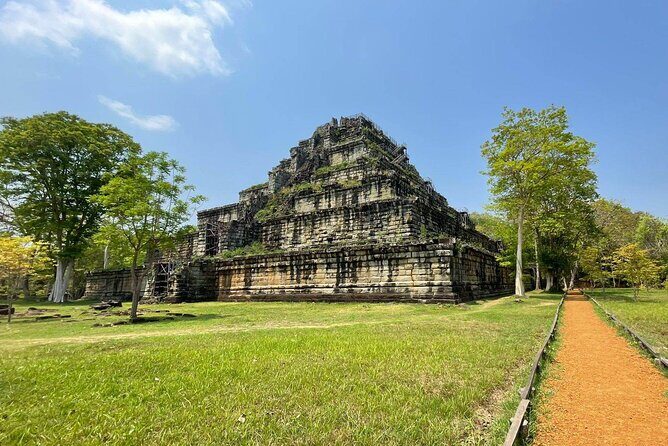
- Koh Ker feels like an old Khmer city you find by accident, built between 928 AD and 944 AD and known for its tall seven-tiered prang pyramid.
- Beng Mealea is a jungle-relic vibe, built by Suryavarman II in the early 12th century, with plants growing around the structures.
- Peung Kom Nuo is a quieter Kulen Mountain stop, a short add-on that helps break up the bigger temple moments.
- Preah Vihear is the big vertical day, with a 3-hour visit on top of the Dongrek mountain range near the Thailand border.
- Ta Mok House gives context beyond temples, a 30-minute visit tied to the Khmer Rouge leader active from 1975–1979.
- You travel with a driver who keeps things safe and calm, including regular breaks, and a guide like Vanra who helps you connect the dots.
Koh Ker: a Khmer capital on a hill (and why it changes your whole trip)
Koh Ker is one of the oldest cities in the Khmer Empire, and it carries that “how is this not more famous?” feeling. The Khmer built it as a capital between 928 AD and 944 AD, and it once supported over 10,000 people—which is wild when you stand in what looks like pure stone and quiet air now.
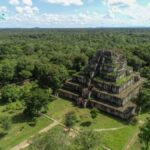
The centerpiece is the seven-tiered Prang pyramid. It’s the kind of structure that makes you naturally look up, then walk around and study the layers. Even if you’ve seen big temples around Siem Reap, Koh Ker hits differently because the setting is more hilly and spread out than the flat, postcard-heavy sights.
Practical note: Koh Ker’s terrain means you should be ready for a bit of effort. The stop is listed as about 6 hours, so this is not a quick photo-and-go. It’s a day where you learn the feel of the place—where the views start to open up, where the path gets uneven, and how the ruins sit in the terrain rather than on a perfectly leveled plaza.
I also like that this part of the trip helps you understand Khmer power as something that wasn’t stuck in one spot. Koh Ker feels like a chapter of empire-building, not just a monument.
You can also read our reviews of more tours and experiences in Siem Reap.
Beng Mealea: ruin + nature, and how to enjoy it without rushing
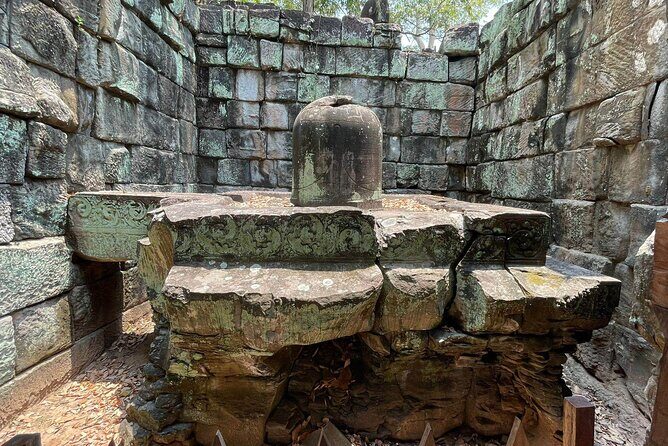
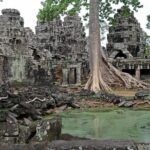
Next comes Prasat Beng Mealea. This is the kind of ruin where nature has had time to work on the stone, and it shows. The temple was built by King Suryavarman II in the early 12th century, and it’s become well known because of the plants growing around the temple.
What I love about Beng Mealea is the texture. Angles break in unexpected ways. Stones sit in odd relationships. Creeping greenery changes the “read” of the site, so it feels less like a restored museum and more like an old place that got reclaimed by time.
This stop is shorter—about 1 hour—but you can still make it count. Go slow for a few minutes, then use the rest of the hour to take in different views and angles. If you try to sprint through, you miss what makes Beng Mealea feel alive.
One small consideration: because the area can be overgrown and uneven, wear shoes you trust. I wouldn’t plan on sandals-only days here.
Peung Kom Nuo on Kulen Mountain: a short breather with a different mood
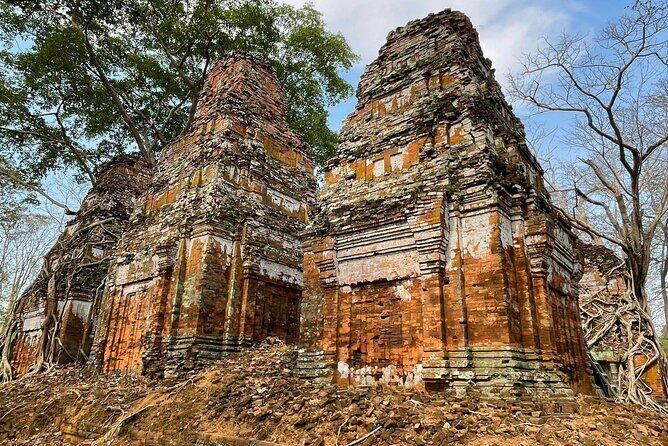
After the main ruin time, you get a change of pace with Peung Kom Nuo, listed as about 1 hour. This stop is on Kulen Mountain, and the point of it is variety. It breaks the day so Koh Ker and Beng Mealea don’t blur together.
I like this kind of stop because it gives your brain a rest. Temples can become a pattern fast: same colors, same carvings, same “look up now” rhythm. Peung Kom Nuo helps you reset your eyes and scan the area for how the ruins and daily life sit in the hills.
Also, this is where the “rural daily life” idea shows up more clearly. The tour description frames the day as more than monuments, and these shorter stops are where you feel that shift. You’re not just traveling temple-to-temple—you’re moving through the Cambodia that exists outside the famous Angkor bubble.
Bring patience for the driving rhythm. Even when the stops are timed, the roads and the day’s energy set the pace.
Preah Vihear: the border temple you actually feel in your body
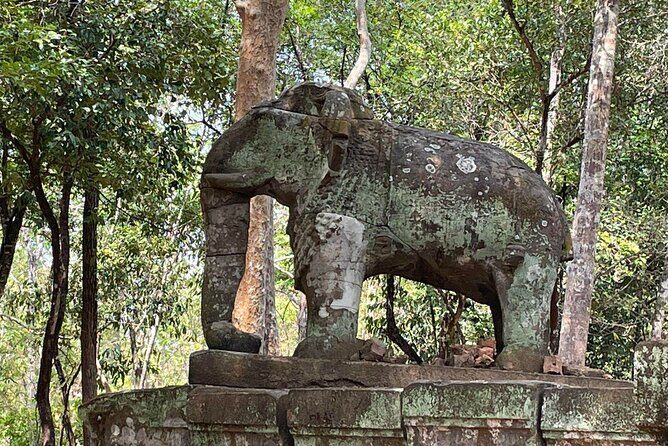
Day 2 is anchored by Preah Vihear Temple, about 3 hours. This is a Hindu temple built during the Khmer Empire, and it sits on top of the Dongrek mountain range along the Cambodia–Thailand border.
If you’ve ever felt temples are mostly about decoration, Preah Vihear can correct that idea. The big factor is location. Being up high changes everything: light, wind, and the way you look across distance. It’s the kind of site where you stop and realize you’re not just touring a building—you’re touring a vantage point.
The tour format here also helps. You’re given enough time to move at an easy pace and to understand the temple beyond a checklist. Three hours is long enough to step back, ask questions, and actually notice features rather than just collecting photos.
A practical consideration: mountain-top stops can feel tougher than you expect. Even if the walk isn’t extreme, the altitude feeling and uneven ground can add up. Stick with moderate fitness, take breaks when your guide offers them, and plan to move slowly.
Ta Mok House: one short stop that adds real context
Right after Preah Vihear, you visit Ta Mok House for about 30 minutes. This is connected to Ta Mok, a formal Khmer Rouge leader from 1975–1979.
This stop matters because it reminds you that Cambodia’s story is bigger than temple dates. In many places, it’s easy to treat the past as something aesthetic—carvings, stone, and old legends. Ta Mok House shifts the tone toward the modern history people lived through, and the contrast can be sobering.
Keep it simple here: listen, read what’s available, and give the moment the seriousness it deserves. It’s short by design, so don’t treat it as a quick photo break. You’re there to understand why this place is remembered.
Price and Logistics: what the $100 really buys you
At $100 per person for a 2-day trip, this can be good value if you care about structure and fewer headaches.
Here’s what’s included:
- Transport
- Driver and tour guide
- Cold water
Here’s what’s not included:
- Entrance fees
- Food
- Accommodation
- Tips and other expenses
That split matters. Temple entrance fees can add up in Cambodia when you stack multiple sites, and meals and lodging are usually where you spend the most if you’re staying overnight. The tour price itself covers the mechanics—getting you there, keeping you safe with a driver, and giving you guide time to interpret what you’re seeing.
Two details also make this feel more personal: it’s set up with a maximum of 2 travelers, and pickup is offered. A tiny group can be a big deal on days that involve hills and long drives, because you don’t get stuck waiting for a large crowd to regroup.
Also, the tour uses a mobile ticket, which is a small thing but can reduce on-the-spot friction.
What Vanra and Mr Buny do differently (and why safety matters on hills)
The biggest strength of this tour isn’t just the temples. It’s how the trip is paced and driven.
Guides like Vanra are repeatedly described as respectful and engaging, with explanations that match what you’re actually looking at. Driver Mr Buny is singled out for careful, safe driving, including not getting lost in distractions and keeping regular rest breaks when needed.
On a trip like this, safety and timing are part of the sightseeing. If you feel rushed, you skip details. If the driving is careless, you stop enjoying the scenery. A calm, experienced approach makes a big difference, especially when you’re moving between hillier sites and you don’t want the day to feel like endurance training.
And there’s another benefit: with a guide who can explain what you’re seeing, stops like Koh Ker and Beng Mealea become more than impressive ruins. You learn what to look for, so you leave with a stronger mental map.
Timing on the road: how to handle two long days without burning out
Your start time is 8:30 am, which means you’ll want breakfast planned and ready. This isn’t a lie-in tour.
Day 1 is stacked with big temple time: Koh Ker (about 6 hours), then Beng Mealea (about 1 hour), and Peung Kom Nuo (about 1 hour). That’s a full day, even if each stop is timed.
Day 2’s flow is more focused: Preah Vihear (about 3 hours), then Ta Mok House (about 30 minutes). It’s still a mountain day, but the day’s structure feels more like a targeted finale than a nonstop grind.
My advice: plan to keep your expectations realistic. You will not see everything at maximum depth everywhere. Instead, aim to absorb the “feel” of each location: Koh Ker’s capital-energy on the hill, Beng Mealea’s ruin-and-nature chaos, Peung Kom Nuo’s calmer pause, and Preah Vihear’s high-altitude temple presence.
What to pack (since the tour is active but not described as hardcore)
The tour notes you should have a moderate physical fitness level. That’s your cue: wear shoes for uneven ground, and be ready for hills.
You can also lean on what the tour provides:
- Cold water is included, so you can reduce what you need to carry.
- The guide and driver can help set the pace if you take breaks when offered.
Beyond that, pack like you’re doing a real two-day sight route: sun protection, a hat or cap, and layers if the mountain air feels cooler. I’d also bring something small for hands and face because long drive days get dusty.
If you’re sensitive to walking discomfort, consider how long the Koh Ker stop is. That 6-hour block is where comfort makes or breaks your experience.
Who this tour suits best
This tour fits best if you want:
- Khmer ruins beyond the most famous Angkor circuit
- A small group experience where pacing can be flexible
- The combination of temple viewing plus a stop that connects to modern Cambodian memory
It also suits you if you enjoy learning while you walk—because the setup includes a tour guide and the site choices invite questions.
If you prefer totally flat, easy strolling, this may feel too hilly for you. But if you can handle moderate effort and you like variety, it’s a strong match.
Should you book it?
Book it if you want a two-day route that mixes hilltop Khmer ruins with rural-feeling Cambodia and a thoughtful historical stop. The value is in the included transport, guide time, and the small group limit, plus the praised safe driving.
Skip it if you know you don’t like uneven ground, long temple days, or if you don’t want to manage extra costs for entrance fees and meals. With that said, for many people, Koh Ker and Preah Vihear are exactly the kind of combo that makes a short Cambodia trip feel complete.
FAQ
How long is the Koh Ker & Preah Vihear tour?
The tour runs for about 2 days.
What time does the tour start?
The start time is 8:30 am.
Is pickup offered?
Yes, pickup is offered.
What’s included in the price, and what costs extra?
Included are transport, the driver, the tour guide, and cold water. Not included are entrance fees, food, accommodation, and tips/other expenses.
How many people are in the group?
The tour has a maximum of 2 travelers.
Can I get a full refund if I cancel?
Yes. You can cancel for a full refund up to 24 hours before the experience starts. If you cancel within 24 hours, there’s no refund.