REVIEW · KAMPOT
Kampot: Cultural Bike Experience – Local Life & Countryside
Book on GetYourGuide →Operated by Jason's Tour · Bookable on GetYourGuide
Temple bells and countryside roads in one ride. This Kampot bike tour takes you off the main tourist lanes and into rural villages, where you’ll walk through several Buddhist monastaries, learn how faith shows up in daily life, and hear the story of Cambodia from the ground level. The route is slow and relaxed, with plenty of pauses for photos and short walks between viewpoints and temple stops.
I especially liked two things. First, the biking feels comfortable: you cover about 15 km at an easy pace on quiet, mostly empty country roads. Second, the best part is the food and people connection—the home-cooked Cambodian meal with a local family. The guide, Jason, brings serious depth without turning it into a lecture, and the supportive local help from Vin makes the day feel human and welcoming.
One thing to keep in mind: this is not a sit-and-watch tour. If you can’t ride a bike, or if long stretches of walking in villages and temple areas are tough for you, this won’t match your comfort level. It’s also not designed for kids under 12, wheelchair users, or anyone with mobility impairments.
In This Review
- Key things I’d look for on this Kampot bike day
- Why this Kampot countryside bike tour feels more real than sightseeing
- The ride details: 6.5 hours, about 15 km, and all the comfort matters
- Monastery walks: Wat Jum Kreal and the rhythm of Buddhism in daily life
- Tuek Chhou photo stop: a simple break that adds real perspective
- Palm sugar farm visit: the sweet work behind a local product
- Rice farming community learning: how cultivation shapes village life
- Lunch in a traditional wooden house: when the day turns personal
- Price and value: what $35 covers in a 6.5-hour guided day
- Timing and pace: why the route feels easy even with multiple stops
- Who should book this, and who should skip it
- Should you book Jason’s Kampot Cultural Bike Experience?
- FAQ
- Where does the tour start?
- How long is the tour?
- What is included in the price?
- Is the route hilly?
- Which Buddhist monastaries are visited?
- What language is the guide?
- Who is the tour not suitable for?
Key things I’d look for on this Kampot bike day
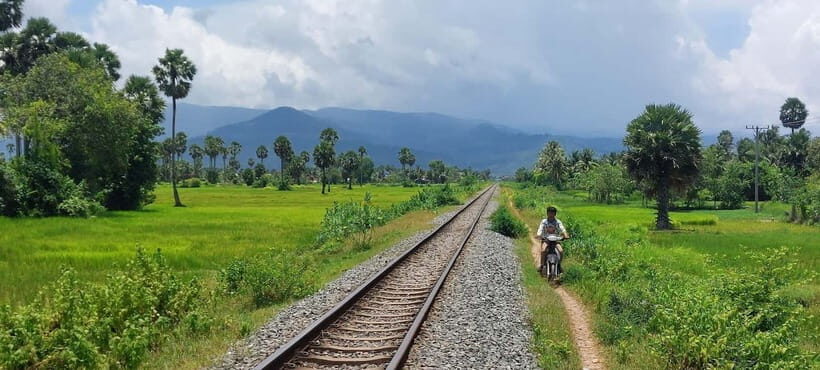
- A flat 15 km route with slow cycling and frequent breaks, so the day stays easy on the legs
- Three Buddhist monastary visits (including Wat Jum Kreal, Wat Ang Prey Serey Meanchey, and Wat Prey Tom) with guided context
- Home-cooked lunch with a local family in a traditional wooden house
- Palm sugar farm visit plus explanations of how local production works
- Rice farming community learning focused on how rice cultivation is done
Why this Kampot countryside bike tour feels more real than sightseeing
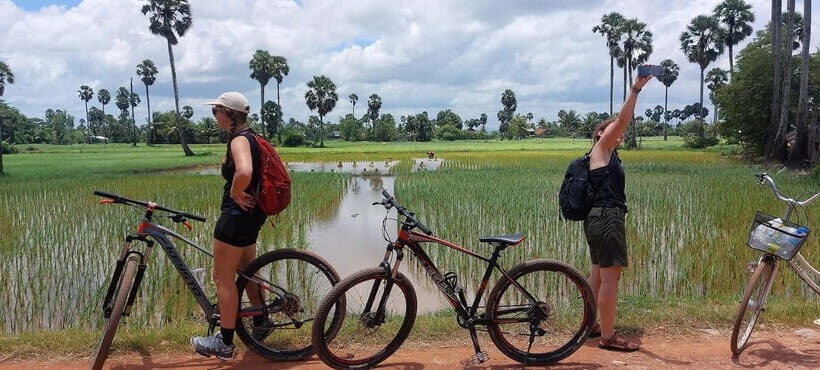
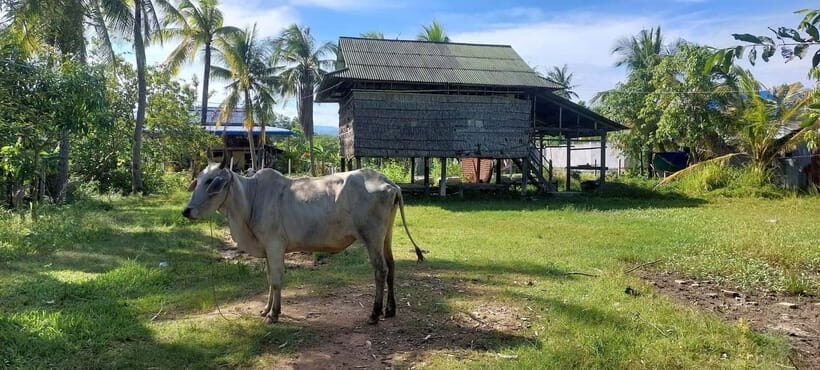
Kampot is easy to visit as a pretty town with pepper and riverside cafes. This tour pushes beyond that. You spend the day in village space—roads that feel local, pagodas that are part of everyday routines, and farm stops where work and tradition overlap.
What makes it especially appealing is that you’re not only looking at places. You’re learning how Cambodia functions: faith, farming, and community life. The day includes explanations of local history and culture, plus hands-on contact with real families you meet along the way.
And because you’re on bicycles, the pace naturally stays human. You’re close to the scenery and you can actually notice details that you miss when you’re in a car—small roadside moments, how fields sit next to homes, and how villages are arranged around work and worship.
You can also read our reviews of more tours and experiences in Kampot.
The ride details: 6.5 hours, about 15 km, and all the comfort matters
This is a 6.5-hour guided experience built around an easy cycling plan. You’ll ride roughly 15 km total, and the route is described as entirely flat with no hills. That matters. Flat means less stress on your legs and more energy for the walking tours and temple time.
The schedule uses a repeating pattern:
- short cycling segments between stops
- scenic stretches where you pause and take in views
- breaks plus guided walks where you learn something specific
Bicycle rental is included, and the tour also includes drinks. That combination is a real value boost. If you’ve paid for bike rental and water on your own before, you know how fast costs add up once you start moving outside the city center.
Monastery walks: Wat Jum Kreal and the rhythm of Buddhism in daily life
One of the core goals of this tour is to show you Buddhism as a living part of community life, not just as a postcard. You visit multiple Buddhist monastaries, each with a guided tour.
The first monastic stop on the route is វត្តជុំគ្រៀល (Wat Jum Kreal). Expect a break time plus a visit and guided walk. This kind of stop is valuable because it teaches you what you’re seeing while you’re standing in the space, including how Buddhism is practiced in villages.
Later you return to monastic ground again at Wat Ang Prey Serey Meanchey, where the tour includes guided time and even free time. That mix is smart. Guided time gives you the meaning. Free time gives you a chance to look around without feeling rushed or pushed along.
Finally, you finish the temple sequence with a stop at Wat Prey Tom. By the third monastary, you start connecting the dots yourself: how communities organize around temple life, and how different village pagodas still serve the same broad spiritual purpose.
Practical note: you’re doing guided walking tours during temple visits, so wear comfortable shoes. Also, temple areas can involve quiet rules and respectful behavior—your guide will help you get it right.
Tuek Chhou photo stop: a simple break that adds real perspective
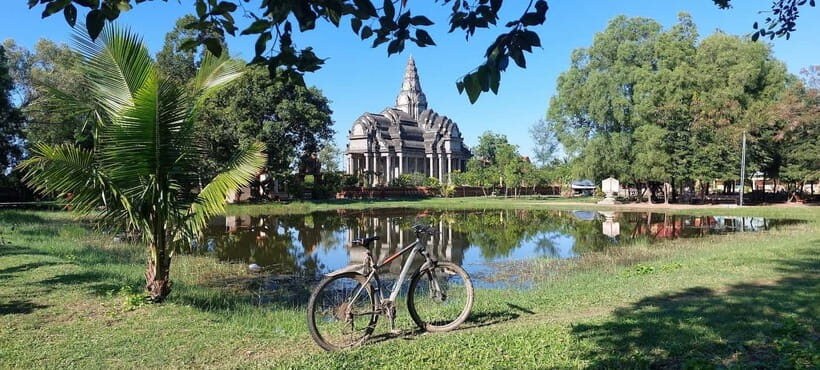
Not every stop in a countryside tour is about a building or a lecture. Tuek Chhou is scheduled as a photo stop with sightseeing and cycling time around it.
This matters because it changes the texture of the day. Instead of being “on” the entire time, you get a natural rhythm: ride, pause, look, breathe. And photo stops are often where you notice the land for what it is—small details like the way roads thread between homes, or how fields sit in relation to water and temple areas.
You don’t need to be an expert photographer. You just need to be willing to look slowly. That’s how these rural moments start to feel memorable.
Palm sugar farm visit: the sweet work behind a local product
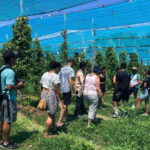
One of the big cultural stops included is a palm sugar farm run by a local family. A farm visit isn’t only about the finished product. It’s about process.
This is where your day starts turning from “seeing Cambodia” into “understanding how people make a living.” You’ll get explanations connected to local production and daily work. And because the farm is family-run, the story comes with a human scale. You’re not just viewing an operation from a distance—you’re hearing how it fits into household routines.
For me, this kind of stop is one of the reasons to choose a tour like this instead of renting a scooter and trying to guess your way around rural Kampot. The guide helps you notice what you would otherwise miss.
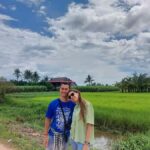
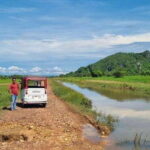
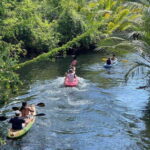
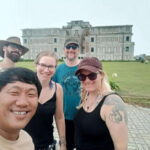
Rice farming community learning: how cultivation shapes village life
Rice is at the center of Cambodia’s food system, and this tour includes a rice farming community stop where you’ll learn about rice cultivation. You’ll also see rice fields as part of the broader “farms and villages” focus.
What I like about this part of the day is that it’s practical learning. Rice cultivation is one of those topics where a quick, guided explanation can change the way you see the landscape. Once you understand what’s happening in the cycle—why fields look the way they do, why timing matters, how water and work relate—you stop thinking of farmland as just scenery.
It also supports the tour’s bigger goal: showing you modern Cambodia away from tourist lanes. Farming communities are a direct window into economy, routine, and how people plan their days around seasons.
Lunch in a traditional wooden house: when the day turns personal
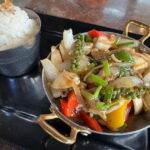
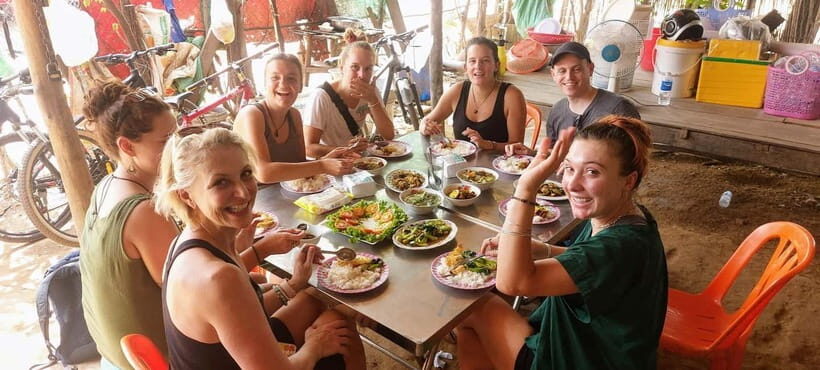
The best meal stories usually aren’t about restaurants. They’re about the moment you share with a family. This tour’s highlight is a stop at a traditional wooden house where you enjoy an authentic home-cooked Cambodian meal.
Lunch is scheduled during the day’s temple segment at Wat Ang Prey Serey Meanchey, and it’s built around that local-family meal experience. So you get the cultural learning and then you get the food that reflects it—simple, filling, and tied to real daily life.
Drinks are included too, which is a small detail that makes a big difference when you’re biking and walking for hours. You don’t want the “Where do we buy water?” moment to steal time from the experience.
If you’re used to tours that sell food as a checkbox, this is the opposite. The meal is presented as a relationship moment—one more step in meeting people, not just feeding a group.
Price and value: what $35 covers in a 6.5-hour guided day
The price is $35 per person for a 6.5-hour guided tour. At first glance, that’s affordable for a countryside day. What makes it feel like better-than-average value is what’s included:
- bicycle rental
- drinks
- lunch
- English-speaking live guide
- guided walks at several sites
A bike tour with food included usually costs more once you add up rental, transport, and meals on your own. Here, you’re paying for a full day structure: transport between areas (by bike), time with a guide, and the major stops where your questions actually get answered.
In other words, you’re not just buying access to places. You’re buying context—and in rural Cambodia, that context is what turns a road trip into a real cultural experience.
Timing and pace: why the route feels easy even with multiple stops
The itinerary is built to keep the day moving without feeling frantic. You ride in shorter chunks—often 15 to 30 minutes at a time—then you slow down for break time and guided walks that last about an hour in key places.
This pacing helps you handle the practical reality of a hot, active day. You’re outside, walking around temples and farms, and taking photo stops. Without those planned breaks, you’d feel drained faster.
Also, because the route is flat and traffic is described as very low, you won’t feel like you’re constantly steering through chaos. It’s more like a slow “moving conversation” between landscapes, communities, and the guide’s explanations.
Who should book this, and who should skip it
This tour fits best if you:
- can ride a bike confidently
- enjoy cultural walking stops more than “just photos”
- like meeting families and learning how daily life works
- want a calmer countryside route with flat cycling
You should skip it if you can’t ride a bike, if you have mobility impairments, if you use a wheelchair, if you’re under 12, or if you’re over 95 years old. The day includes walking tours and extended time outdoors, so comfort matters.
If you’re the kind of traveler who gets bored after seeing one temple, this one may be a good match because it keeps adding layers: pagodas, palm sugar production, rice cultivation, and a home-cooked lunch that anchors everything.
Should you book Jason’s Kampot Cultural Bike Experience?
I’d book this tour if you’re looking for Kampot that feels local. The combination of flat biking, multiple Buddhist monastery visits, and two farm-focused stops (palm sugar and rice) makes the day more balanced than a single-theme tour. Add an English guide like Jason, plus local support from Vin, and you get a day where questions get answered in real time.
I wouldn’t book it if you want a low-effort day with minimal walking. This is structured for movement. You’ll bike and you’ll walk. If that works for you, it’s one of the smarter ways to understand rural Kampot in a single afternoon-length block.
If you want, tell me your dates and your biking comfort level, and I’ll help you decide whether the pace sounds like a good fit for you.
FAQ
Where does the tour start?
The meeting point is the Kampot Pepper Shop near the Old Market.
How long is the tour?
The duration is 6.5 hours.
What is included in the price?
The tour includes bicycle rental, all drinks, and lunch.
Is the route hilly?
No. The route is described as entirely flat with no hills.
Which Buddhist monastaries are visited?
The tour includes visits to វត្តជុំគ្រៀល, Wat Ang Prey Serey Meanchey, and Wat Prey Tom.
What language is the guide?
The live tour guide speaks English.
Who is the tour not suitable for?
It is not suitable for children under 12, people with mobility impairments, people who can’t ride a bike, wheelchair users, or people over 95 years old.