REVIEW · KAMPOT
Kampot Countryside: Authentic Khmer Cooking Class
Book on GetYourGuide →Operated by Eco Lotus Kampot · Bookable on GetYourGuide
A Khmer cooking class can feel like home.
In Kampot Province, this one starts with a local market run and ends with you cooking and eating at Eco Lotus Kampot while looking out over paddy fields and Bokor Mountain. I especially liked shopping with Samon (he’s friendly, funny, and patient with English), and I loved how the class is built around a real family home, not a demo kitchen. One thing to consider: the setting is informal and you may need to be comfortable sitting on the floor.
The day is also timed well for food-first travelers. You’ll visit the market for fresh ingredients, gather herbs and vegetables from the garden, then learn to make three traditional Khmer dishes plus a dessert. Morning or afternoon classes are available, and vegetarian classes can be arranged, but it’s not suitable for people with nut allergies since they can’t guarantee peanuts (or other ingredients) weren’t used.
Eco Lotus Kampot itself is part of the experience. You’ll have lounge, bar, and bathroom facilities onsite, plus the option of a cool stream swim when conditions allow. If you want a meal that feels local, practical, and relaxed, this class is a strong pick.
In This Review
- Key highlights worth planning for
- Eco Lotus Kampot: a countryside kitchen with Bokor Mountain views
- First stop: the market run and ingredient hunting with Samon
- Cooking 3 Khmer dishes and a dessert in a real family-style setup
- What the meal is like afterward (and the one “sit-down” detail)
- The paddy views and a seasonal stream swim
- Price and value: what $24 buys in real terms
- Who should book Kampot Countryside, and who should skip it
- Quick tips so your day runs smoothly
- Should you book this cooking class?
- FAQ
- Where is the cooking class held?
- How long is the experience?
- What dishes will I cook?
- Can I join if I eat vegetarian?
- Is pickup included?
- Is a cooking class recipe included?
- Can I swim in the stream?
- Is this class safe for people with nut allergies?
- What should I bring?
- Is there booking flexibility?
Key highlights worth planning for
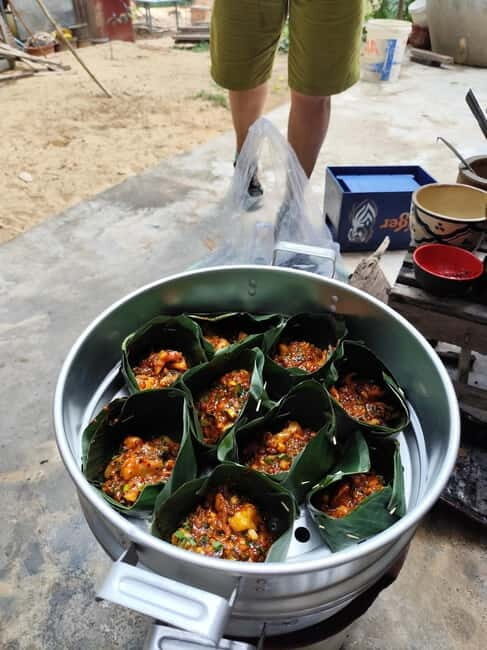
- Market shopping with Samon: you pick ingredients directly, including herbs and dessert tasting along the way
- Garden-to-cooking: seasonal vegetables and herbs come from the property itself
- Four dishes total: 3 Khmer dishes plus a dessert (examples vary, like Fish Amok or Lok Lak)
- Countryside setting: paddy fields and Bokor Mountain views while you learn and eat
- Seasonal stream dip: swimming is possible, but only if there’s water and weather is right
Eco Lotus Kampot: a countryside kitchen with Bokor Mountain views
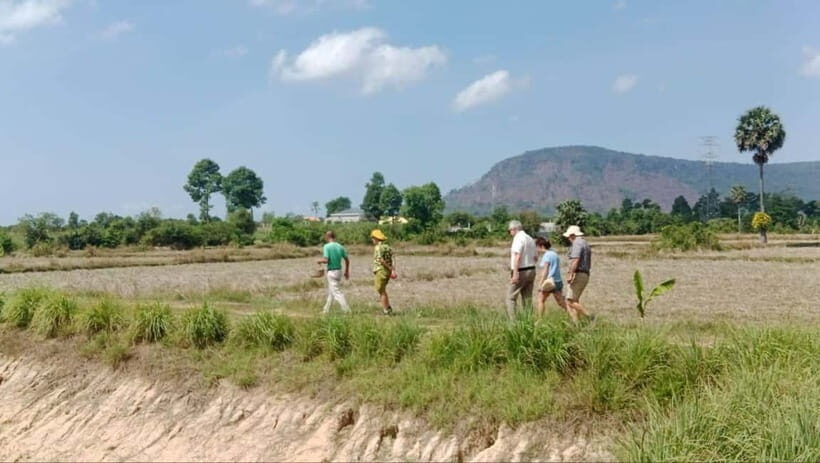
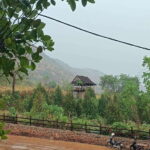
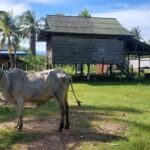
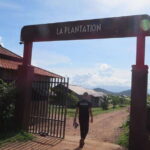
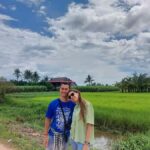
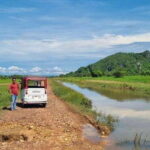
This is a countryside home-cooking class, based at Eco Lotus Kampot in Kampot Province. The vibe is calm and outdoorsy: you’re in a typical Khmer village-style setting with views of rice fields, and you can see Bokor Mountain from the property area. It’s not staged. The experience feels more like you’re visiting a family and joining in than attending a formal cooking studio.
You’ll also have practical comforts available onsite. There’s a lounge area, a bar, and bathrooms, so you’re not roughing it. And because the class includes transport, you’re not stuck navigating rural roads on your own after a long day in Kampot.
If you’re the type who likes taking breaks between activities, this place makes it easy. After the cooking and meal, you can slow down, look at the fields, and enjoy the quiet. For me, that’s a big part of the value: you’re paying for the whole “morning/afternoon story,” not just the time at the stove.
You can also read our reviews of more cooking classes in Kampot
First stop: the market run and ingredient hunting with Samon
The tour starts with pickup from your guesthouse or hotel. You’ll ride by tuk tuk or car, and the driver meets you at reception. From there, you head to a local market where you buy fresh ingredients for your class.
This is one of the best parts of the experience because you’re not just learning recipes—you’re learning what good ingredients look like and how they’re used. You’ll be guided by an English-speaking guide (and Cambodian), and Samon is the name that comes up often for a reason: he’s described as upbeat, patient, and willing to slow down his explanations so your English-level stays comfortable.
At the market, you follow the process like a real cook would: you choose items, see how stalls work, and taste your way through some local treats. One person even mentioned getting to try a few kinds of dessert while shopping. Even if you don’t go deep into sweets, you’ll still get a stronger sense of flavors before you start cooking.
Practical tip: markets are hot, busy, and hands-on. That’s why they recommend bringing a hat, sunscreen, and insect repellent. If you’re someone who hates sticky heat, plan to wear breathable clothes.
Cooking 3 Khmer dishes and a dessert in a real family-style setup
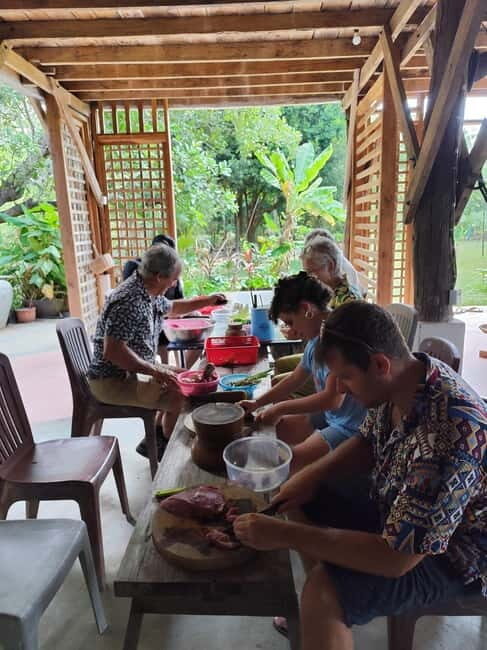
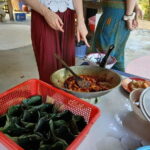
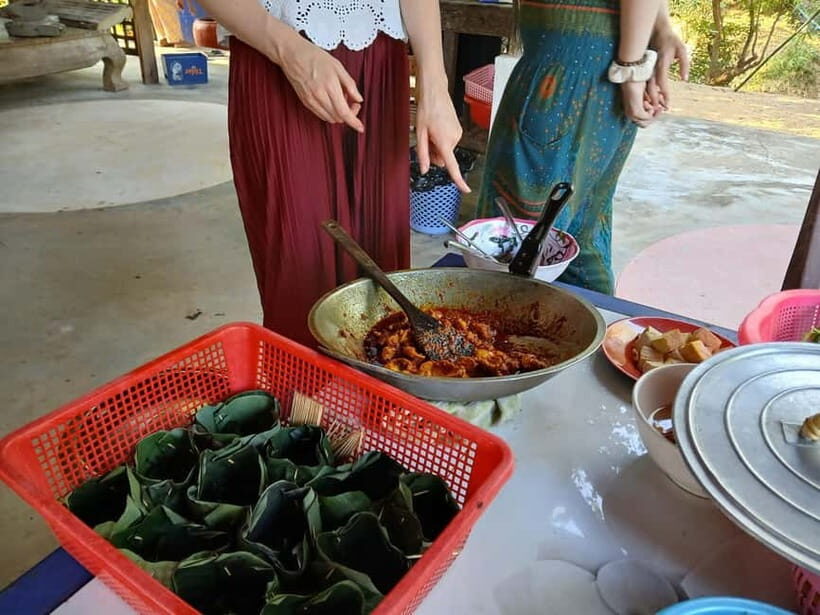
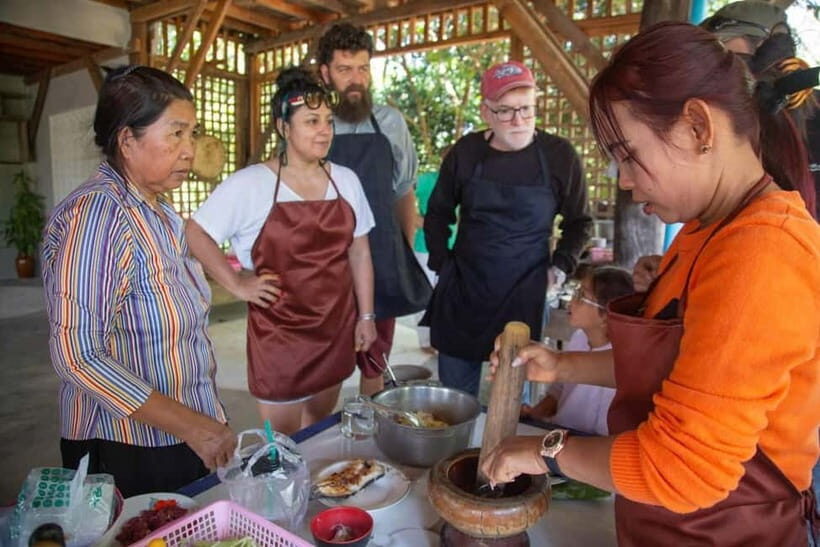
After the market, you head back to Eco Lotus Kampot to cook. The class is taught in a family-style learning environment, with help from the local family and the guide. That matters because it shapes the teaching: you’re not watching from the sidelines. You’re in the process.
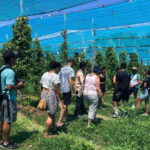
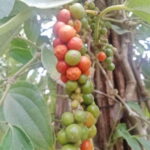
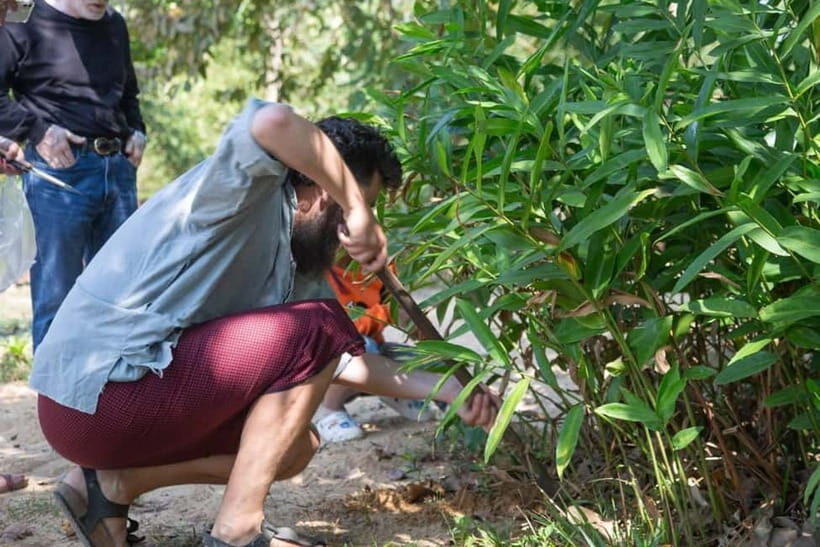
Before you cook, you’ll gather seasonal herbs and vegetables from the garden. This is where the class becomes more than cooking techniques. You get to see what’s growing and pick ingredients that match the season. It also makes you appreciate flavor building, especially with Khmer cooking where aromatics and spice mixes do a lot of work.
You’ll learn three traditional Khmer dishes plus a dessert. Specific dishes can change, but the examples you might cook include Fish Amok, Lok Lak, Palm Sugar Bananas, and Khmer Curry. If you’re hoping for one dish in particular, it’s worth checking before you go, since the menu can shift based on what’s available.
The instruction is designed so you can actually recreate the food later. Some people received takeaway recipes, while others felt recipes weren’t provided. To avoid disappointment, I’d ask upfront whether you’ll get a recipe sheet at the end, and if yes, how it’s delivered.
Timing-wise, you’re signing up for 3.5 hours total. That’s long enough to shop, cook actively, and eat, but not so long that it turns into a travel-day blur.
Vegetarian classes can be arranged, and vegetarian options are available upon request. If you go this route, tell the team clearly before the class so they can plan ingredients and adjust the dishes. (Also note the nut allergy reality below, because vegetarian doesn’t automatically mean allergen-safe.)
What the meal is like afterward (and the one “sit-down” detail)
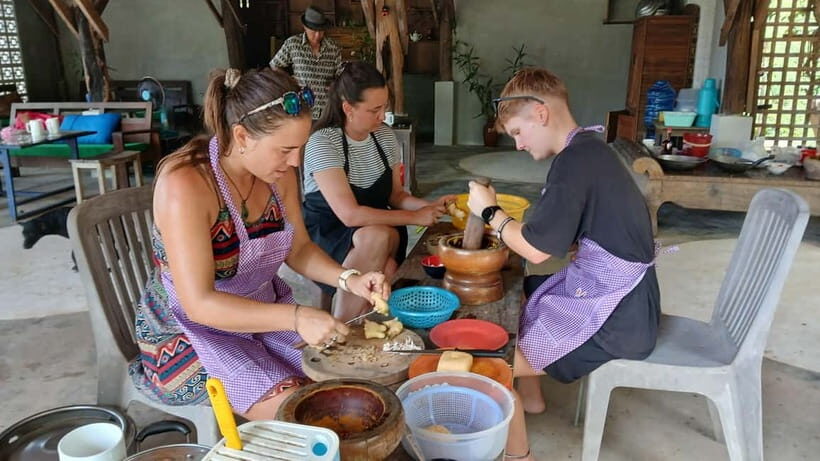
Once you finish cooking, you eat your dishes family-style in the countryside setting. This is the payoff: you taste what you made, while the food is still at its best.
One detail to know: the class setting can be informal, and some people may need to sit on the floor during parts of the experience. If that’s uncomfortable for you, consider it ahead of time so you’re not spending the meal day fighting your own body.
Portions can also surprise you. In at least one case, the amount of food felt like more than two people could comfortably finish. That doesn’t mean it’s always “too much,” but if you’re booking as a couple, go in knowing that Khmer home cooking tends to be generous.
Now, the allergen topic is important. They can cater for allergies, but they can’t guarantee peanuts or other food items weren’t used in the kitchen. And the activity explicitly isn’t suitable for people with nut allergies. If that applies to you, treat this as a hard stop rather than a “maybe it’ll be fine” situation.
The paddy views and a seasonal stream swim
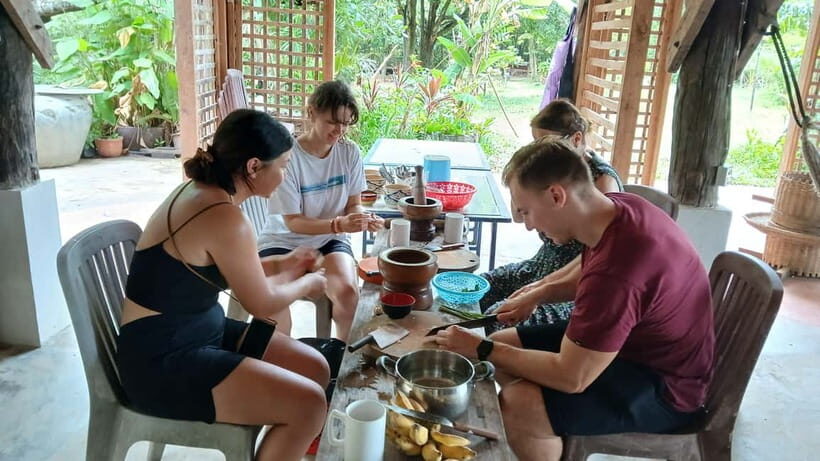
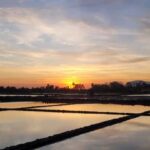
After your meal, you get to enjoy the property views—paddy fields and Bokor Mountain—while the day winds down. This is when the experience feels most like Kampot itself: slow, rural, and green in a way city life doesn’t match.
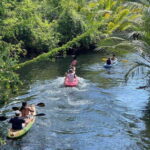
There’s also the option to take a dip in a cool stream, but it’s seasonal and weather-dependent. If you want to swim, ask at booking time whether there’s water in the stream. Bring your own towel and swimwear, because you should be ready rather than hoping.
Even if you don’t swim, the outdoor setting is part of the charm. The garden and stream area make the whole day feel lighter, like you’re spending a few hours in nature instead of only indoors at a cooking station.
Price and value: what $24 buys in real terms
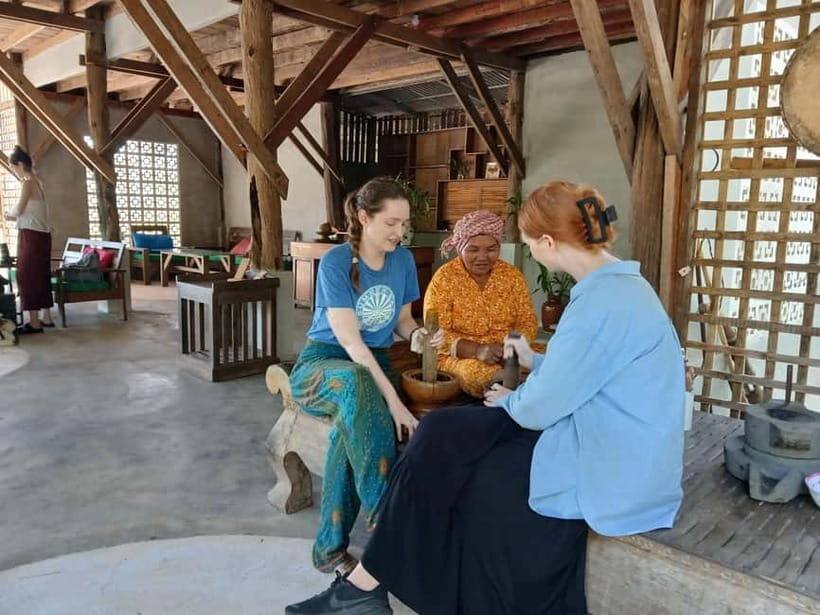
At $24 per person for a 3.5-hour experience, this isn’t just “pay for a cooking class.” You’re getting a full sequence: market visit, ingredients, family-style cooking instruction, your meal, and transport from your hotel or guesthouse. There’s also a welcome drink included, plus lounge/bar/bathroom onsite, and English-speaking guidance throughout.
Transport is a big part of the practical value here. The format is tuk tuk or car pickup, and it has a strong satisfaction score for transport. That matters because rural cooking classes are often annoying to reach. This one is built around solving that problem cleanly.
Where the value gets even better is the authenticity factor. You’re shopping for ingredients in a local market and cooking with a local family in a Khmer home environment. If you like food because it’s tied to daily life, this kind of lesson is worth paying for more than a “chef demo” style class.
If you’re a careful planner, one small cost-control mindset helps: since portions can run generous, you might want to avoid booking this on the same day as heavy sit-down dinners. Let the meal be the meal.
Who should book Kampot Countryside, and who should skip it
I think this is a great fit for three types of travelers:
1) Food-first travelers who want to learn flavors and techniques, not just take a class photo
2) People who like real local settings—market + home kitchen + countryside views
3) Travelers who appreciate a patient guide, especially if your English is still building (Samon’s teaching style is repeatedly described as slow and friendly)
It may be less ideal if:
- You need a guaranteed nut-free environment. This isn’t suitable for nut allergies, and they can’t guarantee peanuts weren’t used.
- You strongly dislike informal seating. The setting can involve sitting on the floor.
- You have a tight schedule and hate delays. Pickup and timing depend on coordination for tuk tuk or car transport, and communication matters.
If you’re vegetarian, you’ve got options. Vegetarian classes can be arranged and vegetarian options are available upon request. Just be clear about what you can and can’t eat.
Quick tips so your day runs smoothly
Bring: hat, camera, sunscreen, comfortable clothes, and insect repellent. You’ll be outside for parts of the day, and cooking involves heat and movement.
Wear clothing that works for both cooking and an outdoor market setting. If you’re planning to swim in the stream, ask whether water is available and pack swimwear plus a towel.
If you have allergies (even non-nut allergies), tell the team. They can try to cater, but they can’t promise peanut-free preparation.
Finally, if you care about takeaway materials, ask whether you’ll receive a recipe at the end. Some people were happy with recipe handouts, while others didn’t get what they expected.
Should you book this cooking class?
Yes, if you want a practical cooking lesson in a genuine Khmer home setting, starting with a market ingredient run and ending with a countryside meal and views of paddy fields and Bokor Mountain. The guide experience with Samon—patient explanations, good humor, and hands-on help—is a big reason this works.
I’d think twice if you have nut allergies (this is not suitable) or if floor seating would ruin your comfort. Also, if you’re on a strict schedule, build in a little buffer around pickup time, since transport timing depends on local coordination.
If you match the vibe—curious, flexible, and ready to learn by doing—you’ll probably leave with better cooking confidence and a day that feels distinctly Kampot, not generic.
FAQ
Where is the cooking class held?
It takes place in Kampot Province, Cambodia, at Eco Lotus Kampot in the countryside.
How long is the experience?
The class runs for about 3.5 hours.
What dishes will I cook?
You’ll learn 3 traditional Khmer dishes and a dessert. Examples that may be cooked include Fish Amok, Lok Lak, Palm Sugar Bananas, and Khmer Curry, but the exact dishes can change.
Can I join if I eat vegetarian?
Yes. Vegetarian classes can be arranged, and vegetarian options are available upon request.
Is pickup included?
Yes. Pickup is included from your guesthouse or hotel by tuk tuk or car, and the driver meets you at reception.
Is a cooking class recipe included?
The information provided doesn’t clearly guarantee a takeaway recipe. If you want one, ask at booking time so you know what to expect.
Can I swim in the stream?
There’s an opportunity to swim, but it’s seasonal. If you want to swim, ask at booking time whether there is water in the stream, and bring your own towel and swimwear.
Is this class safe for people with nut allergies?
No. The activity is not suitable for people with nut allergies, and the kitchen cannot guarantee peanuts or other food ingredients weren’t used.
What should I bring?
Bring a hat, camera, sunscreen, comfortable clothes, and insect repellent. If you want to swim, bring swimwear and a towel as well.
Is there booking flexibility?
Yes. You can reserve now and pay later, and free cancellation is available up to 24 hours in advance for a full refund.