Five days later, Angkor still won’t leave me. This private route strings together the big temples, quieter ruins, and a Kompong Phluk boat cruise with door-to-door transfers that keep the day moving. I love the calm pace and context from a guide, plus the practical comfort touches like bottled water and cold towels. The main thing to watch: entrance fees aren’t included, and you’ll do some real walking on uneven ground.
Timing matters in Siem Reap, and the 8:30 am start helps you get cracking early. If you’re lucky, you might get a guide like Choup, praised for clear English and strong context, and a driver such as Mr Bean, noted for careful, on-time driving. That’s a deal in itself, but plan for long drives on the “temples farther out” days.
In This Review
- Quick hits
- Why This Angkor and Beyond Route Feels Worth the Money
- Morning Pickup and Door-to-Door Comfort in Siem Reap
- Day 1: Bayon to Ta Prohm, Then Angkor Wat and Phnom Bakheng
- Day 2: Phnom Kulen Waterfalls, Banteay Srei, and Pre Rup
- Day 3: Angkor Wat Sunrise, Then Preah Khan and Ta Som Area Temples
- Day 4: Koh Ker and Beng Mealea’s Remote Feel, Plus Preah Vihear
- Day 5: Kompong Phluk Floating Village Cruise and Siem Reap Markets
- Price and What You’ll Still Pay for (Passes and Site Fees)
- The Guide Makes a Bigger Difference Than You Think
- Who This Tour Suits Best (and Who Should Consider Another Option)
- Should You Book This 5-Day All Sights Tour?
- FAQ
- What’s included in the tour price?
- Are temple entrance fees included?
- How much are Angkor Temple passes?
- Do Koh Ker and Beng Mealea require separate tickets?
- What time does the tour start?
- Is this a private tour?
- Can I cancel for a full refund?
Quick hits
- Door-to-door pickup at a set start time, so you’re not juggling tuk-tuks
- Private guide attention for history, layout, and what to look for at each stop
- Early return to Angkor Wat for sunrise on Day 3
- Motorised boat during the Kompong Phluk floating village visit
- Small comfort wins (cold towels, bottled water) that matter in the heat
Why This Angkor and Beyond Route Feels Worth the Money
You’re paying for less hassle and more story-per-minute. With a private guide and pickup, you don’t spend your day guessing routes, fighting with ticket queues, or timing buses between distant sites.
The itinerary is also built around smart variety. You get the classic temples (Angkor Wat, Ta Prohm), but you also get the farther-out stops like Koh Ker and Beng Mealea, plus nature time at Phnom Kulen. That mix is why the days feel full without feeling like a rushed highlight reel.
One more value point: because this is private, your guide can adjust the pace to your group. If you want to slow down for photos, ask questions, or step aside from the busiest spots, you can.
Morning Pickup and Door-to-Door Comfort in Siem Reap
The tour starts at 8:30 am, and the vehicle departs from your hotel at that time. Hotel pickup and drop-off are included, which sounds basic until you’ve tried moving around Siem Reap in the heat and humidity.
What I like here is that it removes the most stressful part of sightseeing. You don’t need to coordinate meeting points, negotiate rides, or figure out how to get back at night. Your driver and guide handle the schedule, and you spend energy on seeing things, not logistics.
Also included are bottled water and cold towels. It’s a simple line item, but it changes how long you can comfortably keep going—especially after temple stairs, sun exposure, and motorbike-roads dusty air.
Day 1: Bayon to Ta Prohm, Then Angkor Wat and Phnom Bakheng
Day 1 is the “welcome to Angkor” push, with a classic sweep through the core Angkor experience. The day begins at the Angkor Archaeological Park, where you buy the pass. The tour notes you should buy it for at least three days, one pass per person.
From there, you move into the heart of Angkor Thom:
- Bayon Temple: famous for its sculpted faces of King Jayavarman VII. What makes Bayon feel special is the way the bas-reliefs and towers create a repeating visual rhythm. You’ll see details from multiple angles, which is where a good guide pays off.
- Baphuon Temple: a temple mountain dedicated to Shiva, built in the mid-11th century. It’s part of Angkor Thom’s temple cluster, so it helps connect the big layout of the city.
- Ta Prohm Temple: the famous “tree roots in the stones” temple. It’s one of those places where you’ll either rush through or you’ll slow down and watch how nature and architecture share space.
Then the itinerary adds the palace-edge viewpoints:
- Terrace of the Elephants: the Royal Terraces face the parade grounds. Even if you don’t remember every carved figure, your guide can help you picture how processions would have moved along this space.
After lunch, the tour hits the big one:
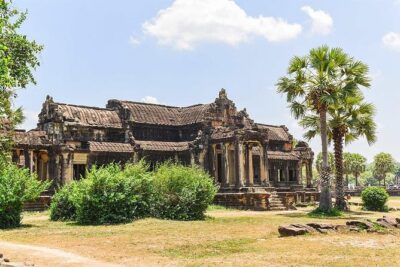
- Angkor Wat: the largest religious monument site at Angkor (and the headline temple of the whole complex). You’re likely to spend serious time absorbing scale here, but the private format helps because you can move at a pace that fits your group, not a fixed crowd rhythm.
The day ends with Phnom Bakheng, a temple mountain on a hill. The payoff is big views, but remember this is also a climb and a long sit in the sun if you choose to linger. If you’re heat-sensitive, ask your guide how to pace the final stop.
Practical tip: bring your patience and your hat. Even with a guide, Angkor’s best spots can be busy, and the day’s length means you’ll want to stay comfortable from the first stop.
Day 2: Phnom Kulen Waterfalls, Banteay Srei, and Pre Rup
If Day 1 is stone monuments, Day 2 adds nature and more variety in temple style. It begins with a stop at 1000 Lingas, then moves toward Phnom Kulen National Park.
Here’s the rhythm:
- 1000 Lingas: a quick culture stop that sets context before you go higher into Phnom Kulen.
- Phnom Kulen waterfalls and swim time: the itinerary allows time for a swim at the waterfalls area. This is one of the rare “cool your body down” moments in a temple-heavy trip.
- Walk to the pagoda and reclining Buddha: after the swim, you head up a short way to reach the pagoda and reclining Buddha. The tour also notes that guests can sometimes get a water blessing, depending on timing and conditions.
Lunch comes in at the park, so you’re not searching for food between sights. Then you continue with temples outside the main Angkor loop:
- Banteay Srei (often called the ladies temple): a Shiva temple from the 10th century area. This one is frequently chosen for its fine carving work, and it tends to reward slower looking.
- Banteay Samre: built in the early 12th century in the Angkor Wat style.
- Pre Rup: a temple mountain dedicated to Khmer King Rajendravarman. The structure is brick, laterite, and sandstone, and it’s a good stop for understanding how these different materials change the look of the temple as light shifts.
Day 2 can feel like a “two moods” day: cooling nature time, then back into walking and sun for temples. Pace matters. If your group loves photos, you may want to ask your guide to build in short shade breaks as you go.
Day 3: Angkor Wat Sunrise, Then Preah Khan and Ta Som Area Temples
Day 3 is built around one of the most rewarding ideas in the whole itinerary: revisiting Angkor Wat for sunrise. The plan calls for you to see Angkor Wat in the early light, then return to your hotel so you can have breakfast.
That return-to-hotel choice matters. Sunrise mornings can drain you. Having breakfast back home is a smart way to keep the rest of the day enjoyable rather than purely exhausting.
After breakfast, the itinerary shifts into a temple cluster:
- Preah Khan: paired in the plan with Neak Poan, Ta Som, and East Mebon. These are grouped together, so your guide can tie them into a larger story about how the Angkor complex functioned beyond just one “icon” temple.
- Ta Prohm and Ta Nei: after lunch, you see Ta Prohm again, plus Ta Nei. Returning to Ta Prohm later in the day can feel different because the light and crowds change. It’s also a way to let you notice details you might have missed on Day 1.
The day closes with Banteay Kdei, described as a Buddhist temple with monks’ cell references. Even if you’re not chasing every architectural term, this kind of stop helps you see the religious blend across the wider Khmer world.
If you’re someone who gets temple fatigue—too many stones, too little recovery—this day is still manageable because the schedule includes a hotel breakfast reset.
Day 4: Koh Ker and Beng Mealea’s Remote Feel, Plus Preah Vihear
Day 4 is for people who like their Angkor trip with texture. This is where you trade some proximity for atmosphere.
First stop: Koh Ker. The tour notes it’s a very long drive (about 120 km from Siem Reap) to a remote archaeological site in a jungle-filled region. That remoteness is the point. Koh Ker isn’t just another temple on a busy circuit. It feels more isolated, and that changes how you experience the place.
You’ll need to budget extra for tickets here. The tour lists Koh Ker temple passes at USD 10 per person.
After lunch, you head to Beng Mealea, another ruin from the Angkor Wat period on the ancient royal highway route. It’s noted as about 40 km east of the main temple group. Beng Mealea often has a different vibe than the polished, heavily restored sites: you tend to feel the “in-between” nature of a ruin still growing back around it.
Entrance fee for Beng Mealea is listed at USD 5 per person.
Then the day adds Preah Vihear, an ancient Hindu temple atop a 525-meter cliff in the Dângrêk Mountains. It’s a long day, but it gives a dramatic setting that breaks up the temple sequence.
Fitness reality check: this is the kind of day where uneven ground, heat, and stairs can stack up. If your group already knows they walk slowly, plan to bring water discipline and good shoes.
Day 5: Kompong Phluk Floating Village Cruise and Siem Reap Markets
This is the day that slows your body down after temple intensity. Kompong Phluk is a collection of villages on stilts on the Tonle Sap, and the tour includes the fee for a motorised boat, which is a big practical win.
The itinerary describes the community’s rhythm: much of the year they fish, and during Cambodia’s wet season (May to October) fishing becomes central to survival. Even if you don’t memorize every detail, seeing how daily life works on the water helps you understand this area as a living place—not just a tourist stop.
After the cruise and village time, you head back through markets:
- Phsar Leu Thom Thmey (top market)
- Phsar Chas (old market)
- Artisans d Angkor
This market portion is also a good way to round out the trip. Temples tell one kind of story. Markets tell another: what people still make, buy, repair, and sell today.
Time-wise, the tour plans about 4 hours for Kompong Phluk and about 3 hours for markets, so it’s not a quick drive-by. You’ll have time to look, ask questions, and pick up small souvenirs without feeling rushed.
Price and What You’ll Still Pay for (Passes and Site Fees)
The tour price is USD 309 for the 5-day private experience. What you’re getting for that money is the “friction removed” package: hotel pickup and drop-off, a professional English-speaking guide, bottled water, cold towels, and the motorised boat fee.
The key catch is that entrance fees aren’t included. You’ll need to buy:
- Angkor Archaeological Park passes (one pass per person): USD 62 for 3 days, or USD 72 for 7 days
- Koh Ker temple pass: USD 10 per person
- Beng Mealea entrance: USD 5 per person
So, if you follow the tour’s own logic and plan for a 3-day Angkor pass, your on-top ticket budget is at least:
- USD 62 (Angkor pass) + USD 10 (Koh Ker) + USD 5 (Beng Mealea) = USD 77 per person
Meals and drinks are also not included, so you’ll want to set aside a daily food budget based on your comfort level.
Is it good value? For a private guide plus door-to-door transfers across multiple distant sites, yes—especially if you hate planning. If you’re the type who loves researching and moving independently, you might find cheaper options. But if your goal is to see a lot without stress, this price lines up well with that goal.
The Guide Makes a Bigger Difference Than You Think
This tour lives or dies on how well you interpret what you’re seeing. The stops are famous, but what makes them memorable is the “why.”
In the feedback you can see a pattern: strong English guidance and friendly service stand out. A guide named Choup is specifically mentioned for good knowledge and explanations. Drivers also get credit for punctuality and safe driving, including Mr Bean for careful transport and keeping water on hand.
That matters because Angkor isn’t just one temple. It’s a network of temples, materials, religious shifts, and city planning concepts. When your guide can connect those dots, your photos look better later because you understand what you captured.
Who This Tour Suits Best (and Who Should Consider Another Option)
This fits best if you:
- Want private, guided pacing across major Angkor sites and the farther-out ruins
- Like mixing big landmarks with quieter, less visited areas (Koh Ker and Beng Mealea are the tell)
- Appreciate practical comfort details like cold towels and bottled water in hot weather
It may not fit if:
- You have less than average fitness or can’t walk normally. The tour explicitly says it’s not suitable for those who struggle with walking.
- You’re traveling with very young children. It’s not available for children under 3 years old.
If you’re comfortable with stairs, heat, and a full schedule, you’ll likely love it. If you want a slow, beach-style trip, this won’t match that vibe.
Should You Book This 5-Day All Sights Tour?
Book it if your priority is seeing a lot with low stress. The door-to-door transfers, private guide attention, and included boat fee make it a practical way to cover Angkor and the “beyond” stops like Phnom Kulen, Koh Ker, and Beng Mealea.
Skip—or at least double-check your expectations—if you’re trying to do Angkor on a tight budget and hate managing tickets. Entrance passes add cost, and the schedule includes walking and climbs.
If you like a well-run day with a guide who explains what you’re looking at, this is the kind of tour that pays you back every evening when you’re reviewing your photos and realizing you didn’t just visit temples—you understood them.
FAQ
What’s included in the tour price?
The tour includes hotel pickup and drop-off, a professional English-speaking guide, the fee for a motorised boat, bottled water, and cold towels.
Are temple entrance fees included?
No. The Angkor Temple passes and other site fees are not included.
How much are Angkor Temple passes?
You buy the Angkor pass at the Angkor Enterprise ticket office. It’s USD 62 for 3 days and USD 72 for 7 days, with one pass per person.
Do Koh Ker and Beng Mealea require separate tickets?
Yes. Koh Ker is listed at USD 10 per person, and Beng Mealea is listed at USD 5 per person.
What time does the tour start?
The tour start time is 8:30 am, and the vehicle departs from your hotel at that time.
Is this a private tour?
Yes. It’s a private tour/activity, and only your group participates.
Can I cancel for a full refund?
Yes. You can cancel up to 24 hours in advance for a full refund. If you cancel less than 24 hours before the start time, the amount paid will not be refunded.