REVIEW · BATTAMBANG
Full/Half Day Tuk TuK: Handicrafts Bambootrain Killing&Bat Caves
Book on Viator →Operated by Discover Battambang with Samol Tuk-Tuk & Motorbike Tours · Bookable on Viator
That first ride out of town sets the tone. This Battambang tuk-tuk tour mixes real village life with history you can see in front of you, from bamboo sticky rice stops to the Killing Cave sites. I also like how the day includes hands-on food and drink moments, like rice wine tasting and optional rat barbecue, taught in plain language by the guide, including Sum Ol. The main drawback is the pace and length: it’s about 12 hours, and one of the big payoffs (the bat flight) happens in the evening, so you need to stay focused all day.
You’ll travel past fruit plantations and rice fields and get simple lessons on how things grow, with stops to talk with farmers and children along the way. I appreciate that the tour builds in frequent photo stops and practical comforts like cold water and a cold towel. One more consideration: the bamboo train costs extra, so your total day spend won’t be just the headline $16.
In This Review
- Key highlights
- Pricing and what you really get for $16
- Getting started in Battambang: 7:30am timing and a long, full day
- From French-era sights to working fields: how the ride teaches the country
- Wat Samrong Knong: cooking bamboo sticky rice like a local
- Ek Phnom: rice wine since the 1980s, plus a taste and local uses
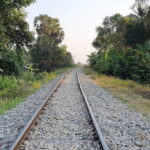
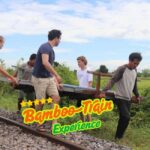
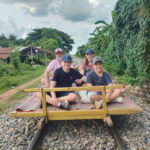
- Bamboo train at Ou Srauo Laou: views, villages, and the ride itself
- Battambang city return: a short reset before heading uphill
- Phnom Sampeau and Killing Cave: rat barbecue and real Khmer Rouge history
- Battambang Bat Caves: waiting for the millions
- What I’d pack and how to handle a day this full
- Should you book this tuk-tuk day?
- FAQ
- What time does the full-day tuk-tuk tour start?
- How long is the tour?
- What’s included in the $16 price?
- What costs extra during the day?
- Do I need to pay for entry to the Killing Cave and Bat Caves?
- Is the rat barbecue tasting required?
- Is there a cancellation option?
Key highlights

- Farm-to-table stops where you see and taste local specialties, not just look at them
- Rice wine production (since the 1980s) with a chance to try it and learn how it’s used locally
- Bamboo train on Ou Srauo Laou, with views of villages and fields, plus the very Cambodiana “butt massage” from the ride
- Phnom Sampeau and the Killing Cave story, tied to the Khmer Rouge era (1975–1979)
- Battambang Bat Caves at dusk, with millions of bats taking more than 50 minutes to fly out
Pricing and what you really get for $16
At $16, this is a strong-value day—mainly because the big costs are already folded in. Your price covers tuk-tuk transport, a live guide, hotel pick-up and drop-off, entrance fees for Ek Phnom, Killing Cave, and the Bat Caves, plus donations and all donations connected to the stops.
Where the math gets real is what you don’t have to organize yourself. You also get cold water, cold towel service, photo opportunities, and snack tasting. The one obvious add-on is the bamboo train, listed at $5 per person, and lunch is not included—so budget for that separately.
Think of the $16 as paying for the “logistics brain” of the day: getting you out to multiple sites, keeping you on schedule, and covering the paid entries that can otherwise add up.
You can also read our reviews of more tours and experiences in Battambang.

Getting started in Battambang: 7:30am timing and a long, full day
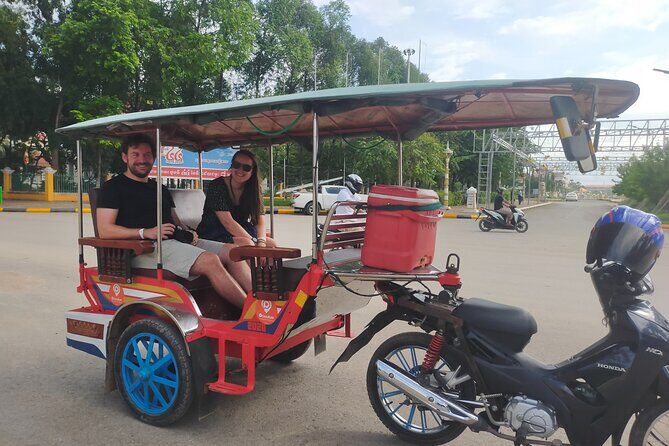
This run leaves around 7:30am. You’ll want to be ready about 10 minutes early at your accommodation or a restaurant, because the tuk-tuk schedule moves with the day’s plan.
The day is long—about 12 hours—but it stays structured with stops that change what you’re doing: driving, walking, tasting, and sitting to watch the bat flight later. If you’re the type who hates waiting, you’ll still be okay, because the bat cave portion builds in a long “wait with a view” segment that’s part of the experience, not dead time.
Group size is capped at 15, which helps you feel like a small outing rather than a crowd shuffle.
From French-era sights to working fields: how the ride teaches the country
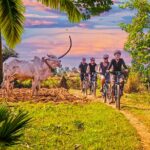
The tour is designed to show you “Battambang then the countryside,” with the guide also covering history, culture, religion, agriculture, and some Cambodian language along the way. That matters because it turns roadside scenery into context: you’ll pass fruit plantations and rice fields, and you’ll understand what you’re looking at instead of just seeing green.
One of my favorite parts of this style of day is the stop-and-talk moments. You may pause to chat with children and farmers about raising vegetables, which is the kind of exchange that makes the countryside feel human, not just scenic.
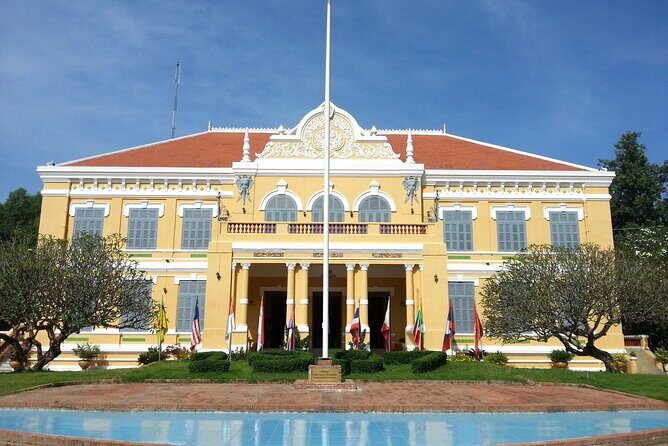
You’ll also have time to see major sights around town, including main French structures in Battambang. That mix—colonial-era architecture plus working farms—helps you understand how the city sits between eras and economies.
Wat Samrong Knong: cooking bamboo sticky rice like a local
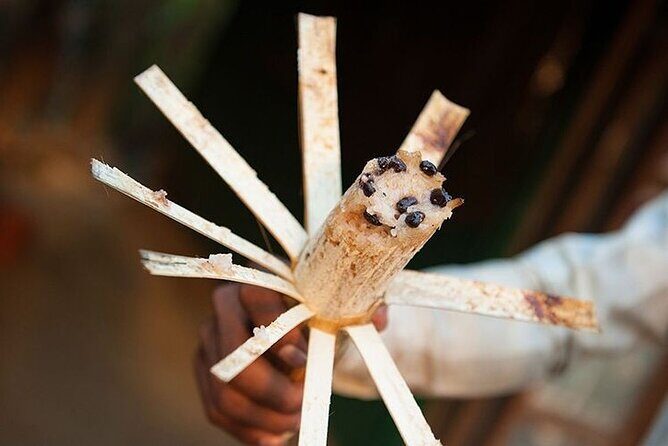
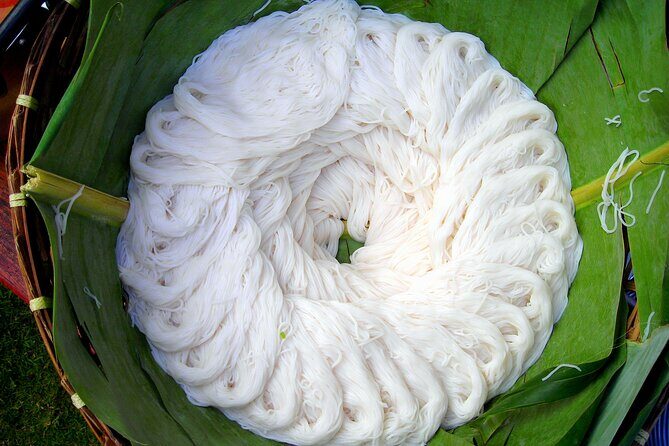
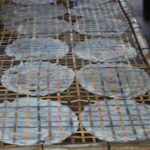
At Wat Samrong Knong, you get a close look at how bamboo sticky rice is prepared, and it’s part of the local food rhythm rather than a tourist-only demo. This bamboo sticky rice is made as a dessert or sweet snack, and the stop explains how it has kept a reputation for quality over time.
Practical note: food stops like this are usually easiest when you go with a light appetite and take your time. You’ll be tasting as the day builds, so don’t stack heavy meals before this point.
What I like here is that the story isn’t only about the recipe—it’s about daily life and food traditions that keep going.
Ek Phnom: rice wine since the 1980s, plus a taste and local uses
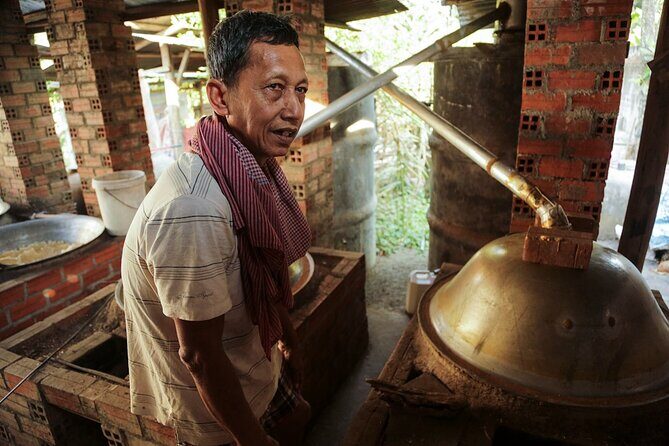
Ek Phnom centers on rice wine production, with processing dating back to the 1980s. You’ll learn how the rice wine is produced and get to try it, and you’ll also hear how it’s used locally for medication and for soaking plants and other items.
This stop gives you more than a sample cup. It shows how fermentation and alcohol production can be part of everyday local practice, not just a bar experience.
If you’re sensitive to alcohol, you can still enjoy the process without treating the tasting as a must-chug moment. Take a small sip, watch the steps, then decide how much you want to sample.
Bamboo train at Ou Srauo Laou: views, villages, and the ride itself
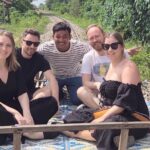
The bamboo train stop is one of the most fun, and the tour doesn’t hide the fact you’ll pay extra. The bamboo train at Ou Srauo Laou costs $5 per person and is not included in the $16 price.
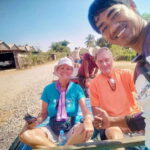
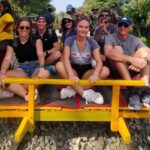
Before you board, you’ll see villages, fruit plantations, and rice fields, and you’ll stop to talk with farmers. Then you buy your ticket and ride the bamboo train. The itinerary even calls out a humorous perk: a free butt massage from the movement—accurate enough to make you smile while you’re bouncing along.
A useful expectation-setting point: bamboo train rides can be bumpy by design. It’s part of the charm and part of the reason it feels so different from a standard tour bus. Wear shoes you trust, and don’t plan on getting perfect photos. Plan on having a good story.
Battambang city return: a short reset before heading uphill
After the northern-side stops, you come back toward the city for a brief reset. This portion is short, and it’s basically there to keep the route organized and to set up the next big segment: Phnom Sampeau and the cave area.
If you get a bit tired, this is the moment to take it easy, hydrate, and recharge your focus. You’ll need it for the mountain portion and the evening bat cave wait.
Phnom Sampeau and Killing Cave: rat barbecue and real Khmer Rouge history
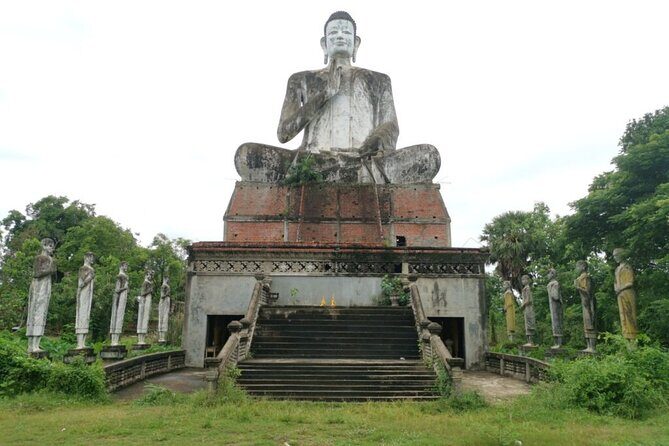
Phnom Sampeau is where the day turns serious. Before heading up, you’ll see and taste K F R (Rat barbecue), often described as a local snack option on the route. The rat tasting is marked as optional, and you can choose whether you want to try it or just watch.
Then you’ll travel by motorbike or pickup truck to the mountain area. Once up there, you’ll visit and hear about the Khmer Rouge period from 1975 to 1979, when over 10,000 victims were killed.
This is not a casual stop. It’s educational, and it asks you to take the story seriously even if the transport ride up is a bit bumpy and quick. If you’re visiting with kids, I’d treat this as an adult-guided, values-and-history conversation moment, not a sightseeing checkbox.
Battambang Bat Caves: waiting for the millions
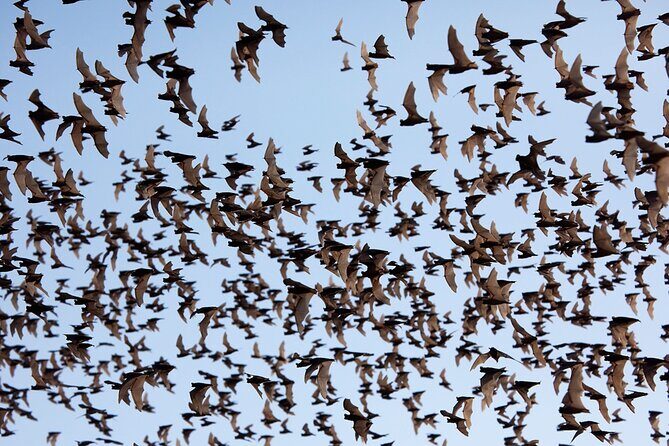
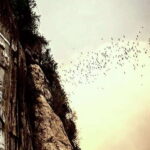
The final big moment is the Bat Caves. You’ll see viewpoints first, then come down to wait for the evening flight when millions of bats fly out. The schedule notes this flight takes over 50 minutes, so plan to be patient and watch the sky for a while.
This is one of those experiences where timing matters more than you think. You’re not just walking through a cave; you’re waiting for a natural event that has a rhythm, and the guide helps you time it so you don’t miss the main burst.
If you hate waiting, this could feel long—but if you enjoy watching wildlife behavior, it’s the kind of scene that makes the whole day feel connected. By the time the bats go, you’ll already have learned a lot about agriculture and village life, and you’ll be looking at Battambang again through a different lens.
What I’d pack and how to handle a day this full
This is a long day with early start and evening payoff, so your comfort matters. Bring sun protection and a light layer, because morning can feel different from dusk timing when you’re near caves and viewpoints.
You’ll have cold water and a cold towel during the tour, which helps, but you still shouldn’t rely on a single water stop. Also remember lunch isn’t included, so plan a simple lunch solution or ask what time the day might allow for it on your route plan.
Finally: wear shoes that handle walking to viewpoints and cave areas. Some sections are easier than others, but you’ll be moving more than you might expect from a “tuk-tuk day.”
Should you book this tuk-tuk day?
Book it if you want a single organized day that blends food, craft, farming context, and real Cambodian history without you juggling tickets for each stop. The value is strong at $16 because entrance fees for key sites are included, and you’re getting transportation, guide time, and tasting built in.
I’d think twice if you’re very time-sensitive or you get cranky with long waits. The schedule is front-loaded with multiple stops and then asks you to stick with the bat cave for the evening flight window.
If you like hands-on learning—rice wine tasting, bamboo sticky rice prep, and the bamboo train ride—this is the kind of day that turns Battambang from a dot on the map into a place with stories you can repeat.
FAQ
What time does the full-day tuk-tuk tour start?
The full-day departure is at about 7:30am. Plan to be ready roughly 10 minutes before pickup at your accommodation or a restaurant.
How long is the tour?
The duration is about 12 hours (approx.).
What’s included in the $16 price?
Included are hotel pick-up and drop-off, tuk-tuk transportation, a live guide, cold towel and cold water, photo opportunities, entrance fees for Ek Phnom, Killing Cave, and Bat Caves, all donations, and snacks tasting. Rat tasting is optional.
What costs extra during the day?
The bamboo train costs $5 per person and is not included. Lunch and personal expenses are also not included.
Do I need to pay for entry to the Killing Cave and Bat Caves?
Yes, but those entrance fees are listed as included in the tour price for Killing Cave and Bat Caves.
Is the rat barbecue tasting required?
No. Rat tasting is listed as optional, so you can decide whether to try it.
Is there a cancellation option?
Yes. Free cancellation is available up to 24 hours in advance of the experience start time for a full refund.