REVIEW · BATTAMBANG
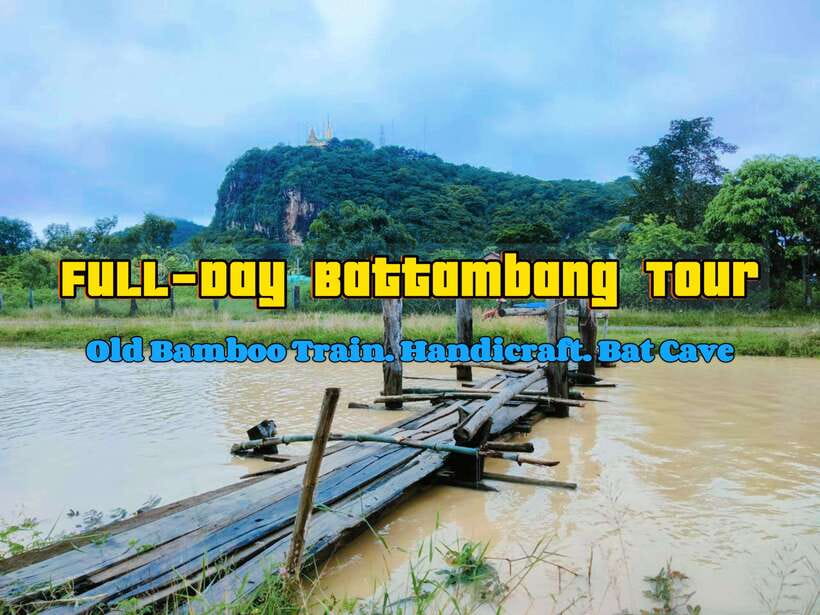
Full-day: Handicraft, Bamboo train, Killing cave, Bat Cave
Book on GetYourGuide →Operated by David Local Family Battambang Trip · Bookable on GetYourGuide
Bamboo trains and Khmer Rouge caves in one day. This tour is interesting because it mixes hands-on local food stops with the iconic Battambang bamboo train, then finishes at Phnom Sampau for the Bat Army at dusk. I like the practical way you get to see how everyday items are made, from rice paper to rice wine, not just watch from a distance. One consideration: the Killing Cave part is heavy, and the day involves biking, walking, and uneven ground.
I also appreciate the human touch. With a live English guide such as David or Kim, you’re not stuck in a rigid script; you’ll get clear explanations plus extra little stops when something looks worth a closer look. The tour being a private group helps a lot with pacing, questions, and small requests.
Finally, it’s a full 10 hours, not a light stroll. You’ll use tuk tuk and bikes, and you’ll want to wear shoes that handle dust and steps, especially near Phnom Sampau. If you have mobility limits or health concerns like high blood pressure, this is not the right fit for you.
In This Review
- Key highlights you’ll actually care about
- Where the day starts: Krong Battambang and first bike views
- Wat Samrong Knong: temple time plus a rural-feeling ride
- Khmer prahok market and local specialties you can taste
- Rice paper, spring rolls, and rice wine production stops
- Ek Phnom Temple and the return toward Battambang’s older side
- Sangke River villages, a suspension bridge, and time with farmers
- Pagodas and a calm religious stop
- The bamboo train: what you’re really paying for
- Late lunch in a village restaurant
- Phnom Sampau mountain: Monkey Forest, Killing Cave, and golden viewpoints
- Bat Cave at dusk: catching the Bat Army moment
- Price and value: what $15 really buys (and what costs extra)
- Who this tour fits best (and who should skip it)
- Should you book this Battambang full-day tour?
- FAQ
- What’s included in the $15 per person price?
- Is the bamboo train included in the base price?
- Are meals included?
- How long is the full-day tour?
- Does the tour include Phnom Sampau cave visits?
- Do I need cash?
- Is it suitable for everyone?
Key highlights you’ll actually care about
- Food production tastings: rice paper, spring rolls, dried bananas, rice wine, and more with snack breaks
- Markets with local flavor: a visit connected to the Khmer prahok market area
- Phnom Sampau timing: shrines and caves in the afternoon, then bats at dusk
- Real bamboo train experience: plan for the $5 per person bamboo train fee
- Village-and-river touring: Sangke River villages, a suspension bridge, and farmer conversations
- Clear local guidance: English explanations from your guide (David or Kim show up in this tour style)
Where the day starts: Krong Battambang and first bike views
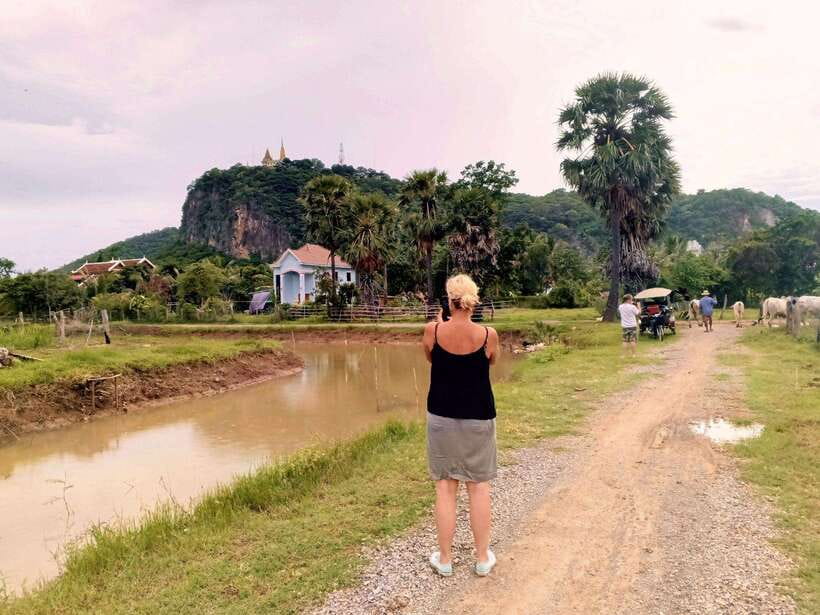
The day kicks off with pickup in Krong Battambang and you’re out early enough to beat some heat. The rhythm is simple: you’ll do a series of short bike tours early on, then shift to tuk tuk for longer jumps around town and out toward the river and Phnom Sampau.
Right away, you’re not just looking at monuments. You’re going to community stops—temples, markets, and food areas—where local life is part of the scenery, not a separate activity.
You can also read our reviews of more tours and experiences in Battambang.
Wat Samrong Knong: temple time plus a rural-feeling ride
Your first major landmark visit is Wat Samrong Knong with a bike tour that lasts about 1.5 hours. This is a good anchor stop because it gives you context before the day turns into food production and countryside villages.
The value here is the slow pace. You don’t just arrive, take photos, and move on. You’ll have time to take in the setting and absorb what your guide points out.
Khmer prahok market and local specialties you can taste
Next comes a stop tied to the Khmer Prahok Market, paired with a bike tour of about 80 minutes. Even if you don’t know Khmer prahok from your first bite, you’ll come away with a better sense of how Battambang cooks and shops like a working town.
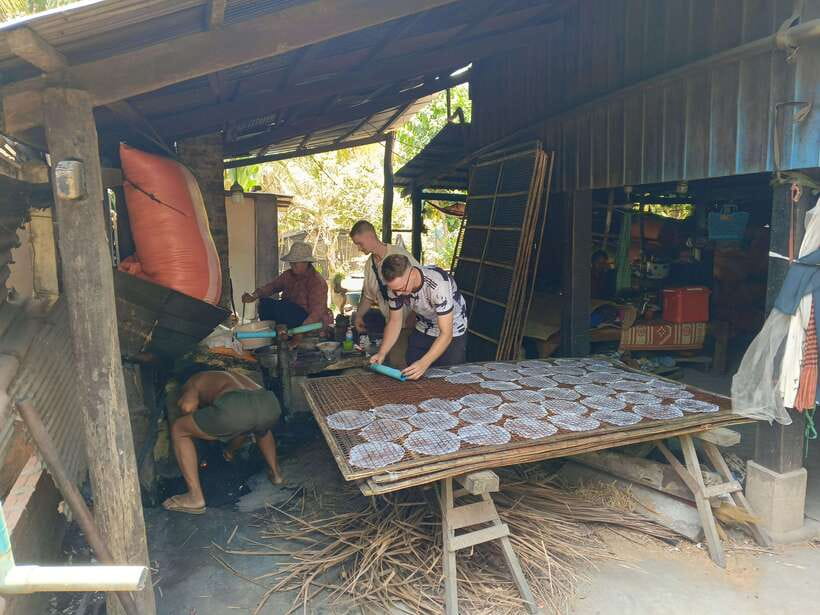
Then you move into the food side more directly: you’ll head to a rice paper and spring roll spot where you’ll see how the ingredients and the process connect. The tour also includes tastings, so you get a chance to try common local flavors rather than guessing later.
Practical tip: go hungry. Snacks are included, but meals are not, so those tastings do real work toward your lunch and afternoon energy.
Rice paper, spring rolls, and rice wine production stops
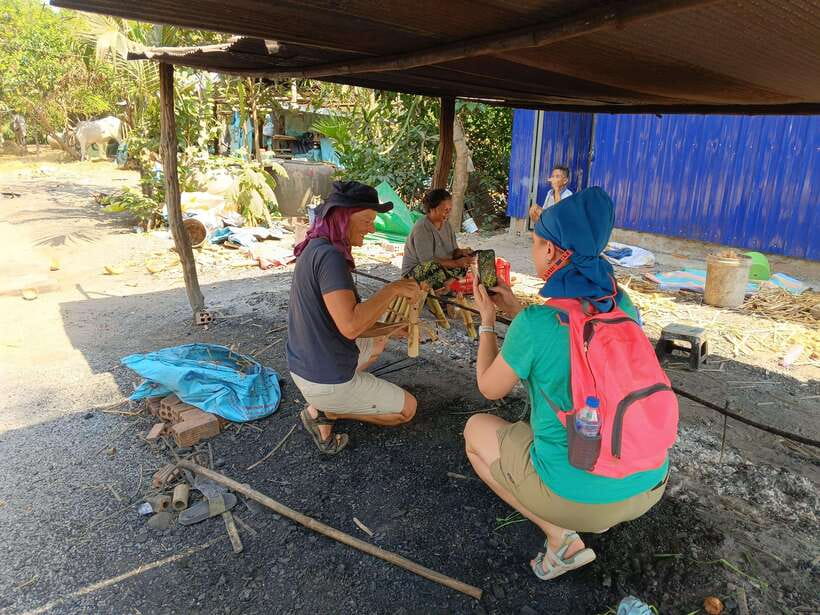
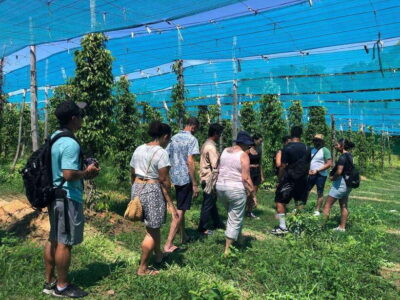
A standout part of this day is the sequence of food-making stops. You’ll see rice paper, bamboo sticky rice, dried bananas, and other items that show up later in Cambodian meals. It’s not fancy in the way a museum is fancy; it’s hands-on and practical.
One highlight is the rice wine production place, with a visit time of about 1 hour. This type of stop matters because it connects the taste you’ll recognize on menus to the process behind it. You’ll hear explanations about how the product is made and what it’s used for.
Based on the way the guides run the day, this segment is also where you’ll get the most curiosity-friendly answers. When you ask what you’re tasting or why it’s prepared a certain way, your guide has room to answer without rushing you out.
Ek Phnom Temple and the return toward Battambang’s older side
After more early biking and temple time, you’ll circle back into Battambang city for lunch. This matters because it breaks up the active morning and gives you a chance to reset before you start taking longer scenic drives.
Then the tour shifts to notable town sights: you’ll visit colonial-era style buildings like the provincial hall, plus a statue stop connected to Ta Dambong Kro Aung. There’s also time for city landmarks such as a provincial hall area and other points around town (including a statue visit that’s part of the guided route).
This portion is worth it if you want your Cambodia experience to go beyond temples. Seeing these civic buildings helps you understand why Battambang grew the way it did—and how the present sits alongside older architecture.
Sangke River villages, a suspension bridge, and time with farmers
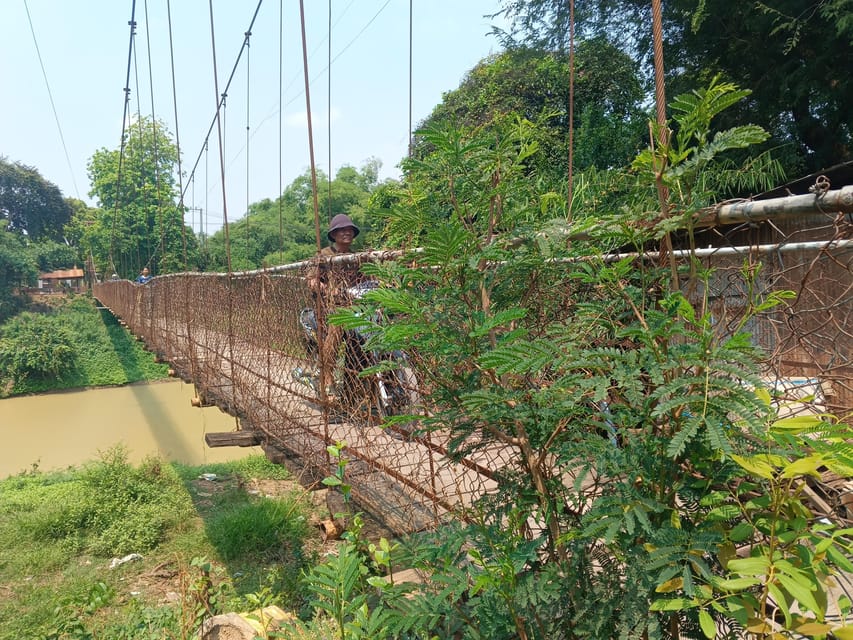
After the city segment, you’ll take tuk tuk out toward the countryside. This is where the tour feels most like a day with local people, not just a checklist.
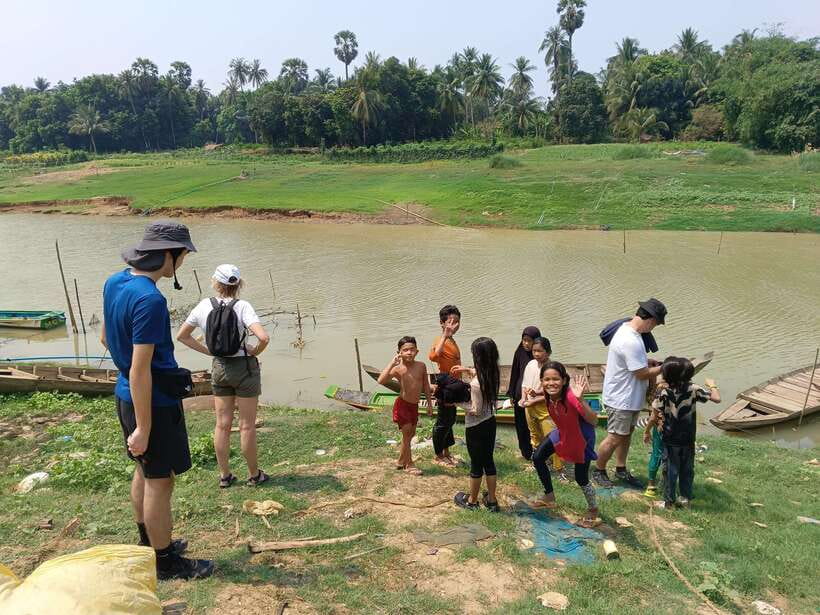
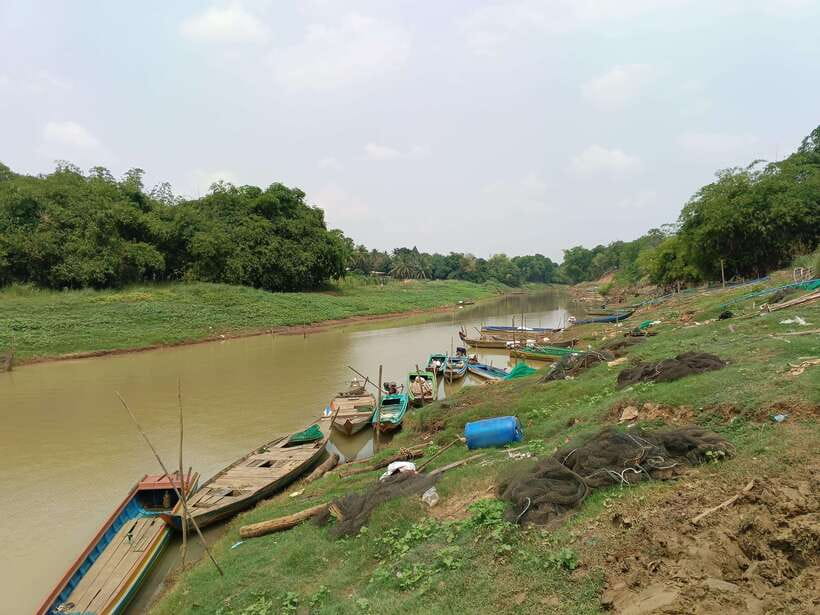
You’ll go to villages and suspension bridge views on the Sangke River. There’s time for conversation and a farmer-focused feel, so you can ask questions about crops and daily routines. If you like photos, this is also one of the better sections because the scenery is more human-scaled than the bigger mountain areas later.
The only caution: rural roads plus sun can be tiring. Bring the sunscreen mentioned for a reason. Even when the tour provides water and a cold towel, you still want to protect your skin during countryside travel.
Pagodas and a calm religious stop
As part of the river-and-village section, you’ll also visit pagodas. This is usually a calmer moment in the schedule. It gives you space to slow down and absorb religious meaning in a way that doesn’t feel rushed.
Your guide will likely connect what you see to how local people think about faith and community. It’s a good pause before the big-name experience: the bamboo train.
The bamboo train: what you’re really paying for
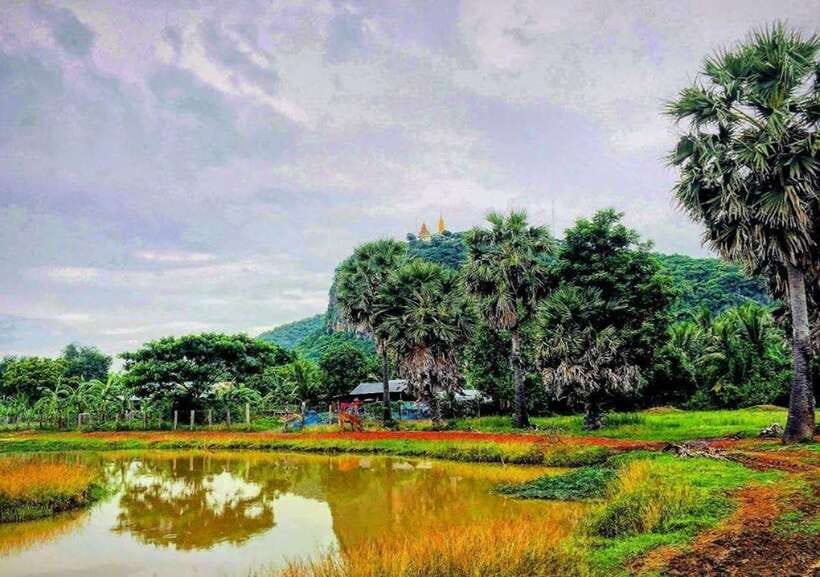
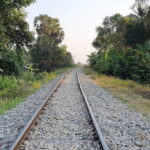
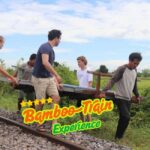
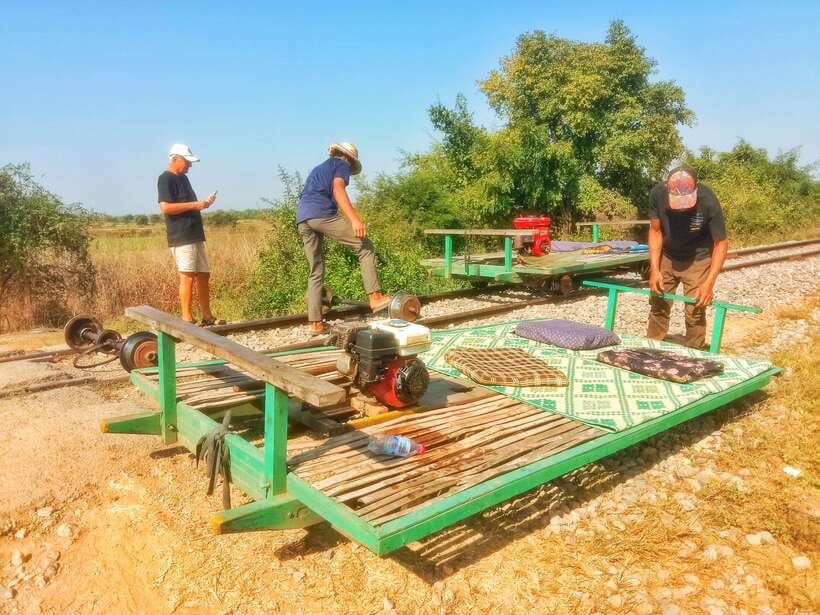
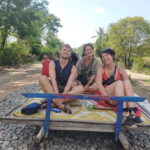
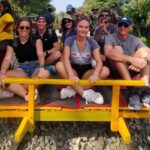
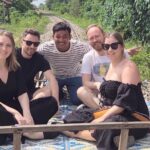
The big famous moment is the bamboo train. This tour includes the experience, but you should budget the extra fee: the bamboo train costs $5 per person and is not included in the base price.
Even if you’ve heard of the train before, the value here is the context around it. You’re not just getting a quick ride; you’re arriving after food, markets, and villages, so the day’s story is coherent. The bamboo train then becomes a moving viewpoint, not a standalone stunt.
Practical tip: wear comfortable shoes and keep your camera ready. The ride is about views and feel-good travel energy, and you’ll want those quick photo moments.
Late lunch in a village restaurant
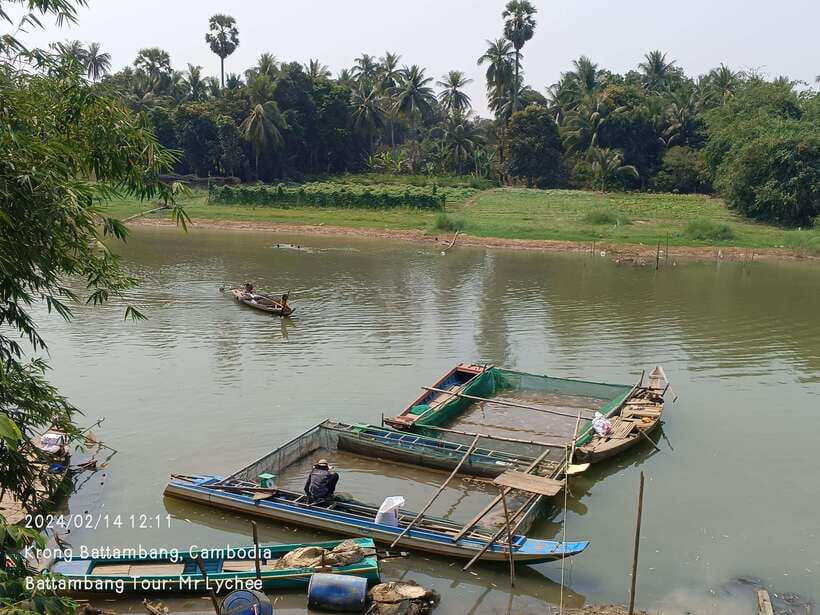
Later in the day, you’ll have a late lunch at a village restaurant. Meals aren’t included, so plan to pay here or check what the tour covers in your specific booking.
This timing is good: it keeps you fueled before the afternoon climb and cave visits at Phnom Sampau. If you’re sensitive to heat, eat a little slower than you think you need—then you’ll be less rushed once you start moving again.
Phnom Sampau mountain: Monkey Forest, Killing Cave, and golden viewpoints
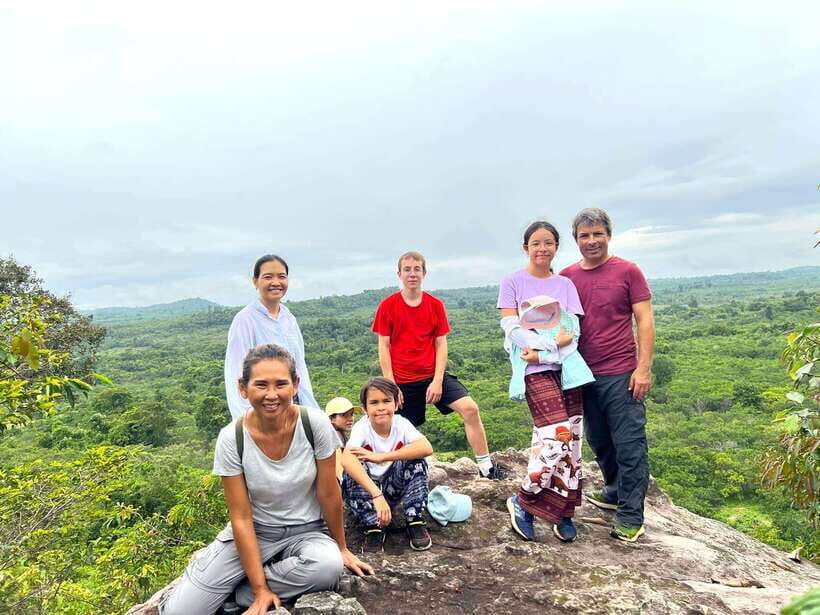
In the afternoon, the tour heads to Phnom Sampau, home to shrines and caves used during the Khmer Rouge period. This part of the day is emotionally serious. The experience isn’t just about dramatic scenery—it’s about historical places tied to real suffering.
You’ll visit the Monkey Forest, then continue to the caves area including the Killing Cave. Your entrance fee for Killing Cave is included, and you’ll also see Golden Temple viewpoints as part of the route. The cave section also includes guidance for getting around, and the tour notes that riding up to the Killing Caves involves a walking/free option (so you might be able to choose walking if you’re feeling steady on your feet).
Because this is a historical site, I’d treat it like a museum-with-walking, not a photo expedition. Take your time, listen to your guide, and don’t feel pressured to speed through.
Bat Cave at dusk: catching the Bat Army moment
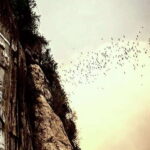
The finale is the most memorable visual payoff: the Bat Army at Phnom Sampau. Thousands of bats fly out of the caves at dusk, so timing matters.
This is why the tour runs the full length. You’re not just fitting in another stop; you’re saving the most time-sensitive moment for the end. If you hate waiting, you might still enjoy this—because the anticipation builds while the mountain cools down.
Practical tip: bring your camera, but also look up with your own eyes. The sound and movement can be startling in a good way, and you’ll remember it beyond your photos.
Price and value: what $15 really buys (and what costs extra)
The base price is $15 per person and includes a lot: hotel pickup/drop-off, tuk tuk transportation, an English live guide, unlimited mineral water and cold towel, plus snacks and entrance fees for Bat Cave and Killing Cave.
The main add-on is the bamboo train fee at $5 per person. Meals are not included, so you’ll want to budget for lunch/dinner on top of that. The tour also suggests you bring cash, which is a good clue that some spending is expected during the day.
For value, I’d think about what you’re getting: crafts/food tastings, market learning, village time, a landmark architecture segment in town, the bamboo train ride, and two Phnom Sampau cave experiences tied to real history. That’s a lot of ground for a single day price, especially with guide time built in.
Who this tour fits best (and who should skip it)
This tour is best if you enjoy cultural sightseeing that includes food, everyday life, and outdoor movement. You’ll likely like it if you’re comfortable biking for multiple stretches and if you don’t mind the emotional weight of the Khmer Rouge cave sites.
It’s not suitable for people with mobility impairments, people with high blood pressure, or people over 95. Also, pets aren’t allowed (assistance dogs are allowed). If you fall outside the listed comfort zones, you’ll enjoy Battambang more by choosing a calmer plan.
Should you book this Battambang full-day tour?
Book it if you want one day that ties together Battambang’s crafts and specialties, the bamboo train, and Phnom Sampau in a way that feels connected instead of random stops. It’s also a strong choice if you like having a guide who answers questions and builds in extra interests along the route, like the way guides such as David (and sometimes Kim) run it—friendly, energetic, and tuned to what you ask.
Skip it if you want only relaxed sightseeing, or if the Khmer Rouge cave sites feel like too much for your headspace. And if you don’t want to pay any extra fees beyond the base price, remember the $5 bamboo train and the fact that meals aren’t included.
If you’re the type who enjoys learning by doing—tasting, asking, walking a bit, and looking for small local details—this is a smart use of a day in Battambang.
FAQ
What’s included in the $15 per person price?
The price includes hotel pickup and drop-off, unlimited mineral water and cold towels, transportation by tuk tuk, a live English guide, snacks (local food tasting), and entrance fees for Bat Cave and Killing Cave.
Is the bamboo train included in the base price?
No. The bamboo train fee is $5 per person and is not included in the $15 price.
Are meals included?
Meals are not included. The tour includes snacks tasting local food, and you’ll have lunch as part of the day, but you should plan to pay for meals.
How long is the full-day tour?
The tour runs for 10 hours.
Does the tour include Phnom Sampau cave visits?
Yes. It includes visits with entrance fees for the Bat Cave and the Killing Cave.
Do I need cash?
Yes. The tour notes that you should bring cash, and the bamboo train fee is an extra cost you’ll need to pay.
Is it suitable for everyone?
No. It’s not suitable for people with mobility impairments, people with high blood pressure, or people over 95.