REVIEW · CAMBODIA
Angkor Wat: Sunrise: Ta Prohm and Bayon Temple Tour
Book on GetYourGuide →Operated by Tourme ANGKOR · Bookable on GetYourGuide
Waking up before 4am is a lot. This Angkor Wat sunrise tour is the kind of day that turns that sacrifice into one clear payoff: morning light on Angkor Wat, followed by three major temple stops with a guide who explains what you’re actually seeing.
I love that you enter the complex early and in a quieter way, with the chance to line up for photos and catch the sky changing over the water. I also love the pacing: you get real time inside Angkor Wat before moving on to Ta Prohm’s jungle drama and the face towers at Bayon. One thing to plan for: the temple entrance fee is separate (US$37 for all temples in one day), and breakfast isn’t included.
In This Review
- Key highlights worth planning around
- Sunrise at Angkor Wat: the early start that actually pays off
- Getting in early: east-side entry, carvings, and the pool break
- Inside Angkor Wat: corridors, chambers, and upper terraces (with real context)
- Ta Prohm’s jungle drama: what to notice when the roots take over
- Angkor Thom and Bayon: terraces, face towers, and the southern gate
- Price and logistics: what you’re paying for (and what you’re not)
- Practical tips that make this sunrise day feel smoother
- Should you book this Angkor Wat sunrise tour?
- FAQ
- How much is the temple entrance fee?
- Is breakfast included?
- How long is the tour?
- What time does the tour end?
- What should I bring for the sunrise start?
- What clothing rules apply inside temples?
- Is this tour suitable for wheelchair users or young children?
Key highlights worth planning around
- Sunrise viewpoint time: You’ll arrive pre-dawn for the best chance at a good viewing spot.
- Angkor Wat from the less-crowded side: You enter from the eastern side early, then move through key areas in morning light.
- A guided read of the bas-reliefs: The long carving galleries make much more sense with a guide putting stories behind them.
- Ta Prohm’s monk history: You’ll see a temple that once housed 2,740 monks, not just roots and stone.
- Bayon’s 200-plus faces: The central towers are covered with enormous faces that shift how you experience the whole city.
- Angkor Thom details you might otherwise miss: Gate statues, the Terrace of Elephants, and the Terrace of Leper King help you connect the dots.
Sunrise at Angkor Wat: the early start that actually pays off
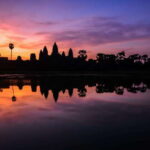
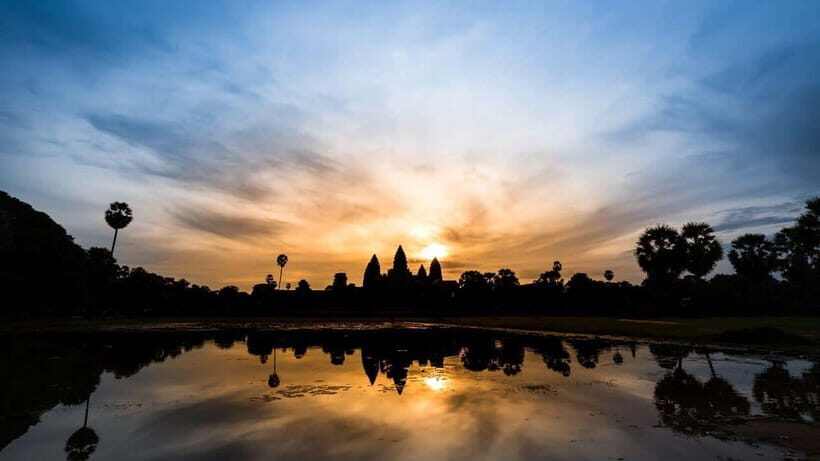
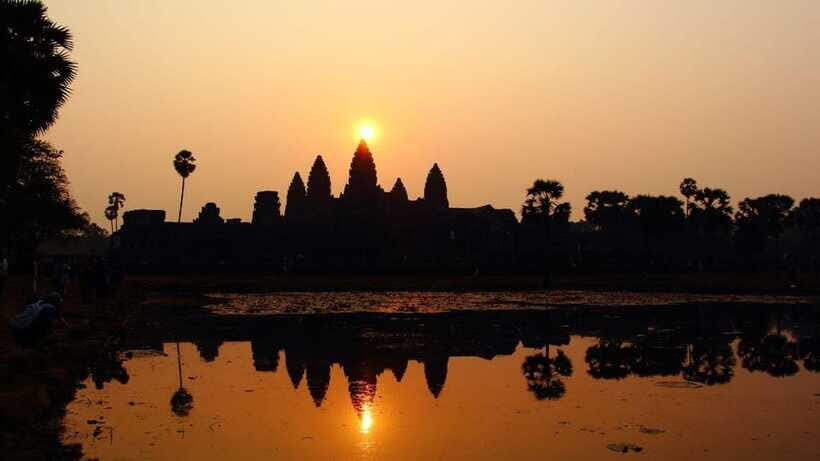
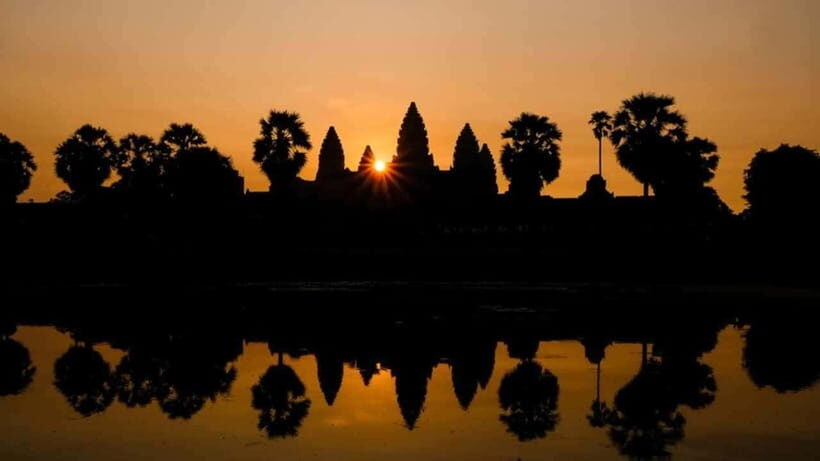
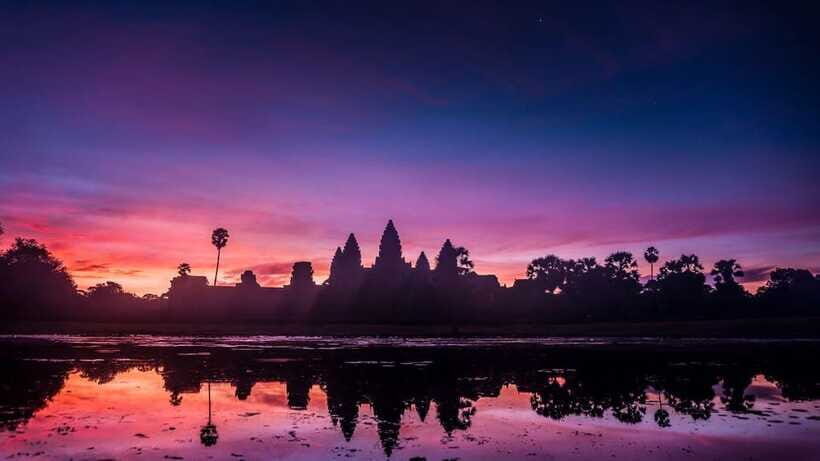
Angkor Wat at sunrise is famous for a reason. The complex sits in a bowl of light: first you see silhouettes soften, then details sharpen, then the whole scene warms up in stages. The value of this tour is that you’re not rushing in after sunrise like a lot of half-day plans. You’re there early, and you’re given time to find your footing and watch the sky work.
I also like that this isn’t just a photo stop. The schedule is built around the idea that you’ll want to look closely once the light arrives. That matters because Angkor Wat isn’t a single “wow” view. It’s a whole set of views that make sense only when you’re moving through the space slowly enough to notice corridors, terraces, and carvings.
The start is early for a reason, but it can feel intense if you hate mornings. If you’re the type who turns off your alarm the second it goes off, plan to bring a torch, wear layers, and accept that you’ll be active long before breakfast.
You can also read our reviews of more tours and experiences in Cambodia
Getting in early: east-side entry, carvings, and the pool break
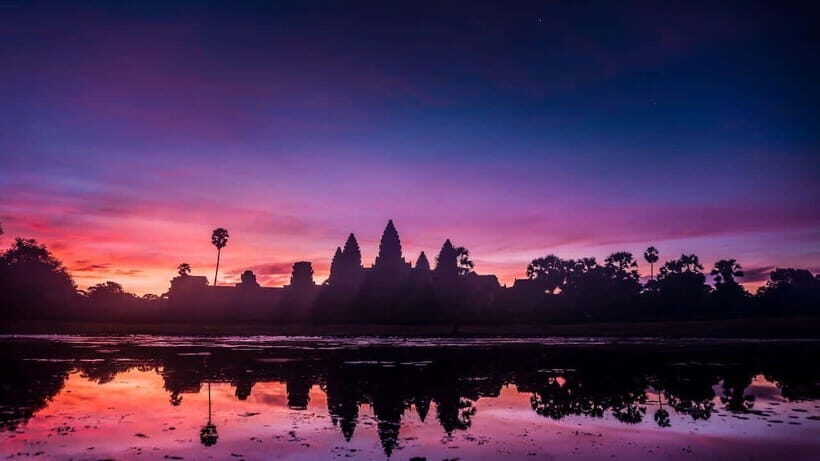
One smart touch here is how early access changes your experience. Entering Angkor Wat in the early hours from the eastern side helps you avoid the worst crush timing and gives you a calmer way to get your bearings while the air is still cool.
Once you’re inside, you move along some of the temple’s most important visual storytelling. You’ll creep through hoary cloistered corridors and reach a famous stretch of bas-relief carving that’s described as the longest in the world. Even if you don’t read every scene, you’ll get a sense of how the Khmer builders used walls like picture scrolls—war, kings, rituals, daily life—layered into stone panels.
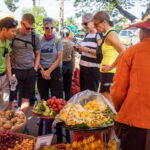
Then comes a small but valuable breather: you’ll spend time near Srah Srang (the pool area) for a break and breakfast time. This is where you’ll feel the day shift from the “pre-sunrise focus” mode into the “stay sharp for more temples” mode. You can also use this pause to check what you’ve already seen and decide where you want to slow down later.
Inside Angkor Wat: corridors, chambers, and upper terraces (with real context)
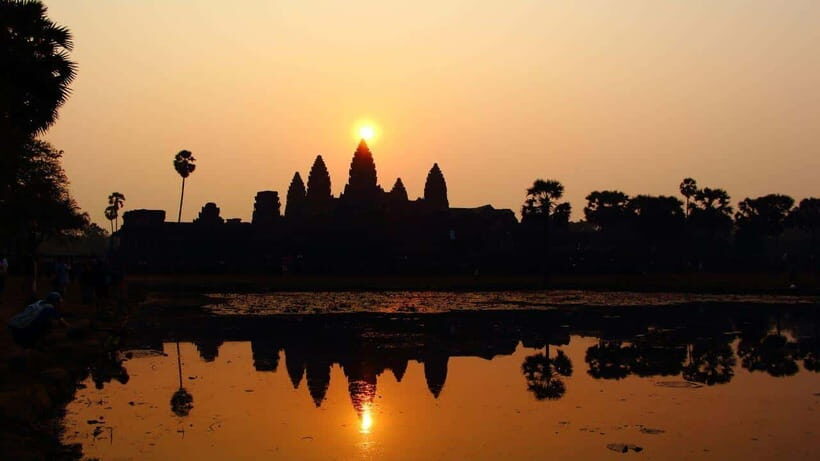
Angkor Wat’s exterior views are only half the story. What surprised me is how different the temple feels once you’re inside, and this tour leans into that. You’ll get about two hours exploring key interior corridors, central chambers, and upper terraces—enough time to stop pretending you’ll just “glance” and move on.
The best part is the guidance. Your English-speaking local guide is there to decode the carvings and tie them to life and belief during the Khmer Empire’s height. If you’ve ever walked through a temple feeling like you’re looking at pretty stone without the “what am I looking at” part, this is exactly what fixes that.
Practical note: two hours inside means you’ll be moving a lot. It’s not a relaxed stroll. You’ll want comfortable shoes with good grip and a plan for staying hydrated. You’ll receive bottled water and a cool towel during the day, which helps you avoid the classic mistake of pushing too hard and then feeling washed out at Ta Prohm.
Ta Prohm’s jungle drama: what to notice when the roots take over
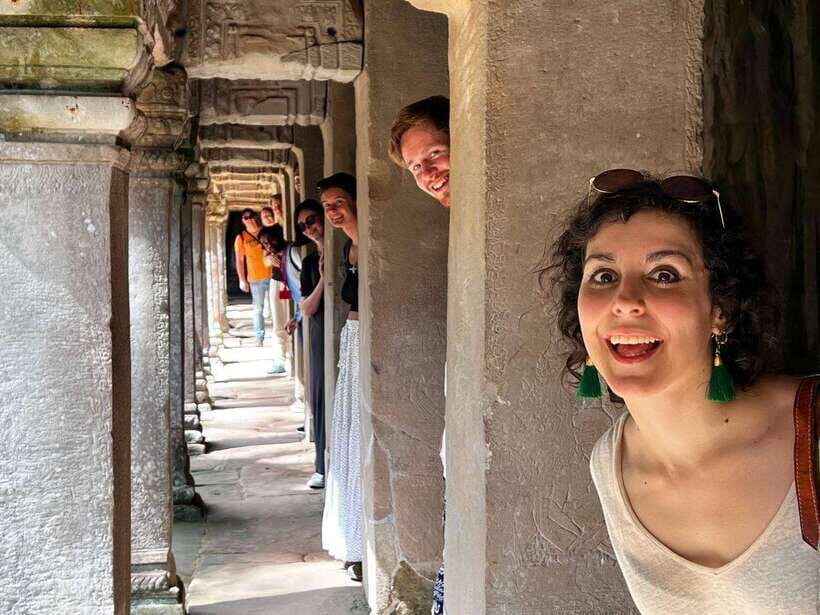
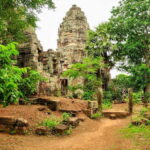
After the bigger temple work, the shift to Ta Prohm is one of the most satisfying parts of the day. This is the place people remember because it looks like the jungle swallowed it whole. But it’s also emotionally different: it feels like a temple caught in time.
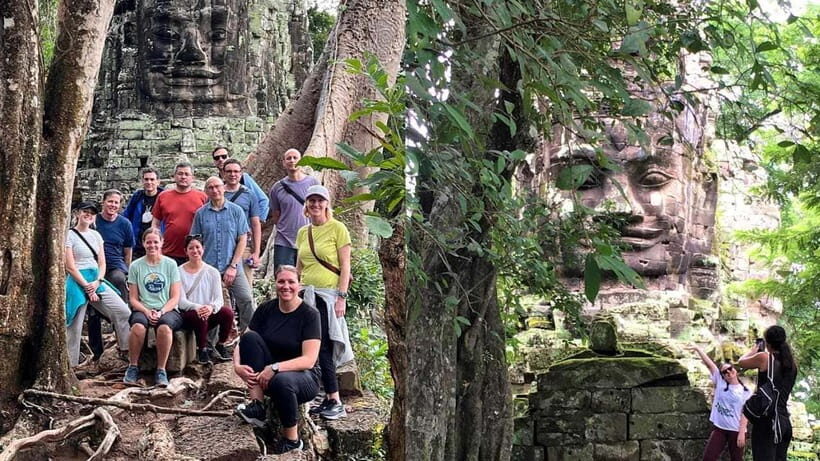
You’ll visit Ta Prohm in the morning, when the light hits the stone and greenery at an angle that makes the “ruin living” vibe easier to see. And the guide gives you a key fact that changes how you look at the site: Ta Prohm was once home to 2,740 monks. So you’re not just seeing a crumbling structure. You’re seeing a former center of religious life, now being reclaimed by nature.
You’ll also hear about French explorer Henri Mouhot, who is often linked to the “rediscovery” story in the early 1850s. That historical framing matters because it makes the site feel less like a random ruin stop and more like a chapter in how the modern world encountered Angkor.
If you love photography, you’ll likely enjoy the atmosphere here. If you’re not a photo person, focus on the textures: stone surfaces, fallen blocks, and the way tree roots twist into architecture. This is the kind of place where details reward slow looking.
Angkor Thom and Bayon: terraces, face towers, and the southern gate
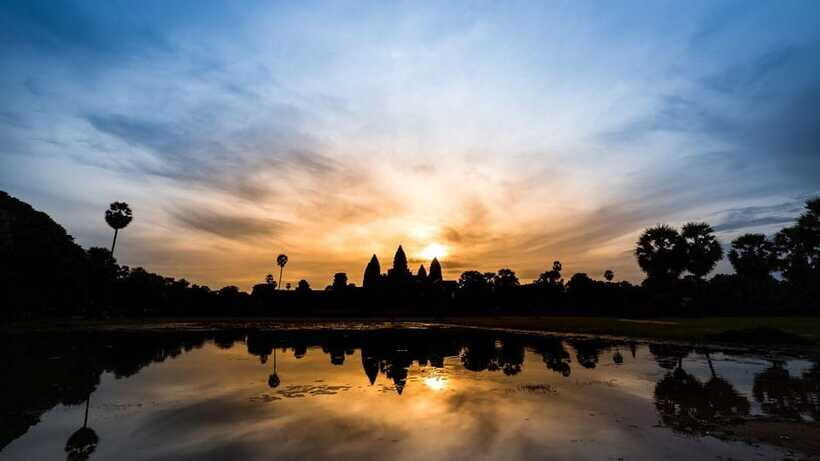
Once you move to Angkor Thom, the temples start to feel like a city with boundaries, entrances, and rules. This section of the tour gives you the main anchors that help you understand the layout: Terrace of the Leper King, Terrace of Elephants, then the Bayon Temple and the southern gate.
Terrace of the Elephants is a great example of how a guided stop beats a solo wander. The carvings and figures are impressive, but what makes them meaningful is context—what the terrace represents and how the city’s power is displayed in stone. The same idea applies to the Terrace of the Leper King, which can otherwise feel like a strange name without explanation.
Then you reach Bayon, and the experience snaps into focus. Bayon’s central towers are covered with more than 200 enormous faces. When you see them up close, it changes how you experience the space. You don’t just look at one direction; the faces feel like they’re looking back at you from multiple angles.
From there, you continue to the southern Gate of Angkor Thom. This is flanked by 54 stone figures on each side—gods on the left and demons on the right. That detail is one of those things you’ll remember later because it’s specific, symmetrical, and dramatic even for people who aren’t “temple people.”


Price and logistics: what you’re paying for (and what you’re not)
The tour price is listed at US$16 per person for an 8-hour day with a guided circuit and hotel pickup/drop-off. That’s unusually low compared to how long and how packed Angkor days can be, especially when you factor in transport and guide time.
Just don’t miss the one big line item that changes the real total: the temple entrance fee is US$37 (covering all temples in one day). Your tour ticket doesn’t replace the entrance cost—it adds the guide and the structured day. For me, value here comes from the sunrise timing plus the guide’s ability to translate what you’re seeing, not from the transportation alone.
You’ll also want to plan your food. Breakfast time is part of the schedule near the pool area, but breakfast is not included. You’ll have time for breakfast outside the temple, and you’ll get a short rest before heading into Ta Prohm and Angkor Thom.
Timing-wise, you’ll end around 12:30–1:30pm, which is great if you plan to do other Siem Reap stuff later (museums, massages, or a low-key afternoon).
Practical tips that make this sunrise day feel smoother
This tour is simple in concept, but sunrise logistics matter. Here’s what I’d do if I were packing for it again.
- Bring a torch for the early start. Even with street lighting, temple areas before dawn can be hard to read underfoot.
- Wear comfortable shoes with traction. There’s walking, steps, and uneven stone.
- Cover up: casual clothes are fine, but shoulders and knees must be covered inside temples. Shorts are not allowed.
- Pack biodegradable sunscreen and a camera, but also think about water and shade. You’ll get bottled water and cool towels, yet the sun can still surprise you after sunrise.
- Carry cash, since you’ll likely want to handle breakfast and any on-the-spot needs.
One more thing: the tour uses an air-conditioned vehicle for comfort between temples, and the included water bottles and cool towels are more helpful than they sound. A few minutes of cooling down after a hot walk can keep the rest of the day enjoyable instead of exhausting.
As for fit: this tour isn’t set up for wheelchair users and it’s not suitable for children under 8.
Should you book this Angkor Wat sunrise tour?
Book it if you want a day with a clear structure and a guide who helps you make sense of Angkor instead of just taking pictures and moving on. The best reasons to choose it are the sunrise timing, the guided interior time at Angkor Wat, and the way the day connects Ta Prohm, Angkor Thom, and Bayon through specific details (monk history, terraces, gate statues, and the face towers).
Skip it or look closely at alternatives if you dislike early mornings, hate long temple walking, or you’re trying to keep costs ultra-low (because the US$37 entrance fee is separate and breakfast isn’t included).
If you’re in Siem Reap and you want one half-day that feels like the heart of Angkor, this is a strong pick.
FAQ
How much is the temple entrance fee?
Temple entrance fee is US$37. It covers all temples in one day. Your tour price is separate from this fee.
Is breakfast included?
Breakfast is not included. There is a break scheduled for breakfast outside the temple area.
How long is the tour?
The tour duration is listed as 8 hours.
What time does the tour end?
The tour ends between 12.30 and 1.30pm.
What should I bring for the sunrise start?
Bring comfortable shoes, a camera, biodegradable sunscreen, comfortable clothes, cash, and it’s recommended to bring a torch.
What clothing rules apply inside temples?
Casual clothing is fine, but shoulders and knees must be covered inside temples. Shorts are not allowed.
Is this tour suitable for wheelchair users or young children?
It is not suitable for wheelchair users. It is also not suitable for children under 8 years old.