REVIEW · CAMBODIA
Phnom Penh to Siem Reap Through Cambodia’s Heartland
Book on GetYourGuide →Operated by S.P.P.T TRANSPORT & TOURS · Bookable on GetYourGuide
Phnom Penh to Siem Reap can be more than a drive. This full-day road trip trades highway time for uncrowded ancient temples and real village scenes along National Road 6. I like that you get a private AC car with a flexible schedule, and I also like the way the stops feel local, not staged for big tour groups. One thing to plan for: Sambor Prei Kuk has a temple entry fee of about $10 per person, not included.
You’ll leave Phnom Penh in the morning and watch the city fade into rice paddies, palm trees, stilted wooden houses, and daily rural life. The driver is also your English-speaking guide, and in past rides with guides like Tom and Ya, the explanations were practical and grounded in how people live along the route.
The day runs about 9 hours, and it’s not built for someone who needs step-free access. If you’re sensitive to heat or you don’t do stairs, take the Phnom Santuk option carefully, since the climb to the summit can be steep.
In This Review
- Key things to know before you go
- Turning the road trip into real Cambodia
- From Phnom Penh to the countryside: National Road 6 in comfort
- Skuon’s Spider Market: snacks, local craft, and photo time
- Phnom Santuk Sacred Summit: steps, monks, and 360-degree views
- Sambor Prei Kuk (UNESCO-listed): Chenla-era temples in a calmer setting
- Kampong Kdei’s 12th-century bridge: King Jayavarman VII’s engineering
- Value and pricing: what $69 really buys you
- Temple etiquette and practical tips that save time
- Who should book this Phnom Penh to Siem Reap transfer
- Should you book this day trip?
- FAQ
- How long is the Phnom Penh to Siem Reap transfer?
- Is this a private tour and do you have air-conditioning?
- What stops are included along the way?
- Do I need to pay temple entry fees?
- Is lunch included?
- What should I wear for the temple visits?
- What should I bring?
- Can I cancel if my plans change?
Key things to know before you go
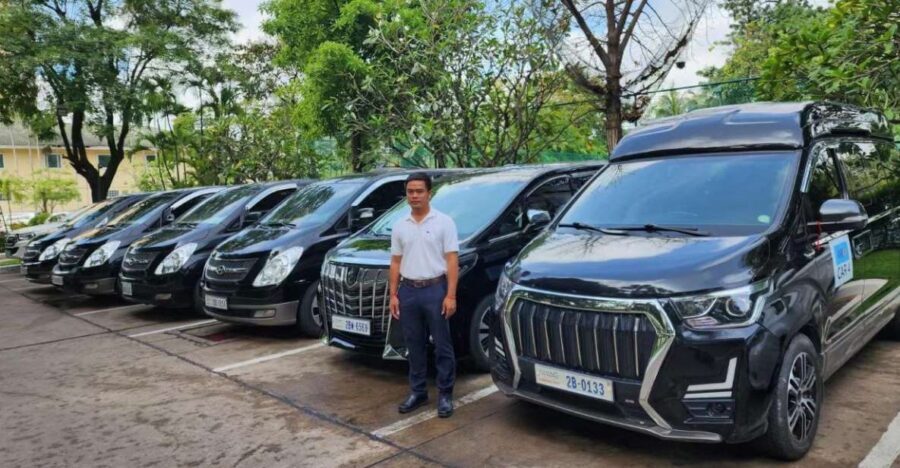
- A private AC car with stop-by-stop flexibility so you can stretch, take photos, and adjust timing
- Skuon Spider Market (Spider Village) for fried insect snacks and great street-market energy
- Phnom Santuk summit views with an option between 809 steps and an easier path
- Sambor Prei Kuk Chenla ruins that feel quiet, with laterite temples and original carvings
- Tree roots hugging ancient brickwork at the temple complex, perfect for photos
- Kampong Kdei’s 12th-century bridge if there’s time, with 85 meters of laterite engineering
Turning the road trip into real Cambodia
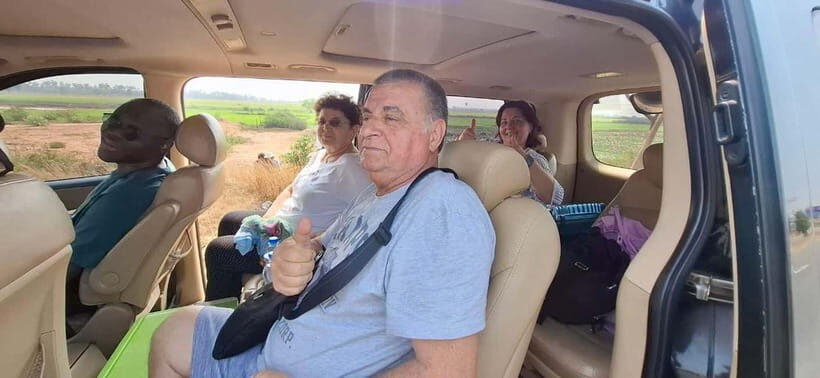
The best part of this transfer is that it doesn’t treat Cambodia like scenery you pass through. You start with a normal morning departure from Phnom Penh, then the route keeps changing as the day goes on—city sounds out, village rhythms in.
You’ll travel with an English-speaking driver-guide, which matters more than it sounds. When someone can point out what you’re seeing—how people live, what the buildings are for, why a temple looks the way it does—you don’t just move from A to B. You actually understand the journey.
I also like that the day has built-in variety. One stop is about food, one is about a spiritual hilltop, one is about pre-Angkor-era temples, and the last is about engineering. It’s a nice way to learn Cambodia without cramming one kind of sight for the entire day.
You can also read our reviews of more tours and experiences in Cambodia.
From Phnom Penh to the countryside: National Road 6 in comfort
You’ll be picked up in Phnom Penh and the trip runs for about 9 hours total. The transport is a private, air-conditioned vehicle with bottled drinking water provided along the way. That comfort isn’t just for convenience—it helps you enjoy the stops instead of arriving sweaty and exhausted.
On the drive out, the scenery shifts quickly. Expect rice paddies and palms replacing city streets, with stilted wooden houses and everyday rural activity appearing as you go. This is the kind of change that makes the trip feel like part of your vacation, not a chore.
Pickup details are straightforward. The driver meets you at your Phnom Penh lobby or another agreed landmark about 15 minutes before departure. If you’re coming from the airport, the driver meets you at the arrival gate and will have a printed full name sign.
One practical note: this transfer is private and personal, so the schedule can flex. That’s ideal when you want photos in soft light or you need a short break before walking up steps.
Skuon’s Spider Market: snacks, local craft, and photo time
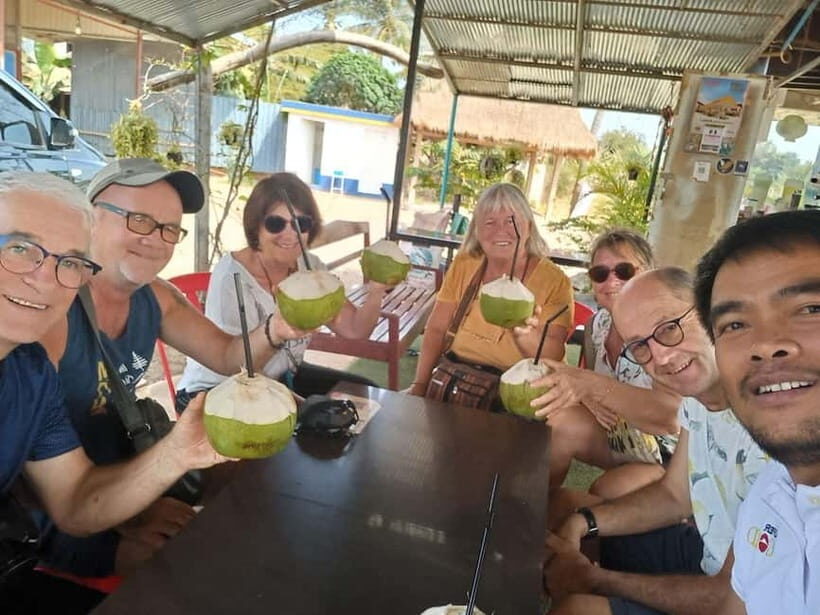
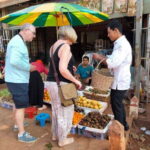
After around 1.5 hours, you reach Skuon’s famous insect market, nicknamed Spider Village. This is the stop built for people who like food culture as much as landmarks.
You’ll see locals preparing fried tarantulas, crickets, and other insect snacks. Even if you don’t want to try them, you’ll still get a front-row view of how the market works and why it’s famous. It’s also a photographer’s-friendly setting: people cooking, people trading, lots of close-up action at stall level.
The tour includes a snack stop with fruit tasting, spiders, and optional insect snacks. I like that your guide doesn’t treat it like a dare. You can sample what you’re comfortable with and skip what you’re not.
Possible consideration: if insects aren’t your thing, you might enjoy the market atmosphere more than the tasting. Still, it’s a useful stop because it shows a slice of Cambodian food life most standard transfers skip entirely.
Phnom Santuk Sacred Summit: steps, monks, and 360-degree views
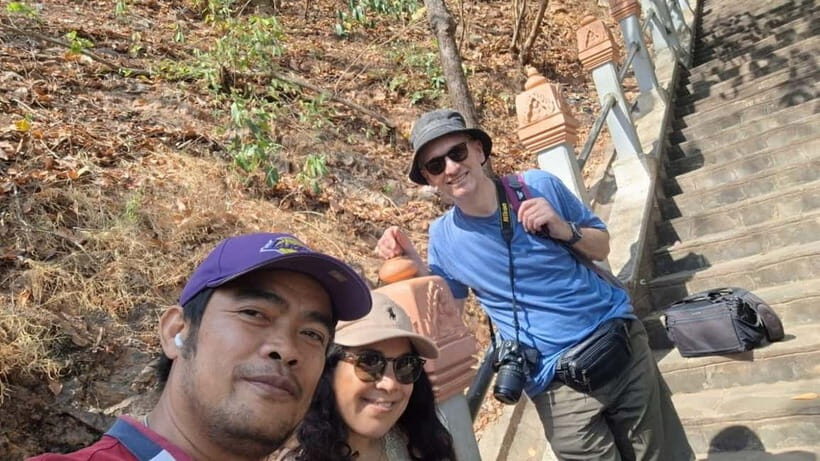
From the market, you’ll head toward Kampong Thom province to Phnom Santuk, a hilltop pagoda complex with a sacred feel.
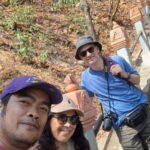
Here’s the deal: you can choose between climbing 809 steps or taking an easier route to reach the complex. That flexibility is smart. You get the chance to go “full effort” if you want the challenge, and you can still get to the viewpoints without forcing your legs into a long uphill grind.
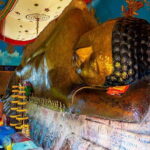
Along the way, you’ll notice Buddhist carvings and golden statues. You may also interact with resident monks, which is one of those moments that changes how you see a religious site. Instead of reading signs, you’re watching living practice.
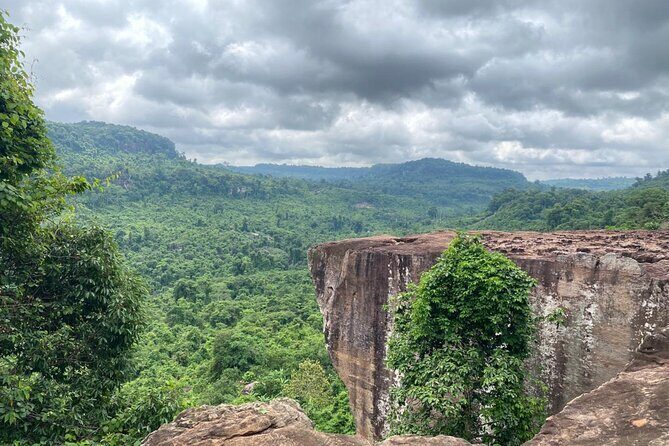
The payoff is the view. At the top, you’re rewarded with broad, 360-degree scenery over Cambodia’s central plains. Even if you’re not a dramatic-view person, this viewpoint is useful because it helps you understand the flatness of the area—and why temples and pagodas on hills become natural landmarks.
If you’re traveling with kids or someone who tires easily, pick the easier path and save energy for later temple walking.
Sambor Prei Kuk (UNESCO-listed): Chenla-era temples in a calmer setting
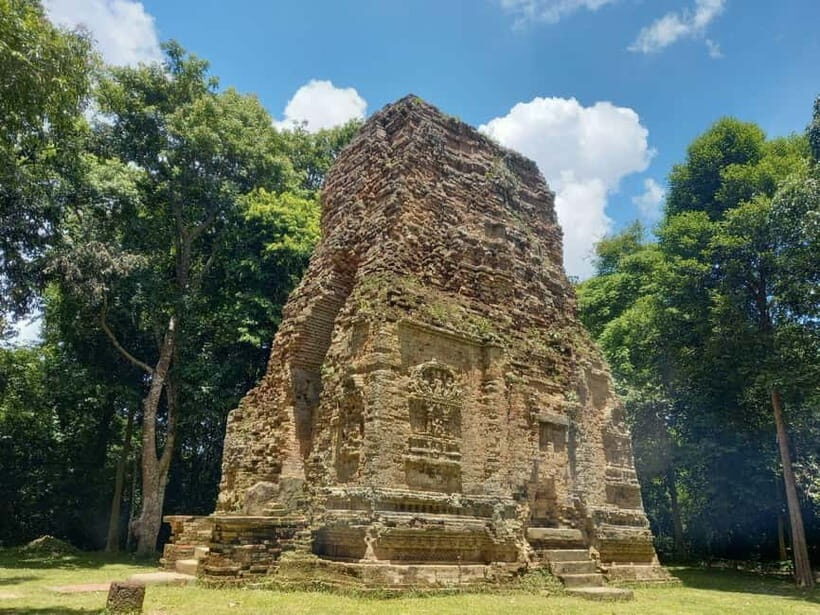
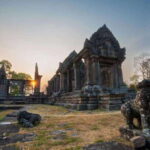
After Phnom Santuk, you head to Sambor Prei Kuk, a UNESCO-listed complex connected to the pre-Angkorian Chenla Kingdom. This is the stop that feels like stepping into the 7th century without huge crowds.
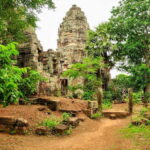
The temples sit in forest clearings, and you walk among structures made with laterite. Laterite is the reddish-brown stone Cambodia is famous for at many ancient sites, and here it gives the ruins a rugged, earthy look.
One of the best parts is the sense of quiet. You can move at your pace and look closely. You’ll see original carvings on surviving temple faces, which is exactly what you want at a place like this. A rushed photo-only stop won’t teach you much here; slow watching pays off.
Another strong visual: massive tree roots embracing ancient brick structures. It’s not just dramatic for pictures. It also helps you understand how nature and time interact with the site. You’re seeing decay and survival happening at the same time.
Entry fee matters here. Expect to pay about $10 per person for temple access, since it’s not included in the tour price. Bring cash so you’re not stuck negotiating in a slow line.
Possible drawback: if you’re hoping for Angkor-style crowds and tour-guide theater, this is the opposite. It’s about quiet exploration and respectful walking.


Kampong Kdei’s 12th-century bridge: King Jayavarman VII’s engineering
If there’s enough time, you’ll make a final cultural stop at Kampong Kdei bridge, built in the 12th century under King Jayavarman VII. This is a different kind of “ancient wonder.” Instead of temples and statues, it’s about infrastructure—how people connected places across the water or wetland zones.
The bridge is remarkably preserved and measures about 85 meters long. Laterite construction gives it that tough, reddish durability that still looks solid after centuries of use.
This is a great stretch point. Even a short walk along the bridge helps you reset before the final drive into Siem Reap. It also gives your brain a break from temple surfaces and carvings.
If time runs short, this is the one stop that may be skipped. So if bridge walking is a must for you, keep in mind it’s conditional based on how the day is going.
Value and pricing: what $69 really buys you
At $69 per person for a 9-hour private transfer, you’re paying for more than transportation. You’re paying for a private AC vehicle, bottled water, an English-speaking driver who acts as a guide, flexible stop times, and multiple sightseeing stops that include snack and temple-site visits.
What’s included:
- Private air-conditioned vehicle
- English-speaking driver/guide
- Bottled water
- Snack stop at Skuon market (fruit tasting, spiders, optional insect snacks)
- Sightseeing stops at Sambor Prei Kuk with a local guide
- Kampong Kdei bridge if there’s enough time
- Flexible photo opportunities
- Pickup in Phnom Penh and drop-off in Siem Reap
What’s not included:
- Meals beyond the provided snacks (there’s a lunch stop available upon request)
- Personal expenses and souvenirs
- Sambor Prei Kuk temple entry fee (around $10 per person)
In other words, the value is strongest if you care about the stops and not just reaching Siem Reap. If you only need a car to get there, a cheaper straight transfer might make sense. But if you want to turn a travel day into a learning day, this price is reasonable for what you get.
Temple etiquette and practical tips that save time
This trip includes temple visits, so plan clothing early. You’ll need respectful outfits that cover knees and shoulders. That means t-shirts or long sleeves, and long pants or skirts. If you forget something, sarongs and scarves can sometimes help, but it’s better to plan ahead.
Bring cash. You’ll want it for the Sambor Prei Kuk entry fee and for any snacks or small purchases you decide to make.
Also think about comfort:
- Wear shoes that handle uneven ground, especially around temple areas.
- Carry a light layer since temple sites can feel cooler in shade even during hot months.
- If you’re sensitive to heat, pace yourself on the steps route at Phnom Santuk.
Rules for the ride are standard: no smoking in the vehicle, no alcohol and drugs, and no weapons or sharp objects. Unaccompanied minors aren’t allowed either, so plan accordingly if you’re traveling with kids.
Who should book this Phnom Penh to Siem Reap transfer
This is ideal if you:
- Want a private day with stop-by-stop control
- Enjoy food culture as part of travel, especially the Skuon market
- Like ancient sites but prefer fewer crowds and more quiet looking
- Want to see rural Cambodia beyond the most famous tourist corridors
It may not be ideal if you:
- Need step-free access, since it’s not suitable for mobility impairments
- Want a strict “temples only” day with no market stop
- Are not comfortable with optional stairs at Phnom Santuk, even though you can choose the easier route
Families, couples, and solo visitors can all do well here, as long as you’re comfortable with a full day and some walking.
Should you book this day trip?
Book it if you want your Phnom Penh to Siem Reap transfer to feel like part of the trip, not just transit. The mix of Skuon market food culture, Phnom Santuk hilltop views, pre-Angkor temple calm at Sambor Prei Kuk, and Kampong Kdei bridge engineering gives you a well-rounded Cambodia day.
Don’t book it if you only care about reaching Siem Reap fast with minimal stops, or if walking stairs and uneven ground will be a problem for you.
If you’re on the fence, the decision is simple: do you want to learn Cambodia between the two cities? If yes, this is one of the better ways to do it.
FAQ
How long is the Phnom Penh to Siem Reap transfer?
It lasts about 9 hours from morning departure to drop-off in Siem Reap.
Is this a private tour and do you have air-conditioning?
Yes. You travel in a private air-conditioned vehicle with an English-speaking driver who also serves as your guide.
What stops are included along the way?
You’ll stop at Skuon’s famous insect market for snacks, visit Phnom Santuk, visit the Sambor Prei Kuk temple complex with local guidance, and you may also go to Kampong Kdei bridge if there is enough time.
Do I need to pay temple entry fees?
Yes. The Sambor Prei Kuk temple entry fee is around $10 per person and is not included.
Is lunch included?
Meals beyond the provided snacks aren’t included, but a lunch stop can be arranged upon request.
What should I wear for the temple visits?
Wear clothing that covers your knees and shoulders. Examples include long pants or skirts and t-shirts or long-sleeved shirts.
What should I bring?
Bring comfortable clothes and cash.
Can I cancel if my plans change?
You can cancel up to 24 hours in advance for a full refund.