REVIEW · SIEM REAP
Explore Angkor Sunrise Spectacle a Full Day Temples Tour
Book on Viator →Operated by Angkor7th Travel · Bookable on Viator
Dawn at Angkor turns your morning into a mission. You start in the dark, roll up just for sunrise at Angkor Wat, then spend the day seeing the main highlights of the Angkor complex with an English-speaking guide keeping the story straight. It’s a full, structured day that trades aimless wandering for smart timing.
Two things I’d put near the top of your priority list are the English-speaking guide (the kind who explains what you’re looking at and helps with practical photo timing) and the way the route layers classic sights: Angkor Wat, then Angkor Thom’s big stone drama, then Ta Prohm’s roots-and-stone look, with Banteay Srei added if time allows.
One thing to plan for: the tour price does not include entrance fees. You’ll need the Angkor Pass (listed as US$37 per person), and meals aren’t included either. Also, the start time is early, so bring the right mindset and a moderate fitness level for temple walking.
In This Review
- Key highlights worth knowing
- Why the 4:30 am Angkor Wat start changes everything
- Pickup, AC comfort, and the guide who keeps you on track
- Angkor Wat for sunrise: what you’ll do in the first 3 hours
- Angkor Thom South Gate: the big-city entrance feeling
- Bayon Temple: the faces, the bas-reliefs, and the quick photo sprint
- Ta Prohm: the roots, the ruins, and why you’ll want the full hour
- Banteay Srei if there’s time: smaller scale, big attention
- Price and value: what you pay, what you still budget
- What the day feels like in real life
- Who should book this sunrise tour (and who should skip it)
- Should you book Angkor7th Travel’s Angkor Sunrise Spectacle?
- FAQ
- What time does the tour start?
- How long is the full-day temples tour?
- How much does it cost?
- What is included in the price?
- What isn’t included?
- Is pickup offered?
- Is this tour private?
- Are there any physical requirements?
- What if the weather is poor?
- What is the cancellation policy?
Key highlights worth knowing
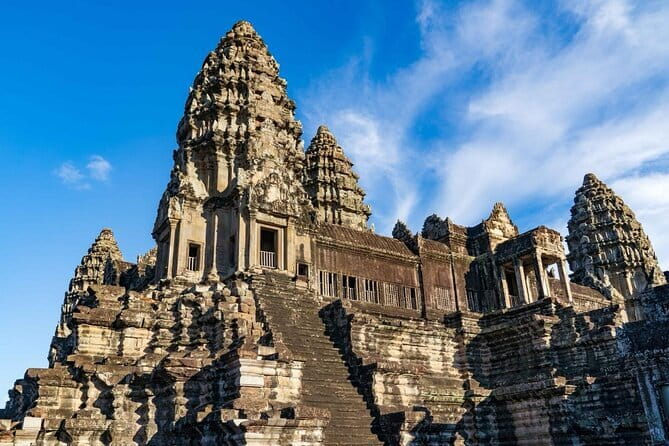
- 4:30 am start so you can be at Angkor Wat for the sunrise moment
- English-speaking guide who sets expectations and keeps your timing on track
- Three temple stops plus optional Banteay Srei depending on the day’s schedule
- AC vehicle to cool down during the hotter gaps between sites
- Private tour format so your group stays together rather than mixing with strangers
Why the 4:30 am Angkor Wat start changes everything
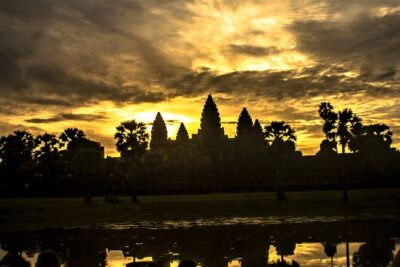
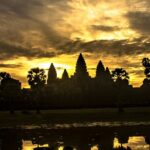
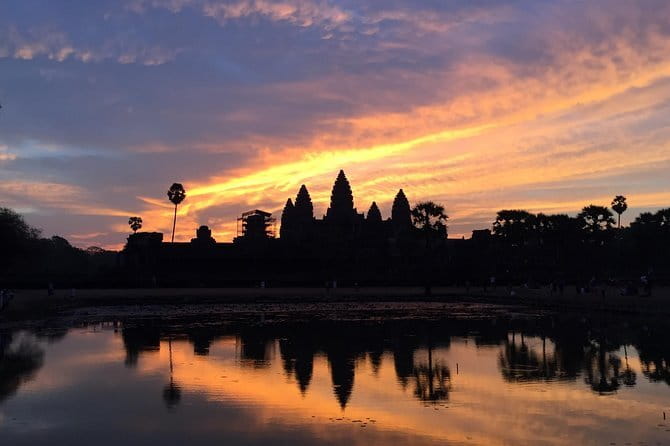
If you’ve only ever seen Angkor Wat in daytime photos, sunrise is the real upgrade. At that hour, the light is softer, the crowds are different, and you get that cinematic feeling without needing any special equipment. This tour is built around that idea: you leave Siem Reap at 4:30 am, then arrive for the sunrise at Angkor Wat and have about 3 hours on site.
That timing matters because it gives you two kinds of viewing time. First, you’re there for the main visual moment when the sun clears the horizon and the temple silhouette comes into focus. Then you still have time after sunrise to walk, look closer, and take photos without feeling like you arrived five minutes too late.
It also helps that the day is paced. After the early morning, the itinerary moves through the next key temple areas and then includes a break for you to get through the heat and regroup. One guide approach stands out in the feedback: time for pictures, plus time to cool off in the AC between stops.
You can also read our reviews of more tours and experiences in Siem Reap.
Pickup, AC comfort, and the guide who keeps you on track
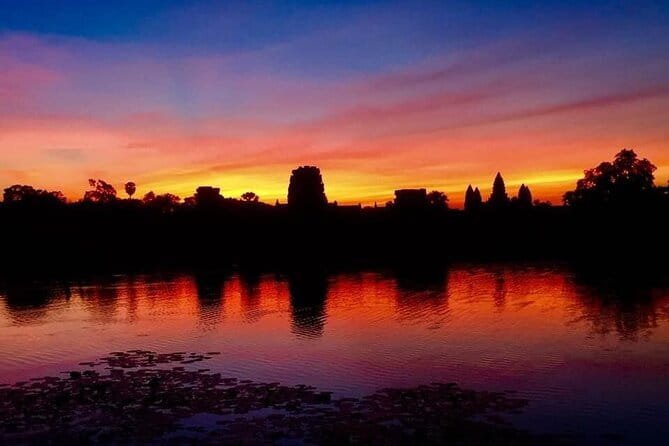
This is an 8 to 9 hour full-day format, and the included transportation is air-conditioned. For Angkor, that’s not a luxury detail. It’s part of how you survive the day. You’ll likely be walking in temple areas that can feel exposed, so having AC time between stops gives you a practical reset.
The tour also includes an English-speaking tour guide who adds context as you go. That’s what turns a set of photo stops into an experience with meaning—because Angkor’s scale can be confusing if no one helps you make sense of the layout. The guides are also attentive to what you actually need in the moment, like planning photo stops and keeping the group moving without rushing.
If you get a guide named Dat, that name shows up for a reason. People describe him as fun, energetic, and thoughtful about group needs—especially balancing site time with breaks in the AC. Even if your guide is someone else, the style you’re paying for is clear: clear explanations and sensible pacing.
Angkor Wat for sunrise: what you’ll do in the first 3 hours
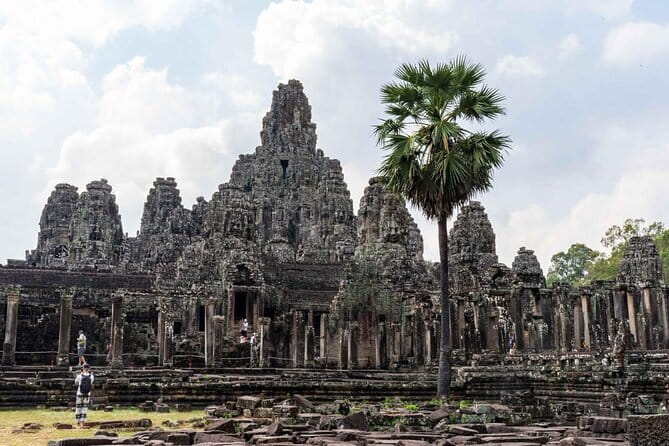
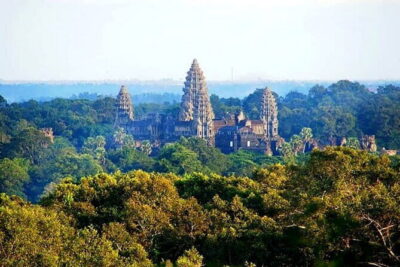
Angkor Wat is the headline, so this tour treats it like the main event. You’ll be picked up in the early morning darkness and arrive in time for sunrise. Once you’re inside, you’ll have about 3 hours at the site.
Here’s why that time block is a good idea for most people:
- You get the sunrise moment without sprinting.
- You can move at a comfortable walking pace once the light improves.
- You have time for photos without feeling like you’re cutting off your own viewing.
A crucial practical note: entrance fees are not included. The Angkor Pass is listed at US$37 per person. So check what you’re paying for versus what you still need to buy. If you’re traveling as a small group, it can be worth budgeting the pass right away so there’s no scramble at the gate.
During your time at Angkor Wat, your guide should help you look beyond the obvious angles. The goal is to understand what you’re seeing—temple layout, design logic, and what makes this complex different from the surrounding sites. With the right guide, the place starts to feel legible.
Angkor Thom South Gate: the big-city entrance feeling
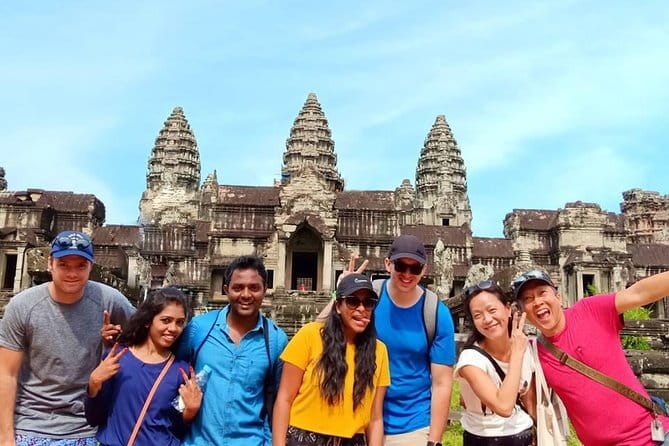
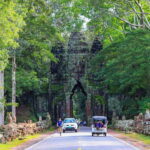
After Angkor Wat, the tour heads to Angkor Thom South Gate. This stop is listed at 30 minutes, so think of it as a “get your bearings fast” moment.
Angkor Thom is the old Khmer capital area, and the South Gate acts like a massive threshold. You’ll feel the scale right away—this isn’t a small side temple. It’s a formal entry into a whole urban world of stone corridors and ceremonial spaces.
One detail to plan around: the itinerary includes a Khmer-style breakfast before exploring further. At the same time, the tour notes meals aren’t included, so you should treat breakfast as part of the day’s plan rather than something you should assume is already covered in your ticket. If you want a sure thing, ask before you go and double-check what’s actually included on your specific booking.
Even with a short time here, this stop helps you connect the dots. Angkor Wat is the perfect icon. Angkor Thom shows you the working side of the Khmer Empire—through gates, city layout, and ceremonial architecture.
Bayon Temple: the faces, the bas-reliefs, and the quick photo sprint
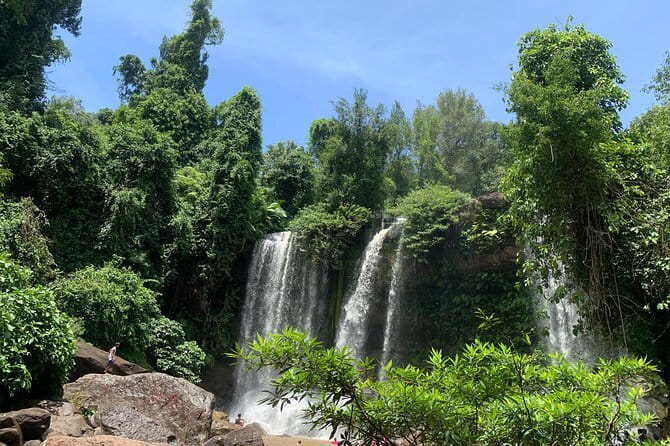
Next up is Bayon Temple, listed at about 2 minutes. That number looks tiny, but don’t assume you’ll only see “two minutes” of the site. In tours like this, short listed times often mean a tight highlight walk through the most recognizable areas.
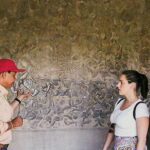
Bayon is the standout because of its many carved faces and the way the temple surfaces are packed with detail. Even if you only have a quick window, it’s the kind of place where the basics are clear fast: look up for faces, then look around for stone stories.
In practical terms, you’ll want to use your guide’s direction here. Ask where to stand for the best view and what to look for first. When a guide times the flow well, you get those signature impressions without the feeling of being rushed through something important.

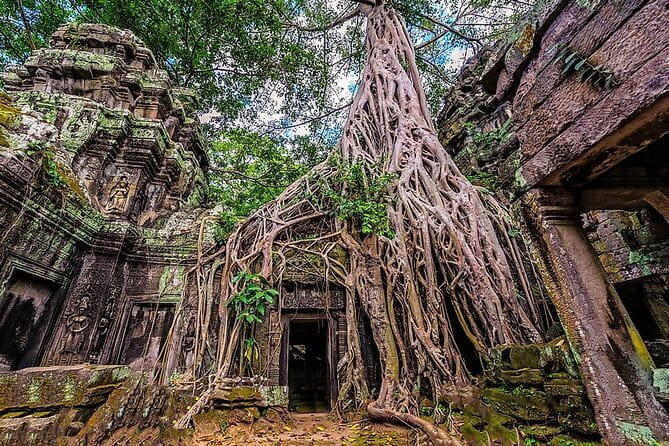
Ta Prohm: the roots, the ruins, and why you’ll want the full hour
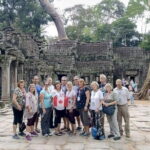
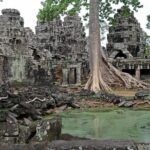
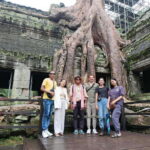
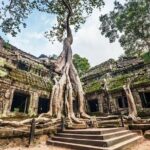
Then you get Ta Prohm, with about 1 hour on the site. This is the temple most people recognize from photos: stone structures tangled with big trees and roots. It gives Angkor a slightly wild, “nature vs. architecture” energy that’s different from the strict symmetry you see elsewhere.
That full hour matters. Even if you only care about the famous photo angle, you still need time for:
- walking between viewpoints,
- finding a spot that works for your photos,
- and taking a breather when the sun gets too strong.
The best part of Ta Prohm on a guided tour is that you don’t just see the visual effect. You also get help interpreting what you’re looking at—how the temple was shaped, what the surviving structures mean, and why this site became such a powerful symbol in popular culture while still being firmly Khmer in its original purpose.
If you’re the kind of person who likes to wander a bit without losing the thread, this stop fits.
Banteay Srei if there’s time: smaller scale, big attention
Toward the afternoon, there’s a possible visit to Banteay Srei. It’s listed as 1 hour, but explicitly says it depends on whether time allows. That’s a very real part of Angkor planning. Travel time, heat, crowds, and how long people take for photos all affect the last stop.
Banteay Srei is known for a more intricate feel than some of the larger, more open temple areas, so when you do get there, treat it like a “slow looking” opportunity. With only about an hour, you’ll want to choose your priorities early: the carving details, the layout, or the best photo angles.
Because this is optional, you should also treat it like a bonus rather than a guarantee. The core of your day remains Angkor Wat at sunrise and then the core Angkor Thom and Ta Prohm route.
Price and value: what you pay, what you still budget
The tour price is US$45 per person, lasting 8 to 9 hours and including an AC vehicle plus an English-speaking guide. Those inclusions can be genuine value in Siem Reap, especially for sunrise timing, where good logistics can make the difference between a smooth morning and a stressed one.
But the pricing is split into two layers:
- Tour price: US$45
- Entrance fees: Angkor Pass at US$37 per person (not included)
So your likely total is US$82 per person, before any meal spending. Also, meals aren’t included, so you’ll want extra budget for breakfast during the day plan (the day includes a Khmer-style breakfast stop, but meals aren’t listed as included overall) and whatever you eat later.
Is it worth it? For most first-timers, yes—if you want a structured day with a guide and you value sunrise timing. If you’re a veteran who can handle planning and navigation on your own, you might compare options. But for the specific goal of seeing Angkor Wat at sunrise with guided context and a realistic route, this looks like a solid deal.
What the day feels like in real life
This is not a “see one temple and then snack” kind of tour. It’s a temple marathon with smart breaks. The schedule is built for momentum: sunrise first, then quick transitions, then longer time at the sites that reward it most.
That pacing helps if you’re trying to fit Angkor into a limited number of days in Siem Reap. It also helps if you’d rather not waste time negotiating transport early in the morning.
Physical comfort is the main consideration. The tour info calls for moderate physical fitness. That doesn’t mean you need to be an athlete; it means you should expect walking and standing in temple areas, plus early departure. If you know you get tired easily with heat and steps, plan accordingly: bring water, sun protection, and comfortable shoes.
Who should book this sunrise tour (and who should skip it)
This tour is a great match if you:
- want Angkor Wat at sunrise as your anchor experience,
- prefer an English-speaking guide to explain what you see and help with timing,
- like having an itinerary that covers Angkor Thom, Bayon, and Ta Prohm in one day,
- and you’re okay with an early start and a full day on your feet.
It may not be your best choice if you:
- hate early mornings and don’t handle early wake-ups well,
- want an unstructured, slow day with no tight schedule,
- or you’re hoping meals and entrance fees are fully included.
The format is also described as a private tour/activity, meaning it’s only for your group. That can be a big plus if you want a calmer experience than a large mixed group day.
Should you book Angkor7th Travel’s Angkor Sunrise Spectacle?
If your top goal is the sunrise at Angkor Wat, I think booking makes sense. The early start is built into the plan, and the included AC transport plus an English-speaking guide are practical benefits, not fluff. Add the route through Angkor Thom, Bayon, and Ta Prohm, and you get the core hits of Angkor in one day.
My “yes, book it” checklist would be:
- You can handle a 4:30 am start.
- You’re okay paying entrance fees separately through the Angkor Pass.
- You want a guide to help you make sense of what you’re seeing and to keep the timing realistic.
If that matches you, this is a strong way to see Angkor when it looks its most magical and still get the rest of the major temples without turning your day into a logistics puzzle.
FAQ
What time does the tour start?
The tour start time is listed as 4:30 am.
How long is the full-day temples tour?
The duration is listed as 8 to 9 hours (approximately).
How much does it cost?
The price is US$45 per person.
What is included in the price?
The included items are an air-conditioned vehicle and an English speaking tour guide who provides information and history along the way.
What isn’t included?
Entrance fees are not included. You’ll need the Angkor Pass (US$37 per person). Meals are also not included.
Is pickup offered?
Yes, pickup is offered.
Is this tour private?
Yes. It’s described as a private tour/activity, meaning only your group will participate.
Are there any physical requirements?
The tour info says moderate physical fitness is recommended.
What if the weather is poor?
The experience requires good weather. If it’s canceled due to poor weather, you’ll be offered a different date or a full refund.
What is the cancellation policy?
You can cancel for a full refund if you cancel at least 24 hours before the experience’s start time. If you cancel less than 24 hours before, the amount paid is not refunded.